September 2, 2026 · 9 min read
Ruta por la Royal Mile de Edimburgo
Descubre la mejor ruta a pie por la Royal Mile de Edimburgo, un recorrido autoguiado desde las alturas del castillo hasta el palacio.
507
August 27, 2026 · 9 min read
Haz esta caminata en grupo en la próxima salida programada.
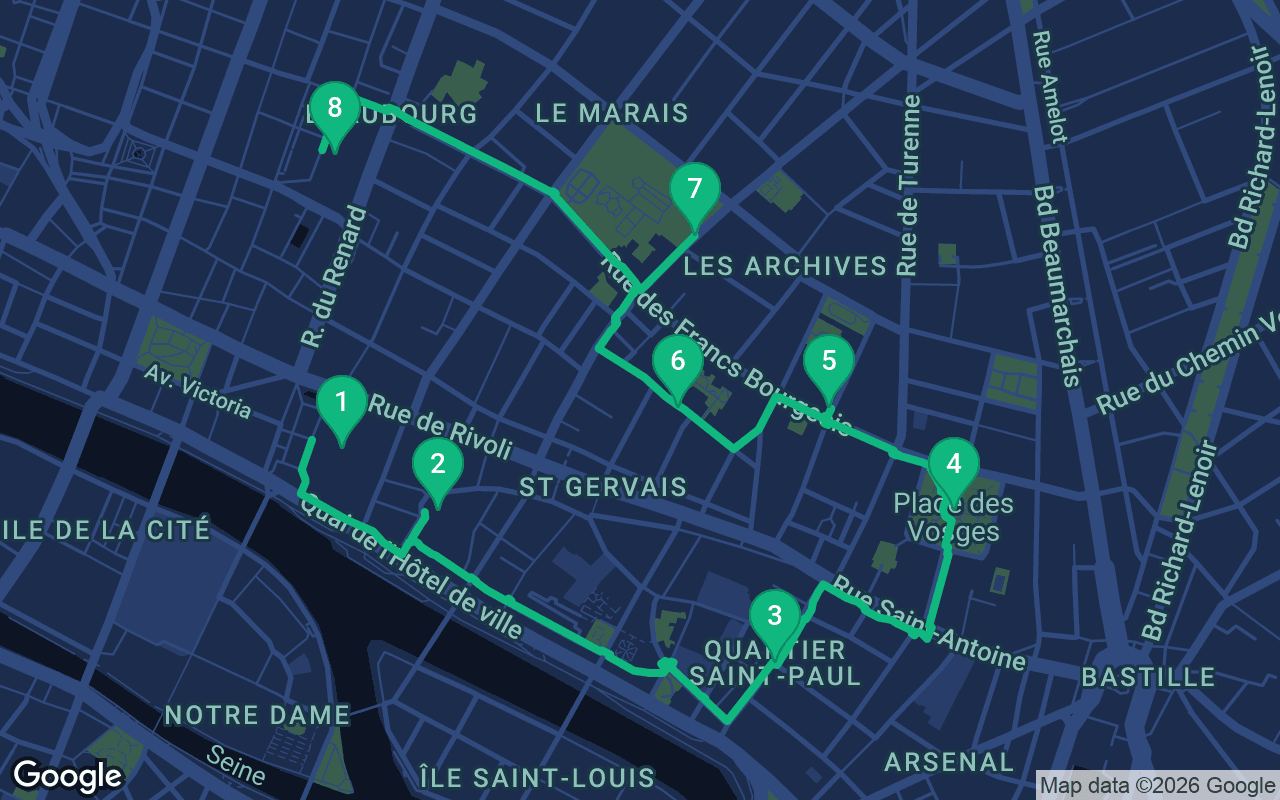
Unos 3,4 km, unos 48 minutos a ritmo suave · 8 paradas
Audioguía · 12 min de narración$5.99 pago único
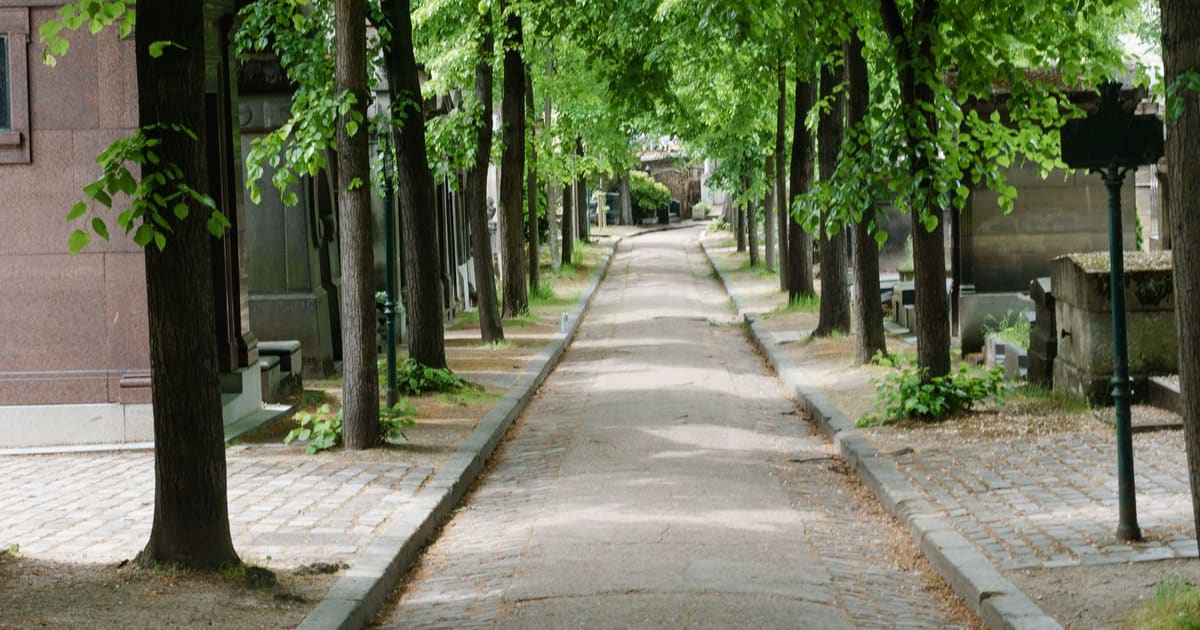
The Marais is one of the oldest and most captivating quarters of Paris, a maze of narrow medieval streets that escaped the great nineteenth-century rebuilding, packed with grand mansions, hidden courtyards, a historic Jewish quarter and some of the liveliest cafes in the city. If you are planning a walking tour in France, this Paris self guided walking tour wanders the heart of the Marais, from the grand city hall through its tangled lanes to the perfect symmetry of the oldest planned square in Paris, ending at the colorful, inside-out modern art museum on its western edge. It is a flat, atmospheric walk through centuries of history, best taken slowly with plenty of stops.
Before you set off, a few practical notes. This walk covers about four to five kilometers and is refreshingly flat, so any comfortable shoes will do, though the streets are paved in stone and often crowded, so an unhurried pace suits it best. The Marais is at its liveliest in the afternoon and is famously one of the few quarters where the shops and cafes stay open on Sundays. Late afternoon into early evening is a fine time to wander. If you are following by audio, keep your eyes up for the carved doorways and courtyards that are easy to miss, watch for cyclists in the narrow lanes, and pause whenever a shopfront, a square or a hidden garden invites you to slow down.
You begin in front of the Hotel de Ville, the grand city hall of Paris, an enormous and ornate palace of a building that has been the seat of the city's government for centuries. Its facade is a riot of neo-Renaissance detail, studded with over a hundred statues of famous Parisians standing in niches along its front, and topped with steep roofs and clock towers. Stand back in the wide square that opens before it, a space that has seen revolutions, celebrations and executions over the ages, and which now hosts a seasonal ice rink in winter and events all year round. The current building is a faithful reconstruction, raised after the original was burned during a turbulent chapter of the city's history. Take in the sheer scale and decoration of the facade. Then head east, away from the river, into the streets behind the city hall, aiming for the tall Gothic church whose tower rises just a short way ahead.
Saint-Gervais Church stands tucked just behind the city hall, a tall Gothic church that is often overlooked yet holds real treasures and a deep sense of calm after the busy square. Its front is unusual, one of the earliest classical facades in Paris, with three tiers of columns rising above the older Gothic body of the church behind. Step into the small square before it and look up at the layered facade and the soaring stone tower. Inside, if it is open, you will find beautiful stained glass, an ancient organ played by a famous family of composers for generations, and a hushed, dim interior where a monastic community keeps the church a place of quiet prayer amid the city. An old elm tree has stood on this spot for centuries, a landmark for meetings and markets. Pause in the peaceful square. Then continue east into the older lanes of the Marais, working toward a cluster of hidden courtyards known as a village within the city.
The Village Saint-Paul is a hidden network of interlinked courtyards tucked between the streets, a peaceful enclave of antique shops, art galleries and cafes reached through unmarked passageways that most passersby never notice. Step through one of the archways and you leave the street behind, entering a series of quiet cobbled courtyards ringed by old buildings, where dealers display vintage furniture, curiosities and art. It is a place made for slow browsing and unexpected discoveries, with a village-like calm that feels miles from the bustle outside. Nearby run some of the last surviving fragments of the medieval city wall, a reminder of how old this quarter truly is. Wander through the connected courtyards at your leisure, enjoying the secret, tucked-away atmosphere. Then find your way back out to the streets and head northeast, following the lanes as they lead you toward the grandest and most beautiful square in the whole quarter.
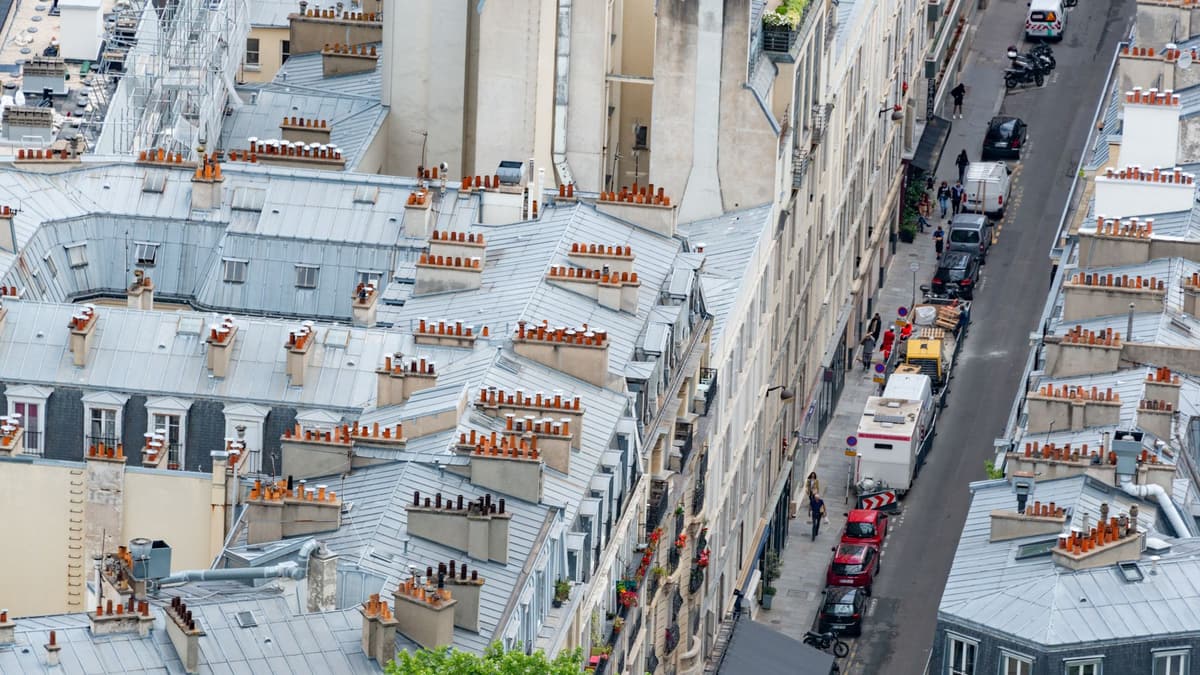
Place des Vosges is the oldest planned square in Paris and one of the most beautiful, a perfect symmetry of thirty-six rose-brick pavilions with steep slate roofs, all identical, arranged around a serene central garden of trees, lawns and fountains. Step through an archway into the square and the harmony of it is striking, the arcaded ground floors running unbroken around all four sides, sheltering cafes, galleries and the occasional busker whose music echoes under the vaults. Walk into the central garden, where Parisians read on benches, children play, and the fountains murmur beneath the linden trees. This royal square set the fashion for elegant city living four hundred years ago, and a famous writer once lived in one of its corners, his home now a museum. Stroll the arcades and the garden and soak in the calm grandeur. Then leave by a northwestern corner and thread a couple of streets to a grand mansion that tells the whole story of the city.
The Musee Carnavalet is the museum of the history of Paris, housed in a pair of magnificent Renaissance mansions, and it is one of the loveliest free museums in the city, well worth stepping into or simply admiring from its courtyards. Enter the grand courtyard and take in the elegant carved facade, the formal garden with its clipped hedges, and the statue of a king at its center. The museum tells the story of the city from its earliest days to now, through paintings, old shop signs, furniture and relics, but even the buildings and gardens themselves are a pleasure to wander. This is a fine place to rest amid the greenery and grand stone. Whether you go in or not, the courtyards offer a peaceful pause. Then leave the mansion and head back south into the busy lanes, toward the narrow street that forms the heart of the historic Jewish quarter, alive with the smell of food.
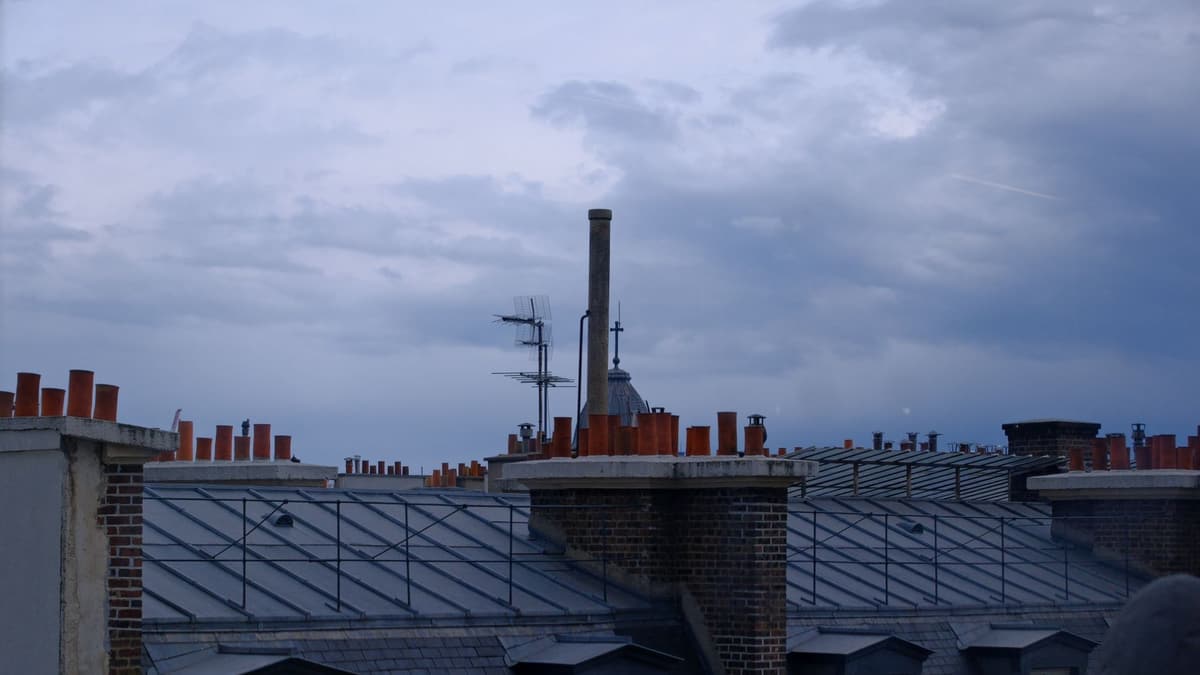
Rue des Rosiers is the historic heart of the Jewish quarter of Paris, a narrow, crowded lane that has been the center of Jewish life in the city for generations, lined with bakeries, delis, bookshops and falafel counters that draw long, cheerful queues. Walk down the lively street and let the atmosphere carry you, the smell of fresh bread and frying chickpeas, the mix of old kosher shops and trendy new boutiques, the buzz of people eating on the go. This quarter has a moving and layered history, a community that has endured through dark times, remembered in plaques and memorials along the way. Today it is one of the most vibrant and characterful streets in the Marais, where tradition and fashion sit side by side. Take your time among the shops and food stalls, perhaps with something to nibble. Then continue into the neighboring lanes and turn onto one of the grandest old streets of the quarter.
Rue Vieille du Temple is one of the main arteries of the Marais, a long and lively street lined with fine old mansions, fashionable boutiques, art galleries, cafes and bars that spill onto the pavement day and night. As you walk, look up above the trendy shopfronts to the grand carved doorways and elegant facades of the aristocratic houses that once lined this street, some hiding beautiful courtyards behind their gates. This is the Marais at its most sociable and stylish, a place to see and be seen, buzzing with a diverse and creative crowd. Push open an unlocked carriage door if you find one ajar, and you may glimpse a hidden courtyard within. The street perfectly captures the quarter's blend of history and contemporary life. Wander along it, taking in the mix of old stone and modern energy. Then head northwest out of the tangle of lanes, toward a strange and colorful building whose pipes and tubes rise above the rooftops ahead.
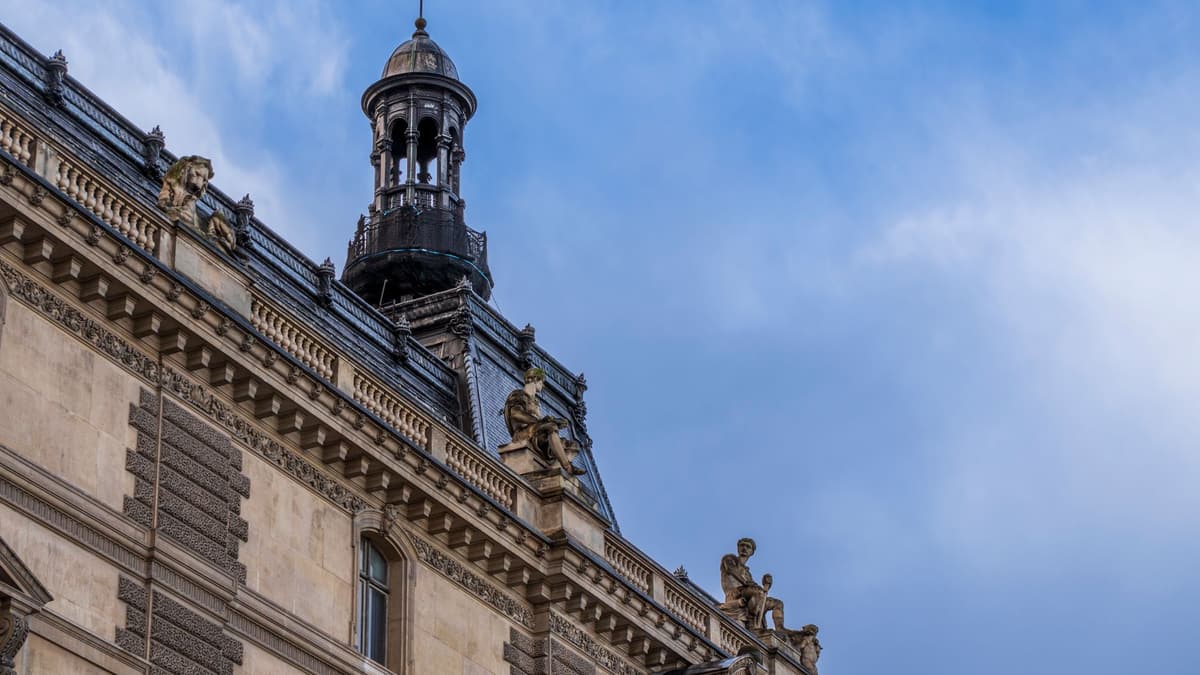
You finish at the Centre Pompidou, the great modern art museum that shocked Paris when it opened, a radical building turned inside out, with its pipes, ducts and escalators worn boldly on the outside in bright primary colors so that the vast interior could be left open for art. Step into the large sloping square in front of it, a gathering place for street performers, musicians and crowds, and take in the astonishing structure, a tangle of blue and green pipes, red escalators and glass tubes climbing the facade like a giant machine. Love it or hate it, it is impossible to ignore, and the view from its external escalators over the rooftops of Paris is one of the best in the city. The square below buzzes with life and performance. This bold, playful building makes a fitting end to a walk through a quarter where the ancient and the modern live so closely together. Find a spot on the sloping square and let the day settle.
Reaching the Pompidou, you have crossed the whole of the Marais on foot, from the grand city hall through hidden courtyards and the perfect royal square to the vibrant Jewish quarter and the boldest modern building in Paris. Walking it is the only way to truly know this quarter, because its magic lies in the hidden things, the unmarked passage, the carved doorway, the courtyard glimpsed through an open gate, none of which a bus or a rushed visit could ever reveal. On foot you feel how the centuries pile up here, medieval lanes and Renaissance mansions and radical modern art all within a few minutes of each other, and you notice the small pleasures, a baker's window, a busker under an arcade, a garden behind a wall. It is a quarter made for the curious and the slow. If you would like company for the next walk, open the Walk With Me map to find other walkers out exploring the city right now.
Todas las paradas de este paseo por Paris, France, en orden.
Unos 3,4 km, más o menos 48 minutos a paso tranquilo.
Esta ruta está narrada
Recorre la ciudad con la app y un narrador te contará la historia en cada parada de forma automática. La intro y las primeras 3 paradas son gratis, y puedes desbloquear todo el tour por un pago único de $5.99 para siempre.
Funciona con Garmin, Komoot, Strava, OS Maps y cualquier app de GPX.
September 2, 2026 · 9 min read
Descubre la mejor ruta a pie por la Royal Mile de Edimburgo, un recorrido autoguiado desde las alturas del castillo hasta el palacio.
August 29, 2026 · 10 min read
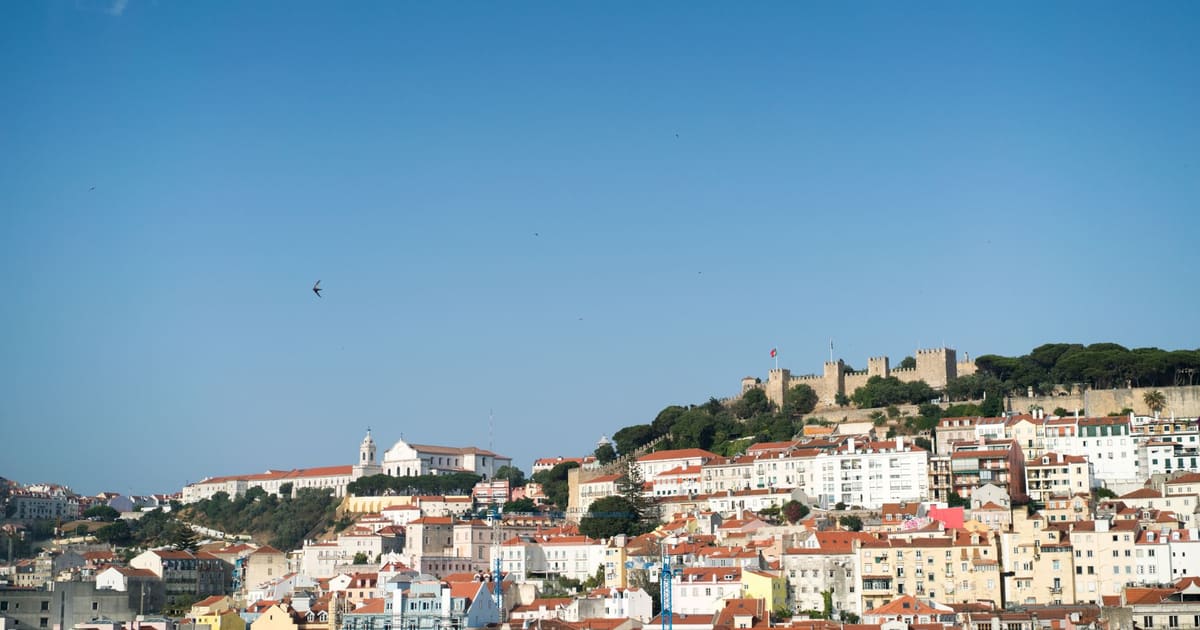
Descubre el alma de Lisboa en esta ruta autoguiada por la Alfama, con impresionantes vistas al castillo, catedrales históricas y callejones ocultos de fado.
August 28, 2026 · 9 min read
Una ruta autoguiada a pie por el Jordaan de Ámsterdam, pasando por la Westerkerk, la Casa de Ana Frank, patios ocultos y las Nueve Calles.