September 22, 2026 · 9 min read
Bologna Historic Center Walk
A self-guided Bologna walking tour under the porticoes from Piazza Maggiore to the leaning Two Towers, the old food market, and Santo Stefano.
553
September 22, 2026 · 10 min read
Tedd meg ezt a sétát másokkal a következő tervezett túrán.
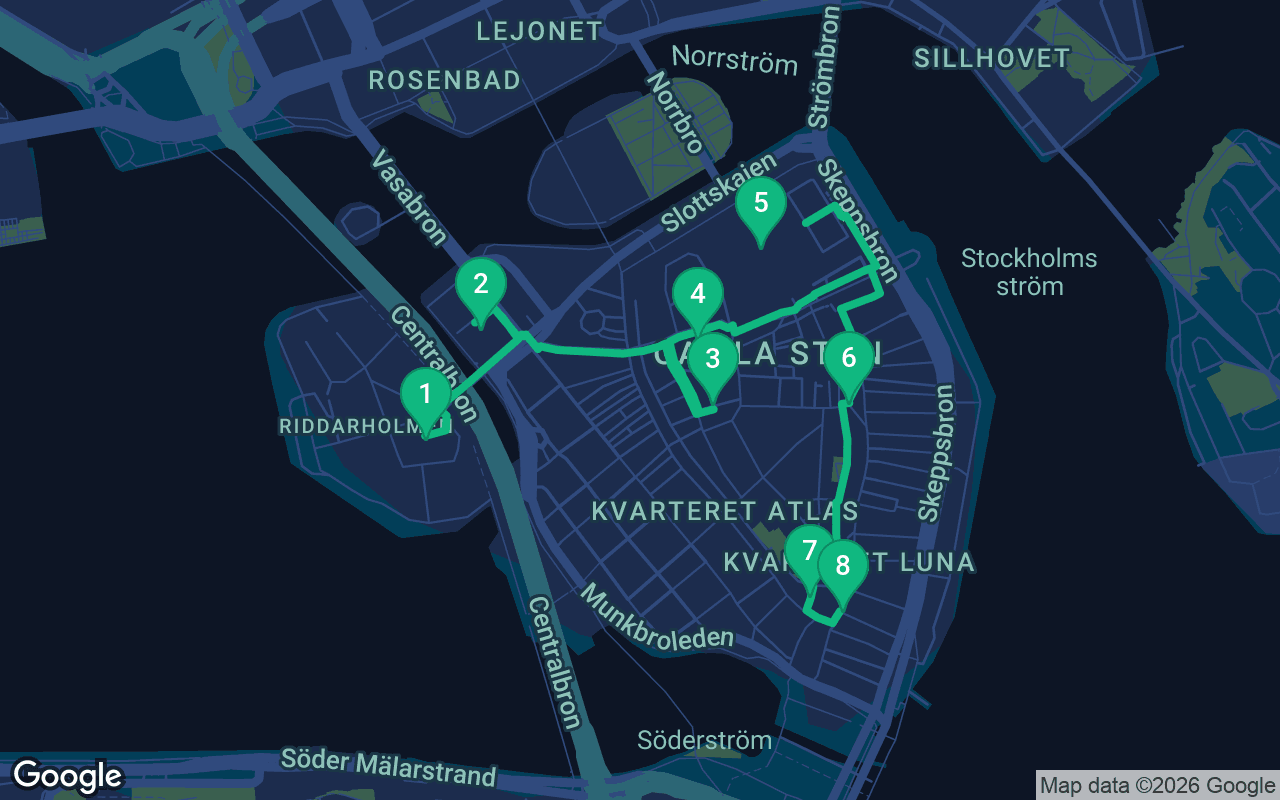
Körülbelül 1,9 km, nagyjából 28 perc kényelmes tempóban · 8 megálló
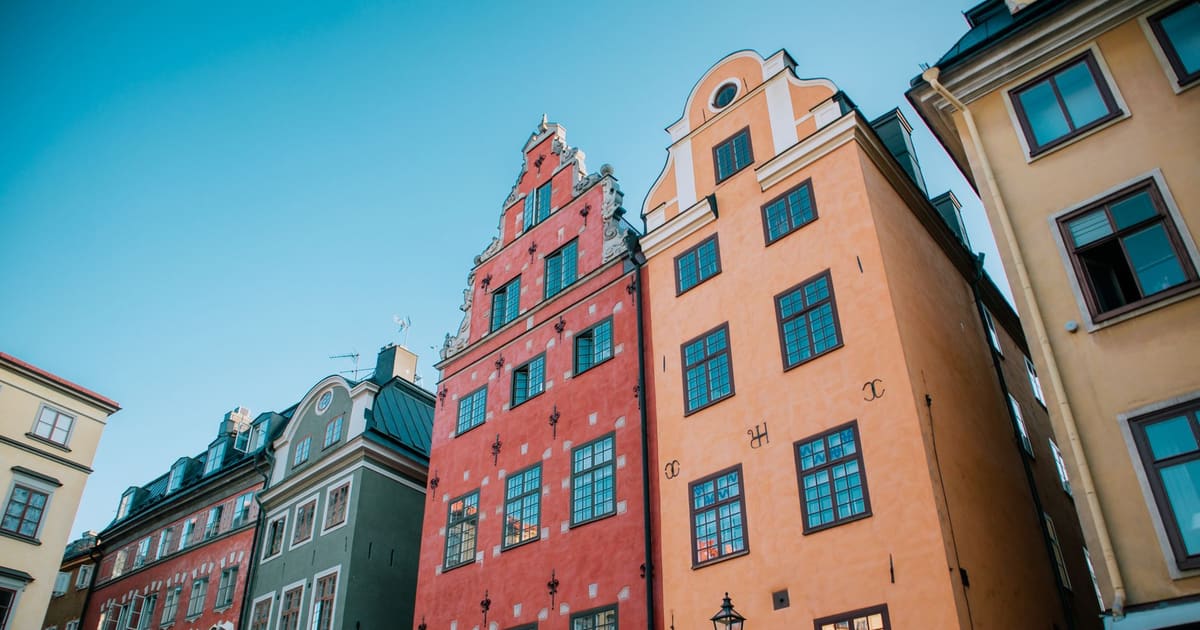
Stockholm is spread across fourteen islands, but the one that matters most is the smallest and oldest, a little knot of ochre and rust-red houses rising straight out of the water in the middle of the city. This is Gamla Stan, the old town, where the whole place began some eight hundred years ago, and this self-guided Stockholm walking tour keeps entirely to its cobbled lanes and hidden squares. It is one of the most compact self-guided walking tours you can do, barely two kilometers, yet it takes in a royal palace, a coronation church, the narrowest alley in the city, and the square where the town's darkest day unfolded. Wear shoes for cobbles, bring a layer for the northern air, and give the little island a slow morning.
Give yourself two or three hours at a gentle pace, more if you go inside the palace or the cathedral or stop for a long coffee, which the Swedes treat as a daily ritual they call fika. Gamla Stan is tiny and entirely walkable, but its lanes are cobbled and can be slippery in the wet, so wear comfortable shoes with a bit of grip. The weather this far north is changeable and often cool even in summer, so bring a layer and something for rain, and take comfort that a warm cafe is never more than a lane away. The island is small enough that you truly cannot get lost for long, so put the map away and let yourself wander down any alley that looks inviting, because the quiet back lanes are where the old town keeps its charm. It does fill up in the middle of the day, especially along the main drag, so an early start buys you the cobbles almost to yourself and much better photographs. And do stop for a cinnamon bun and a coffee somewhere along the way, since pausing is half the point.
Start on the tiny islet of Riddarholmen, just west of the main old town and joined to it by a short bridge, a quiet corner most day visitors never reach. Its landmark is the Riddarholmen Church, whose distinctive cast-iron latticework spire is one of the oldest buildings in Stockholm, begun as a monastery church seven hundred years ago. For centuries it served as the burial place of Swedish monarchs, and almost every king and queen since the Middle Ages lies here, which gives the plain brick church a heavy dignity. The islet around it is calm and grand, lined with old palaces that now hold courts and offices, and from its western edge you get a lovely open view across the water to the city hall and the lake beyond. It is a peaceful, almost solemn place to begin, away from the crowds. Take in the view and the spire, then cross back over the little bridge toward the main island, where a grand pale palace stands guard at the entrance to the old town.
Just across the bridge, at the northwestern edge of the old town, stands the Riddarhuset, the House of Nobility, one of the most beautiful buildings in the city and often overlooked. Built in the seventeenth century, when Sweden was a great power, it was the meeting place of the Swedish nobility, and its elegant pink and grey facade with a steep copper roof is a fine piece of northern baroque. Inside, the great hall is hung with thousands of small painted coats of arms, one for every noble family, a dizzying record of the old aristocracy. Stand in the little square in front and take in the symmetry of it, with statues along the roofline and a bronze king in the garden. It is a reminder of the era when Stockholm ran an empire around the Baltic. The building marks the start of the old town proper, so from here you plunge into the cobbled lanes, following them eastward and inward toward the heart of the island and its main square.
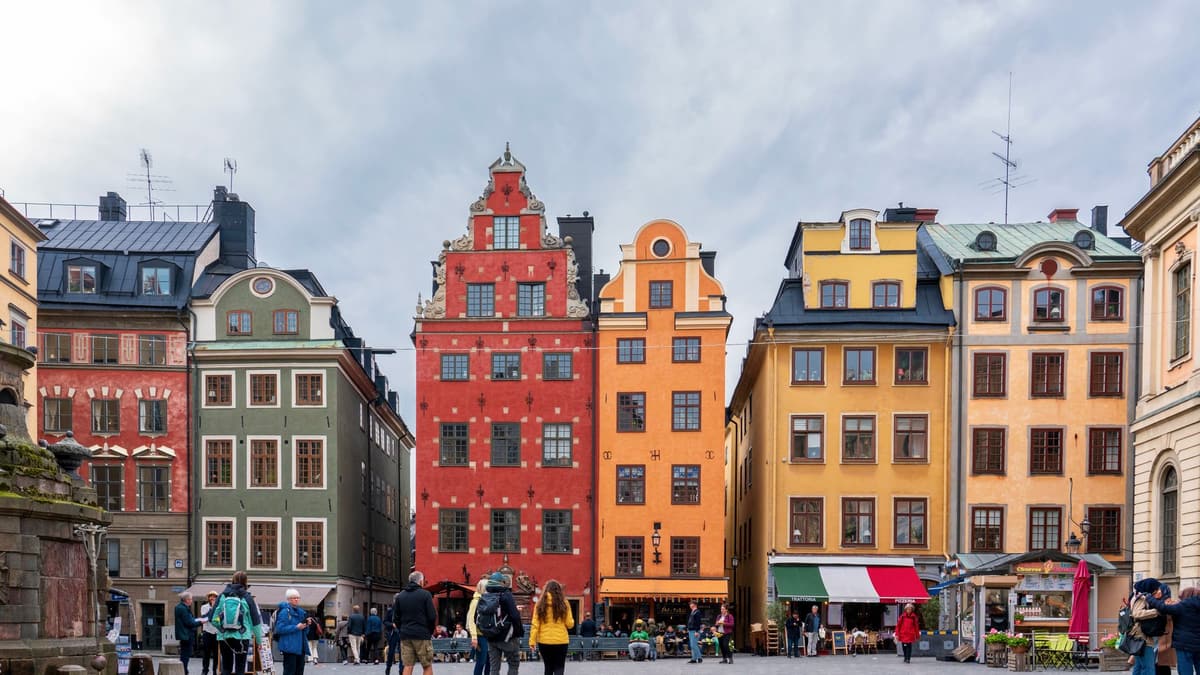
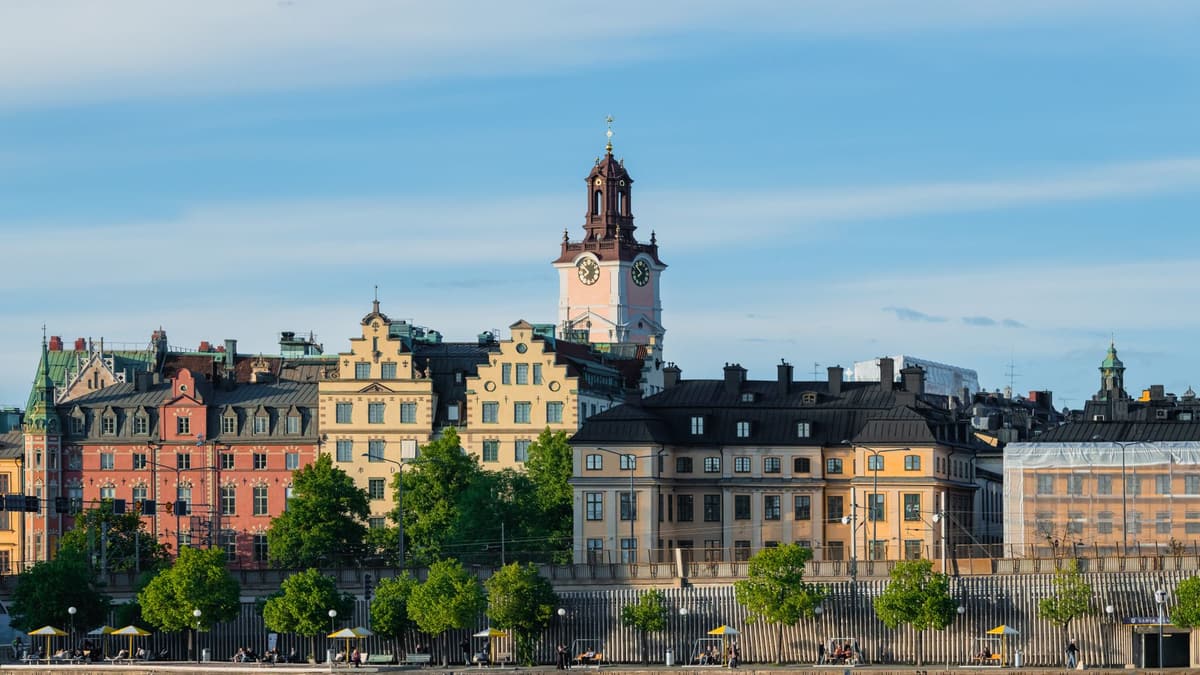 You arrive at Stortorget, the great square at the very center of Gamla Stan and the oldest square in Stockholm, ringed by tall, narrow merchants' houses painted in warm shades of ochre, red, and gold. It is the postcard image of the city, and the row of gabled houses on its eastern side is photographed endlessly. Pretty as it is, the square holds a dark memory, for this was the site of the Stockholm Bloodbath in 1520, when a Danish king had scores of Swedish nobles executed here in a single day, an atrocity that helped spark the rebellion that made Sweden independent. Look for the cannonball said to be lodged in one of the facades, a relic of those violent years. Today the square is all cafes and the excellent Nobel Prize Museum, housed in the old stock exchange on its north side. Sit for a while with a coffee and take in the colored houses, then leave by the short lane on the northern side toward the great church whose tower rises just beyond the rooftops.
A few steps from the square stands Storkyrkan, the Stockholm Cathedral, the oldest church in the old town and the spiritual heart of the city. Its plain exterior hides a soaring brick-vaulted interior that has seen royal weddings and coronations for centuries, and it remains the coronation church of the Swedish crown. Inside are two extraordinary treasures. One is a huge and dramatic medieval wooden sculpture of Saint George and the Dragon, carved more than five hundred years ago, so lifelike and detailed it stops you in your tracks. The other is a strange and famous old painting showing a sky full of glowing halos over Stockholm, the oldest known depiction of the city. The cathedral sits right beside the Royal Palace, the two great institutions of church and crown standing shoulder to shoulder as they have for centuries. Step inside if it is open, then continue the short way to the vast palace next door, whose long facade dominates this side of the island.
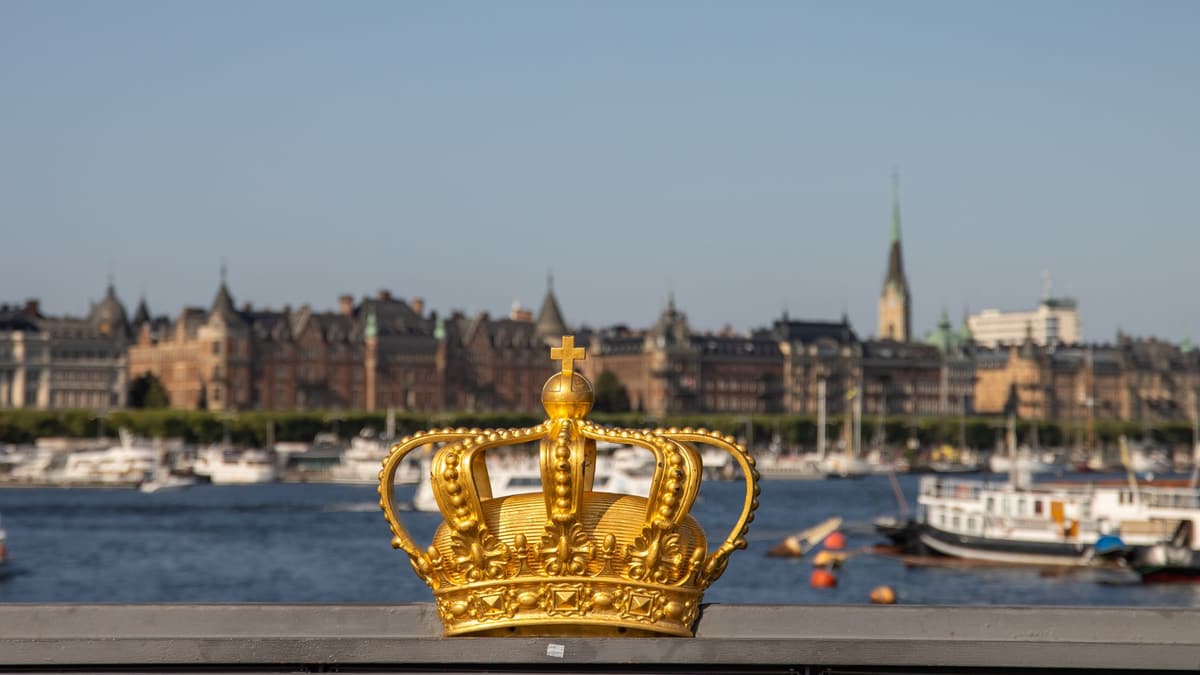 The Royal Palace, Kungliga slottet, is one of the largest palaces in the world still in use by a head of state, a huge baroque block of over a thousand rooms wrapped around a central courtyard, and it is the official residence of the Swedish monarch. After the old castle burned down three hundred years ago, this grand Italian-style palace rose in its place, and its severe, dignified facades line the northern and eastern edges of the old town. If your timing is right, watch the changing of the guard in the outer courtyard, a ceremony with music and marching that draws a crowd around midday. Several parts are open to visitors, including the lavish state apartments, the treasury with the crown jewels deep in the cellars, and an armory full of royal carriages and armor. Even from the outside the scale is impressive, and the terrace on the water side gives fine views across the harbor. Walk along the palace front, then head down into the lanes on its southern side, dropping back into the tangle of the old town toward a small square with a famous statue.
Tucked in the eastern lanes is Köpmantorget, a small, quiet square whose name means the Merchants' Square, once part of the main road into the medieval town. Its centerpiece is a striking bronze statue of Saint George slaying the dragon, a copy of the wonderful wooden carving you saw inside the cathedral, here rendered life-size in metal and set dramatically against the old buildings. The rearing horse and the writhing dragon make it one of the most photogenic corners of the island, and the little square is usually calm, a world away from the busier lanes nearby. Around here the streets are at their most medieval, narrow and crooked and lined with old iron shop signs and lanterns. This eastern edge of the old town has always been the merchants' quarter, close to the water and the trade that made the city rich. Take a moment with the statue, then follow the lanes southward and downhill, toward the narrowest and most secret passage in the whole city.
Mårten Trotzigs Gränd is the narrowest street in Stockholm, a stepped alley that squeezes down to barely ninety centimeters wide at its tightest, so slim you can touch both walls at once. Named after a German merchant who lived nearby in the sixteenth century, it is little more than a staircase between two buildings, dropping steeply down toward the water, and it is one of the most atmospheric corners of the old town. It was closed off for a long time and only reopened decades ago, and today it is a small pilgrimage for everyone who visits, so you may have to wait a moment for a clear photograph. Squeeze down its worn stone steps and feel the buildings lean in overhead, and you get a real sense of just how tight and crowded the medieval town once was. It is a tiny thing, but a genuine delight. At the bottom, the lanes open out toward a broad square that once stood on the very shore of the island.
 The walk ends at Järntorget, the Iron Square, one of the oldest squares in the city and the second great open space of the old town after Stortorget. Its name recalls the days when this was the center of the iron trade that was the foundation of Sweden's wealth, and the square once stood right on the water's edge before the land was extended. Today it is a calm, handsome space ringed by old buildings in soft yellows and pinks, with a fountain at its center and a couple of old cafes, including one of the oldest confectioners in the city, a fine place to end with a coffee and a pastry. It sits at the southern tip of the island, close to the bridge across to the southern districts and the locks. After the palace, the church, and the narrow lanes, this quiet old square is a fitting place to stop. Sit for a while by the fountain and let the little island settle in your mind, the whole storybook old town crossed on foot in a couple of easy, cobbled kilometers.
Gamla Stan is made for walking and almost hostile to anything else, a medieval tangle of lanes far too narrow and cobbled for cars, best unravelled slowly on foot. Walking is the only way to feel its real character, the sudden hidden courtyards, the iron signs and lanterns, the way a broad square gives onto an alley barely wider than your shoulders. The island is so small that getting lost is impossible for long, which frees you to follow whichever lane looks most tempting, and the quiet back streets are always better than the busy main one. Go early to beat the day crowds, wear shoes for the cobbles, and leave time to simply sit in a square with a coffee. If you would rather not wander alone, open the Walk With Me live map to see who else is out walking Stockholm, and share a cinnamon bun and a cobbled lane with a little company.
A(z) Stockholm, Sweden városban tett séta összes megállója, sorrendben.
Nagyjából 1,9 km, körülbelül 28 perc kényelmes tempóban.
Működik Garmin, Komoot, Strava, OS Maps és bármilyen GPX alkalmazással.
September 22, 2026 · 9 min read
A self-guided Bologna walking tour under the porticoes from Piazza Maggiore to the leaning Two Towers, the old food market, and Santo Stefano.
September 22, 2026 · 10 min read
A self-guided Ghent walking tour past the three towers and the medieval quays to the Gravensteen castle, through one of Belgium's finest old towns.
September 22, 2026 · 8 min read
A self-guided Granada walking tour from the cathedral quarter along the river Darro up to the Mirador de San Nicolas and its view of the Alhambra.