September 22, 2026 · 9 min read
Bologna Historic Center Walk
A self-guided Bologna walking tour under the porticoes from Piazza Maggiore to the leaning Two Towers, the old food market, and Santo Stefano.
553
September 22, 2026 · 10 min read
Do this walk with other people on the next scheduled tour.
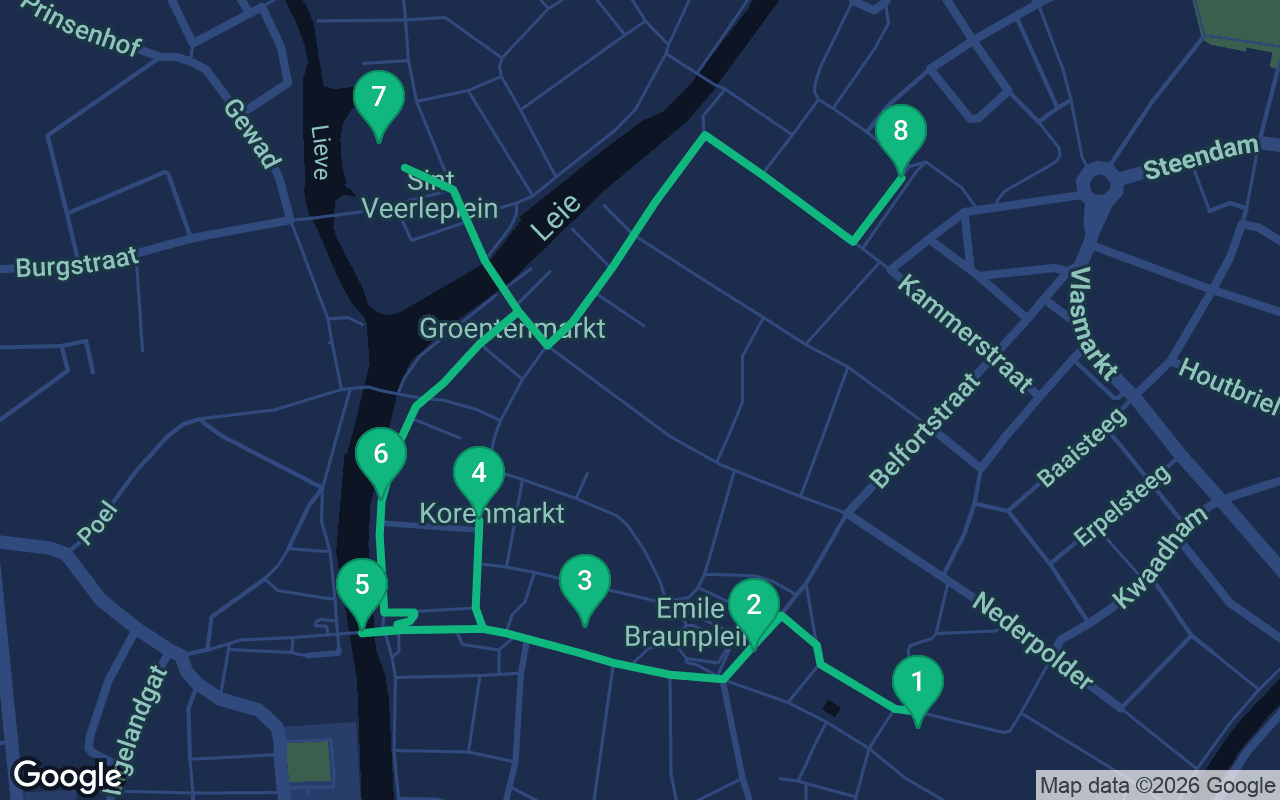
About 1.7 km, roughly 23 minutes at an easy pace · 8 stops
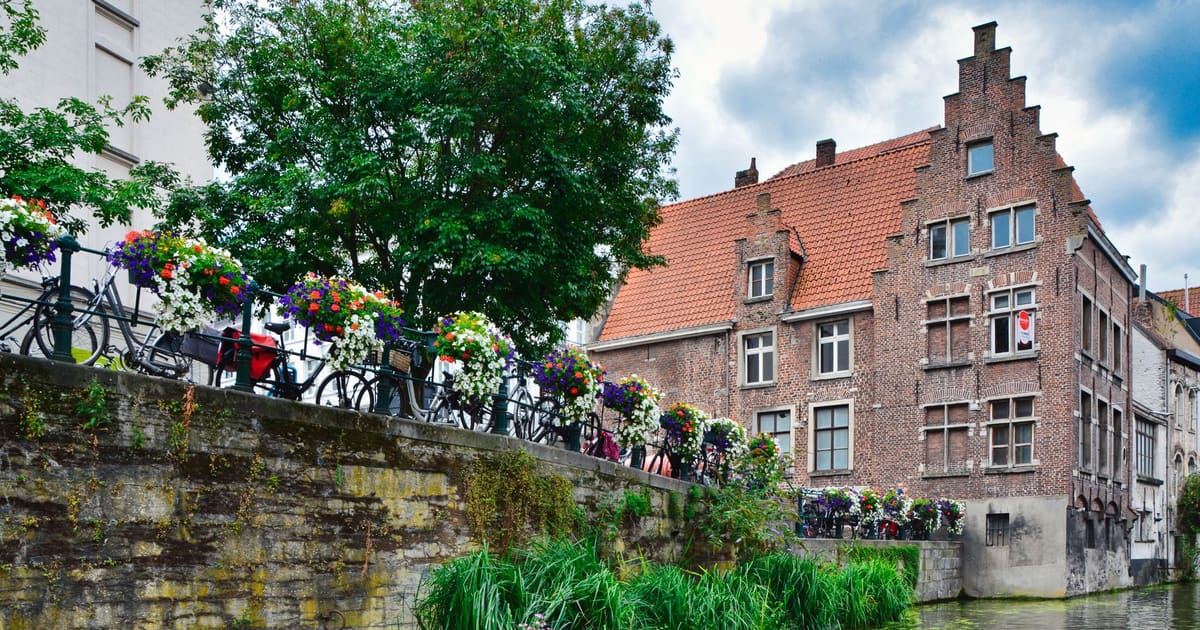
Ghent is the Belgian city that locals half-hope you will overlook in favor of its prettier neighbor down the road, because they rather like having it to themselves. It is every bit as beautiful as Bruges, with a skyline of medieval towers, a set of gorgeous canal-side quays, and a genuine moated castle, but it is bigger, livelier, and full of students, so it feels like a real working city rather than a museum. This self-guided Ghent walking tour threads the medieval core of it, and it is among the most rewarding self-guided walking tours in Flanders, under two kilometers and flat the whole way. Wear comfortable shoes for the cobbles, bring a layer for the changeable weather, and give the old town a slow half day.
Give yourself two or three hours at an easy pace, more if you climb the belfry or go inside the cathedral to see its famous altarpiece, and much more if you stop for the local beer and fries as you should. The old town is small, flat, and entirely walkable, but it is all cobbles, so wear comfortable shoes. Ghent weather is famously changeable, grey and drizzly one hour and bright the next, so bring a layer and something for rain and do not let a shower put you off, since the city looks wonderful under a moody sky. Everything on this route sits within a few hundred meters, and the three great towers act as landmarks you can always navigate by, so feel free to wander off down any tempting lane and find your way back. Try to see the quays at least once in the evening, when the whole medieval waterfront is beautifully floodlit and the reflections double it in the water. And do stop for the city's own pleasures as you go, a strong Belgian beer, a cone of fries with mayonnaise, and a local sweet called a cuberdon, all of which Ghent does very well.
Start at St. Bavo's Cathedral, the great Gothic church at the eastern end of the old town's spine of towers, a soaring building of grey stone that holds one of the most important paintings in the world. This is the home of the Ghent Altarpiece, the Adoration of the Mystic Lamb, painted by the Van Eyck brothers six hundred years ago, a huge and dazzling multi-panel work that helped launch the whole tradition of oil painting and is among the most stolen and coveted artworks in history. Even if you do not go in to see it, the cathedral itself is worth a slow look, its plain exterior giving onto a rich interior of chapels and tombs. It stands on one side of a handsome square, facing the belfry across the way, the first of the famous three towers that line up along the old town. Take in the cathedral, then turn to the tall tower rising just across the square, the symbol of the city's medieval power.
Across the square rises the Belfry of Ghent, a tall medieval bell tower that is the proud symbol of the city and, at over ninety meters, the tallest of its three great towers. For centuries it was the watchtower and treasure house of the townsfolk, its bells ringing out to mark the hours, warn of danger, and proclaim the rights and freedoms of the citizens, and a gilded dragon has guarded its summit for six hundred years. Inside are the great bells and the old town charters, and you can ride a lift most of the way up to a viewing gallery near the top for a wonderful panorama over the red roofs and the other towers. Along with the belfries of the region it is recognized as a world heritage site, a monument to the independence and wealth of the medieval Flemish cities. Look up at the dragon and the great clock, then continue westward along the line of towers, toward the third and final church of the trio, standing where the old market began.
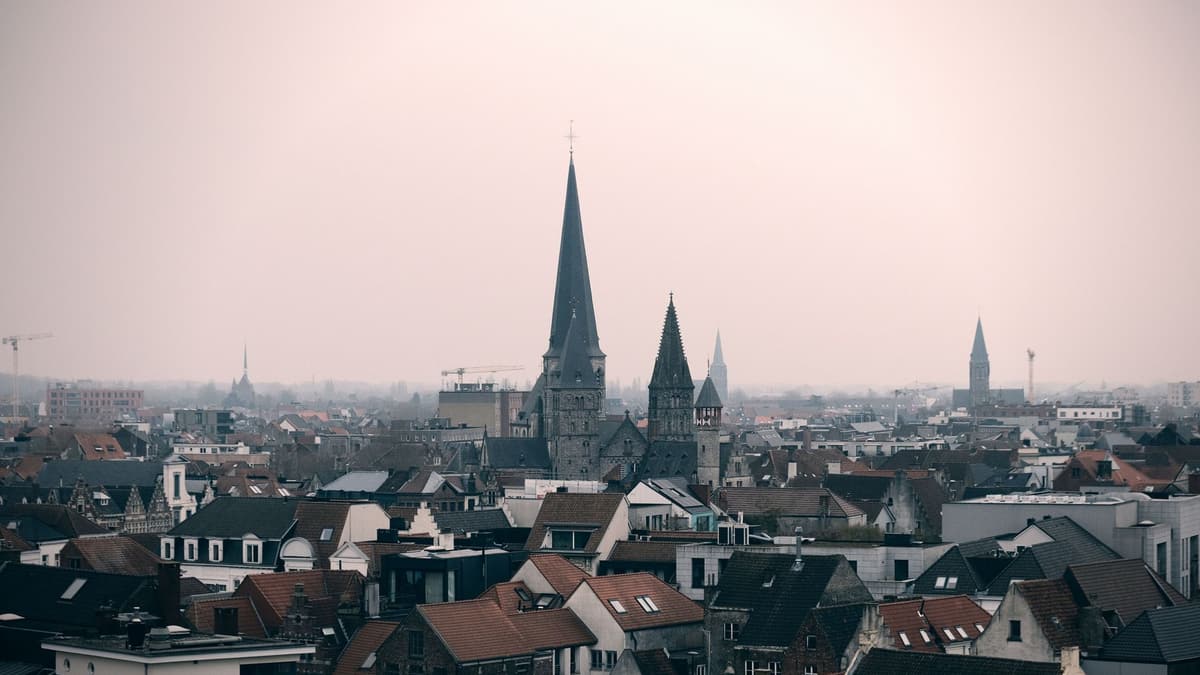 A little further along stands Saint Nicholas' Church, the third of the three towers and for many the most beautiful, a magnificent early Gothic church of blue-grey local stone with a lantern tower rising from its center. It was the church of the medieval merchants and guilds, built right beside the old market and the harbor, and its central tower once served the town as a watchtower before the belfry was raised. The three towers of Ghent, the cathedral, the belfry, and this church, line up almost in a row along the old town's spine, a skyline unlike any other, and you have now walked the length of it. The interior is high and pale and calm, worth a look inside if it is open. The church sits at the edge of the Korenmarkt, the old corn market that was the commercial heart of the town, which opens out just beyond it. Walk around the church and into the broad square beyond, the historic center of the city's trade.
The Korenmarkt, the old corn market, is the bustling central square of Ghent, a wide cobbled space that has been the commercial heart of the city for a thousand years, once piled with grain unloaded from the boats on the nearby river. Today it is ringed with cafes and old guild houses and busy with trams, cyclists, and people crossing the old town, a lively and very real hub rather than a preserved showpiece. Look for the old post office building with its ornate tower on one side, and the handsome facades all around. This is the practical center of the city, the point everything else radiates from, and a good place to feel the everyday life of Ghent. From here you head the short way toward the river, and to the bridge that offers the single best view in the whole city. Cross the square and take the street leading down to the water, where an arched stone bridge spans the old harbor.
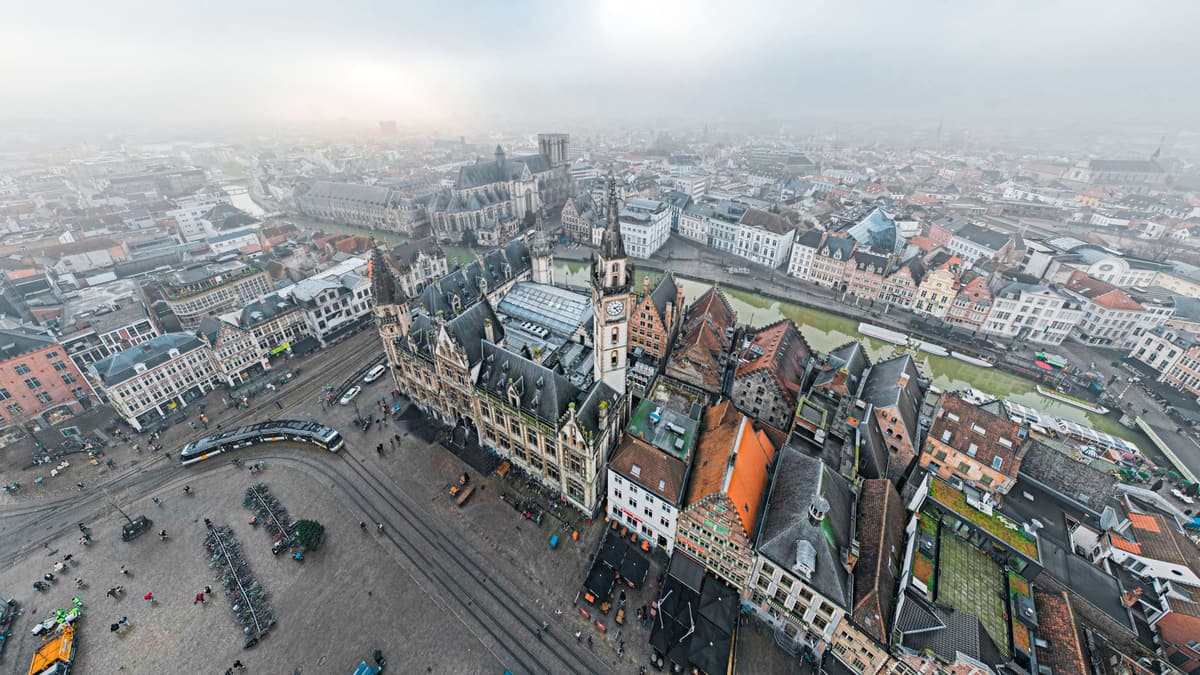 Saint Michael's Bridge, the Sint-Michielsbrug, is a graceful stone arch over the river Leie, and it is quite simply the best viewpoint in Ghent, the spot where every visitor stops to take the photograph that sums up the whole city. From the top of its gentle arch, you look along the water to the medieval quays lined with stepped-gable guild houses, with the three great towers rising in a perfect row behind them, all of it doubled in the river below. It is a genuinely stunning view, and it is worth crossing to the middle of the bridge and turning a slow circle to take it all in. Come back at dusk if you possibly can, when the whole scene is floodlit and glows on the black water. The bridge is named for the great church of Saint Michael standing at one end of it. This is the heart of the walk, so do not rush it. When you have taken your fill of the view, step down off the bridge to the quays you have been admiring, and walk right along the water's edge.
The Graslei and the Korenlei are the two quays that face each other across the river Leie in the very heart of the old harbor, and they are the postcard of Ghent, a magnificent row of guild houses and merchants' warehouses standing shoulder to shoulder along the water. These were the wharves of the medieval port, where boats unloaded grain and goods, and the beautiful stepped and pointed gable houses lining them, some going back the better part of eight hundred years, show off the wealth of the guilds that owned them. The Graslei on the eastern bank is the grander of the two and the most photographed spot in the city, especially in the low golden light of evening. It is a wonderful place to sit right down on the stone edge of the quay, as half of young Ghent does, with a drink and your legs over the water, and simply watch the boats and the reflections. Stroll the length of the quay and admire each ornate facade in turn, then follow the water northward, where a mighty grey castle rises straight out of the streets ahead.
The Gravensteen, the Castle of the Counts, is a genuine medieval fortress planted right in the middle of the city, a grim and magnificent pile of grey stone with battlements, a moat, and a great keep, looking exactly as a castle should. Built more than eight hundred years ago by a count of Flanders, partly to overawe his own unruly citizens, it has served as a fortress, a court, a prison, and even a factory over the centuries before being restored. You can go inside and walk the ramparts, climb the keep for a fine view over the rooftops, and see a slightly gruesome collection of old weapons and instruments of torture in its halls. Even from the outside it is a stirring sight, its walls rising sheer from the water of the moat in the heart of a busy modern city. Walk around its base to feel the scale of it, then head east into the tangle of lanes behind it, toward a large old square that has been a gathering place for the people of Ghent for centuries.
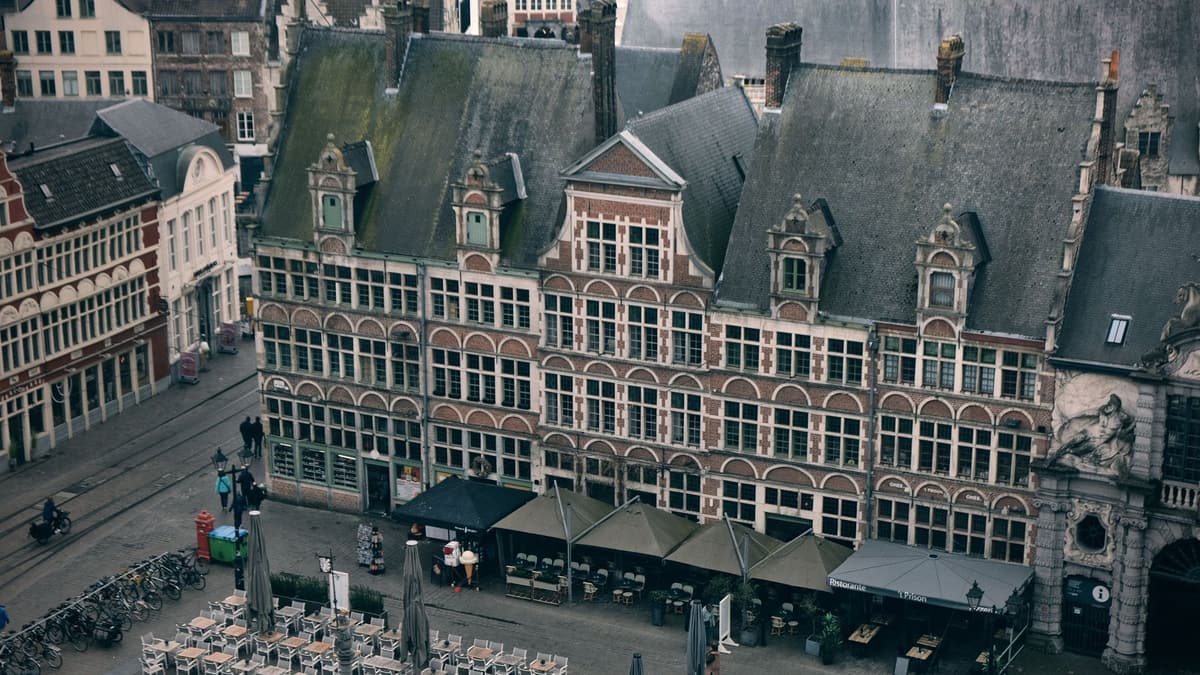 The walk ends at the Vrijdagmarkt, the Friday Market, one of the largest and oldest squares in the city and the traditional heart of public life in Ghent. For seven hundred years this has been the place where the townsfolk gathered, held their markets, staged their revolts, and swore in their counts, a square with a long and turbulent history of civic pride and rebellion. A statue of a medieval guild leader stands proudly at its center, and the square is ringed by old guild houses and lively cafe terraces, still busy with a market on certain days. On the way you will have passed through the Patershol, the atmospheric medieval quarter of tiny winding lanes behind the castle, now full of little restaurants. This lived-in, unpolished square is a fitting place to end, the real working heart of the city rather than a showpiece. Find a terrace, order a strong local beer, and let the old town settle. You have walked its towers, its quays, and its castle in a couple of easy, flat kilometers, and seen why the people of Ghent are quietly glad to keep it for themselves.
Ghent is a city best taken on foot, its medieval core compact, flat, and largely closed to cars, stitched together by cobbled lanes and canal-side quays that only give up their beauty at walking pace. Going slowly is the only way to find the hidden corners, the quiet lane in the Patershol, the reflection under a bridge, the gargoyle on a guild house, that give the city its character. The three towers stand over everything as landmarks, so you can wander freely without ever quite losing your way. See the quays once by day and once floodlit at night if you can, wear shoes for the cobbles, and leave plenty of time to sit by the water with a beer. If you would rather not wander alone, open the Walk With Me live map to see who else is out walking Ghent, and share a canal-side seat and a cold Belgian beer with a little company.
Every stop from this walk through Ghent, Belgium, in order.
About 1.7 km, roughly 23 minutes at an easy pace.
Works with Garmin, Komoot, Strava, OS Maps and any GPX app.
September 22, 2026 · 9 min read
A self-guided Bologna walking tour under the porticoes from Piazza Maggiore to the leaning Two Towers, the old food market, and Santo Stefano.
September 22, 2026 · 8 min read
A self-guided Granada walking tour from the cathedral quarter along the river Darro up to the Mirador de San Nicolas and its view of the Alhambra.
September 22, 2026 · 10 min read
A self-guided Lyon walking tour through the Renaissance lanes of Vieux Lyon and up the Fourviere hill to the basilica, the Roman theatres, and the view.