How Long Does It Take to Walk?
Pick a distance and a pace and get the walking time, plus roughly how many steps it works out to.
Walking time only, with no stops. Add time for crossings, hills and anywhere you will want to stand and look.
Example: walking 5 km at a brisk pace takes about 54 minutes.
How walking times are worked out
Walking time is distance divided by speed, so the whole answer rests on which speed you use. The figure quoted most often is 5 km/h, which is a comfortable average for an adult on flat ground with nothing to dodge.
Real walks are slower than the arithmetic. Road crossings, hills, uneven pavement, luggage, small children and stopping to look at things all take time that a distance calculation cannot see. For journey planning in a town centre, adding roughly 20% to the number below is closer to what you will experience.
Pace also varies far more between people than most guides admit. A brisk walker at 6.4 km/h covers a mile in about 15 minutes; a relaxed walker at 3.2 km/h takes 30. That is the difference between catching a train and missing it.
time = distance / speed
How long does it take to walk a kilometre, and a mile?
At an average pace of 5 km/h, one kilometre takes about 12 minutes and one mile takes about 19. At a brisk 5.6 km/h it is closer to 11 minutes and 17 minutes. Those are the two figures worth memorising, because almost every walking journey you plan is some multiple of them.
The average matters more than it sounds. A relaxed walker at 3.2 km/h takes nearly 19 minutes to cover the kilometre a fast walker does in under 10. Over a 5 km route that gap becomes nearly 50 minutes, which is the difference between arriving early and missing the thing entirely.
So the first question is not how far you are going. It is honestly, how fast do you walk.
Walking time by distance
The table covers the distances people actually plan around, from a short walk to the shops up to a full marathon on foot. Each column is one of the four pace bands, with the speed given in both km/h and mph.
| Distance | Strolling (3.2 km/h / 2.0 mph) | Easy (4.8 km/h / 3.0 mph) | Brisk (5.6 km/h / 3.5 mph) | Fast (6.4 km/h / 4.0 mph) |
|---|---|---|---|---|
| 0.5 km (0.31 mi) | 9 min | 6 min | 5 min | 5 min |
| 1 km (0.62 mi) | 19 min | 13 min | 11 min | 9 min |
| 2 km (1.24 mi) | 38 min | 25 min | 21 min | 19 min |
| 3 km (1.86 mi) | 56 min | 38 min | 32 min | 28 min |
| 5 km (3.11 mi) | 1 h 34 min | 1 h 3 min | 54 min | 47 min |
| 8 km (4.97 mi) | 2 h 30 min | 1 h 40 min | 1 h 26 min | 1 h 15 min |
| 10 km (6.21 mi) | 3 h 8 min | 2 h 5 min | 1 h 47 min | 1 h 34 min |
| 15 km (9.32 mi) | 4 h 41 min | 3 h 8 min | 2 h 41 min | 2 h 21 min |
| 20 km (12.43 mi) | 6 h 15 min | 4 h 10 min | 3 h 34 min | 3 h 8 min |
| 21.1 km (13.11 mi) | 6 h 36 min | 4 h 24 min | 3 h 46 min | 3 h 18 min |
| 42.2 km (26.22 mi) | 13 h 11 min | 8 h 48 min | 7 h 32 min | 6 h 36 min |
Walking time only, on level ground, with no stops. Real journeys run longer.
Walking time in miles
The same conversion for anyone thinking in miles, including the half marathon at 13.1 and the marathon at 26.2, both of which a surprising number of people walk rather than run.
| Distance | Strolling (3.2 km/h / 2.0 mph) | Easy (4.8 km/h / 3.0 mph) | Brisk (5.6 km/h / 3.5 mph) | Fast (6.4 km/h / 4.0 mph) |
|---|---|---|---|---|
| 0.5 mi (0.80 km) | 15 min | 10 min | 9 min | 8 min |
| 1 mi (1.61 km) | 30 min | 20 min | 17 min | 15 min |
| 2 mi (3.22 km) | 1 h | 40 min | 34 min | 30 min |
| 3 mi (4.83 km) | 1 h 31 min | 1 h | 52 min | 45 min |
| 5 mi (8.05 km) | 2 h 31 min | 1 h 41 min | 1 h 26 min | 1 h 15 min |
| 10 mi (16.09 km) | 5 h 2 min | 3 h 21 min | 2 h 52 min | 2 h 31 min |
| 13.1 mi (21.08 km) | 6 h 35 min | 4 h 24 min | 3 h 46 min | 3 h 18 min |
| 26.2 mi (42.16 km) | 13 h 11 min | 8 h 47 min | 7 h 32 min | 6 h 35 min |
Walking time only, on level ground, with no stops. Real journeys run longer.
What counts as a normal walking pace
Around 5 km/h, or a little over 3 mph, is the usual answer for an adult on flat ground with nothing in the way. It is a comfortable pace you could hold for an hour without thinking about it.
Brisk means something more specific. It is usually put at 5.6 km/h, or 3.5 mph, and the practical test is that you can still hold a conversation in full sentences but would struggle to sing. When public health guidance says get 150 minutes of moderate activity a week and mentions walking, this is the pace it means.
Below that, a stroll at around 3.2 km/h is the pace of window shopping, walking with a toddler, or any walk whose point is the company rather than the distance. Above it, a fast walk at 6.4 km/h is close to the speed at which most people start wanting to break into a jog instead.
How long does it take to walk 10,000 steps?
Around 86 minutes at an average pace, or about 77 minutes if you keep it brisk throughout. Most people who set out to hit 10,000 steps in one go are surprised by that, because the target is usually described in steps rather than in the hour and a half it takes.
In practice a daily step target is easier to reach split across a day than walked in one block, which is also better for you than one long walk and eight hours of sitting.
| Steps | Distance | At 5.6 km/h | At 5 km/h |
|---|---|---|---|
| 2,500 | 1.8 km (1.12 mi) | 19 min | 22 min |
| 5,000 | 3.6 km (2.24 mi) | 39 min | 43 min |
| 7,500 | 5.4 km (3.36 mi) | 58 min | 1 h 5 min |
| 10,000 | 7.2 km (4.47 mi) | 1 h 17 min | 1 h 26 min |
| 15,000 | 10.8 km (6.71 mi) | 1 h 56 min | 2 h 10 min |
Uses an average step length of 72 cm rather than a height-derived one, which is the same assumption the calculator above makes.
Why real walks take longer than the chart
Every number above is pure walking time on level ground with nothing in your way, which describes almost no real journey. Road crossings and pedestrian lights are the usual culprits: a town centre route can easily lose five minutes to waiting alone.
Then there are hills, which cost more time going up than they give back coming down, uneven or wet pavement, stairs, station tunnels, and the sheer friction of moving through a crowd at lunchtime. Add a shop you needed to stop at and the arithmetic is well behind you.
For planning a real journey in a built-up area, add roughly 20% to the figure in the table. For a countryside route with stiles, gates and gradients, add more. If you are walking somewhere you have to arrive on time, work from the slower of the two paces you might realistically hold.
What slows you down
Company, cheerfully. A group walks at the pace of its slowest member and stops more often, and if the point of the walk is the conversation then that is the walk working as intended rather than failing. Just do not plan a group walk on solo timings.
Carrying anything heavy costs speed, as do bad weather, wind, heat, and any surface that is not firm and flat. Walking pace also declines gradually with age, and it drops sharply for anyone managing an injury or a long-term condition, which is worth remembering before you publish a walk and call it easy.
The honest way to plan is to time yourself over a route you know well and work out your own real pace, stops included. That number will be slower than the chart and far more useful than it.
What is Walk With Me App?
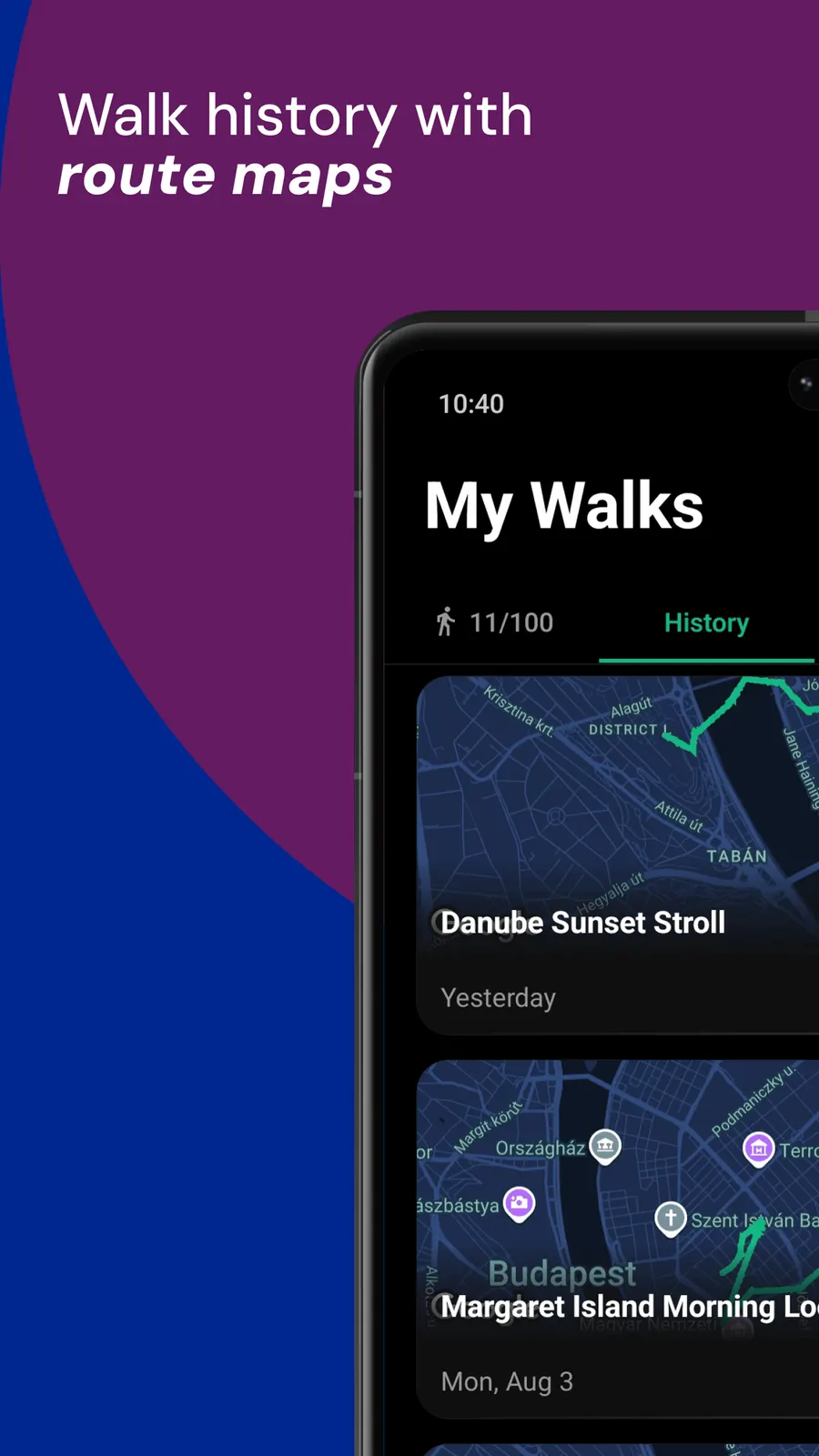
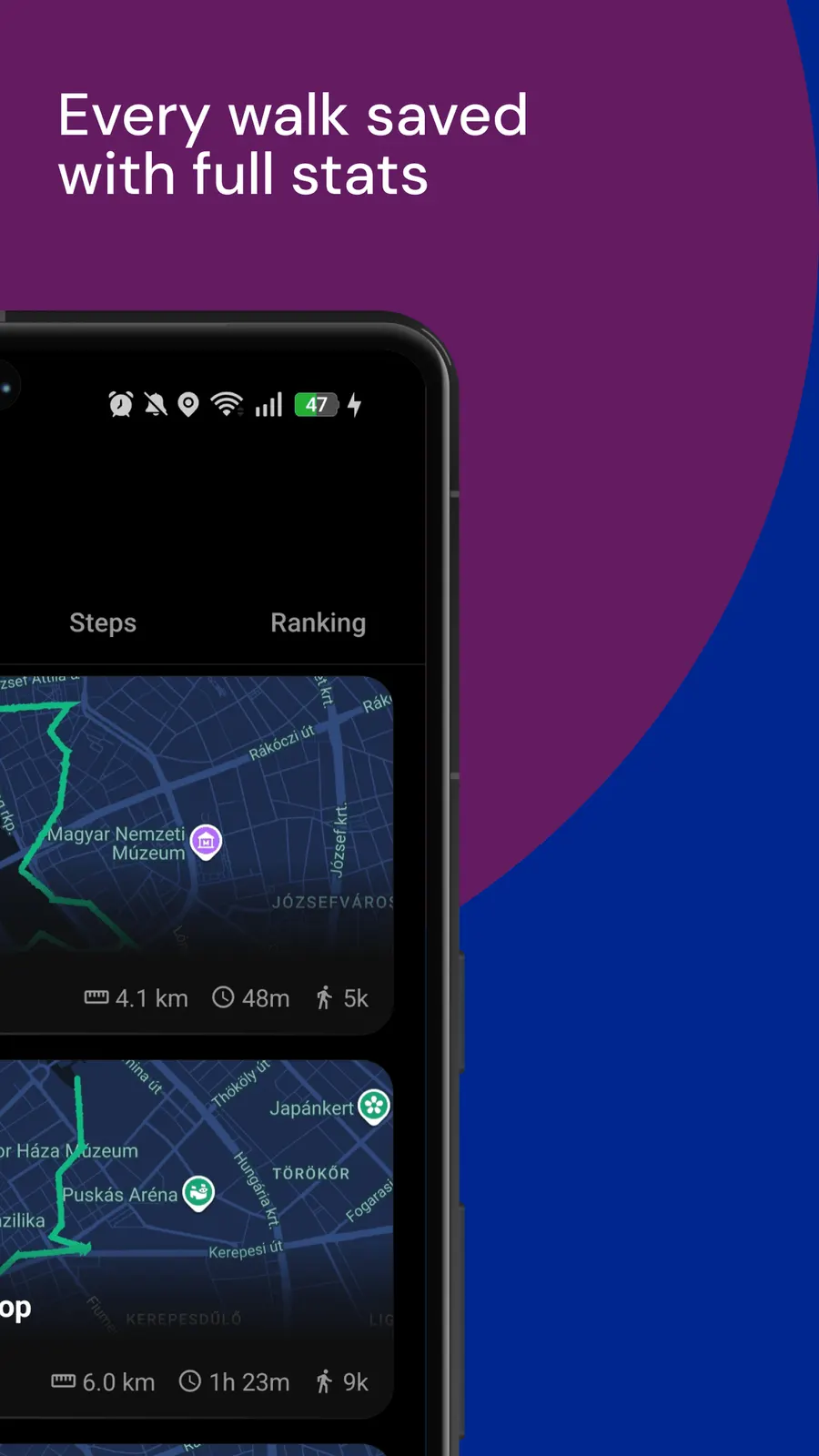
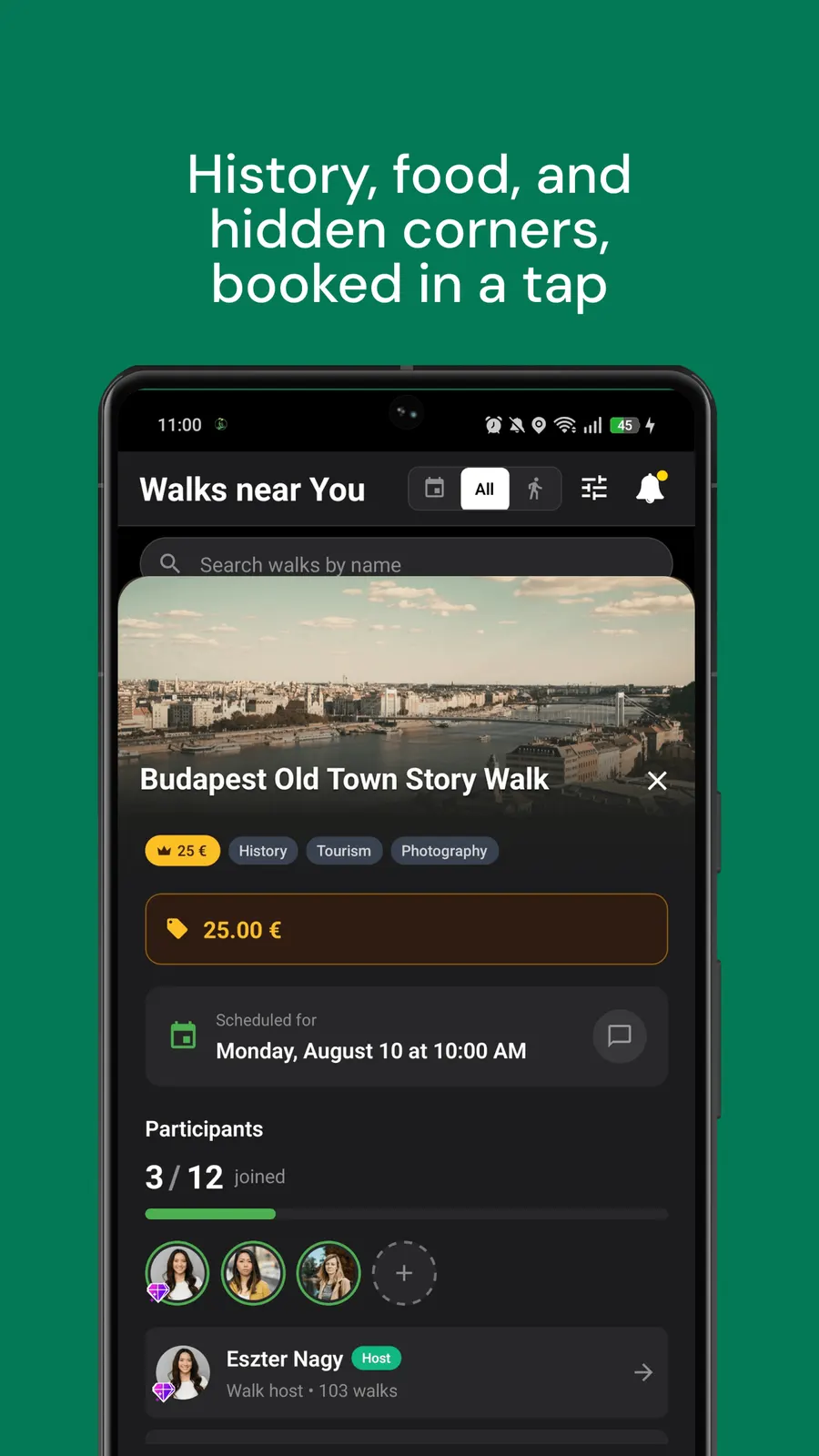
Not just tracking steps, A walking community
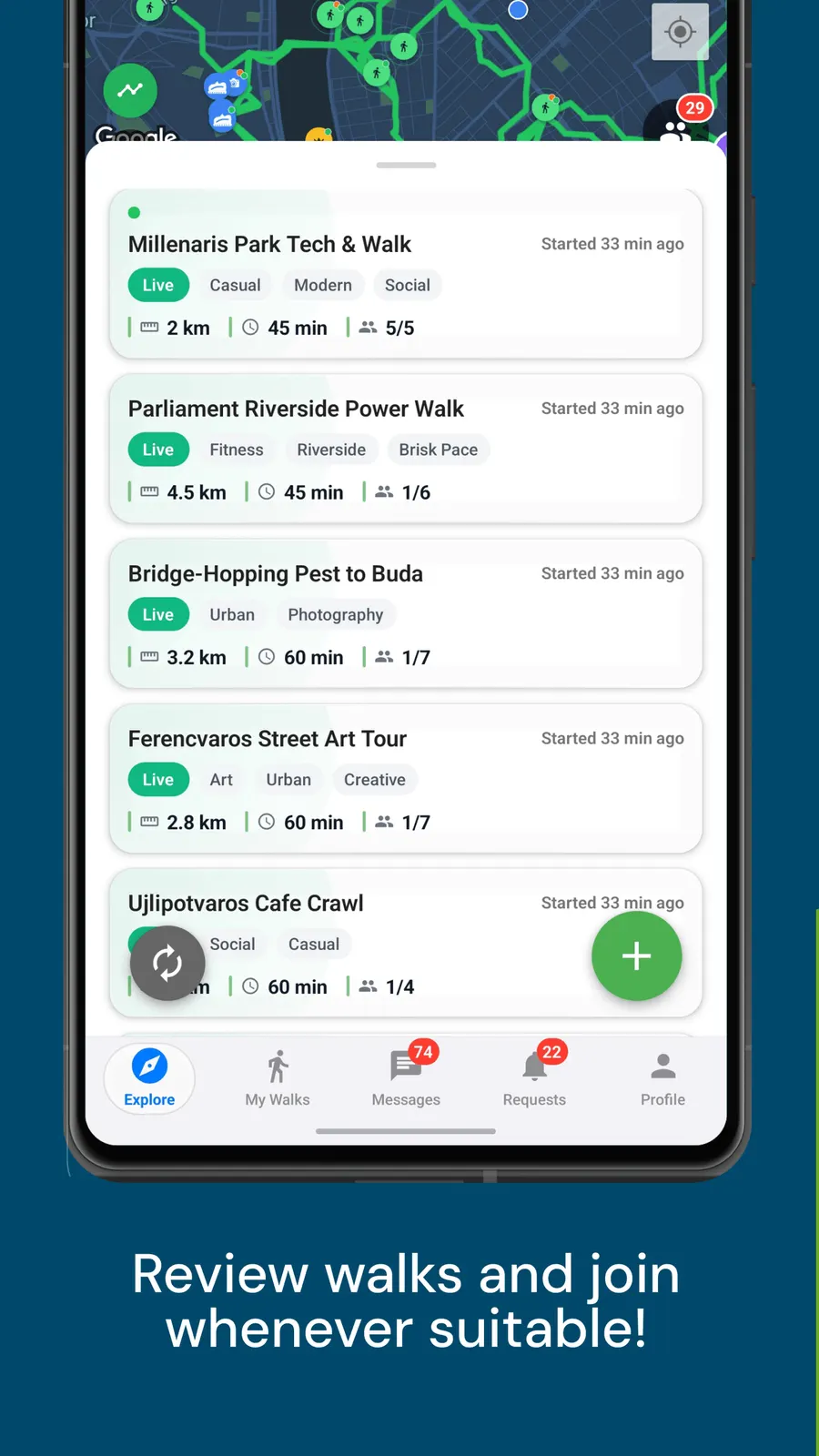
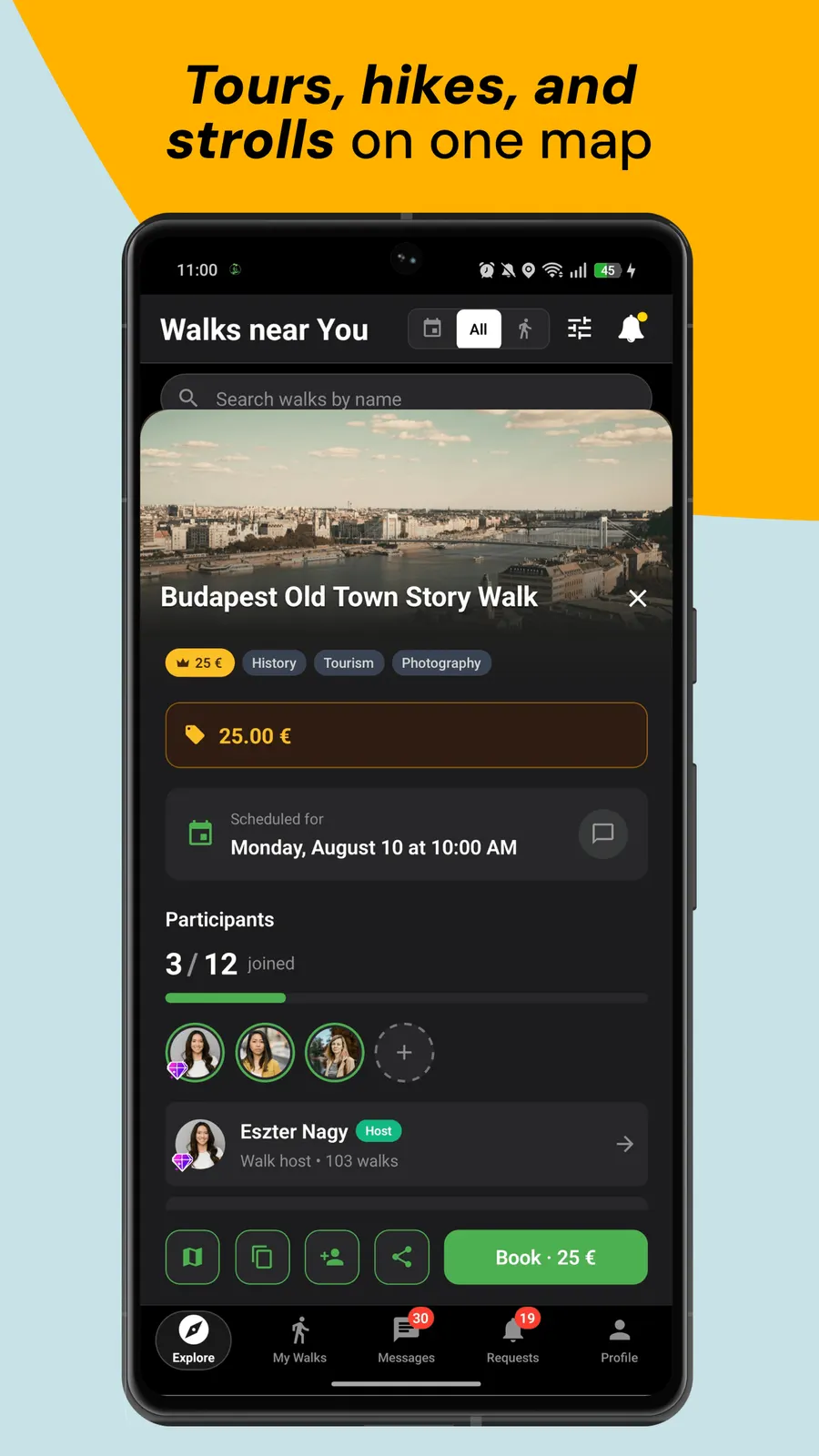
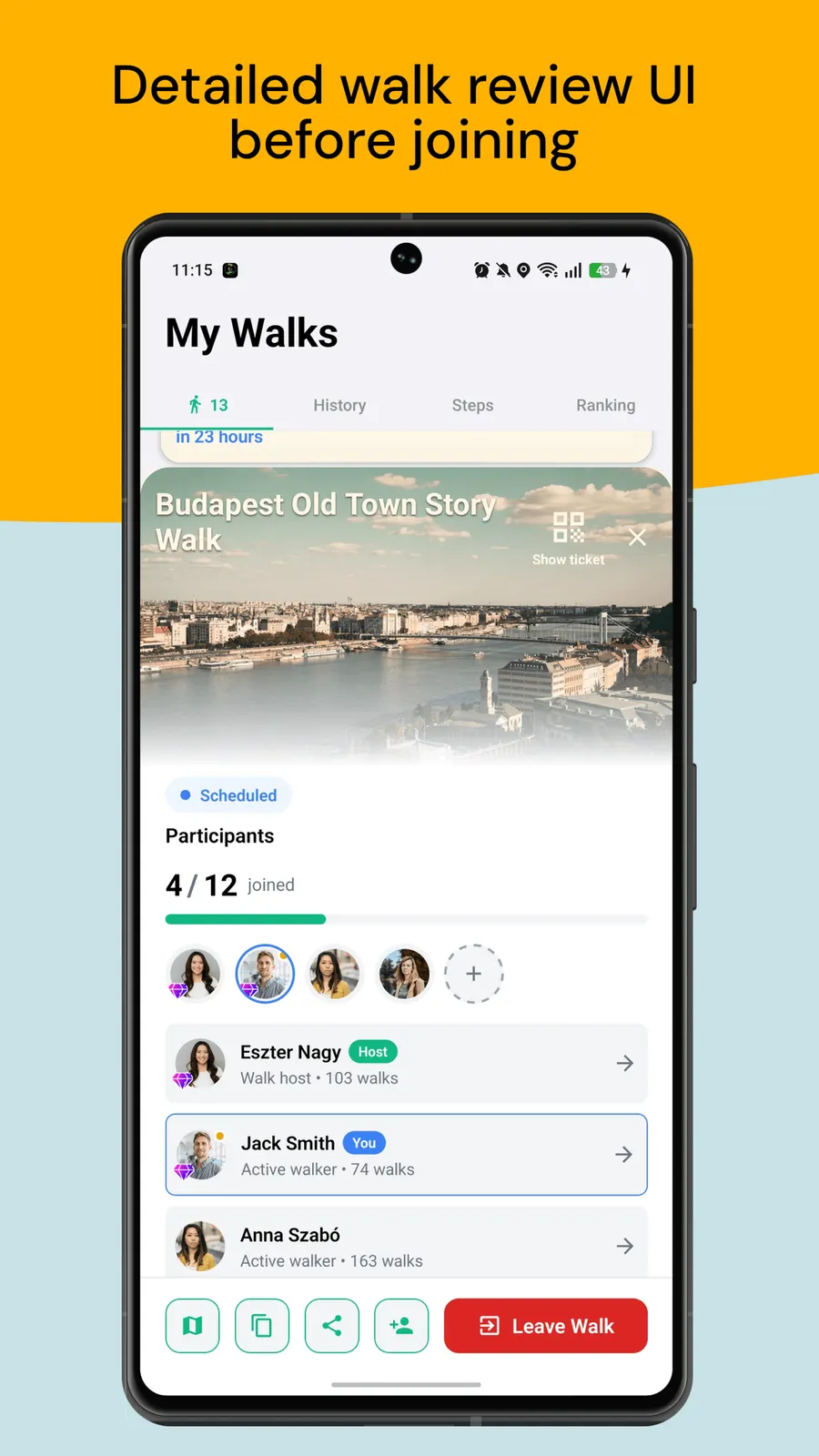
Walk With Me is your all-in-one walking app that lets you find walkers in your area and walk together.
- Step and distance count
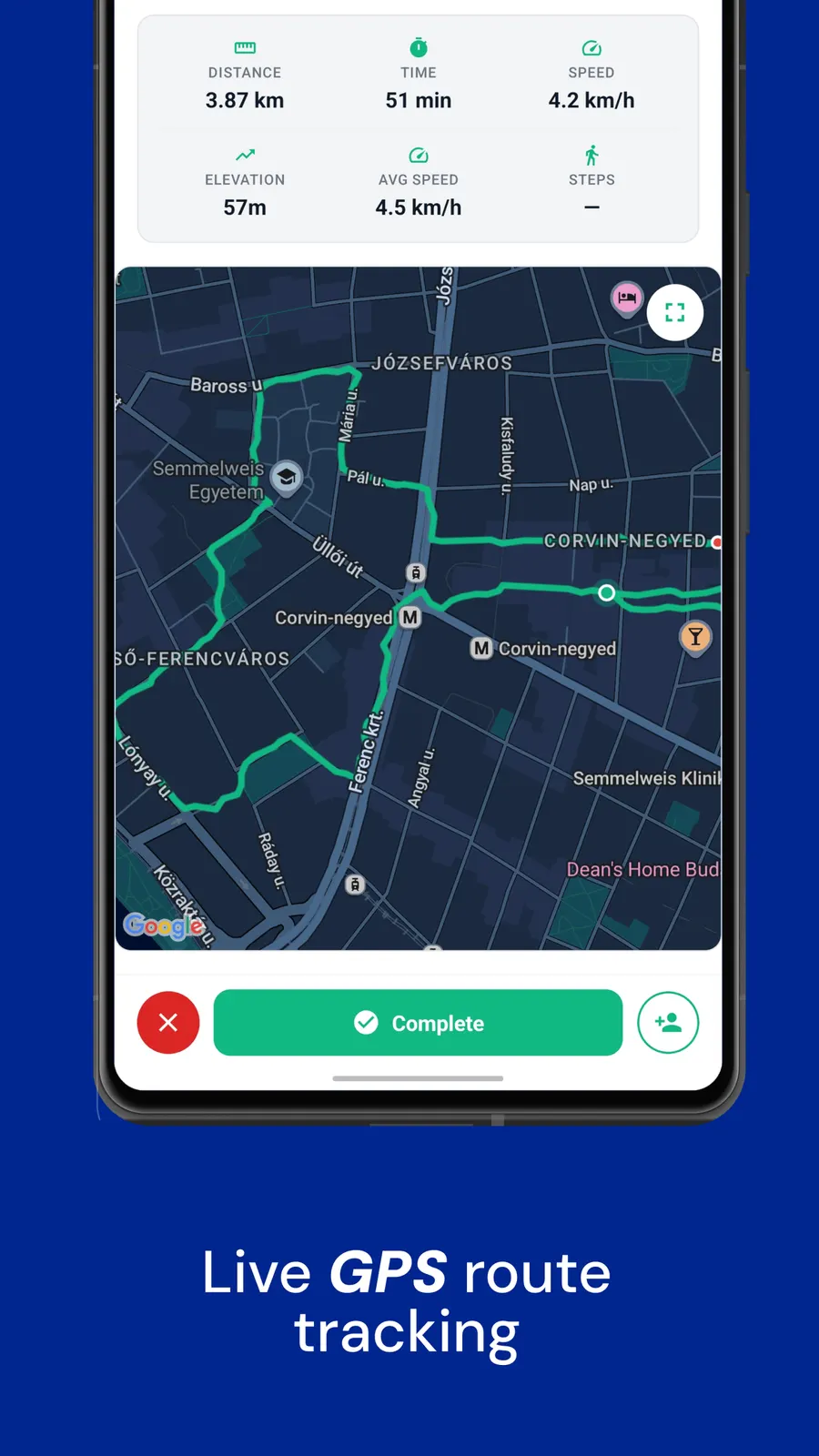
- Your route drawn on a map
- Calories burned
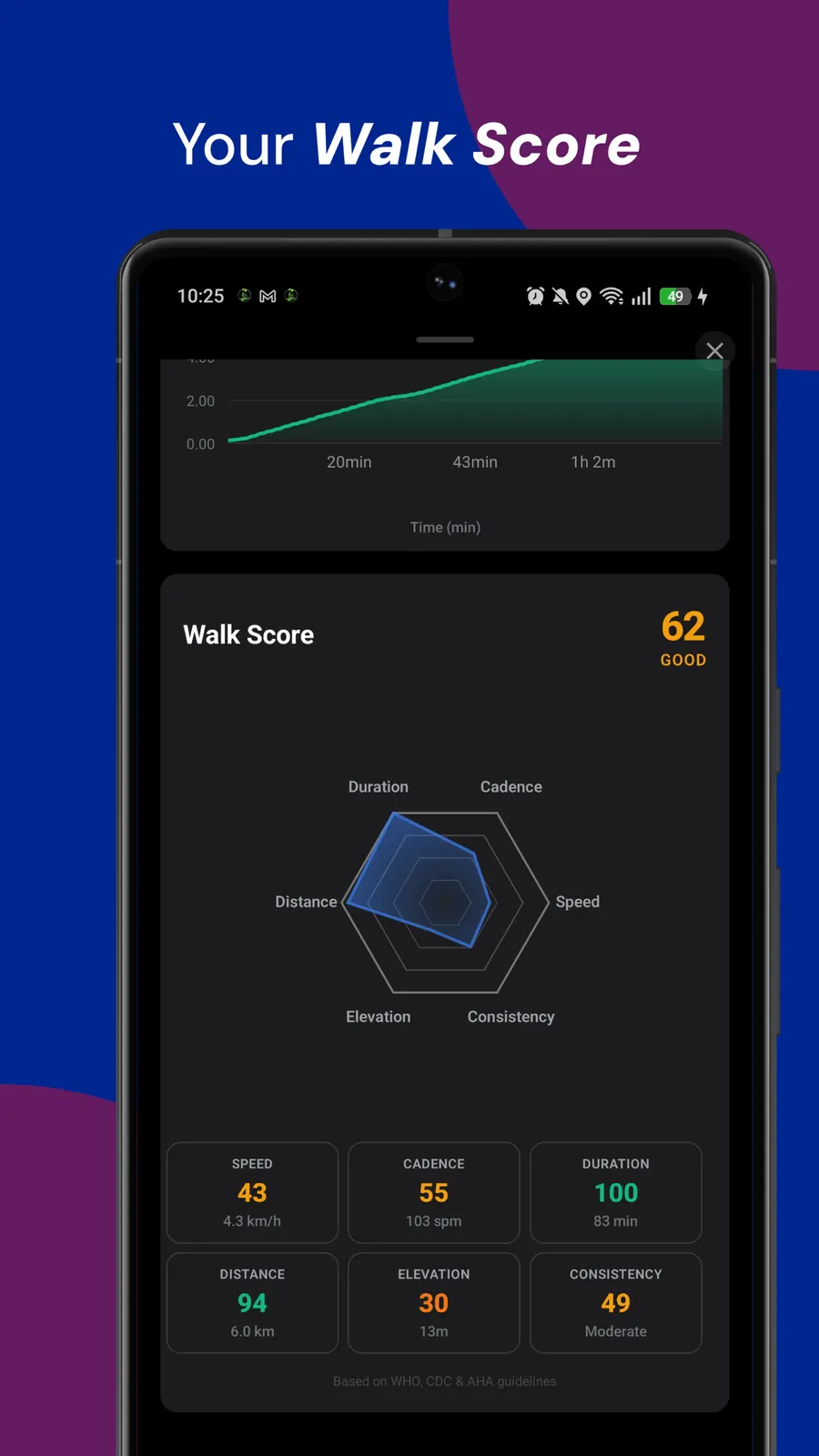
- Pace and elevation
- Every walk kept in your history
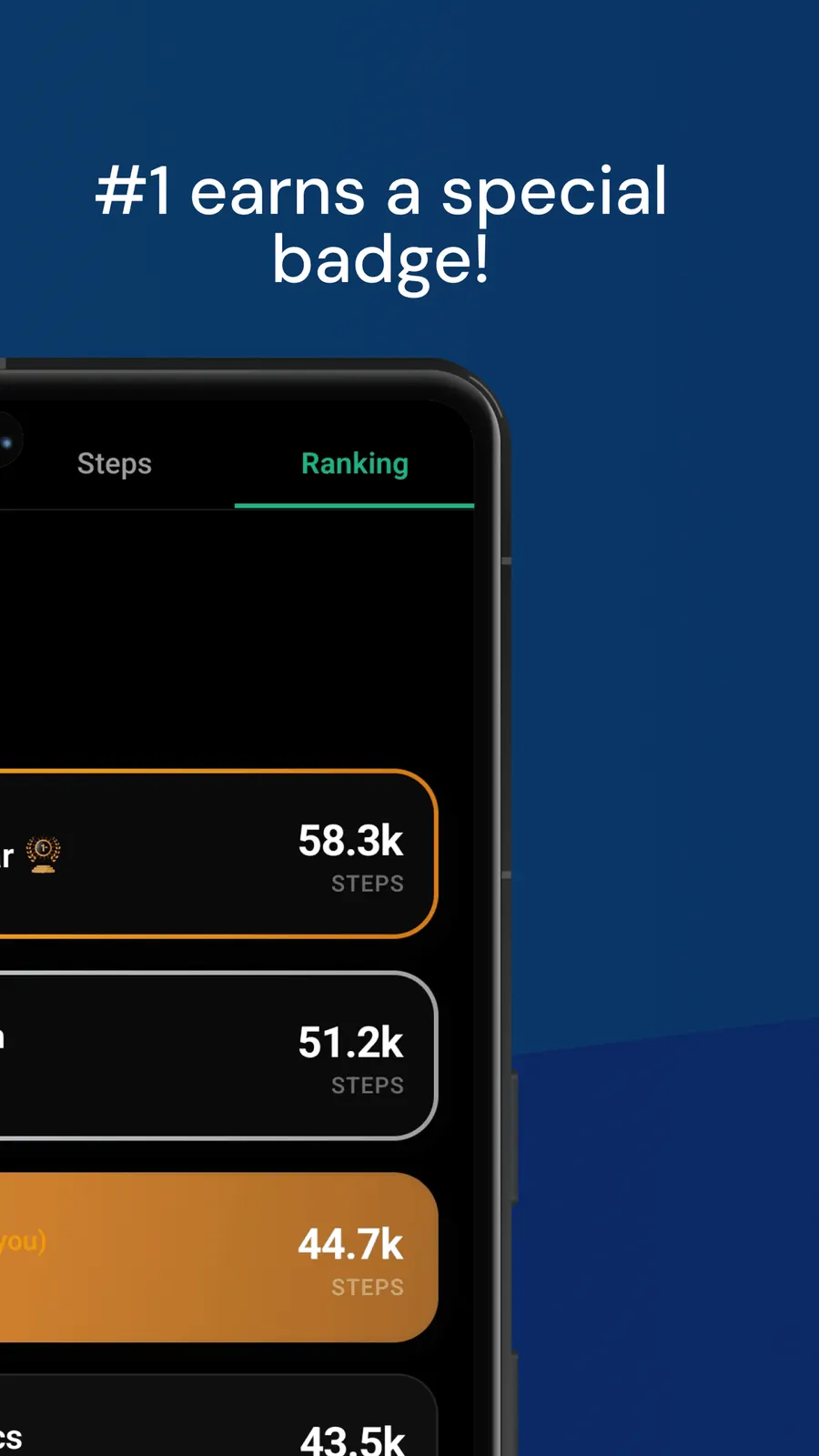
- A global leaderboard you can climb
- Your friends' step counts, day by day
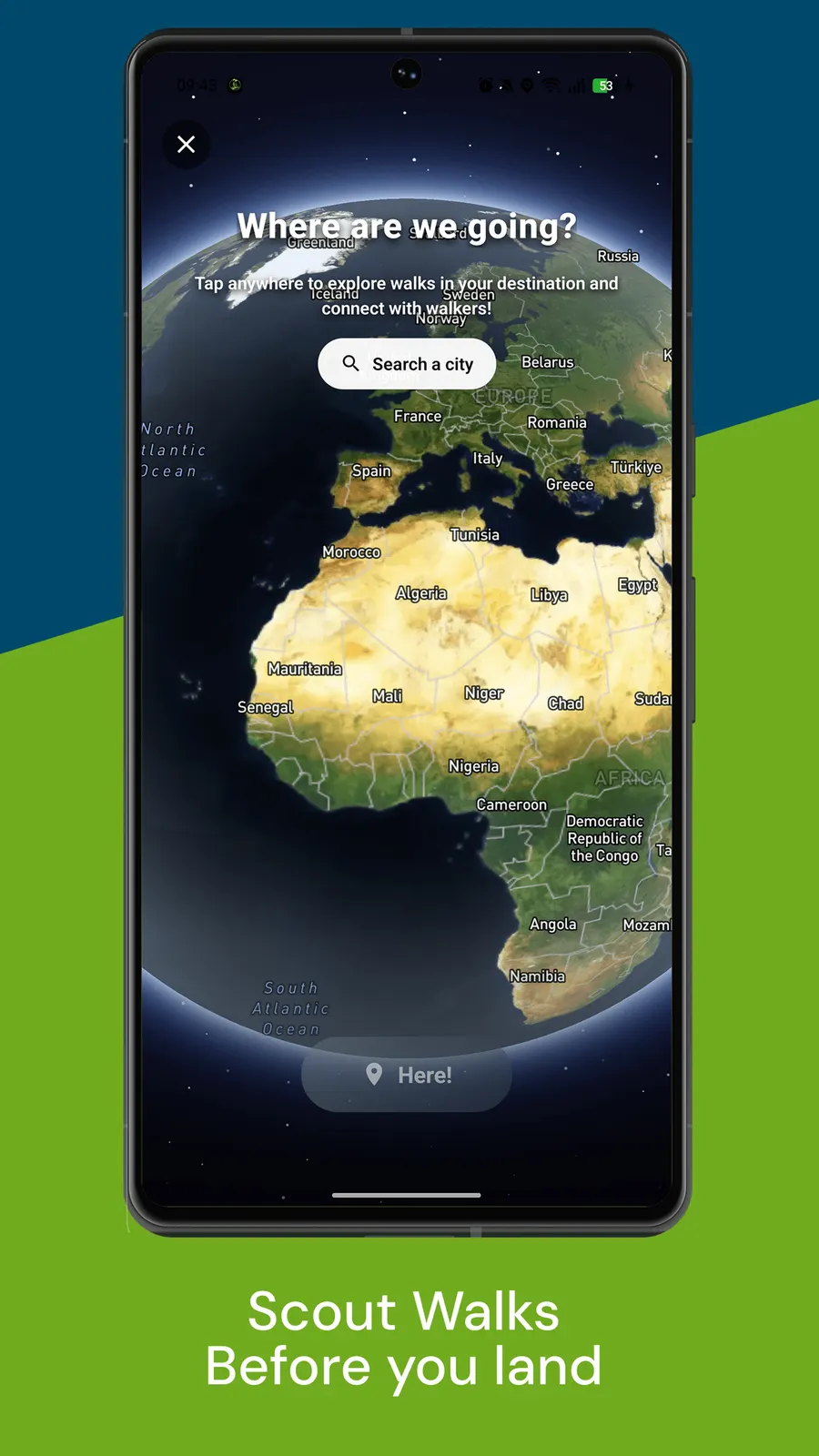
- Walkers near you on a live map
- Join or host a walk in a tap
- Groups, challenges and ranked cities
More from Walk With Me
Track Every Step, Together
A built-in step counter and walk tracker logs every walk you take, on your own or with the group.




Start Walking Together Today
Free on iOS and Android. Find your first walking buddy in minutes.
Key Takeaways
- At an average 5 km/h, walking one kilometre takes about 12 minutes.
- A mile takes about 19 minutes at that same average pace.
- 5 km takes roughly 54 minutes at a brisk 5.6 km/h, or 94 minutes strolling.
- Add around 20% for crossings, hills and stops when you are planning a real journey.
What is a brisk walk?
A brisk walk is usually defined as around 5.6 km/h, or 3.5 mph. The practical test is that you can still talk in full sentences but would struggle to sing. Most public health guidance that mentions walking means this pace.
Frequently Asked Questions
How long does it take to walk 5 km?
Roughly 54 minutes at a brisk 5.6 km/h, about 63 minutes at an easy 4.8 km/h, and around 94 minutes at a stroll. Add time for crossings and hills on a real route.
How long does it take to walk a mile?
About 17 minutes at a brisk pace and around 19 minutes at an average one. Fast walkers manage close to 15 minutes.
What is a normal walking speed?
Around 5 km/h, or a little over 3 mph, for an adult on flat ground. It drops with age, with heavy bags, and in crowds.
How many steps is a kilometre of walking?
Roughly 1,400 for an adult of average height, though it depends on your own step length. The steps figure shown here uses an average; the steps to km converter works it out from your height.