September 2, 2026 · 9 min read
Wandelroute Edinburgh Royal Mile
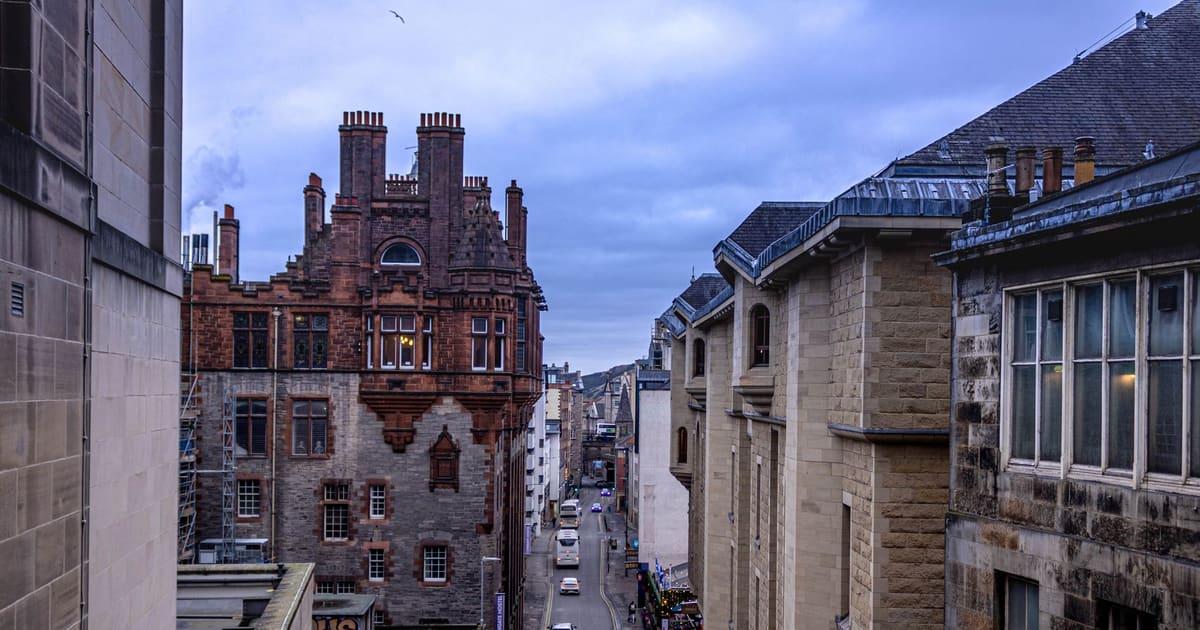
Ontdek de ultieme wandelroute over de Royal Mile in Edinburgh, een zelfgeleide tocht van de vulkanische hoogten van het kasteel naar de paleispoort.
507
August 27, 2026 · 9 min read
Doe deze wandeling samen met anderen tijdens de eerstvolgende geplande tour.
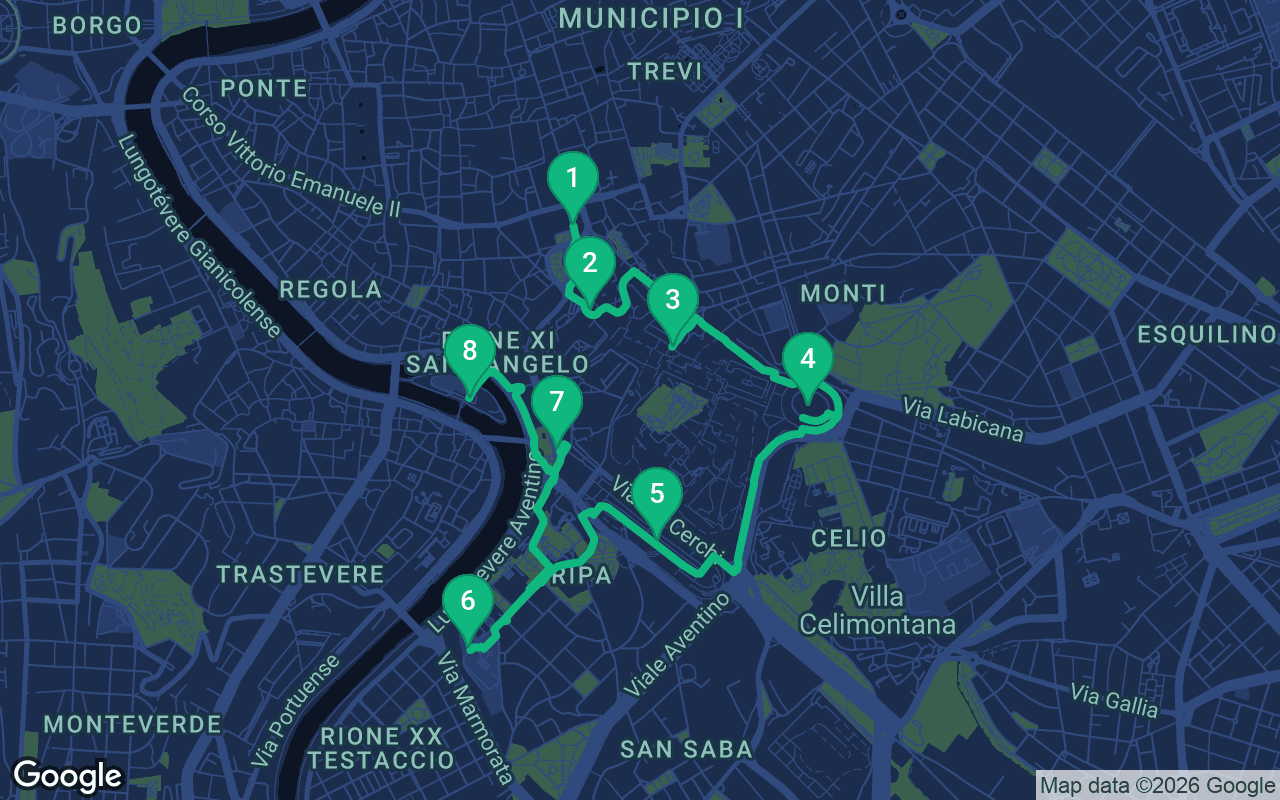
Ongeveer 6,2 km, circa 88 minuten in een rustig tempo · 8 stops
Audiotour · 12 min gesprokenEenmalig $7.99
Rome is a city where you can walk straight through two thousand years of history in an afternoon, past the ruins where senators argued and emperors ruled, and this route follows the old bones of the ancient city on foot. If you are planning a walking tour in Italy, this Ancient Rome self guided walking tour leads you from a thunderous central square up a sacred hill, down through the great field of ruins, around the mighty Colosseum, and on to a quiet garden of orange trees before ending on an island in the river. It is a walk through the heart of the empire, where every stone has a story and the past is never quite finished.
Before you set off, a few practical notes. This walk covers roughly six kilometers and takes about two and a half hours of walking, though the ruins invite long pauses, so give yourself the better part of a day. The ground is a mix of smooth pavement, ancient cobbles and dusty paths, and there is one gentle climb up a hill near the end, so wear sturdy shoes. Early morning or late afternoon is best, both for the light on the old stones and to avoid the fierce midday sun, which the ruins offer little shade from. If you are following by audio, keep your eyes up on the monuments, watch the busy roads around the ancient sites, bring water and a hat, and pause as often as the history moves you.
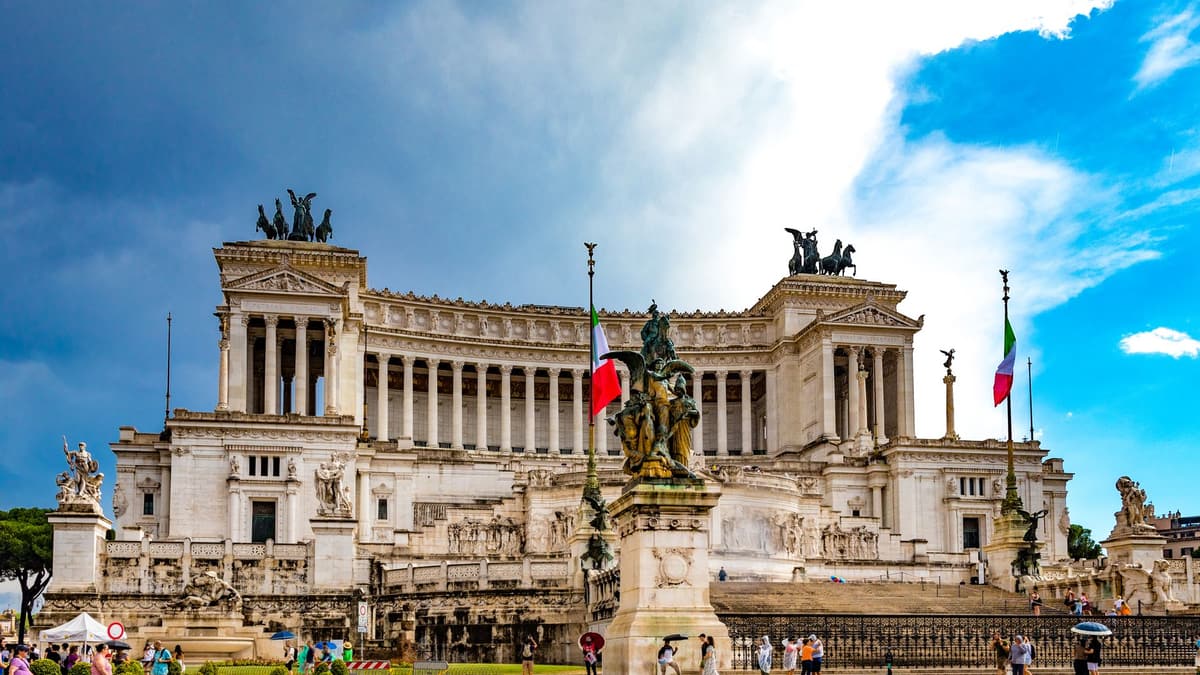
You begin at Piazza Venezia, the roaring hub at the very center of Rome, dominated by an enormous white marble monument that locals nickname the wedding cake for its tiered, gleaming excess. Stand back and take in its vast staircases, columns and chariots, built to honor the unification of Italy and its first king. From the terraces you get a fine view, and an eternal flame guards the tomb of an unknown soldier at its heart. Around you the traffic swirls in a chaotic ballet of buses, scooters and cars, and a lone policeman sometimes conducts it from a podium. This grand, noisy crossroads sits on top of the ancient city, and from here you can already sense the ruins waiting nearby. Cross with care toward the side of the great monument, and follow the road as it curves and climbs a gentle ramp up the sacred hill that rises just behind it.
The Capitoline Hill is the smallest and most sacred of the seven hills of Rome, the citadel of the ancient city and still its symbolic heart, crowned by a beautiful square designed by Michelangelo himself. Climb the gently sloping ramp of steps and emerge onto the piazza, a harmonious space framed by three palaces, with an intricate star-patterned pavement radiating out beneath your feet. At the center stands a bronze equestrian statue of a philosopher emperor, a copy of the ancient original. The buildings around you hold some of the oldest public museums in the world. Walk to the far side of the square, behind the central palace, and you reach a terrace that delivers the walk's first great reward. Below you, suddenly, the entire Roman Forum spreads out in a panorama of columns, arches and broken temples. Pause here to take it all in, then find the path that leads down into the ruins themselves.
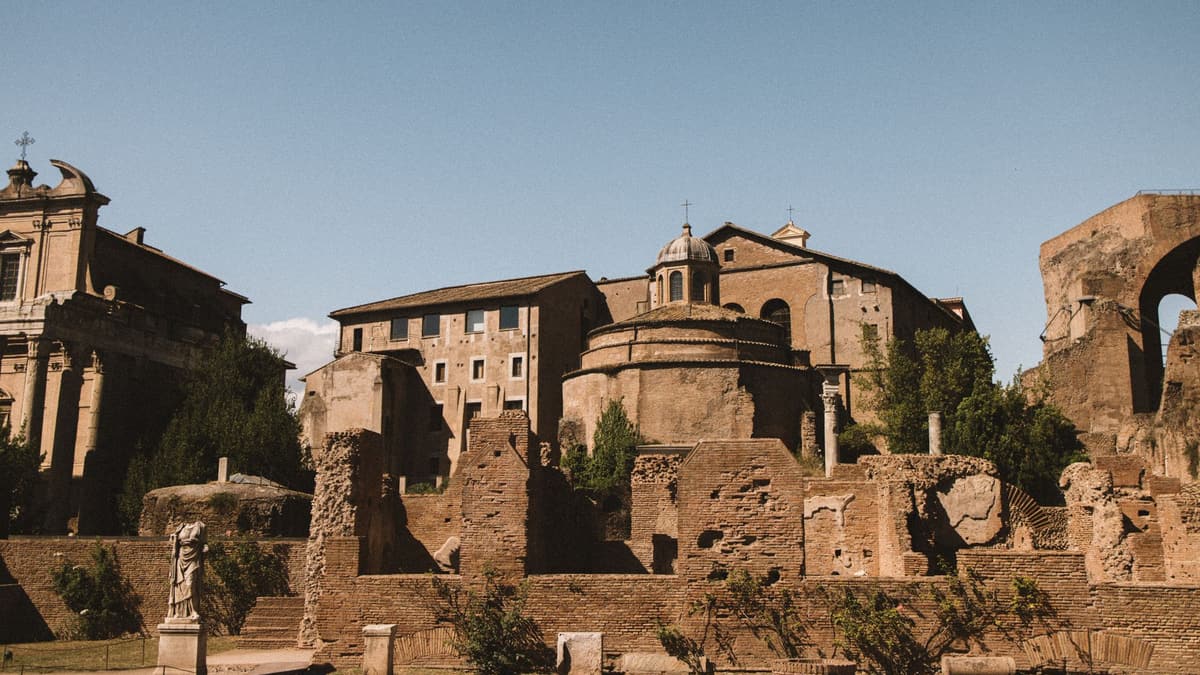
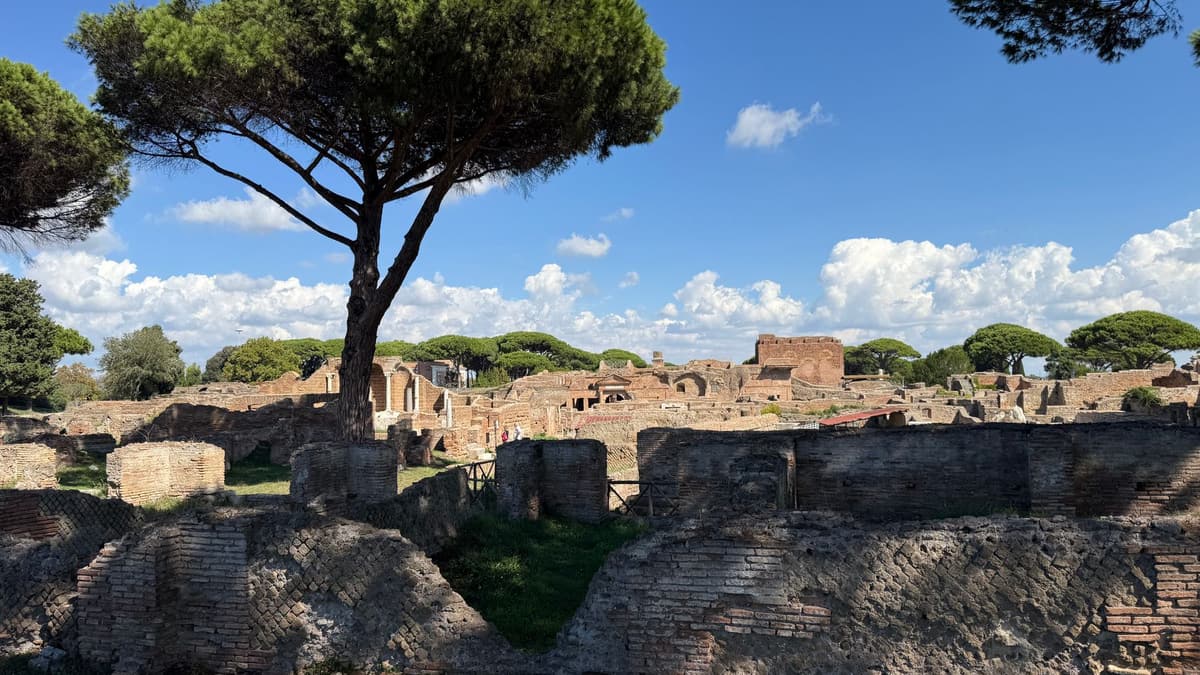
The Roman Forum is the beating heart of the ancient world laid bare, the marketplace, law court and gathering place where the business of the empire was conducted, now a haunting field of columns, arches and foundations. Walking down into it, you follow the old Sacred Way, the road along which triumphant generals once paraded, its worn paving stones still underfoot. All around rise the remains of temples to forgotten gods, the towering columns of grand halls, and triumphal arches carved with scenes of conquest. Try to picture it clad in marble and crowded with togas, the noise and smell of a living city. A lone fig or laurel grows among the stones, and lizards dart across the sun-warmed marble. Take your time wandering the paths between the ruins, reading the ghosts of the buildings. At the far end, the road leads you out toward a colossal structure that needs no introduction, its arches rising above the trees ahead.
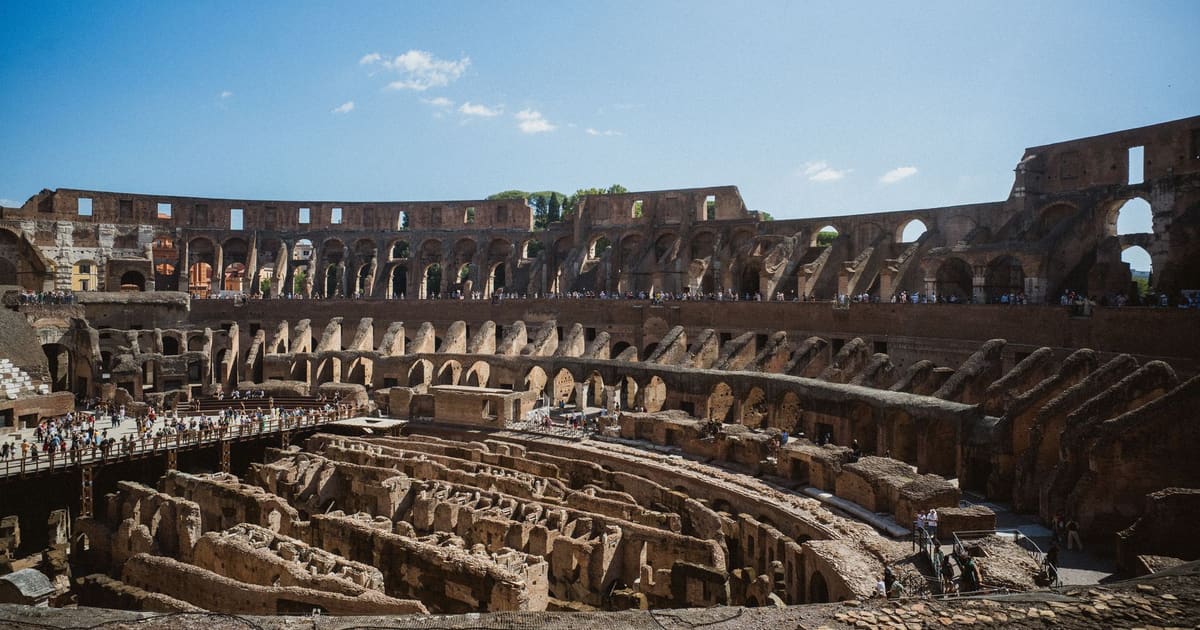
The Colosseum is perhaps the most recognizable ruin on earth, a vast oval amphitheater that once held tens of thousands of roaring spectators, and no photograph prepares you for its scale when you stand beneath its towering arches. Walk a slow circle around the outside, looking up at the tiers of arches stacked one upon another, the pale travertine stone pocked with holes where metal clamps were long ago pried out. Picture the crowds pouring through the numbered entrances to watch gladiators fight and beasts battle on the sand. Part of the outer wall has fallen away over the centuries, felled by earthquakes and quarrying, revealing the honeycomb of passages inside. The great arena is a symbol of Rome itself, of its glory and its cruelty. Beside it stands a triumphal arch honoring an emperor's victory. Circle the amphitheater, then head south and west, following the road as it descends toward a long, open green valley between the hills.
The Circus Maximus is now a great grassy hollow, but this long open valley was once the largest stadium in the ancient world, a chariot racing track that could hold a crowd of a couple of hundred thousand roaring Romans. Walking along its edge, you have to use your imagination, because little remains but the shape of the land itself, a vast elongated bowl with a raised spine down the middle where the turning posts once stood. Yet the scale is still thrilling, and it is easy to picture the thundering chariots, the dust and the deafening noise of the crowd. Today it is a beloved public park where locals jog, walk their dogs and sunbathe on the grass. On one side rise the ruins and gardens of the imperial palaces on the Palatine Hill. Walk the length of the old track, feeling its enormous scale, then turn toward the leafy hill on the southern side and begin the gentle climb up toward a fragrant garden.
The Aventine Orange Garden is a peaceful walled park on the slopes of the Aventine Hill, planted with orange trees and offering one of the most romantic and least crowded views in all of Rome. After the grandeur and dust of the ruins, this shady garden is a balm, the air scented with citrus, the paths lined with orange trees, and a terrace at the far end that opens onto a sweeping view. Walk to that terrace and look out over the rooftops and domes of the city, with the great dome of St. Peter's floating on the horizon across the river. Couples come here at sunset, and the mood is quiet and golden. Nearby, a famous keyhole in a garden gate frames a perfectly aligned view of that distant dome, and a small line often forms to peek through it. Rest here among the orange trees and the view. Then head back down the hill toward the river, where a church portico shelters a famous carved face.
The Bocca della Verita, the Mouth of Truth, is a giant ancient marble disc carved with the face of a bearded river god, its open mouth the star of a legend that says it will bite off the hand of anyone who tells a lie while reaching inside. It sits in the portico of a lovely old church, and a line of visitors usually waits to place a hand in the stone mouth and pose for a photograph, made famous by a classic old film. Stand in the shady portico and study the weathered face, worn smooth by centuries of touch, probably an ancient drain cover before it became an oracle. The medieval church behind it is a gem in its own right, with a beautiful bell tower and a serene interior. Have your moment with the stone mouth, then walk a short way toward the river and the bridge that leads across to a small island in its midst.
You finish on Tiber Island, a small boat-shaped island in the middle of the river, connected to both banks by ancient bridges, one of which has carried foot traffic for over two thousand years and is among the oldest in the city. Cross onto the island by that old stone bridge and feel how the noise of the city drops away over the water. The island has long been associated with healing, home in ancient times to a temple of the god of medicine and today to a hospital that still serves the sick. Walk down the ramp to the lower embankment at the water's edge, where you can stroll almost at river level beneath the plane trees, watching the green water flow past the island's prow, which was once carved to resemble a ship. It is a serene and secret-feeling place to end. Find a spot by the water and let the long history of the day settle around you.
Reaching Tiber Island, you have walked through the entire span of ancient Rome, from the sacred citadel hill through the ruined forum and the great amphitheater to the racing track and the healing island. Seeing it this way, on foot, is the only way the ancient city truly comes alive, because the ruins are not a single monument but a landscape you move through, one that only makes sense when you feel the distances, the climbs and the connections between the sites. Walking it, you tread the same worn stones as emperors and slaves, and you notice the small things a tour bus erases, a lizard on the marble, the scent of orange blossom, the cool of the river. The past here is something you walk into. If you would like a companion for the next walk, open the Walk With Me map to find other walkers out exploring the city right now.
Alle stops van deze wandeling door Rome, Italy, op volgorde.
Ongeveer 6,2 km, zo'n 88 minuten op een rustig tempo.
Deze tour is ingesproken
Wandel met de app en een verteller vertelt het verhaal bij elke stop, automatisch gestart zodra je aankomt. De intro en de eerste 3 stops zijn gratis te proberen, en je ontgrendelt de hele tour voor $7.99, een eenmalige aankoop die voor altijd van jou blijft.
Werkt met Garmin, Komoot, Strava, OS Maps en elke GPX-app.
September 2, 2026 · 9 min read
Ontdek de ultieme wandelroute over de Royal Mile in Edinburgh, een zelfgeleide tocht van de vulkanische hoogten van het kasteel naar de paleispoort.
August 29, 2026 · 10 min read
Ervaar de ziel van Lissabon tijdens deze zelfgeleide wandeling door Alfama, met adembenemende kasteeluitzichten, historische kathedralen en verborgen fado-steegjes.
August 28, 2026 · 9 min read
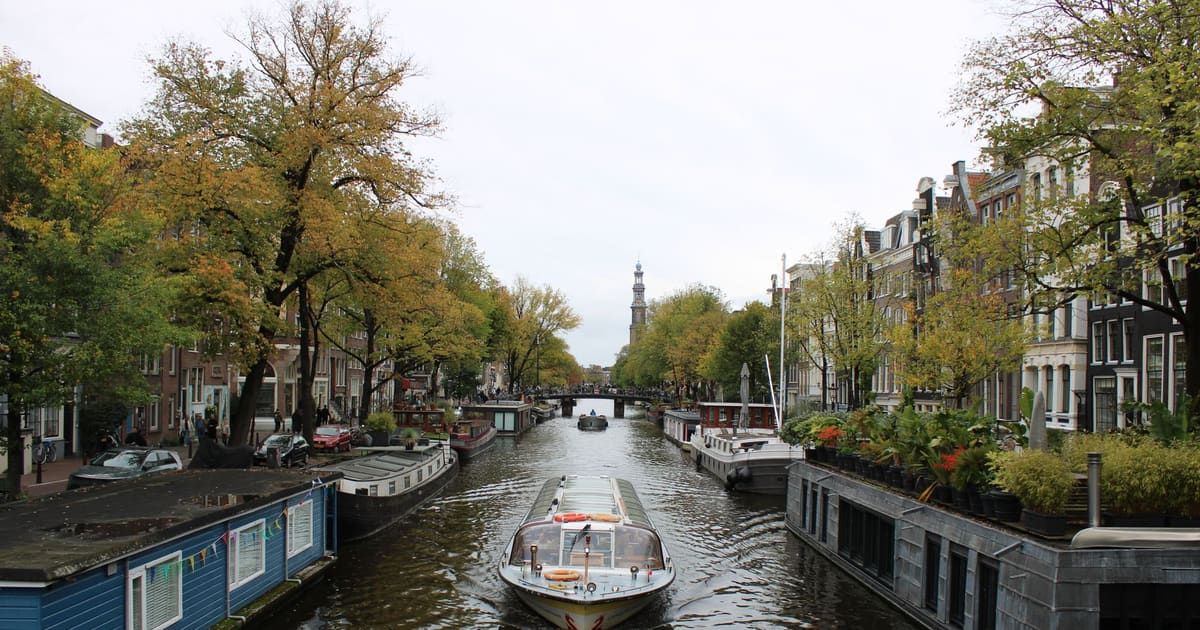
Een zelfgeleide stadswandeling door de Amsterdamse Jordaan, langs de Westerkerk, het Anne Frank Huis, verborgen hofjes en de Negen Straatjes.