September 22, 2026 · 10 min read
Ghent Old Town Walking Tour
A self-guided Ghent walking tour past the three towers and the medieval quays to the Gravensteen castle, through one of Belgium's finest old towns.
550
September 22, 2026 · 9 min read
Przejdź tę trasę z innymi podczas najbliższej zaplanowanej wycieczki.
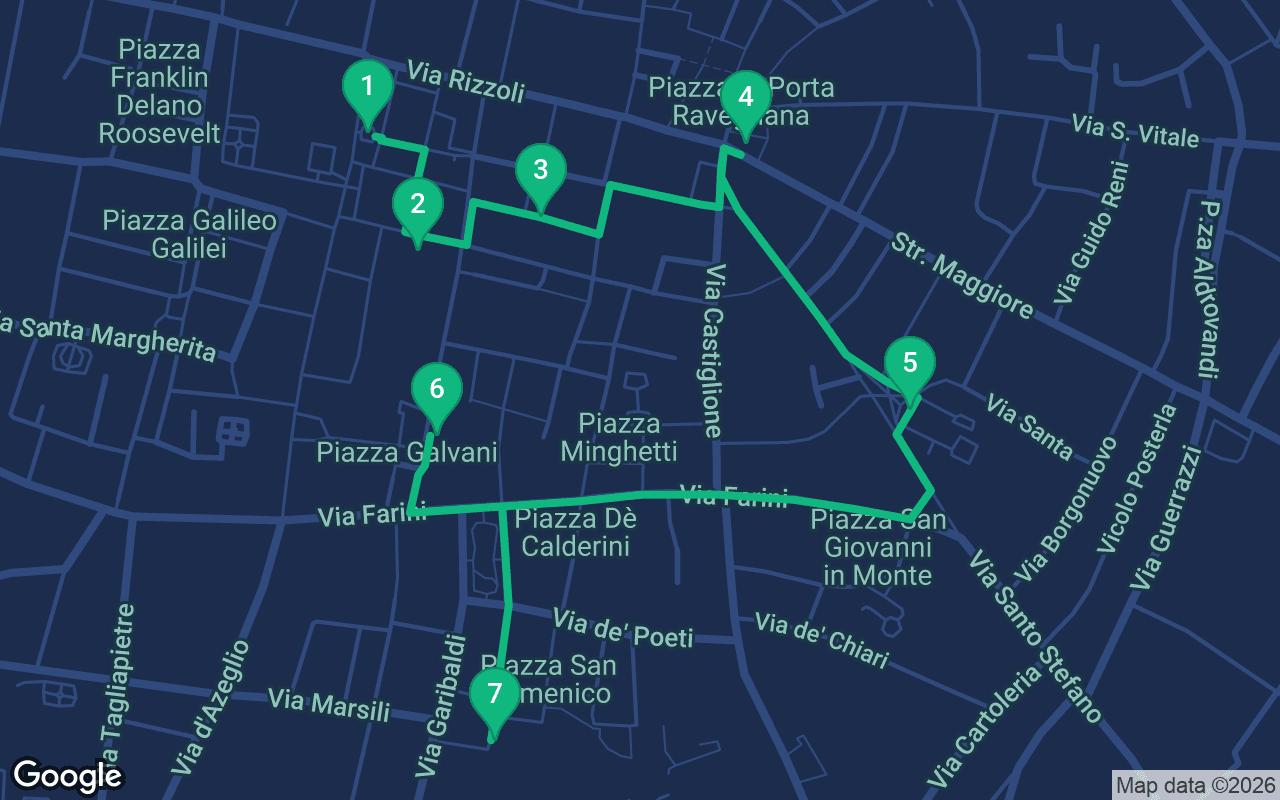
Około 1,8 km, około 25 minut spokojnym tempem · 7 przystanków
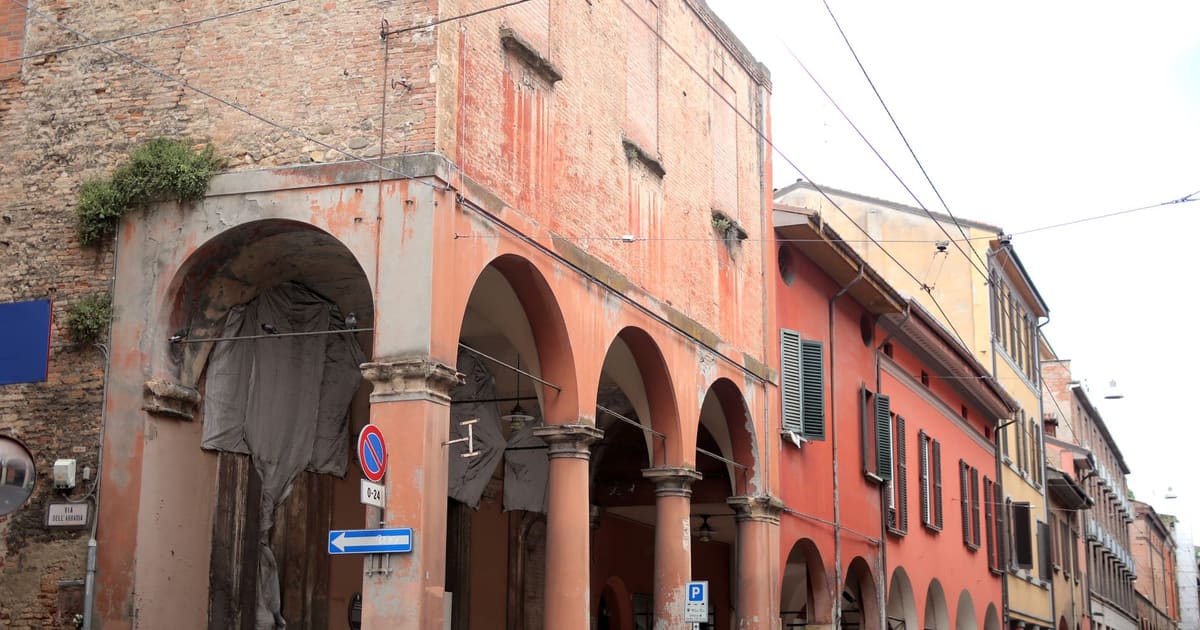
Bologna is the great Italian city that visitors somehow skip on their way between Florence and Venice, which is their loss and, for now, your gain. It is one of the oldest university cities in the world, a warm red-brick town of leaning medieval towers, endless covered arcades, and some of the best food in all of Italy. This self-guided Bologna walking tour keeps to its compact historic center, and it is one of the most enjoyable self-guided walking tours you can do, under two kilometers and, thanks to the city's famous porticoes, largely under cover whatever the weather. Wear comfortable shoes for the stone streets, come hungry, and give the old center a slow morning or afternoon.
Give yourself two or three hours at an easy pace, more if you climb the tower or linger over the food, which in Bologna you absolutely should, since this is the city that gave the world its richest cooking. The historic center is compact and flat and wonderfully walkable, and its greatest gift to the walker is the portico, nearly forty kilometers of covered arcade lining the streets, so you can walk much of the city sheltered from sun or rain alike. Wear comfortable shoes for the stone and cobbles all the same. The city is lively and studenty and full of life, its squares busy day and night. Everything on this route sits within a few hundred meters, and the two leaning towers stand over the center as a landmark you can always find your way back to. And do stop to eat and drink as you go, because the real point of Bologna is the table, whether it is a plate of fresh pasta, a board of cured meats, or a glass of wine under an arcade, and pausing often is exactly how the city is meant to be enjoyed.
Start at the Fontana del Nettuno, the Neptune Fountain, one of the great symbols of the city, standing in its own little square just off the main piazza. The muscular bronze sea god, trident in hand, has presided over this spot for over four and a half centuries, surrounded by cherubs and sirens spouting water, a swaggering Renaissance masterpiece by the sculptor known as Giambologna. The locals have a fond nickname for the giant and a well-worn joke about the cheeky angle from which he is best admired, which you can work out for yourself. The fountain stands between two grand old civic palaces, at the hinge of the city's public spaces, and it makes a lively meeting point busy with students and passers-by. Take a slow look around the bronze figures and the falling water, then step around the corner into the vast main square that is the heart of the whole city, dominated by one of the largest churches in the world.
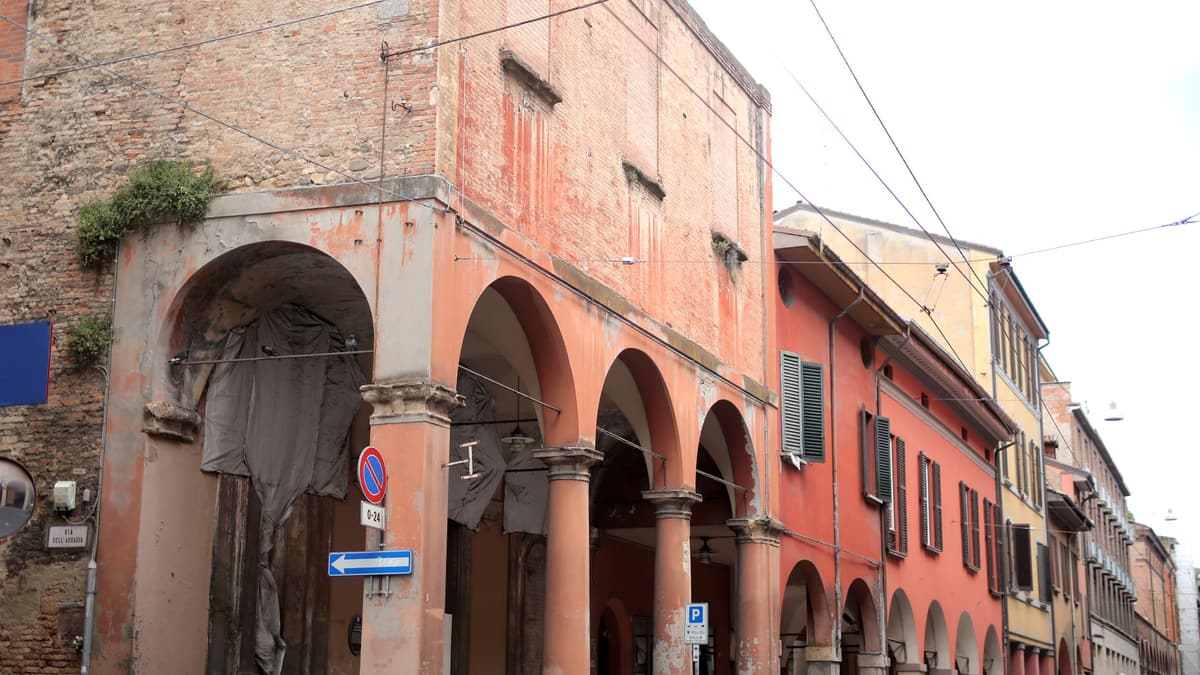 Piazza Maggiore is the grand central square of Bologna, a vast open space ringed by medieval and Renaissance palaces that has been the beating heart of the city for eight hundred years. On its southern side rises the enormous bulk of the Basilica di San Petronio, one of the largest churches in the world, dedicated to the city's patron saint. The strangest thing about it is its facade, which is finished in marble only across the lower third and left as bare brick above, a building famously never completed, and once you know the story you cannot unsee it. Inside, it is cavernous and austere and holds a remarkable sundial, a long brass meridian line laid into the floor that tracks a beam of sunlight through the year. The square around it is where the city gathers for everything, from markets to concerts to summer film screenings. Take in the scale of the square and the half-finished church, then head to the smaller streets on the eastern side, where the city's oldest and most delicious quarter begins.
Just east of the main square lies the Quadrilatero, a dense little grid of medieval lanes that has been the market and food heart of Bologna since the Middle Ages, and it is a feast for all the senses. The narrow streets here, with names that still recall the old trades, are packed with market stalls and shops spilling over with the produce that made the city's reputation, mounds of fresh pasta, wheels of parmesan, hanging cured hams and salami, fish on ice, fruit, wine, and bread. This is where the city shops and eats, and around midday and in the early evening the lanes fill with people grazing on plates of cold cuts and glasses of wine at little counters. It is one of the most atmospheric corners of any Italian city, alive with color and smell and noise. Take your time wandering the lanes, and stop for a bite, because there is nowhere better in the city to taste what Bologna is famous for. When you have had your fill, work your way east toward the two great towers that lean over the rooftops ahead.
The Two Towers, the Due Torri, are the enduring symbol of Bologna, a pair of tall, thin medieval brick towers standing side by side at the old crossroads of the city, both leaning at unnerving angles. In the Middle Ages the noble families of Bologna competed to build tall stone towers as fortresses and status symbols, and the city once bristled with well over a hundred of them, of which a handful survive. These two are the greatest. The taller one, the Asinelli, rises nearly a hundred meters, and you can climb its five hundred worn wooden steps to a view over the whole red city, a stiff but rewarding ascent, though you may need to book ahead. Its shorter companion, the Garisenda, leans so alarmingly that it was cut down to its present height centuries ago, and it tilts even more than the famous tower at Pisa. Stand at their feet and look straight up to feel the vertigo of it. Then head southeast down one of the old streets toward a quiet and extraordinary square of ancient churches.
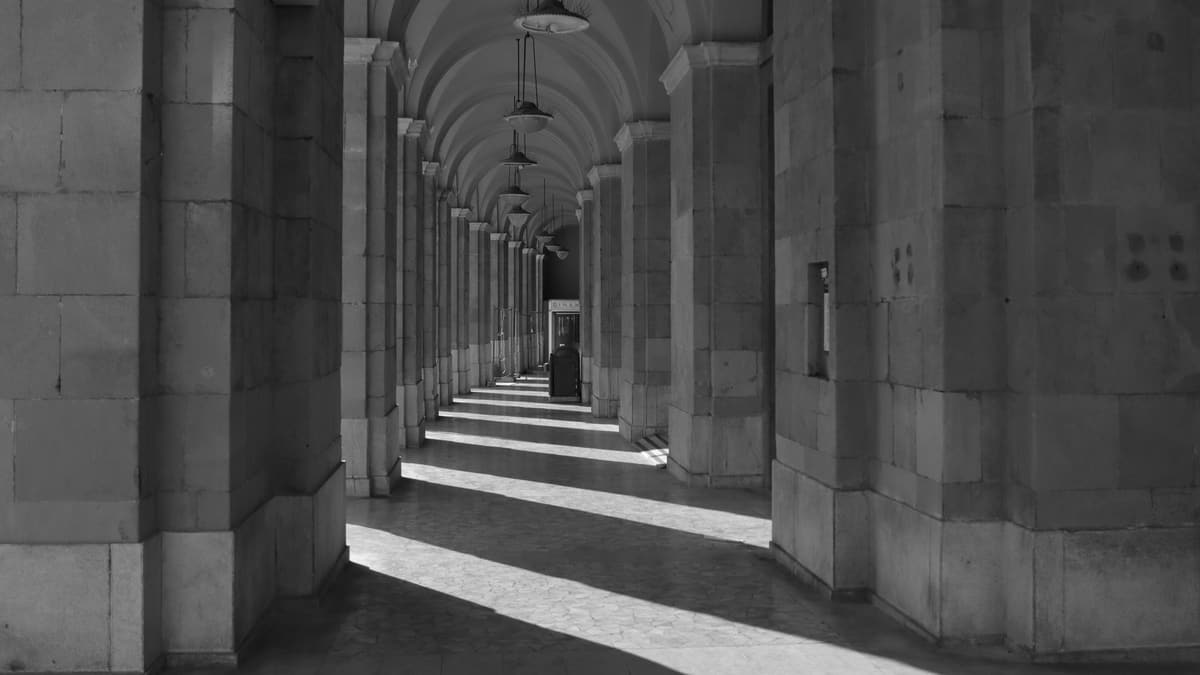 The Basilica di Santo Stefano is not one church but a maze of several, an ancient and atmospheric complex known as the Seven Churches, set around a beautiful sloping medieval square that is one of the loveliest and most peaceful spots in the city. Founded well over a thousand years ago and meant to recreate the holy places of Jerusalem, it is a warren of interlinked chapels, courtyards, and cloisters of different ages, dim and worn and deeply atmospheric, that you wander through in a sequence. At its heart is an octagonal church holding the tomb of the city's patron saint, and a quiet central courtyard with an old basin. It is a place to slow right down, one of the oldest and most evocative corners of Bologna, far from the bustle of the market. The triangular square in front, lined with porticoes and cafes, is a fine place to sit for a moment. When you are ready, follow the arcaded streets back westward, toward a building at the very root of the city's fame for learning.
On the way you pass the Archiginnasio, once the main building of the University of Bologna, the oldest university in the world, founded more than nine hundred years ago. Its long arcaded facade hides a magnificent interior, a grand courtyard and staircase whose walls and ceilings are covered from top to bottom with thousands of painted coats of arms of the students and rectors who passed through over the centuries, a dazzling record of learning. Upstairs is its great treasure, the Anatomical Theatre, a breathtaking room carved entirely of wood, where medical students once gathered around a central marble slab to watch dissections beneath statues of famous physicians. It is a small and astonishing place, well worth the modest entry. This building is a reminder that Bologna has been a city of students for the better part of a thousand years, which is why it still feels so young. Have a look inside, then continue the short way south to the great church that closes the walk.
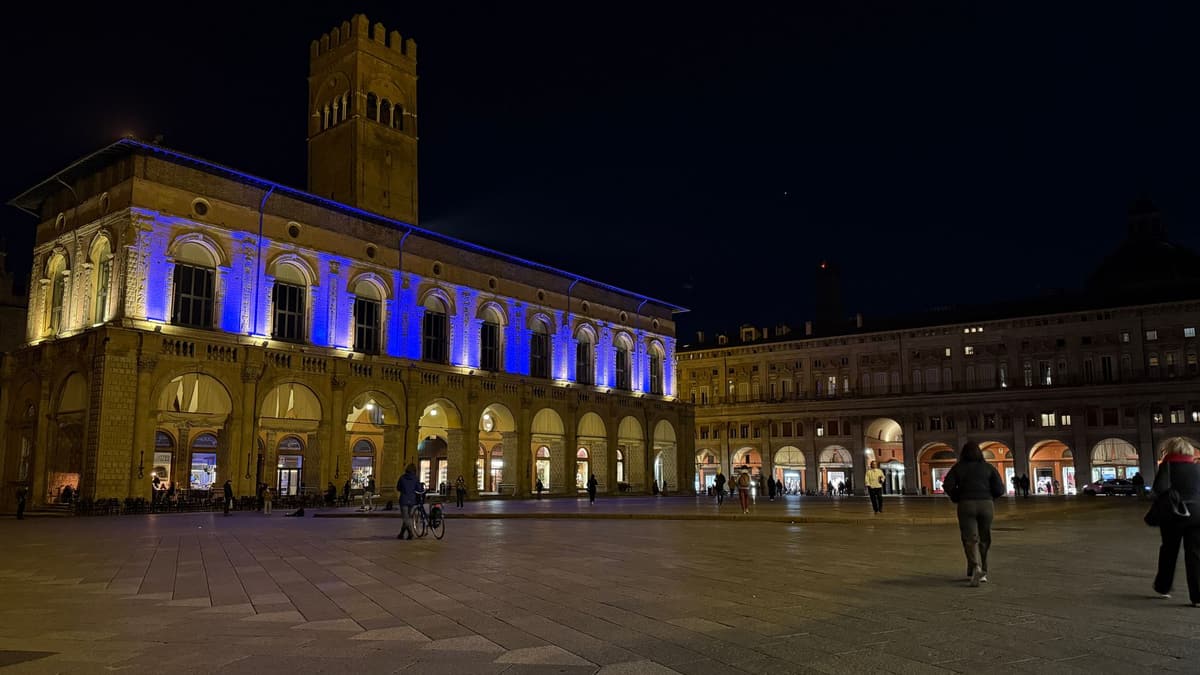 The walk ends at the Basilica di San Domenico, a great church that holds the elaborate tomb of Saint Dominic, the founder of the Dominican order, who died in Bologna eight hundred years ago. The tomb itself is a masterpiece worked on by a succession of great sculptors over the centuries, and among its many carved figures are three small marble works by a young and then-unknown Michelangelo, made when he was only a teenager passing through the city, a remarkable thing to stand before. The church sits on a broad, quiet square with a couple of curious raised tombs of medieval scholars nearby, a calm and dignified spot a little apart from the bustle. It makes a fitting end to the walk, and the center and Piazza Maggiore are only a few arcaded minutes back to the north. Find a cafe under a portico, order a coffee or a glass of wine, and let the warm red city settle. You have walked its towers, its market, and its ancient churches in a couple of easy, sheltered kilometers, and barely stepped out from under the arcades to do it.
Bologna is a city made for walking, and it goes out of its way to make walking a pleasure, sheltering nearly its entire center under those famous porticoes so you can stroll for hours out of the sun and the rain alike. Everything worth seeing sits within an easy, flat few hundred meters, the two towers stand over it all as a landmark, and the real joys of the city, a plate of pasta, a market stall, a coffee under an arch, only reveal themselves at walking pace. Come hungry, wear comfortable shoes, and let yourself drift off the route into any arcaded lane that tempts you, because in Bologna the detours usually lead to something good to eat. If you would rather not wander alone, open the Walk With Me live map to see who else is out walking Bologna, and share a plate of something and a glass of wine under a portico with a little company.
Wszystkie przystanki tego spaceru po Bologna, Italy, po kolei.
Około 1,8 km, mniej więcej 25 minut w spokojnym tempie.
Działa z Garmin, Komoot, Strava, OS Maps i dowolną aplikacją GPX.
September 22, 2026 · 10 min read
A self-guided Ghent walking tour past the three towers and the medieval quays to the Gravensteen castle, through one of Belgium's finest old towns.
September 22, 2026 · 8 min read
A self-guided Granada walking tour from the cathedral quarter along the river Darro up to the Mirador de San Nicolas and its view of the Alhambra.
September 22, 2026 · 10 min read
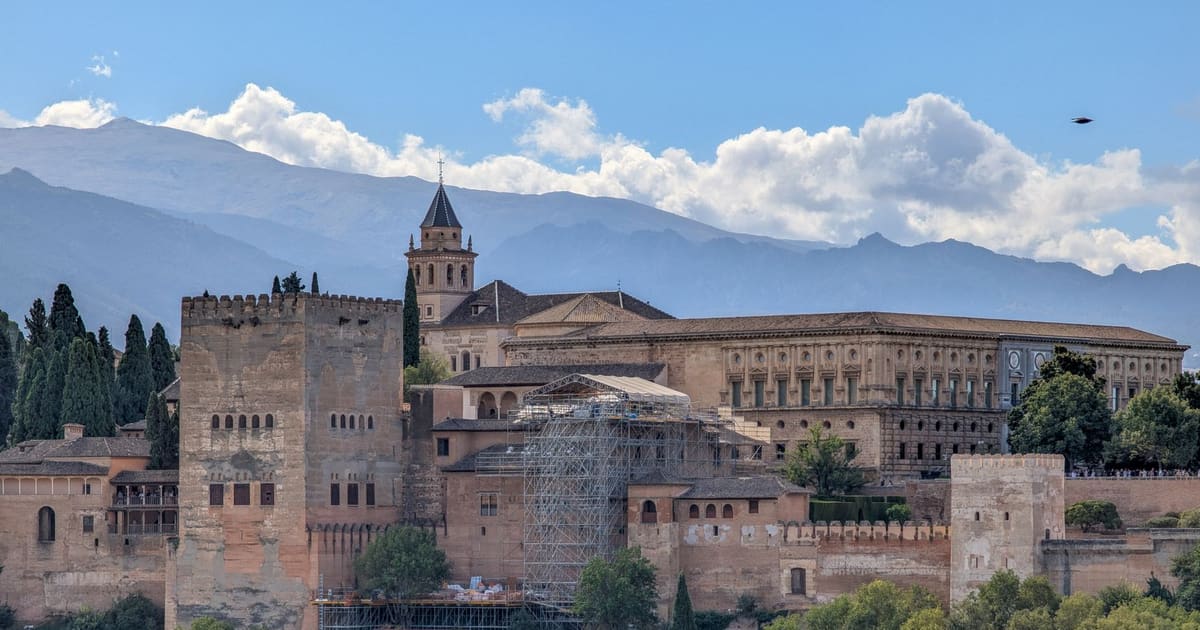
A self-guided Lyon walking tour through the Renaissance lanes of Vieux Lyon and up the Fourviere hill to the basilica, the Roman theatres, and the view.