September 19, 2026 · 9 min read
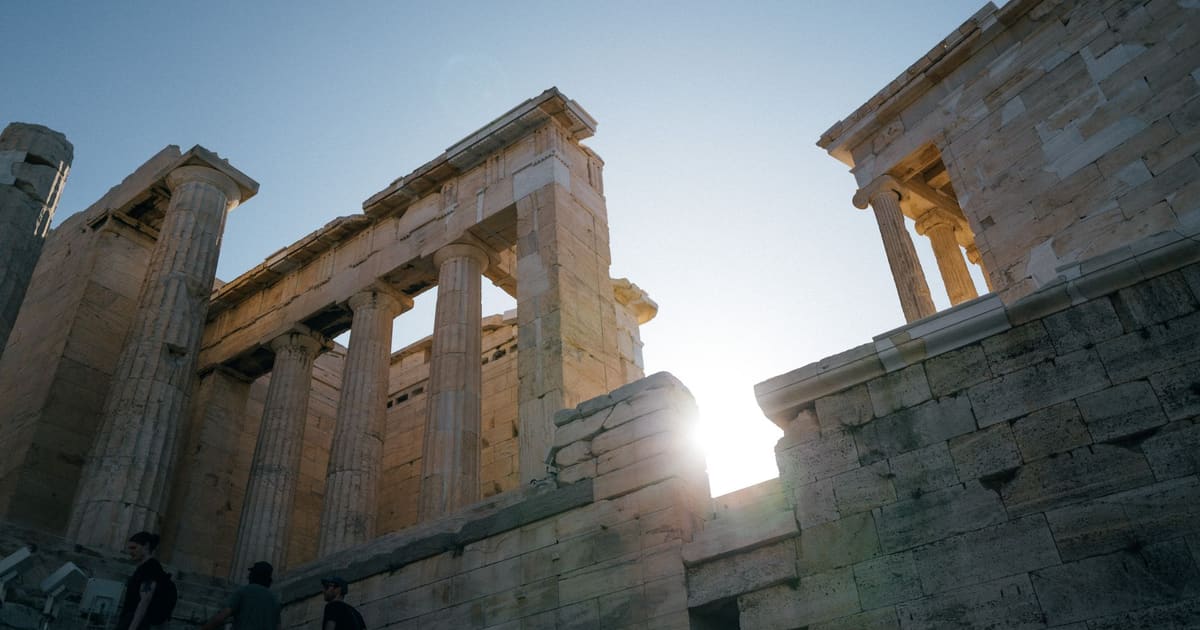
Athens Acropolis and Plaka Walk
A self-guided Athens walking tour through the old lanes of Plaka and Anafiotika, around the ancient Agora, and up to the Acropolis itself.
548
September 19, 2026 · 8 min read
다음 예정된 투어에서 다른 사람들과 함께 이 산책을 해보세요.
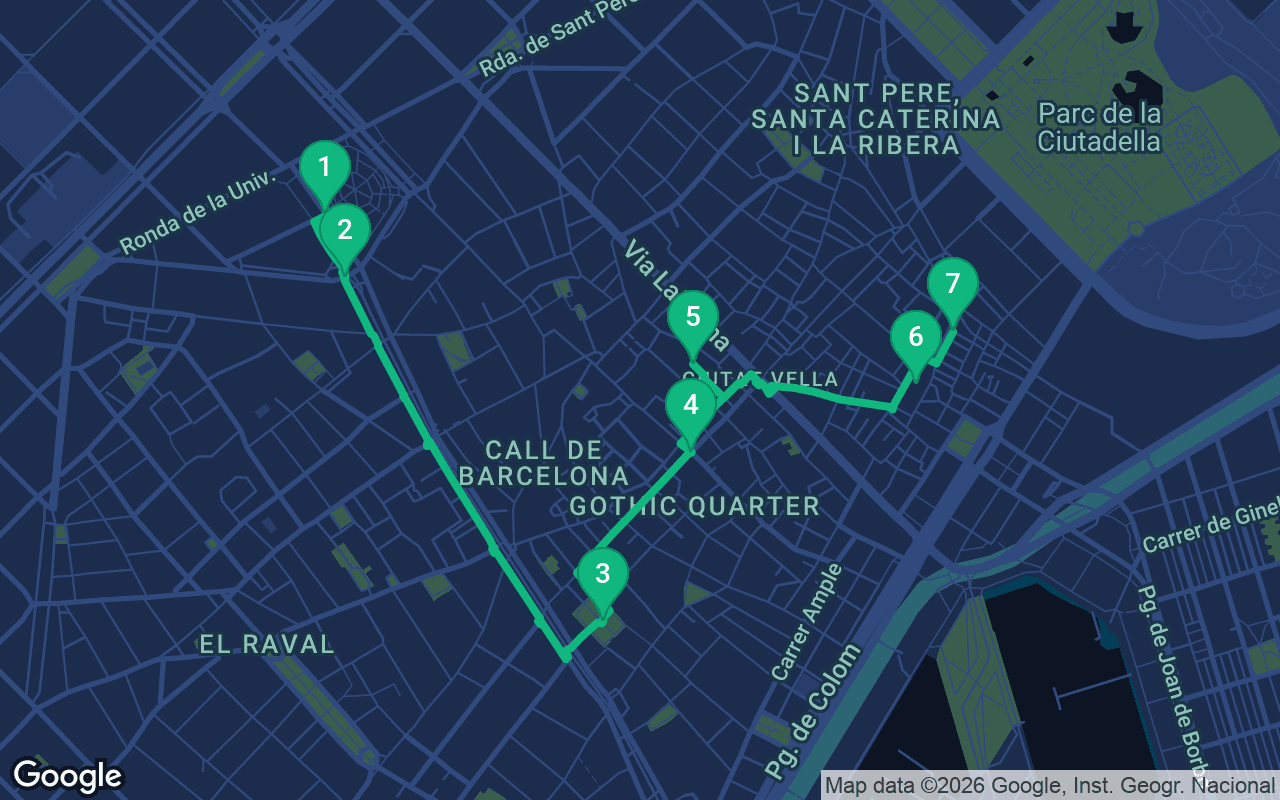
약 2.3km, 여유로운 페이스로 대략 30분 소요 · 7 정류장
오디오 투어 · 10분 분량 음성$4.99 (1회 구매)
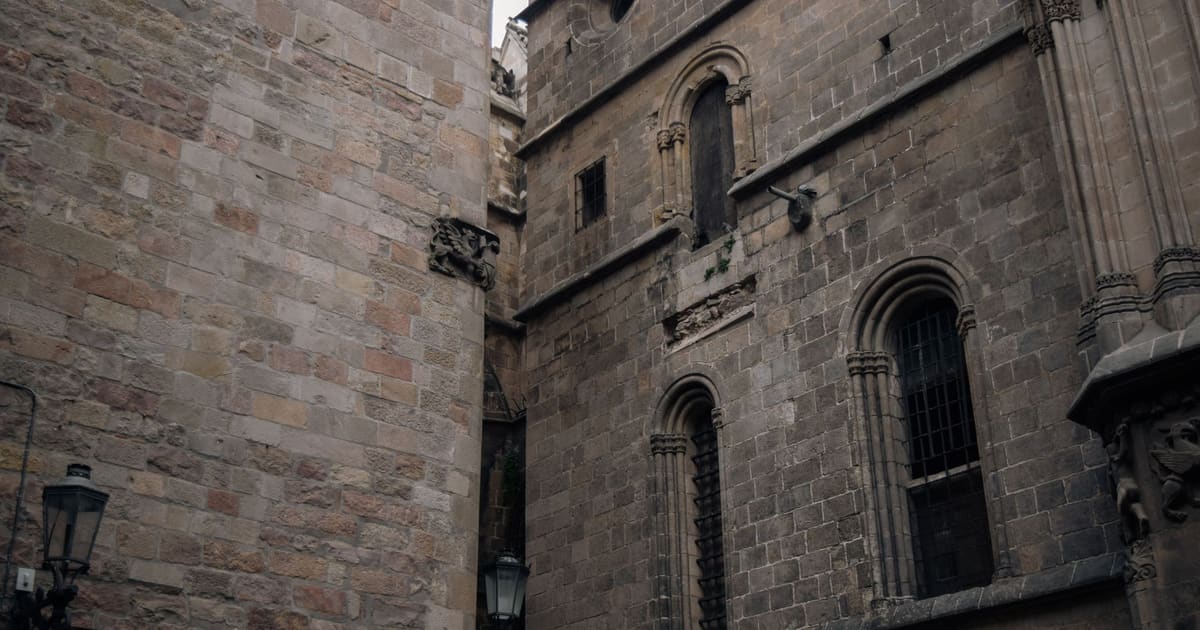
The oldest part of Barcelona is a maze, and that is exactly the point. Behind the busy Ramblas lies a warren of narrow stone lanes, hidden squares, and Roman walls, and the best way to know it is to get slightly lost in it on purpose. This route gives that wandering a spine, starting at the city's central square, dropping down the famous boulevard, and threading through the Gothic Quarter into the buzzing El Born. It makes a great choice among self-guided walking tours, a compact walk of a little over two kilometers with a stop worth lingering at on every corner. Roman stones, gothic churches, and tapas at the end.
Give yourself about two hours at a wander, longer if you stop for a coffee or a vermouth along the way, which you should. The route is flat, but the old town is all stone and the lanes can be slick after rain, so wear something with grip. These streets are narrow and shaded, which is a blessing in the Barcelona heat, but it also means they get busy, so an earlier start gives you the quiet squares to yourself. Keep an eye on your bag in the crowded stretches, as any local will tell you. And save some appetite for the end, because El Born is one of the best places in the city to eat. This whole quarter is built in layers, Roman walls under medieval palaces under modern shopfronts, so keep glancing down side alleys and up at the stonework, where a chunk of two thousand year old wall might be holding up a tapas bar. The joy of the old town is that you cannot really plan it, so treat the route as a thread to follow and let yourself be pulled off it whenever a lane looks tempting.
Start in Placa de Catalunya, the huge open square that is the meeting point of the whole city, where the old town below meets the grid of the newer districts above. It is a place of fountains, statues, and enormous flocks of pigeons, ringed by grand facades and always busy with people arriving and departing. It is not the prettiest square on the walk, but it is the natural door into the old town and a good spot to get your bearings. Stand near the fountains and face downhill, toward the gap in the buildings where the Ramblas begins. This is where the city funnels down toward the sea. Take a breath, because from here you step into the flow of the most famous street in Barcelona.
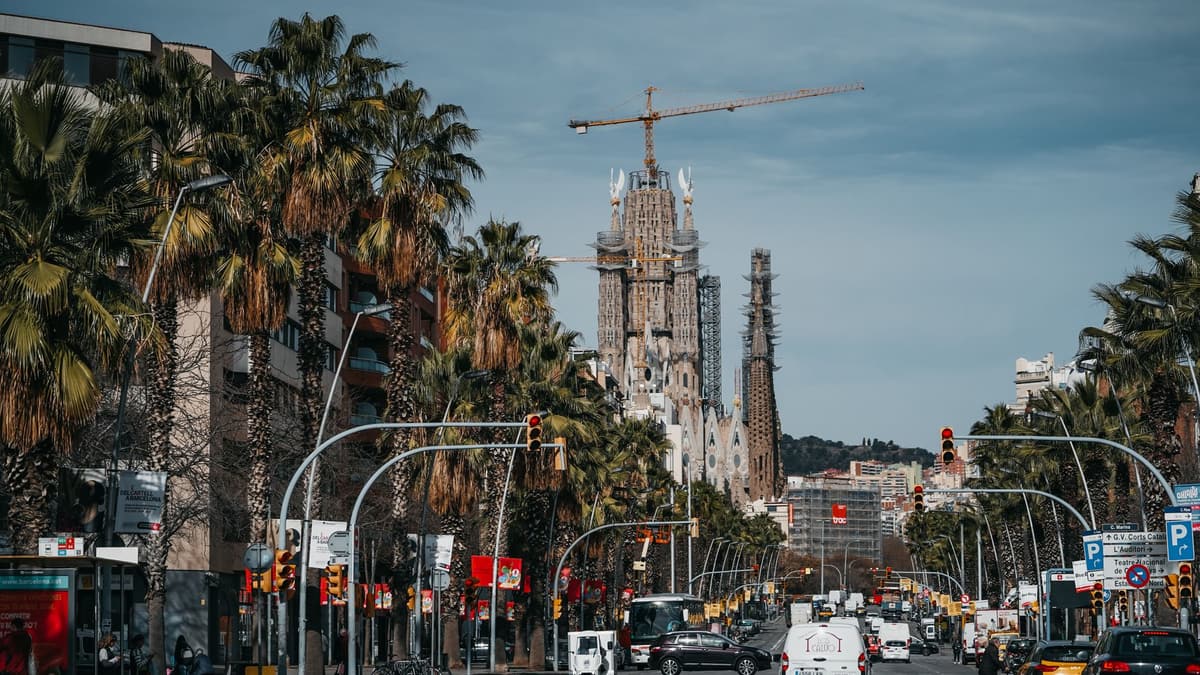 Walk down La Rambla, the wide, tree lined boulevard that runs from the square toward the harbor, its central promenade thick with strolling crowds, flower stalls, and street performers. It is touristy, and locals will roll their eyes at it, but it is a genuine spectacle and an essential part of the city. Keep to the middle and let the river of people carry you, glancing off to the sides where the great covered market of La Boqueria spills out its color and noise. Look down at your feet near the middle of the boulevard for a round mosaic set into the pavement by the artist Miro, easy to walk straight over. The Rambla is a place to feel the pulse of the city rather than to tick off a monument. Partway down, a small archway on your left leads into a hidden square.
Slip off the Rambla through a short passage and you emerge into Placa Reial, and the change is wonderful. Suddenly you are in a calm, elegant square ringed by arcades, with tall palm trees, a fountain in the middle, and lamps designed by a young Gaudi at the start of his career. It is one of the most harmonious spaces in the old town, and the cafes under the arcades make it a fine place to stop for a drink. Look up at the ornate lampposts to spot Gaudi's early style, all winged helmets and serpents. After the crush of the Rambla, the square feels like a secret, even though it is anything but. Take a slow turn around the arcade and look for the two ornate lampposts near the fountain, among the very first public commissions Gaudi ever received, a small early trace of the genius who would go on to reshape the whole city. In the evening the square becomes one of the liveliest corners of the old town, its bars and music spilling out under the palms. Then leave by one of the lanes on the far side, plunging into the true heart of the Gothic Quarter.
Wind through the narrow lanes and you arrive at Placa de Sant Jaume, the political heart of both the city and the region for two thousand years, since it sits on the old Roman forum. Two grand buildings face each other across the square: the city hall on one side and the seat of the regional government on the other, a standoff of power written in stone. The square is plainer than the others on the walk, but its weight of history is enormous, and it is the crossroads of the whole quarter. Stand in the middle and imagine the Roman town that once met here. The lanes leading off it are some of the oldest in the city. From here, a short walk through the narrowest streets brings you to a hidden medieval square.
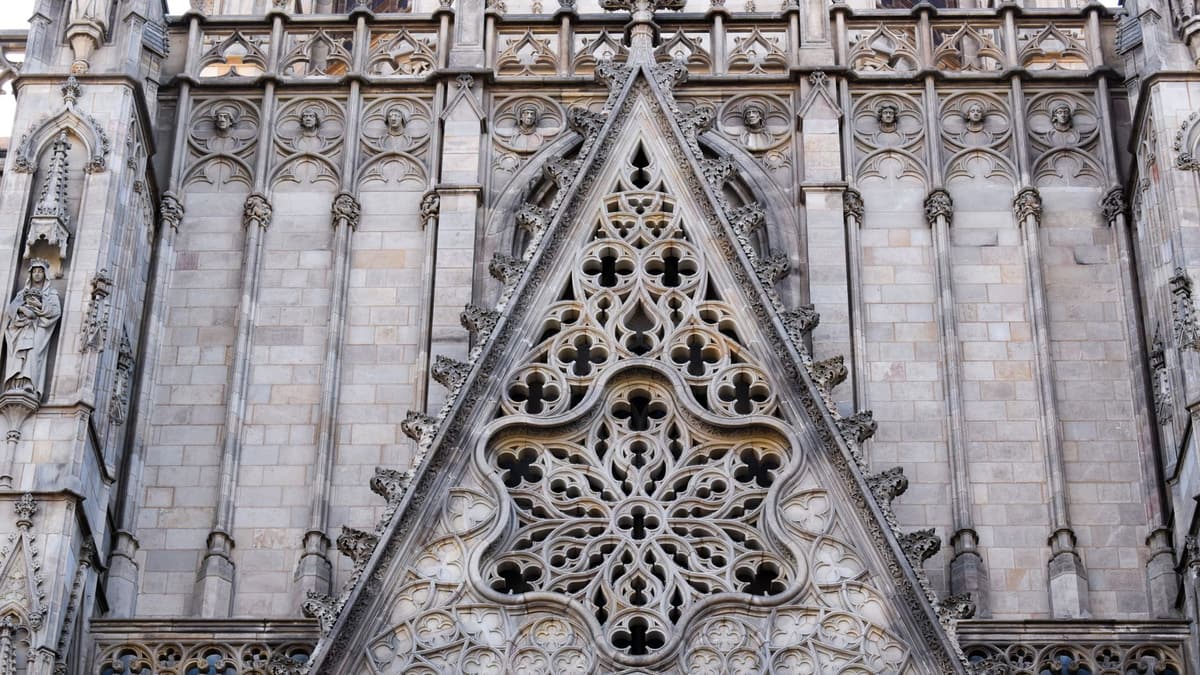 Tucked away in the lanes lies Placa del Rei, a quiet, enclosed medieval square that feels like stepping into another century. It is ringed by the buildings of the old royal palace of the counts of Barcelona, with a sweep of stone steps rising to a grand doorway and a slender watchtower above. This is where, by tradition, the returning explorers were received after crossing the Atlantic. Beneath the square lie the excavated streets of the Roman city, which you can walk through in the museum here if you want to go deeper. Stand in the middle and take in how complete and untouched the square feels, with no cafes or shops to break the spell. It is one of the most atmospheric corners in Barcelona. From here, thread east out of the Gothic Quarter and across into the neighboring district of El Born.
Crossing into El Born, you reach Santa Maria del Mar, and it is worth the walk on its own. From outside it is a plain, fortress like church, but step inside and it opens into one of the purest gothic interiors anywhere, tall slender columns rising to a high vault with the light pouring in. It is known as the cathedral of the sea, built by the ordinary people of the waterfront district, the porters and fishermen, with their own hands and money. The sense of soaring space and calm is remarkable, especially after the tight lanes outside. Sit in a pew for a few minutes and just look up. This is the emotional high point of the walk. When you step back out, the leafy promenade of El Born stretches out in front of the church door.
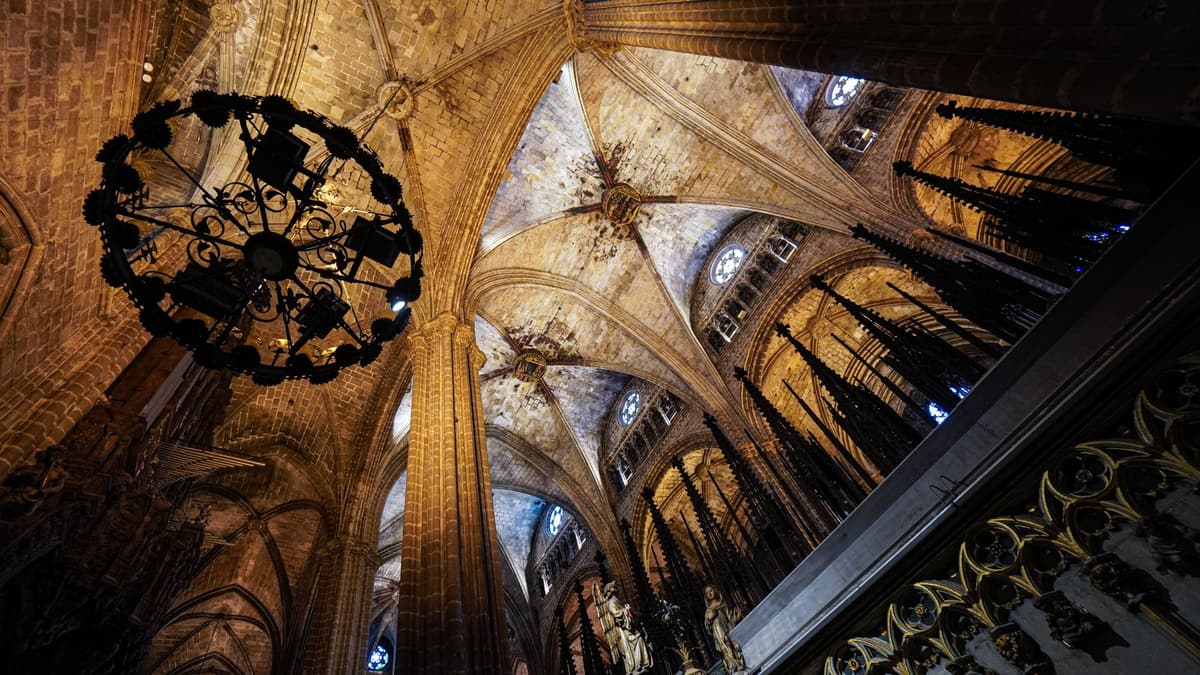 Finish on the Passeig del Born, the wide, tree shaded promenade that runs from the church into the liveliest quarter in the old town. For centuries this was the stage for festivals, markets, and jousts, and it still has that festive energy, lined with tapas bars, wine shops, and little boutiques. At the far end stands the old iron market hall, now a cultural center built over the excavated ruins of a whole medieval neighborhood, which you can look down into. This is the place to end the walk properly, at a table with a plate of something small and a glass of something cold. Find a spot, watch the promenade fill up as the day cools, and let the old town hum around you. You have crossed it end to end, Roman forum to gothic nave to this.
The Gothic Quarter is made to be walked and impossible to drive, a knot of lanes that only give up their squares and secrets on foot. Wandering it slowly is the whole experience, and this route strings the highlights together without robbing you of the pleasure of getting a little lost between them. Doing it at your own pace, stopping wherever a lane looks interesting, is how the old town is meant to be seen. Go early or go late, since the middle of the day packs these lanes tight and the magic of the quarter is easier to feel when it is quiet. If you would like company for the wander, open the Walk With Me live map to find others walking Barcelona, and share a table in El Born with someone new.
Barcelona, Spain를 지나는 이 산책의 모든 정류장을 순서대로 소개합니다.
약 2.3km, 여유로운 페이스로 대략 30분 소요.
음성 가이드가 포함된 투어입니다
처음 3개 스톱에서 재생을 누르면 여기에서 바로 나레이션을 들을 수 있습니다. 앱에서는 도착할 때마다 각 스톱의 오디오가 자동으로 재생되며, 전체 오디오 투어는 $4.99에 한 번만 구매하시면 평생 소장하실 수 있습니다.
Garmin, Komoot, Strava, OS Maps 및 모든 GPX 앱과 호환됩니다.
September 19, 2026 · 9 min read
A self-guided Athens walking tour through the old lanes of Plaka and Anafiotika, around the ancient Agora, and up to the Acropolis itself.
September 19, 2026 · 8 min read
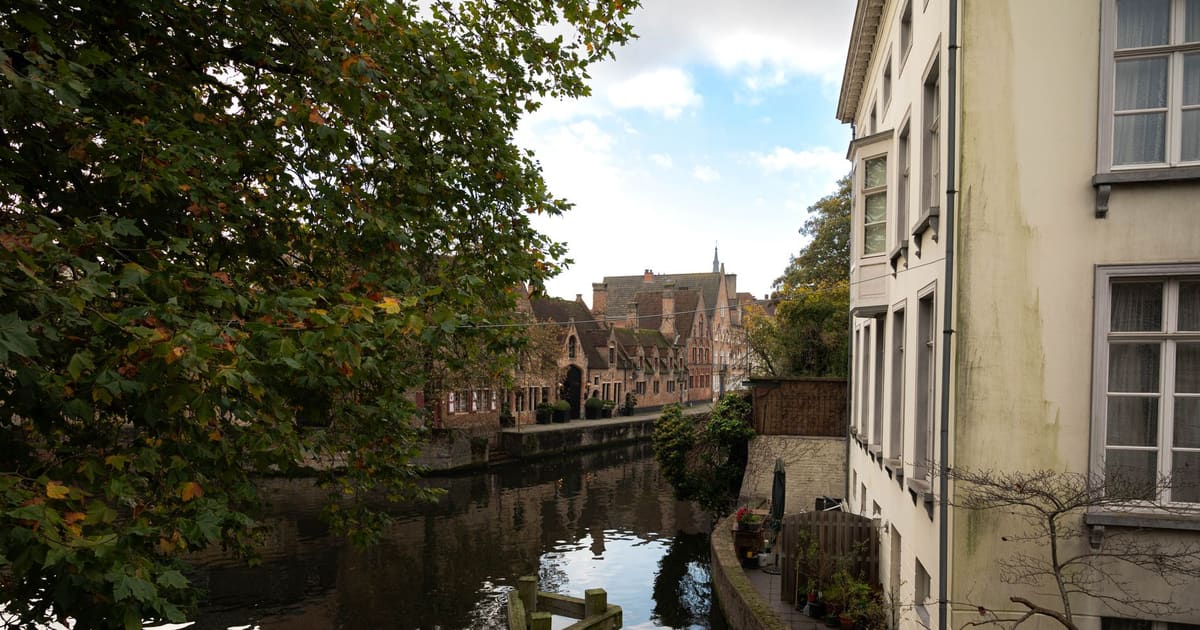
A self-guided bruges walking tour from the Markt and its belfry through the squares and along the canals to the Beguinage and the Lake of Love.
September 19, 2026 · 10 min read
A self-guided Copenhagen walking tour from the city hall along Stroget to the Round Tower, the Nyhavn canal, and the royal palaces of Amalienborg.