September 19, 2026 · 9 min read
Athens Acropolis and Plaka Walk
A self-guided Athens walking tour through the old lanes of Plaka and Anafiotika, around the ancient Agora, and up to the Acropolis itself.
548
September 19, 2026 · 10 min read
Пройдите этот маршрут вместе с другими во время следующей запланированной прогулки.
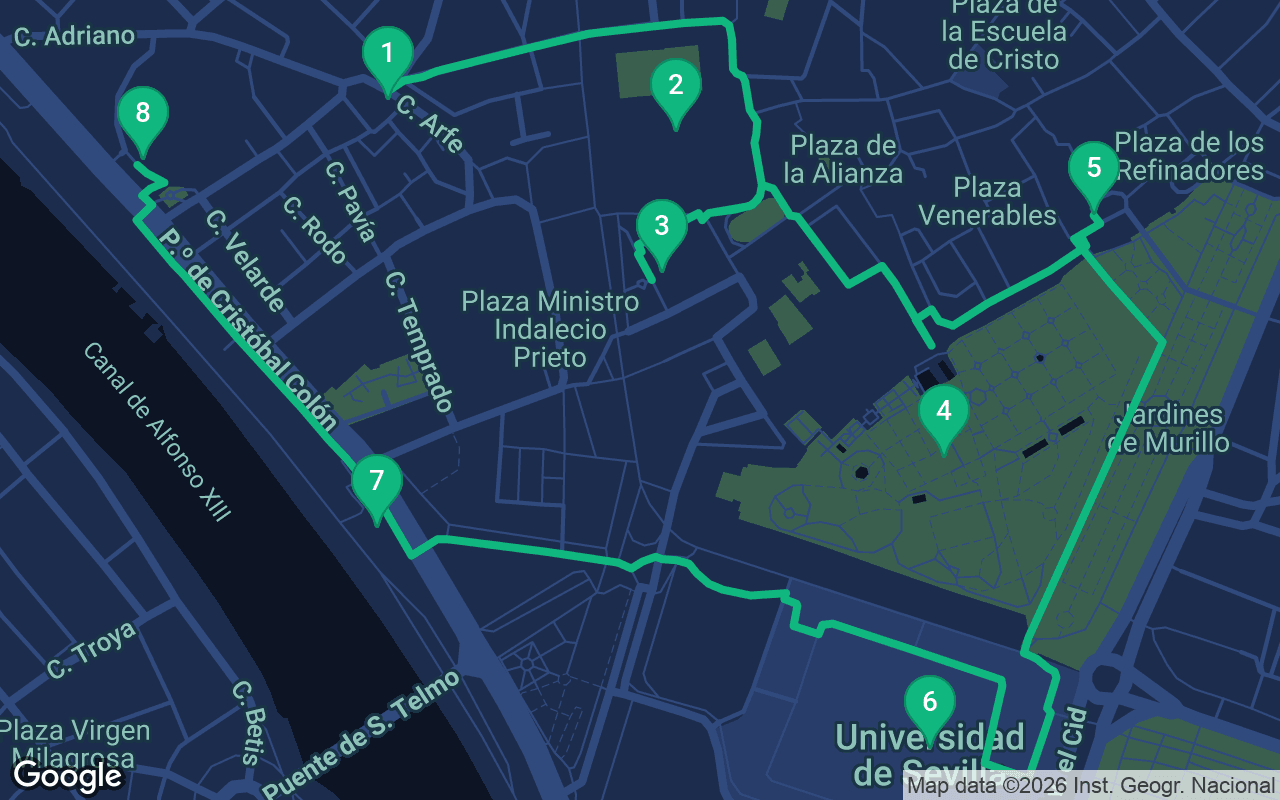
Около 3,2 км, примерно 44 мин в спокойном темпе · 8 остановок
Seville does not really do restraint. The city piles Moorish palaces on top of Roman foundations, wraps the whole thing in orange trees, and lets it simmer in the Andalusian sun. This self-guided Seville walking tour keeps to the old heart of it, the tight knot of streets around the cathedral where the city began, and it is one of the most rewarding self-guided walking tours you can do in a single easy morning. You will pass the largest Gothic cathedral on earth, slip into a royal palace still used by kings, and lose yourself on purpose in a quarter of whitewashed lanes barely wide enough for two. Just over three kilometers, flat the whole way, and shady when you need it to be.
Give yourself a morning, three hours at a gentle pace, more if you go inside the cathedral or the Alcazar, both of which deserve a proper hour of their own. Seville is a hot city for much of the year, so start early, carry water, and follow the local rhythm of ducking into the shade whenever the sun gets serious. The lanes of the old center are cobbled and often narrow, so wear shoes you can walk all day in. Almost everything on this route sits within a few hundred meters of everything else, which means you can wander off down any tempting side street and find your way back without much trouble, and in this part of Seville the side streets are half the pleasure. If you can, book the Alcazar and the cathedral online ahead of time, because the queues at both can swallow an hour on a busy day. And do stop for a coffee or a cold beer and a plate of something in one of the small squares along the way, since pausing often is exactly how Seville is meant to be walked.
Start in Plaza Nueva, a wide, palm-lined square at the western edge of the old town, watched over by the grand facade of the city hall and a bronze king on horseback in the middle. It is a calm, open place to get your bearings before the streets tighten around you. Locals cut across it all day on their way to work and to the smart pedestrian shopping streets running north, and the benches under the trees make a good spot to sit for a minute and plan your morning. The square marks the line between the modern shopping city to the north and the tangled medieval core to the south, which is where you are heading. Have a slow look at the ornate stonework of the city hall on the eastern side, some of the finest Renaissance carving in the city. When you are ready, leave by the southeast corner and walk the couple of minutes toward the enormous shape already looming over the rooftops ahead, because you cannot miss where you are going next.
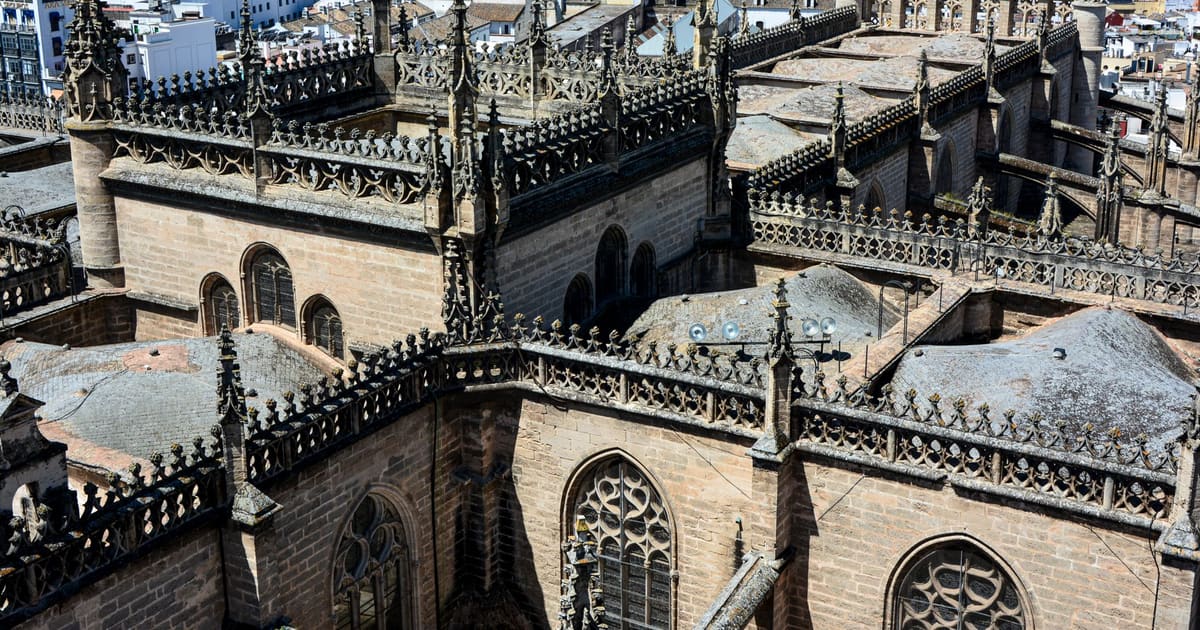
You arrive at the foot of Seville Cathedral, and the scale of it is genuinely hard to take in. This is the largest Gothic cathedral in the world, built on the footprint of the great mosque that stood here before, as if the city wanted to leave no doubt about who was in charge now. Inside, if you go in, lies the tomb of Christopher Columbus, held aloft by four stone kings, along with more gold than seems quite decent. But the real symbol of the city is the tower beside it, La Giralda, once the mosque's minaret and now the cathedral's bell tower. Its lower two thirds are Moorish brickwork of the twelfth century, delicate and patterned, and the top is a Christian belfry added later, a neat summary of the whole city in one building. You can climb it, and the clever thing is that there are no stairs, only a wide ramp built so a rider could go up on horseback, which makes the climb far gentler than it looks. Walk a slow circle around the outside first to feel the sheer bulk of the place, then head for the palm-filled courtyard on its southern flank.
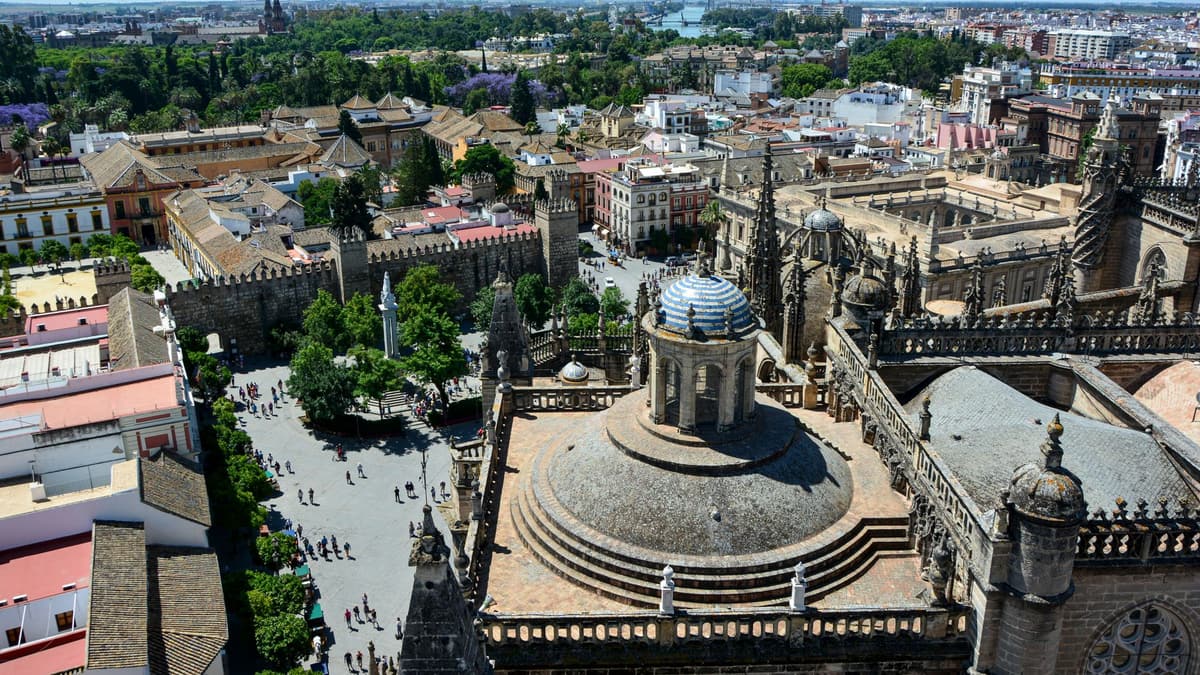 Just across the square sits a calm, square Renaissance building that most people walk straight past, the Archivo General de Indias. It looks almost plain next to its giant neighbors, which is part of its quiet dignity. Behind those walls lies one of the most extraordinary collections of documents anywhere, the entire paper record of Spain's empire in the Americas, mile upon mile of shelves holding letters, maps, and ledgers going back five hundred years, including papers in the hand of Columbus and the conquistadors. It was built in the sixteenth century as the city's merchant exchange, back when Seville held a royal monopoly on trade with the New World and gold flowed up the river to this very spot. Step inside if it is open, since entry is usually free, and climb the grand marble staircase to see the beautiful vaulted galleries lined with dark wooden shelves. Even a short look gives you a sense of the wealth and reach that once ran through these streets. When you come out, the entrance to the royal palace is only a few steps away across the square, behind a modest stone gateway.
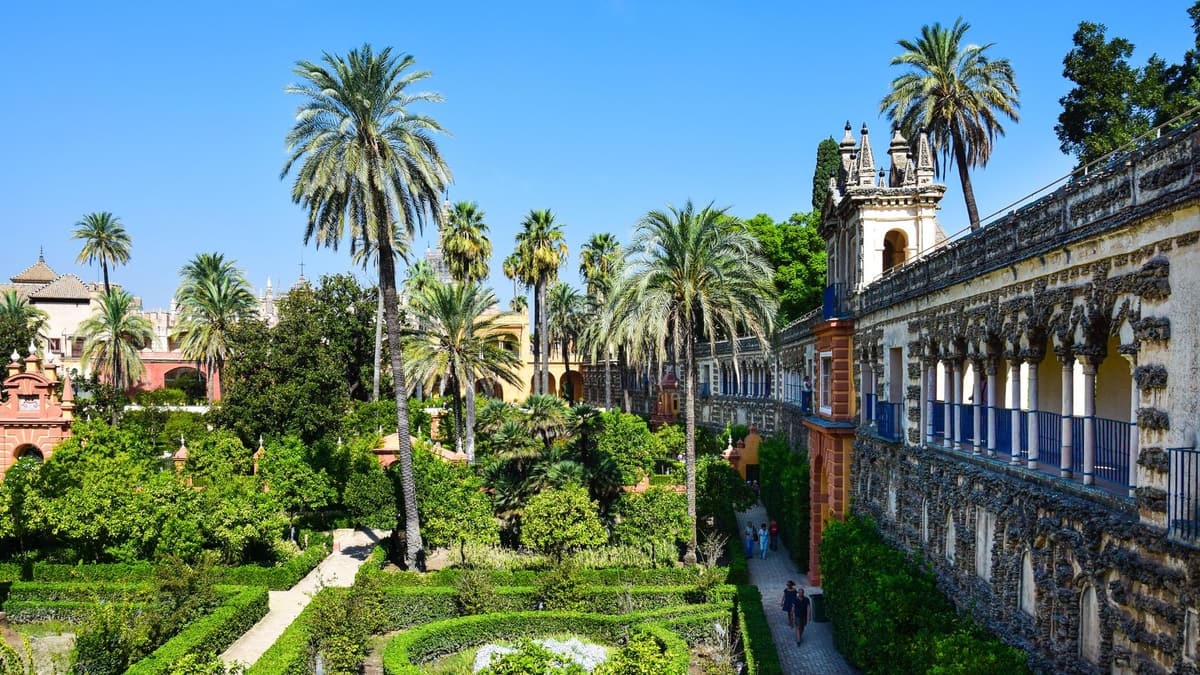
Through an unassuming gate in the wall you enter the Royal Alcazar of Seville, and it is the highlight of the whole walk. This is a working royal palace, the oldest still in use in Europe, and the upper floors are kept for the Spanish royal family to this day. What takes your breath away is the Mudejar architecture, built by Muslim craftsmen for Christian kings, a fantasy of carved plaster, tiled walls, horseshoe arches, and courtyards where water runs in narrow channels and reflects the sky. The Courtyard of the Maidens, with its long central pool and delicate arcades, is one of the most beautiful rooms in Spain. Beyond the palace lie the gardens, acres of them, full of palms, orange trees, fountains, hidden ponds, and peacocks stalking the hedges, a green world you could happily lose an hour in. Film and television crews use it often, and you may recognize corners of it. Take your time here and let yourself wander, because the Alcazar rewards slow, aimless exploring more than any checklist. When you finally leave, you step straight out into the old Jewish quarter, and the change of mood is immediate.
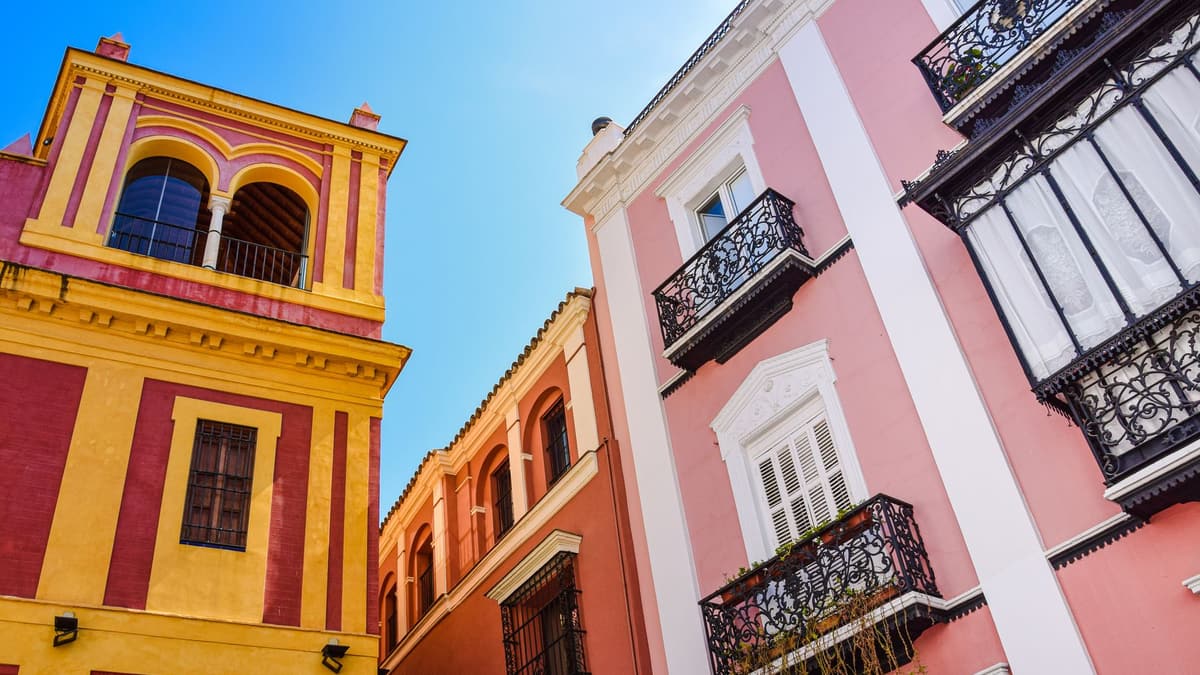
 Barrio Santa Cruz is the Seville of everyone's imagination, a maze of narrow whitewashed lanes, tiny plant-filled squares, wrought-iron balconies dripping with geraniums, and the scent of orange blossom in spring. This was the Jewish quarter in medieval times, and its streets were kept deliberately narrow and winding to hold the shade and confuse the summer heat, which is why it stays cool and dim even at midday. Getting a little lost here is not a failure, it is the entire point, so put the map away for a while and follow whichever lane looks prettiest. You will come out into small squares like the Plaza de Santa Cruz and the Plaza de Dona Elvira, where orange trees stand over tiled benches and the only sound is a fountain and, now and then, a guitar. Look up as you walk, since the balconies and the strips of blue sky between the white walls are half the beauty. There are quiet bars tucked into these lanes serving cold sherry and small plates, and this is a fine place to stop for one. When you are ready to move on, work your way south out of the maze toward the larger streets and the old factory beyond.
The old town gives way to a long, grand building that runs for an entire block, the University of Seville, though for most of its life it was something far more surprising. This was the Royal Tobacco Factory, built in the eighteenth century as the largest industrial building in Spain and, for a time, one of the largest buildings in the whole country. Thousands of women worked here rolling cigars, and one of them, imagined by a French writer, became the fiery heroine of the opera Carmen, which is set right here. Today it holds lecture halls and students instead of tobacco, but the scale of it still impresses, ringed by its own moat and guarded by grand stone gateways. You are welcome to walk into the main courtyards during the day and feel the cool of the vast stone corridors. It makes a nice change of register after the tight lanes of Santa Cruz, a reminder that Seville was a working, wealthy city as well as a beautiful one. From here, turn west and make for the river, a few minutes away, where a golden tower stands at the water's edge.
Down at the riverside stands the Torre del Oro, the Tower of Gold, a twelve-sided watchtower built by the city's Moorish rulers in the thirteenth century to guard the harbor. The name may come from the golden tiles that once covered it, or from the gold and silver that was unloaded here from the Americas, and either story fits a city that grew rich on the river. It once anchored one end of a great chain stretched across the water to stop enemy ships, and it has been a chapel, a prison, and a store over the centuries. Today it holds a small maritime museum, and you can climb to the top for a lovely view up and down the Guadalquivir. Stand on the promenade beside it and watch the rowers and the tour boats on the water, with the broad river curving away past the bullring toward the old sailors' district on the far bank. This is the city's link to the sea and the wider world, the point from which countless voyages once set out. Follow the riverside walk a short way north, and the great white and ochre wall of the bullring rises ahead of you.
 The walk ends at the Plaza de Toros de la Maestranza, the beautiful white and ochre bullring that is one of the oldest and most famous in Spain. Whatever you feel about the tradition itself, the building is a genuine piece of the city's history, an elegant ring of arches and balconies begun in the eighteenth century and still in use during the spring festival. On a quiet day you can take a tour of the ring, the stables, and the small museum, and stand for a moment in the empty arena under the Seville sky. It sits right on the river, a short stroll from where you started, so it closes the loop neatly. From here the smart shopping streets and the cafes of the center are only minutes away, and Plaza Nueva, where you began, is a short walk inland. Find a terrace, order something cold, and let the morning settle. You have crossed a thousand years of the city in a few easy kilometers, from Roman roots through Moorish palaces to golden-age wealth, and barely raised a sweat doing it.
Seville is a city built for walking. Its old center is compact, largely closed to traffic, and stitched together by squares and shaded lanes that only reveal themselves on foot, at the slow pace the heat demands anyway. Cars would miss all of it, the hidden courtyards, the sudden view of the Giralda at the end of an alley, the smell of orange blossom around a corner. Go early or go late, when the light turns golden and the stone glows, and let yourself drift off the route whenever something tempts you, because in this part of Seville the detours are usually better than the plan. If you would rather not wander alone, open the Walk With Me live map to see who else is out walking Seville, and share a square and a cold drink with a little company at the end of the loop.
Все точки прогулки по городу Seville, Spain, по порядку.
Примерно 3,2 км, около 44 минут в спокойном темпе.
Совместимо с Garmin, Komoot, Strava, OS Maps и любыми приложениями для GPX.
September 19, 2026 · 9 min read
A self-guided Athens walking tour through the old lanes of Plaka and Anafiotika, around the ancient Agora, and up to the Acropolis itself.
September 19, 2026 · 8 min read
A self-guided barcelona walking tour from Placa de Catalunya down the Ramblas into the Gothic Quarter and El Born to Santa Maria del Mar.
September 19, 2026 · 8 min read
A self-guided bruges walking tour from the Markt and its belfry through the squares and along the canals to the Beguinage and the Lake of Love.