September 19, 2026 · 9 min read
Athens Acropolis and Plaka Walk
A self-guided Athens walking tour through the old lanes of Plaka and Anafiotika, around the ancient Agora, and up to the Acropolis itself.
548
Зробіть цю прогулянку разом з іншими людьми на наступному запланованому турі.
Приблизно 2,9 км, приблизно 42 хвилин у легкому темпі · 9 зупинок
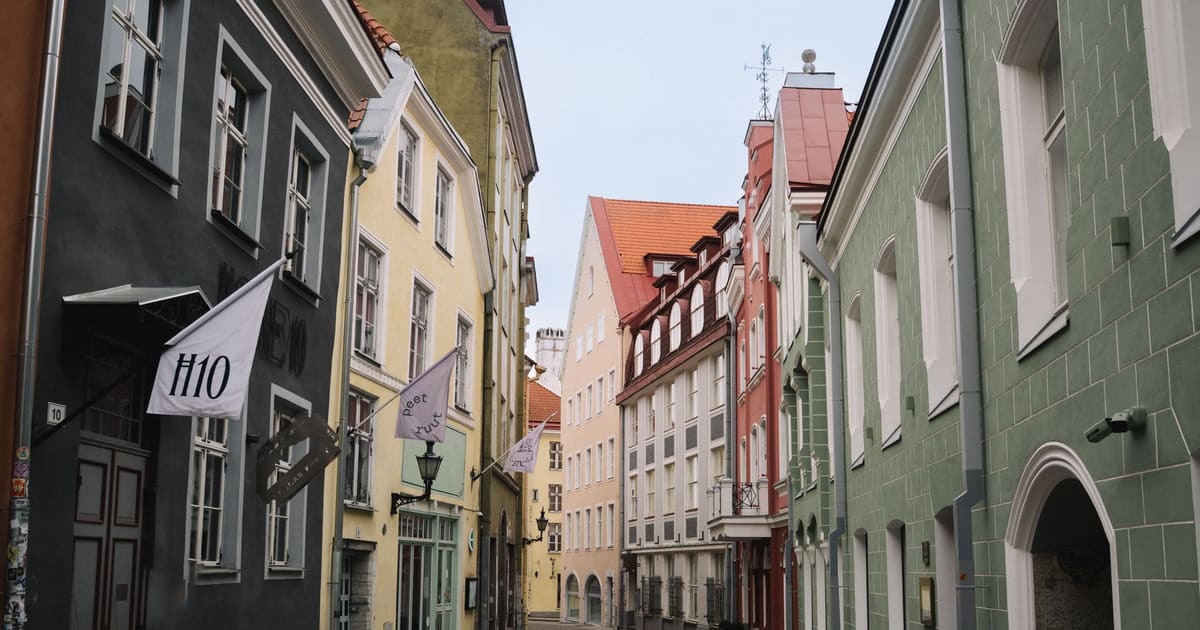
Tallinn has one of the best-preserved medieval old towns in Europe, a walled maze of cobbled lanes, red roofs, church spires, and merchants' houses that looks barely touched since the Hanseatic traders grew rich here six hundred years ago. This self-guided Tallinn walking tour winds up through the two halves of that old town, the lower town of the guilds and the upper town of the rulers on its hill, and finishes at the viewpoints that give you the whole fairytale skyline at once. It is one of the most atmospheric self-guided walking tours you can do, under three kilometers but climbing from the town gates to the castle heights. Wear shoes for cobbles and a slope or two, bring a layer for the Baltic air, and set aside an unhurried few hours.
Give yourself three or four hours, more if you climb a tower or linger over lunch in one of the old merchant cellars. Tallinn's old town is small and walkable, but its lanes are cobbled and uneven and there is a climb up to the upper town, so wear sturdy, comfortable shoes and take the slope slowly. The Baltic weather is changeable and can be cold and wet even outside winter, so bring a warm layer and something for rain, and take comfort that cozy cafes and cellar restaurants are never far. The whole town is ringed and threaded by its medieval walls and towers, which makes it easy to keep your bearings, and half the pleasure is simply drifting down a lane to see where it goes. It does get busy when cruise ships are in, so an early start buys you quieter streets and better photographs. And do stop for the local warmth as you go, a coffee, a marzipan sweet, or a mug of spiced wine in the colder months, because Tallinn does hospitality beautifully.
Begin at the Viru Gate, the most photographed entrance to the old town, where two stout round towers hung with ivy and flowers frame the start of the main street in from the modern city. These towers are the surviving remnants of the medieval defensive gate that once controlled this approach, part of the great ring of walls that still wraps much of the old town. Passing between them, you step out of the twenty-first century and into the Middle Ages in the space of a few paces, which is exactly the right way to arrive. Just inside, a lively flower market usually brightens the street, and the lane ahead, Viru Street, is the busy main artery leading into the heart of the lower town, lined with shops, cafes, and old gabled houses. Look back at the towers from inside to appreciate how they framed the gateway, then follow Viru Street gently downhill and inward, letting the crowds carry you toward the great open square at the center of it all, the true heart of medieval Tallinn.
Viru Street opens into the Town Hall Square, the Raekoja plats, the grand cobbled market square that has been the center of Tallinn's life for some eight centuries. On its southern side stands the Gothic Town Hall, the oldest of its kind in northern Europe, a proud stone building topped by a slender spire and a weathervane of an old warrior called Old Thomas, the guardian of the city. The square is ringed by pastel merchants' houses and cafe terraces, and it has hosted markets, festivals, and the occasional public punishment for hundreds of years, while today it holds a famous Christmas market around a great tree in winter. Somewhere on the square, a small stone marks the one spot from which you can supposedly see the tops of five church spires at once, a fun puzzle to solve. Pause here to take in the heart of the lower town, perhaps over a coffee, and look for the old town pharmacy in one corner, in business since the early fifteenth century and one of the oldest continuously running in Europe. When you are ready, leave by one of the small lanes off the square, ducking into the narrow passages that made this a trading town.
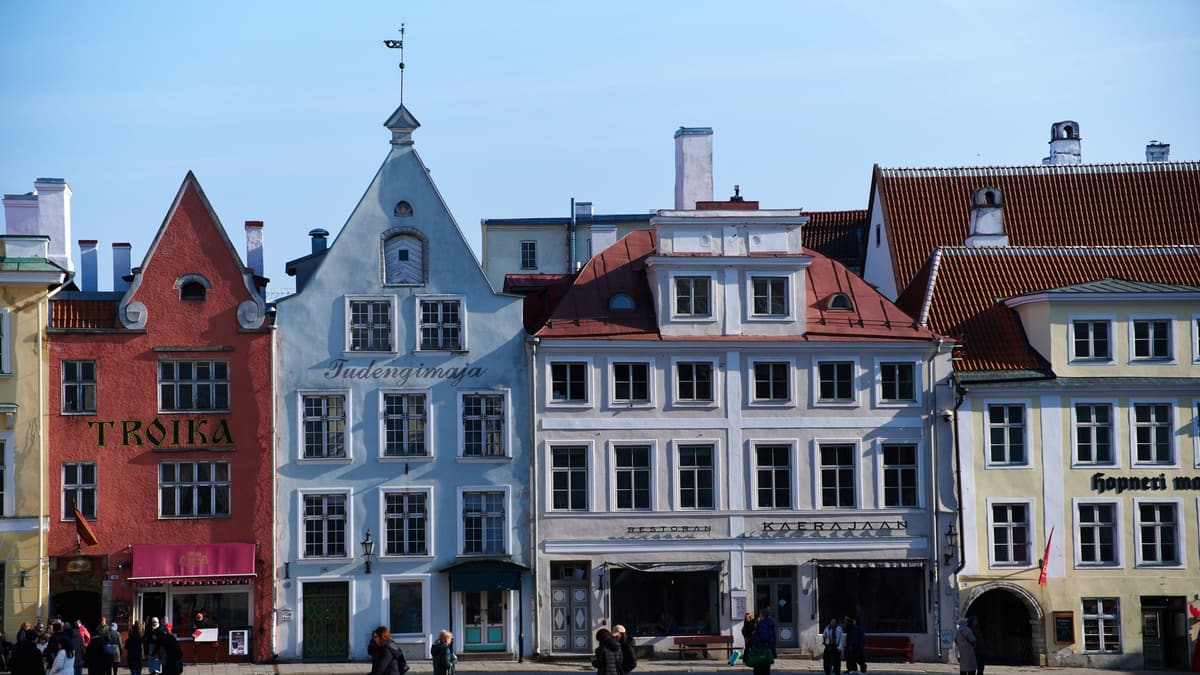 Tucked off the streets nearby is St. Catherine's Passage, the Katariina kaik, one of the most atmospheric corners of the old town, a narrow medieval lane running between two old streets beside the ruined wall of the former St. Catherine's Church. Along one side, old carved gravestones from the church are set into the stone wall, and the passage is spanned by rough archways, its worn cobbles and leaning walls feeling every bit their six hundred years. In the small workshops opening off it, the artisans of St. Catherine's Guild practice traditional crafts, blowing glass, throwing pots, stitching leather, and making hats and quilts, and you can watch them at work and buy what they make. It is a short lane but a magical one, dim and timeworn and easy to miss, so slow down and take it in. This is the old Tallinn of craftsmen and guilds distilled into a single passage. Follow the lanes onward and northward from here, deeper into the quieter streets of the lower town, toward the tall spire that has been guiding sailors and travelers into the city for centuries.
Ahead rises St. Olaf's Church, the Oleviste, whose enormous green spire dominates the northern skyline of the old town. For a period in the Middle Ages this was reckoned to be one of the tallest buildings in the entire world, its steeple raised deliberately high so that it could be seen far out at sea and act as a beacon for ships approaching the trading city. The spire has been struck by lightning and burned several times over the centuries and rebuilt a little lower each time, but it remains a soaring, dizzying sight. The church interior is plain and white and calm, austere in the northern Protestant way, but the real draw is the climb, since in season you can toil up the tight, winding stairs inside the tower to a narrow open gallery near the top, with a breathtaking and slightly vertiginous view over the red roofs and out to the harbor. It is a hard climb up a claustrophobic stair, but the payoff is one of the great views of the city. Catch your breath, then continue north through the streets toward the edge of the old town and the sea, where a great round tower guards the coastal road.
At the northern edge of the old town you reach Fat Margaret, a squat, massive round tower that guarded the seaward gate and the road down to the harbor, its walls some four meters thick, built stout and low to withstand cannon fire. The nickname suits its broad, heavy shape, and it makes a fine bookend to the tall thin spires you have been following. Inside, it now houses the Estonian Maritime Museum, several floors telling the story of a seafaring nation through old diving suits, ship models, nautical instruments, and tales of the Baltic, and a climb to the rooftop terrace gives a fine view over the harbor and the town walls. Beside it stands the Great Coastal Gate, the old passage down to the port, and from here you can see one of the best-preserved stretches of the medieval town wall running back up the hill, thick and toothed with towers. This was the city's front door to the sea and the trade that made it rich. Have a look at the tower and the old gate, then turn back inland and begin the climb, following the lanes up toward the upper town on its hill, a change of pace and of world.
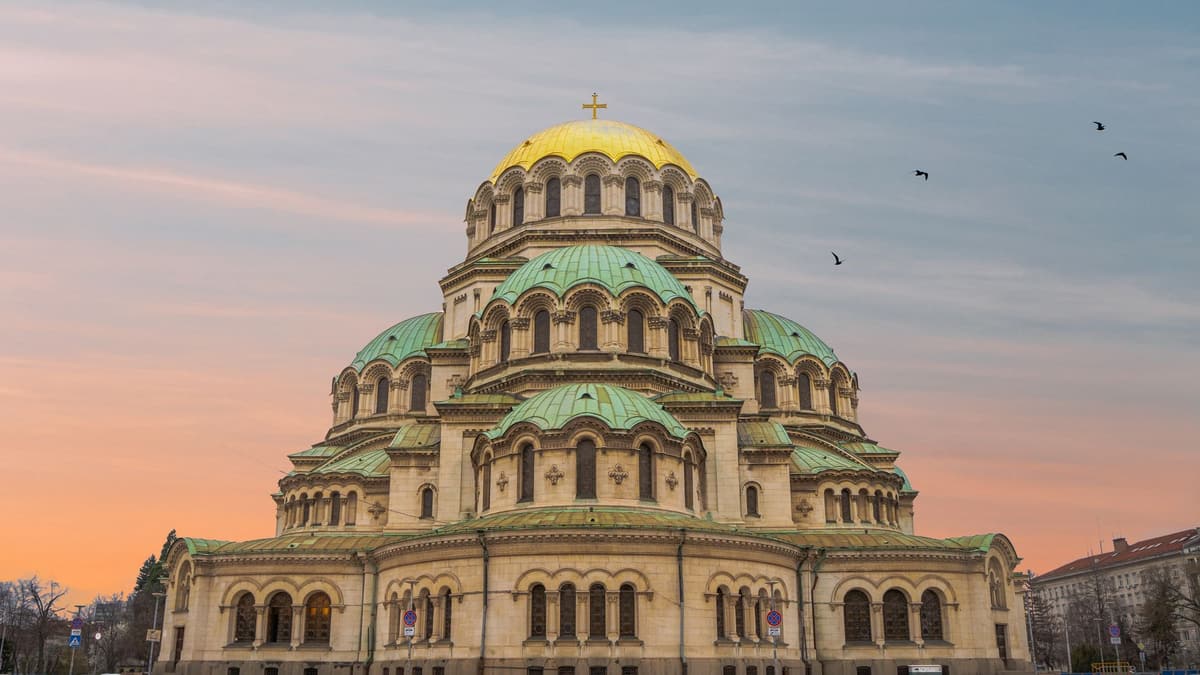 The climb up to the upper town brings you to the Danish King's Garden, the Taani Kuninga Aed, a terraced green space set against the old wall on the slope of Toompea hill, with three tall medieval towers standing guard along it. This quiet garden carries one of the great legends of the country, since it is said that in a battle here in the year 1219 the Danish army was losing until a red flag with a white cross fell from the sky, rallied them to victory, and became the flag of Denmark, the oldest national flag still in use, so the Danes trace their banner to this very hillside. Ghostly hooded monk figures stand in the garden as a nod to its history, and the terraces give lovely framed glimpses back over the lower town and its spires. It is a peaceful, atmospheric pause on the climb, with the massive walls and towers close around you. Take in the view and the story, then continue up the short, steep lane onto the top of Toompea, the ancient seat of power, where an onion-domed cathedral faces the pink palace of parliament.
On top of Toompea hill you arrive before the Alexander Nevsky Cathedral, a grand Russian Orthodox church of black onion domes and elaborate stonework, planted here at the turn of the twentieth century when Estonia was under Russian rule, deliberately facing down the seat of local power across the square. It is a striking and slightly controversial building, an emblem of empire that many Estonians once wanted gone, and yet it has become a familiar part of the skyline, its domes and gilded crosses unmistakable. Step inside if it is open, since the interior is dim and rich with icons, mosaics, and the glow of candles, and the mighty bells sometimes ring out across the hill. Directly opposite stands the long pink building of Toompea Castle, the historic seat of power now home to the Estonian parliament, with a tall medieval tower called Tall Hermann at its far end, where the national flag is raised each dawn. This hilltop has been the center of rule over the land for the best part of a thousand years. Take in the two rival buildings facing each other across the square, then follow the lanes a short way to the edge of the hill, where the ground falls away and the views begin.
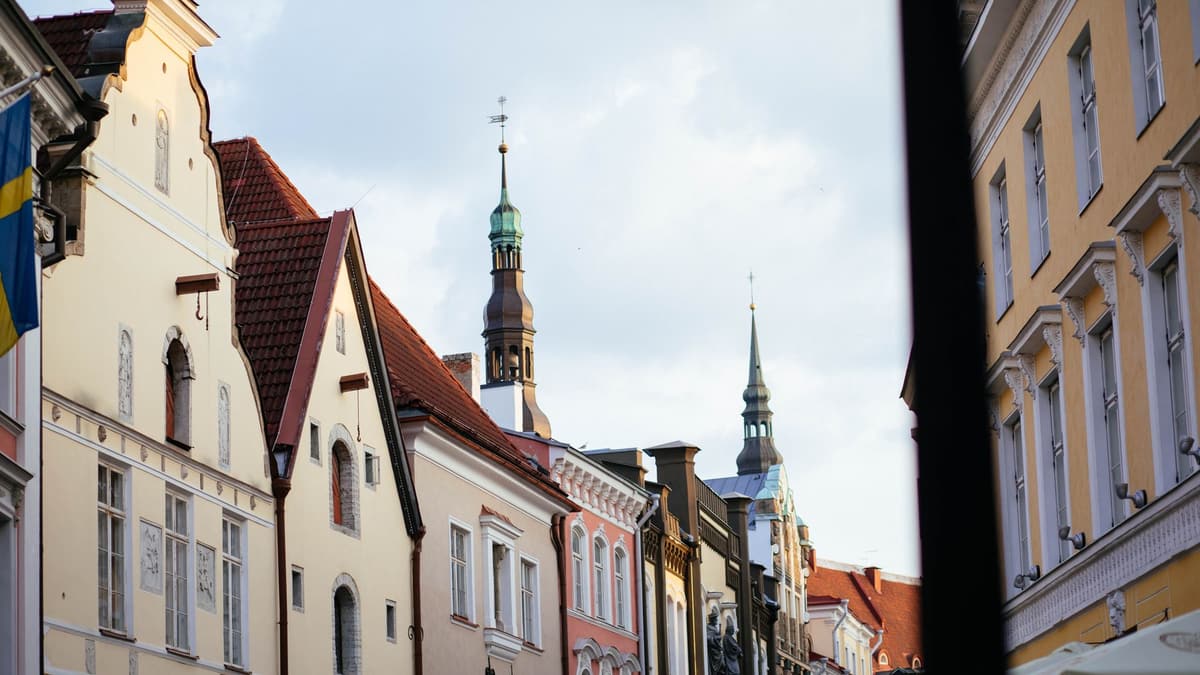 A minute's walk brings you to the Kohtuotsa viewing platform, and it delivers the classic postcard view of Tallinn, the one on all the covers. From the railing at the edge of Toompea hill, the whole lower town spreads out below you in a sea of orange and red roofs, pierced by the green spires of the old churches, with the medieval walls and towers threading through it and the modern city and the blue of the harbor beyond. It is a genuinely stunning outlook, and there is often a musician playing and a wall bearing the cheerful painted slogan that has become a photo tradition. Stand and pick out the landmarks you have walked past, the spire of St. Olaf's, the tower of the Town Hall, the round bulk of Fat Margaret by the sea. This is the view that sells the city, and it earns its fame. Take your photographs and your time, then follow the path a short way around the rim of the hill to a second, quieter terrace looking the other way.
The walk ends at the Patkuli viewing platform, a little further around the hill, quieter than the first and looking out over a different sweep of the city, toward St. Olaf's soaring spire, the long line of the northern town wall with its cluster of tall towers, and the harbor and sea beyond. A long flight of old stone steps drops down from here toward the lower town, the historic way up and down the hill. It is a calmer, often less crowded spot to take a last, lingering look, with a slightly wilder and more romantic view of the medieval defenses than the famous terrace offers. Lean on the rail and take it all in, the whole toy-town of spires and walls and roofs you have just threaded on foot, from the flower-framed gate at the bottom to these heights at the top. When you are ready, you can wander back through the upper town or take the long stairway down into the lower one to rejoin the life of the streets. In a couple of easy, cobbled kilometers you have crossed six centuries and two towns, and seen why Tallinn feels like a fairytale that someone forgot to end.
Tallinn is a city made for walking, its old town a compact medieval maze of lanes far too narrow and cobbled for cars, best unravelled slowly and on foot. Walking is the only way to feel the real magic of the place, the sudden spires at the end of an alley, the guild workshops down a hidden passage, the way the lower town of merchants gives way to the upper town of rulers as you climb. The walls and towers keep you oriented, so getting a little lost only turns up more of the town's quiet corners. Come early to beat the cruise crowds, wear shoes for the cobbles and the climb, and let yourself drift off the route whenever a lane tempts you. If you would rather not wander alone, open the Walk With Me live map to see who else is out walking Tallinn, and share a warm drink and the view from the hill with a little company at the end.
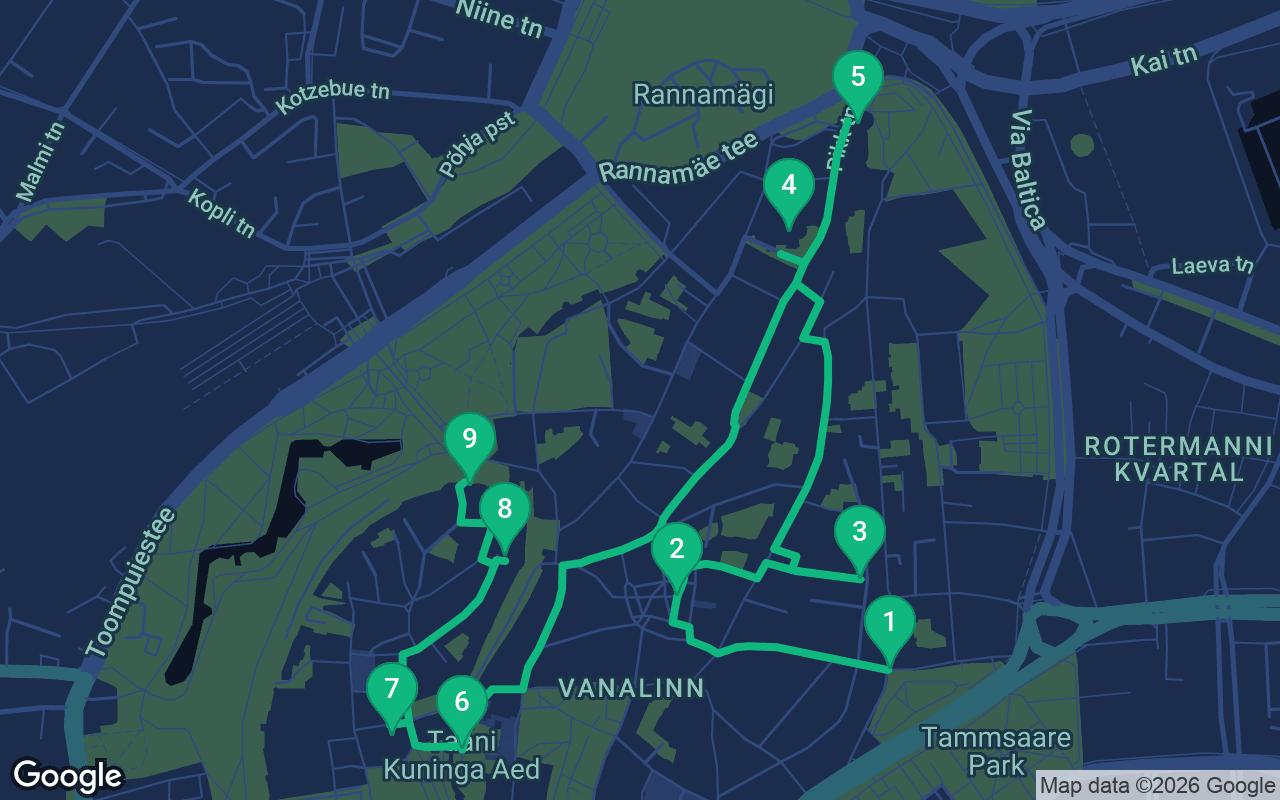
Кожна зупинка цієї прогулянки через Tallinn, Estonia, по порядку.
Приблизно 2,9 км, приблизно 42 хвилин у легкому темпі.
Працює з Garmin, Komoot, Strava, OS Maps та будь-яким застосунком GPX.
September 19, 2026 · 9 min read
A self-guided Athens walking tour through the old lanes of Plaka and Anafiotika, around the ancient Agora, and up to the Acropolis itself.
September 19, 2026 · 8 min read
A self-guided barcelona walking tour from Placa de Catalunya down the Ramblas into the Gothic Quarter and El Born to Santa Maria del Mar.
September 19, 2026 · 8 min read
A self-guided bruges walking tour from the Markt and its belfry through the squares and along the canals to the Beguinage and the Lake of Love.