
October 11, 2026 · 9 min read
Amsterdam Anne Frank Walking Tour
From the Hollandsche Schouwburg through the old Jewish Quarter, past the Dockworker and the Dam, to the Anne Frank House on the Prinsengracht.
589

October 11, 2026 · 13 min read

 A barátaid ingyen sétálnak
Minden túra ütemezett csoportos sétaként is fut, amelyhez csatlakozhatsz az appban.
További hangos túrák itt: Paris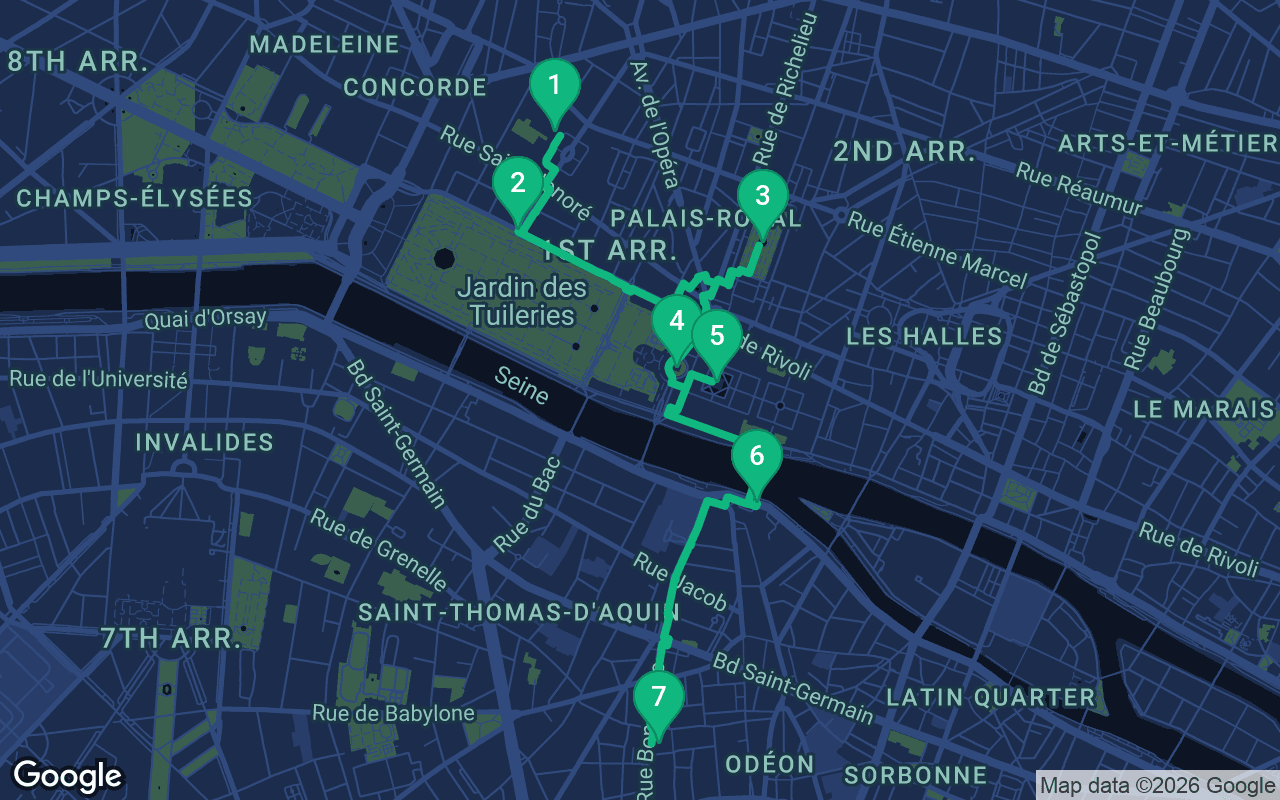
Nagyjából 3,9 km, körülbelül 56 perc kényelmes tempóban.
Ez a séta hangosvezetéssel is elérhető
Nyomj a lejátszásra az első 3 megállónál, és itt helyben meghallgathatsz egy 30 másodperces részletet a narrációból. Az alkalmazásban a bevezető és ez a 3 megálló teljes hosszában ingyenes, és mindegyik hangjelzéssel szól, amint megérkezel. A teljes narrált túra mindössze $15.99 összegért a tiéd lehet, ami egy egyszeri, örökre szóló vásárlás.
Működik Garmin, Komoot, Strava, OS Maps és bármilyen GPX alkalmazással.
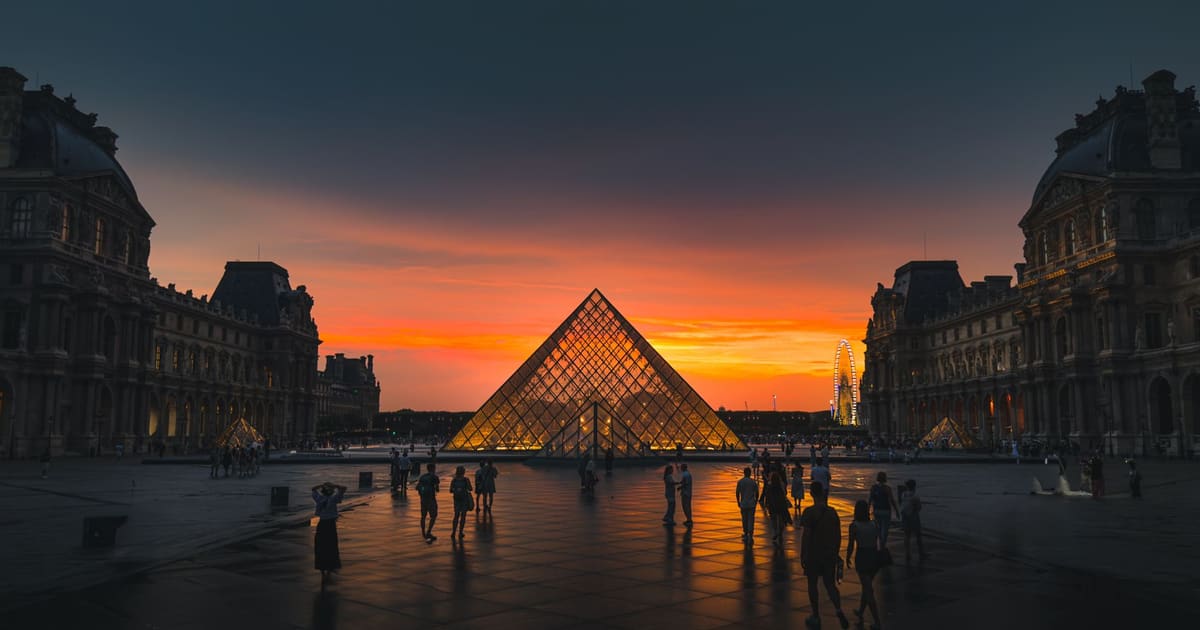
It starts after midnight, in a hotel room. Robert Langdon, a Harvard symbologist, is in Paris to give a lecture. The police want him at the Louvre, right now. The museum's curator, Jacques Saunière, has been shot inside the Grand Gallery, and he has left a trail of coded clues behind him. Soon Langdon will be a man on the run from the police, with a police cryptographer named Sophie Neveu at his side and a killer working through the city ahead of them. That's The Da Vinci Code, Dan Brown's 2003 thriller, filmed by Ron Howard with Tom Hanks as Langdon and released in May 2006. This is an unofficial walk, not made with or endorsed by Dan Brown, his publishers or the filmmakers. It's a walk about fact and fiction: what's real in these places, what Brown invented, and what one church felt it had to put on a sign. One thing to know about the route: the real streets don't run in the book's order. So we'll start with the first chapter, reach the novel's last pages early, then go back to the night at the Louvre and finish with the church scene at Saint-Sulpice. Spoilers throughout. It's one of our self-guided walking tours, about 3.9 kilometers from the Place Vendôme to Saint-Sulpice.
The walking adds up to about 56 minutes, so allow around two hours with time at each stop. The route is paved and flat, through two gardens, under the Louvre and across the Seine on a footbridge. The Tuileries and the Palais-Royal garden close in the evening, and the inverted pyramid is indoors, in the Carrousel du Louvre shopping concourse, so check opening times and walk in the daytime. The Palais-Royal has a little noon cannon that fires only on certain dates, so if you'd like to hear it, check the schedule before you go. Saint-Sulpice is a working church. You can see the brass line and its obelisk inside, free, during opening hours, but keep quiet and don't use flash during services. Look down as you walk, too: some of the bronze markers in this story are set in the pavement. The nearest metro stations at the start are Tuileries and Opéra. At the end, the metro is a few minutes' walk from the church.
You're on the Place Vendôme. Find number 15, the Ritz Paris. You can admire it from the square; there's no need to go in.
This is where the story begins. In the first chapter, Langdon is asleep upstairs when the front desk wakes him after midnight. A police lieutenant named Collet has come for him. There's been a death at the Louvre, and the police want the American professor there. Langdon has no idea how the night will end.
The hotel is as real as it looks. It was opened in 1898 by César Ritz, and it reopened in June 2016 after a long restoration. Brown put his hero in a real luxury hotel, and it's still here and still working, for guests who will never get a call from the police.
Remember this building. At the very end of the novel, in its epilogue, Langdon wakes up here again. Then he goes out for one last walk through Paris, following a line of bronze markers to the Louvre. Because of how the streets fall, we'll reach that ending sooner than you'd think.
But first, the drive. Collet takes Langdon to the Louvre by police car, and the car's route is our route. Walk south out of the square on Rue de Castiglione to Rue de Rivoli. The Tuileries Garden gate is straight across. About five minutes.
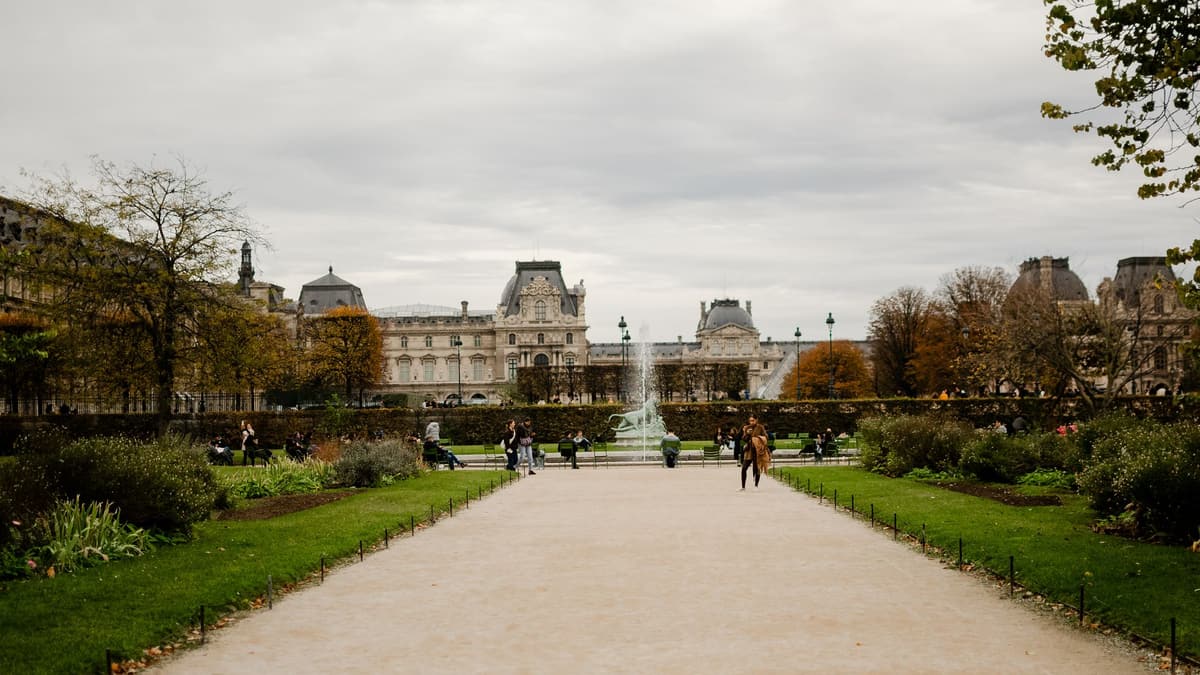
You're at the gate of the Tuileries Garden on Rue de Rivoli, looking south down the garden. Beyond the trees, to your left, is the Louvre.
In chapter 3, the police Citroën comes racing down Rue de Castiglione behind you, then into the Tuileries and through the garden, on through the Arc du Carrousel, the little triumphal arch near the Louvre, and up to the glass pyramid. It's a thrilling ride. It's also impossible. In 2005, a professor at Middlebury College, Thomas Beyer, wrote an annotated guide to the novel, and he called this drive a serious blunder. The gardens are closed to motor traffic. No police car, however urgent, races through the Tuileries. Look around you and you'll see why: paths, lawns, statues and people.
The garden itself has a real story worth the stop. It was begun in 1564 for Catherine de' Medici. It took its name from the tile works, the tuileries, that once stood on this ground. In 1664 the great garden designer André Le Nôtre redesigned it. And it became fully public in 1871, when the Tuileries Palace was burned during the uprising of the Paris Commune. Since 2005, the garden has been managed by the Louvre.
In the novel, the car heads straight on to the pyramid. We'll take a different path, and it leads straight to the end of the book. Leave the garden and walk east along Rue de Rivoli under its long arcades. Just before the Place du Palais-Royal, turn left across Rue Saint-Honoré to Place Colette, beside the Comédie-Française. Go through the archway there into the palace courtyard and on into the garden, as far as the fountain. About fourteen minutes.
You're in the garden of the Palais-Royal, by the fountain. The garden is framed on every side by arcaded galleries.
We've jumped forward to the novel's last pages. The chase is over, and Langdon is back at the Ritz. He wakes, and he goes out walking, down Rue de Richelieu, past these gardens, and finds what he's looking for in a royal arcade: small bronze discs set in the ground. He follows them through the Passage Richelieu, toward the Louvre.
Those discs are real, and you can hunt for them. They mark the old Paris meridian, a line running north to south through the city. In 1994 the Dutch artist Jan Dibbets set 135 of them across the city, as a work called Hommage à Arago. Each disc is 12 centimeters wide and marked ARAGO, with an N and an S for north and south. The Palais-Royal has the densest run of them on our route. Seven are listed in and around it, in the Montpensier and Chartres peristyles, the colonnades at the garden's south end, in the Galerie de Nemours and on Place Colette, plus one more at 24 Rue de Richelieu. Some have disappeared over the years, so look down carefully, and count yourself lucky for each one you find.
There's another meridian story in this garden. In 1786 a clockmaker named Rousseau set up a little cannon here. On sunny days a lens focused the sunlight on its fuse, and at noon it fired, so Parisians could set their watches. Daily firing ended in 1911. Today the cannon fires only on certain dates.
Langdon follows the markers south, and so do we. Leave the garden at its south end by Place Colette and cross Rue de Rivoli. Walk a short way west along the Louvre side to the Carrousel du Louvre entrance at number 99, and follow the signs down to the inverted pyramid. About ten minutes.
Mit tartalmaz
Túráink meditatívnak és magával ragadónak készültek: mozogsz, és egyszerűen hallgatod. Együtt mindig jobbak, és az alkalmazás szinkronban játssza le a narrációt, így te, a párod és a barátaid ugyanabban a pillanatban hallhatjátok az egyes megállókat.
You're standing under the inverted pyramid, in the Carrousel du Louvre. Look up.
A megálló folytatása a teljes hangos túrában hallható.
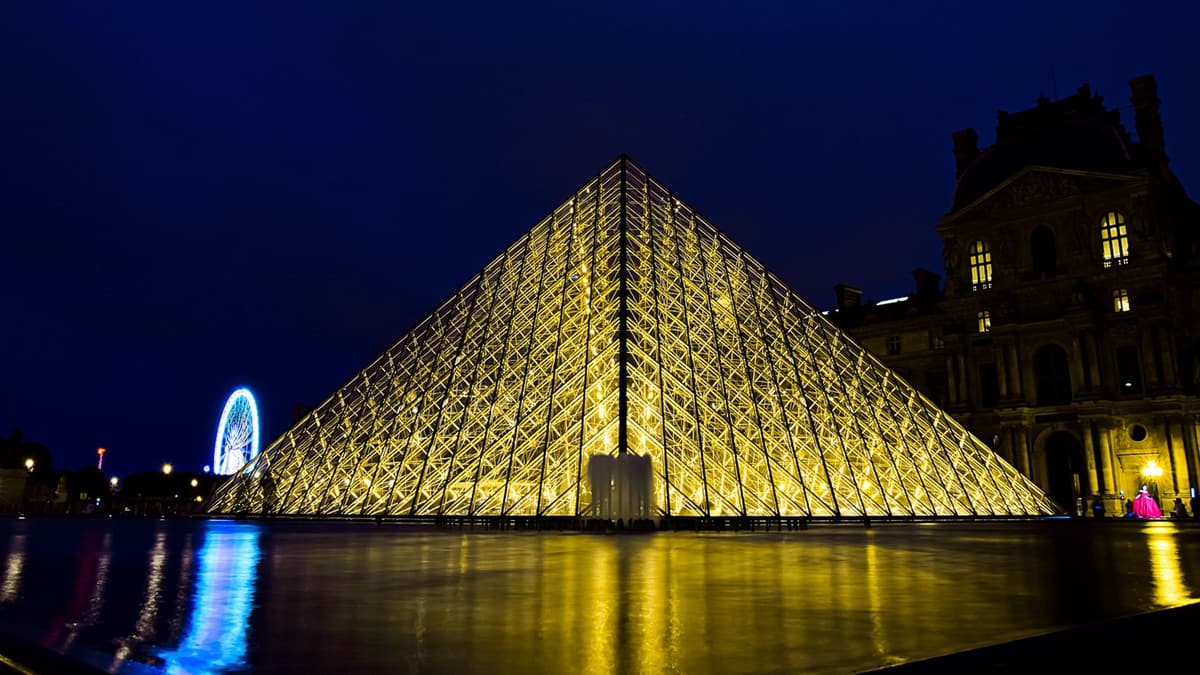
You're in the Cour Napoléon, the great courtyard of the Louvre, in front of I. M.
A megálló folytatása a teljes hangos túrában hallható.
You're on the Left Bank, facing the domed Institut de France, at the end of the Pont des Arts.
A megálló folytatása a teljes hangos túrában hallható.
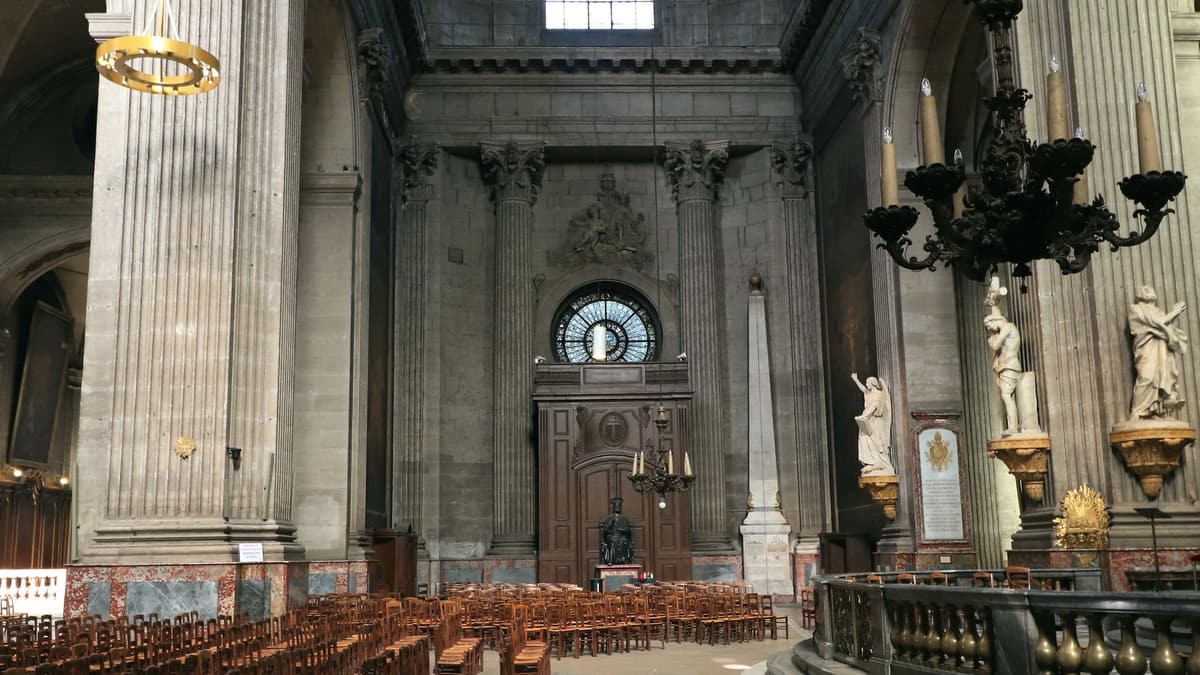
You're on the Place Saint-Sulpice, beside the fountain, facing the church of Saint-Sulpice. If it's open, step inside.
A megálló folytatása a teljes hangos túrában hallható.
Tedd meg ezt a sétát másokkal a következő tervezett túrán.
Körülbelül 3,9 km, nagyjából 56 perc kényelmes tempóban · 7 megálló
A barátaid ingyen sétálnakOctober 11, 2026 · 9 min read
From the Hollandsche Schouwburg through the old Jewish Quarter, past the Dockworker and the Dam, to the Anne Frank House on the Prinsengracht.
October 11, 2026 · 11 min read
From Van Houten's street by the Vondelpark past Leidseplein, the Rijksmuseum passage and the famous canal bench to the Anne Frank House.

October 11, 2026 · 10 min read
Follow the last days of April and May 1945 from the Anhalter Bahnhof ruin past the Gestapo site and Brandenburg Gate to the Moltke Bridge and the Reichstag.
