
October 11, 2026 · 9 min read
Amsterdam Anne Frank Walking Tour
From the Hollandsche Schouwburg through the old Jewish Quarter, past the Dockworker and the Dam, to the Anne Frank House on the Prinsengracht.
589

October 11, 2026 · 13 min read

 A barátaid ingyen sétálnak
Minden túra ütemezett csoportos sétaként is fut, amelyhez csatlakozhatsz az appban.
További hangos túrák itt: Paris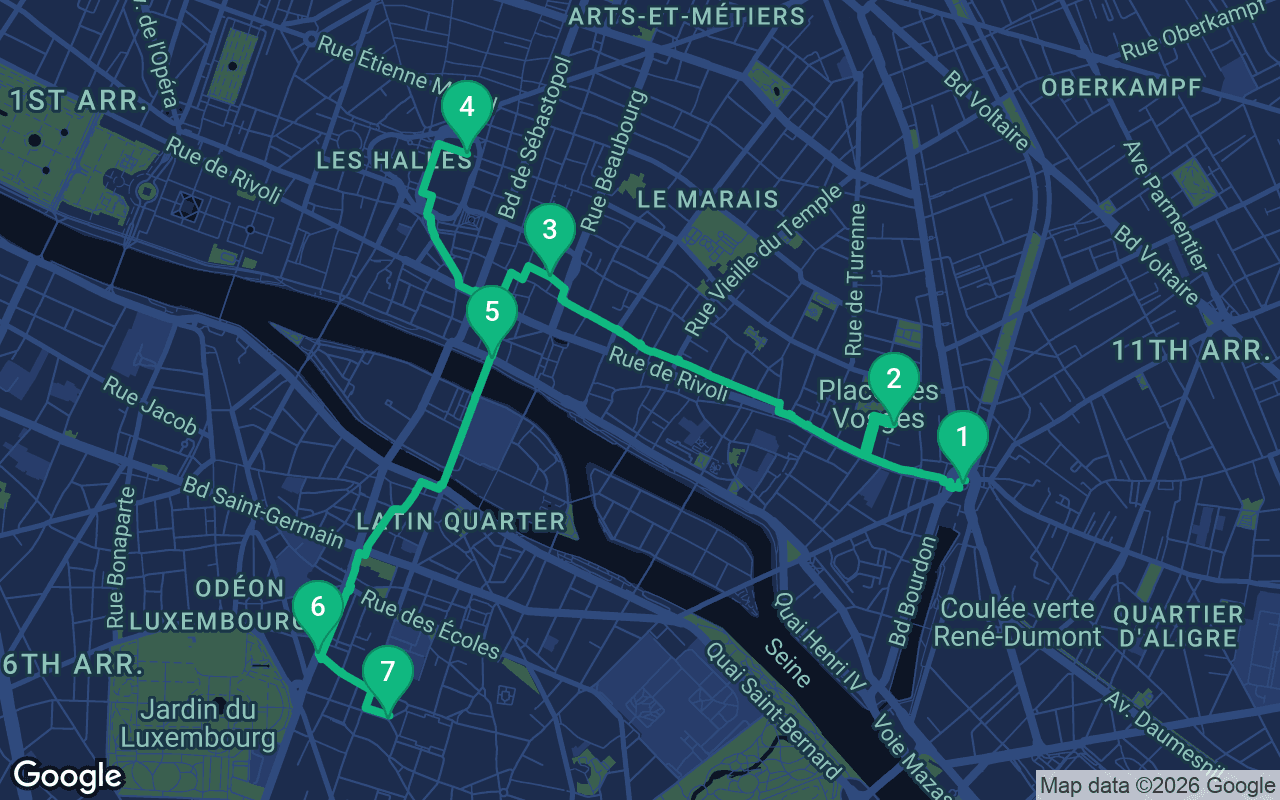
Nagyjából 5,4 km, körülbelül 76 perc kényelmes tempóban.
Ez a séta hangosvezetéssel is elérhető
Nyomj a lejátszásra az első 3 megállónál, és itt helyben meghallgathatsz egy 30 másodperces részletet a narrációból. Az alkalmazásban a bevezető és ez a 3 megálló teljes hosszában ingyenes, és mindegyik hangjelzéssel szól, amint megérkezel. A teljes narrált túra mindössze $17.99 összegért a tiéd lehet, ami egy egyszeri, örökre szóló vásárlás.
Működik Garmin, Komoot, Strava, OS Maps és bármilyen GPX alkalmazással.
Many people think Les Misérables is about the French Revolution. It isn't. Its barricade belongs to a small, failed rising that lasted two days, the fifth and sixth of June 1832. Paris was sick with cholera. A popular general died, his funeral turned into a revolt, and by the next evening the last rebels had been crushed in the streets around a church. A young poet named Victor Hugo was caught in the crossfire that first afternoon. Thirty years later he turned those days into Les Misérables. This walk follows both stories and keeps them apart. The first three stops are history, told in order. Then come three places from the novel: its invented barricade, Javert's end at the river, and a step back in time to the students' café. You finish at the Panthéon, where Hugo lies. The walk starts at the Place de la Bastille and covers about five and a half kilometers, one of the longer of our self-guided walking tours.
The walking takes about an hour and a quarter. With the stories, allow two and a half hours. Two legs are long, around fifteen minutes each: across the Marais, and from the river up into the Latin Quarter. The route is mostly flat, with a gentle climb at the end to the Panthéon. Start at Bastille metro station, lines 1, 5 and 8. At the finish, Luxembourg station on RER line B is about five minutes away, or Cardinal Lemoine metro. The Victor Hugo house museum is closed on Mondays, and the Panthéon charges for entry; check times and prices before you go. If you love the novel, one detour is worth knowing: the Paris sewers museum near the Pont de l'Alma, about four kilometers west, where you can picture Jean Valjean's escape underground.
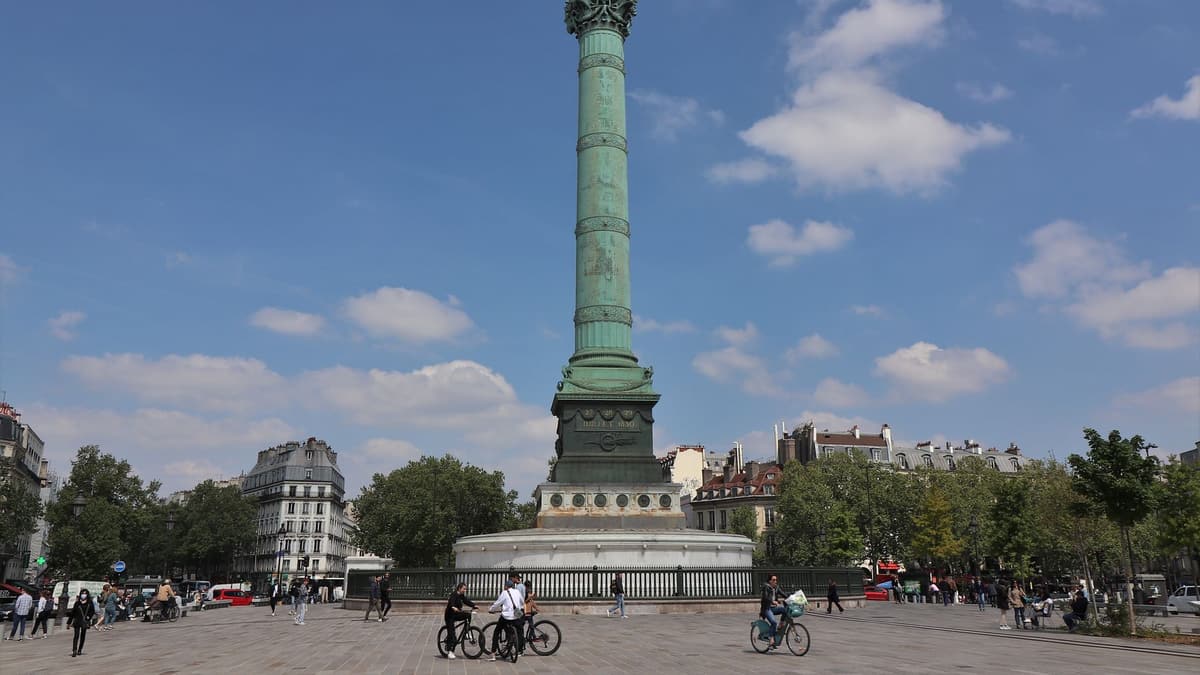
You're in the Place de la Bastille. In the middle rises the July Column, a memorial to the dead of the revolution of July 1830. In June 1832 it was only going up, wrapped, as Hugo puts it, "in an immense shirt of woodwork."
Look at its base and picture something stranger. That base was built for another monument. In 1810 Napoleon decreed a fountain for this square: a bronze elephant, cast from cannon taken from the Spanish insurgents. It was never built. All Paris got was a full-size model of wood and plaster, put up in 1814, which slowly rotted until it was torn down in 1846. Hugo knew it well. In the novel, the street boy Gavroche makes his home inside it. Hugo, in Isabel Hapgood's translation, calls it "sombre, mysterious, and immense," and he swears that a real child had once been put on trial for sleeping in it.
Now the history. In the spring of 1832 cholera swept Paris and killed thousands. One of its victims, on the first of June, was General Jean-Maximilien Lamarque, an opposition deputy with revolutionary and Bonapartist credentials. Many republicans felt that the king, Louis-Philippe, had abandoned the ideals of the revolution of 1830.
His funeral, on the fifth of June, drew thousands into the streets, and hundreds of Spaniards, Poles, Portuguese, Germans and Italians marched in it. The procession came along the boulevards to this square. In the novel, Hugo reconstructs what happened next, just south of here at the Pont d'Austerlitz. Lafayette spoke over the coffin. A man in black on horseback appeared with a red flag. The crowd roared "Lamarque to the Pantheon!" Then three shots rang out. Hugo says the first killed an officer, the second an old woman closing her window, and the third only grazed a shoulder. At about five in the afternoon the dragoons advanced, and Paris was at war with itself.
Follow your map north-west for about five minutes, into the arcaded square of the Place des Vosges, and find number 6.
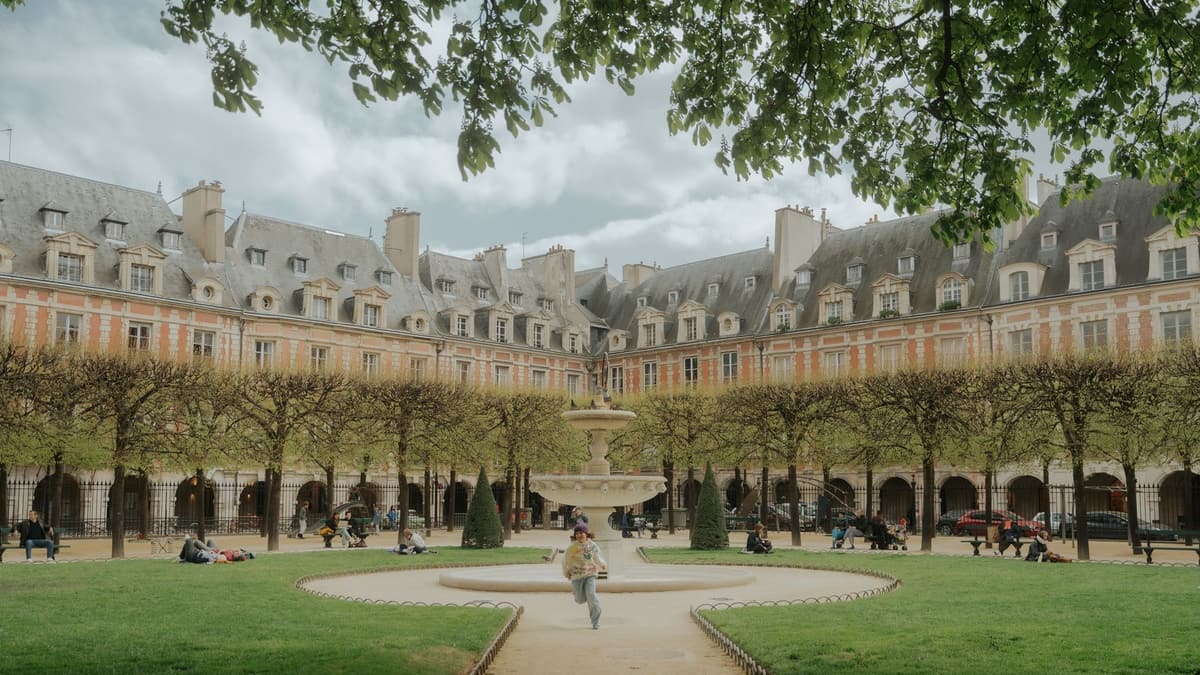 You're under the arcades of the Place des Vosges, called the Place Royale in Hugo's day. Number 6 is the Maison de Victor Hugo. His apartment was on the second floor, as the French count it, and today it is a museum.
On the afternoon of the fifth of June 1832, the young writer was across town. Caught in the fighting in a covered passage, he found himself between two fires. He survived to write about it, but not yet.
Four months later, on the eighth of October 1832, Hugo moved in here, and he stayed until 1848. These were busy years. He wrote plays here, among them Ruy Blas, and books of poems. And on the seventeenth of November 1845, in this apartment, he began a novel he called Les Misères, The Miseries. It was the first version of Les Misérables.
He did not finish it here. Hugo wrote the barricade chapters far from Paris, in exile on the island of Guernsey, in the early 1860s. The novel finally came out in 1862, thirty years after the rising.
Inside you can walk through the rooms where he lived. There is also furniture in a Chinese style that Hugo designed for the Guernsey home of his companion, Juliette Drouet, and the desk where he wrote the first series of his epic poem The Legend of the Ages, which he gave her in 1859.
In the novel, Hugo also sets out the odds. He counts twenty-four thousand soldiers held ready in the city on the day of the funeral, and thirty thousand more around it.
Leave the square on its western side and follow your map west through the Marais for about sixteen minutes, to the Gothic church of Saint-Merri on Rue Saint-Martin, just south of the Centre Pompidou.
You're beside the church of Saint-Merri. Its Gothic front faces Rue Saint-Martin. The narrow street along its side is the Rue du Cloître-Saint-Merri, the cloister street. Around the corner are the Centre Pompidou and the colorful Stravinsky fountain. On the sixth of June 1832, this was the last stronghold of the rising.
By the evening of the fifth, the troops had penned the revolt into the old center, between the boulevards, the river and the Bastille. Inside that box, barricades had gone up across the narrow streets. The rebels came from republican clubs such as the Society of the Friends of the People and the Society of the Rights of Man, and they included law and medical students, craftsmen and workers. Their best-known figures, Lafayette among them, hesitated.
Here, the last of them dug in near the corner of Rue Saint-Martin, led by a republican named Charles Jeanne. Hugo, in the novel, calls it "that famous house No. 50, which was the fortress of Jeanne." On the sixth, the army and the National Guard closed in, and the fighting went on until early evening. Then the cloister fell, and most of its defenders were killed.
How many died in the two days? Around eight hundred killed or wounded is the usual figure, but estimates vary widely. Paris's own museums warn that the numbers differ by as much as four times. The dead were on both sides: rebels, soldiers, National Guardsmen, and bystanders.
Afterwards there were trials. Eighty-two people were convicted. Seven were sentenced to death, and the king commuted every one of those sentences.
That is the history. Now Hugo takes it and moves it a few streets north.
Walk north up Rue Saint-Martin past the Centre Pompidou, turn left onto Rue Rambuteau and follow it west, across the Boulevard de Sébastopol, to where Rue Mondétour meets it, about seven minutes.
Mit tartalmaz
Túráink meditatívnak és magával ragadónak készültek: mozogsz, és egyszerűen hallgatod. Együtt mindig jobbak, és az alkalmazás szinkronban játssza le a narrációt, így te, a párod és a barátaid ugyanabban a pillanatban hallhatjátok az egyes megállókat.
You're on Rue Rambuteau, at the end near Les Halles, opposite Rue Mondétour. Nothing old is left here.
A megálló folytatása a teljes hangos túrában hallható.
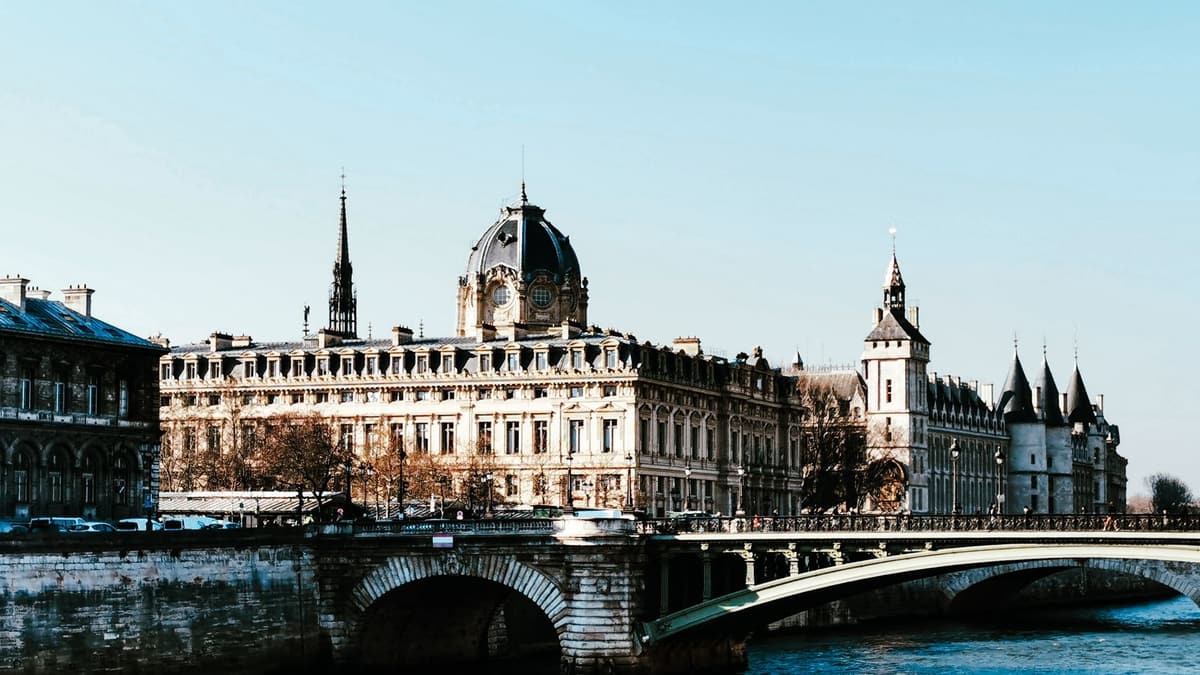
You're on the quay at the end of the Pont Notre-Dame, close to the Place du Châtelet. Look out over the river.
A megálló folytatása a teljes hangos túrában hallható.
You're on Rue Cujas, a university street beside the Sorbonne's law buildings, meeting the Boulevard Saint-Michel. In 1832 it had another name: the Rue des Grès.
A megálló folytatása a teljes hangos túrában hallható.
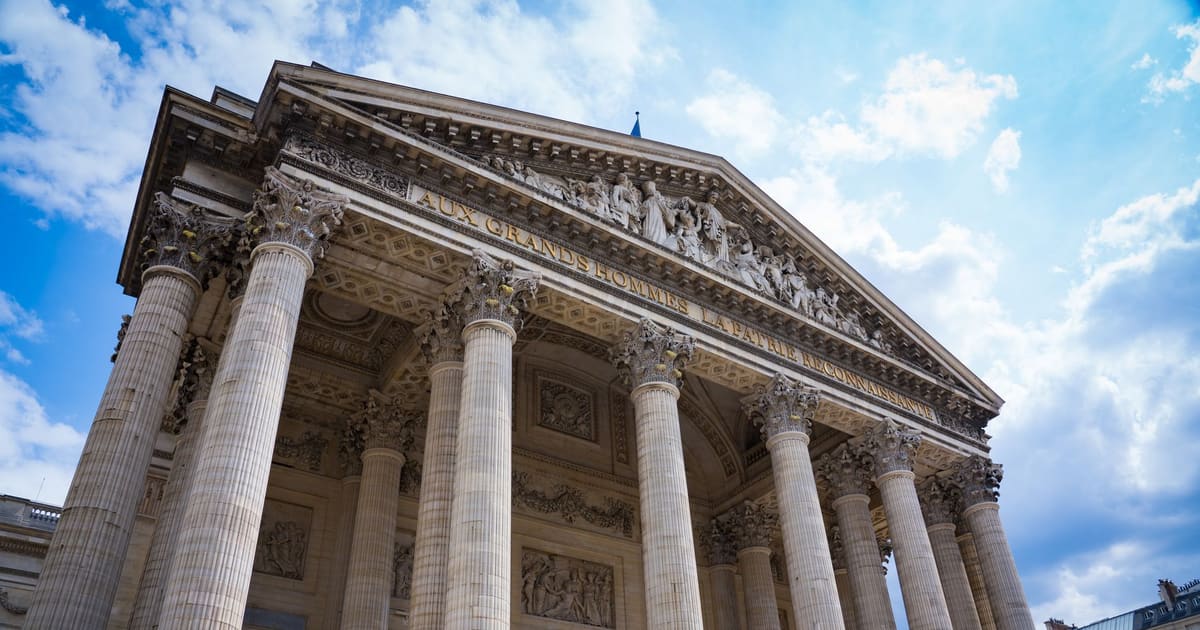
You're in front of the Panthéon, its great dome above you and its columns ahead. Over the entrance runs the inscription "Aux grands hommes, la patrie reconnaissante": To great men, the grateful nation.
A megálló folytatása a teljes hangos túrában hallható.
Tedd meg ezt a sétát másokkal a következő tervezett túrán.
Körülbelül 5,4 km, nagyjából 76 perc kényelmes tempóban · 7 megálló
A barátaid ingyen sétálnakOctober 11, 2026 · 9 min read
From the Hollandsche Schouwburg through the old Jewish Quarter, past the Dockworker and the Dam, to the Anne Frank House on the Prinsengracht.
October 11, 2026 · 11 min read
From Van Houten's street by the Vondelpark past Leidseplein, the Rijksmuseum passage and the famous canal bench to the Anne Frank House.

October 11, 2026 · 10 min read
Follow the last days of April and May 1945 from the Anhalter Bahnhof ruin past the Gestapo site and Brandenburg Gate to the Moltke Bridge and the Reichstag.
