
October 11, 2026 · 9 min read
Amsterdam Anne Frank Walking Tour
From the Hollandsche Schouwburg through the old Jewish Quarter, past the Dockworker and the Dam, to the Anne Frank House on the Prinsengracht.
589

October 11, 2026 · 13 min read

 A barátaid ingyen sétálnak
Minden túra ütemezett csoportos sétaként is fut, amelyhez csatlakozhatsz az appban.
További hangos túrák itt: Tokyo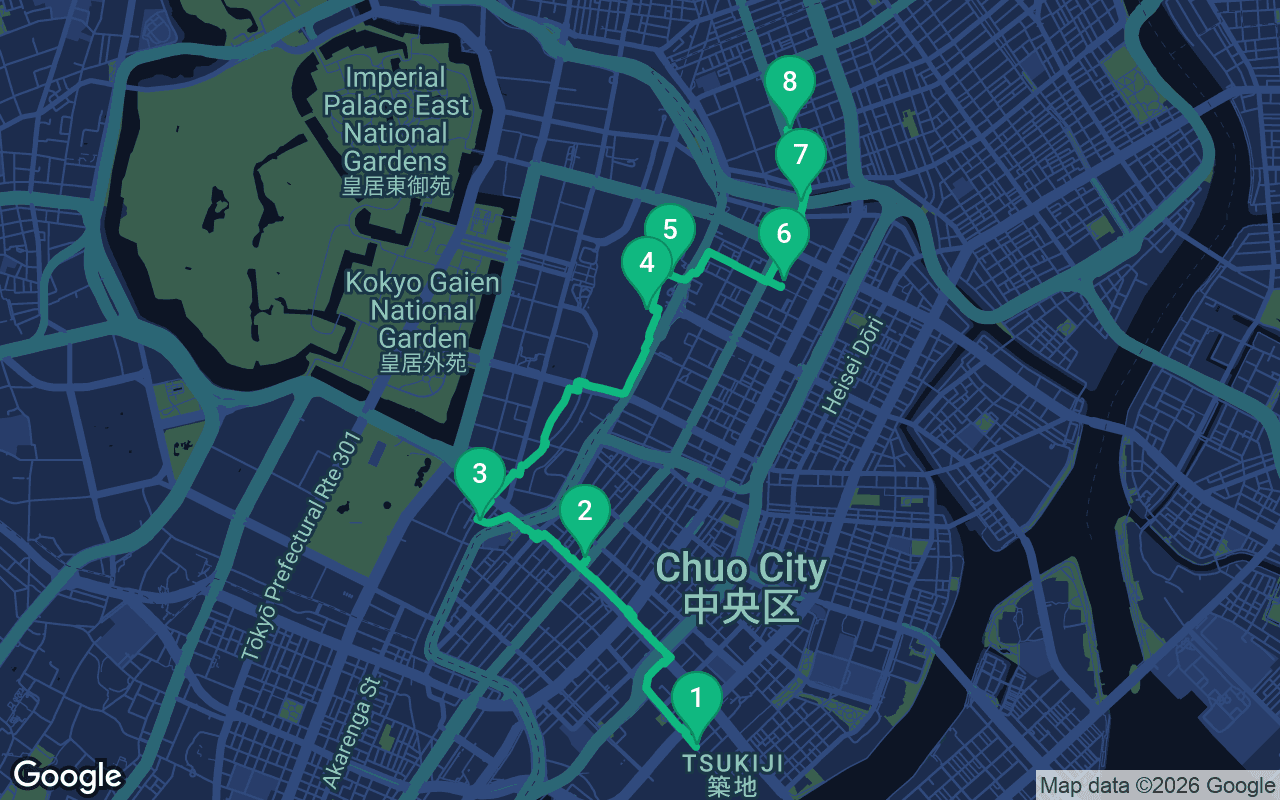
Nagyjából 4,5 km, körülbelül 65 perc kényelmes tempóban.
Ez a séta hangosvezetéssel is elérhető
Nyomj a lejátszásra az első 3 megállónál, és itt helyben meghallgathatsz egy 30 másodperces részletet a narrációból. Az alkalmazásban a bevezető és ez a 3 megálló teljes hosszában ingyenes, és mindegyik hangjelzéssel szól, amint megérkezel. A teljes narrált túra mindössze $16.99 összegért a tiéd lehet, ami egy egyszeri, örökre szóló vásárlás.
Működik Garmin, Komoot, Strava, OS Maps és bármilyen GPX alkalmazással.
Tokyo's food story is a story of markets that moved and merchants who stayed put. For three centuries the city's fish market stood on a riverbank in Nihonbashi. In 1923 a great earthquake destroyed it, and the city rebuilt it at Tsukiji. Then, in October 2018, the wholesale market moved again, to Toyosu, while the little shops of Tsukiji's outer market stayed exactly where they were. This walk follows that market backwards in time. You start at Tsukiji with a slice of rolled omelette, cross Ginza to the bakery that invented anpan, eat yakitori under brick railway arches from 1910, and go underground at Tokyo Station for ramen and a department-store food hall. Then you finish in Nihonbashi, where it all began, between a tea merchant from 1690 and a katsuobushi house from 1699, two businesses older than the United States. It's one of our self-guided walking tours, about 4.5 kilometers from Tsukiji Outer Market to the Ninben dashi bar in Nihonbashi Muromachi, with seven tastings along the way.
The walking takes a little over an hour, but with seven tastings, allow three and a half to four hours. It's flat city pavement the whole way, with a stretch underground at Tokyo Station. Pick your day carefully. Don't go on a Wednesday, a Sunday or a national holiday, because many of Tsukiji's shops close on those days. The yakitori stand doesn't open until 1:30 in the afternoon on weekdays, or noon on Saturdays. So on a weekday, start at Tsukiji around noon, while the market is still busy. On a Saturday, a 10:30 start works. Either way you reach the yakitori just after it opens, and the last stop is open until 6. You pay for your own food as you go. Share everything and take small portions, so you still have room for the dashi at the end. Carry cash for the small stalls. If you have allergies, ask staff: dashi, rolled omelette and many sweets contain fish, egg, wheat or soy. Market manners matter here. Eat where you buy, standing at or in front of the shop, and don't eat while walking. If there's a line, join the end of it. Don't block the narrow lanes, don't touch the produce, and skip photos where a sign asks you to. Hours change, so check before you go. Tsukiji Station on the Hibiya Line and Tsukiji-shijo on the Oedo Line are both close to the start.
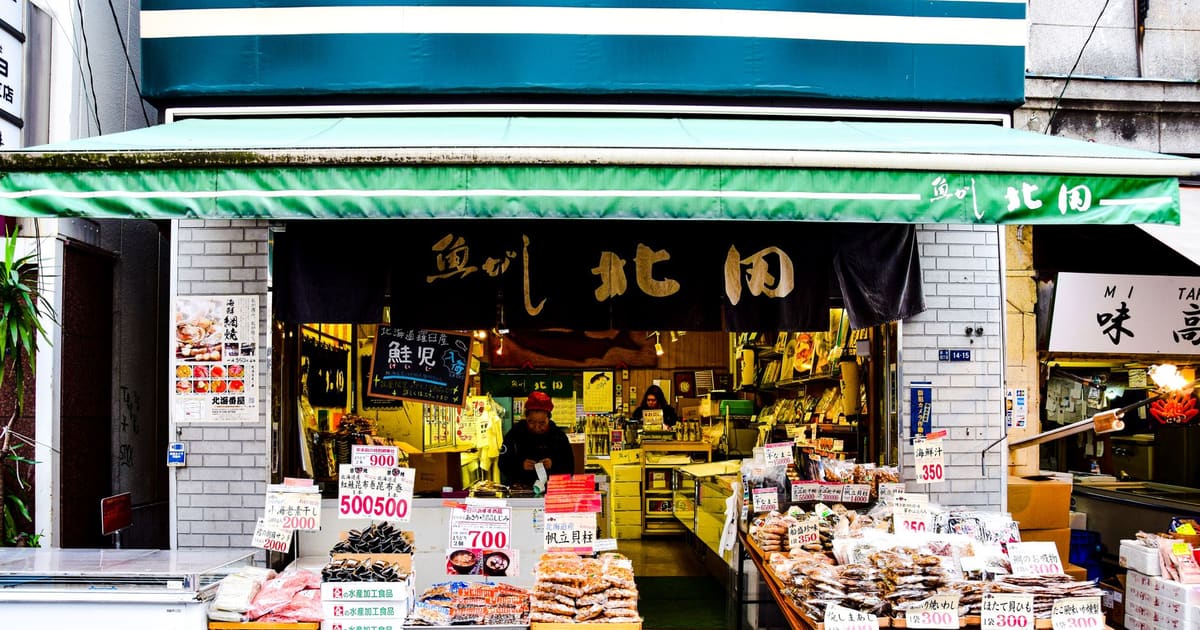
You're in the lanes of Tsukiji Outer Market, about 460 shops and restaurants packed into a few blocks. Find Yamacho, at 4-10-10 Tsukiji, and look in the window. You'll see square omelette pans.
Here's the twist in this market's story. If you've heard that Tsukiji closed, that's only half true. The great wholesale fish market, the one with the famous early-morning tuna auctions, shut on 6 October 2018. Over the next few days its businesses packed up and moved, and Toyosu Market opened on 11 October. The tuna auctions happen there now, not here. But the outer market, these streets of shops that grew up around the wholesale market, stayed put. That's why you can still eat here today.
Tsukiji itself was never the original. It opened on 11 February 1935, as the replacement for the old fish market at Nihonbashi, which the Great Kanto Earthquake had destroyed in 1923. So the market you're standing in was already a survivor of one move before it lived through another. You'll reach the site of the old Nihonbashi market at the end of this walk.
What to order here: a slice of tamagoyaki from Yamacho. It's the sweet and savory rolled omelette, made in those square pans. The market's own shop listing says Yamacho is open 365 days a year, from early morning until mid-afternoon. Eat it right at the stall, standing at or in front of the shop, the way the market asks. Then remember the taste. You'll meet its cousin at the very end of the walk.
The market is at its best until about 1 in the afternoon, so give yourself time to wander the lanes before you leave. When you're ready, walk northwest along Harumi-dori, the wide avenue at the edge of the market, for about 13 minutes to the big Ginza 4-chome crossing. Kimuraya is a few steps from the crossing.
You're at Ginza Kimuraya, a nine-storey building with the bakery shop on the ground floor. Step inside and look for the anpan, soft bread buns filled with sweet red bean paste. They were invented by this company.
The story starts with a man who lost his job to history. Kimura Yasubei was a samurai, and when the Meiji Restoration swept away the old order, he lost his position. In 1869 he opened a bakery called Bun'eido in Shiba. The next year he moved it toward Ginza and renamed it Kimuraya. In 1874 he opened here, in Ginza 4-chome, and that same year the shop created its sake-yeast anpan. The dough was raised with sakadane, the yeast starter used for sake. It made the bread soft enough to suit Japanese tastes.
In 1875 the anpan reached the very top. Through a man named Yamaoka Tesshu, it was presented to Emperor Meiji. The company's history says the Emperor was pleased, and the Empress was fond of it. The shop was destroyed in the 1923 earthquake, the same disaster that wiped out the Nihonbashi fish market, and the building you see went up in 1971.
Ginza's name is older than any of this. In the early 1600s, the shogunate's silver mint stood here. Gin means silver, and the name stuck even after the mint moved away in 1800. After a fire in 1872, Ginza was rebuilt as a Western-style district of brick, designed by Thomas Waters. A Western food, made the Japanese way, fits right in.
What to order here: a sakadane anpan. The sakura version, topped with a salted cherry blossom, is the one guides link to the Emperor, so look for it if it's on sale.
From here, keep going northwest along Harumi-dori for about six minutes, past the Sukiyabashi crossing, to the railway tracks. Pass under them. Tonton is in the arches right beside the avenue, on the far side of the tracks.
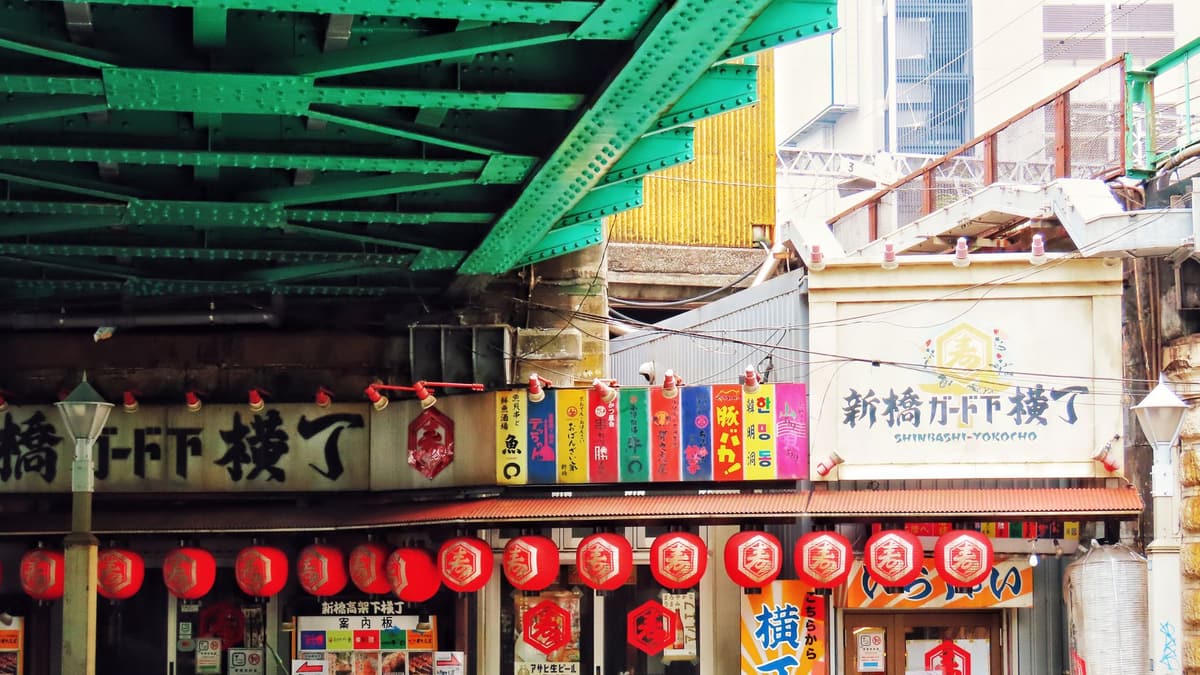
Look up. You're under the railway. The red-brick arches overhead carry the tracks, and under them is a long row of small bars and grills, smoke drifting out into the lane. This is Gado-shita, which means "below the girders," and the restaurants stretch along nearly 700 meters of track on either side of Yurakucho Station.
These arches are a piece of history in their own right. They belong to Japan's first elevated railway, built in 1910. The viaducts were modeled on the elevated railways of Berlin and built under German engineers. Yurakucho Station itself opened that same year. More than a century on, the trains still rumble overhead while people eat beneath them, and the brick still holds.
It's a very different kind of eating from the polished Ginza counter you just left. Here it's stools, smoke and skewers, and the noise of the trains is part of the meal.
What to order here: a few skewers at Yakitori Tonton, at 2-1-10 Yurakucho. Try yakitori, grilled chicken, and motsuyaki, which is grilled offal. You can stand, or sit outside under the arches. Tonton opens at 1:30 in the afternoon on weekdays and at noon on Saturdays, Sundays and holidays, so time your arrival for that. Keep it to a couple of skewers each, because you're about to eat noodles.
Now go back under the tracks to the Sukiyabashi crossing and turn left onto Sotobori-dori. Follow it north, with the railway off to your left, for about 15 minutes to the Yaesu side of Tokyo Station. Go down into Tokyo Station First Avenue, called Ichibangai, and follow the signs to Tokyo Ramen Street in the basement.
Mit tartalmaz
Túráink meditatívnak és magával ragadónak készültek: mozogsz, és egyszerűen hallgatod. Együtt mindig jobbak, és az alkalmazás szinkronban játssza le a narrációt, így te, a párod és a barátaid ugyanabban a pillanatban hallhatjátok az egyes megállókat.
You're in the basement of Tokyo Station First Avenue, on the Yaesu side of the station, in a short row of ramen shops. Find Rokurinsha, and expect a queue.
A megálló folytatása a teljes hangos túrában hallható.
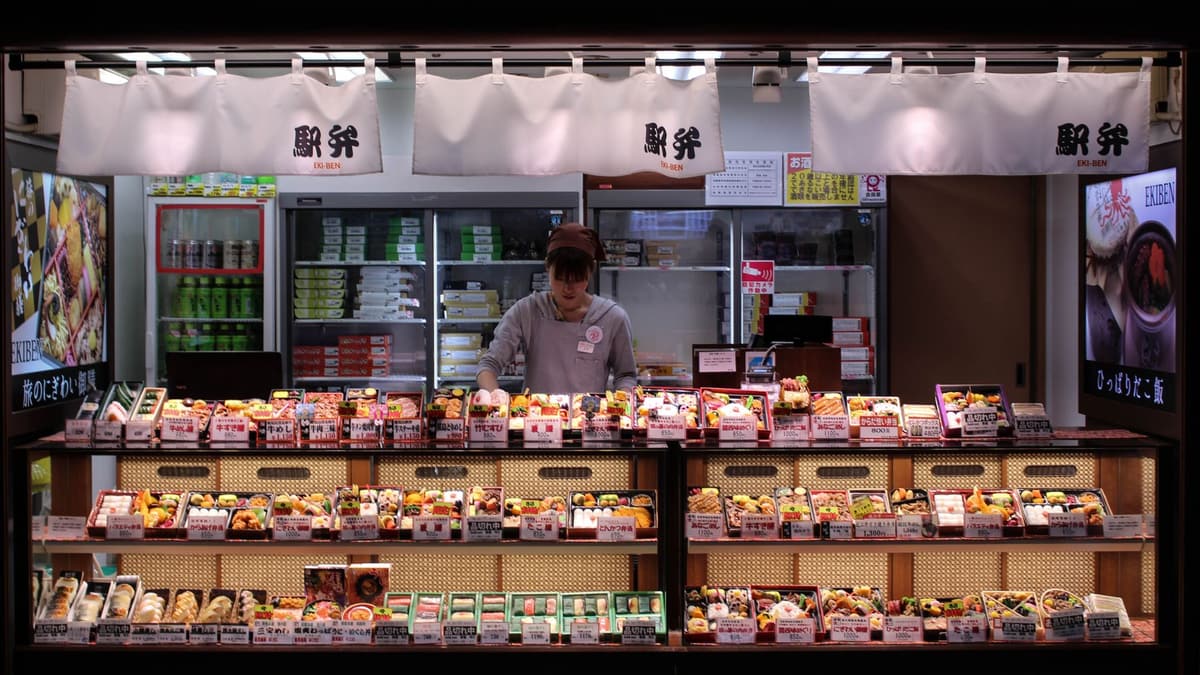
You're in the basement of Daimaru Tokyo, on the food floor. Look around at the counters: bento boxes, rice balls, sweets.
A megálló folytatása a teljes hangos túrában hallható.
You're in Nihonbashi now, the old merchant heart of Edo. Yamamotoyama sits on the ground floor of a modern building, but the business is far older than anything around it.
A megálló folytatása a teljes hangos túrában hallható.
You're at the north end of Nihonbashi bridge. Look for the stone monument.
A megálló folytatása a teljes hangos túrában hallható.
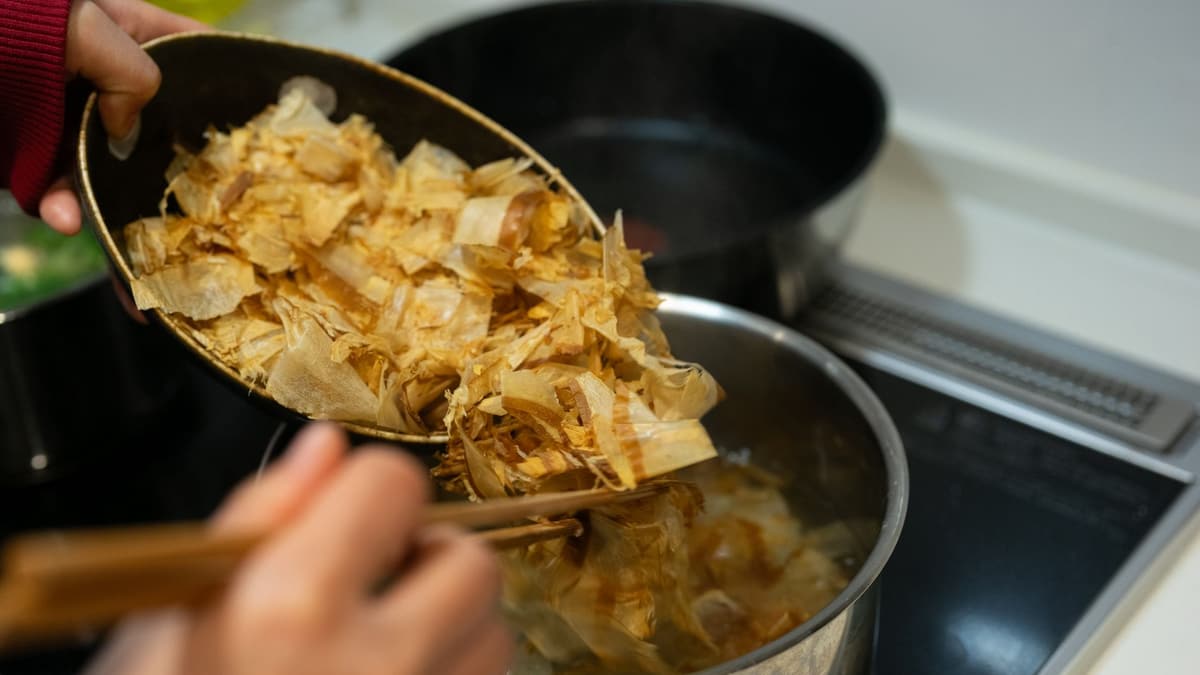
You're at Ninben, a katsuobushi merchant since 1699. Katsuobushi is dried and smoked skipjack tuna, shaved into thin flakes. Here it's shaved daily by artisans.
A megálló folytatása a teljes hangos túrában hallható.
Tedd meg ezt a sétát másokkal a következő tervezett túrán.
Körülbelül 4,5 km, nagyjából 65 perc kényelmes tempóban · 8 megálló
A barátaid ingyen sétálnakOctober 11, 2026 · 9 min read
From the Hollandsche Schouwburg through the old Jewish Quarter, past the Dockworker and the Dam, to the Anne Frank House on the Prinsengracht.
October 11, 2026 · 11 min read
From Van Houten's street by the Vondelpark past Leidseplein, the Rijksmuseum passage and the famous canal bench to the Anne Frank House.

October 11, 2026 · 10 min read
Follow the last days of April and May 1945 from the Anhalter Bahnhof ruin past the Gestapo site and Brandenburg Gate to the Moltke Bridge and the Reichstag.
