September 19, 2026 · 8 min read
Barcelona Gothic Quarter Walking Tour
A self-guided barcelona walking tour from Placa de Catalunya down the Ramblas into the Gothic Quarter and El Born to Santa Maria del Mar.
547
September 19, 2026 · 9 min read
Thực hiện buổi đi bộ này cùng người khác vào tour đã lên lịch tiếp theo.
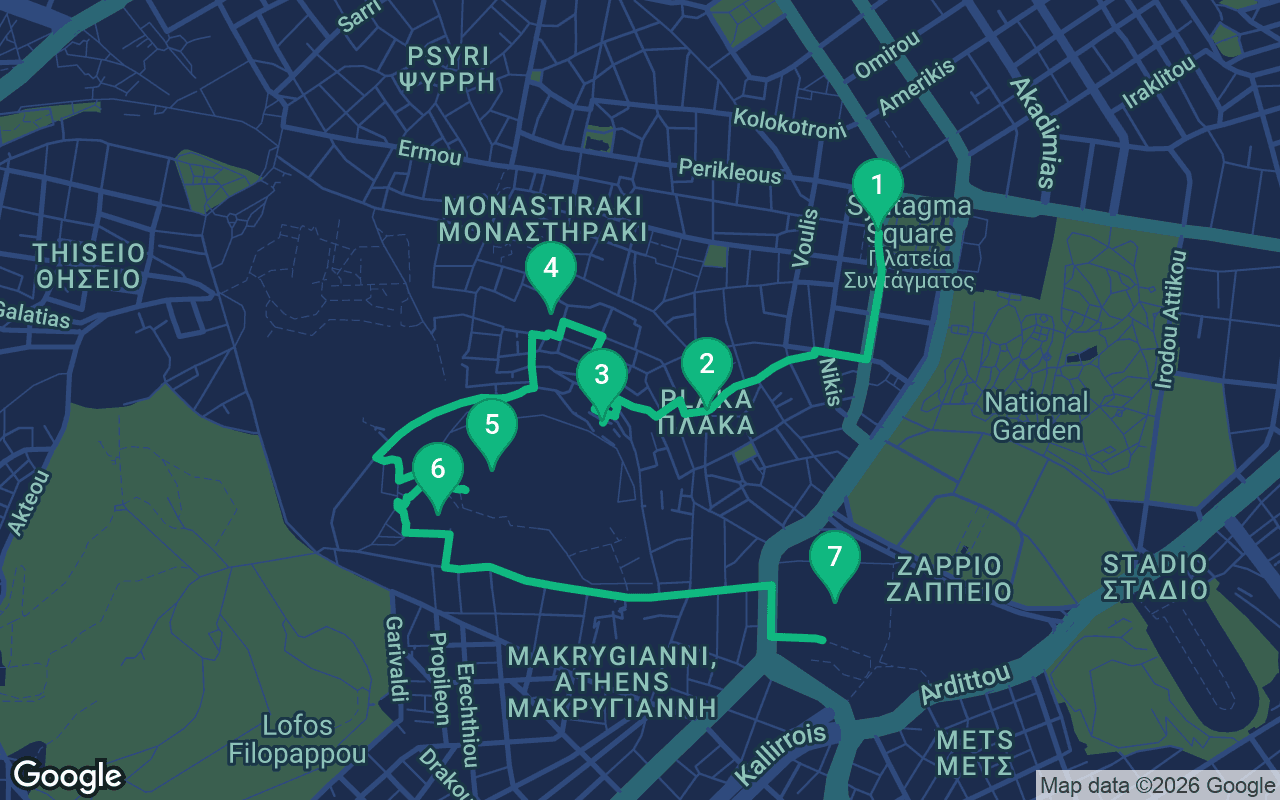
Khoảng 3,2km, mất khoảng 47 phút với nhịp độ thoải mái · 7 điểm dừng
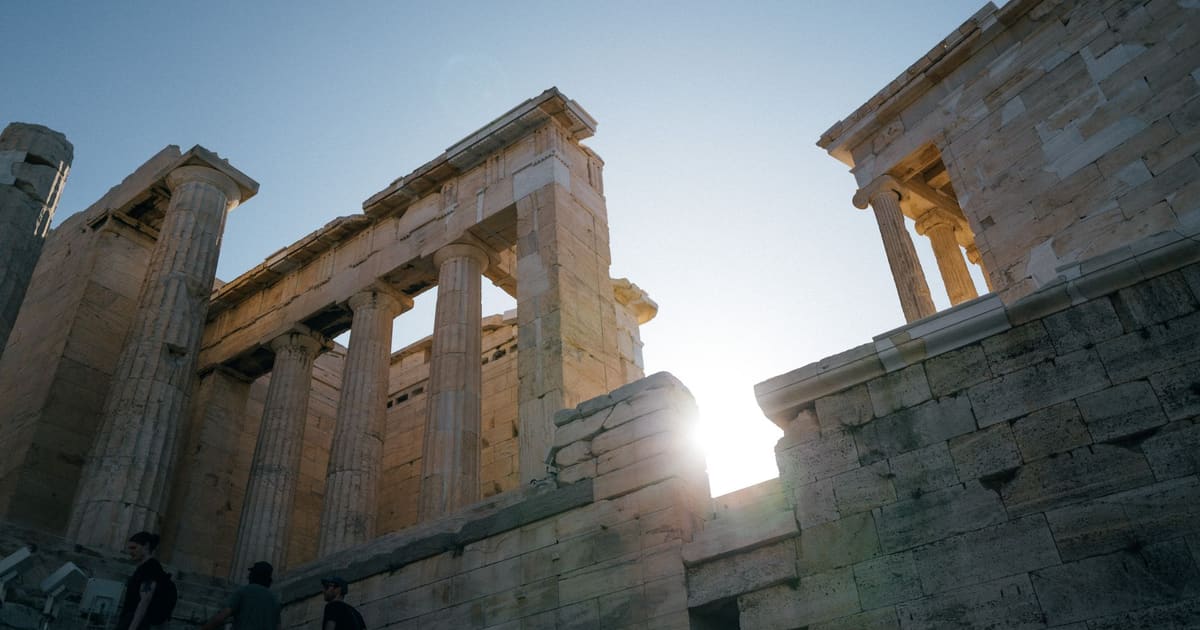
Athens wears its history in layers, and most of them are stacked into one small patch of the old city under the great rock of the Acropolis. This self-guided Athens walking tour circles that rock, threading the oldest neighborhoods, the ruined marketplaces where democracy was argued into being, and the temples that have watched over the city for two and a half thousand years. It is one of the most concentrated self-guided walking tours anywhere, barely three kilometers, yet it crosses from a modern square to the birthplace of Western civilization and back. Wear good shoes for the marble and the slopes, bring water and a hat, and give the ancient stones the slow morning they deserve.
Set aside a morning, three hours at an easy pace and much more if you go up onto the Acropolis itself, which deserves an unhurried hour or two of its own. Athens is hot and bright for much of the year, and the ancient sites offer little shade, so start early, carry water, and wear a hat and shoes with grip, because the old marble underfoot is polished slick by millions of feet. Buy your Acropolis ticket online ahead of time if you can, since the queue at the gate can be long, and consider the combined ticket that covers the Agora and the other ancient sites on this route. The neighborhoods around the rock are small and walkable, and half the pleasure is drifting off down a stepped lane and letting it lead you back toward the Acropolis, which is always there above you as a landmark. Stop often for a frappe or a plate of small dishes in Plaka, since resting in the shade is part of the local art of a hot day.
Begin in Syntagma Square, the modern heart of Athens, a broad open space in front of the grand old royal palace that now houses the Greek parliament. The square is where the city gathers, celebrates, and protests, and it makes a fitting starting point on the line between the modern capital and the ancient one. If your timing is lucky, watch the changing of the guard in front of the parliament, performed by the Evzones in their striking traditional uniforms of pleated kilts and pom-pommed shoes, a slow and precise ceremony that draws a crowd on the hour. Behind the parliament stretch the green National Gardens, a cool retreat if you want one. Get your bearings here, with the Acropolis visible up to the southwest, then leave the square by its southwest corner and walk down toward the old town, dropping gently out of the modern city and into the old one. Within a few minutes the wide avenues give way to narrower, quieter lanes, and you have arrived in Plaka.
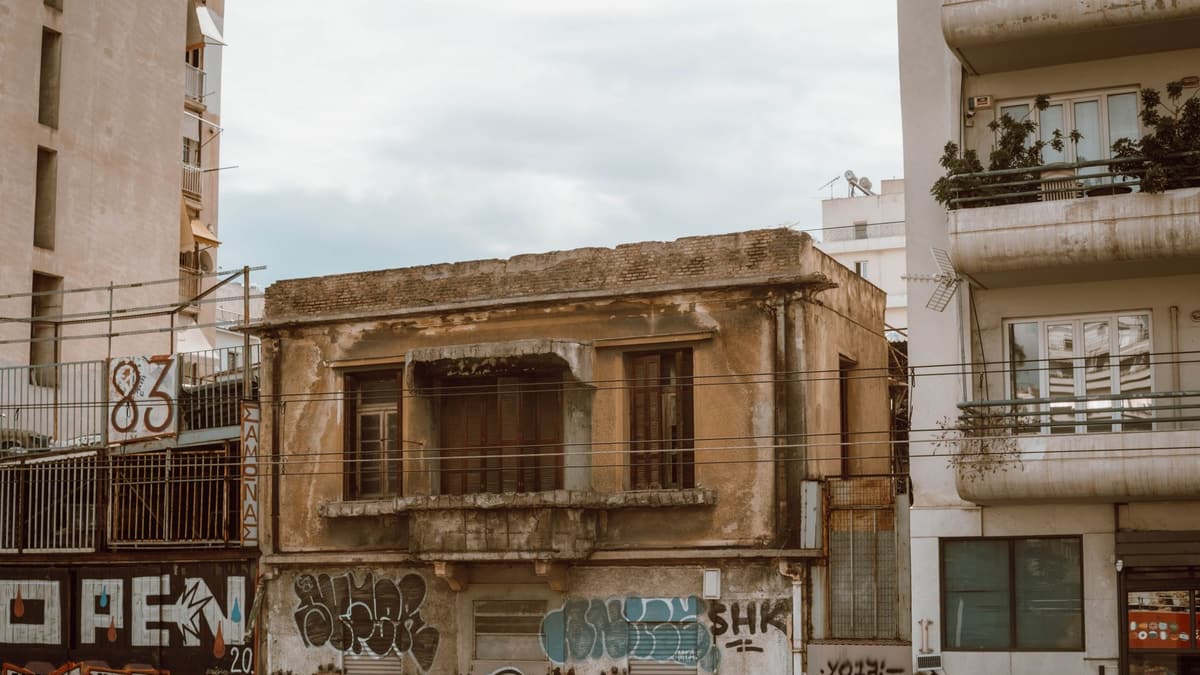 Plaka is the oldest continuously inhabited neighborhood in Athens, a village of neoclassical houses, bougainvillea, tavernas, and tiny shops wound around the northern and eastern slopes of the Acropolis. Its narrow, mostly car-free lanes climb and twist, and it is made for slow, aimless wandering, so put the map away and follow whichever street looks most inviting. Pedestrianized Adrianou Street runs through the middle of it, lined with cafes and stalls, but the real magic is one street back, in the quiet corners where cats doze on doorsteps and the only traffic is other walkers. You will pass fragments of the ancient city poking up between the houses, a stray column here, a Roman wall there, because Plaka is built directly on top of the classical town. Stop for a coffee under a plane tree, browse for a while, and let the neighborhood set the pace. As you climb higher through its lanes toward the base of the rock, the houses begin to change character, and you slip almost without noticing into a corner of Plaka that looks like it was carried here from an island.
Anafiotika is one of the loveliest surprises in Athens, a tiny cluster of whitewashed, blue-shuttered houses clinging to the northern slope of the Acropolis, looking exactly like a village on a Cycladic island. That is no accident, since it was built in the nineteenth century by craftsmen brought from the island of Anafi to work on the new king's palace, who put up homes in the style of the islands they had left behind. The lanes here are barely shoulder wide, stepped and winding, hung with flowers and cats, and they dead-end and double back in a way that feels more island than city. There are no cars and almost no shops, just quiet homes and the odd tiny chapel, with the great rock rising directly overhead. It is a magical, hushed place, easy to miss and all the better for it, so walk slowly, keep your voice down, and enjoy the strange feeling of finding a sunlit island in the middle of a capital city. Follow the little paths westward and downward, and they bring you out at the edge of the ancient sites, where the ruins begin.
You come out among the ruins of the Roman Agora, the marketplace the Romans built when they ruled the city, and its most charming survivor, the Tower of the Winds. This elegant octagonal tower of white marble is one of the oldest weather stations anywhere, built around two thousand years ago with a sundial on each of its eight faces, a water clock inside, and a carved figure of the wind that blows from each direction running around the top. It is remarkably intact, and you can walk right up to it and read the winds carved into the marble. Around it lie the scattered columns and gateways of the Roman market that once bustled here, and the whole area sits in the shadow of the Acropolis, which now looms very close above. This is a quieter, less crowded ruin than the great sites, and a good place to pause and take in how the layers of the city stack up, Roman on Greek, Christian and Ottoman on Roman. When you are ready, follow the path that climbs toward the entrance to the Acropolis itself.
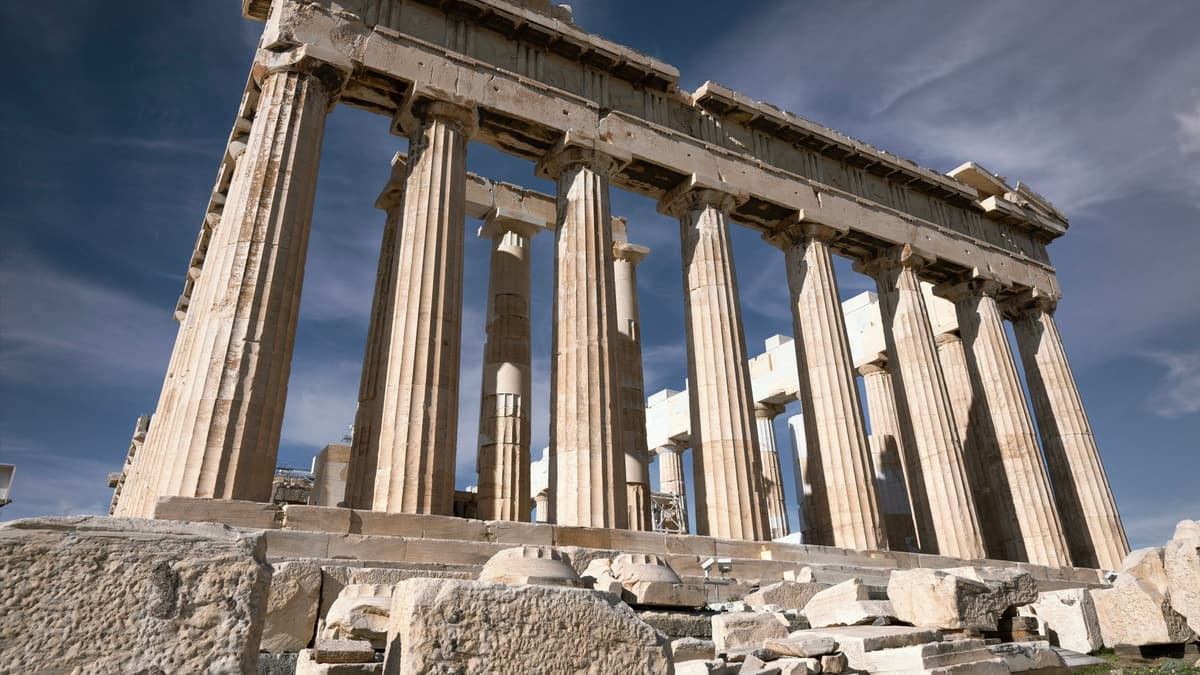 Now you climb to the Acropolis, the sacred rock at the center of it all, crowned by the Parthenon and visible from almost everywhere in the city. Even after everything you have seen, the scale and the setting take the breath away. The great marble temple to Athena has stood here for nearly two and a half thousand years, and though battered by time, war, and looting, it remains one of the most perfect buildings ever raised, its columns subtly curved so the eye reads them as straight. Around it stand the graceful Erechtheion with its porch of carved maidens, the little temple of Athena Nike, and the monumental gateway you pass through to enter. From the top, the whole of Athens spreads out below you in a sea of white to the mountains and the sea, a view worth every step of the climb. Take your time up here, walk the whole plateau, and stand for a while with the city at your feet. Then head down the far side, toward the theaters carved into the southern slope.
On the way down the southwestern slope you reach the Odeon of Herodes Atticus, a grand stone theater built into the hillside by a wealthy Athenian in memory of his wife, nearly nineteen hundred years ago. Its steep tiers of stone seats curve around a stage backed by a tall arched wall, and remarkably it is still in use, hosting concerts and performances under the stars every summer, with the audience sitting where Romans once sat. Even empty by day it is a stirring sight, the Acropolis rising behind it and the city stretching out in front. Just along the slope lies the older and larger Theater of Dionysus, the very birthplace of drama, where the great tragedies and comedies were first performed to Athenian crowds. From here the wide pedestrian promenade of Dionysiou Areopagitou sweeps around the foot of the rock, one of the finest city walks in Europe, lined with trees and cafes and always in the shadow of the Acropolis above. Follow it eastward, an easy and beautiful stretch, toward the columns rising in the distance.
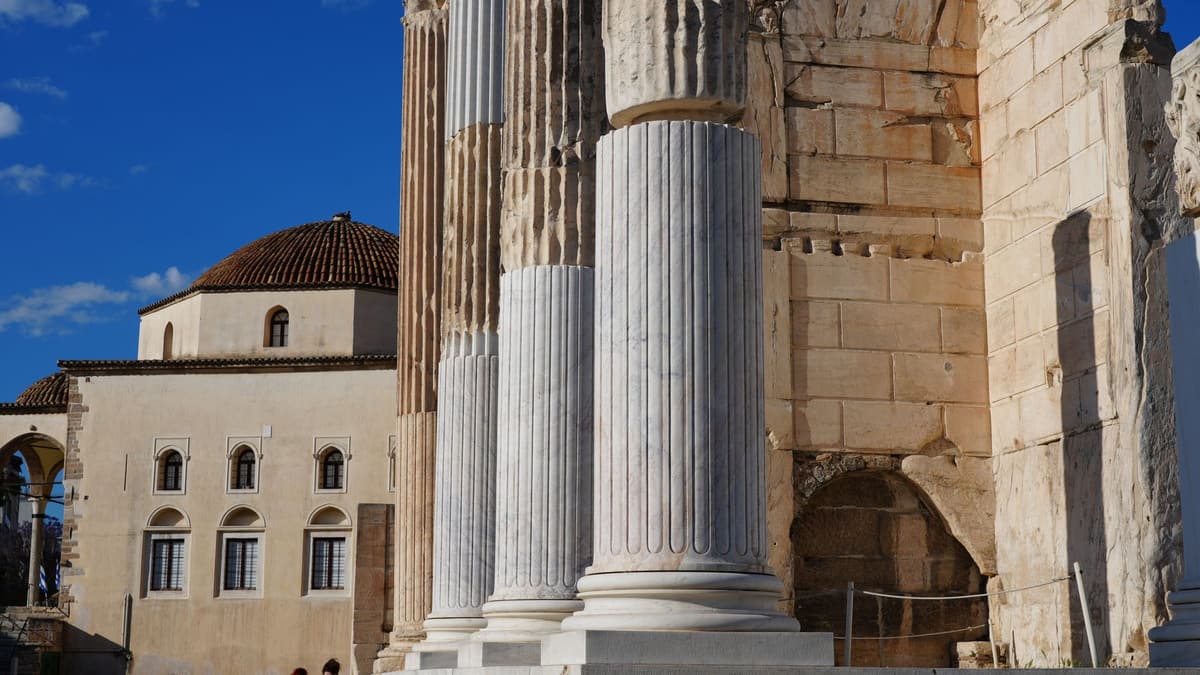 The walk ends at the Temple of Olympian Zeus, and after the tight lanes and slopes, the sheer open scale of it is startling. This was once the largest temple in all of Greece, and though only fifteen of its original columns still stand, each one is enormous, some seventeen meters tall and so massive that a whole group of people looks tiny beside them. It took some seven hundred years to finish, and a Roman emperor finally completed it. One column lies where it fell in a storm two centuries ago, its huge stone drums scattered like a toppled stack of coins, which gives you a real sense of the size of the thing. Beside the temple stands Hadrian's Arch, a tall marble gateway that once marked the line between the ancient Greek city and the new Roman quarter, with an inscription on each side naming the two. Stand under it and you are standing on the seam between two versions of Athens. The center and Syntagma, where you began, are a short walk back to the north, closing the loop around the rock.
Athens rewards walking more than almost any city, because its wonders are stacked so close together and so many of them are only reachable on foot, up stepped lanes and across pedestrian promenades no car can follow. The Acropolis is always there above you as a guide, so it is a hard place to get truly lost, and the best moments are often the unplanned ones, the island lanes of Anafiotika, a ruin glimpsed between houses, a view opening at the top of a step. Go early to beat the heat and the crowds, wear good shoes for the marble, and let yourself drift off the route whenever a lane tempts you. If you would rather share the climb, open the Walk With Me live map to see who else is out walking Athens, and split a frappe in the shade with a little company when the loop is done.
Mọi điểm dừng của buổi đi bộ này qua Athens, Greece, theo thứ tự.
Khoảng 3,2km, mất khoảng 47 phút với nhịp độ thoải mái.
Hoạt động với Garmin, Komoot, Strava, OS Maps và mọi ứng dụng GPX.
September 19, 2026 · 8 min read
A self-guided barcelona walking tour from Placa de Catalunya down the Ramblas into the Gothic Quarter and El Born to Santa Maria del Mar.
September 19, 2026 · 8 min read
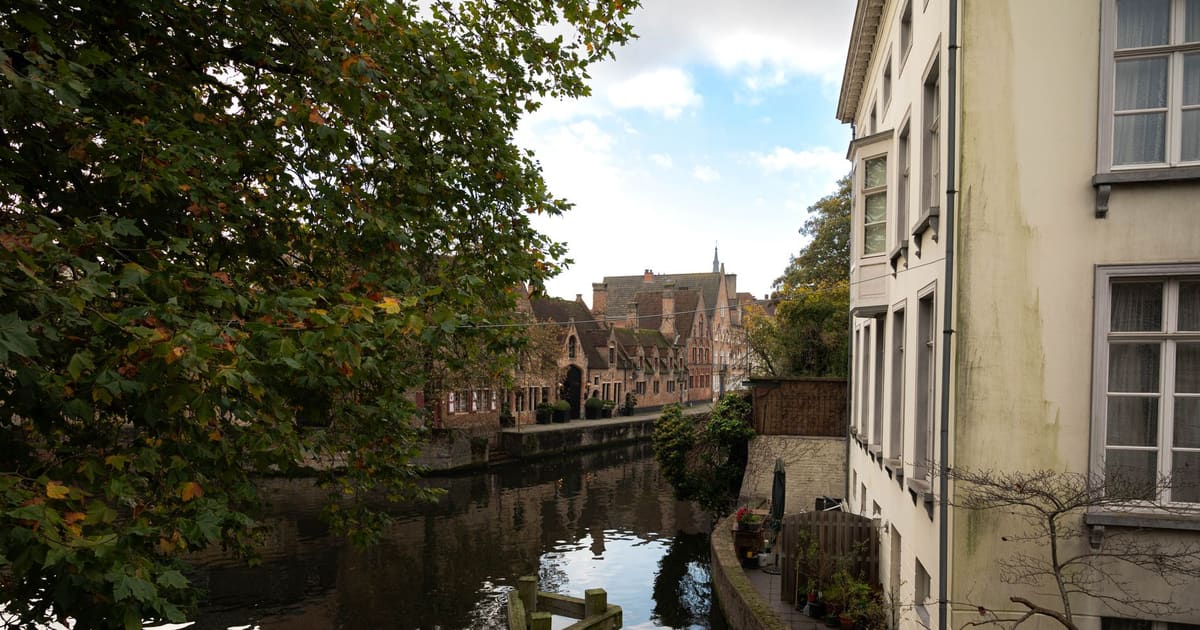
A self-guided bruges walking tour from the Markt and its belfry through the squares and along the canals to the Beguinage and the Lake of Love.
September 19, 2026 · 10 min read
A self-guided Copenhagen walking tour from the city hall along Stroget to the Round Tower, the Nyhavn canal, and the royal palaces of Amalienborg.