




 $9.99Városnézés
Abu Dhabi audió gyalogos túrák
Egyéni, narrált séták Abu Dhabi területén. Vásárold meg a túrát egyszer, töltsd le, és hagyd, hogy a történet megszólaljon minden megállónál, miközben a saját tempódban sétálsz.
Túrák már $9.99 ártól
A barátaid ingyen sétálnak. Egyetlen vásárlás mindenkit lefedi a sétádon. Indítsd el a túrát, hívd meg a barátaidat csatlakozásra, és minden telefonon lejátszódik a csoportodban.
5.0 a Google Play-en
Abu Dhabi audió túrák
Minden túra egy térképes útvonal, amely minden megállónál narrációt tartalmaz. Vedd meg egyszer, és a tiéd marad, előfizetés nélkül.
$9.99VárosnézésMire számíthatsz egy Abu Dhabi audió gyalogos túrán?
An Abu Dhabi audio walk follows the city's whole story in one easy loop, from the coral stone walls of its oldest fort through a modern souk of carved wooden screens to the long sweep of the Corniche, with narration timed to each stop so you can enjoy the shade without checking a guidebook.
The Downtown Walk begins at Qasr Al Hosn, the old coral stone fort that gave the whole city its start, then crosses the plazas and gardens of the Al Hosn site to the Cultural Foundation, a 1980s modernist building whose arcades and courtyards borrow old Gulf ideas about shade.
From there the route heads north to the World Trade Center Souk, a market designed by Norman Foster's studio that keeps the narrow lanes and carved wooden screens of a traditional souk, with carpets, spices and dates sold under a lattice roof that throws moving shadows across the floor.
The walk finishes on the Corniche, the long waterfront promenade built on reclaimed land, before ending in the shade of Capital Garden. In total it covers 4 kilometers, about 57 minutes of walking, flat the whole way and easy to fit into a cool morning or an evening stroll.
Merre sétálj Abu Dhabi területén?
Néhány megálló, amely mellett elhaladsz majd, és amiért érdemes lesz lelassítanod.
Qasr Al Hosn
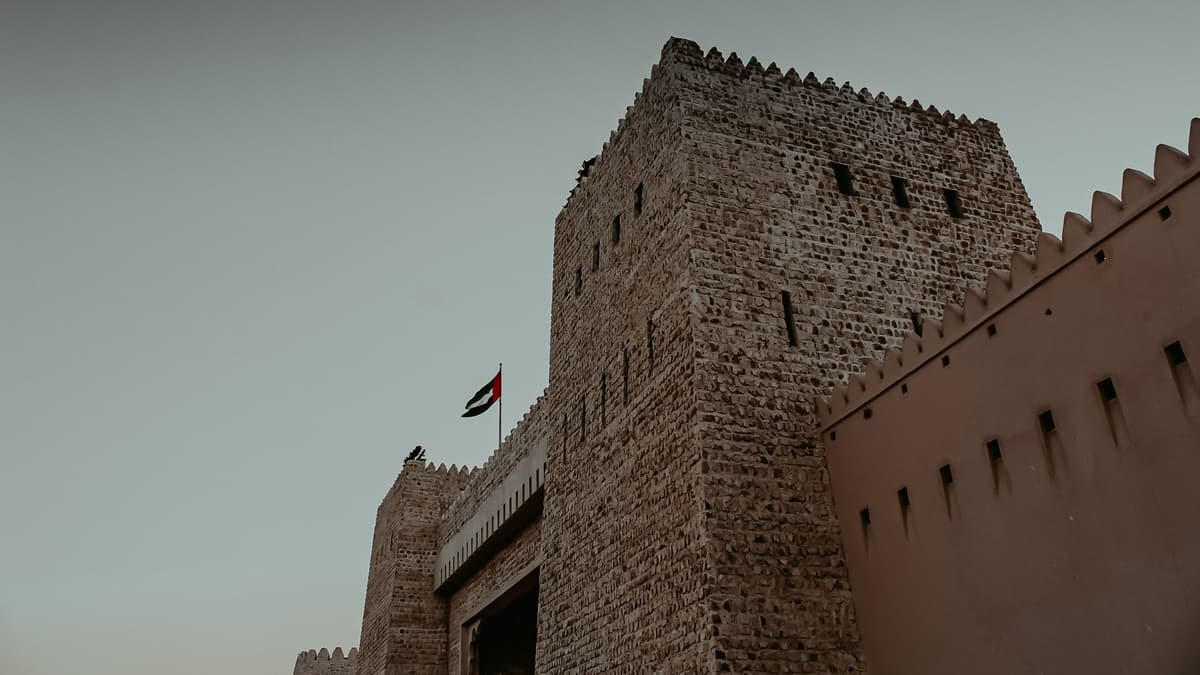
Qasr Al Hosn is the oldest stone building in Abu Dhabi, a fort of thick pale walls, round and square towers and notched battlements that grew up around a watchtower built in the 1760s to guard a freshwater well. For generations it was the home of the ruling Al Nahyan family and the seat of government, and the walls are made of coral and stones gathered from the sea, bound with lime mortar, which is why the building was long known as the White Fort. After a long restoration it reopened as a museum in 2018, telling the story of the city from the inside. Walking around its plazas and gardens, it's easy to see how the whole city grew up around this one small fortress.
Downtown Abu Dhabi
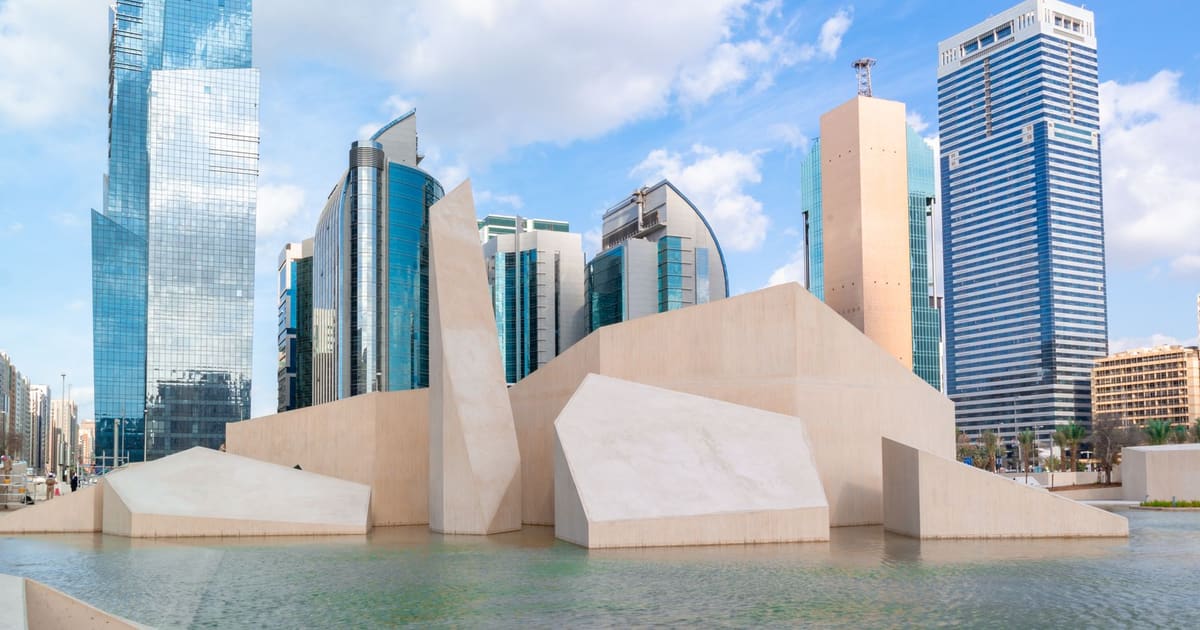
Around the World Trade Center, downtown Abu Dhabi rises into a cluster of glass towers that shot up within a single generation, a sharp contrast with the low coral stone fort just a few streets away. This is where the modern souk sits, tucked beneath the towers and designed to keep the narrow lanes and shaded courtyards of a traditional market even as the skyline around it grew taller. Walking between the fort, the Cultural Foundation and these towers in under half an hour gives you a quick sense of just how fast this city has changed, from a small settlement of palm frond houses to a capital of skyscrapers in roughly one lifetime.
The Corniche and the waterfront skyline
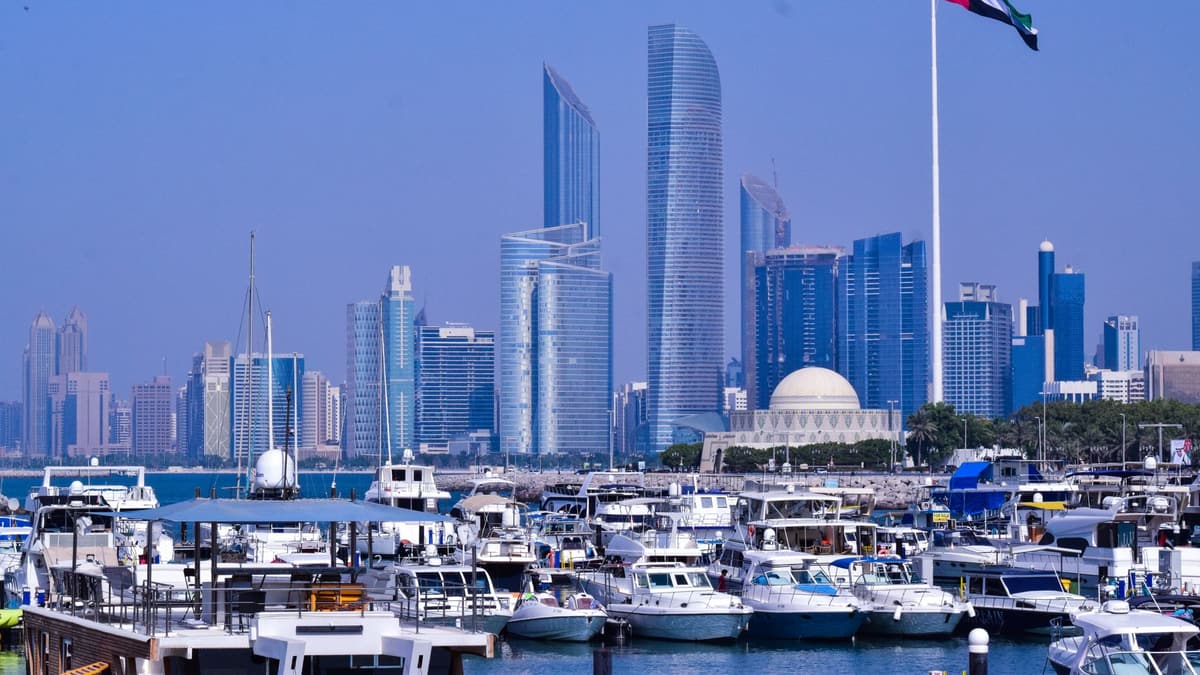
Abu Dhabi's Corniche is a waterfront promenade that runs for about eight kilometers along the island's northern edge, with separate paths for walkers and cyclists and the whole sweep of the downtown skyline rising behind it. The promenade sits on land reclaimed from the sea, so the shoreline here is much further out than it was when the fort was the edge of town. Come at dawn and you'll share it with runners and cyclists, or after sunset when families picnic on the grass and the towers light up along the water. It's the clearest place on the walk to see how far the city has grown from its original fishing settlement toward the open Gulf.
Sheikh Zayed Grand Mosque
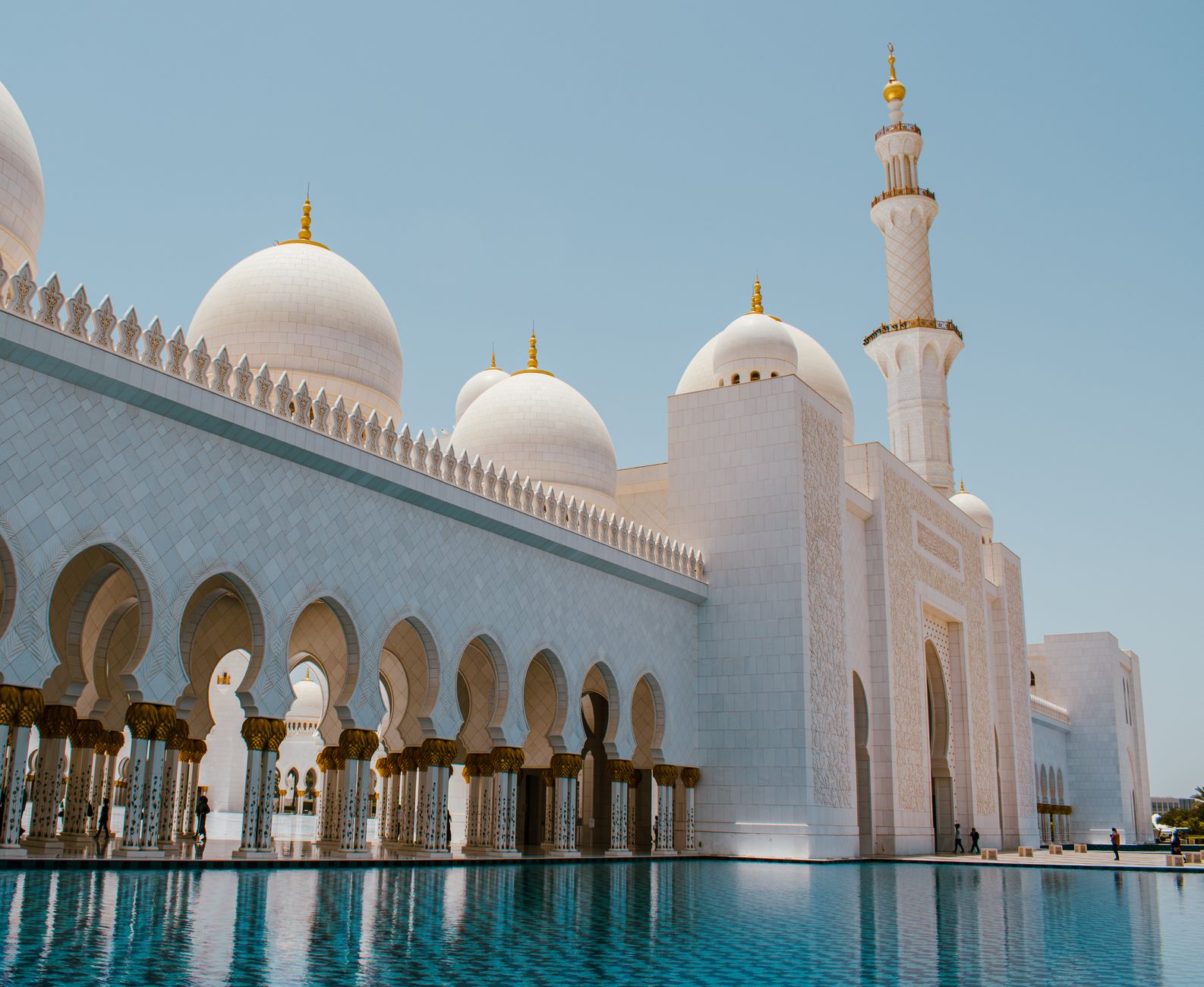
Not far from Qasr Al Hosn and the Corniche stands Sheikh Zayed Grand Mosque, the white marble mosque that Sheikh Zayed, the ruler who founded the modern United Arab Emirates, had built as a gift to the nation. Reflecting pools run along its courtyard, doubling the rows of white domes and slender minarets in the still water. Inside are some of the largest chandeliers and one of the largest hand knotted carpets made anywhere. Visitors are welcome outside prayer times, and dress should cover the shoulders and legs, with a robe provided at the door for women who need one. Walk the courtyard slowly and let the scale of the white marble sink in.
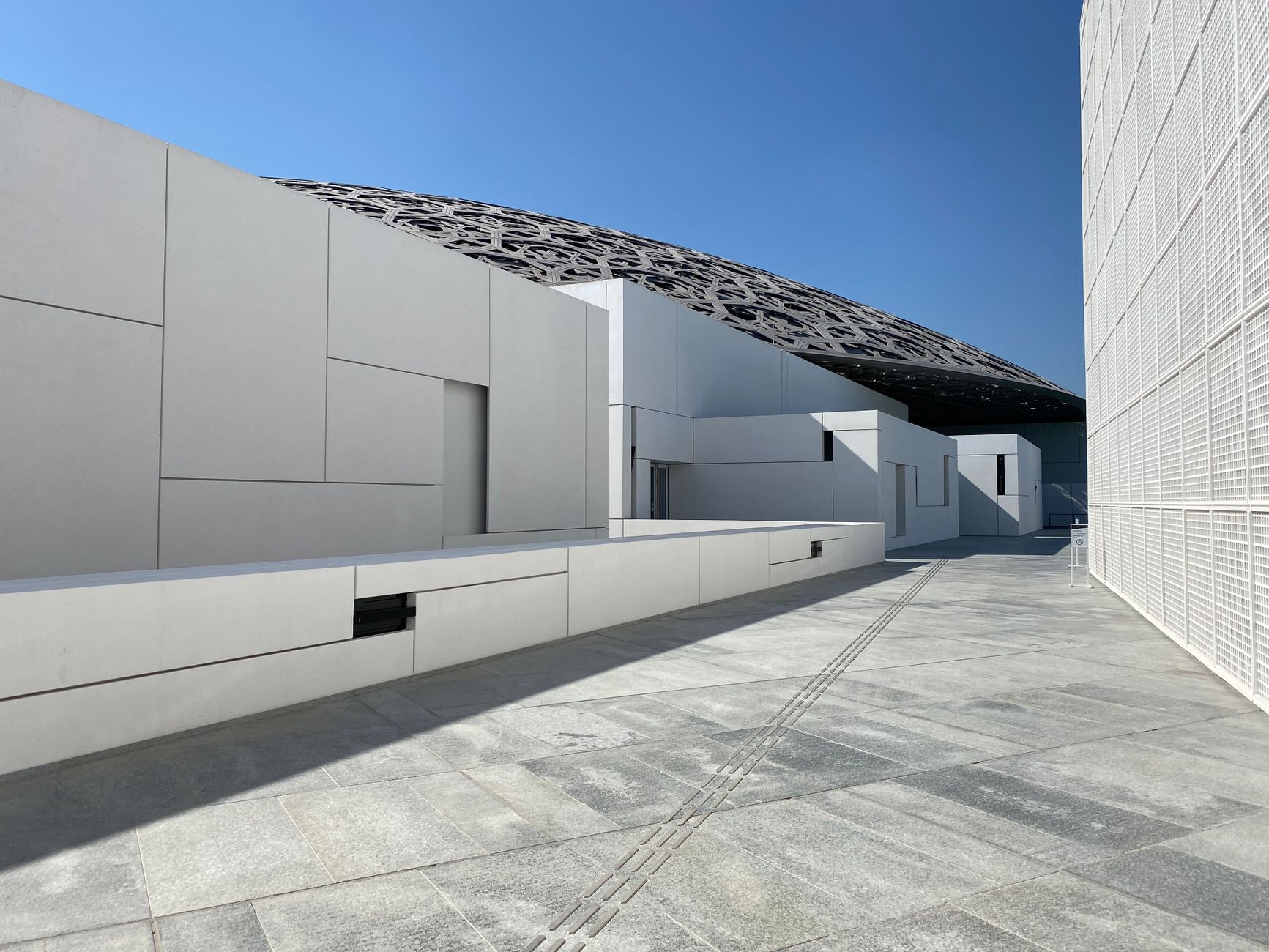
Louvre Abu Dhabi
East along the coast from downtown, on the island of Saadiyat, the Louvre Abu Dhabi sits beneath a vast perforated dome that filters sunlight into shifting patterns on the white walls and walkways below. The museum opened in 2017 under an agreement with the French Louvre, and its galleries move through human history and art from across the world, placing pieces from different cultures side by side in the same room. Low white pavilions are arranged like a small town, with channels of seawater running between them, a cool, quiet contrast to the heat and glass towers back in downtown Abu Dhabi.
Szerezd meg az audiotúrát 3 egyszerű lépésben
Minden az ingyenes Walk With Me appban történik, és minden túra első megállóit ingyen kipróbálhatod.
Koppints az arany fejhallgatóra, és válassz túrát
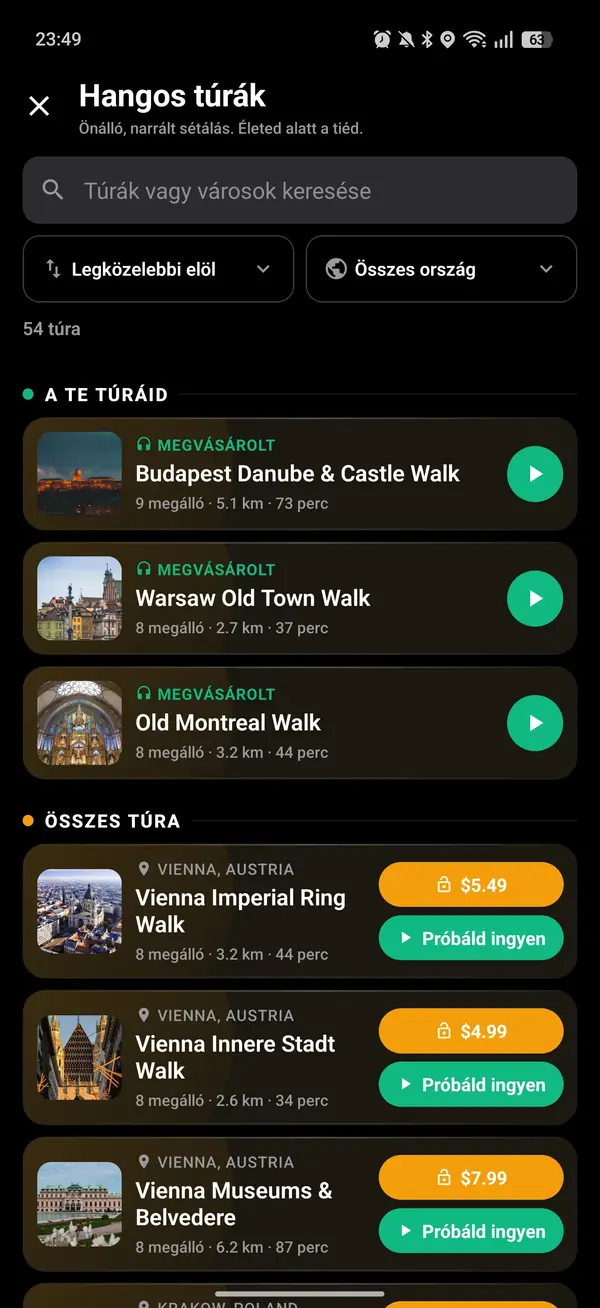
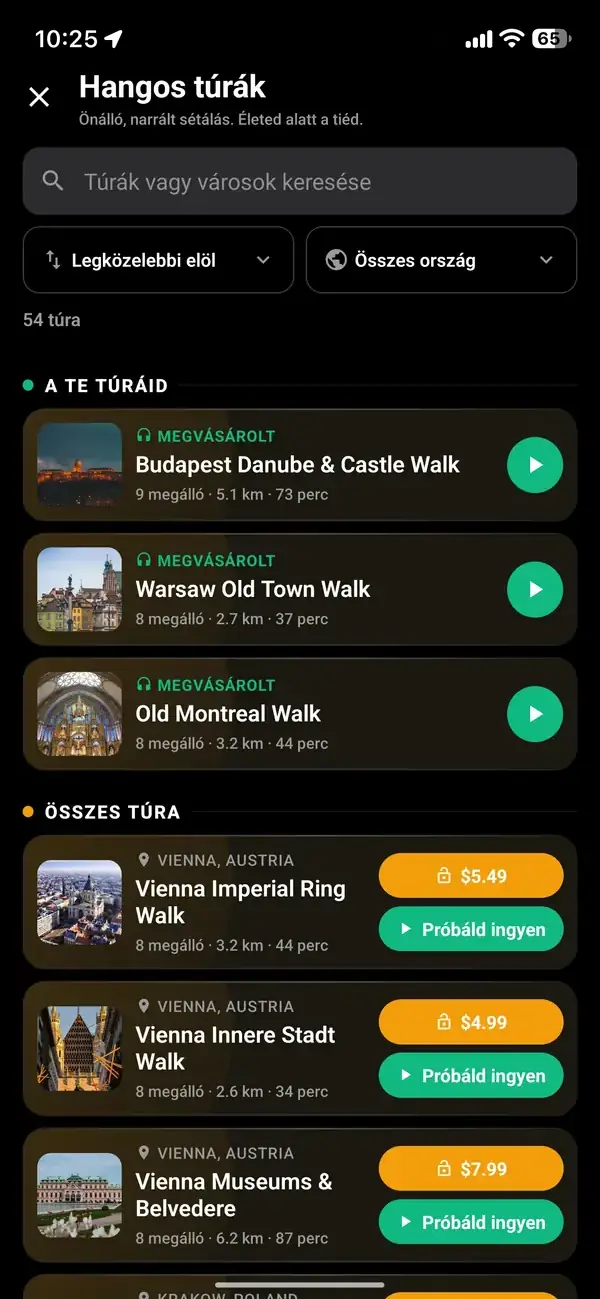
01
Sétálj egyedül, vagy hívj meg valakit


02
Nyomj a lejátszásra és indulj
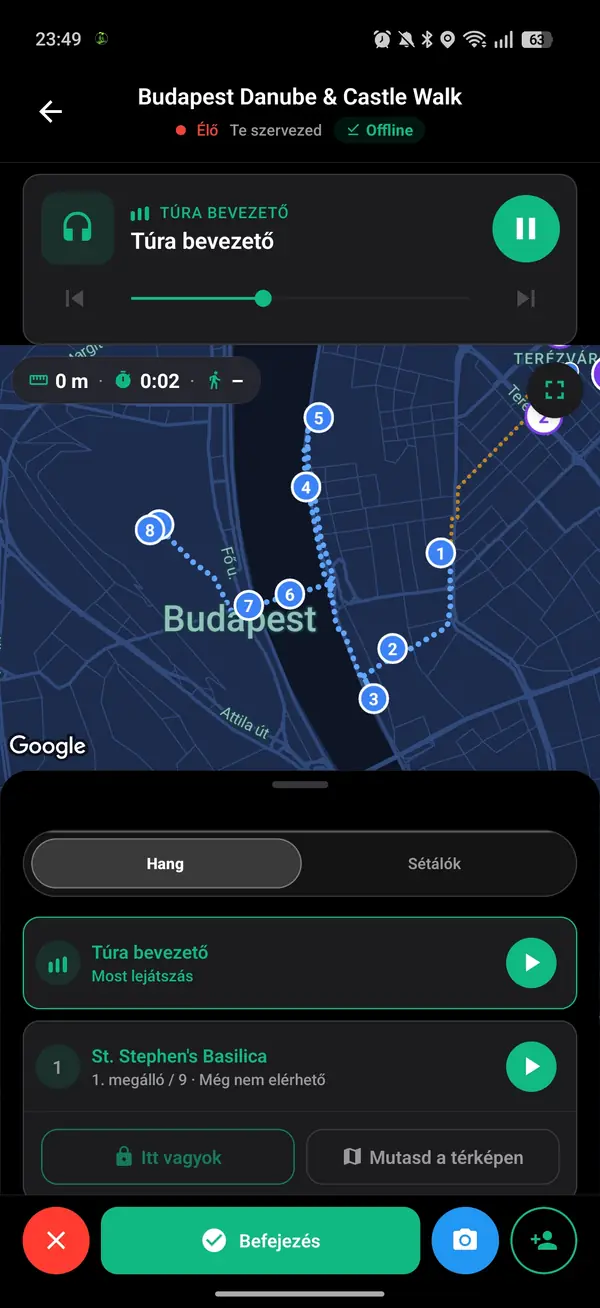
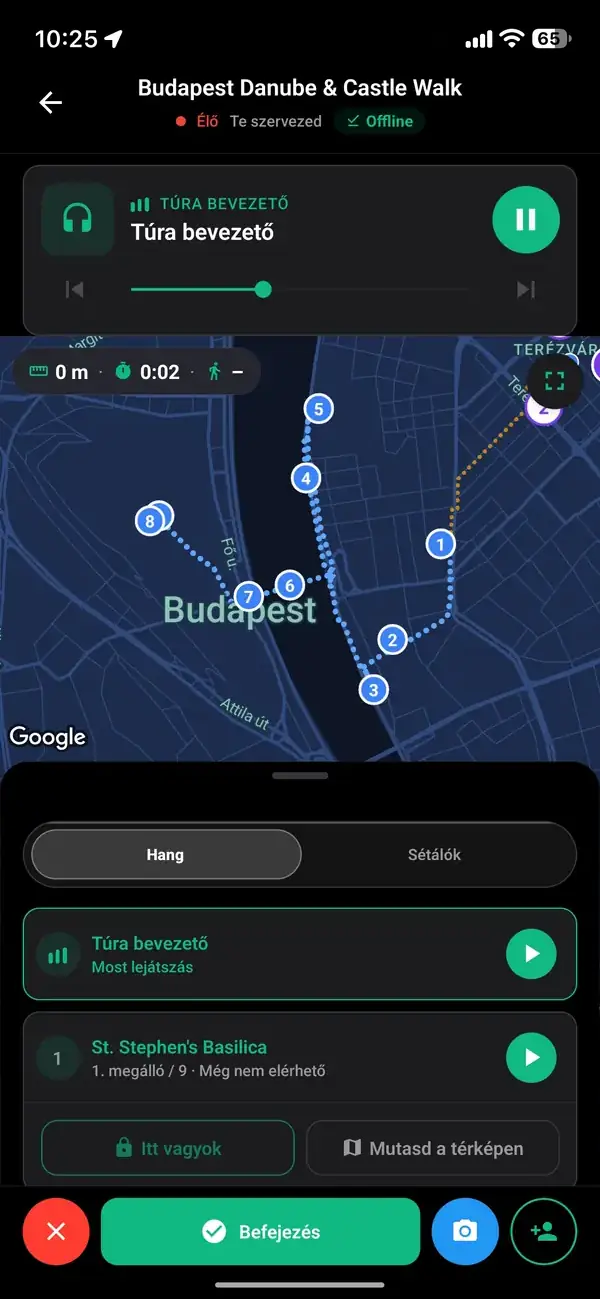
03
Kézzel készítve a városban töltött idődre
Ezek a túrák nem kipipálandó látnivalók listái. Arra készültek, hogy lassan járd végig őket, fejhallgatóval a füleden, a várost figyelve.
Meditatív és magával ragadó
Minden történet ott hangzik el, ahol megtörtént. Az app jelez, amikor egy megállóhoz érsz, egy koppintás elindítja a történetet, a megállók közötti utat pedig a saját tempódban élvezheted.
Kézzel, gondosan készítve
Minden útvonalat és minden megállót mi magunk választunk ki, és minden történetet gondosan formálunk meg, hogy a városban töltött időd a leginkább érdemes helyekre jusson.
Valakivel jobb
Minden séta jobb, ha valaki melletted van, ezért ha tudsz hozni valakit, nagyon ajánljuk. Ezért fedez egyetlen vásárlás mindenkit, akit meghívsz: ingyen csatlakoznak a túrádhoz.