
October 11, 2026 · 9 min read
Amsterdam Anne Frank Walking Tour
From the Hollandsche Schouwburg through the old Jewish Quarter, past the Dockworker and the Dam, to the Anne Frank House on the Prinsengracht.
589

October 11, 2026 · 10 min read

 Přátelé chodí zdarma
Každá prohlídka funguje také jako naplánovaná skupinová procházka, ke které se můžete v aplikaci připojit.
Zobrazit stránku audio prohlídky Sarajevo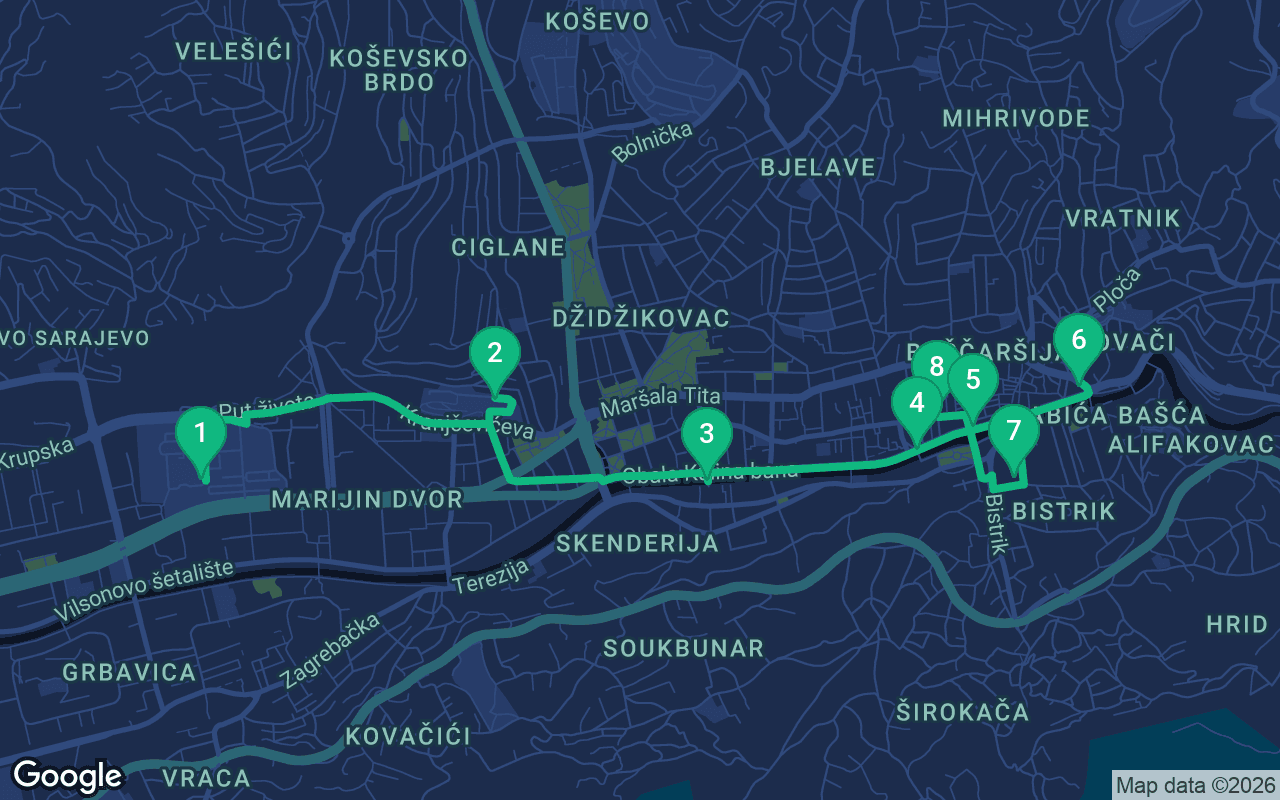
Zhruba 5,1 km, přibližně 73 minut pohodovým tempem.
Tato prohlídka je namluvená
Stisknutím tlačítka přehrávání u prvních 3 zastávek si poslechnete 30sekundovou ukázku vyprávění. V aplikaci si úvod a tyto zastávky přehrajete celé zdarma a každá se ozve zvukovým signálem, jakmile dorazíte na místo. Celá komentovaná prohlídka může být vaše za jednorázový poplatek $16.99, který vám zůstane napořád.
Funguje s aplikacemi Garmin, Komoot, Strava, OS Maps a jakýmkoli GPX programem.
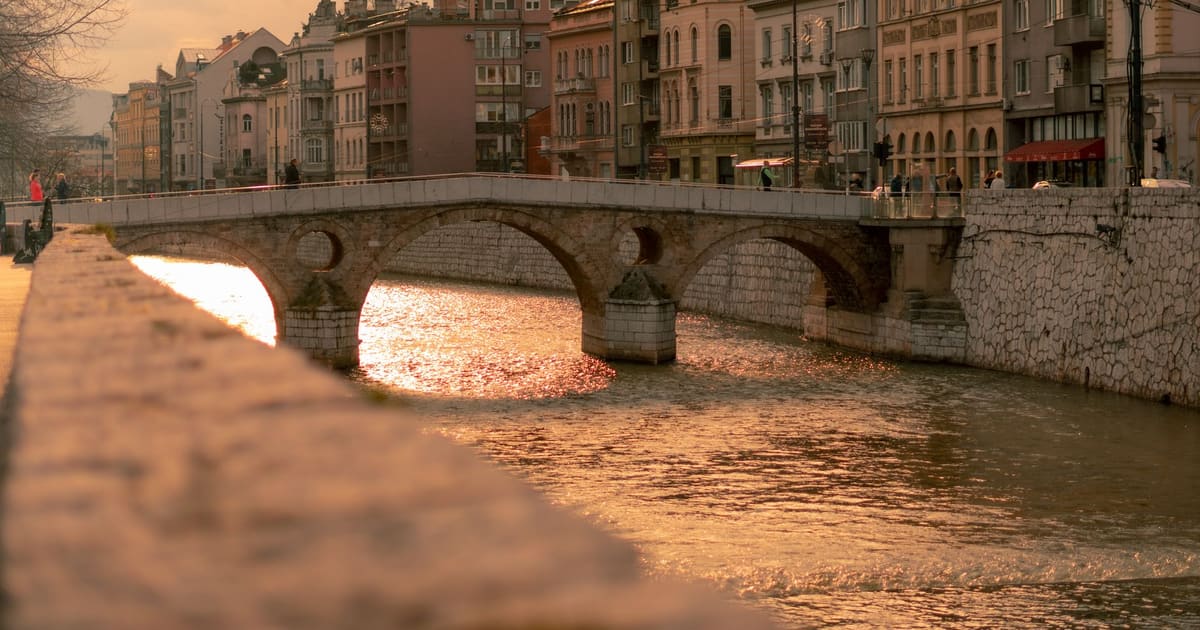
On the morning of Sunday, June 28, 1914, Archduke Franz Ferdinand, heir to the throne of Austria-Hungary, came into Sarajevo with his wife Sophie. Seven young conspirators were waiting for him along the river. By about eleven the couple were dead, and within a month Austria-Hungary was at war with Serbia. This walk follows that morning along the Miljacka River, from the army camp where the couple arrived, down the quay where the motorcade drove, to the corner where a wrong turn decided everything, and on to City Hall, the governor's residence and the riots of the next day. It is a little over five kilometers, one of our self-guided walking tours built around a single story. Where the sources disagree, on times and on details, you will hear that too.
The walking takes about an hour and a quarter; with the stories, allow two hours. The route is flat, mostly along the river quay, with two short river crossings near the end. Trams run along Zmaja od Bosne near the start, and the old town tram loop at Baščaršija is a few minutes from the finish. The hospital and the governor's residence are seen from the street only. City Hall can be visited inside; check its hours before you go. Morning is a good time to walk it, the same hours as the story.
You're at the University of Sarajevo campus. In 1914 this was the Filipović army camp, and much later it became the Maršal Tito barracks, before the university moved in.
The Archduke had been at army maneuvers, and he and Sophie were staying at Ilidža, outside the city. At 9:25 their special train left Ilidža. Their first stop was this camp, opposite the railway station, where General Michael von Appel welcomed them. The review of the troops was very brief. At about ten, they got into the cars.
There were six. In the first rode the mayor, Fehim Čurčić, and the police commissioner. Behind the mayor's car came the Archduke's, an open Gräf and Stift belonging to Count Franz Harrach, who sat up front beside the driver. In the back sat Franz Ferdinand, Sophie and the governor of Bosnia, Oskar Potiorek. The sixth car was an empty reserve. Remember that order. It matters later.
Remember this camp, too. In October, the surviving conspirators would be tried here, in a small courtroom of these same barracks.
Follow your map east for about twenty minutes, to the General Hospital.
Stay on the street here. This is a working hospital, the General Hospital, and most of what you see was rebuilt in the 1970s. It began as an Ottoman military hospital in 1866, and under Austria-Hungary it became Garrison Hospital No. 25, the army hospital, which stood here.
Here is the plan for the day. The cars would drive along the river quay to City Hall for a reception. Then the Archduke would spend an hour at the National Museum, and the couple would have lunch at the Konak, the governor's residence.
And here is the security. For a visit by the heir to the throne, there were no more than about 120 police, in uniform and plain clothes, for the whole city. Only a few hundred soldiers were left in Sarajevo.
Keep this hospital in mind. Later this morning, a wounded officer will be brought to the army hospital, and the Archduke's wish to visit him will send his car back along the quay to the place where the story ends.
Follow your map down to the river and east along the quay to the Festina Lente footbridge, about fourteen minutes.
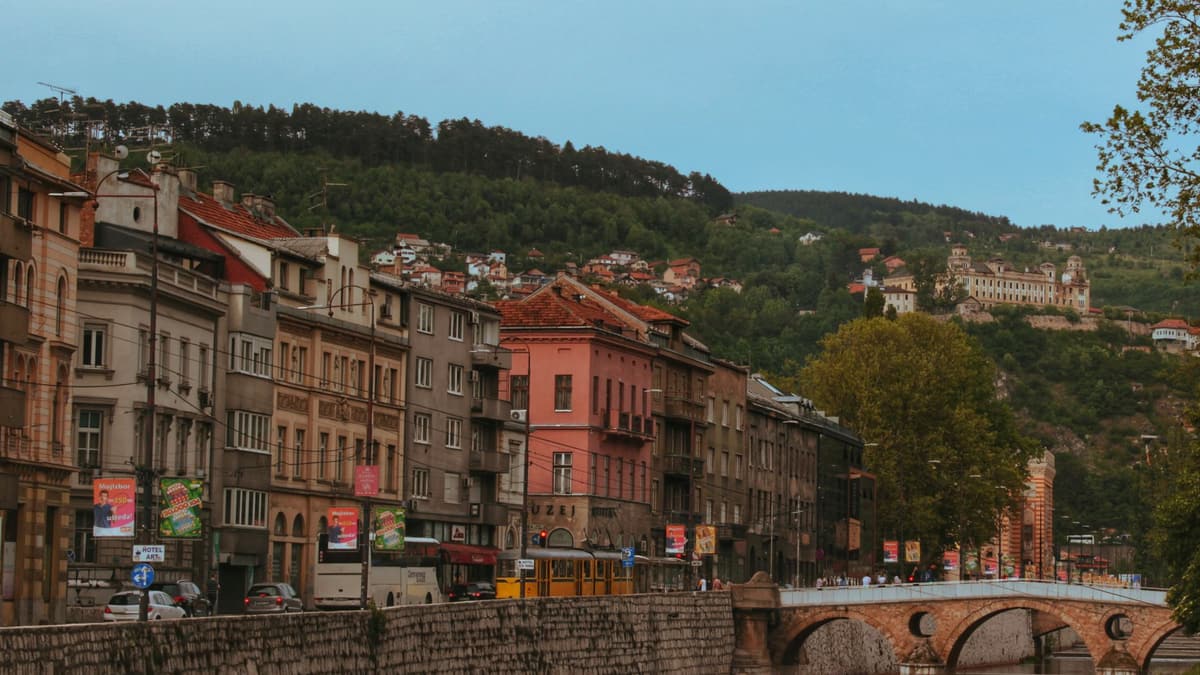 You're on the riverside avenue that in 1914 was the Appel Quay, today Obala Kulina bana. The modern footbridge in front of you has nothing to do with this story; it is just a landmark.
This was the city's broadest avenue, and the motorcade drove up it, heading east toward City Hall. After a week of rain, the day had turned into what one historian calls splendid summer weather. Most of the spectators stood on the shady side of the street. The Miljacka, the river beside you, was running low, as it does at that time of year.
Somewhere ahead along this quay, seven young men had taken up their posts. They carried small bombs of Serbian manufacture, pistols and cyanide. The weapons had come to them through the Black Hand organization in Belgrade. One was Mehmedbašić. One was Nedeljko Čabrinović. And one was Gavrilo Princip, not yet 20 years old.
Walk the way the cars went, east along the quay with the river on your right, to the Ćumurija Bridge, about ten minutes.
Co je v ceně
Naše prohlídky jsou zamýšlené jako meditativní a pohlcující: jdete a prostě posloucháte. Vždy jsou lepší ve společnosti a aplikace přehrává vyprávění synchronizovaně, takže vy, váš partner i vaši přátelé slyšíte každou zastávku ve stejnou chvíli.
Stand on the quay at the north end of the Ćumurija Bridge. It was near here, a little after ten, that the first attack came.
Zbytek této zastávky najdete v celé audioprohlídce.
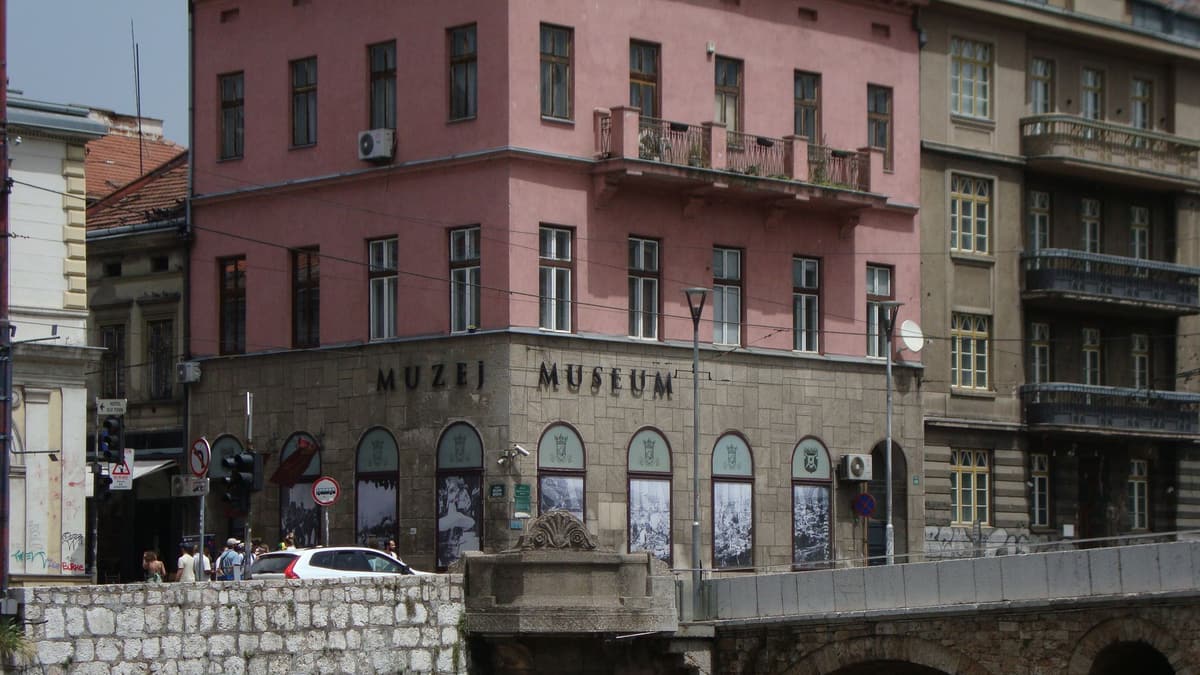
Stand at the corner where the quay meets Zelenih beretki street, right beside the Latin Bridge. In 1914 that street was Franz Joseph Street, and this corner building was Moritz Schiller's food shop.
Zbytek této zastávky najdete v celé audioprohlídce.
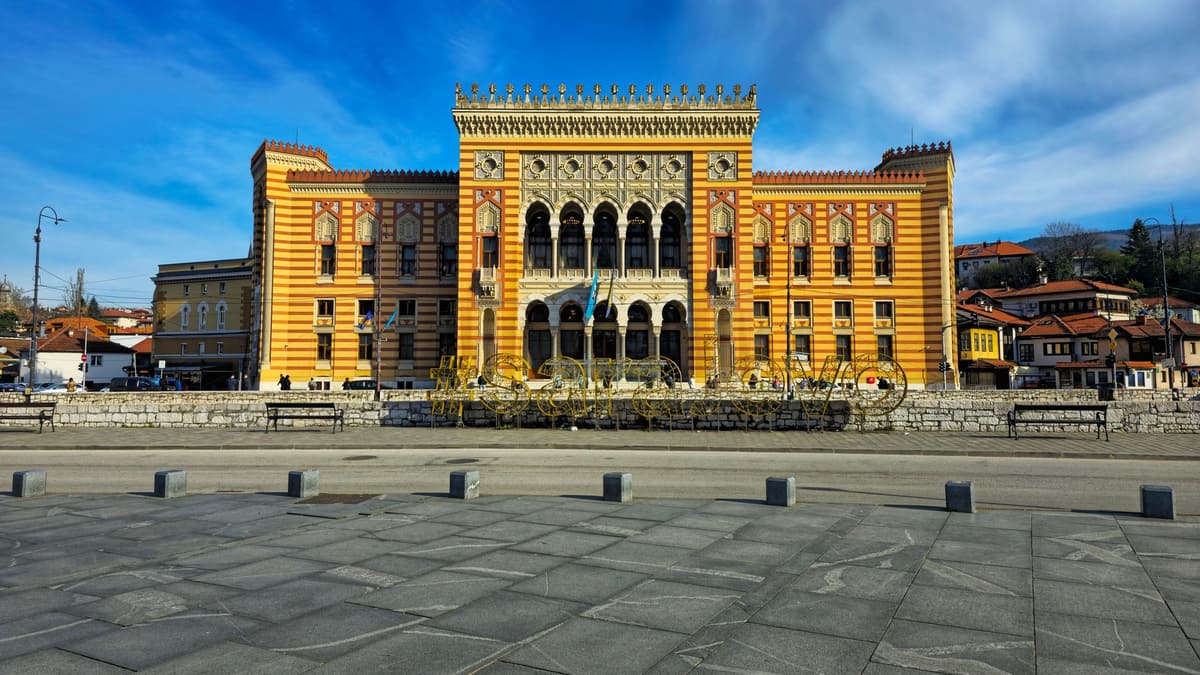
Face the striped building in front of you, Sarajevo's City Hall, opened in 1896. Its story did not end in 1914. On the night of August 25, 1992, during the siege of Sarajevo, incendiary shells set it on fire, and about two million library items…
Zbytek této zastávky najdete v celé audioprohlídce.
You're outside the Konak, the governor's residence from Ottoman times. It belongs today to the Presidency of Bosnia and Herzegovina and is a national monument.
Zbytek této zastávky najdete v celé audioprohlídce.
You're at the Hotel Europe, still a working hotel. It was built in 1882, and by 1914 it was Sarajevo's best hotel, belonging to a prominent Serb.
Zbytek této zastávky najdete v celé audioprohlídce.
Absolvuj tuto procházku s ostatními v rámci příští naplánované trasy.
Asi 5,1 km, zhruba 73 minut volným tempem · 8 zastávek
Přátelé chodí zdarmaOctober 11, 2026 · 9 min read
From the Hollandsche Schouwburg through the old Jewish Quarter, past the Dockworker and the Dam, to the Anne Frank House on the Prinsengracht.
October 11, 2026 · 11 min read
From Van Houten's street by the Vondelpark past Leidseplein, the Rijksmuseum passage and the famous canal bench to the Anne Frank House.

October 11, 2026 · 10 min read
Follow the last days of April and May 1945 from the Anhalter Bahnhof ruin past the Gestapo site and Brandenburg Gate to the Moltke Bridge and the Reichstag.
