September 19, 2026 · 9 min read
Athens Acropolis and Plaka Walk
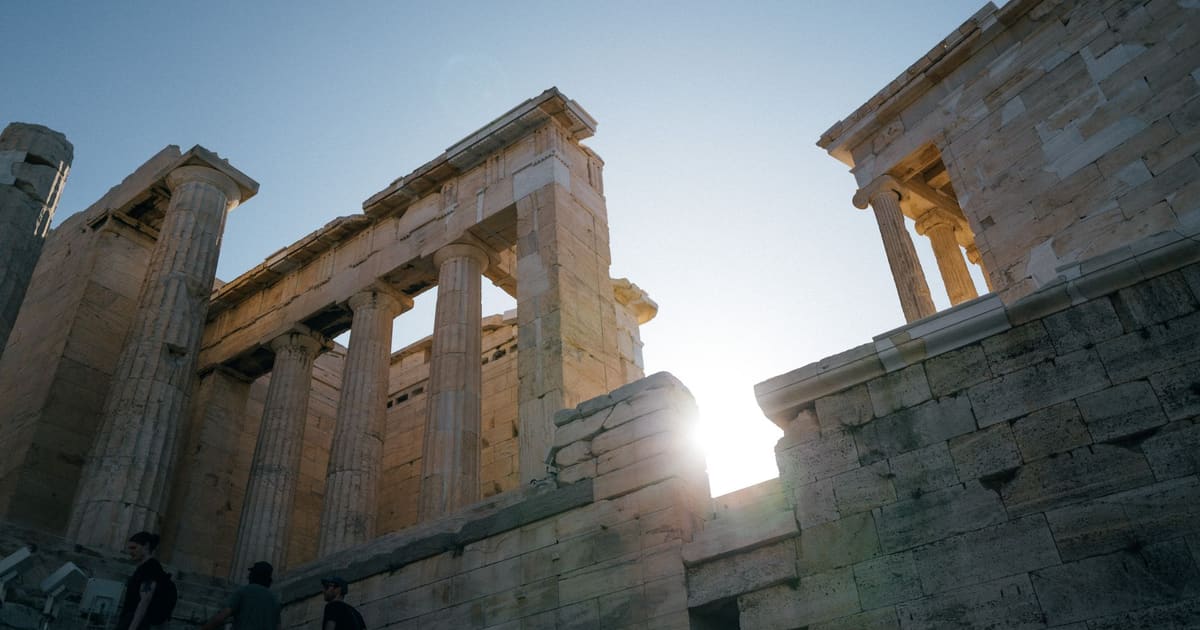
A self-guided Athens walking tour through the old lanes of Plaka and Anafiotika, around the ancient Agora, and up to the Acropolis itself.
548
September 19, 2026 · 8 min read
قم بهذا النشاط مع أشخاص آخرين في الجولة المُجدوَلة القادمة.
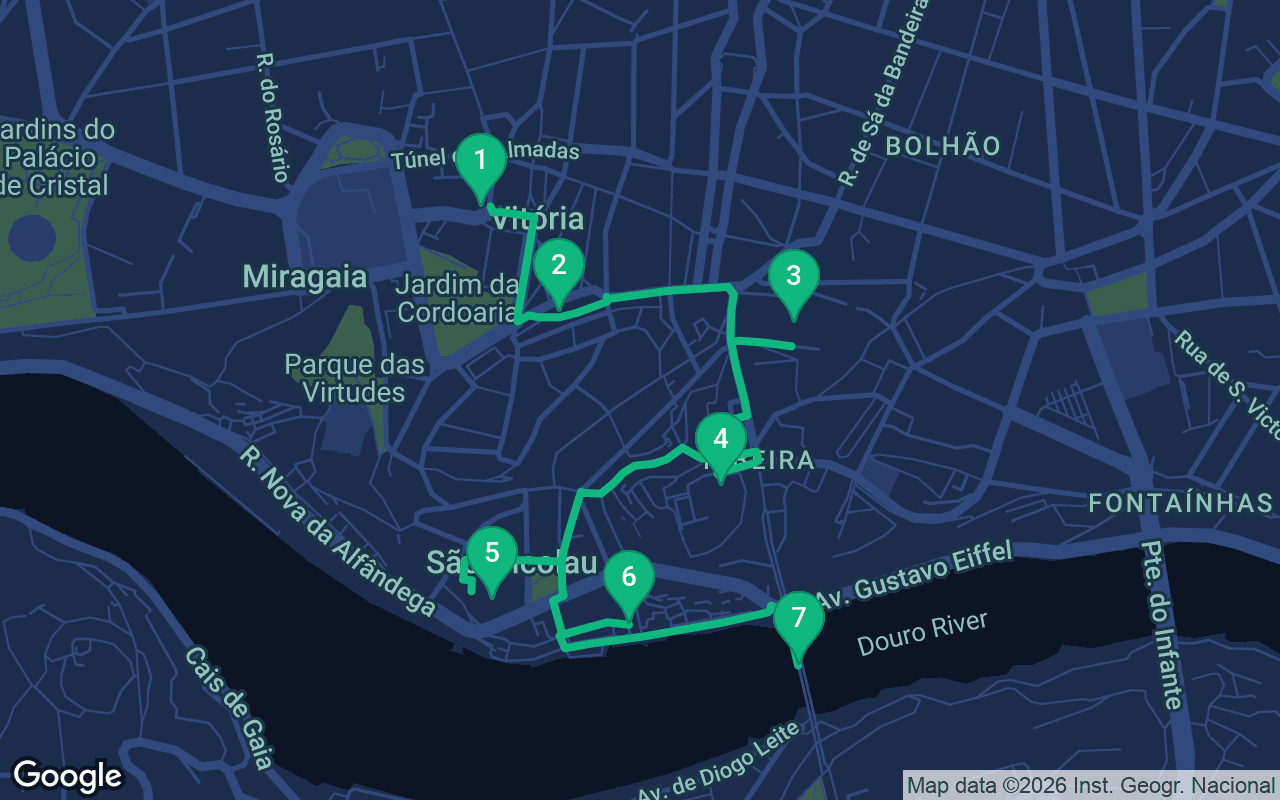
حوالي 3.3 كم، وحوالي 47 دقيقة بسرعة سهلة · 7 محطات
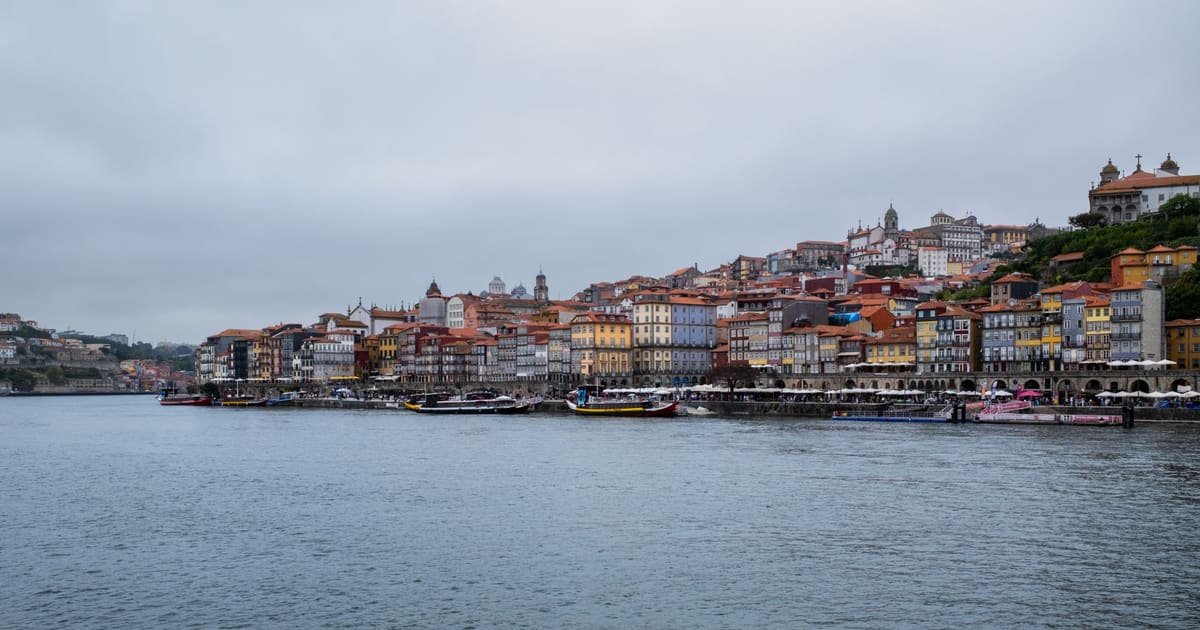
Porto is a city that tips downhill toward its river, and the smartest way to see it is to start up top and let gravity do the work. This route begins among the tiled churches of the upper town and drops through the old center to the Ribeira, the famous row of houses stacked along the Douro. It is a great pick for self-guided walking tours, because almost the whole thing runs downhill and ends with a riverside reward. Count on a little over three kilometers, with the descent doing most of the effort for you.
Give yourself about two hours, more if you plan to linger by the river at the end, which you should. The walk drops steadily downhill, which is easy on the legs going but means the streets can be steep and slick, so wear shoes with a bit of grip. The upper town gets the morning sun while the riverside stays shaded, so an earlier start keeps you comfortable. Porto weather turns quickly, so a light layer is wise even on a bright day. And bring a little appetite, because the Ribeira at the end is made for sitting and watching. Porto is a working city as much as a pretty one, so expect laundry strung between windows and trams rattling past baroque churches, which is exactly what gives it its character. The tiled churches you pass are a thread running through the whole walk, so it is worth learning to spot the blue and white panels, called azulejos, on facades and inside entrance halls. Take the hills slowly, drink the views in, and treat the descent as the city gradually revealing its river to you.
Start at the Carmo Church in the upper town, where one whole side wall is covered in a huge panel of blue and white tiles. Those tiles, telling a religious scene across the entire flank of the building, are the thing to see, and they are best in the morning light. Look closely and you will notice the church is two churches side by side, separated by one of the narrowest houses you will ever see, squeezed into the gap between them. Stand across the little square to take the whole tiled wall in at once. This upper corner of the city is calmer than the streets below, a gentle place to begin. When you are ready, it is a two minute walk to the tower that dominates this part of town.
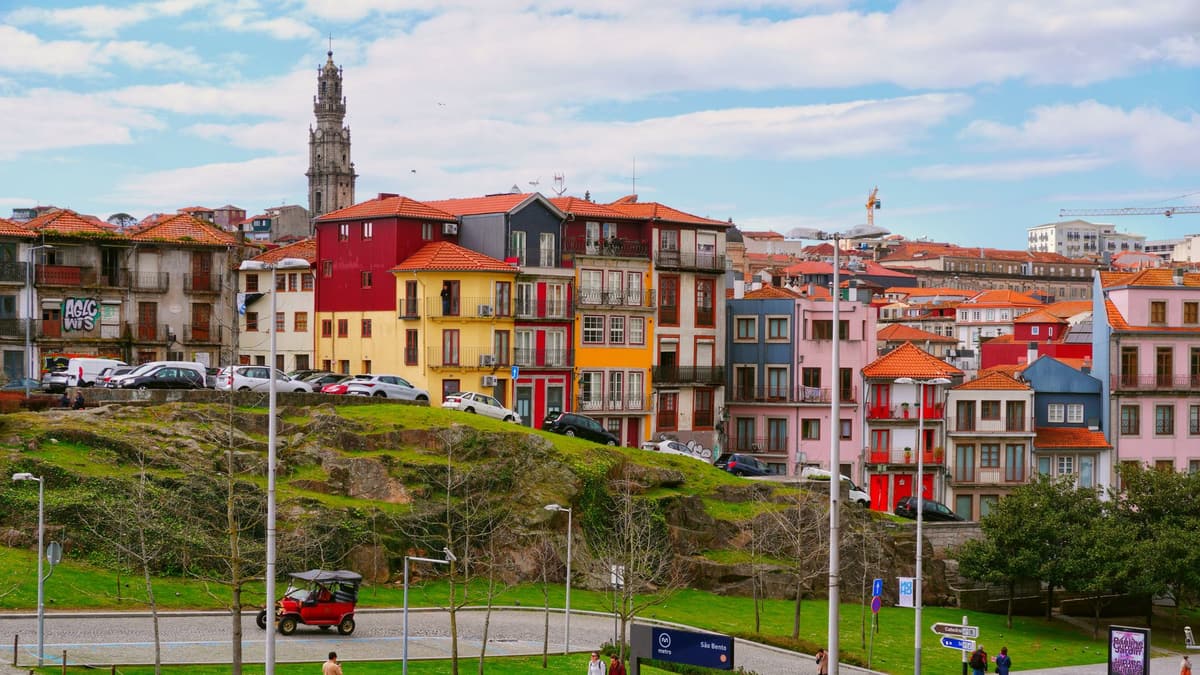 The Clerigos Tower is the tall baroque bell tower that you can see from half the city, a slender stone finger pointing up above the rooftops. The church at its base is worth a glance, but the tower is the landmark, and if you have the legs the climb up its winding stair gives you the best rooftop view in Porto. Even from the ground it is a fine sight, all carved stone and height. This is the moment to get your bearings, because from here the city falls away downhill toward the river you are heading for. Walk around the base to see how the tower anchors the whole quarter, and notice how you can use it to navigate all day, since it pops back into view from half the streets in the city. Right next door stands one of the most famous bookshops in the world, a small neo gothic hall with a swooping red staircase inside, worth a peek through the door even if the queue to enter is long. Then start downhill, following the streets as they drop toward the old center and the grand station below.
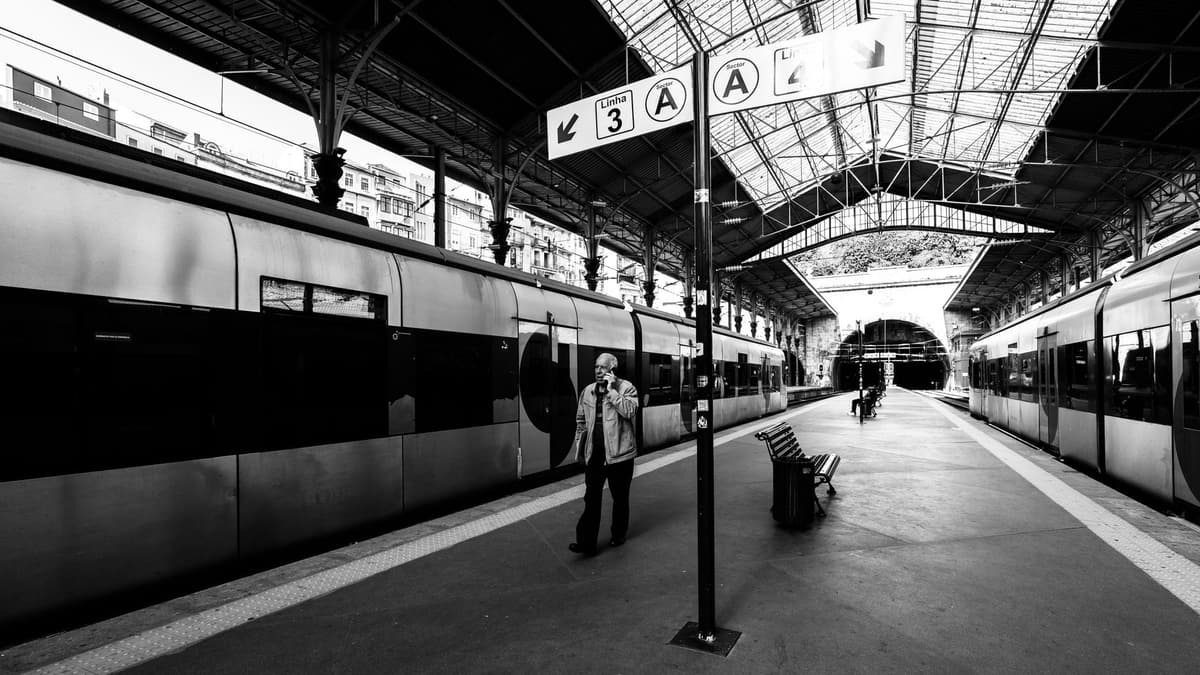
Sao Bento looks like an ordinary railway station from the street, but step inside the entrance hall and you walk into one of the most beautiful rooms in the country. The walls are covered floor to ceiling in blue and white tiles showing scenes from Portuguese history, thousands of them, glowing in the light from the high windows. It is free to walk in and look, and it is easy to spend fifteen minutes just reading the panels. Trains still come and go beyond the hall, which makes the beauty of the room feel casual and alive rather than roped off. This is a genuine highlight, so do not rush it. Look for the big panels showing old battles and royal weddings, and the frieze running high around the top that traces the story of transport, from oxcart to the railway that the station was built to serve. It is a rare thing, a piece of grand public art you pass through on the way to catch a train, and locals barely glance at it. When you step back out, the old cathedral sits on the higher ground just above, a short climb to your next stop.
The cathedral, the Se, is the fortress like church that crowns the oldest part of the city. It is heavy and solid, built more like a stronghold than a chapel, which tells you how old and how defensive this hilltop once was. The real prize here is the terrace out front, a wide stone platform that looks out over the tumble of red roofs down to the river and across to the far bank. Walk to the edge and take it in, because this is the view that sells Porto in every photograph. The cloister beside the church has its own tiled walls if you want a closer look. From the terrace, the streets drop sharply toward the water, and you follow them down into the tangle of the old riverside quarter.
 Lower down toward the river you reach Sao Francisco, a plain gothic church from the outside that hides something remarkable within. Inside, nearly every surface is carved and covered in gold, one of the most lavish church interiors anywhere, a forest of gilded wood that catches the light. Even if you only glance from the entrance, it is worth the pause to see the contrast with the sober stone shell. The church sits near the old merchant heart of the city, where the money that paid for all that gold once changed hands. Around it the lanes grow narrow and steep as they funnel toward the water. Keep going down, and the street will spill you out onto the riverfront itself.
The Ribeira is the postcard of Porto, the row of tall narrow houses in faded colors stacked up the slope right at the water's edge. Come out onto the square and the whole scene opens: the river, the boats, the great iron bridge, and the wine lodges on the far bank. This is where the walk pays off, so find a spot along the quay and just take it in. Café tables spill across the cobbles, buskers play, and the old houses lean over it all in their washed out reds and yellows. Wander the narrow lanes that climb back from the water and then return to the front. There is no hurry here. This little square by the water was the rough heart of the old fishing and trading quarter, and something of that unpolished life still clings to it under the postcard prettiness, which is exactly what keeps it from feeling like a stage set. When you are ready for the last short stretch, walk along the quay toward the great double deck bridge.
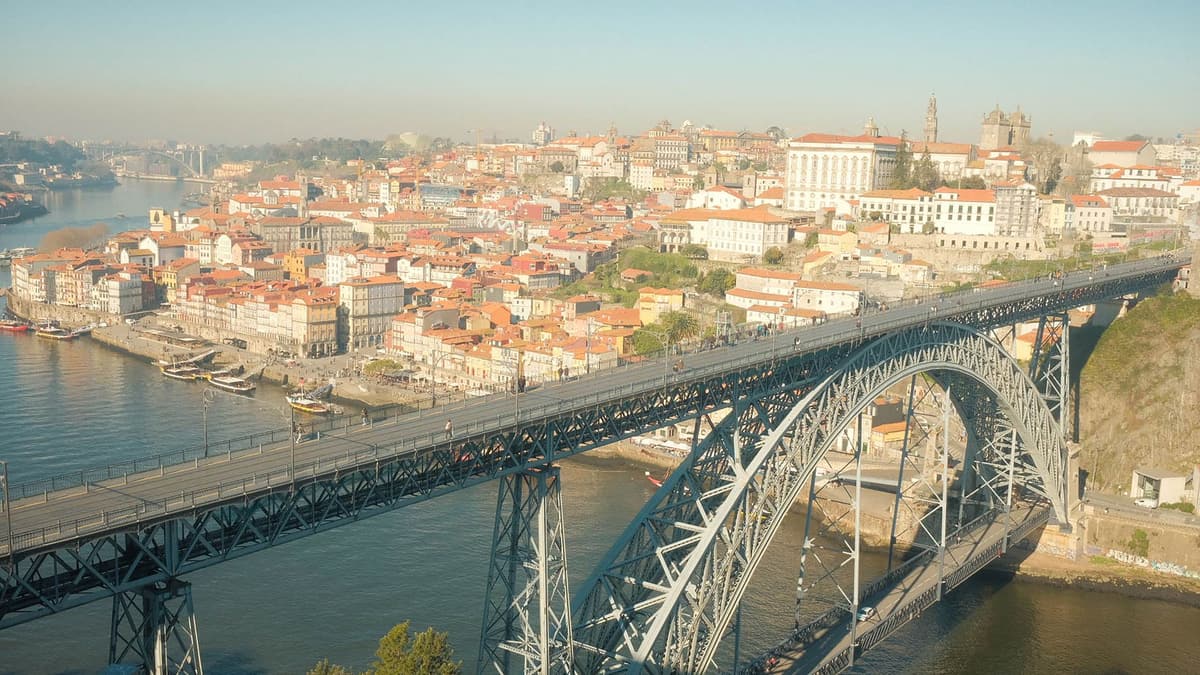 Finish at the Dom Luis I Bridge, the huge iron arch that leaps across the Douro in a single span. Walk out onto the lower deck for a view straight up the river, or if you have the energy, the upper deck gives you the wide panorama back over the Ribeira you just came through. The ironwork is a sight in itself, a great web of metal humming with foot traffic and trams. Standing in the middle, with the water far below and the city climbing both banks, is the perfect place to end. The far side holds the wine lodges if you want to cross for a glass. Either way, you have walked Porto from its highest tiles down to its river, the whole city under your feet.
Porto is too steep and too tangled for any tour bus to do it justice, which is exactly why walking wins here. Going downhill on foot lets you duck into the tiled halls and gold churches at your own pace and arrive at the river ready to sit. Doing it slowly is the whole trick. End of the day is the moment to time it for, when the sun drops behind the far bank and lights the river gold, and the whole Ribeira glows before the lamps come on. If you would like company for the wander, open the Walk With Me live map to find others walking Porto, and share the view from the bridge with someone new.
كل محطة من هذا النشاط عبر Porto, Portugal، بالترتيب.
حوالي 3.3 كم، وحوالي 47 دقيقة بسرعة سهلة.
يعمل مع Garmin وKomoot وStrava وOS Maps وأي تطبيق GPX.
September 19, 2026 · 9 min read
A self-guided Athens walking tour through the old lanes of Plaka and Anafiotika, around the ancient Agora, and up to the Acropolis itself.
September 19, 2026 · 8 min read
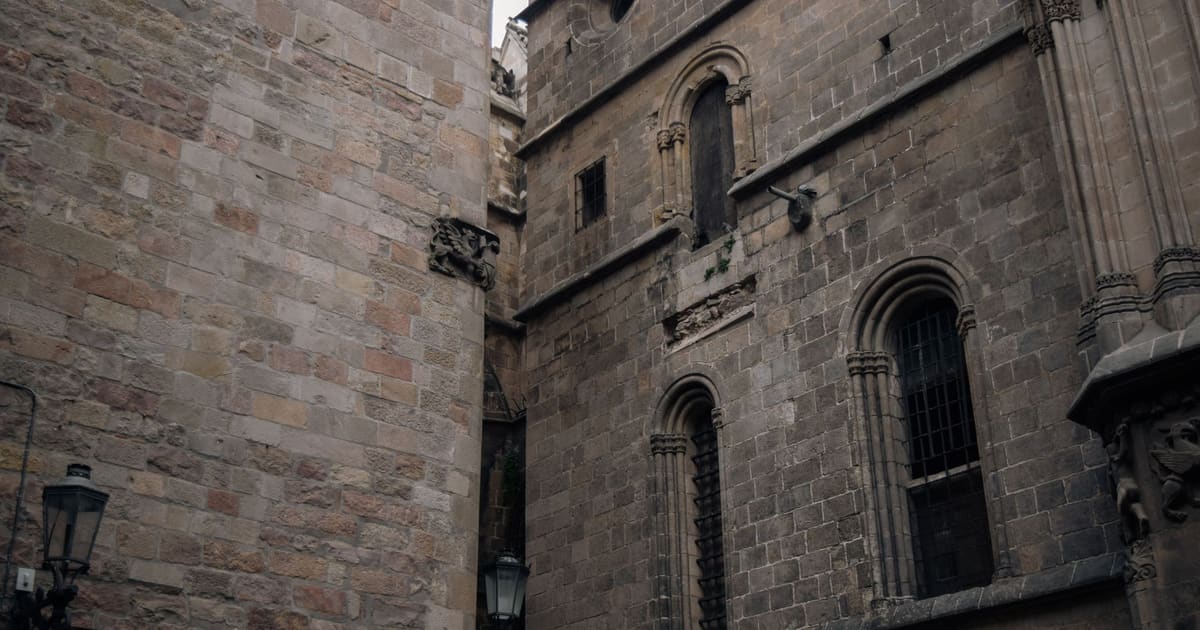
A self-guided barcelona walking tour from Placa de Catalunya down the Ramblas into the Gothic Quarter and El Born to Santa Maria del Mar.
September 19, 2026 · 8 min read
A self-guided bruges walking tour from the Markt and its belfry through the squares and along the canals to the Beguinage and the Lake of Love.