




 $7.99Pamětihodnosti města
Audioprůvodce Dublin Pěší trasy
Pěší trasy s komentářem v Dublin, které můžete procházet sami. Kupte si trasu jednou, stáhněte si ji a nechte příběh hrát na každé zastávce, zatímco jdete vlastním tempem.
Trasy od $7.99
Přátelé chodí zdarma. Jeden nákup pokryje všechny na tvé procházce. Spusť túru, pozvi přátele, aby se připojili, a bude hrát na telefonu každého z vaší skupiny.
5.0 na Google Play
Audioprůvodci pro Dublin
Každá trasa obsahuje mapu a komentář pro každé zastavení. Koupíte si ji jednou a zůstane vám napořád, bez jakéhokoli předplatného.
$7.99Pamětihodnosti města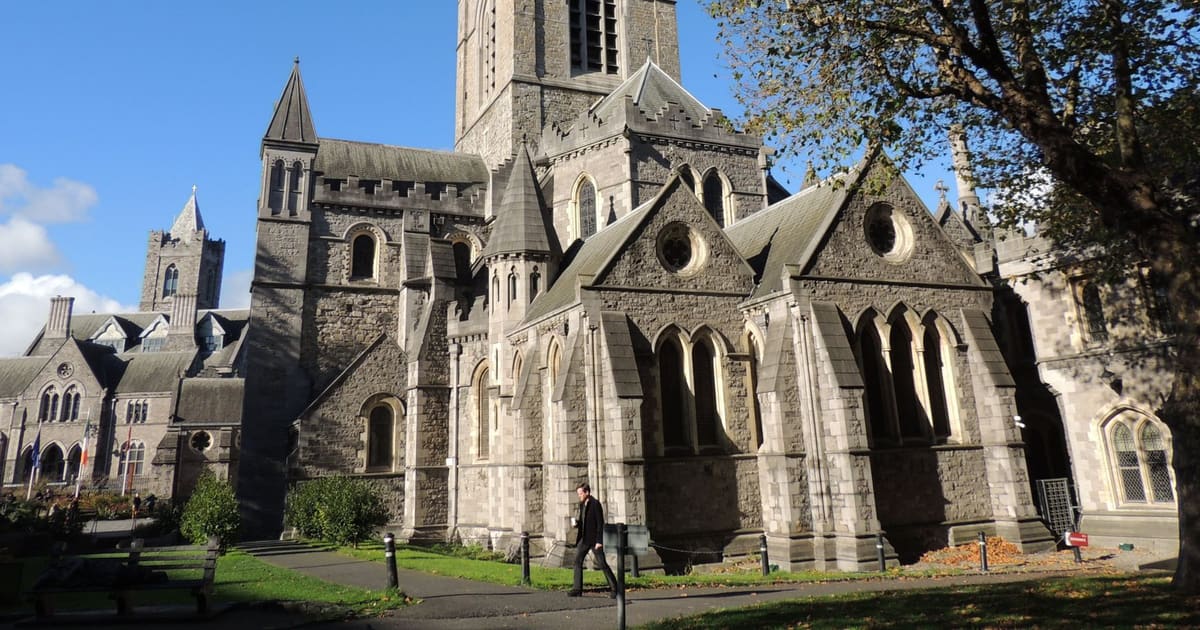 $7.99Pamětihodnosti města
Co vás čeká na pěší trase s audioprůvodcem v Dublin
A Dublin audio walk moves you between two very different cities packed into the same few streets, elegant Georgian squares and painted doors on one route, Viking ridges and two cathedrals on the other, with narration timed to each stop so you can look up instead of down at a map.
The Dublin Georgian Walk starts inside Trinity College, climbs Grafton Street to St Stephen's Green, then heads into the Georgian squares of brick houses, tall windows and painted front doors around Merrion Square, finishing at a small Victorian pharmacy that James Joyce wrote into Ulysses. It's about 2.1 kilometers, roughly 30 minutes of walking, and flat throughout.
The Dublin Medieval City Walk follows the oldest streets in the city instead, starting at St Audoen's, the last medieval parish church still in use, then visiting Christ Church and St Patrick's, the two great cathedrals, and Dublin Castle, the seat of government in Ireland for seven centuries.
That walk then drops through the cobbles of Temple Bar to finish on the Ha'penny Bridge over the Liffey. It's about 2.4 kilometers, roughly 33 minutes of walking, and the two routes share no stops, so they pair well as a single day in the city.
Kam se vydat v Dublin
Několik zastávek, které potkáte cestou, a důvody, proč u nich stojí za to zpomalit.
Georgian Squares
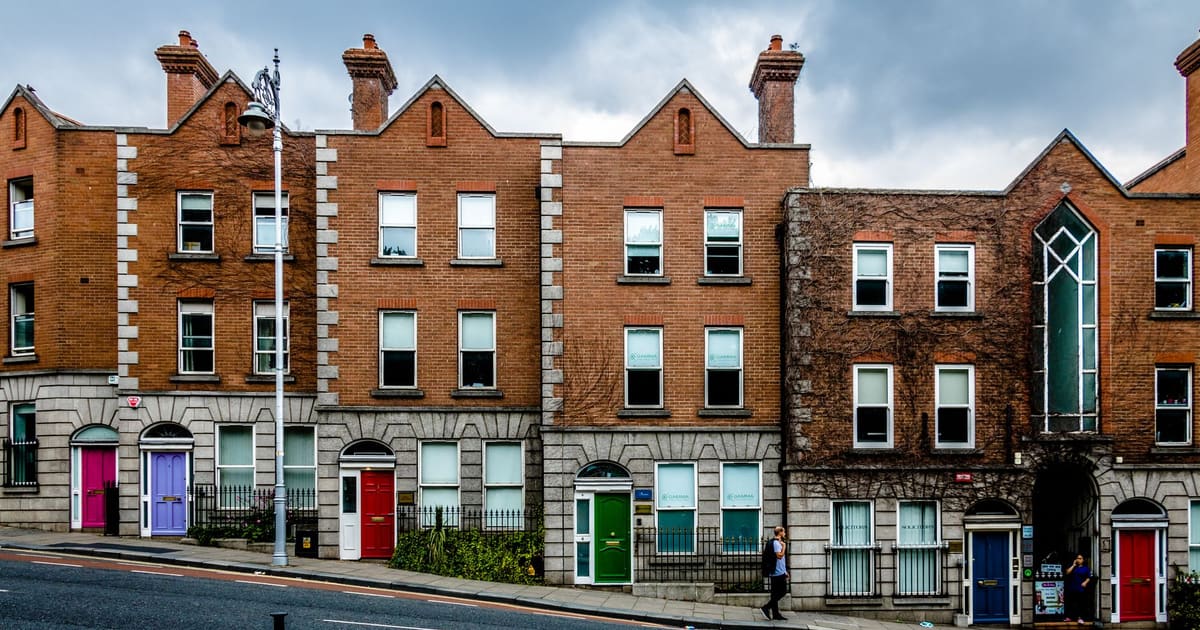
Georgian Dublin's houses are plain brick on the outside, almost severe, with all the decoration saved for the door, and a street like this shows exactly why. Look at the windows: the tallest sit on the first floor, where the grand reception rooms were, and they shrink floor by floor toward the servants' rooms in the attic. Every front door carries a different paint color and its own fanlight, the half moon window that let light into the hall. Merrion Square, laid out from 1762 for the Fitzwilliam family, is the grandest of these squares, with plaques marking the homes of Oscar Wilde's family and W. B. Yeats.

Trinity College
This is the Long Room of the Old Library at Trinity College, finished in the 1730s and one of the great library interiors in the world, its barrel ceiling arching over two long galleries of dark wood shelving packed with old books. Its prize is the Book of Kells, the four gospels written and painted by monks around the year 800, full of spiraling animals and knotwork so fine you need a magnifying glass. Queen Elizabeth I granted Trinity its charter in 1592, and for most of its history it was a Protestant institution, with Catholics admitted only from 1793 and women only from 1904.
Christ Church Cathedral
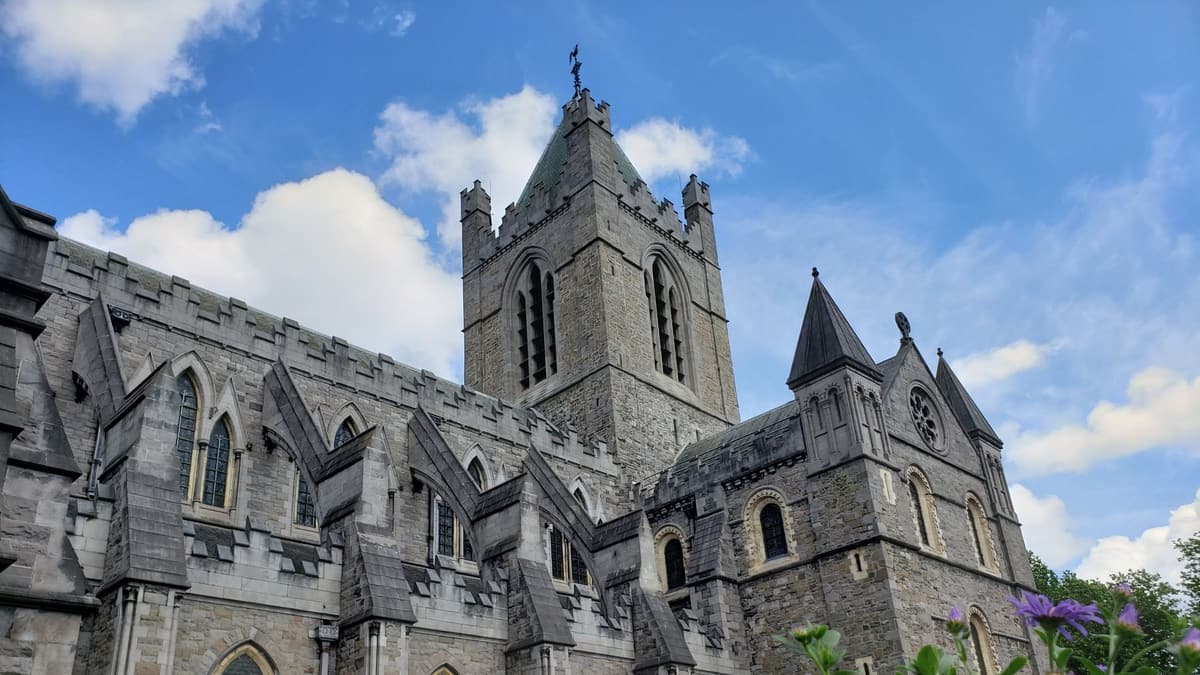
Christ Church is where Dublin's story really begins. Viking raiders set up a fortified base nearby where a small river met the Liffey in a dark tidal pool, Dubh Linn, the black pool that gave the city its name, and around 1030 their king gave land on this ridge for a cathedral. The Normans, who captured Dublin in 1170, replaced it with the stone church standing here now, heavily restored by the Victorians. Underneath runs a vast crypt the length of the building, among the largest medieval crypts in Ireland, holding a famous oddity, a mummified cat and rat found trapped in an organ pipe.
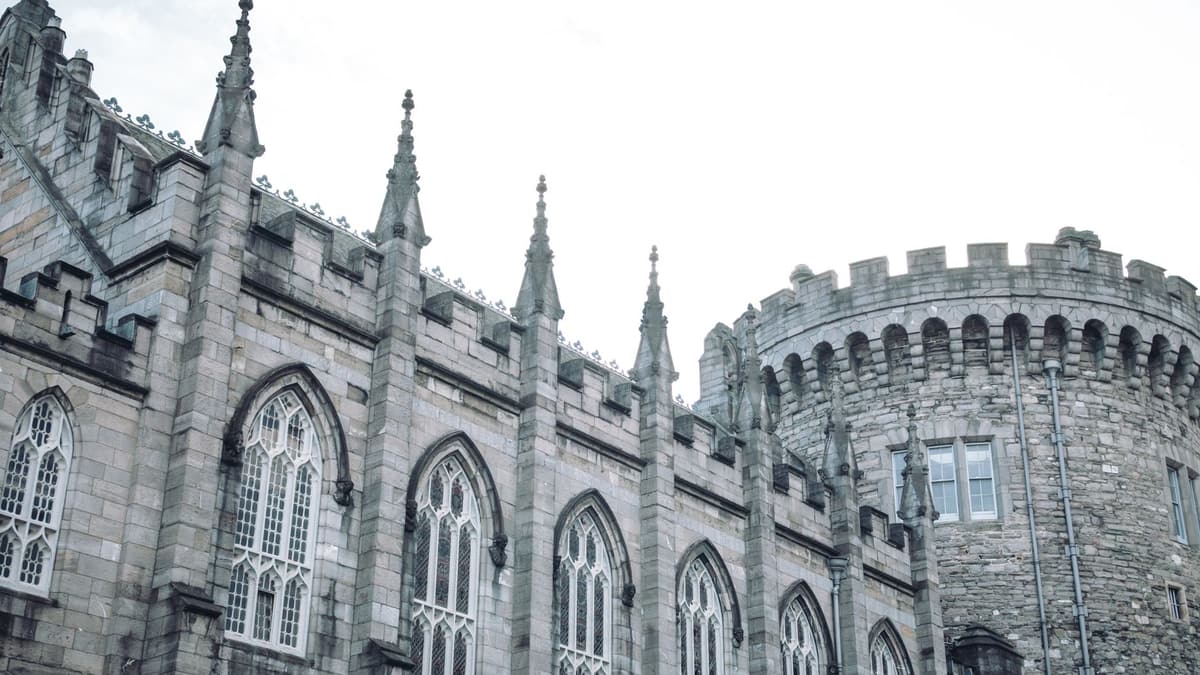
Dublin Castle
The big round tower you can see here is the Record Tower, the last complete survivor of the medieval castle King John ordered built on this spot in 1204, standing beside the Gothic Chapel Royal from the early 1800s. For the next seven hundred years this was the seat of English, and later British, rule in Ireland. Much of what you see elsewhere in the grounds is Georgian, the elegant brick and stone of the Upper Yard, where the ceremony and gossip of the viceregal court played out. On 16 January 1922 the castle was formally handed over to Michael Collins and the new Irish government.

Ha'penny Bridge
This graceful white cast iron footbridge was made in England and opened in 1816, built to replace a ferry crossing at this spot on the Liffey. Its operator was allowed to charge a toll on the new bridge instead, a halfpenny, which gave the bridge its lasting nickname even though the charge was dropped back in 1919. Its official name is the Liffey Bridge, though almost nobody uses it. Stand in the middle of its arch and look both ways: upstream toward the ridge where medieval Dublin began, downstream toward O'Connell Bridge. The Liffey below is tidal, the same water that once carried Viking ships to the black pool.
Získejte audioprohlídku ve 3 jednoduchých krocích
Vše v bezplatné aplikaci Walk With Me a první zastávky každé prohlídky si můžete vyzkoušet zdarma.
Klepněte na zlatá sluchátka a vyberte prohlídku


01
Jděte sami, nebo někoho pozvěte


02
Spusťte přehrávání a jděte
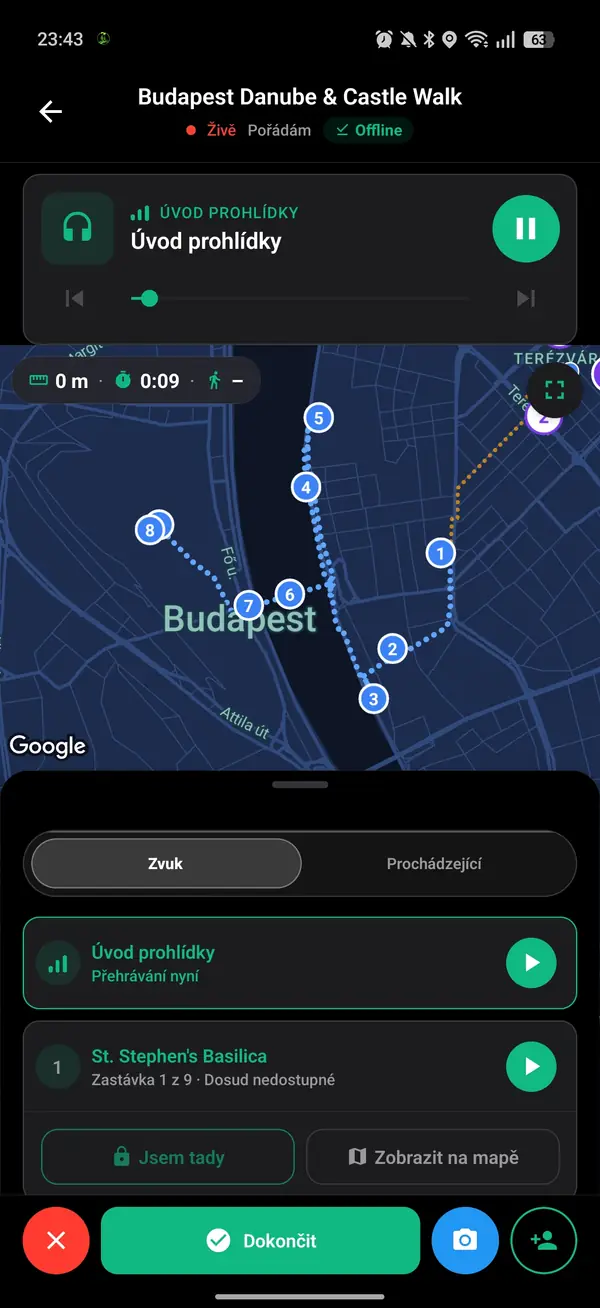
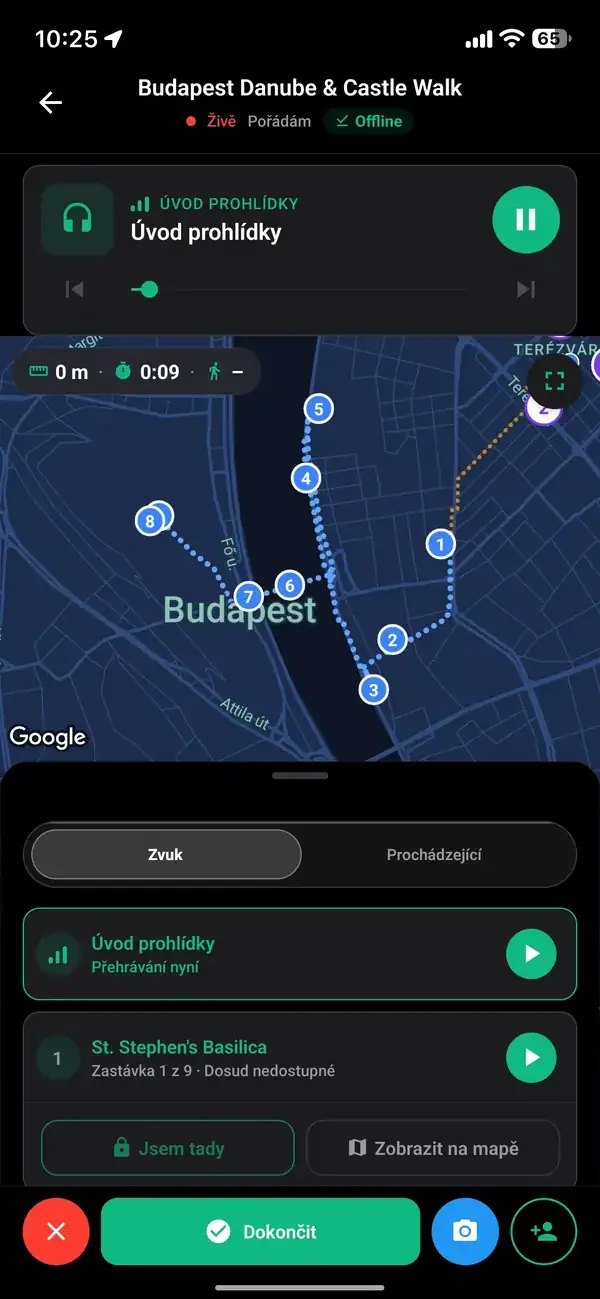
03
Pečlivě vytvořené pro váš čas ve městě
Tyto prohlídky nejsou seznam památek k odškrtání. Jsou určené k pomalé chůzi, se sluchátky na uších a pohledem upřeným na město.
Meditativní a pohlcující
Každý příběh zazní tam, kde se odehrál. Aplikace zazvoní, když dorazíte na zastávku, jedno klepnutí spustí vyprávění a cesta mezi zastávkami patří jen vám, vaším vlastním tempem.
Ručně a s péčí
Každou trasu i každou zastávku vybíráme sami a každý příběh pečlivě dotváříme, aby váš čas ve městě patřil místům, která za to opravdu stojí.
Ve dvou je to lepší
Každá procházka je lepší s někým po boku, takže pokud můžete někoho vzít s sebou, moc vám to doporučujeme. Proto jeden nákup pokryje všechny, koho pozvete: připojí se k vaší prohlídce zdarma.