




 $7.99Điểm nổi bật thành phố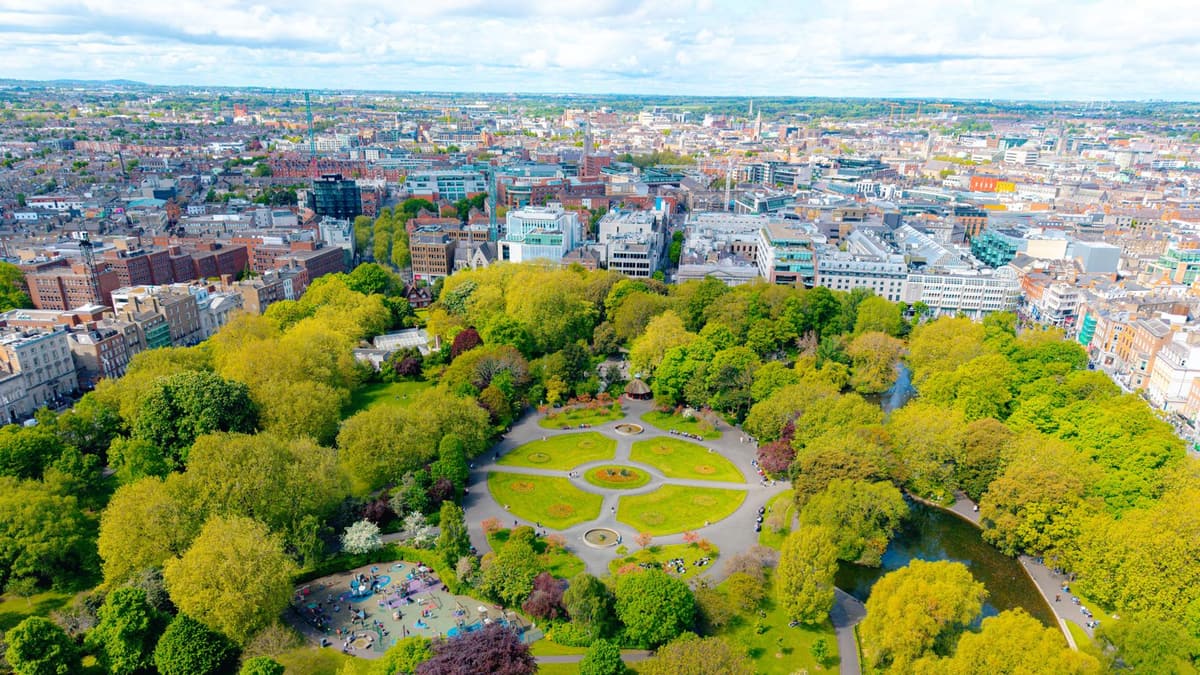
Âm thanh Dublin Tour đi bộ
Các chuyến đi bộ tự hướng dẫn, có thuyết minh qua Dublin. Mua tour một lần, tải xuống và để câu chuyện tự động phát tại mỗi điểm dừng khi bạn đi bộ theo nhịp độ của riêng mình.
Tour chỉ từ $7.99
Bạn bè đi bộ miễn phí. Một lần mua bao gồm tất cả mọi người trong chuyến đi bộ của bạn. Bắt đầu tour, mời bạn bè tham gia, và nó sẽ phát trên mọi điện thoại trong nhóm của bạn.
5.0 trên Google Play
Tour âm thanh tại Dublin
Mỗi tour là một lộ trình trên bản đồ có thuyết minh tại từng điểm dừng. Mua một lần và sở hữu mãi mãi, không cần đăng ký định kỳ.
$7.99Điểm nổi bật thành phố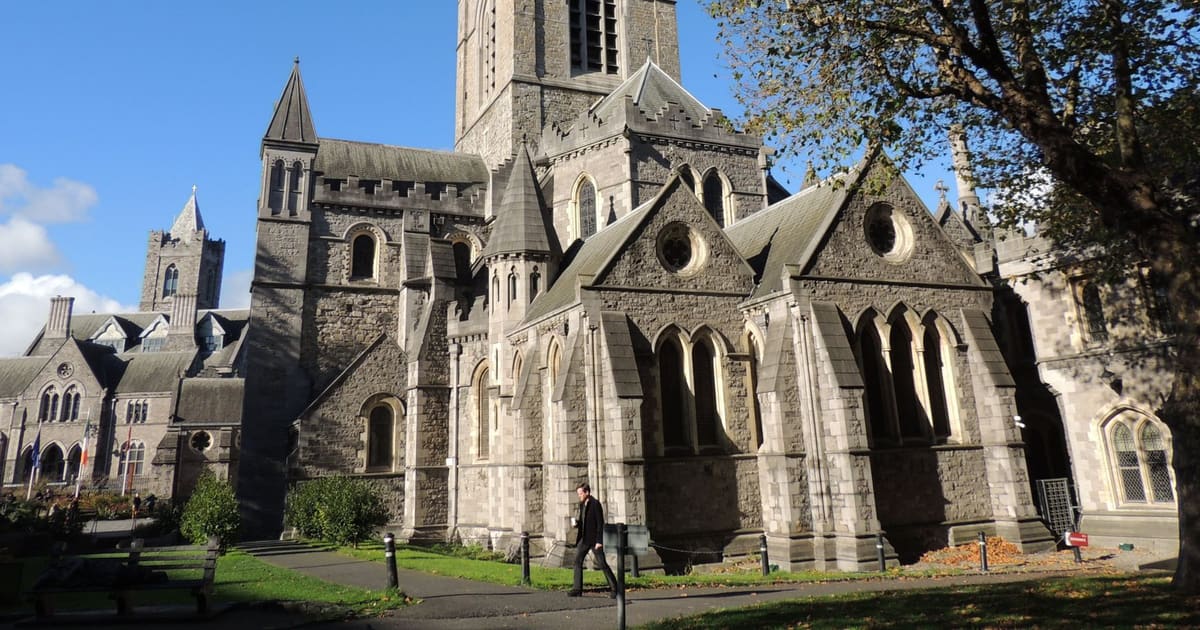 $7.99Điểm nổi bật thành phố
Trải nghiệm gì trong tour đi bộ âm thanh tại Dublin
A Dublin audio walk moves you between two very different cities packed into the same few streets, elegant Georgian squares and painted doors on one route, Viking ridges and two cathedrals on the other, with narration timed to each stop so you can look up instead of down at a map.
The Dublin Georgian Walk starts inside Trinity College, climbs Grafton Street to St Stephen's Green, then heads into the Georgian squares of brick houses, tall windows and painted front doors around Merrion Square, finishing at a small Victorian pharmacy that James Joyce wrote into Ulysses. It's about 2.1 kilometers, roughly 30 minutes of walking, and flat throughout.
The Dublin Medieval City Walk follows the oldest streets in the city instead, starting at St Audoen's, the last medieval parish church still in use, then visiting Christ Church and St Patrick's, the two great cathedrals, and Dublin Castle, the seat of government in Ireland for seven centuries.
That walk then drops through the cobbles of Temple Bar to finish on the Ha'penny Bridge over the Liffey. It's about 2.4 kilometers, roughly 33 minutes of walking, and the two routes share no stops, so they pair well as a single day in the city.
Địa điểm đi bộ tại Dublin
Một vài điểm dừng bạn sẽ đi qua và lý do tại sao chúng xứng đáng để bạn đi chậm lại và thưởng thức.
Georgian Squares
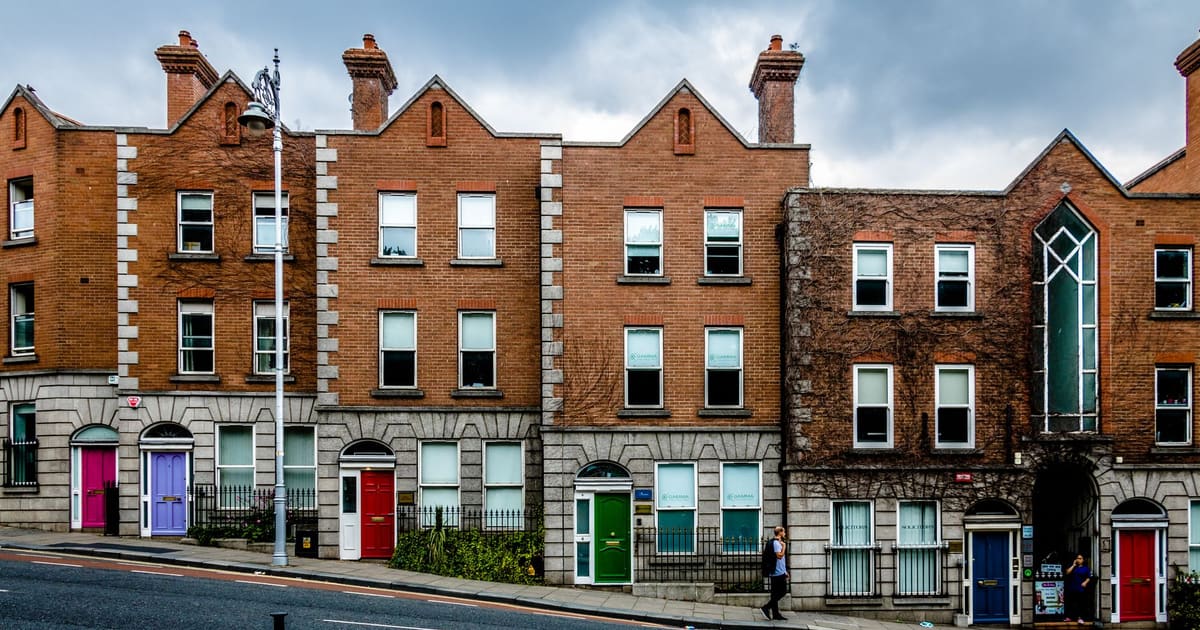
Georgian Dublin's houses are plain brick on the outside, almost severe, with all the decoration saved for the door, and a street like this shows exactly why. Look at the windows: the tallest sit on the first floor, where the grand reception rooms were, and they shrink floor by floor toward the servants' rooms in the attic. Every front door carries a different paint color and its own fanlight, the half moon window that let light into the hall. Merrion Square, laid out from 1762 for the Fitzwilliam family, is the grandest of these squares, with plaques marking the homes of Oscar Wilde's family and W. B. Yeats.
Trinity College
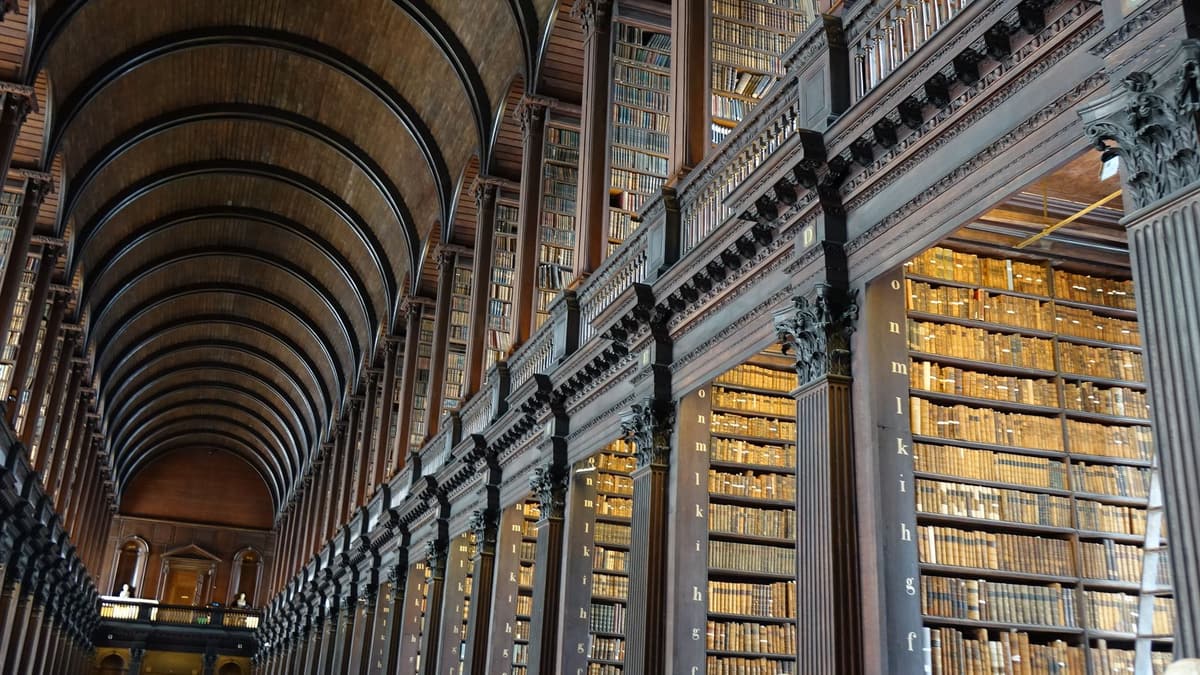
This is the Long Room of the Old Library at Trinity College, finished in the 1730s and one of the great library interiors in the world, its barrel ceiling arching over two long galleries of dark wood shelving packed with old books. Its prize is the Book of Kells, the four gospels written and painted by monks around the year 800, full of spiraling animals and knotwork so fine you need a magnifying glass. Queen Elizabeth I granted Trinity its charter in 1592, and for most of its history it was a Protestant institution, with Catholics admitted only from 1793 and women only from 1904.
Christ Church Cathedral
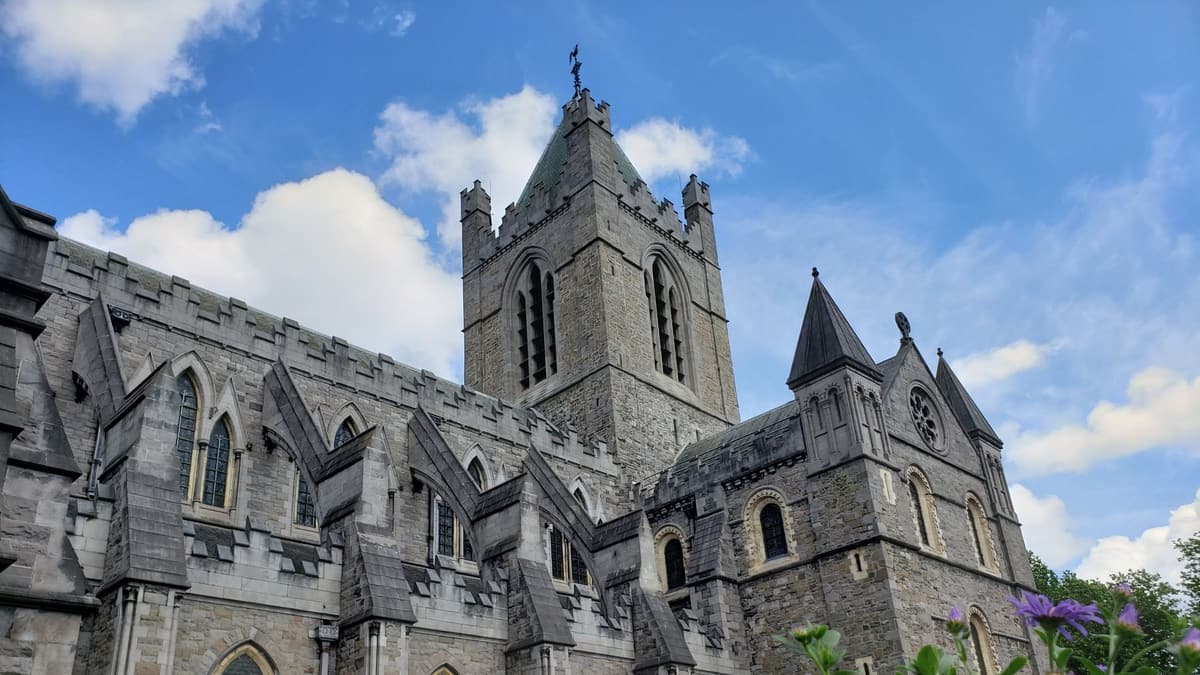
Christ Church is where Dublin's story really begins. Viking raiders set up a fortified base nearby where a small river met the Liffey in a dark tidal pool, Dubh Linn, the black pool that gave the city its name, and around 1030 their king gave land on this ridge for a cathedral. The Normans, who captured Dublin in 1170, replaced it with the stone church standing here now, heavily restored by the Victorians. Underneath runs a vast crypt the length of the building, among the largest medieval crypts in Ireland, holding a famous oddity, a mummified cat and rat found trapped in an organ pipe.
Dublin Castle
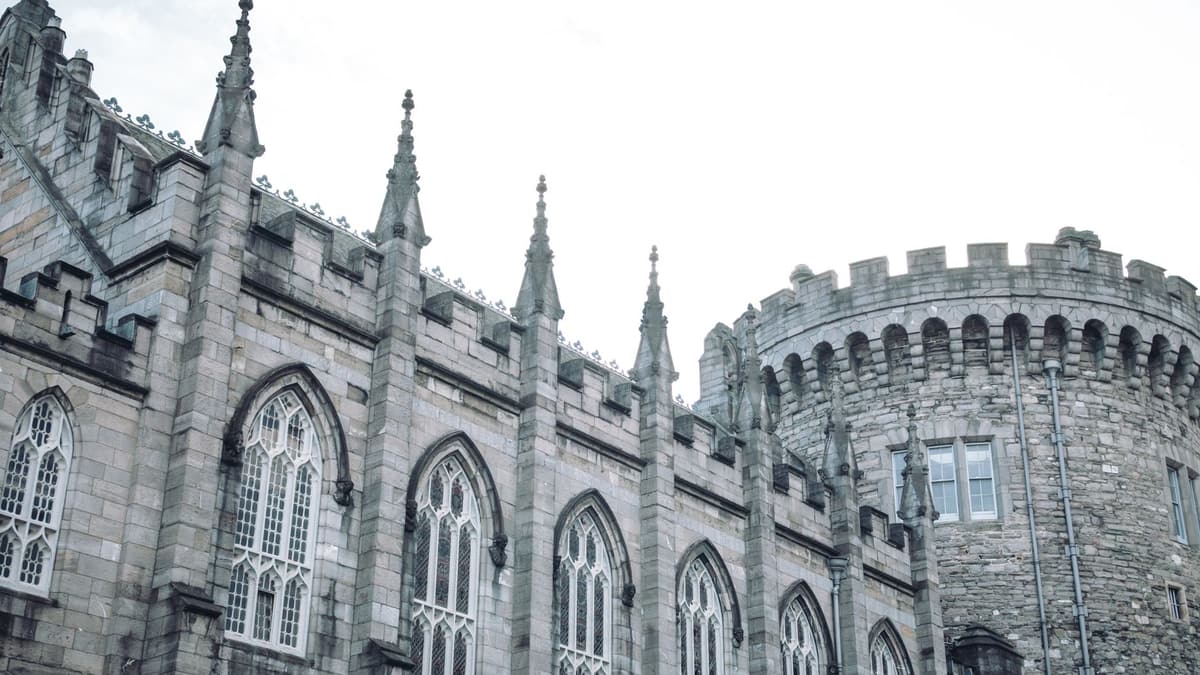
The big round tower you can see here is the Record Tower, the last complete survivor of the medieval castle King John ordered built on this spot in 1204, standing beside the Gothic Chapel Royal from the early 1800s. For the next seven hundred years this was the seat of English, and later British, rule in Ireland. Much of what you see elsewhere in the grounds is Georgian, the elegant brick and stone of the Upper Yard, where the ceremony and gossip of the viceregal court played out. On 16 January 1922 the castle was formally handed over to Michael Collins and the new Irish government.

Ha'penny Bridge
This graceful white cast iron footbridge was made in England and opened in 1816, built to replace a ferry crossing at this spot on the Liffey. Its operator was allowed to charge a toll on the new bridge instead, a halfpenny, which gave the bridge its lasting nickname even though the charge was dropped back in 1919. Its official name is the Liffey Bridge, though almost nobody uses it. Stand in the middle of its arch and look both ways: upstream toward the ridge where medieval Dublin began, downstream toward O'Connell Bridge. The Liffey below is tidal, the same water that once carried Viking ships to the black pool.
Nhận Tour Âm Thanh Trong 3 Bước Đơn Giản
Tất cả trong ứng dụng Walk With Me miễn phí, và các điểm dừng đầu tiên của mỗi tour đều được nghe thử miễn phí.
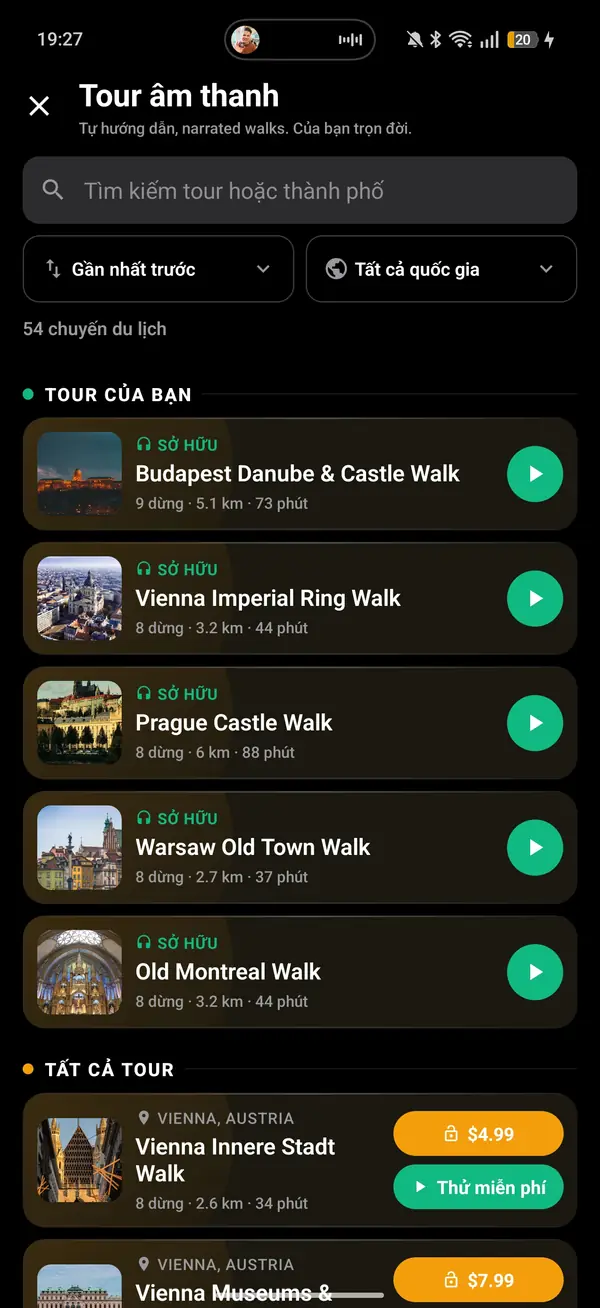
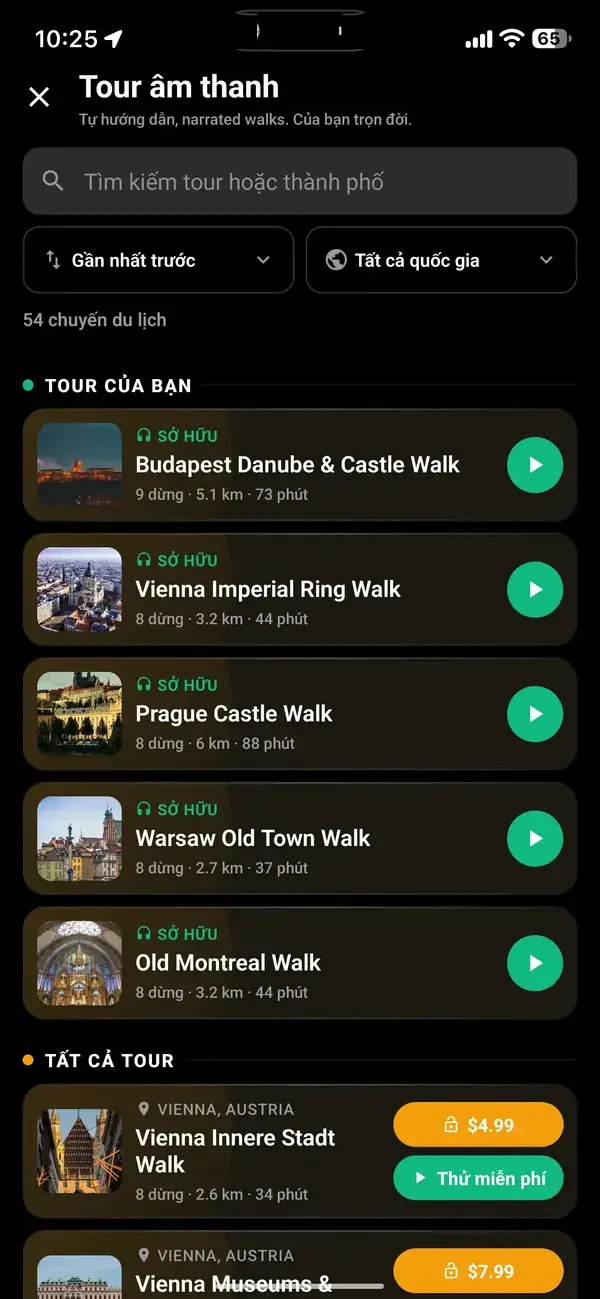
Chạm vào tai nghe vàng và chọn tour
01
Đi một mình hoặc mời ai đó
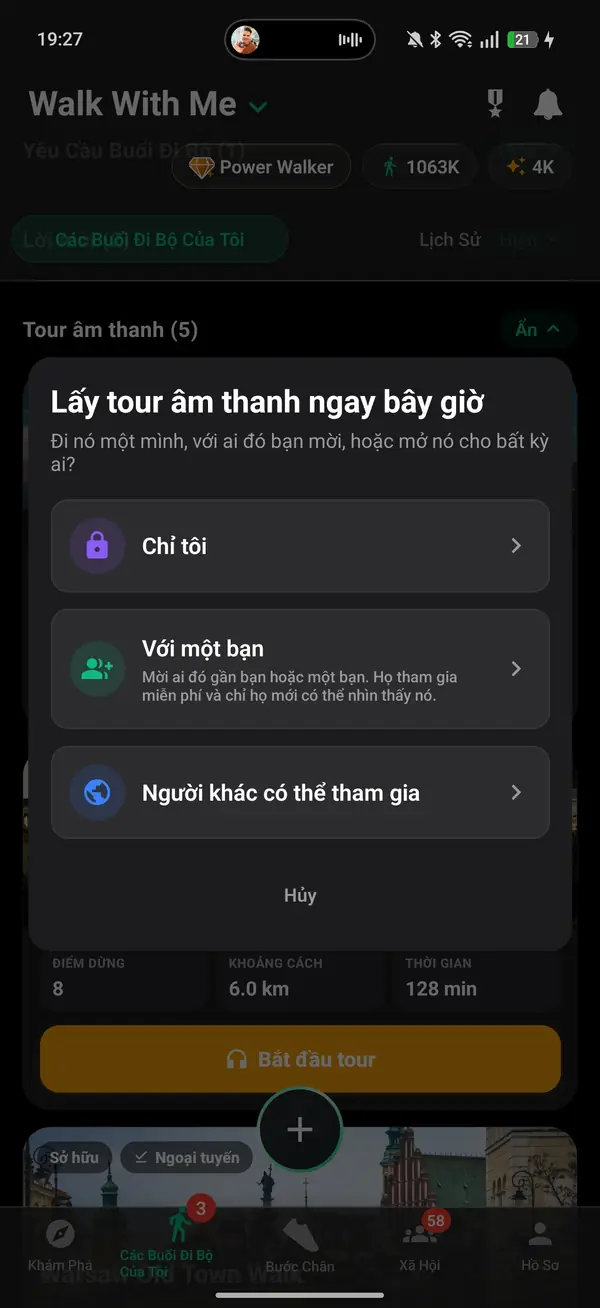
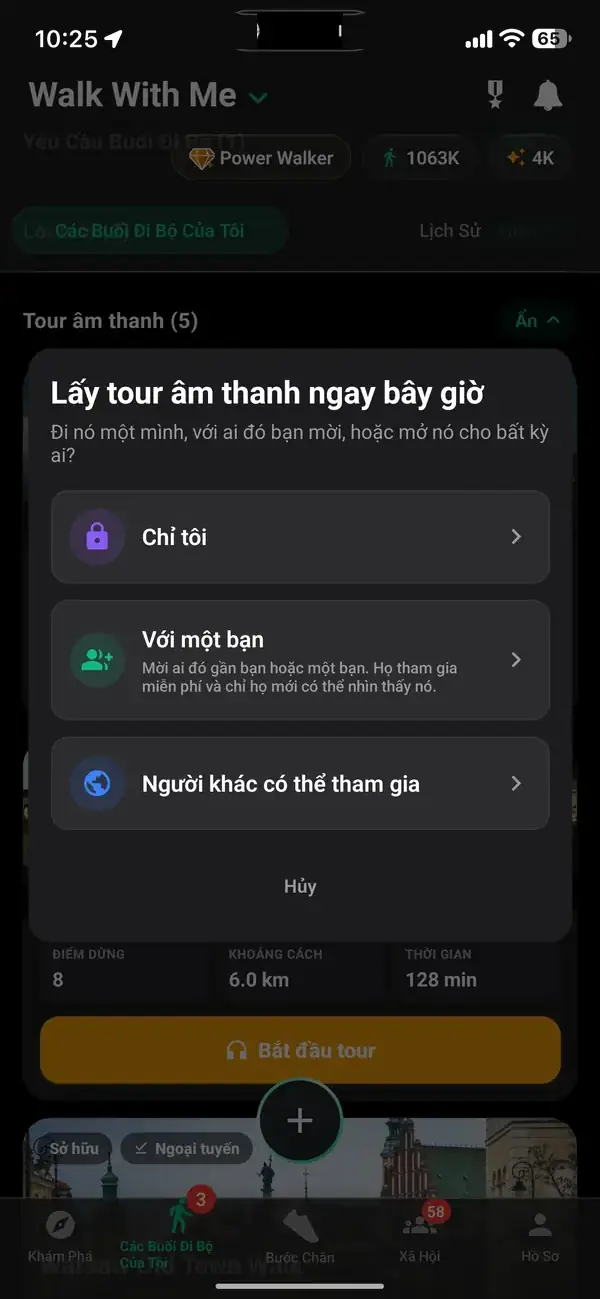
02
Nhấn phát và đi bộ
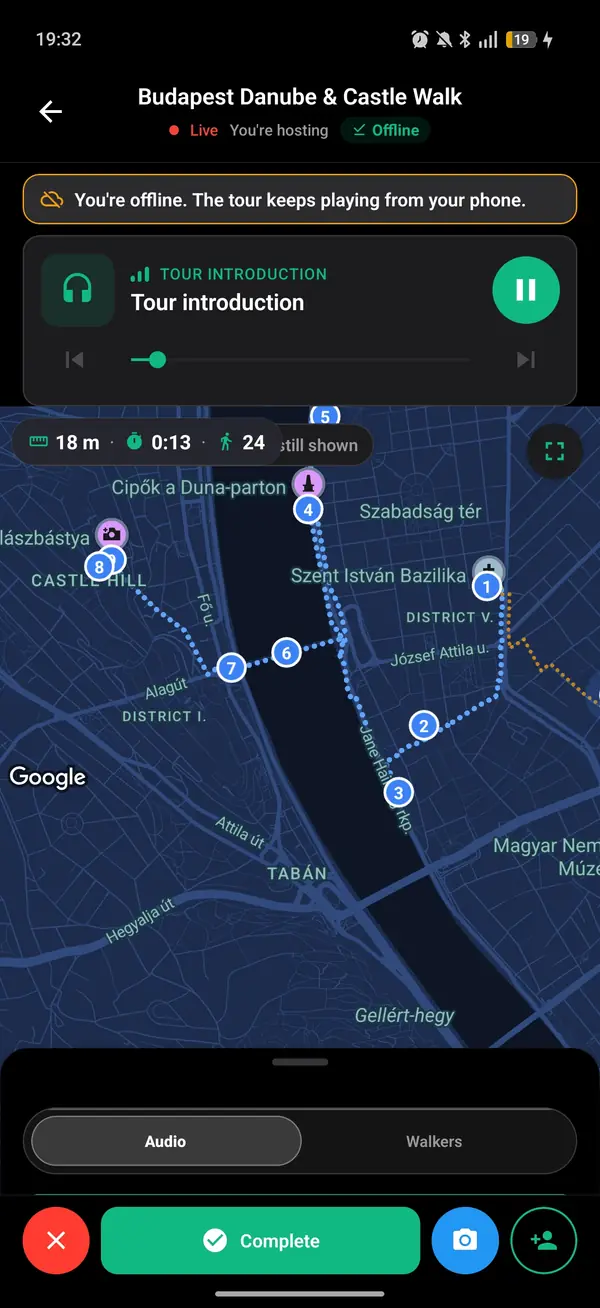
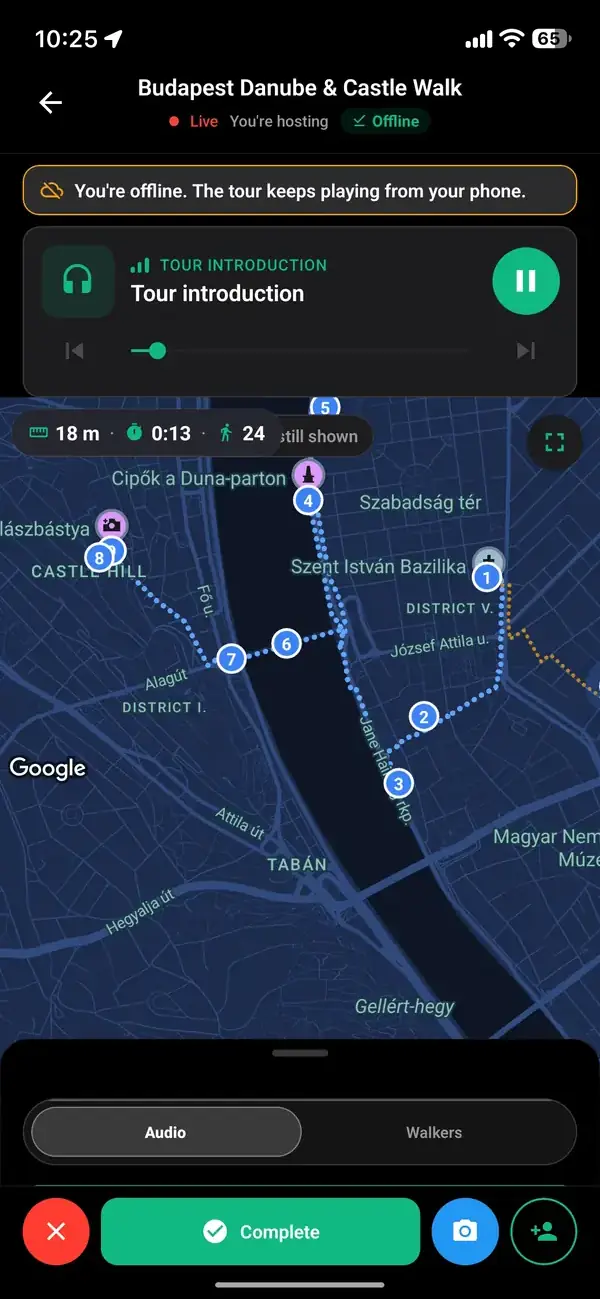
03
Được chăm chút cho thời gian của bạn trong thành phố
Những tour này không phải danh sách địa danh để đánh dấu. Chúng được tạo ra để bước đi chậm rãi, đeo tai nghe và ngắm nhìn thành phố.
Thư thái và cuốn hút
Mỗi câu chuyện được kể ngay tại nơi nó đã diễn ra. Ứng dụng phát âm báo khi bạn đến một điểm dừng, một lần chạm để bắt đầu câu chuyện, và quãng đường giữa các điểm dừng là của riêng bạn, theo nhịp của bạn.
Thủ công, tỉ mỉ
Chúng tôi tự chọn từng lộ trình, từng điểm dừng và chăm chút từng câu chuyện, để thời gian của bạn trong thành phố dành cho những nơi đáng đến nhất.
Vui hơn khi có bạn đồng hành
Mỗi chuyến đi bộ đều vui hơn khi có ai đó bên cạnh, vì vậy nếu bạn có thể rủ một người bạn, chúng tôi rất khuyến khích. Đó là lý do một lần mua bao gồm tất cả những người bạn mời: họ tham gia tour của bạn miễn phí.