
October 11, 2026 · 9 min read
Amsterdam Anne Frank Walking Tour
From the Hollandsche Schouwburg through the old Jewish Quarter, past the Dockworker and the Dam, to the Anne Frank House on the Prinsengracht.
589

October 11, 2026 · 13 min read

 Přátelé chodí zdarma
Každá prohlídka funguje také jako naplánovaná skupinová procházka, ke které se můžete v aplikaci připojit.
Další audio prohlídky v Mexico City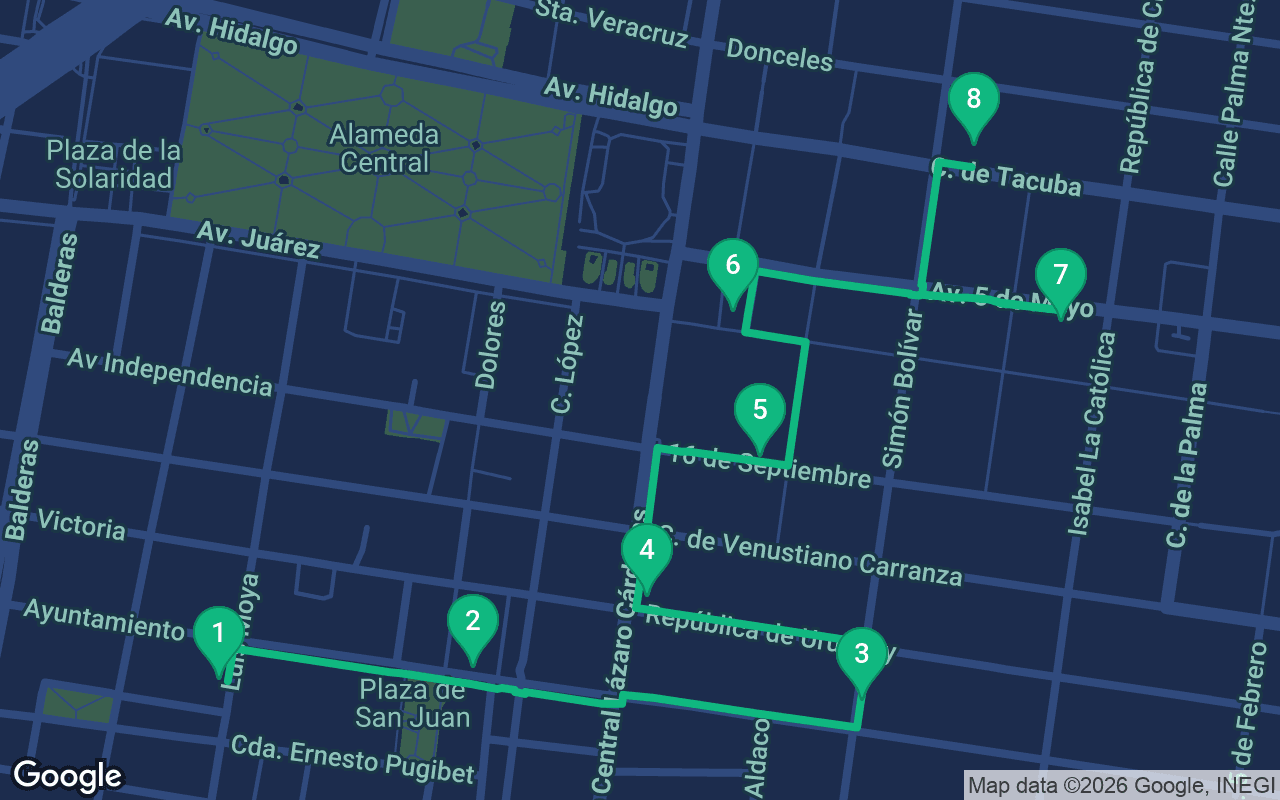
Zhruba 2,4 km, přibližně 33 minut pohodovým tempem.
Tato prohlídka je namluvená
Stisknutím tlačítka přehrávání u prvních 3 zastávek si poslechnete 30sekundovou ukázku vyprávění. V aplikaci si úvod a tyto zastávky přehrajete celé zdarma a každá se ozve zvukovým signálem, jakmile dorazíte na místo. Celá komentovaná prohlídka může být vaše za jednorázový poplatek $14.99, který vám zůstane napořád.
Funguje s aplikacemi Garmin, Komoot, Strava, OS Maps a jakýmkoli GPX programem.
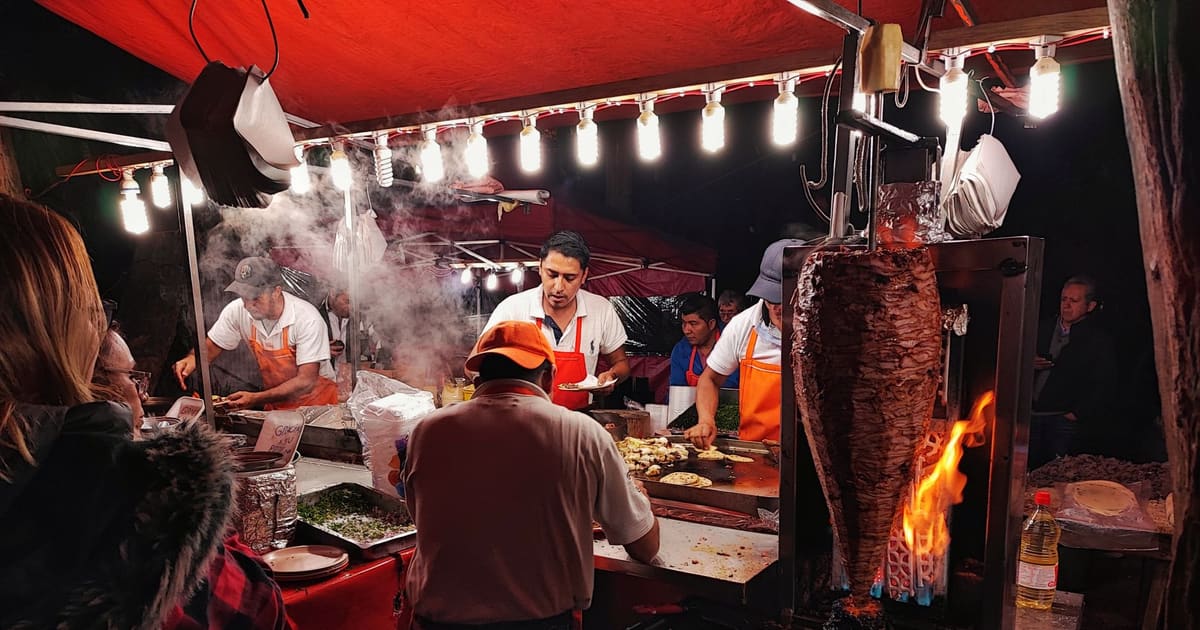
Every bite of street food in Mexico City has layers. The oldest is Indigenous corn, prepared by an old process called nixtamalization and pressed into tortillas. The Spanish brought wheat, pork and sugar. And in the twentieth century, Lebanese immigrants brought a vertical spit of roasting meat, which Mexico turned into one of its most famous tacos. In 2010, UNESCO added traditional Mexican cuisine to its list of the world's intangible cultural heritage. This walk tells that story in eight stops through the Centro Histórico. You'll start with the torta, the city's own sandwich, in a shop full of wrestling masks. You'll reach the little stand that claims a place at the very start of al pastor, a counter with a bubbling pot of beef, and a churro shop a Basque immigrant opened in 1935. Then come sweet bread, a house covered in tiles, the city's oldest sweet shop, and a grand old cafe where a famous painter held his wedding breakfast. It's one of our self-guided walking tours, about 2.4 kilometers from El Cuadrilátero on Luis Moya Street to Café de Tacuba.
The walking takes only about half an hour, since the route is compact and flat, but with eight stops to taste and look, allow two to three hours. The nearest Metro to the start is San Juan de Letrán, on Line 8, about 400 meters east of the first stop. At the end, Allende station on Line 2 is about two blocks away, and Bellas Artes is close too.
Do this walk Monday to Saturday. The torta shop at the start is listed as closed on Sundays, and so is the old pulque bar you'll pass, so Sunday doesn't work. The torta shop is listed as closing at seven or eight in the evening, and the sweet shop near the end at half past seven, so start by early afternoon. You pay for your own food at each stop. Eight stops is a lot, so share, order one taco at a time, and take the sweets away for later.
A word on food safety, in general terms. Choose busy stalls where the food is cooked and served hot. Be careful with raw salsas, ice and tap water, and with unpasteurized dairy. If you have allergies, ask before you order. One stop offers pulque, which is alcoholic, so it's entirely optional. And hours change, so check before you go.
You're on Luis Moya Street, in front of a small torta shop. Step to the door and look at the walls. They're covered in lucha libre masks and photos of wrestlers. The name, El Cuadrilátero, means the ring.
That's no accident. The shop was founded by the family of a wrestler, Súper Astro, and by 2025 it had been open for more than twenty years. It's a fitting first stop for a walk about the city's own food.
The torta is the city's sandwich: a bread roll, split and filled. It's also the first layer of our story on a plate. The roll is wheat, the grain the Spanish brought, and inside it go fillings like ham, or steak done milanesa style, breaded.
The shop is best known for a challenge. Its Gladiador torta weighs somewhere around one and a third to one and a half kilos. Finish it in under fifteen minutes, and it's free. You've got seven more stops ahead, so leave the challenge to someone else.
What to order here: a normal-size torta, with ham or the milanesa-style steak, cut in half to share. That's plenty, with a whole walk of tacos ahead.
Now head north a few steps to Ayuntamiento Street, turn right, and walk east about four minutes. The Mercado de San Juan is just a block away, on Ernesto Pugibet Street, and the stand you're looking for is so small you could walk straight past it.
You're at Ayuntamiento 21, in front of El Huequito. Look for the upright spit of pork. The name means the little hole, and when it opened in 1959 that's what it was: a stand of about one square meter. Its founders were Guillermo Buendía and Amelia.
Before we get to the taco, a word on the market close by. The Mercado de San Juan has stood in its current building since 1955, in old warehouses of the El Buen Tono cigarette factory. It's famous for exotic meats, insects and imported cheeses, and it's worth a look if you have time.
Now the story of al pastor. Lebanese immigrants came to Mexico bringing spit-roasted meat, the dish the Middle East knows as shawarma. In Puebla it became tacos árabes. Then, as the historian Jeffrey Pilcher tells it, their Mexican-born children adapted the spit to pork in a chile marinade and served it on corn tortillas. By around the 1960s it was popular in Mexico City. So al pastor isn't simply Lebanese food. It's a Mexican dish built on a Lebanese idea.
Who did it first? That's a fight. One food reference, La Tacopedia, names El Huequito as the first to adopt what was then called the taco oriental. But El Tizoncito, which opened in the 1960s, also claims al pastor, and it credits itself with adding the pineapple. Treat both as rival claims. What's certain is that this tiny stand grew into a franchise, with seventeen branches by early 2026. This is the original.
What to order here: one taco al pastor. Its recipe is said to have no pineapple and no cilantro, so this is al pastor without the fruit.
Just around the corner, about fifty meters south on Aranda Street at number 28, is Pulquería Las Duelistas, a pulque bar over a century old with murals of Mexica designs. Pulque is the fermented sap of the agave plant, and the flavored ones, made with oats, celery or guava, are called curados. It's alcoholic, and optional.
Then come back to Ayuntamiento and keep walking east, straight across the wide Eje Central avenue, where the street becomes República de El Salvador, to Bolívar Street. Turn left, and Los Cocuyos is just along. It's about six minutes.
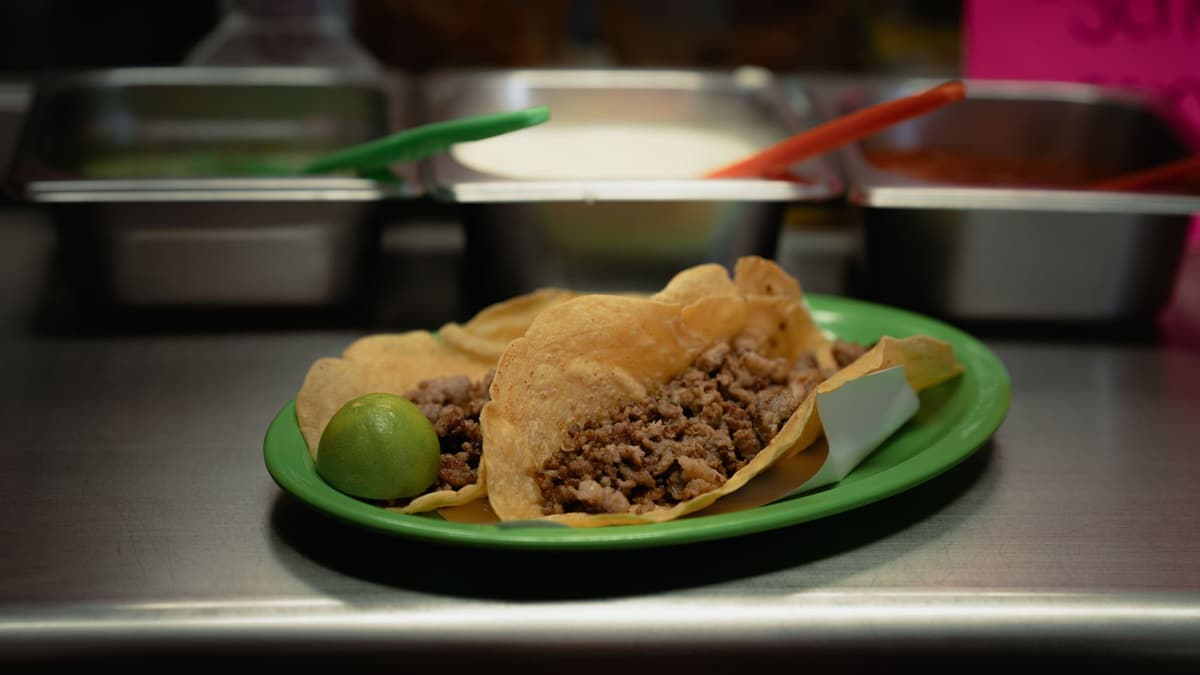
You're on Bolívar Street, at a narrow counter. Look past the counter and you'll see the heart of the place: a big pot of simmering meats, and a cook with a cleaver chopping straight out of it onto tortillas.
This is a different kind of taco from al pastor. There's no spit here, just meat simmering in that pot. Los Cocuyos has been doing it since 1980.
It also has a Michelin listing. The Michelin Guide gives it a Bib Gourmand, the award for good food at a modest price. Some listings have it open around the clock, though others give shorter hours.
Stand where you can watch the cook work, chopping and serving straight from the pot. Watching is part of the experience here.
The Michelin inspectors also give one piece of advice worth following. The suadero, which is beef, is at its best later in the day, once the meats have had time to braise.
What to order here: a taco of suadero. If you want to try more, the cabeza, or the campechano, which mixes meats in one taco, are the other classics. One taco each is enough. Keep room for dessert, because the next stop is churros.
Walk north on Bolívar for one short block, then turn left and head west, back to the wide Eje Central. El Moro is right there on the avenue. It's about four minutes.
Co je v ceně
Naše prohlídky jsou zamýšlené jako meditativní a pohlcující: jdete a prostě posloucháte. Vždy jsou lepší ve společnosti a aplikace přehrává vyprávění synchronizovaně, takže vy, váš partner i vaši přátelé slyšíte každou zastávku ve stejnou chvíli.
You're on the Eje Central, in front of Churrería El Moro. Look in through the window at the counter.
Zbytek této zastávky najdete v celé audioprohlídce.
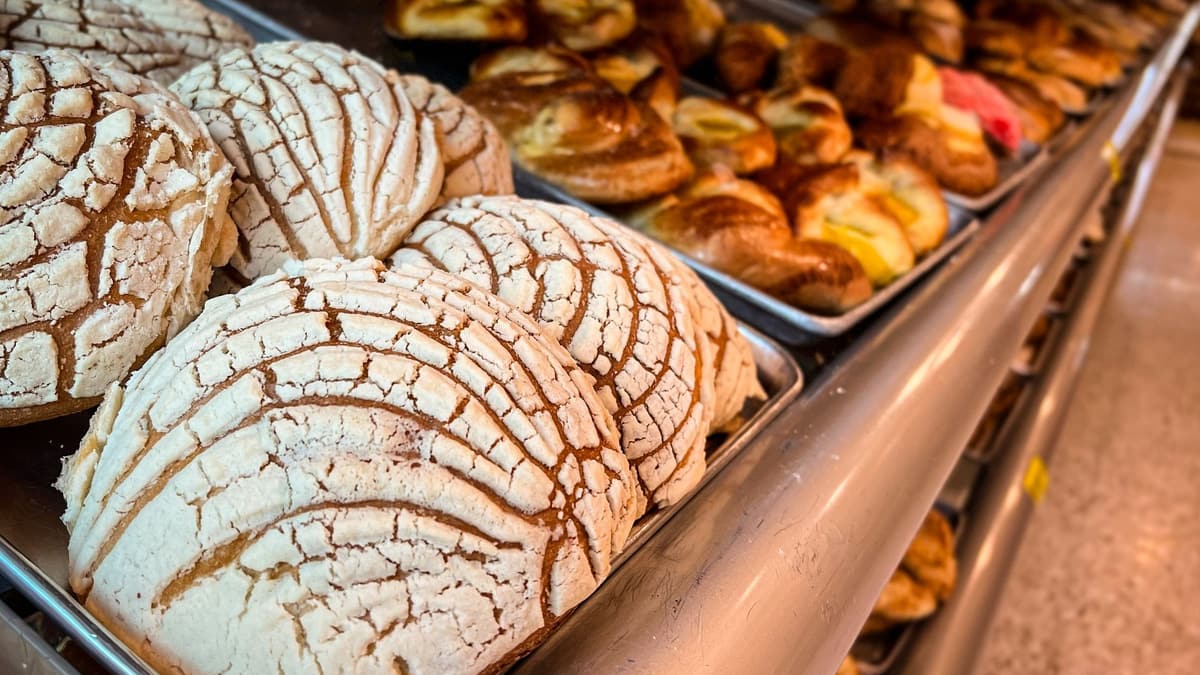
You're on 16 de Septiembre Street, in front of Pastelería Ideal. Look in at the bread.
Zbytek této zastávky najdete v celé audioprohlídce.
You're on Madero Street, in front of the Casa de los Azulejos, the House of Tiles. Look up and take it in.
Zbytek této zastávky najdete v celé audioprohlídce.
You're at 5 de Mayo number 39, in front of the Dulcería de Celaya. Look at the old storefront.
Zbytek této zastávky najdete v celé audioprohlídce.
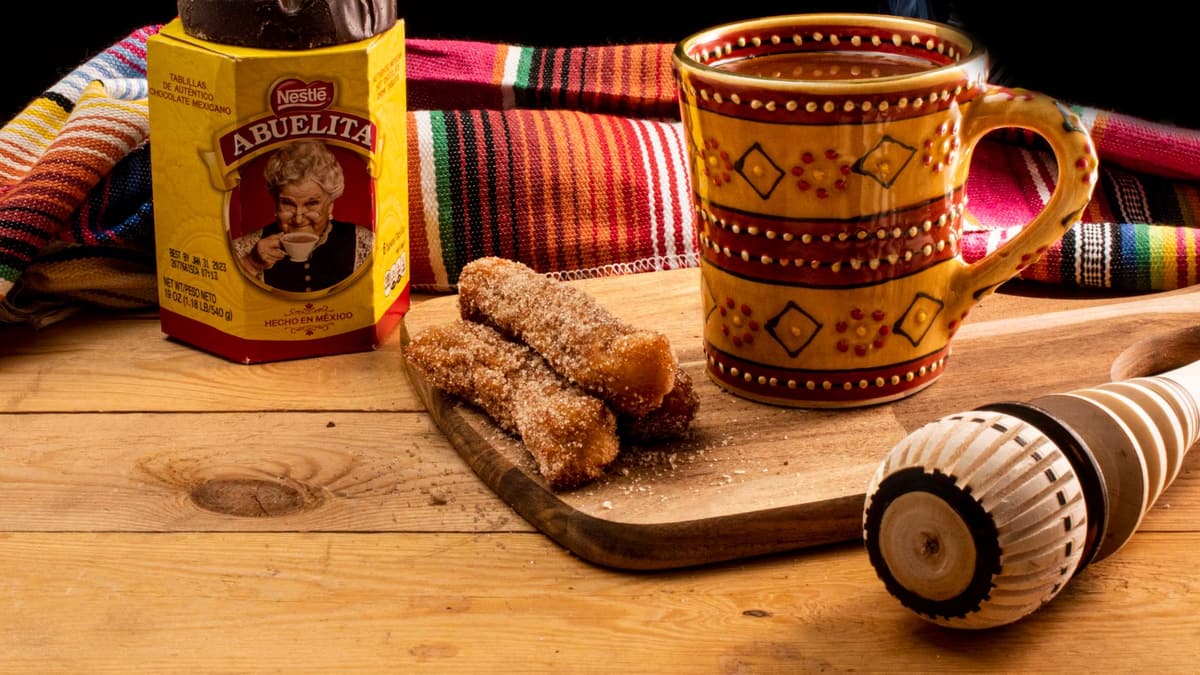
You're on Tacuba Street, in front of Café de Tacuba. Step inside if you can.
Zbytek této zastávky najdete v celé audioprohlídce.
Absolvuj tuto procházku s ostatními v rámci příští naplánované trasy.
Asi 2,4 km, zhruba 33 minut volným tempem · 8 zastávek
Přátelé chodí zdarmaOctober 11, 2026 · 9 min read
From the Hollandsche Schouwburg through the old Jewish Quarter, past the Dockworker and the Dam, to the Anne Frank House on the Prinsengracht.
October 11, 2026 · 11 min read
From Van Houten's street by the Vondelpark past Leidseplein, the Rijksmuseum passage and the famous canal bench to the Anne Frank House.

October 11, 2026 · 10 min read
Follow the last days of April and May 1945 from the Anhalter Bahnhof ruin past the Gestapo site and Brandenburg Gate to the Moltke Bridge and the Reichstag.
