




 $14.99Jídlo a degustace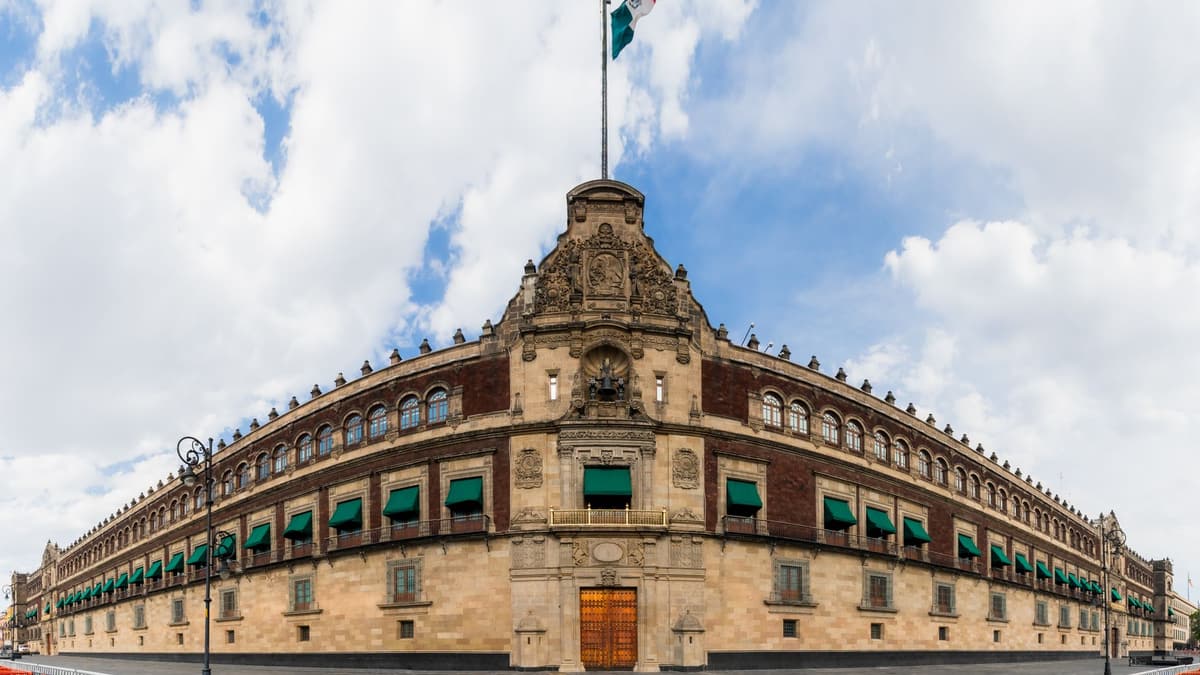
Audioprůvodce Mexico City Pěší trasy
Pěší trasy s komentářem v Mexico City, které můžete procházet sami. Kupte si trasu jednou, stáhněte si ji a nechte příběh hrát na každé zastávce, zatímco jdete vlastním tempem.
Trasy od $7.99
Přátelé chodí zdarma. Jeden nákup pokryje všechny na tvé procházce. Spusť túru, pozvi přátele, aby se připojili, a bude hrát na telefonu každého z vaší skupiny.
5.0 na Google Play
Audioprůvodci pro Mexico City
Každá trasa obsahuje mapu a komentář pro každé zastavení. Koupíte si ji jednou a zůstane vám napořád, bez jakéhokoli předplatného.
$14.99Jídlo a degustace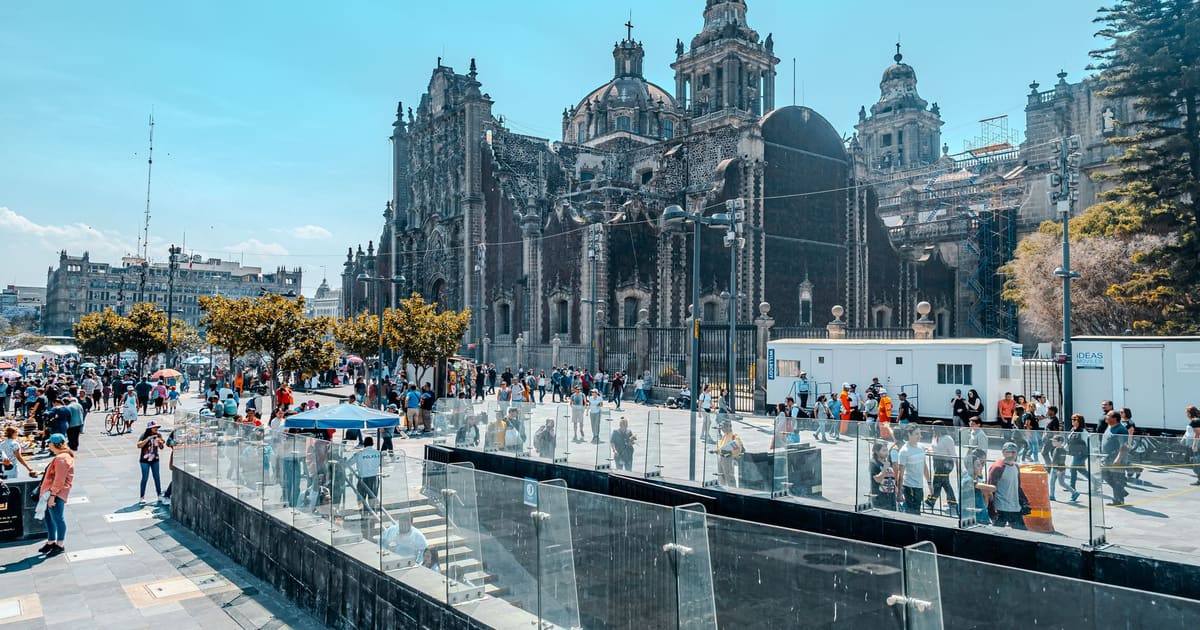 $7.99Pamětihodnosti města
 $8.99Pamětihodnosti města
Co vás čeká na pěší trase s audioprůvodcem v Mexico City
A Mexico City audio walking tour can carry you across the buried stones of the Aztec capital to the marble halls of a muralist's opera house, or into the cobbled, tree shaded village streets where Frida Kahlo and Leon Trotsky once lived, with narration timed to every layer of the city.
The Mexico City Centro Walk starts at the Antiguo Colegio de San Ildefonso, birthplace of Mexican muralism, then passes the excavated Templo Mayor to the Palacio Nacional, built over the ruins of Moctezuma's own palace, and the Catedral Metropolitana facing the vast Zócalo.
From the cathedral the route follows pedestrian Madero street past the Palacio de Iturbide and the Torre Latinoamericana to the white marble Palacio de Bellas Artes, finishing in the shaded paths of the Alameda Central, the oldest public park in the Americas. It covers about 2.4 kilometers, around 33 minutes of walking, through five centuries of history in a single stroll.
The Mexico City Coyoacán Walk is gentler and greener, starting among the trees of the Viveros park, following the cobbled colonial street of Francisco Sosa to the twin plazas at the village center, and stopping at the Mercado de Coyoacán for tostadas. It finishes at the two most famous houses in the neighborhood, the blue house where Frida Kahlo was born and died, and the fortified home where Leon Trotsky spent his last months, about 3.4 kilometers and 47 minutes in all.
Kam se vydat v Mexico City
Několik zastávek, které potkáte cestou, a důvody, proč u nich stojí za to zpomalit.
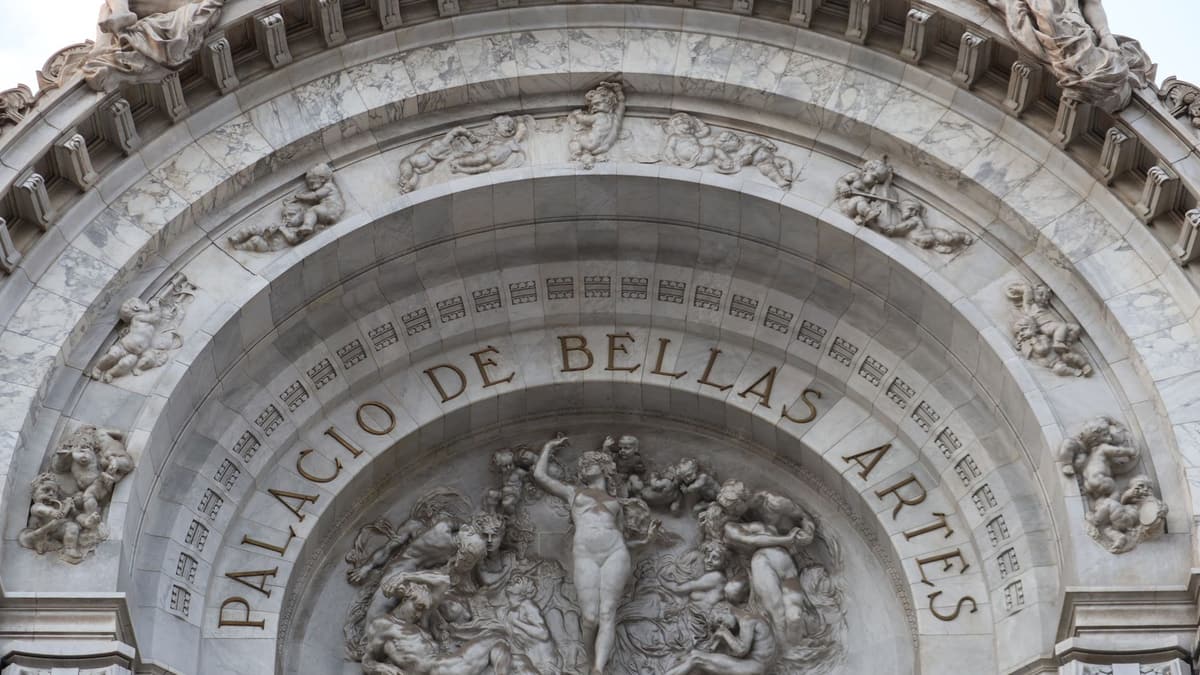
Palacio de Bellas Artes
Carved deep into white marble, this archway spells out the name of the Palacio de Bellas Artes in gilded letters, framed by sculpted figures and scrollwork, visible up close. Begun in 1904 under President Porfirio Díaz as a European style opera house, the building stood unfinished through the Mexican Revolution and was not completed until 1934, with an Art Deco interior that feels like a different era from the lavish exterior. Upstairs, the walls hold murals by Orozco, Siqueiros, Tamayo and Diego Rivera, including a repainted version of the mural Rivera made for Rockefeller Center in New York before it was destroyed for including a portrait of Lenin. The marble is heavy and the ground beneath Mexico City is soft, so the building has sunk noticeably since it went up, just like its neighbors nearby.
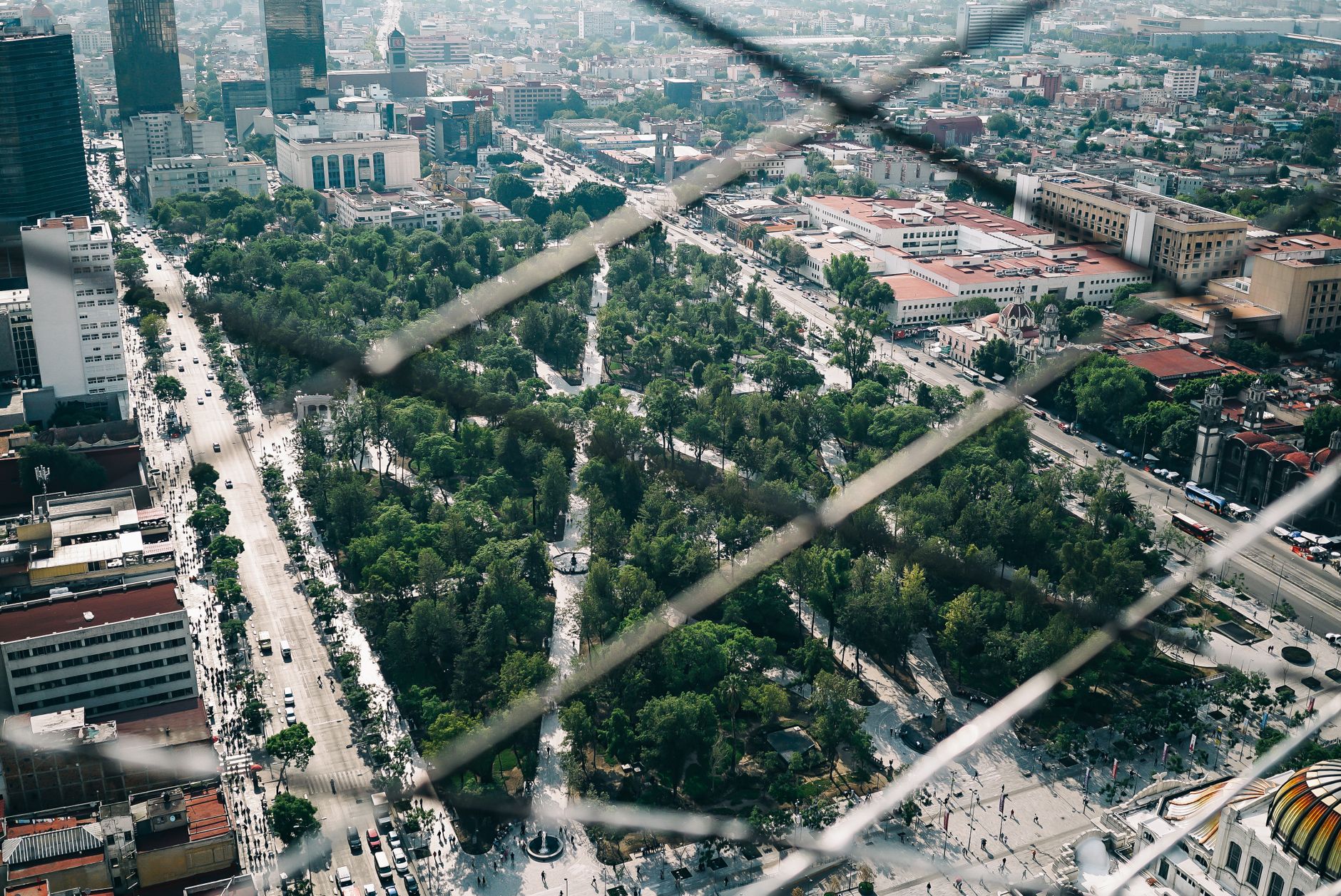
Alameda Central
From high above, the Alameda Central reads as a solid block of green in the middle of the old city, its diagonal paths cutting through the trees toward fountains and the white Hemiciclo a Juárez. Laid out in 1592 under the viceroy Luis de Velasco, it is often called the oldest public park in the Americas, and for centuries it was where the city's well dressed families came to promenade and be seen. Today it is a shady place to rest between the Palacio de Bellas Artes and the busy streets of the Centro, with organ grinders cranking out tunes on the corners nearby.
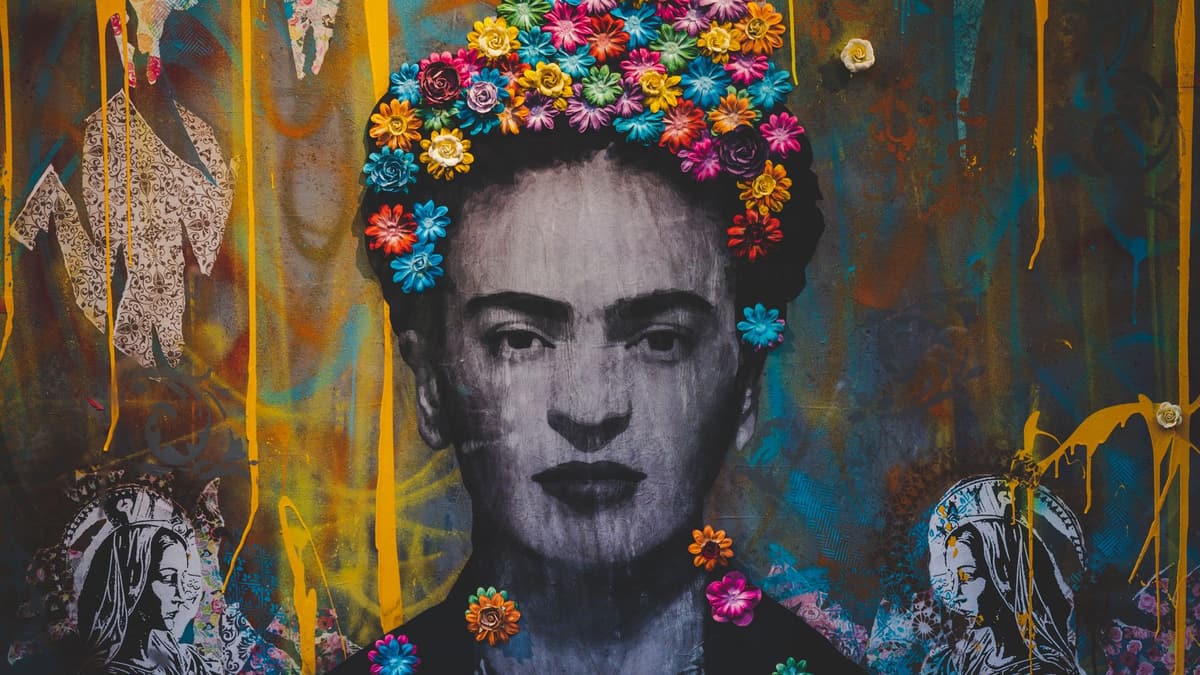
Museo Frida Kahlo
This colorful mural of Frida Kahlo's face, crowned with a ring of painted flowers, captures the spirit of Coyoacán's most famous resident exactly as artists around the neighborhood love to reimagine her. The real Casa Azul, the cobalt blue house a few streets from this mural, is where Frida was born in 1907 and died in 1954, and where she began painting self-portraits from her bed after a bus accident left her in pain for the rest of her life. She married the muralist Diego Rivera in 1929, divorced him and married him again, and the two lived in the house together for years. Rivera left it to the nation after her death, and it opened as a museum soon after, filled with her studio, her wheelchair, and her collection of folk art.
Coyoacán Village Streets
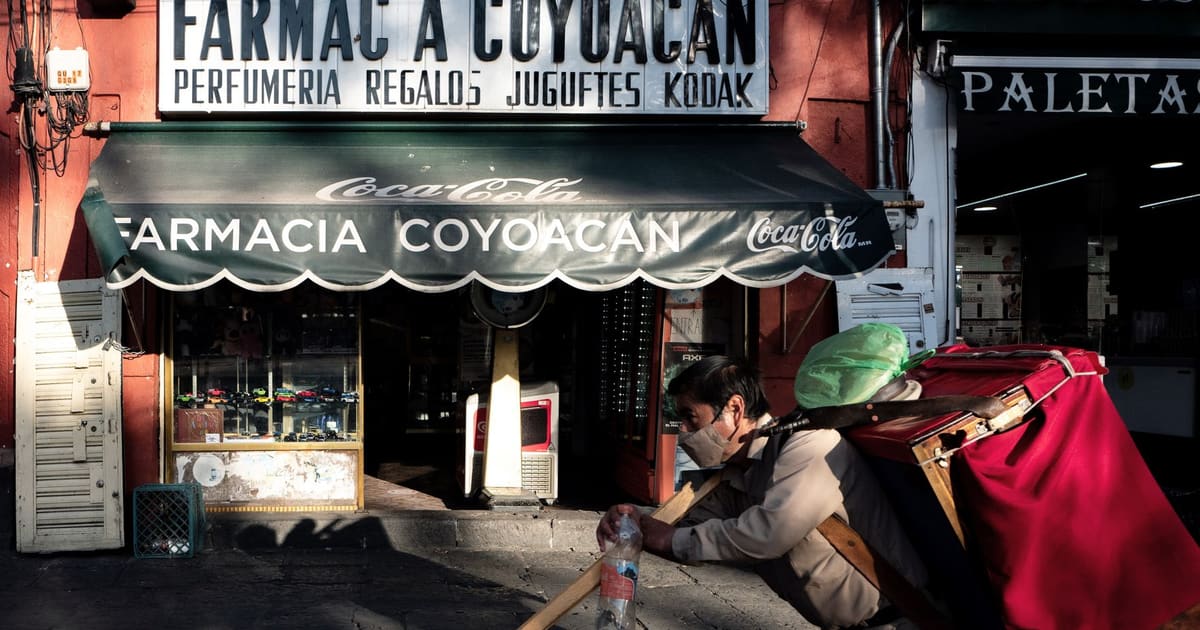
An old pharmacy sign and a Coca-Cola awning mark this corner shop, a street vendor pulling a cart past the window display, the kind of unhurried, lived-in scene that still defines Coyoacán away from its busiest plazas. The neighborhood was a village long before the growing city swallowed it in the twentieth century, and it kept its slower pace, its colonial churches and its tree shaded streets even as artists, writers and political exiles moved in to be close to the capital without living inside it. Wander these side streets on the way to or from the main plazas, and you will find small shops like this one doing business much as they have for generations.
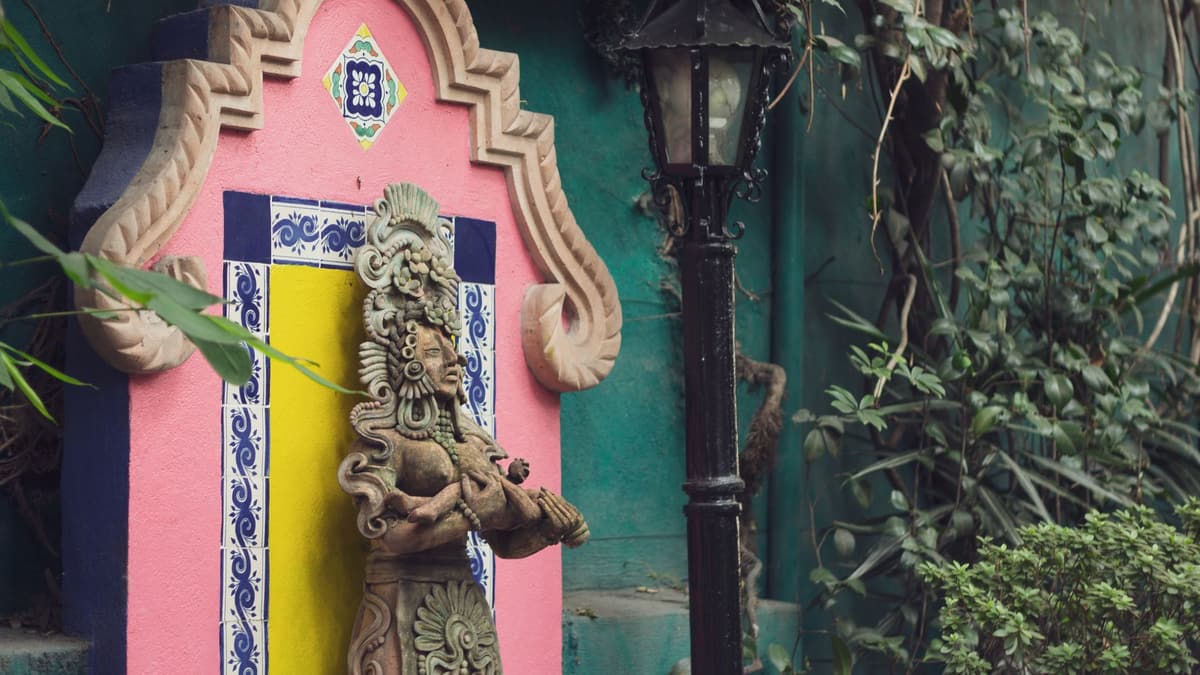
Coyoacán's Colorful Courtyards
Set into a pink and turquoise wall, this carved stone figure and old iron lamppost show the kind of detail that rewards a slow walk through Coyoacán's courtyards and garden corners, half hidden behind trailing vines. Many of the neighborhood's old houses, along streets like the cobbled Francisco Sosa, belonged to well off families who came out from the city center for fresh air and space, and later to artists and writers drawn to the same quiet. Glimpses like this one, through an open gate or over a low wall, are often the best part of walking here, since the plazas get the crowds while corners like this stay quiet even on a busy Sunday.
Získejte audioprohlídku ve 3 jednoduchých krocích
Vše v bezplatné aplikaci Walk With Me a první zastávky každé prohlídky si můžete vyzkoušet zdarma.
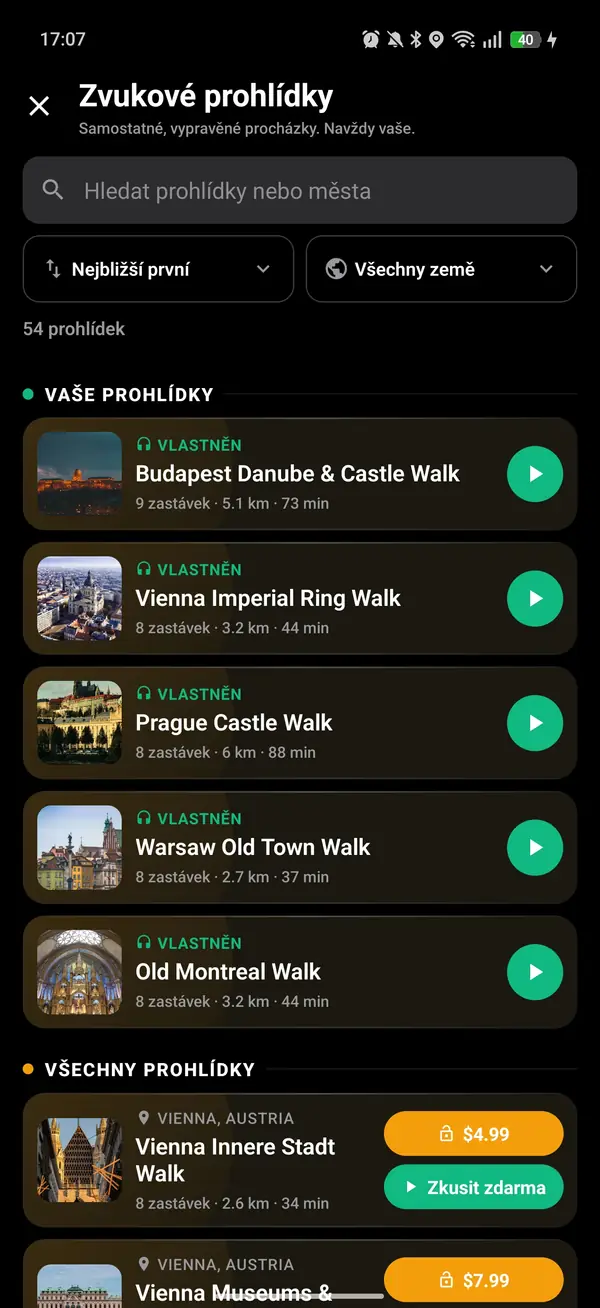
Klepněte na zlatá sluchátka a vyberte prohlídku
01
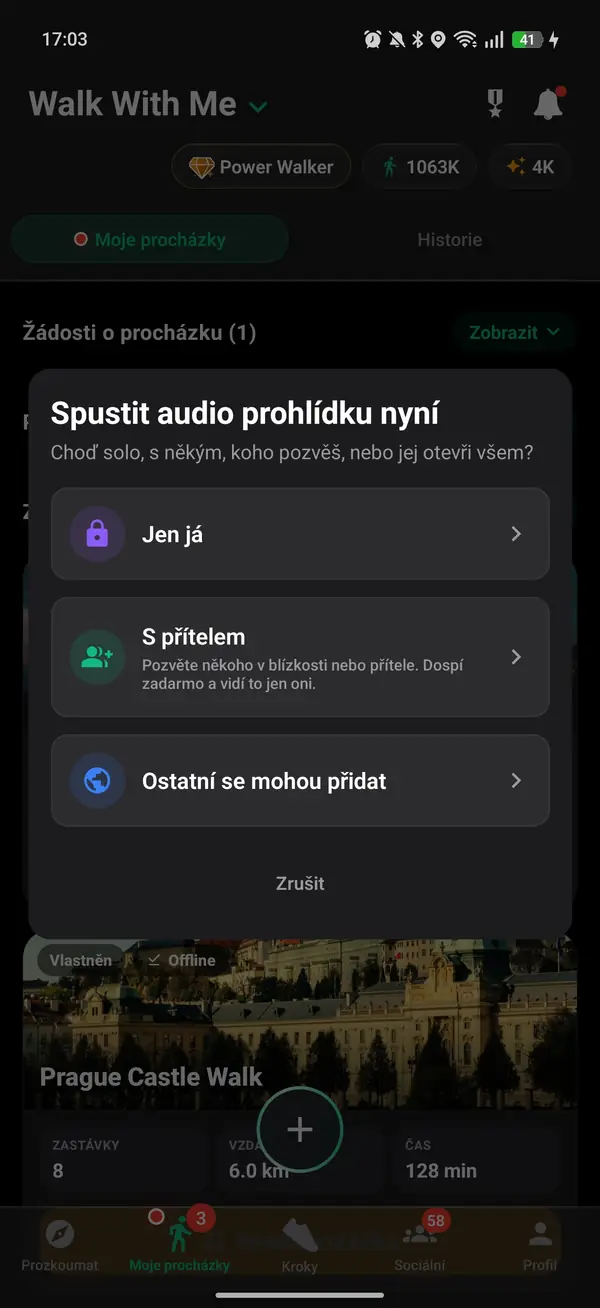
Jděte sami, nebo někoho pozvěte
02
Spusťte přehrávání a jděte
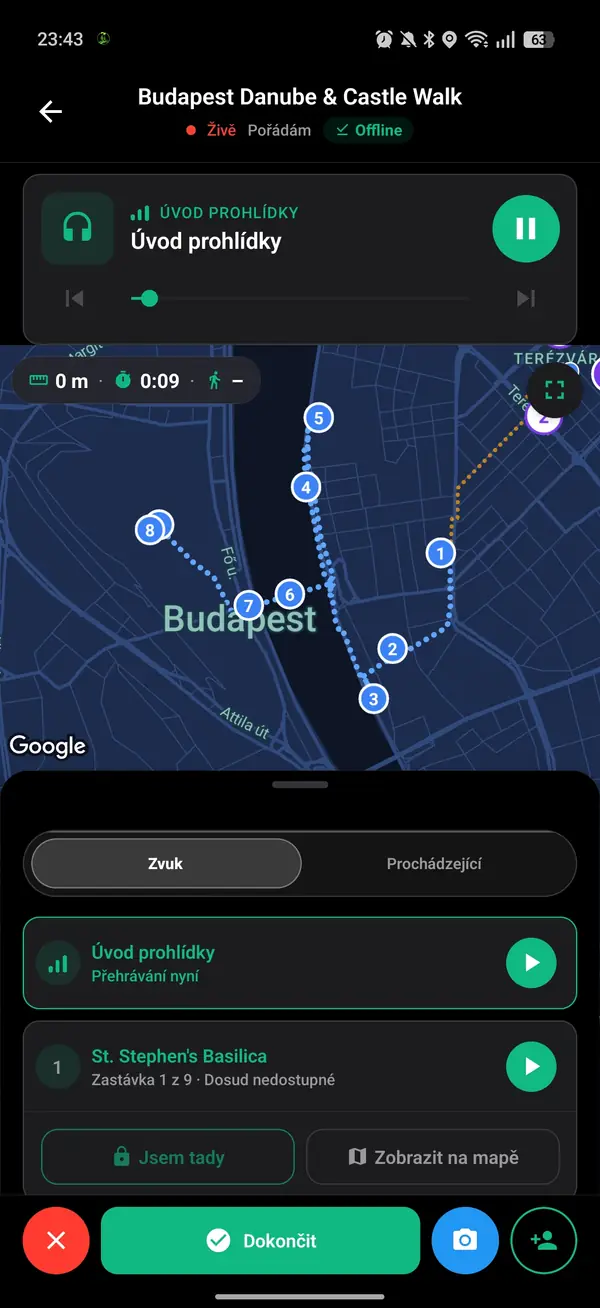
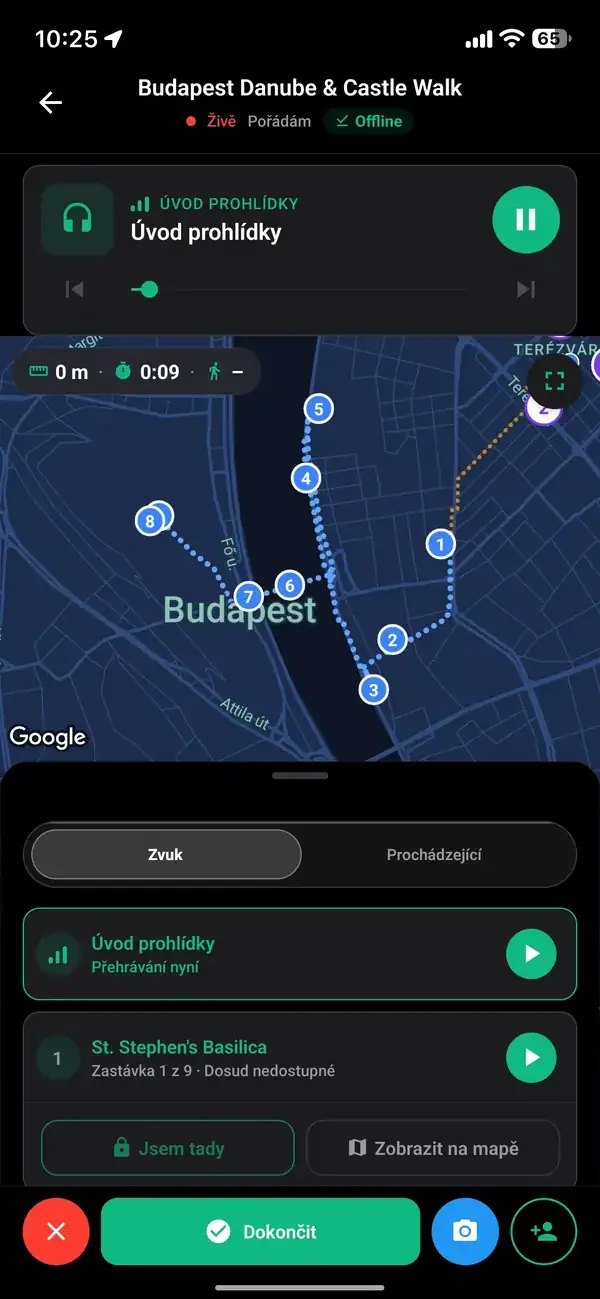
03
Pečlivě vytvořené pro váš čas ve městě
Tyto prohlídky nejsou seznam památek k odškrtání. Jsou určené k pomalé chůzi, se sluchátky na uších a pohledem upřeným na město.
Meditativní a pohlcující
Každý příběh zazní tam, kde se odehrál. Aplikace zazvoní, když dorazíte na zastávku, jedno klepnutí spustí vyprávění a cesta mezi zastávkami patří jen vám, vaším vlastním tempem.
Ručně a s péčí
Každou trasu i každou zastávku vybíráme sami a každý příběh pečlivě dotváříme, aby váš čas ve městě patřil místům, která za to opravdu stojí.
Ve dvou je to lepší
Každá procházka je lepší s někým po boku, takže pokud můžete někoho vzít s sebou, moc vám to doporučujeme. Proto jeden nákup pokryje všechny, koho pozvete: připojí se k vaší prohlídce zdarma.