




 $14.99Food & Tastings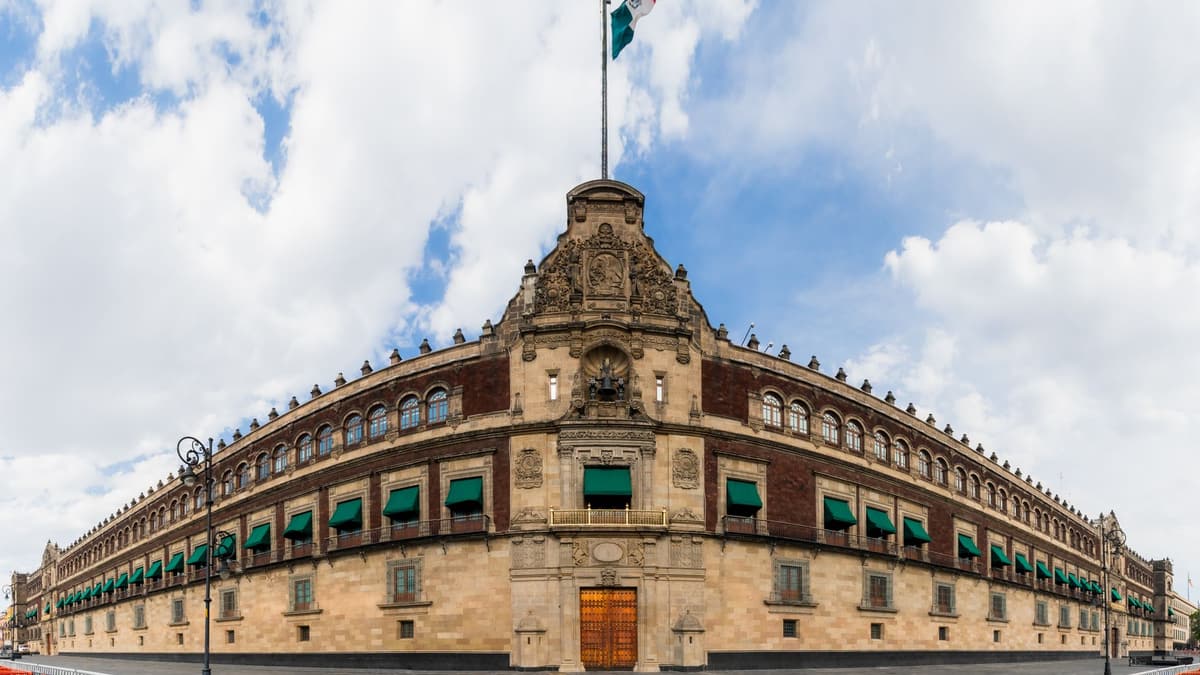
Mexico City Audio Walking Tours
Self-guided, narrated walks through Mexico City. Buy a tour once, download it, and hear the story at each stop while you walk at your own pace.
Tours from $7.99
Friends walk free. One purchase covers everyone on your walk. Start the tour, invite your friends to join, and it plays on every phone in your group.
5.0 on Google Play
Mexico City audio tours
Each tour is a mapped route with narration at every stop. Buy it once and it is yours to keep, no subscription.
$14.99Food & Tastings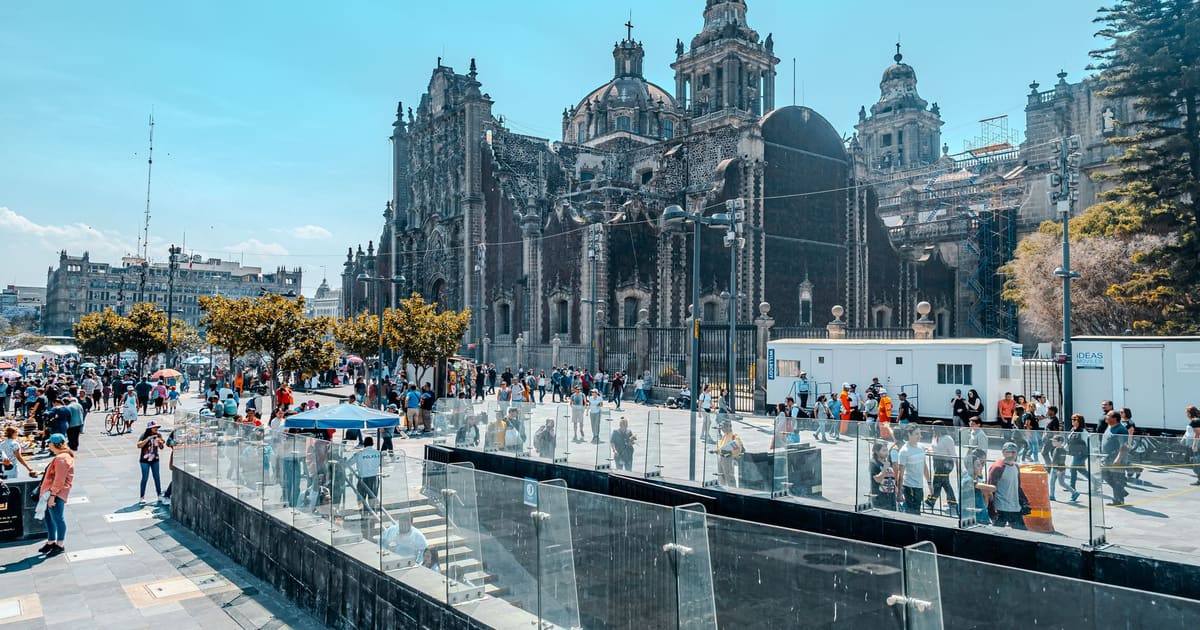 $7.99City Highlights
 $8.99City Highlights
What to expect on a Mexico City audio walking tour
A Mexico City audio walking tour can carry you across the buried stones of the Aztec capital to the marble halls of a muralist's opera house, or into the cobbled, tree shaded village streets where Frida Kahlo and Leon Trotsky once lived, with narration timed to every layer of the city.
The Mexico City Centro Walk starts at the Antiguo Colegio de San Ildefonso, birthplace of Mexican muralism, then passes the excavated Templo Mayor to the Palacio Nacional, built over the ruins of Moctezuma's own palace, and the Catedral Metropolitana facing the vast Zócalo.
From the cathedral the route follows pedestrian Madero street past the Palacio de Iturbide and the Torre Latinoamericana to the white marble Palacio de Bellas Artes, finishing in the shaded paths of the Alameda Central, the oldest public park in the Americas. It covers about 2.4 kilometers, around 33 minutes of walking, through five centuries of history in a single stroll.
The Mexico City Coyoacán Walk is gentler and greener, starting among the trees of the Viveros park, following the cobbled colonial street of Francisco Sosa to the twin plazas at the village center, and stopping at the Mercado de Coyoacán for tostadas. It finishes at the two most famous houses in the neighborhood, the blue house where Frida Kahlo was born and died, and the fortified home where Leon Trotsky spent his last months, about 3.4 kilometers and 47 minutes in all.
Where to walk in Mexico City
A few of the stops you will pass, and why they are worth slowing down for.
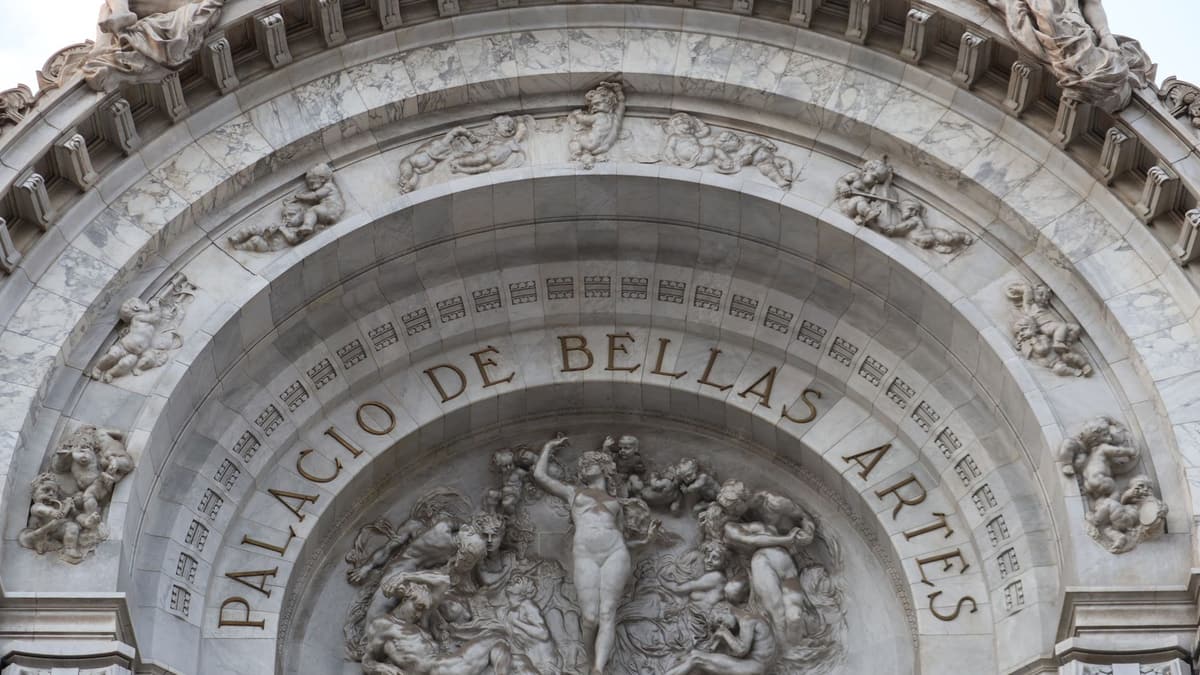
Palacio de Bellas Artes
Carved deep into white marble, this archway spells out the name of the Palacio de Bellas Artes in gilded letters, framed by sculpted figures and scrollwork, visible up close. Begun in 1904 under President Porfirio Díaz as a European style opera house, the building stood unfinished through the Mexican Revolution and was not completed until 1934, with an Art Deco interior that feels like a different era from the lavish exterior. Upstairs, the walls hold murals by Orozco, Siqueiros, Tamayo and Diego Rivera, including a repainted version of the mural Rivera made for Rockefeller Center in New York before it was destroyed for including a portrait of Lenin. The marble is heavy and the ground beneath Mexico City is soft, so the building has sunk noticeably since it went up, just like its neighbors nearby.
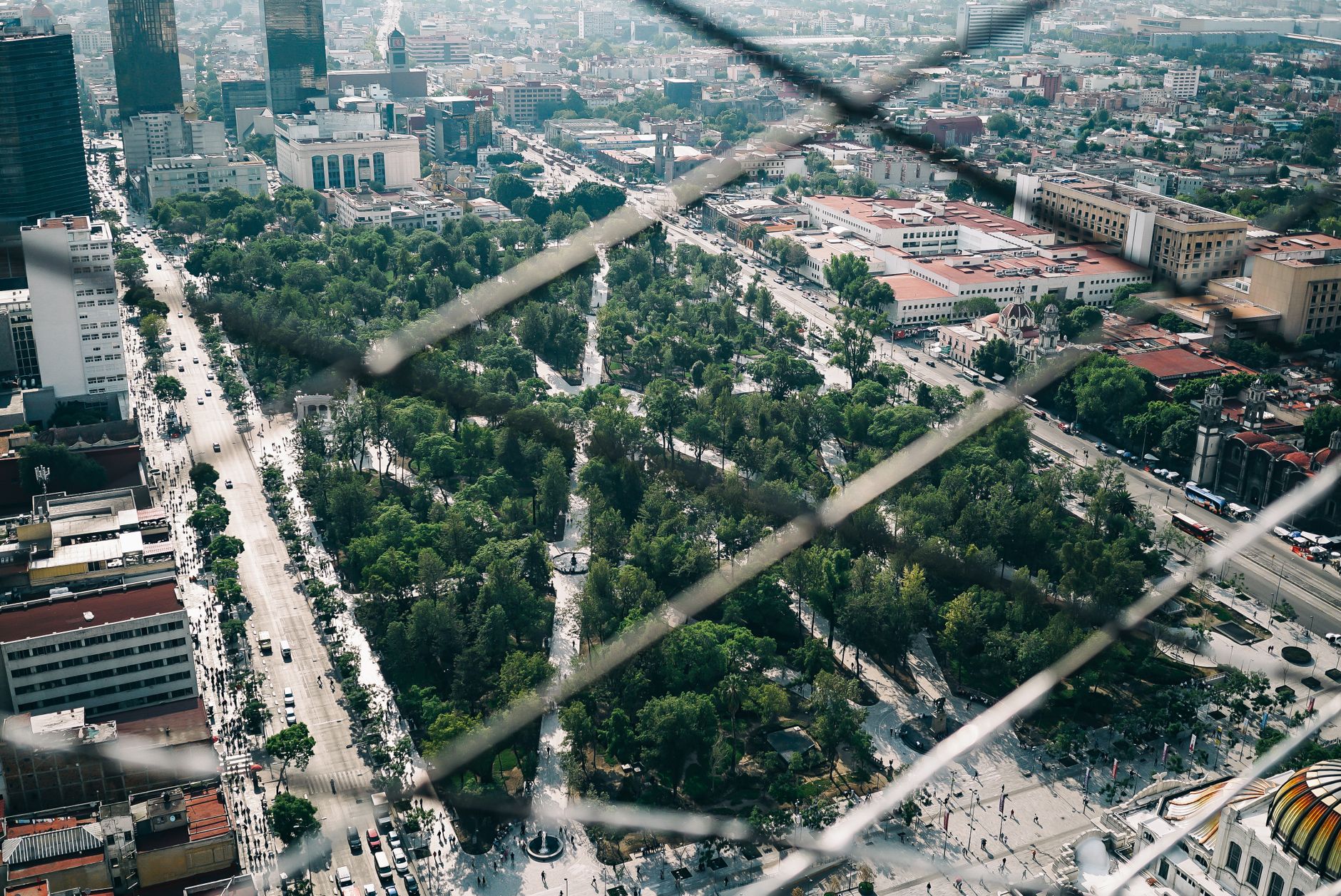
Alameda Central
From high above, the Alameda Central reads as a solid block of green in the middle of the old city, its diagonal paths cutting through the trees toward fountains and the white Hemiciclo a Juárez. Laid out in 1592 under the viceroy Luis de Velasco, it is often called the oldest public park in the Americas, and for centuries it was where the city's well dressed families came to promenade and be seen. Today it is a shady place to rest between the Palacio de Bellas Artes and the busy streets of the Centro, with organ grinders cranking out tunes on the corners nearby.
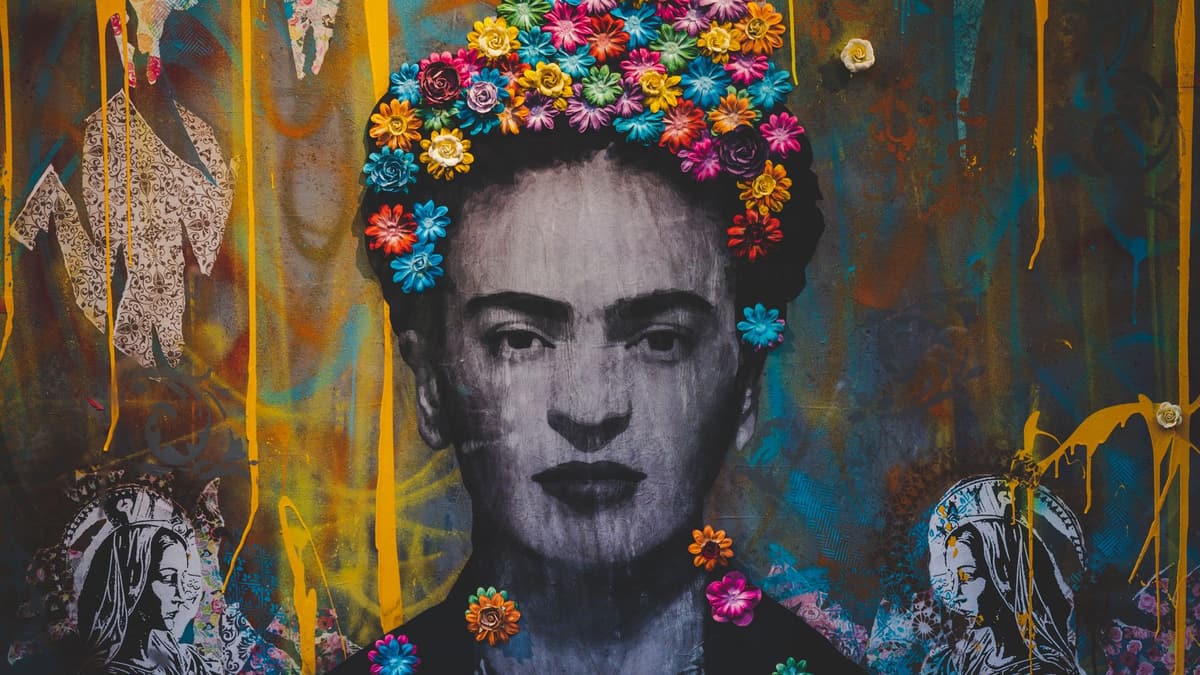
Museo Frida Kahlo
This colorful mural of Frida Kahlo's face, crowned with a ring of painted flowers, captures the spirit of Coyoacán's most famous resident exactly as artists around the neighborhood love to reimagine her. The real Casa Azul, the cobalt blue house a few streets from this mural, is where Frida was born in 1907 and died in 1954, and where she began painting self-portraits from her bed after a bus accident left her in pain for the rest of her life. She married the muralist Diego Rivera in 1929, divorced him and married him again, and the two lived in the house together for years. Rivera left it to the nation after her death, and it opened as a museum soon after, filled with her studio, her wheelchair, and her collection of folk art.
Coyoacán Village Streets
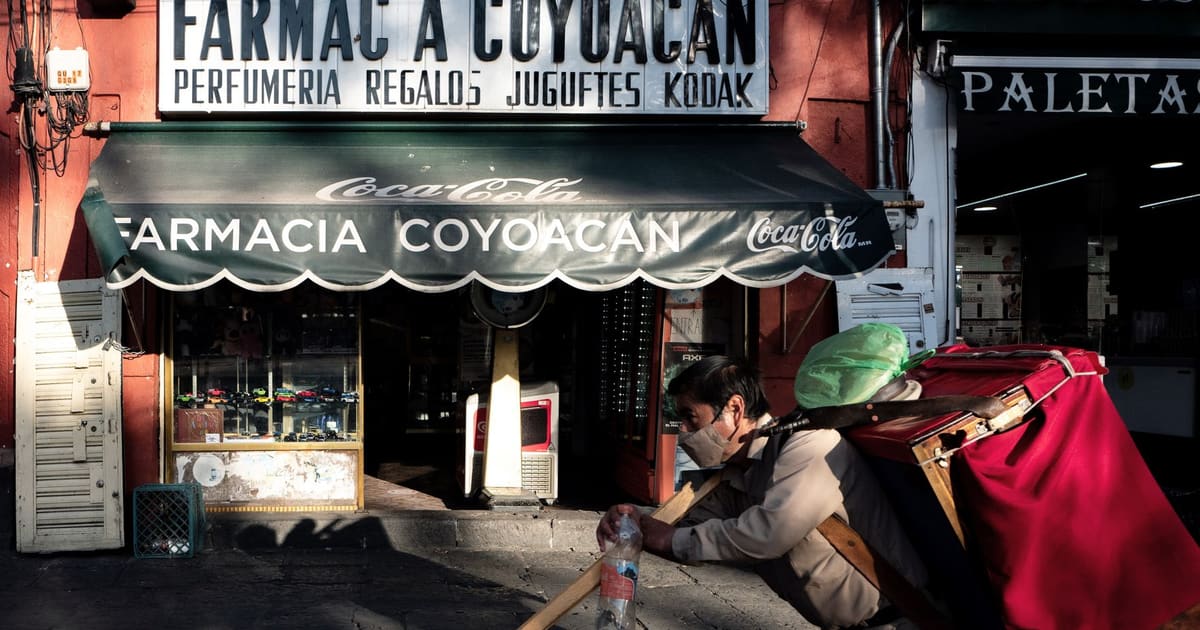
An old pharmacy sign and a Coca-Cola awning mark this corner shop, a street vendor pulling a cart past the window display, the kind of unhurried, lived-in scene that still defines Coyoacán away from its busiest plazas. The neighborhood was a village long before the growing city swallowed it in the twentieth century, and it kept its slower pace, its colonial churches and its tree shaded streets even as artists, writers and political exiles moved in to be close to the capital without living inside it. Wander these side streets on the way to or from the main plazas, and you will find small shops like this one doing business much as they have for generations.
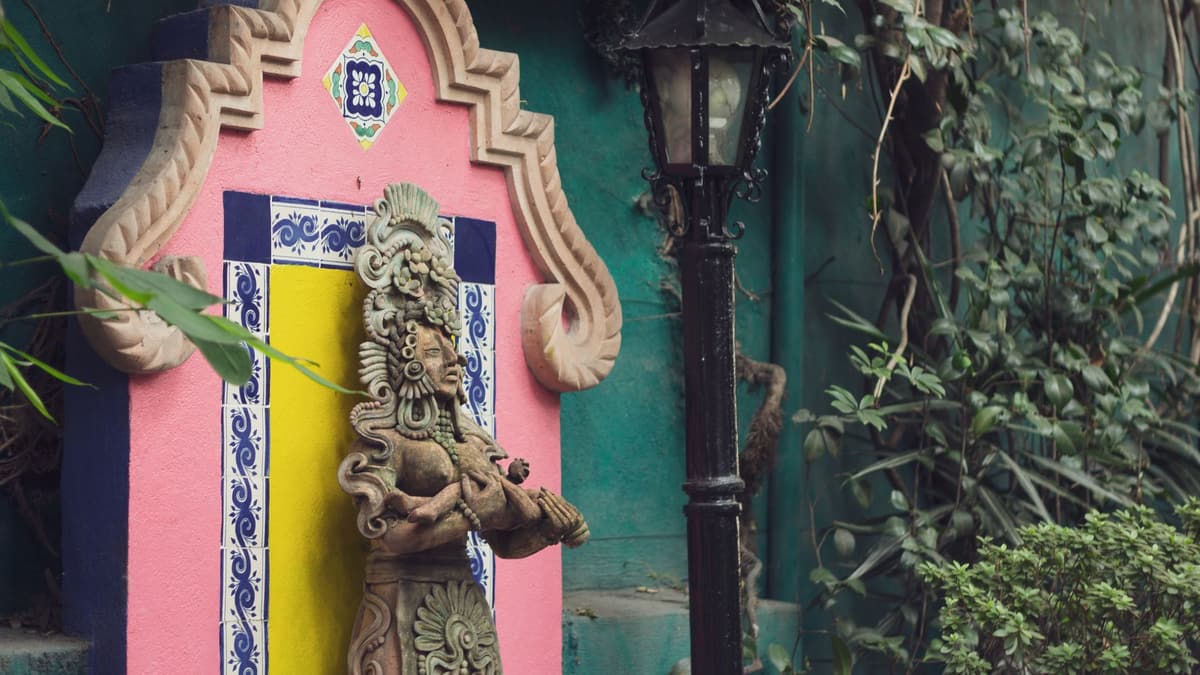
Coyoacán's Colorful Courtyards
Set into a pink and turquoise wall, this carved stone figure and old iron lamppost show the kind of detail that rewards a slow walk through Coyoacán's courtyards and garden corners, half hidden behind trailing vines. Many of the neighborhood's old houses, along streets like the cobbled Francisco Sosa, belonged to well off families who came out from the city center for fresh air and space, and later to artists and writers drawn to the same quiet. Glimpses like this one, through an open gate or over a low wall, are often the best part of walking here, since the plazas get the crowds while corners like this stay quiet even on a busy Sunday.
Get the Audio Tour in 3 Simple Steps
All in the free Walk With Me app, and the first stops of every tour are free to try.
Tap the Gold Headphones and Pick a Tour


01
Walk It Solo or Invite Someone


02
Press Play and Walk


03
Handcrafted for Your Time in the City
These tours aren't a checklist of sights. They're made to be walked slowly, headphones on, eyes on the city.
Meditative and Immersive
Each story is told where it happened. The app chimes when you reach a stop, one tap starts the story, and the stretch between stops is yours to take in at your own pace.
Handcrafted With Care
We choose every route and every stop ourselves and shape each story with care, so the time you have in the city goes to the places most worth seeing.
Better With Someone
Every walk is better with someone beside you, so if you can bring a friend, we really hope you do. That's why one purchase covers everyone you invite: they join your tour free.