




 $14.99Momentos clave
Audio tours en Dallas Tours a pie
Paseos narrados y autoguidados por Dallas. Compra un tour una vez, descárgalo y deja que la historia suene en cada parada mientras caminas a tu propio ritmo.
Tours desde $14.99
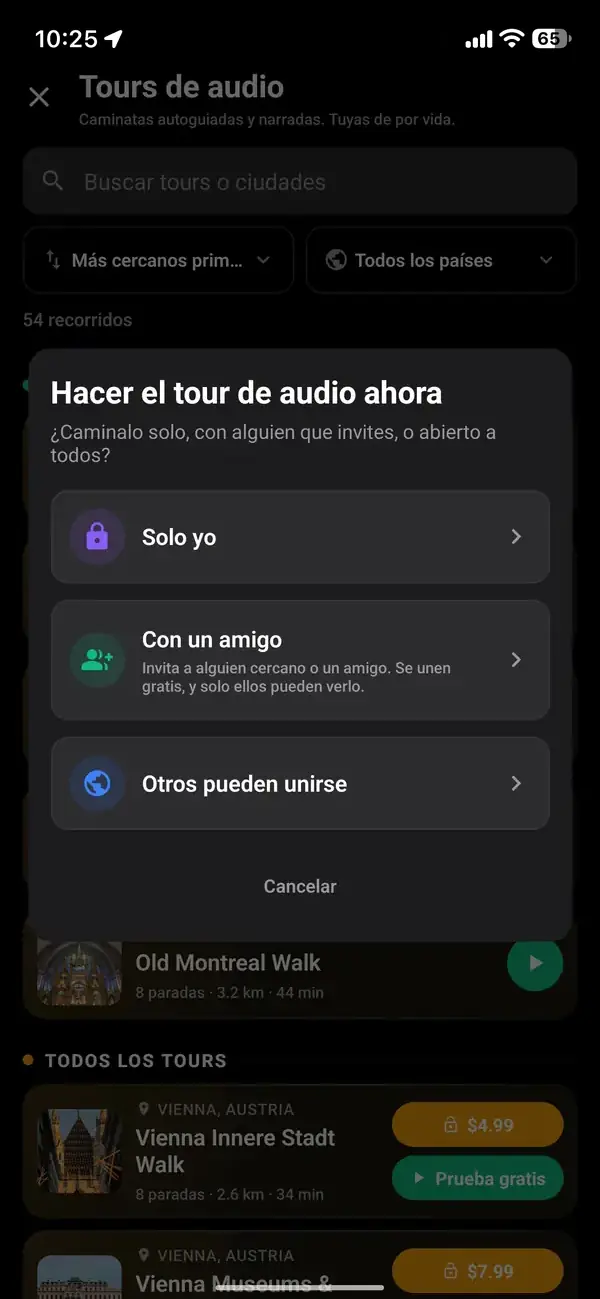
Tus amigos caminan gratis. Una compra cubre a todos en tu caminata. Inicia el tour, invita a tus amigos a unirse, y se reproducirá en cada teléfono de tu grupo.
5.0 en Google Play
Tours de audio por Dallas
Cada tour es una ruta mapeada con narración en cada parada. Cómpralo una vez y será tuyo para siempre, sin suscripciones.
$14.99Momentos claveQué esperar de un tour de audio a pie por Dallas
A Dallas audio walk follows November 22 to 24, 1963 through a few downtown blocks, from the JFK Memorial and the Book Depository window to the grassy knoll, then along Jack Ruby's path to the old police basement, told quietly and in the order the streets allow.
The walk starts at the JFK Memorial, Philip Johnson's roofless cenotaph at Main and Market, then follows the motorcade's last turns onto Houston and Elm to the Texas School Book Depository and its sixth floor corner window. From there it goes down Elm to the white pergola and the grassy knoll, where Abraham Zapruder filmed the motorcade from a small concrete pedestal.
At the knoll the narration sets out what the Warren Commission, the 1979 House committee and the 1982 National Academy of Sciences panel each concluded, in order, and leaves it there. The route then jumps ahead to Sunday at the old county jail on Houston and Main, and steps back to Friday at the old Dallas Morning News on Young Street, where Jack Ruby was placing ads when the shots were fired.
The last stretch follows Ruby along Commerce Street past the site of his Carousel Club to the old Municipal Building at Main and Harwood, where he shot Oswald in the police basement on November 24. It's about 2.9 kilometers, roughly 43 minutes of walking, flat apart from the gentle slope of the knoll, starting about 300 meters from West End DART station and ending about 500 meters from St. Paul.
Dónde caminar en Dallas
Algunas de las paradas por las que pasarás y por qué vale la pena detenerse en ellas.
JFK Memorial
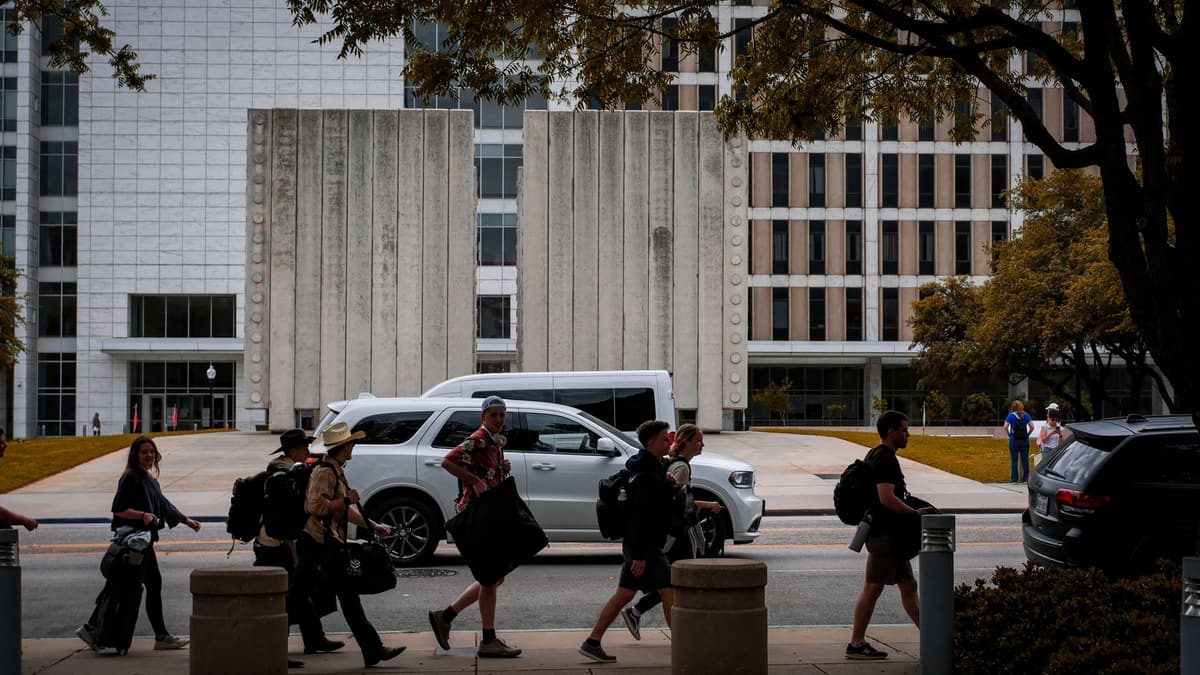
Philip Johnson designed the JFK Memorial as a cenotaph, an empty tomb, and it was dedicated on June 24, 1970. It's a roofless square room open to the sky, 50 feet on each side and 30 feet high, walled in tall white concrete, and inside sits a low granite block with John F. Kennedy's name in gold. Walk in, then step back out to Main Street and look west toward Old Red. That is the way the motorcade went on the morning of November 22, past crowds the Warren Commission called a tremendous reception.
Texas School Book Depository
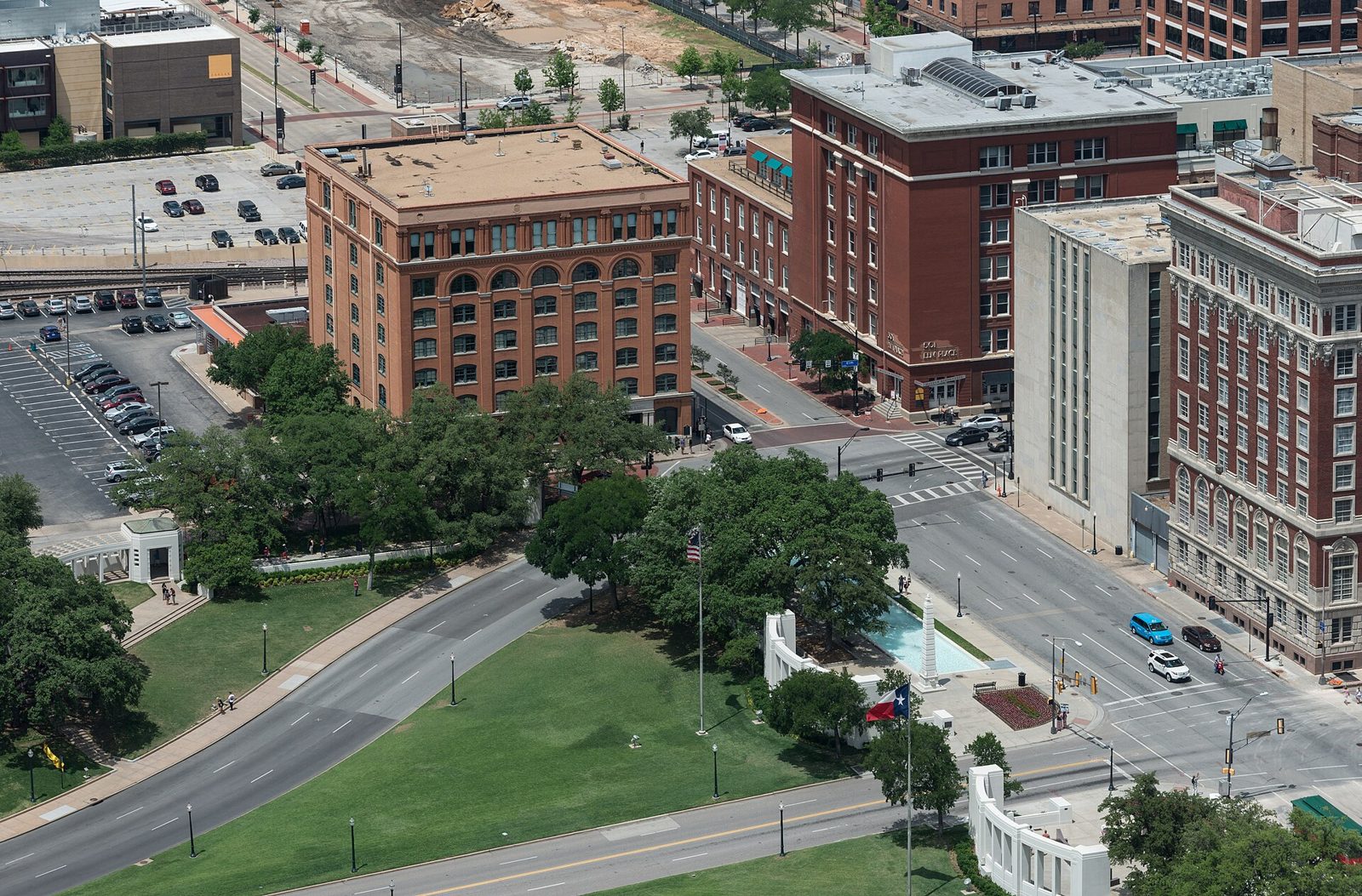
From above you can take in the whole of Dealey Plaza: the seven story red brick Texas School Book Depository at the corner of Houston and Elm, Elm Street curving down past the lawns, and the white concrete pergola at the edge of the grass. The building went up in 1901, after lightning burned an earlier one on the same spot. In 1964 the Warren Commission concluded that the shots came from its sixth floor window at the southeast corner, the corner nearest Houston Street. Dallas County bought it between 1977 and 1981, and since 1989 it has held the Sixth Floor Museum.
Grassy Knoll
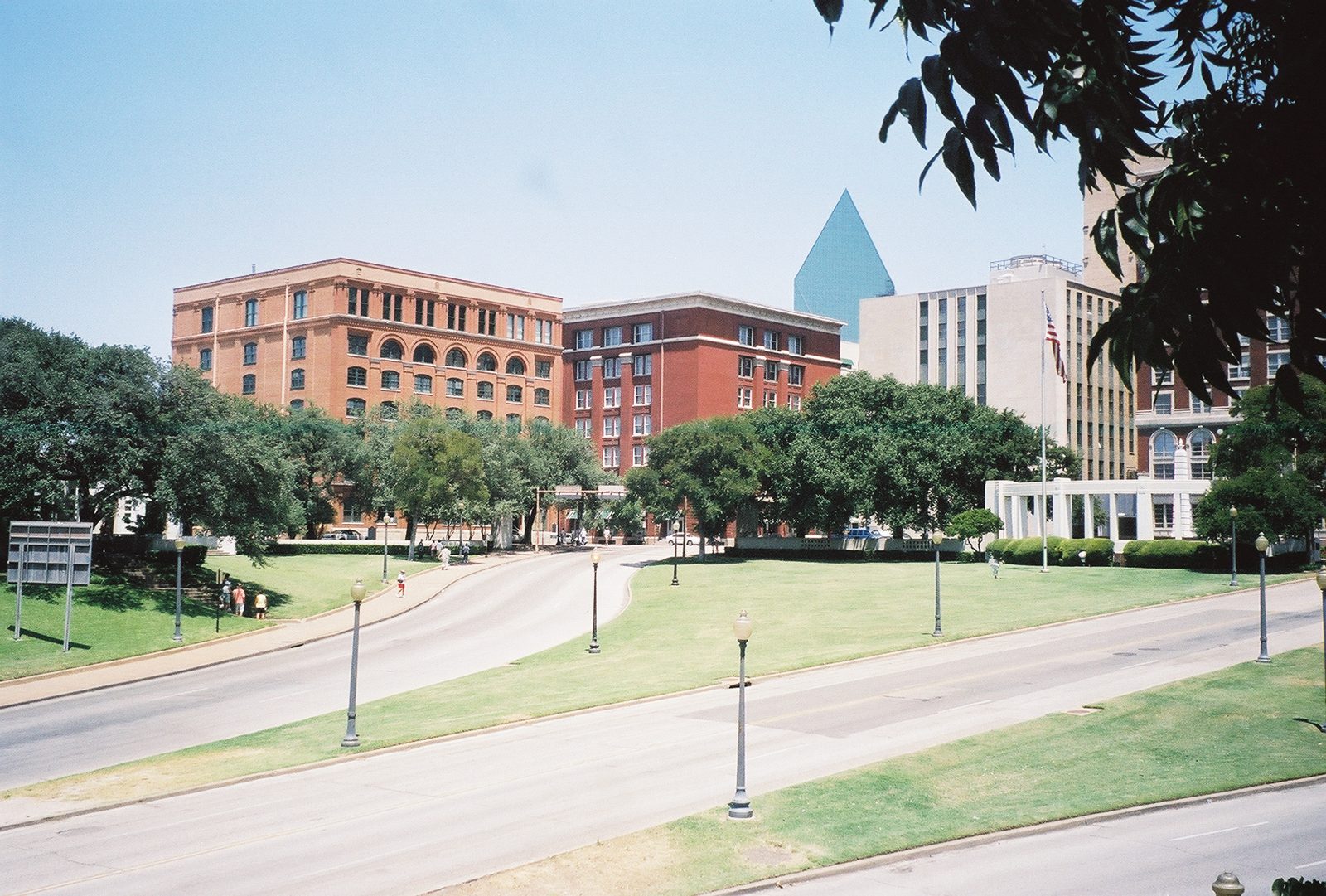
Elm Street curves down through Dealey Plaza with the Book Depository behind the trees, and the grassy slope rising on its north side, below the white pergola, is the grassy knoll. Abraham Zapruder stood on a small concrete pedestal by the pergola and filmed the motorcade here, the key visual record of the day. In person the plaza is far smaller than it looks on film, and all of it has been a National Historic Landmark District since 1993. Elm is a live road with fast traffic, so look at everything, including the unofficial X painted in the lane, from the sidewalk or the grass.
Old Red and the Criminal Courts
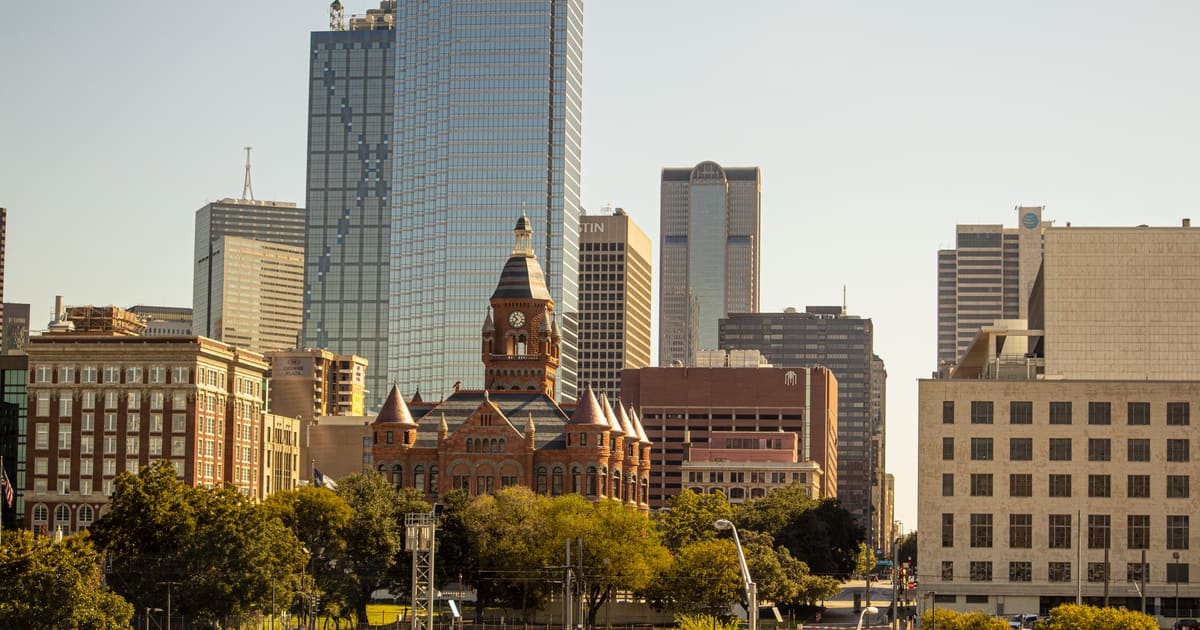
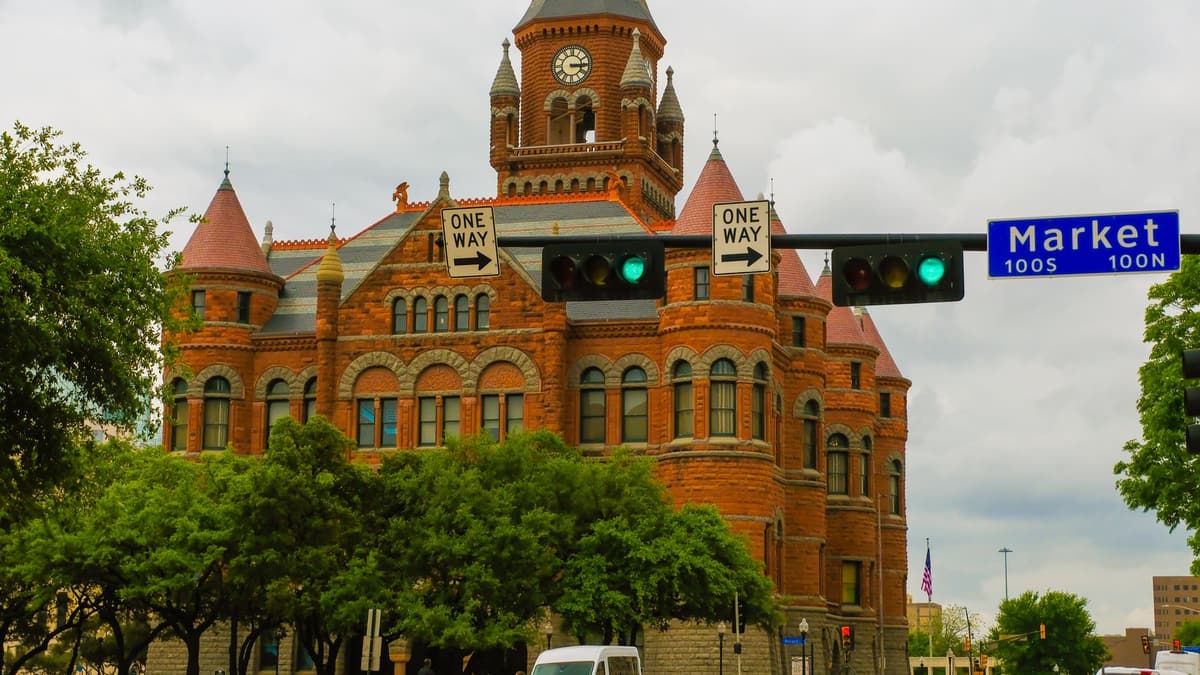
This red sandstone landmark with its turrets and clock tower is the Old Red Courthouse, finished in 1892, and the motorcade turned right beside it from Main onto Houston. Across Main Street stands the Dallas County Criminal Courts Building of 1915, which held the county jail in 1963. On Sunday, November 24, Oswald was due to be moved there from the city jail, and he never arrived. Jack Ruby was later tried for murder in the same building and convicted on March 14, 1964, a conviction overturned in October 1966.
Consigue tu audioguía en 3 Pasos Sencillos
Todo en la app gratuita Walk With Me, y las primeras paradas de cada tour se pueden probar gratis.
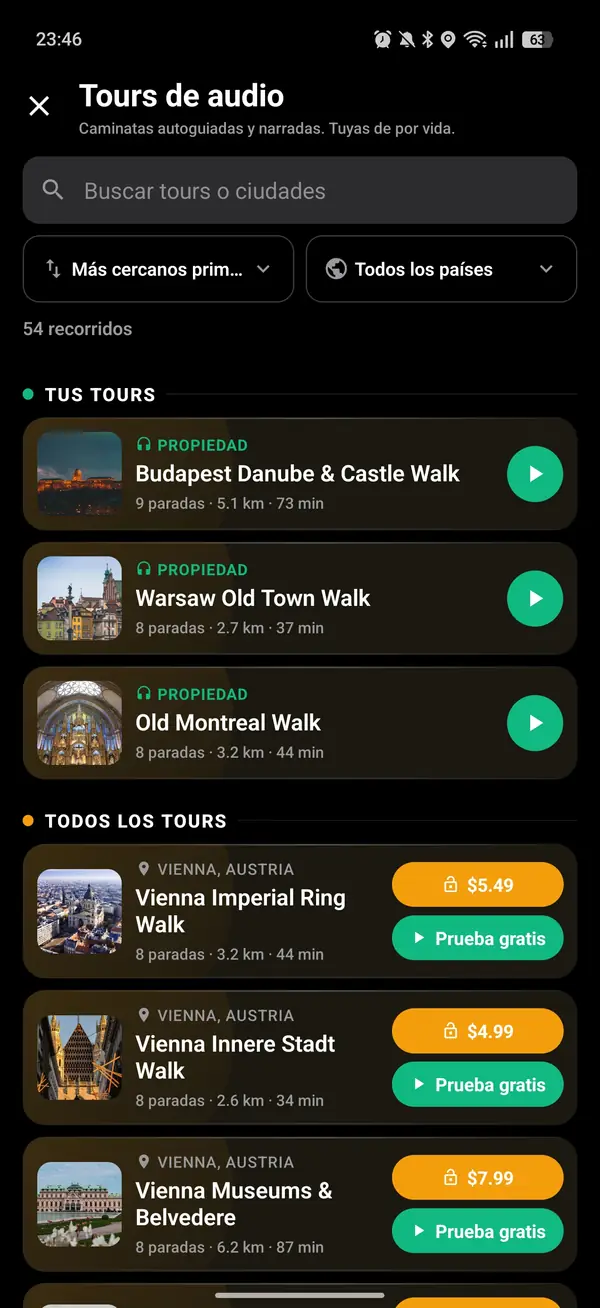
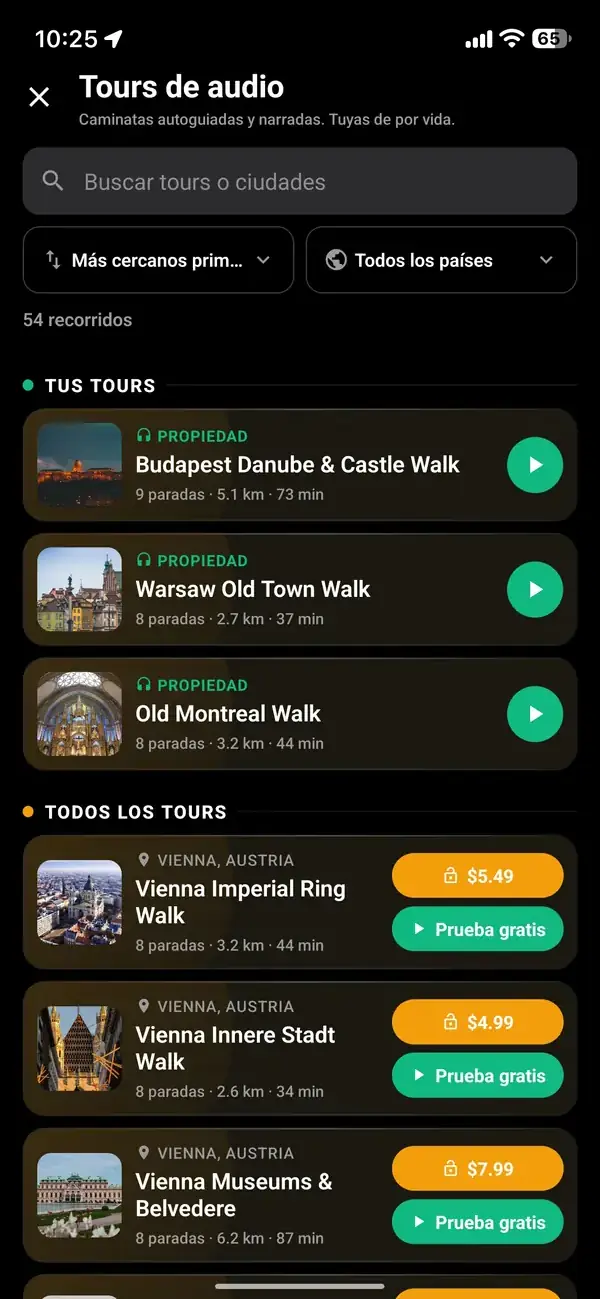
Toca los auriculares dorados y elige un tour
01
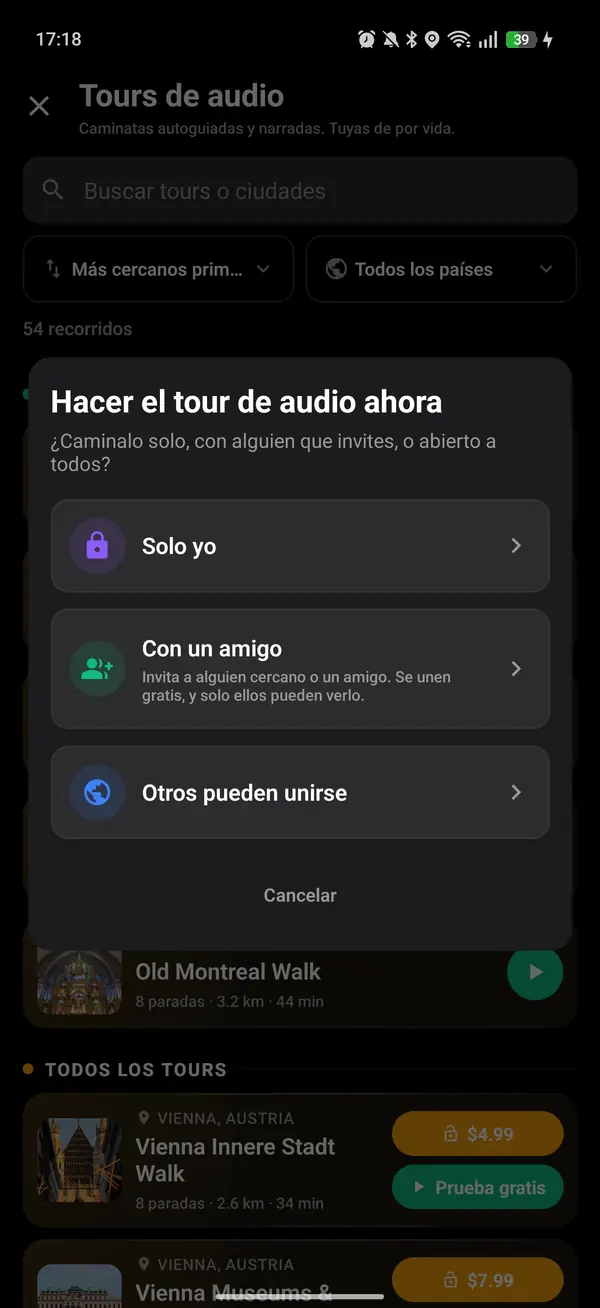
Camina solo o invita a alguien
02
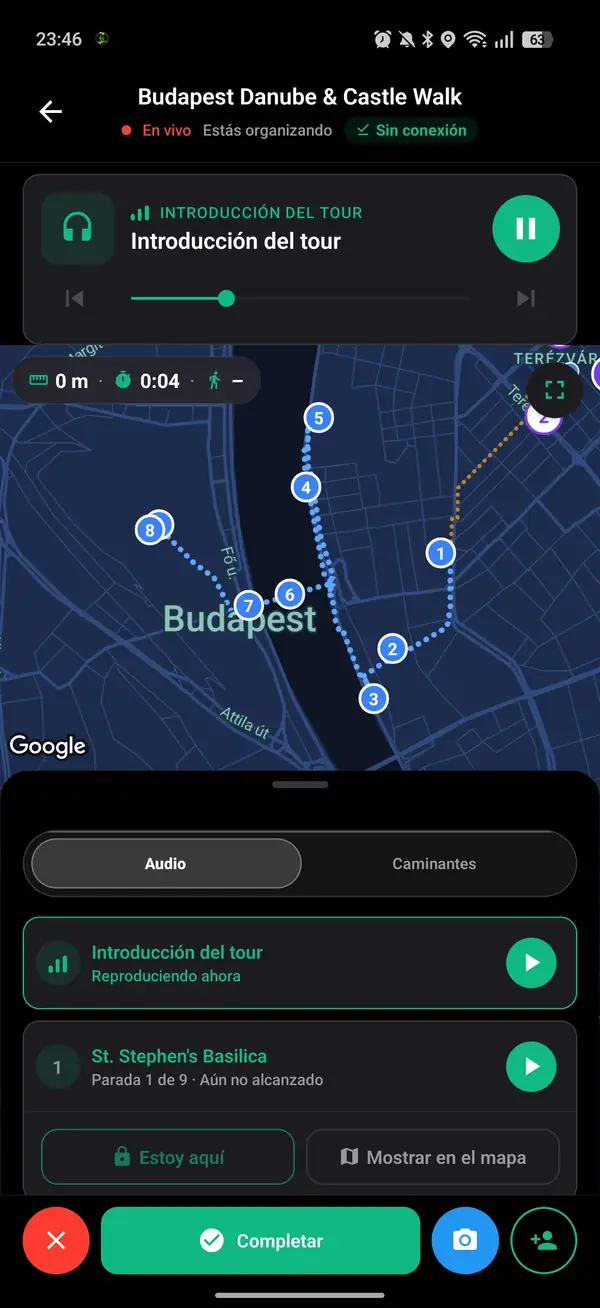
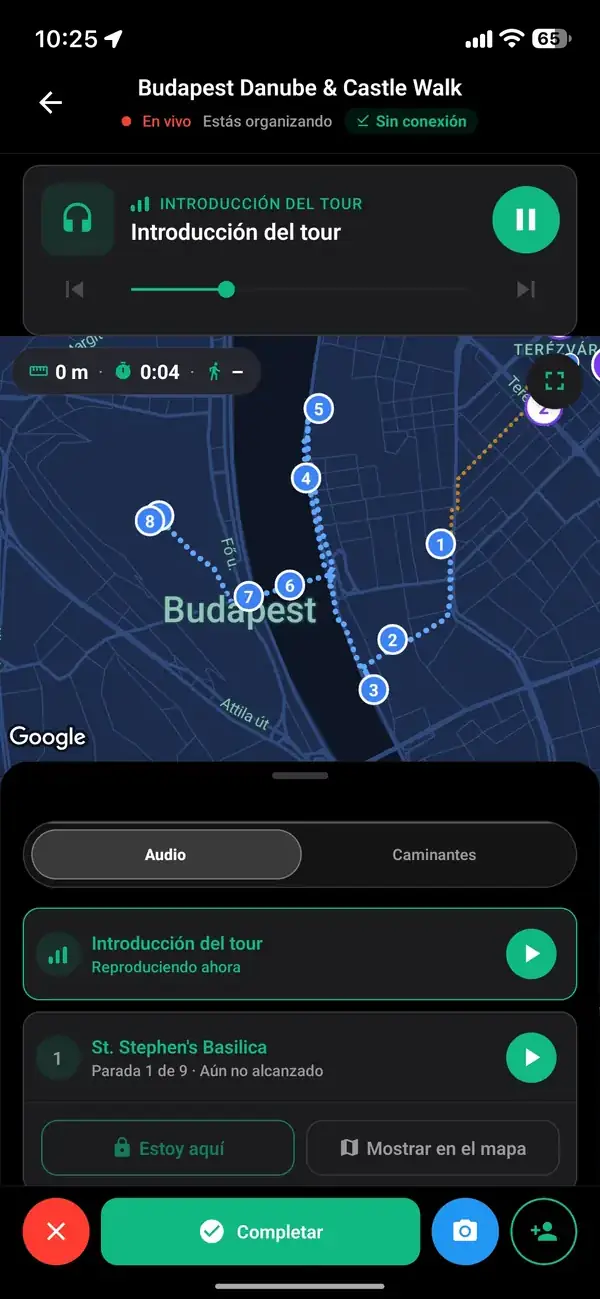
Pulsa reproducir y camina
03
Hechos a mano para tu tiempo en la ciudad
Estos tours no son una lista de monumentos que tachar. Están pensados para recorrerse despacio, con los auriculares puestos y la mirada en la ciudad.
Meditativos e inmersivos
Cada historia se cuenta donde ocurrió. La app suena al llegar a una parada, un toque inicia la historia y el tramo entre paradas es tuyo para disfrutarlo a tu ritmo.
Hechos a mano, con cuidado
Elegimos nosotros mismos cada ruta y cada parada y damos forma a cada historia con cuidado, para que tu tiempo en la ciudad vaya a los lugares que más merecen la pena.
Mejor en compañía
Todo paseo es mejor con alguien al lado, así que si puedes llevar a un amigo, te animamos de verdad a hacerlo. Por eso una sola compra cubre a todas las personas que invites: se unen a tu tour gratis.