




 $7.99Városnézés
Sydney audió gyalogos túrák
Egyéni, narrált séták Sydney területén. Vásárold meg a túrát egyszer, töltsd le, és hagyd, hogy a történet megszólaljon minden megállónál, miközben a saját tempódban sétálsz.
Túrák már $6.99 ártól
A barátaid ingyen sétálnak. Egyetlen vásárlás mindenkit lefedi a sétádon. Indítsd el a túrát, hívd meg a barátaidat csatlakozásra, és minden telefonon lejátszódik a csoportodban.
5.0 a Google Play-en
Sydney audió túrák
Minden túra egy térképes útvonal, amely minden megállónál narrációt tartalmaz. Vedd meg egyszer, és a tiéd marad, előfizetés nélkül.
$7.99Városnézés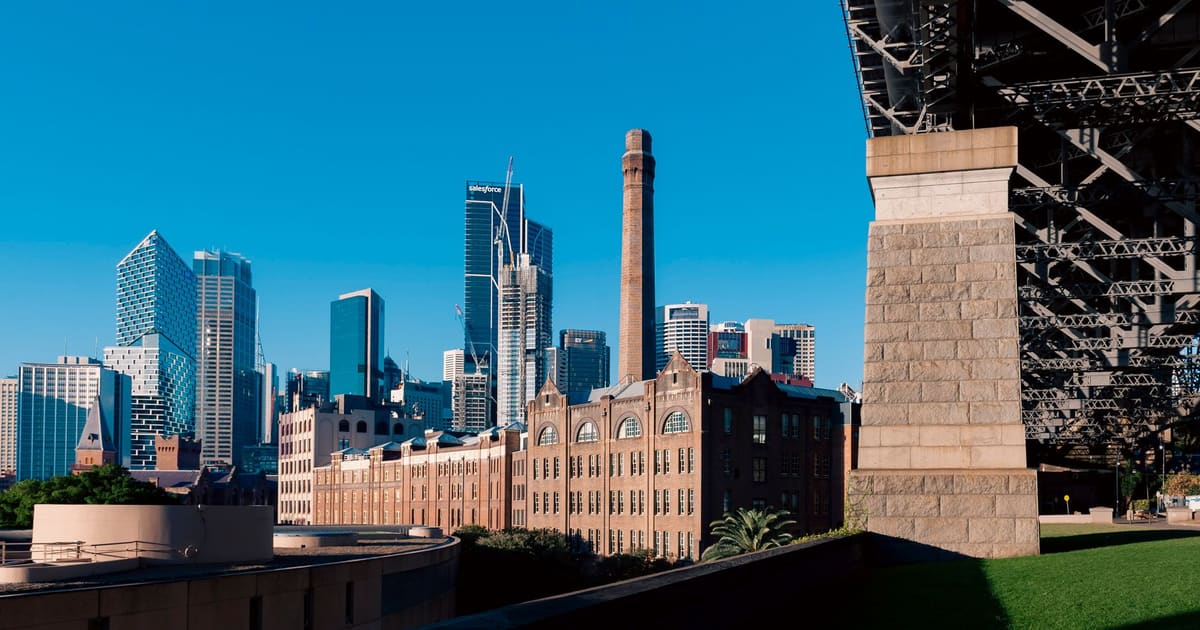 $6.99Városnézés
Mire számíthatsz egy Sydney audió gyalogos túrán?
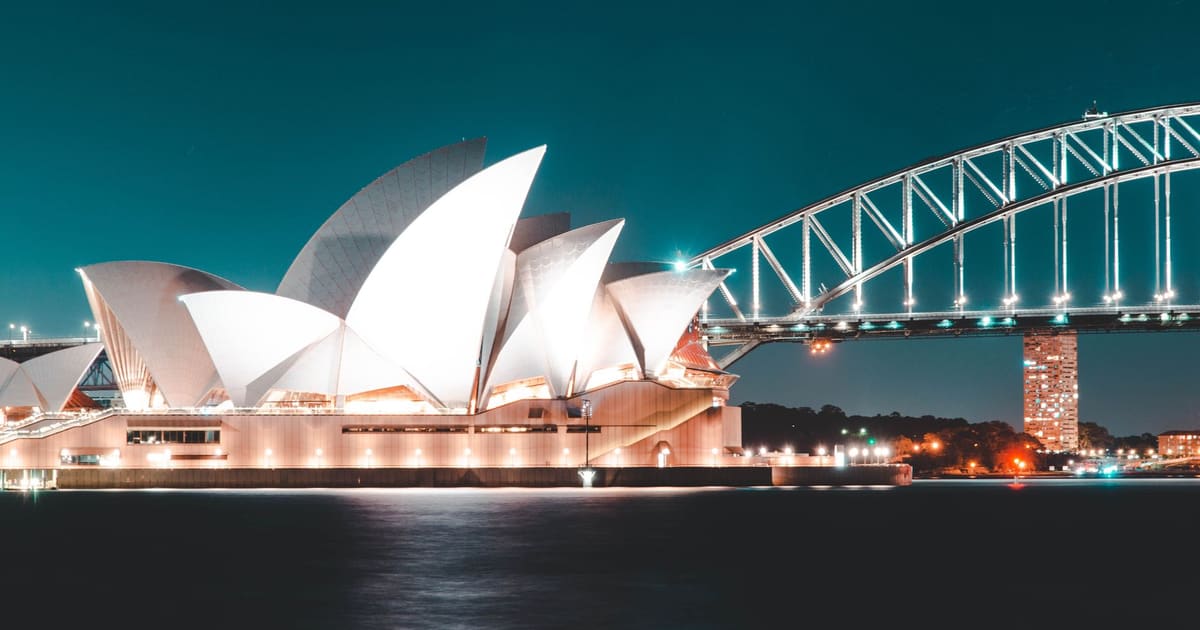
A Sydney audio walk traces the city's ceremonial spine from Hyde Park's war memorial up Macquarie Street to the Opera House, or threads through The Rocks, the sandstone ridge where the convict colony began, right under the Harbour Bridge.
The Macquarie Street Walk starts at the Anzac Memorial in Hyde Park and heads north past St Mary's Cathedral and the grand public buildings Governor Macquarie lined up along the street, 2.8 kilometers, about 39 minutes, mostly level or gently downhill.
From Macquarie Street the route drops through the Royal Botanic Garden to Government House and on to Bennelong Point, ending at the white sails of the Sydney Opera House on the edge of the harbour.
The Rocks Walk is shorter and steeper, 1.5 kilometers, about 21 minutes, from the Museum of Contemporary Art at Circular Quay up through the old convict lanes past Cadmans Cottage and the Argyle Cut, finishing at Dawes Point under the Harbour Bridge with the Opera House across the water.
Merre sétálj Sydney területén?
Néhány megálló, amely mellett elhaladsz majd, és amiért érdemes lesz lelassítanod.
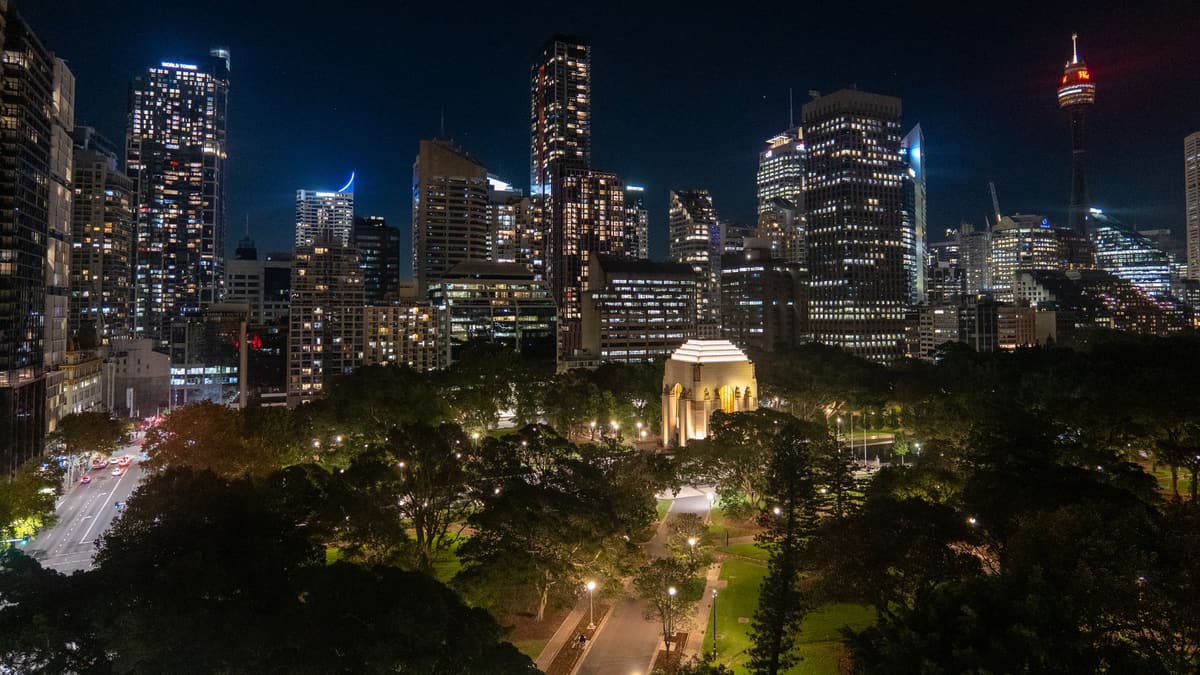
Hyde Park and the Anzac Memorial
The Anzac Memorial is a tall granite block with buttressed corners, opened in 1934 to honor the people of New South Wales who served in the First World War. Hyde Park's avenue of fig trees runs north from here through the middle of the city, a shaded corridor between the office towers that rise on every side. At night the memorial glows gold against the dark park and the lit-up skyscrapers behind it, one of the clearer views you'll get of how the modern city has grown up around these older ceremonial spaces. It's a quiet, reflective start to a walk that gets busier the further north you go.
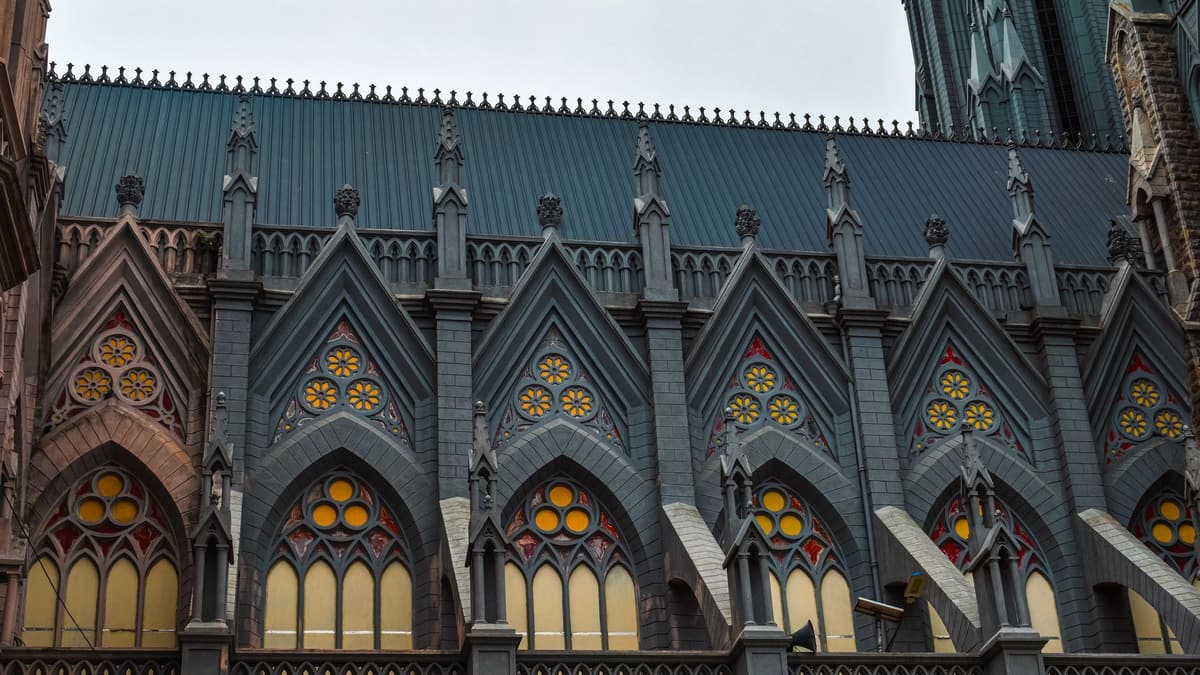
St Mary's Cathedral
St Mary's is the cathedral of Sydney's Catholics, its story beginning with the convicts, many of them Irish, who had no church of their own for decades after the colony began. The building you see today replaced an earlier chapel that burned down in 1865, and its twin spires, part of the original plan, were only finished in 2000. Look closely at the stonework and you'll find rows of pointed gables and rose windows in deep gold sandstone, each one slightly different. Most cathedrals run east to west, but this one runs roughly north to south, a choice made to fit the site rather than tradition.
The Rocks
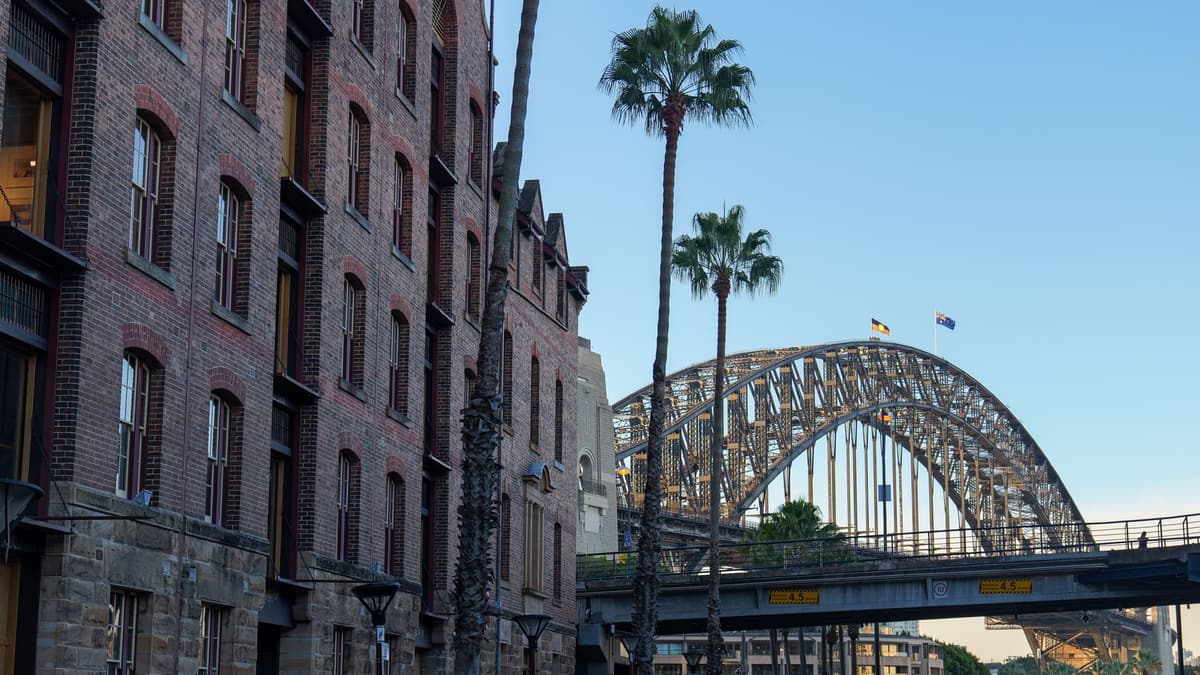
The Rocks is the sandstone ridge where the British colony began in 1788, and its narrow lanes still carry the shape of that first convict town, warehouses, cottages and stairs built long before anyone thought to plan for cars. Brick buildings from the colony's working waterfront days stand just streets away from the steel of the Harbour Bridge, built more than a century later, so you get two very different eras of the city in a single glance. Palm trees soften the older stone and brick, and flags fly from the bridge's arch on a clear day. It's one of the few parts of central Sydney where you can still feel the nineteenth century underfoot.
The Harbour Bridge and Luna Park
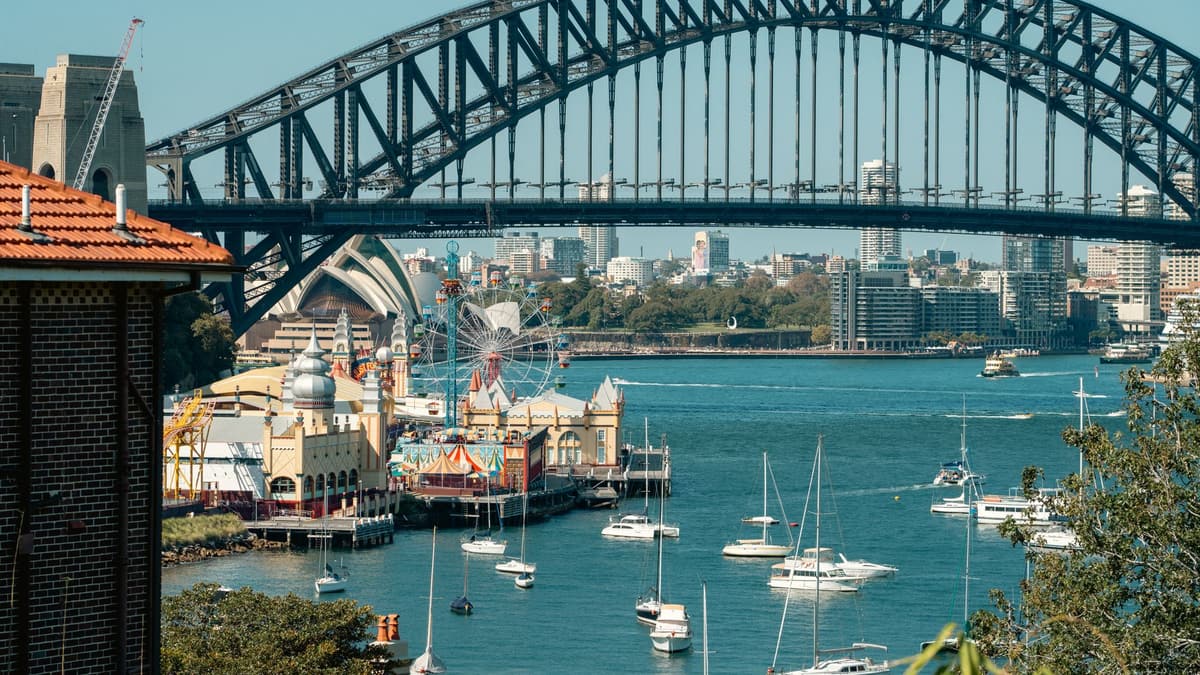
From this angle you get nearly everything Sydney Harbour is known for in one frame: the steel arch of the Harbour Bridge, the white sails of the Opera House just beneath it, the painted face of Luna Park's entrance, and boats of every size riding at anchor on blue water. The bridge opened in 1932 after a decade of construction, and its pylons, though they look like they're holding up the whole structure, actually do very little of the structural work. Ferries cut back and forth across the harbour all day, and this stretch of water is as much a working transport route as it is a view. Few harbours anywhere pack this much into a single sightline.
Sydney Harbour from Above
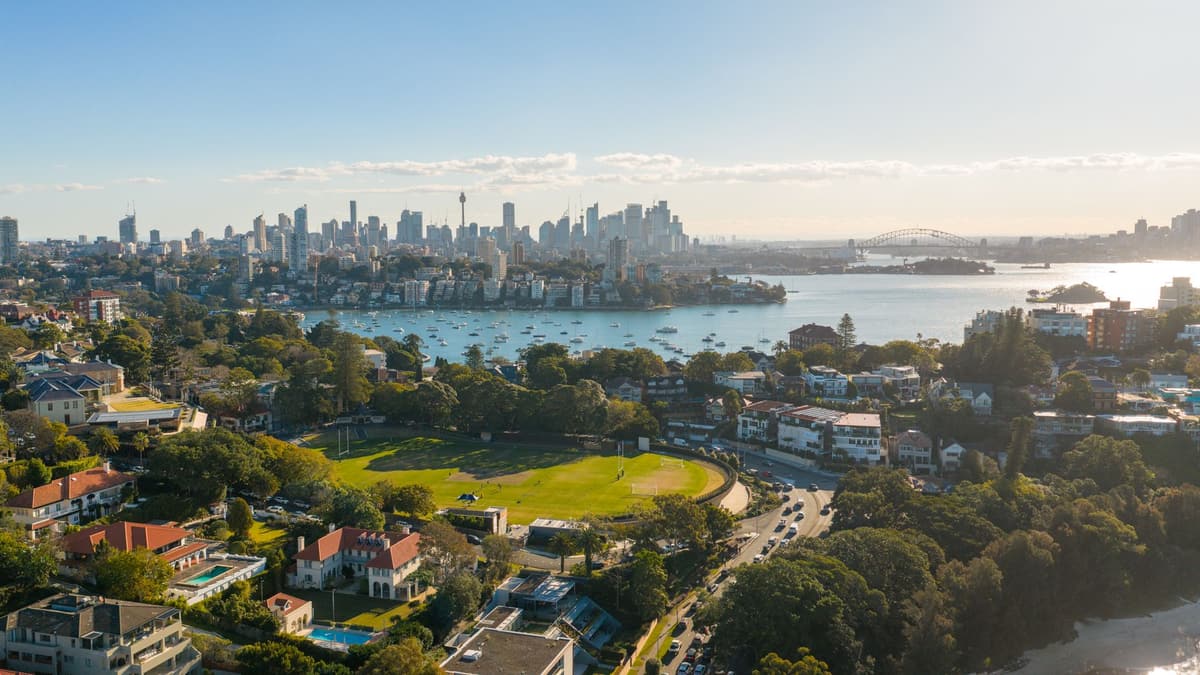
Looking back across the water from the harbour's eastern shore, the city skyline rises in the distance with the Harbour Bridge just visible on the right, boats scattered across the blue in between. Sydney's harbour is really a drowned river valley, its bays and points carved long before the city existed, which is why the shoreline twists and turns rather than running straight. Sailing boats, ferries and the odd tanker all share the same water, and waterside suburbs like this one are only a short ferry ride from the office towers in the distance. It's a reminder that the harbour, not the street grid, is the thing that actually holds Sydney together.
Szerezd meg az audiotúrát 3 egyszerű lépésben
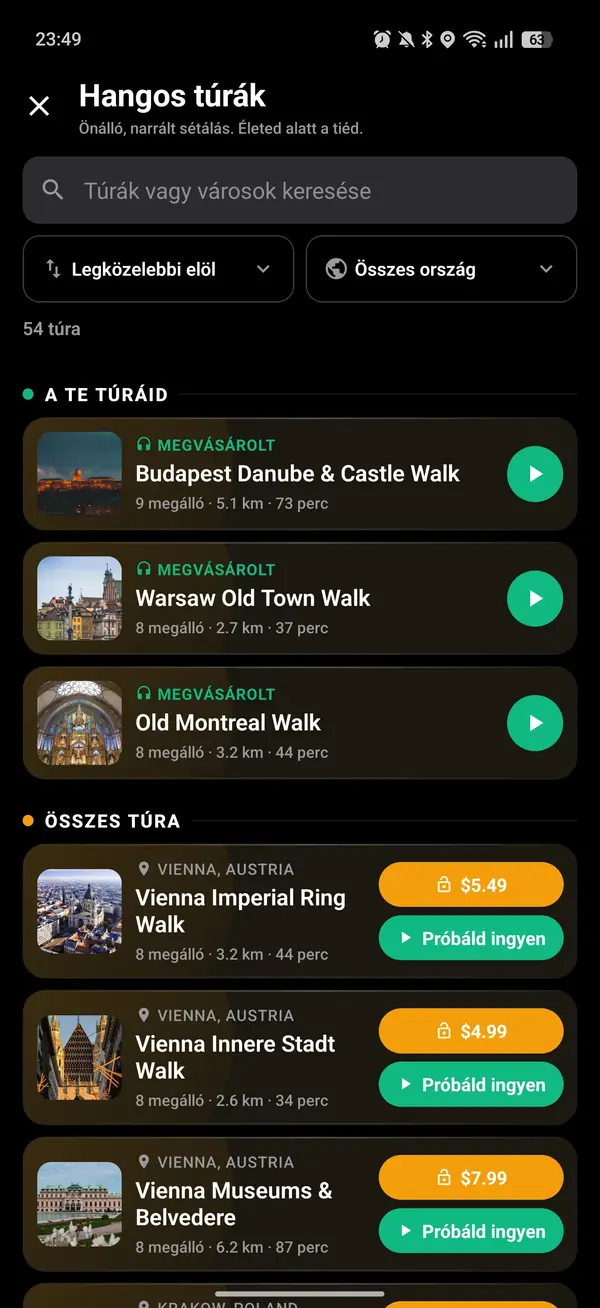
Minden az ingyenes Walk With Me appban történik, és minden túra első megállóit ingyen kipróbálhatod.
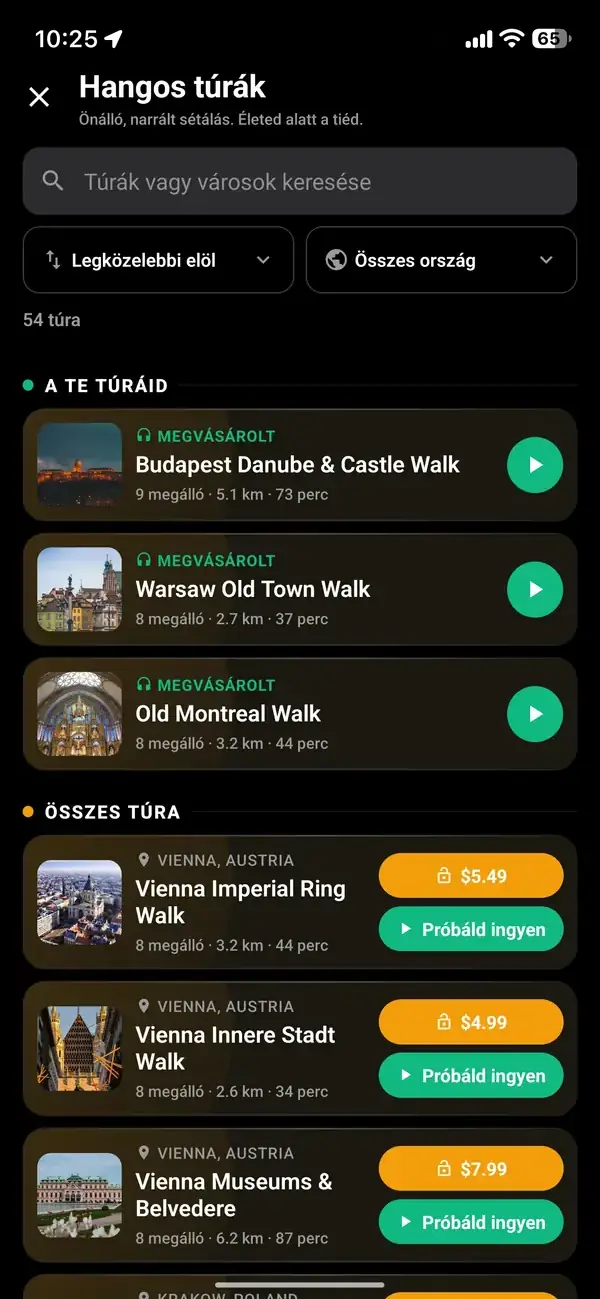
Koppints az arany fejhallgatóra, és válassz túrát
01
Sétálj egyedül, vagy hívj meg valakit


02
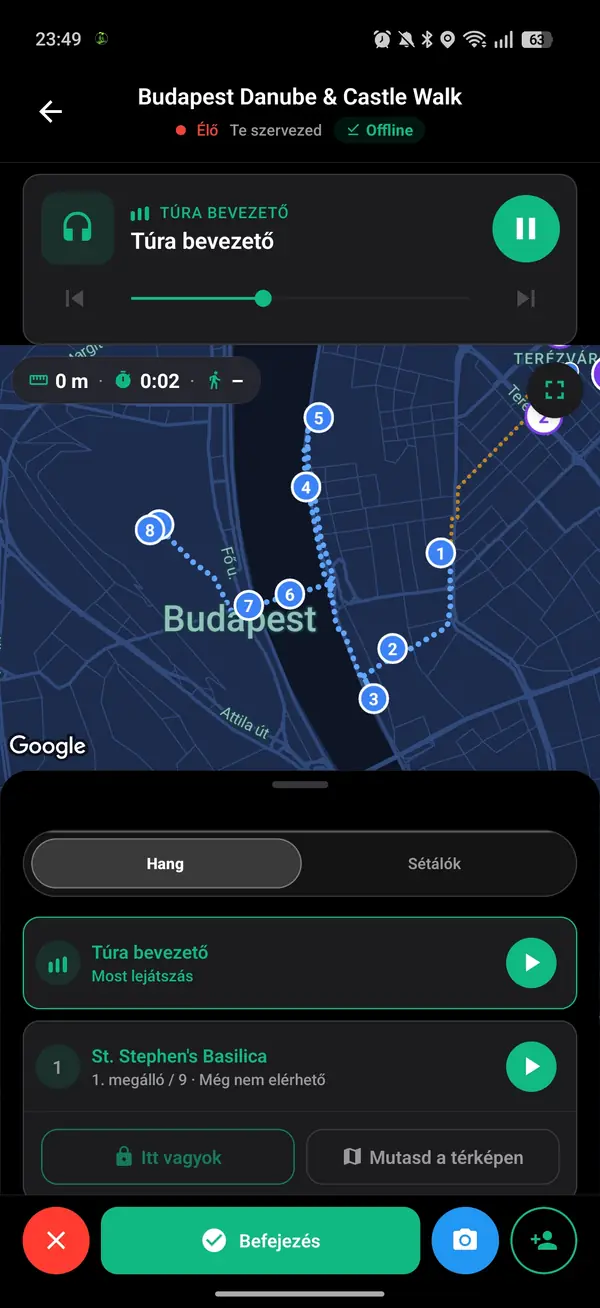
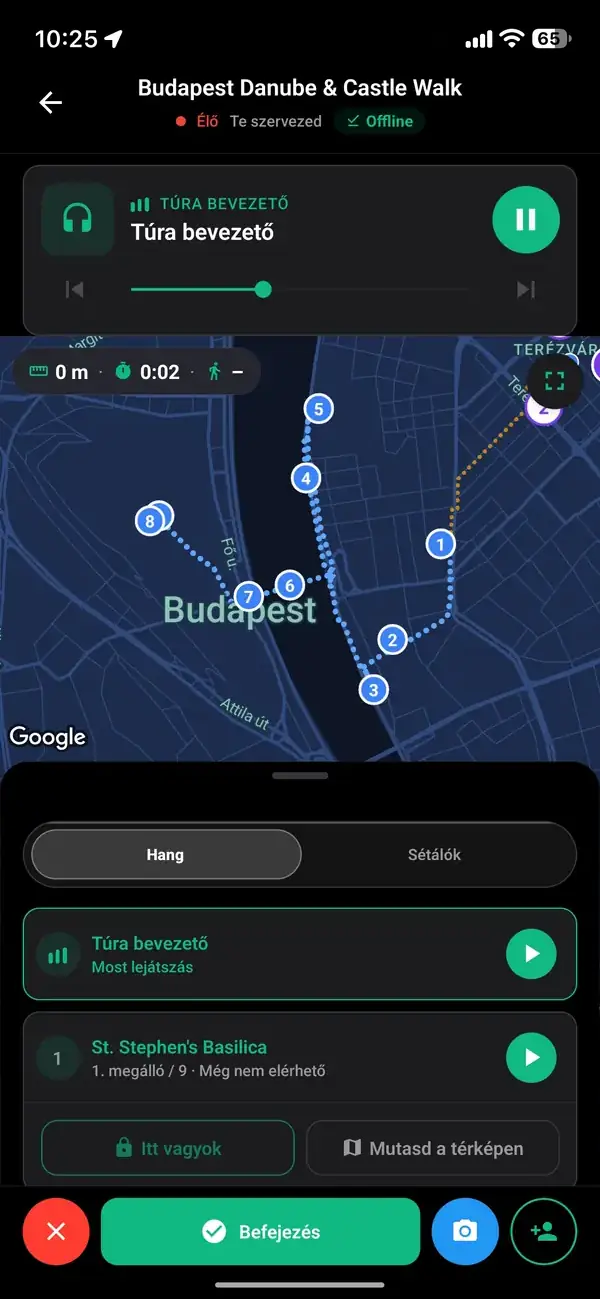
Nyomj a lejátszásra és indulj
03
Kézzel készítve a városban töltött idődre
Ezek a túrák nem kipipálandó látnivalók listái. Arra készültek, hogy lassan járd végig őket, fejhallgatóval a füleden, a várost figyelve.
Meditatív és magával ragadó
Minden történet ott hangzik el, ahol megtörtént. Az app jelez, amikor egy megállóhoz érsz, egy koppintás elindítja a történetet, a megállók közötti utat pedig a saját tempódban élvezheted.
Kézzel, gondosan készítve
Minden útvonalat és minden megállót mi magunk választunk ki, és minden történetet gondosan formálunk meg, hogy a városban töltött időd a leginkább érdemes helyekre jusson.
Valakivel jobb
Minden séta jobb, ha valaki melletted van, ezért ha tudsz hozni valakit, nagyon ajánljuk. Ezért fedez egyetlen vásárlás mindenkit, akit meghívsz: ingyen csatlakoznak a túrádhoz.