




 $7.99City Highlights
Sydney Audio Walking Tours
Self-guided, narrated walks through Sydney. Buy a tour once, download it, and hear the story at each stop while you walk at your own pace.
Tours from $6.99
Friends walk free. One purchase covers everyone on your walk. Start the tour, invite your friends to join, and it plays on every phone in your group.
5.0 on Google Play
Sydney audio tours
Each tour is a mapped route with narration at every stop. Buy it once and it is yours to keep, no subscription.
$7.99City Highlights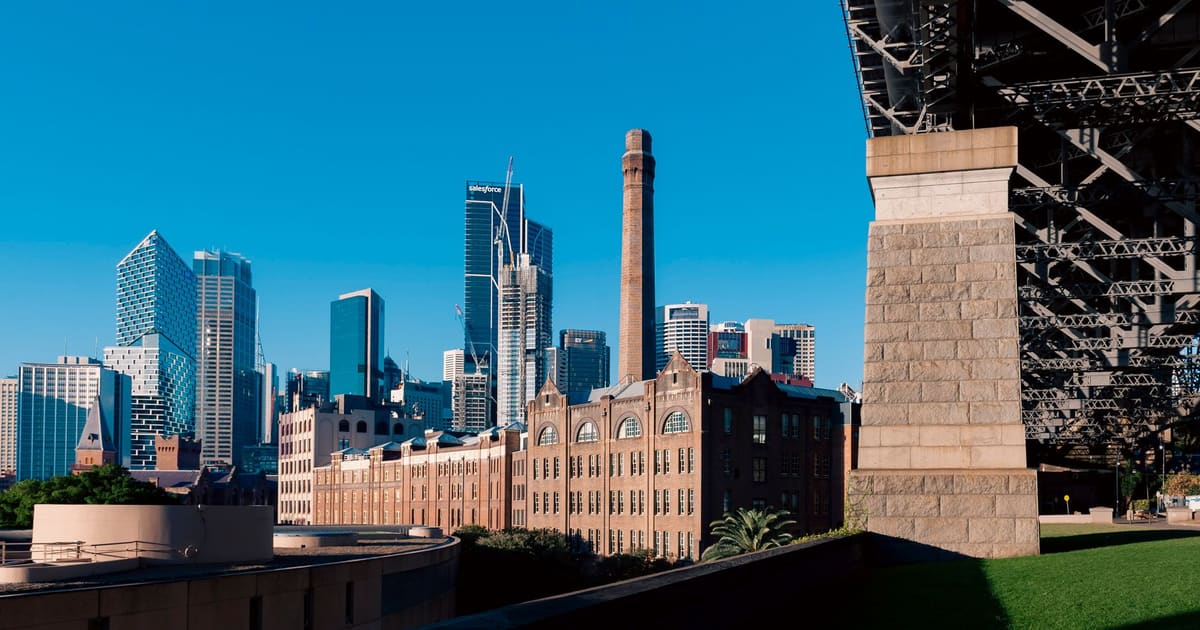 $6.99City Highlights
What to expect on a Sydney audio walking tour
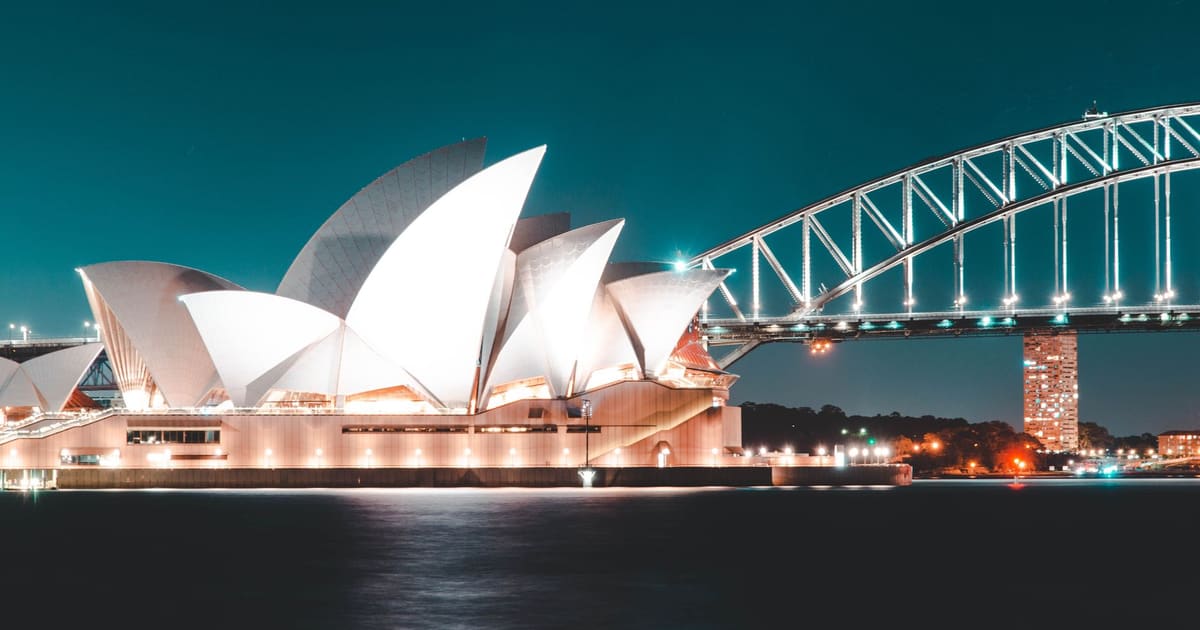
A Sydney audio walk traces the city's ceremonial spine from Hyde Park's war memorial up Macquarie Street to the Opera House, or threads through The Rocks, the sandstone ridge where the convict colony began, right under the Harbour Bridge.
The Macquarie Street Walk starts at the Anzac Memorial in Hyde Park and heads north past St Mary's Cathedral and the grand public buildings Governor Macquarie lined up along the street, 2.8 kilometers, about 39 minutes, mostly level or gently downhill.
From Macquarie Street the route drops through the Royal Botanic Garden to Government House and on to Bennelong Point, ending at the white sails of the Sydney Opera House on the edge of the harbour.
The Rocks Walk is shorter and steeper, 1.5 kilometers, about 21 minutes, from the Museum of Contemporary Art at Circular Quay up through the old convict lanes past Cadmans Cottage and the Argyle Cut, finishing at Dawes Point under the Harbour Bridge with the Opera House across the water.
Where to walk in Sydney
A few of the stops you will pass, and why they are worth slowing down for.
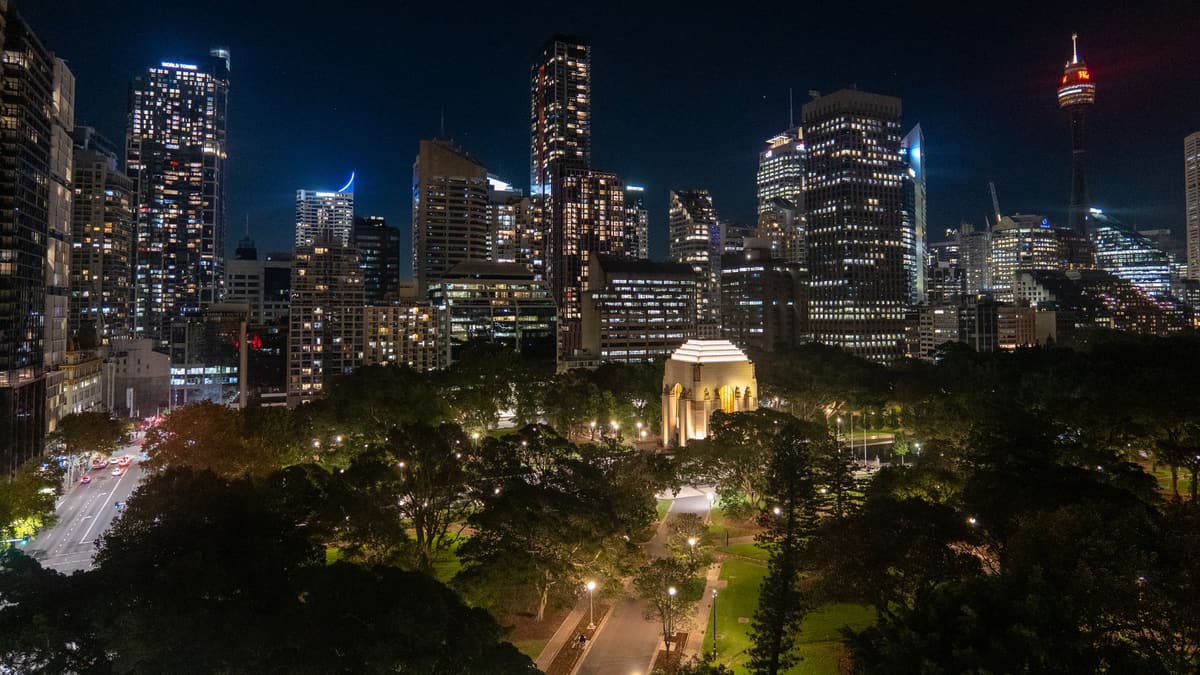
Hyde Park and the Anzac Memorial
The Anzac Memorial is a tall granite block with buttressed corners, opened in 1934 to honor the people of New South Wales who served in the First World War. Hyde Park's avenue of fig trees runs north from here through the middle of the city, a shaded corridor between the office towers that rise on every side. At night the memorial glows gold against the dark park and the lit-up skyscrapers behind it, one of the clearer views you'll get of how the modern city has grown up around these older ceremonial spaces. It's a quiet, reflective start to a walk that gets busier the further north you go.
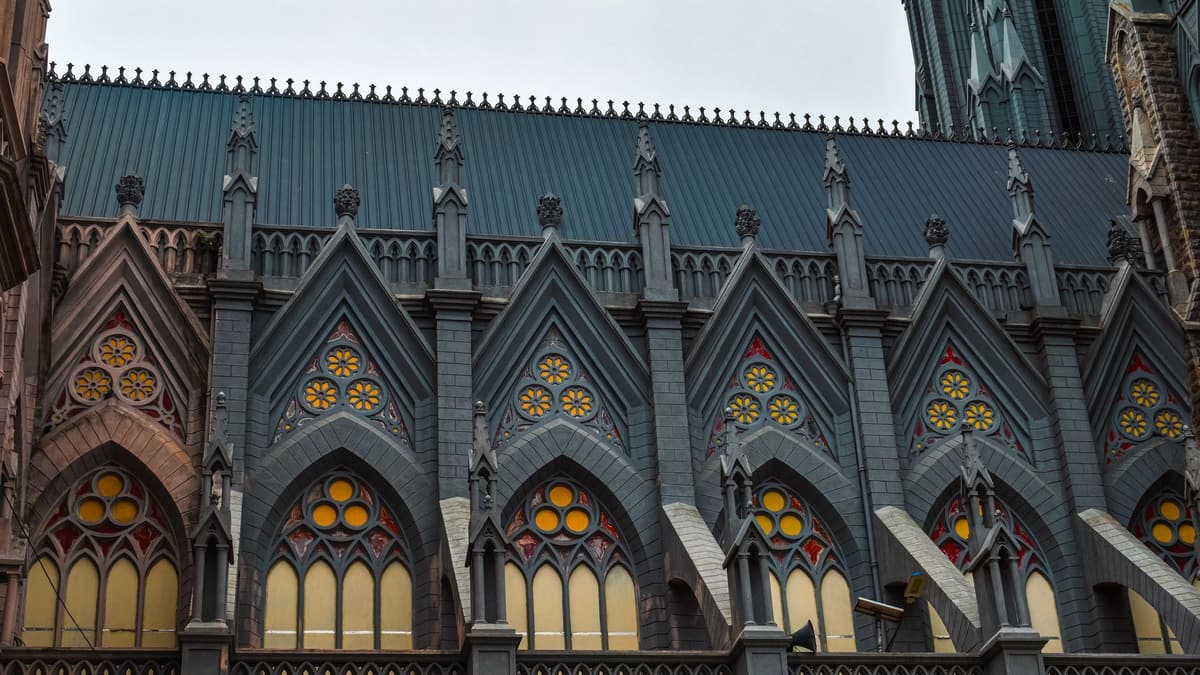
St Mary's Cathedral
St Mary's is the cathedral of Sydney's Catholics, its story beginning with the convicts, many of them Irish, who had no church of their own for decades after the colony began. The building you see today replaced an earlier chapel that burned down in 1865, and its twin spires, part of the original plan, were only finished in 2000. Look closely at the stonework and you'll find rows of pointed gables and rose windows in deep gold sandstone, each one slightly different. Most cathedrals run east to west, but this one runs roughly north to south, a choice made to fit the site rather than tradition.
The Rocks
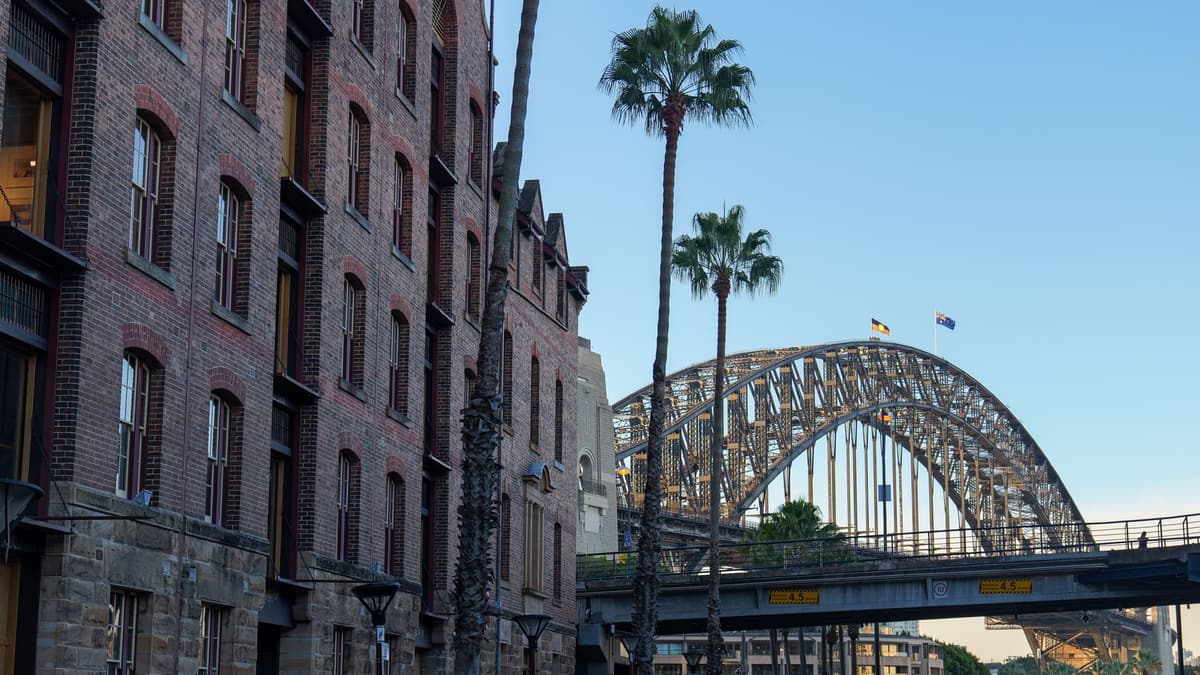
The Rocks is the sandstone ridge where the British colony began in 1788, and its narrow lanes still carry the shape of that first convict town, warehouses, cottages and stairs built long before anyone thought to plan for cars. Brick buildings from the colony's working waterfront days stand just streets away from the steel of the Harbour Bridge, built more than a century later, so you get two very different eras of the city in a single glance. Palm trees soften the older stone and brick, and flags fly from the bridge's arch on a clear day. It's one of the few parts of central Sydney where you can still feel the nineteenth century underfoot.
The Harbour Bridge and Luna Park
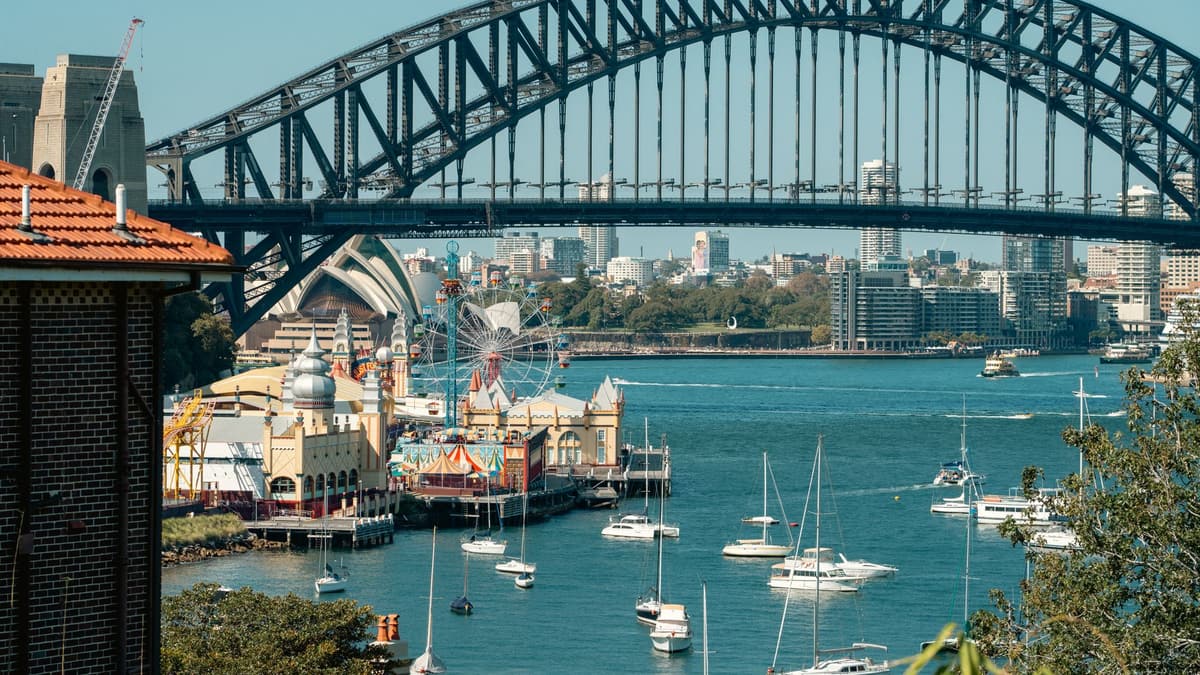
From this angle you get nearly everything Sydney Harbour is known for in one frame: the steel arch of the Harbour Bridge, the white sails of the Opera House just beneath it, the painted face of Luna Park's entrance, and boats of every size riding at anchor on blue water. The bridge opened in 1932 after a decade of construction, and its pylons, though they look like they're holding up the whole structure, actually do very little of the structural work. Ferries cut back and forth across the harbour all day, and this stretch of water is as much a working transport route as it is a view. Few harbours anywhere pack this much into a single sightline.
Sydney Harbour from Above
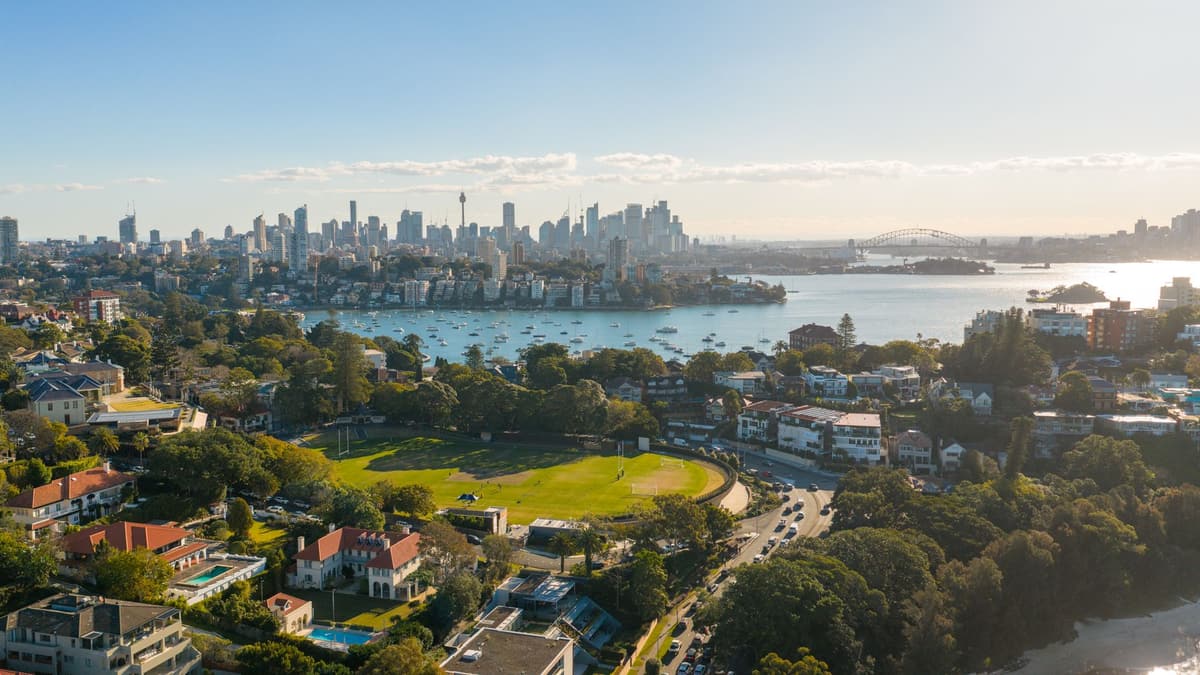
Looking back across the water from the harbour's eastern shore, the city skyline rises in the distance with the Harbour Bridge just visible on the right, boats scattered across the blue in between. Sydney's harbour is really a drowned river valley, its bays and points carved long before the city existed, which is why the shoreline twists and turns rather than running straight. Sailing boats, ferries and the odd tanker all share the same water, and waterside suburbs like this one are only a short ferry ride from the office towers in the distance. It's a reminder that the harbour, not the street grid, is the thing that actually holds Sydney together.
Get the Audio Tour in 3 Simple Steps
All in the free Walk With Me app, and the first stops of every tour are free to try.
Tap the Gold Headphones and Pick a Tour


01
Walk It Solo or Invite Someone


02
Press Play and Walk


03
Handcrafted for Your Time in the City
These tours aren't a checklist of sights. They're made to be walked slowly, headphones on, eyes on the city.
Meditative and Immersive
Each story is told where it happened. The app chimes when you reach a stop, one tap starts the story, and the stretch between stops is yours to take in at your own pace.
Handcrafted With Care
We choose every route and every stop ourselves and shape each story with care, so the time you have in the city goes to the places most worth seeing.
Better With Someone
Every walk is better with someone beside you, so if you can bring a friend, we really hope you do. That's why one purchase covers everyone you invite: they join your tour free.