
October 11, 2026 · 9 min read
Amsterdam Anne Frank Walking Tour
From the Hollandsche Schouwburg through the old Jewish Quarter, past the Dockworker and the Dam, to the Anne Frank House on the Prinsengracht.
589

October 11, 2026 · 11 min read

 Друзья гуляют бесплатно
Каждую экскурсию можно пройти в составе запланированной группы, к которой легко присоединиться в приложении.
Ещё аудиоэкскурсии в Chicago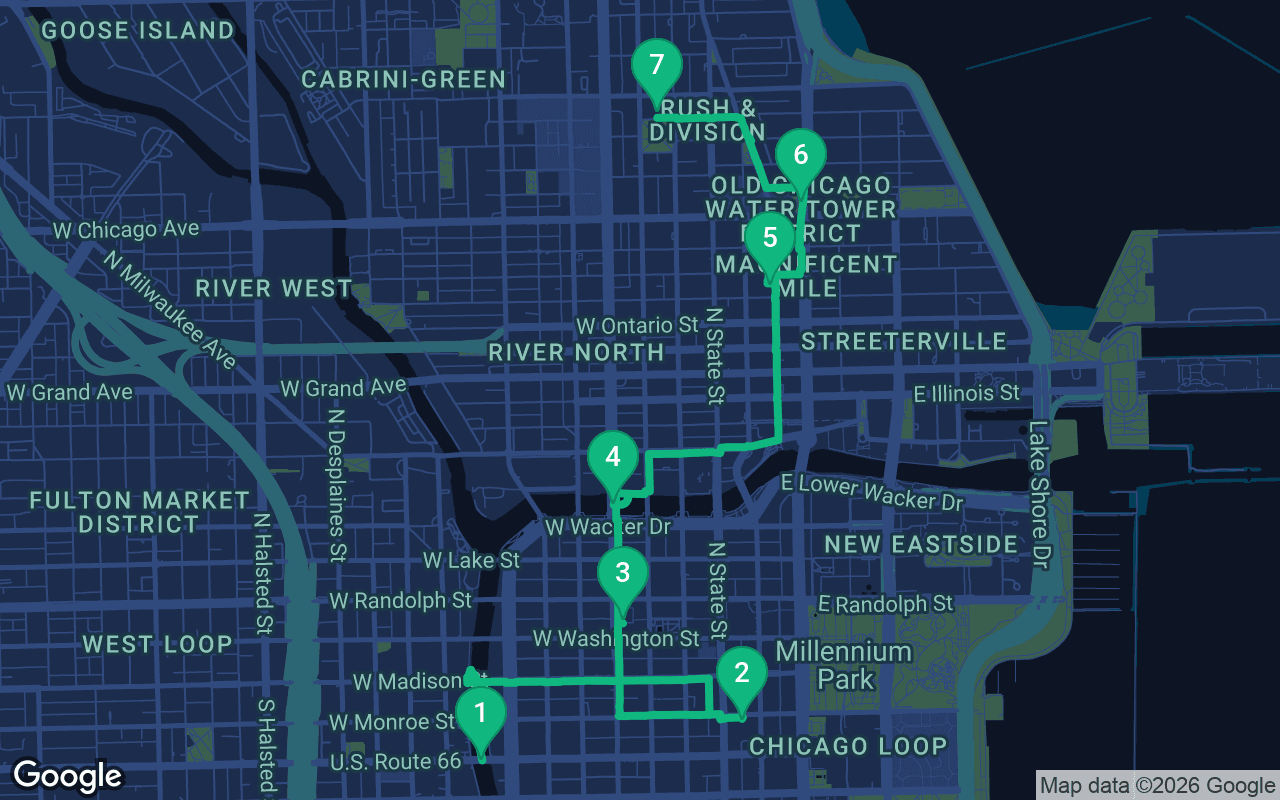
Примерно 5,5 км, около 78 минут в спокойном темпе.
Эта экскурсия озвучена
Нажмите «Воспроизвести» на первых 3 остановках, чтобы послушать 30-секундный фрагмент озвучки. В приложении вступление и эти остановки звучат полностью и бесплатно, а о каждой из них вас оповестит звуковой сигнал, когда вы до неё дойдёте. Вся экскурсия будет вашей за $17.99, это разовая покупка навсегда.
Совместимо с Garmin, Komoot, Strava, OS Maps и любыми приложениями для GPX.
On a Sunday night in October 1871, a fire started in or near a barn on the West Side of Chicago. By the time it burned out, late on Monday or early Tuesday, it had destroyed the heart of the city and almost all of the North Side. About 300 people died, and some 100,000 lost their homes. This walk follows the flames through that night, roughly in the order they arrived: from the river that was supposed to stop them, through the business district and the burning Court House, across the main river with the crowds fleeing north, to the Water Tower and one mansion that survived. It runs about 5.5 kilometers from the Adams Street Bridge to the Newberry Library, one of our story-driven self-guided walking tours. Along the way we'll also sort the record from the legend, starting with a certain cow.
The walking takes about eighty minutes. With the stories, allow about two hours. The route is flat and paved, through the Loop and across the river into River North and the Gold Coast, with busy crossings, so take the lights. The start is beside Union Station, and the Quincy station on the Loop 'L' is a short walk east. At the end, the Clark and Division and the Chicago stations on the Red Line are each a few blocks away. Check the current transit map before you go. The Palmer House lobby is usually open to the public, and St. James Cathedral is an active church, so check before you go in. Everything else works from the sidewalk. Two places from this story lie off the route, and we'll point them out as detours: the site of the O'Leary barn, and Lincoln Park.
You're at the Adams Street Bridge, over the South Branch of the Chicago River, beside Union Station. Look along the water. Nothing here marks the fire, and the records don't say exactly where it crossed the river. Treat this as a vantage point. The fire came across this branch of the river, somewhere along here, on its way into the city.
It started at about nine o'clock on Sunday night, October 8, 1871, somewhere in or very near the barn of Patrick and Catherine O'Leary, on DeKoven Street, about a mile southwest of where you stand. That site is a detour today: the Chicago Fire Academy stands on it, at 558 West DeKoven.
The city was ready to burn. It was built largely of wood. Since the Fourth of July, only about an inch of rain had fallen. A fire the night before had worn out the city's 185 firefighters. A strong wind was blowing from the southwest. And then the alarm system failed. A watchman misjudged where the fire was, and engines were sent the wrong way. The fire had time to grow.
Here's what people believed: the South Branch would stop it. The river would act as a firebreak. It didn't. Along these banks stood lumber yards and wooden bridges, and there was grease on the water. Around midnight, burning debris blew across the river, and the fire reached the business district.
And the cow? You've heard that Mrs. O'Leary's cow kicked over a lantern. No one knows how the fire started. Catherine O'Leary testified that she was in bed, and the official inquiry found no proof against her. A reporter, Michael Ahern, later admitted that he and his colleagues made the cow story up. The legend stuck anyway, and it carried anti-Irish and anti-Catholic prejudice.
Walk east across the bridge and along Adams Street through the Loop to State Street. Turn left, and the Palmer House is one block north, at Monroe. It's about fifteen minutes.
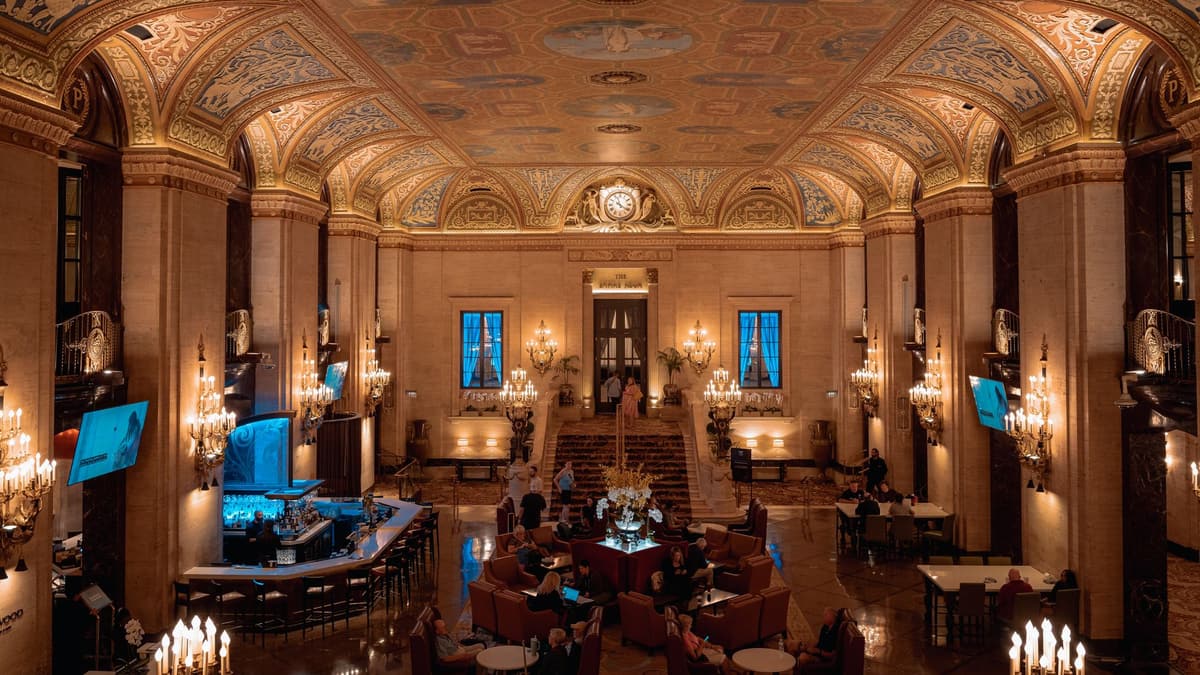
You're at State and Monroe, outside the Palmer House. The building in front of you is not the one that burned. This grand hotel was rebuilt in the 1920s, and its lobby is usually open, if you want to step in and look up.
The first Palmer House, on State Street, opened on September 26, 1871. Thirteen days later it was gone. Sources disagree about exactly where that first building stood. One says this corner. Another says the later hotel went up across the street from the original. Either way, you're within a few steps of it.
That Sunday night, one of the guests, Mrs. Alfred Hebard, took the elevator up and looked out at the fire. She decided, in her words, that "it would not cross the river." Many people in the city thought the same thing.
It did cross. Once the burning debris landed on the east side of the South Branch, the fire moved into the commercial heart of Chicago. Later that night the new Palmer House burned. So did the offices of the Chicago Tribune, which had been called fireproof.
Think about what that meant. The hotel was brand new, open less than two weeks, and it did not survive the night.
Walk north on State Street to Washington Street, turn left and walk west across Clark Street. City Hall fills the next block, on your right. It's about ten minutes.
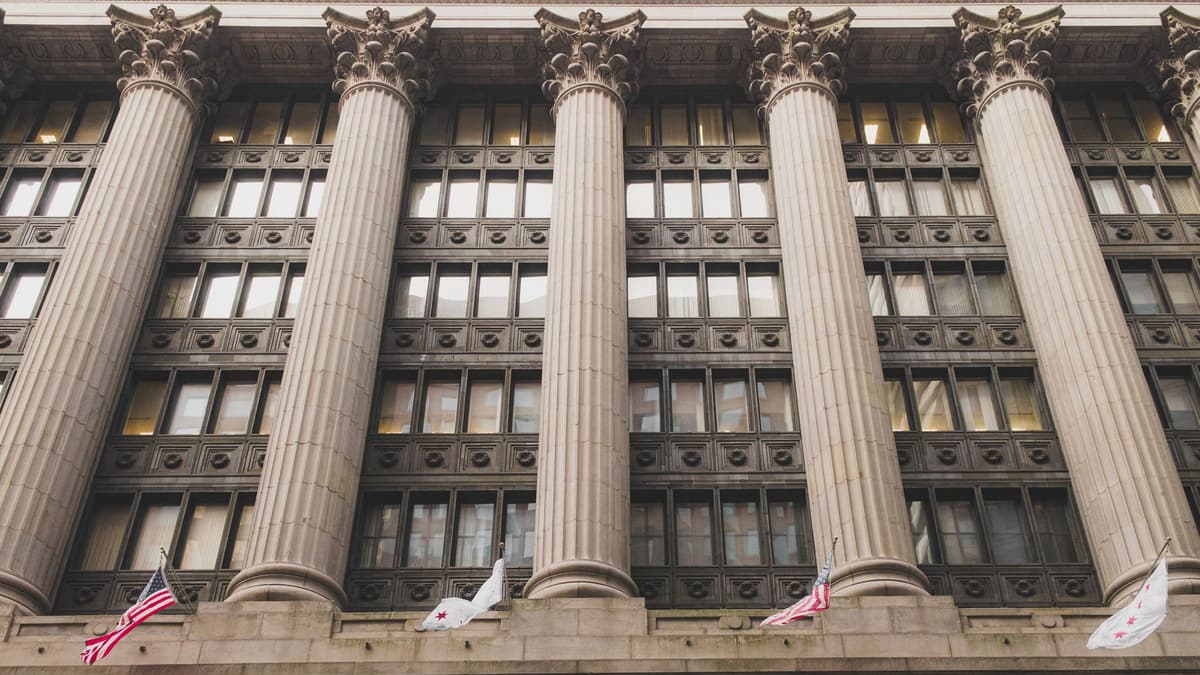
You're beside the City Hall and County Building, which fills the block between Randolph, Clark, Washington and LaSalle. In 1871 this same block held the Court House, with its tower and its great alarm bell. Prisoners were held in a jail in its basement.
By about half past one on Monday morning, the fire had reached the Court House tower. The watchman up there barely escaped. Below, the prisoners in the basement were still locked in.
The mayor, Roswell B. Mason, gave the order in a short note: "Release all prisoners from jail at once, keeping them in custody if possible." They were let out just before the bell plummeted through the collapsing tower. Some of the prisoners escaped.
Mason also did something that mattered for days afterward. He sent telegrams to nearby cities, asking for help.
Stand here and picture it. Within a few hours of the first alarm, the building at the center of the city was a burning shell. And the people still in the business district had one way left to go: north, across the main branch of the river.
Walk around to LaSalle Street, on the west side of the block, and head north. Cross Lake Street and Wacker Drive to the LaSalle Street Bridge. It's about eight minutes.
Что входит
Наши экскурсии задуманы как медитативные и захватывающие: вы идёте и просто слушаете. Вместе всегда лучше, и приложение воспроизводит озвучку синхронно, так что вы, ваш партнёр и ваши друзья слышите каждую остановку одновременно.
You're on the LaSalle Street Bridge, over the main branch of the Chicago River. Look down at the water, and then imagine what was under it.
Продолжение этой остановки есть в полной аудиоэкскурсии.
You're at Wabash and Huron, outside St. James Episcopal Cathedral. Look up at the bell tower.
Продолжение этой остановки есть в полной аудиоэкскурсии.
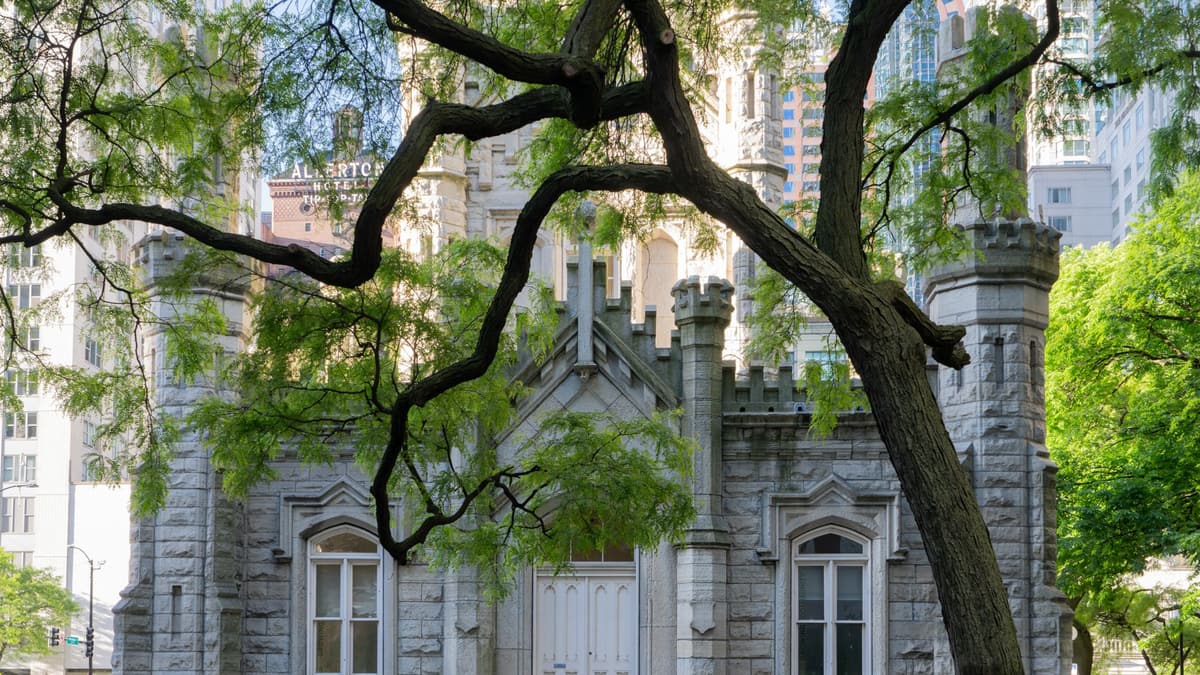
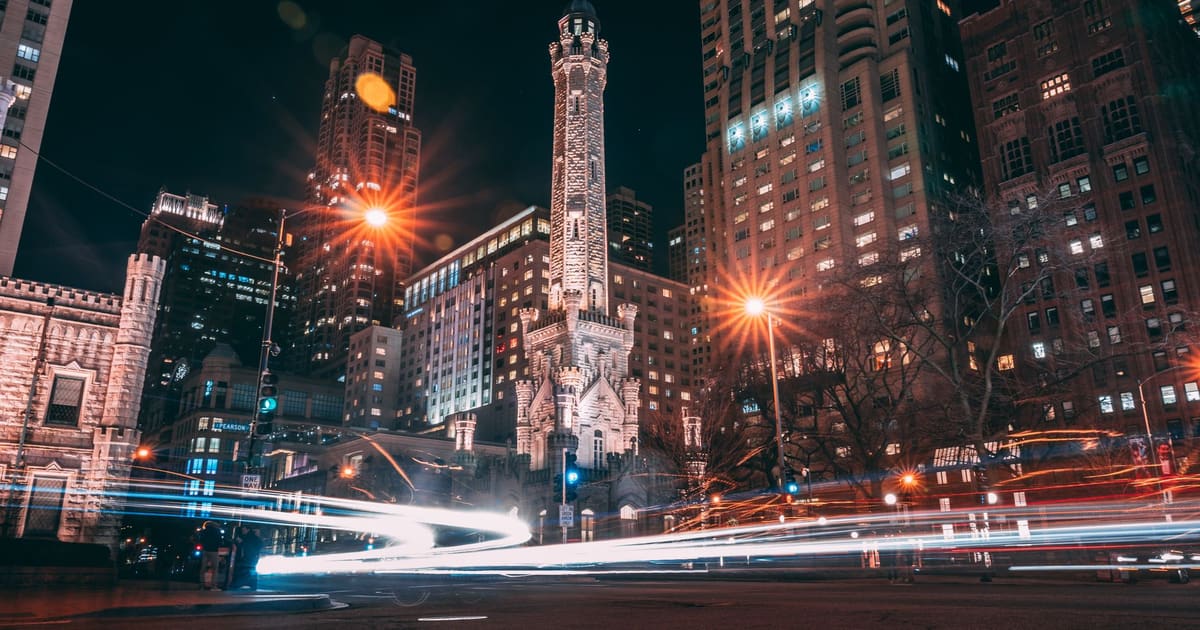
You're at Michigan and Chicago Avenues. On one side stands the Water Tower, on the other the Pumping Station, both built of pale limestone and designed by W.
Продолжение этой остановки есть в полной аудиоэкскурсии.
You're on Washington Square, the small park in front of the Newberry Library, which was built in the 1890s. Look for the marker on the library's steps.
Продолжение этой остановки есть в полной аудиоэкскурсии.
Пройдите этот маршрут вместе с другими во время следующей запланированной прогулки.
Около 5,5 км, примерно 78 мин в спокойном темпе · 7 остановок
Друзья гуляют бесплатноOctober 11, 2026 · 9 min read
From the Hollandsche Schouwburg through the old Jewish Quarter, past the Dockworker and the Dam, to the Anne Frank House on the Prinsengracht.
October 11, 2026 · 11 min read
From Van Houten's street by the Vondelpark past Leidseplein, the Rijksmuseum passage and the famous canal bench to the Anne Frank House.

October 11, 2026 · 10 min read
Follow the last days of April and May 1945 from the Anhalter Bahnhof ruin past the Gestapo site and Brandenburg Gate to the Moltke Bridge and the Reichstag.
