




 $14.99Momentos clave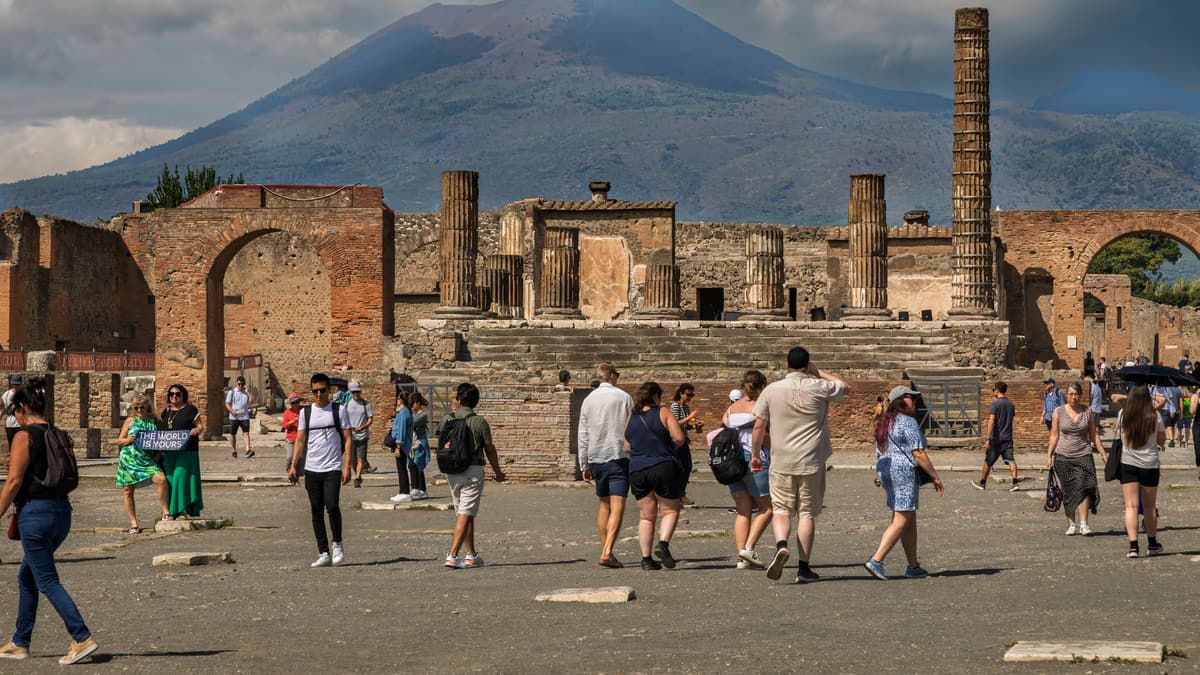
Audio tours en Pompeii Tours a pie
Paseos narrados y autoguidados por Pompeii. Compra un tour una vez, descárgalo y deja que la historia suene en cada parada mientras caminas a tu propio ritmo.
Tours desde $14.99
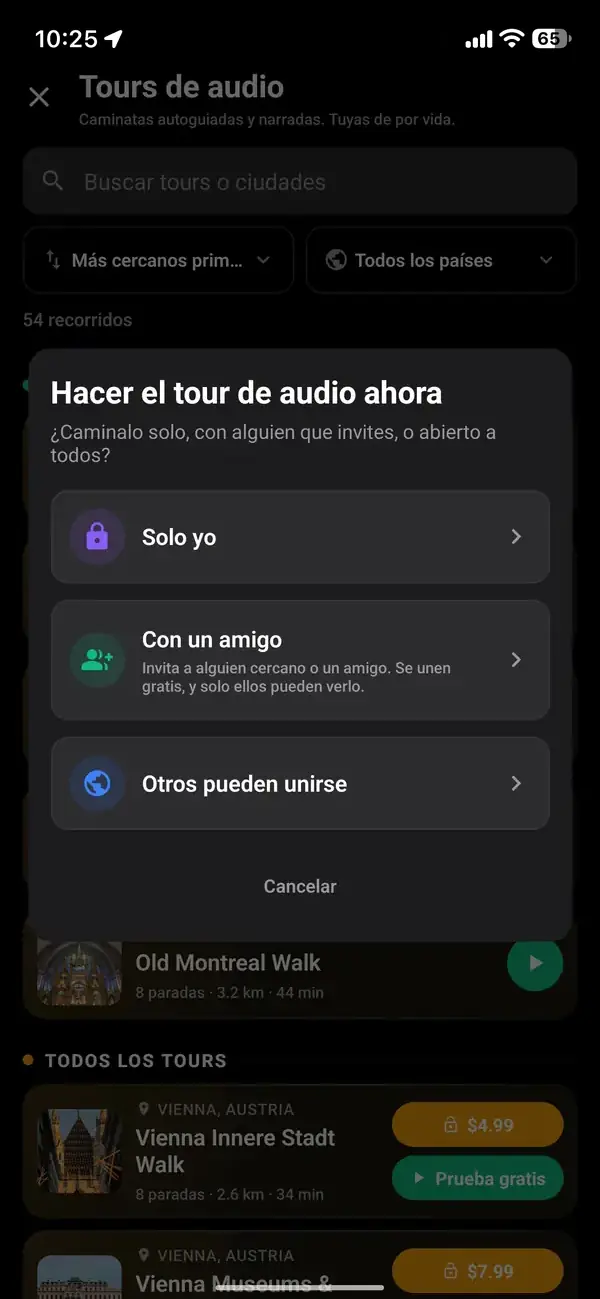
Tus amigos caminan gratis. Una compra cubre a todos en tu caminata. Inicia el tour, invita a tus amigos a unirse, y se reproducirá en cada teléfono de tu grupo.
5.0 en Google Play
Tours de audio por Pompeii
Cada tour es una ruta mapeada con narración en cada parada. Cómpralo una vez y será tuyo para siempre, sin suscripciones.
$14.99Momentos claveQué esperar de un tour de audio a pie por Pompeii
A Pompeii audio walk tells the last two days of the town in the order they happened, from an ordinary morning at Porta Marina and the Forum, through a night of falling pumice, to the memorial of plaster casts in the Large Palaestra, told plainly because these were real people.
The walk climbs in through Porta Marina, the western gate, to the Forum, where the Temple of Jupiter stands with Vesuvius behind it, then visits the House of the Faun, which fills a whole city block, as the cloud Pliny the Younger compared to a pine tree rises over the bay. At the Stabian Baths the pumice starts to fall.
Through the night of day one it moves to the Triangular Forum, the theatres and the gladiators' barracks, then along Via dell'Abbondanza to the Thermopolium of Vetutius Placidus as the hot currents of the second morning sweep into town. The Garden of the Fugitives holds casts of people caught trying to reach the Nocera Gate.
It ends at the Large Palaestra by the amphitheatre, which since March 2026 holds a permanent memorial of 22 casts. It's about 2.2 kilometers, roughly 30 minutes of walking, all inside the ticketed Archaeological Park, from the Porta Marina entrance to the Piazza Anfiteatro exit, so allow two to three hours.
Dónde caminar en Pompeii
Algunas de las paradas por las que pasarás y por qué vale la pena detenerse en ellas.
House of the Faun
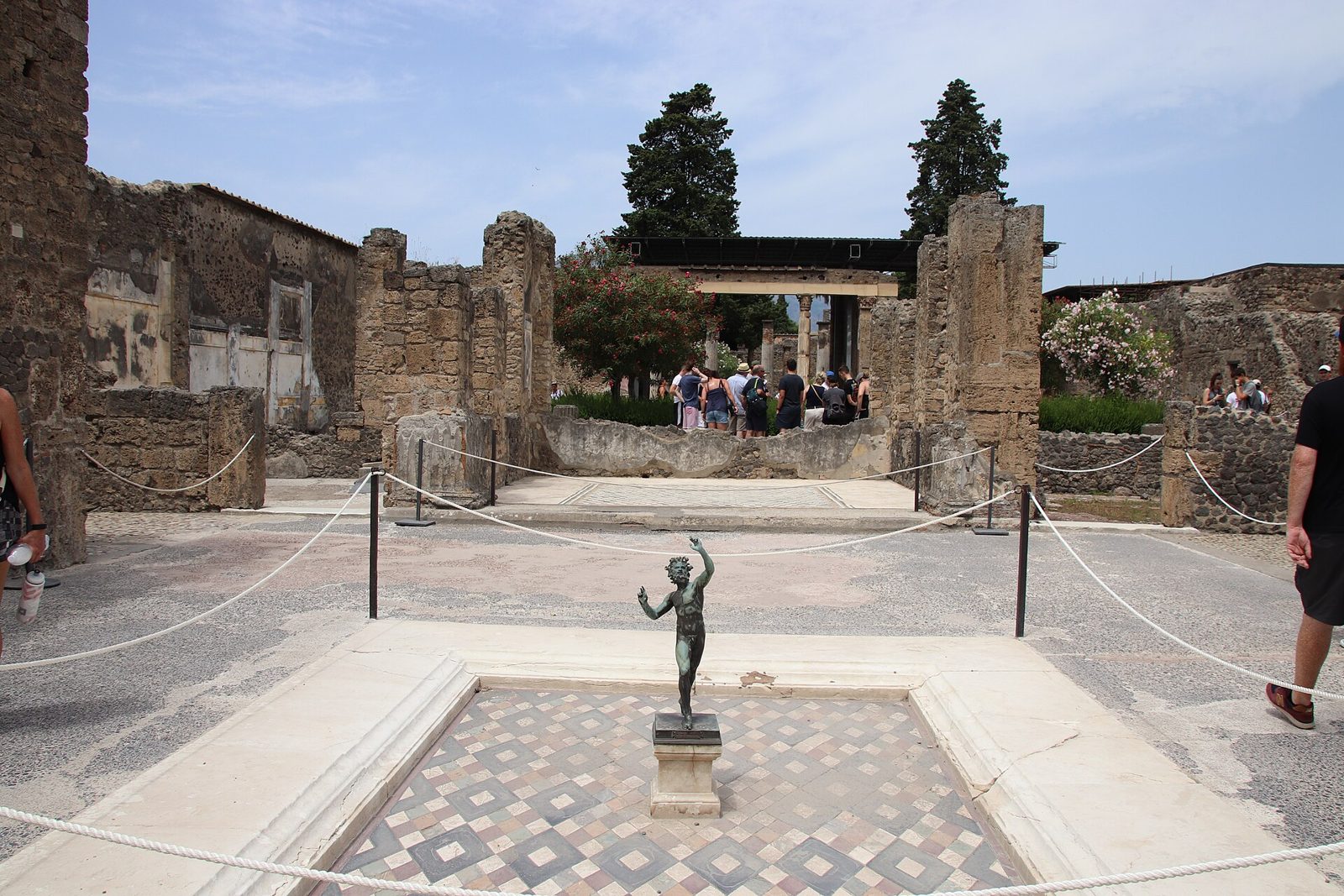
One of the largest houses in Pompeii fills an entire city block, about three thousand square meters, laid out in the second century BC, and at its door the Latin greeting HAVE, welcome, is set into the pavement. In the pool of the main atrium stands this bronze copy of the dancing faun that gave the house its name. The original, and the great mosaic of Alexander the Great whose copy lies deeper inside, are in the National Archaeological Museum in Naples. On the walk, this is where the strange cloud first rises across the bay.
The Roman Streets
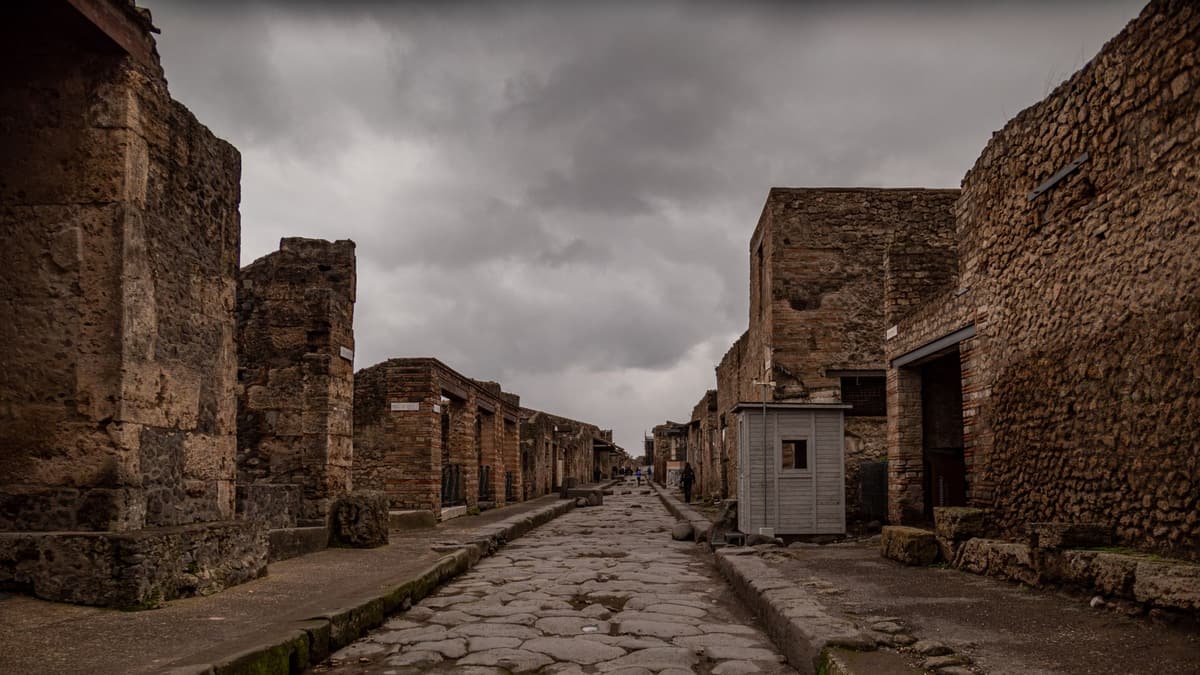
Pompeii's streets are paved with big blocks of hard volcanic stone between raised sidewalks, and the walk follows several of them, among them Via dell'Abbondanza, the town's main street, from the Stabian Baths east toward the thermopolium. On day one, from the early afternoon, pumice fell on these streets at an average of about 15 centimeters an hour, and by the next morning about three meters covered the city. Most people left while they could. Distances that look tiny on a map feel different once you know that.
Thermopolium of Vetutius Placidus
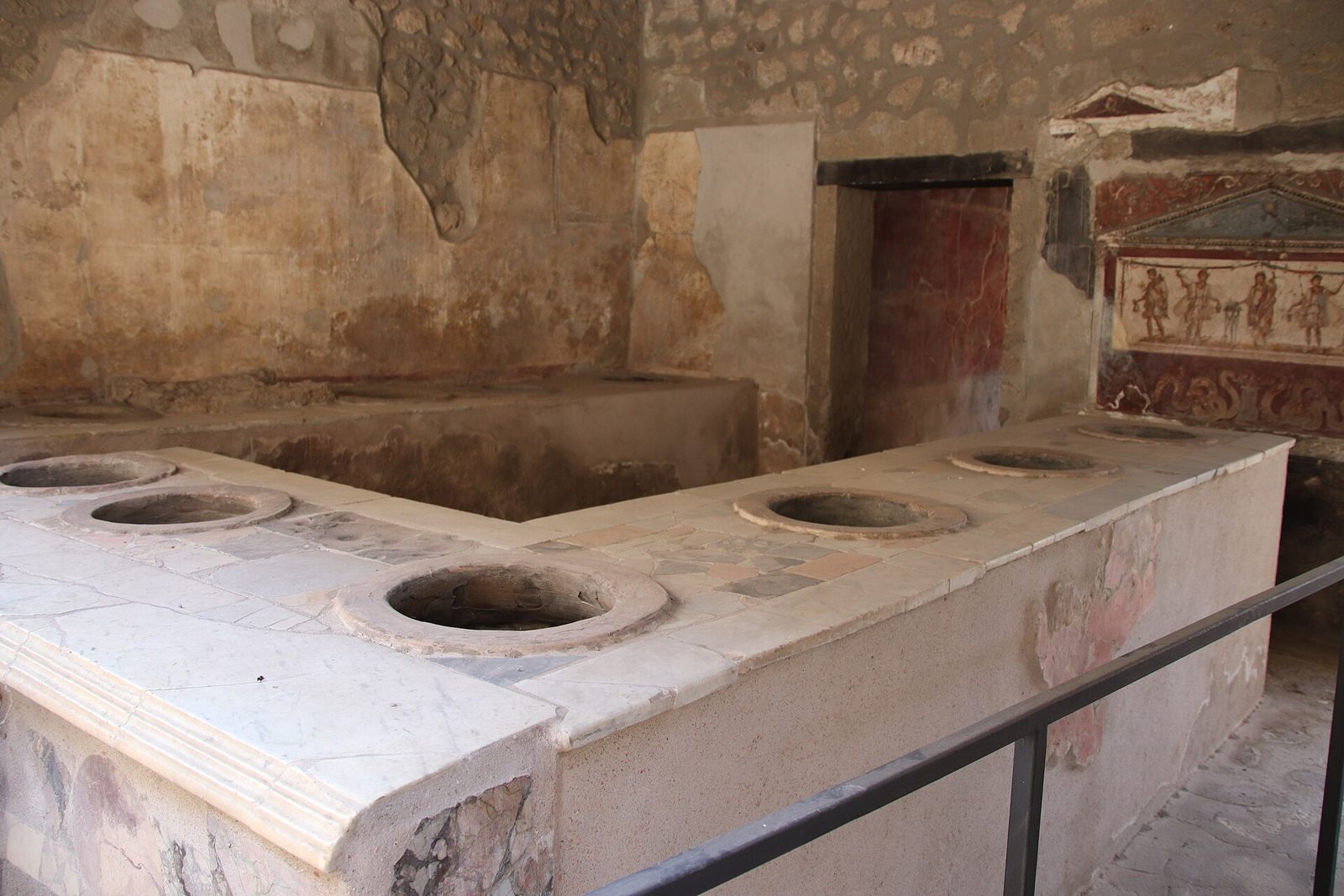
A Roman street counter like this one served hot food and drink, and the round openings in its marble top held big storage jars set into the masonry. This is the Thermopolium of Vetutius Placidus on Via dell'Abbondanza, and the painted household shrine on its back wall is still well preserved. At the time of writing it's visible only from the street. Across the road, in the House of the Painters at Work, a room was being redecorated, its preparatory drawings still on the wall, interrupted when the second morning's hot currents swept into town.
Amphitheatre and Large Palaestra
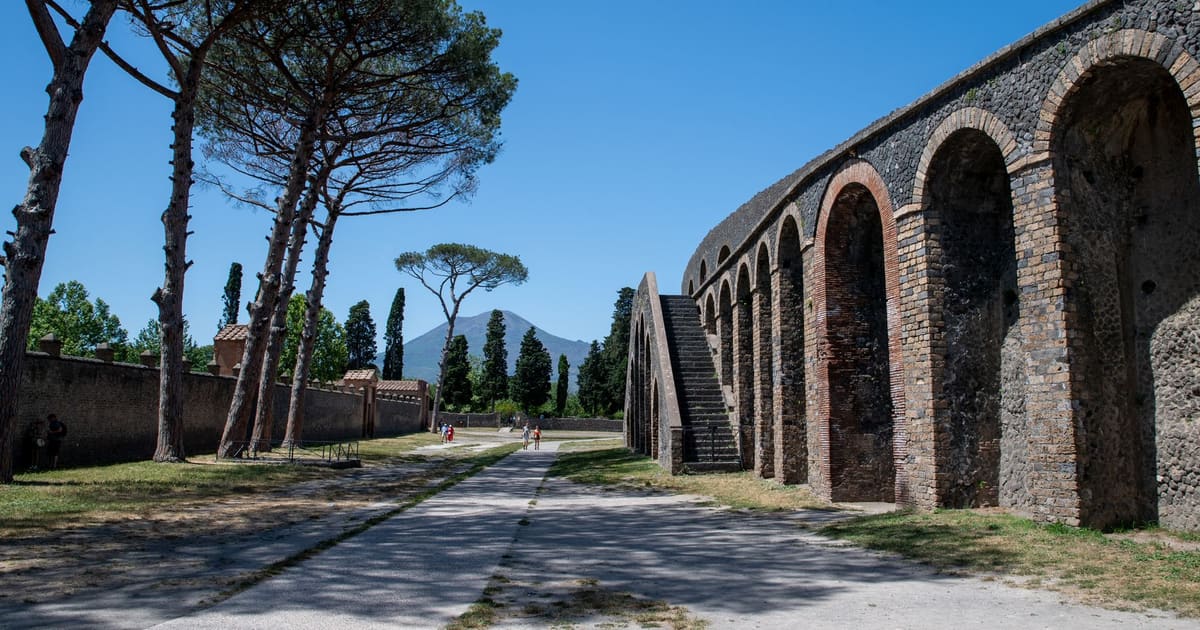
These arches belong to the amphitheatre, and opposite it lies the Large Palaestra, a huge exercise ground about 140 meters long built under Augustus, with colonnades on three sides and a pool in the middle. Many victims were found there who had come looking for shelter or a way out. Since March 2026 its colonnades have held a permanent memorial with 22 casts, a reconstructed column of ash and pumice about four meters tall, and finds of plants and animals. The casts are plaster poured into the hollows the bodies left, so please keep your voice low.
Consigue tu audioguía en 3 Pasos Sencillos
Todo en la app gratuita Walk With Me, y las primeras paradas de cada tour se pueden probar gratis.
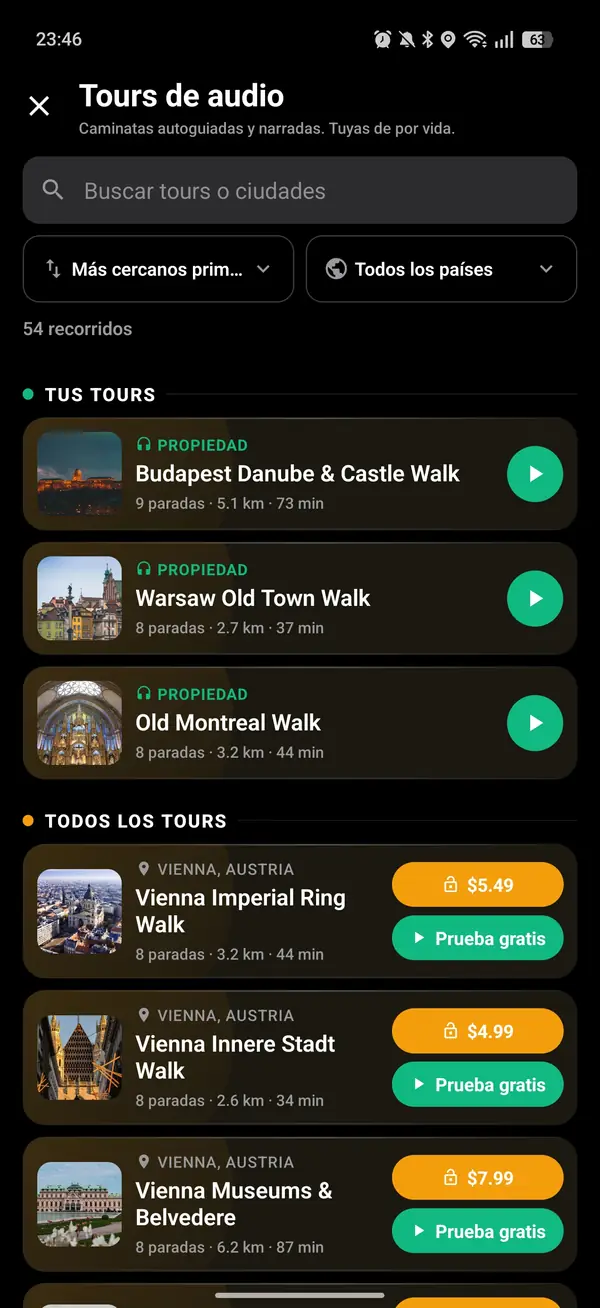
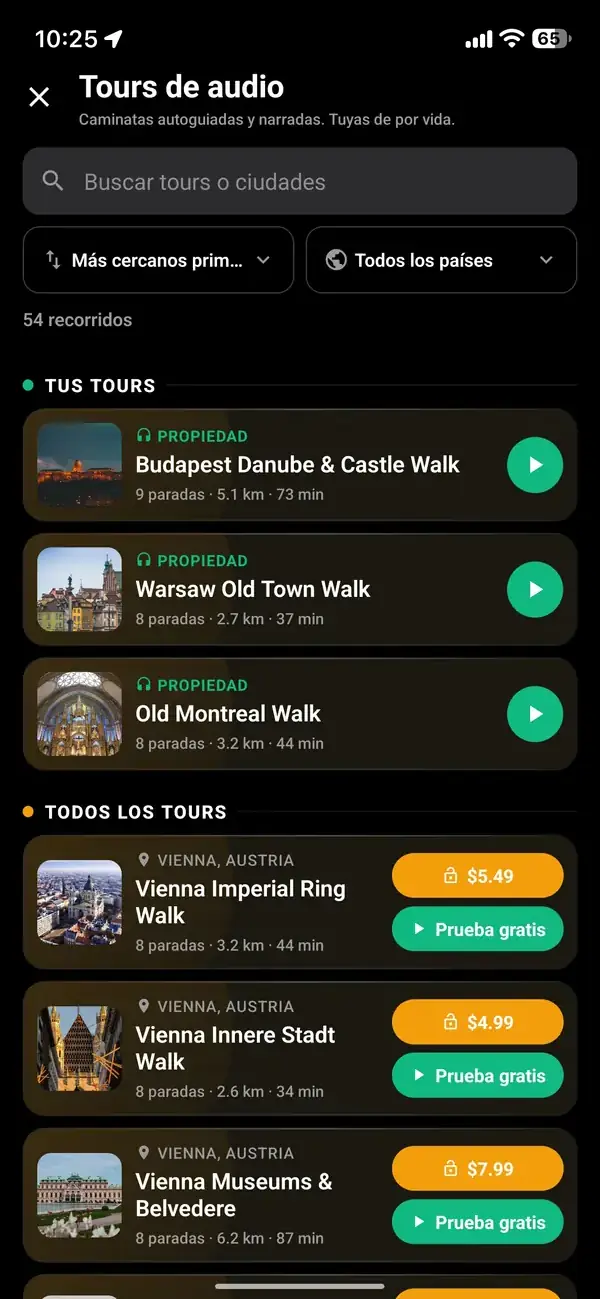
Toca los auriculares dorados y elige un tour
01
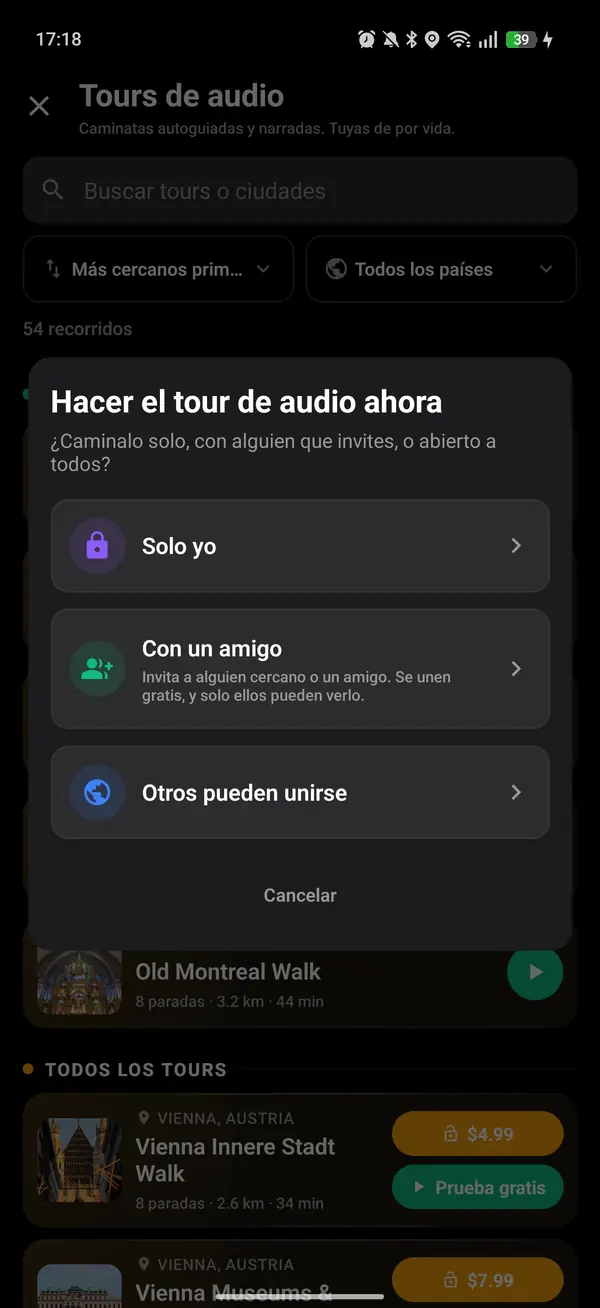
Camina solo o invita a alguien
02
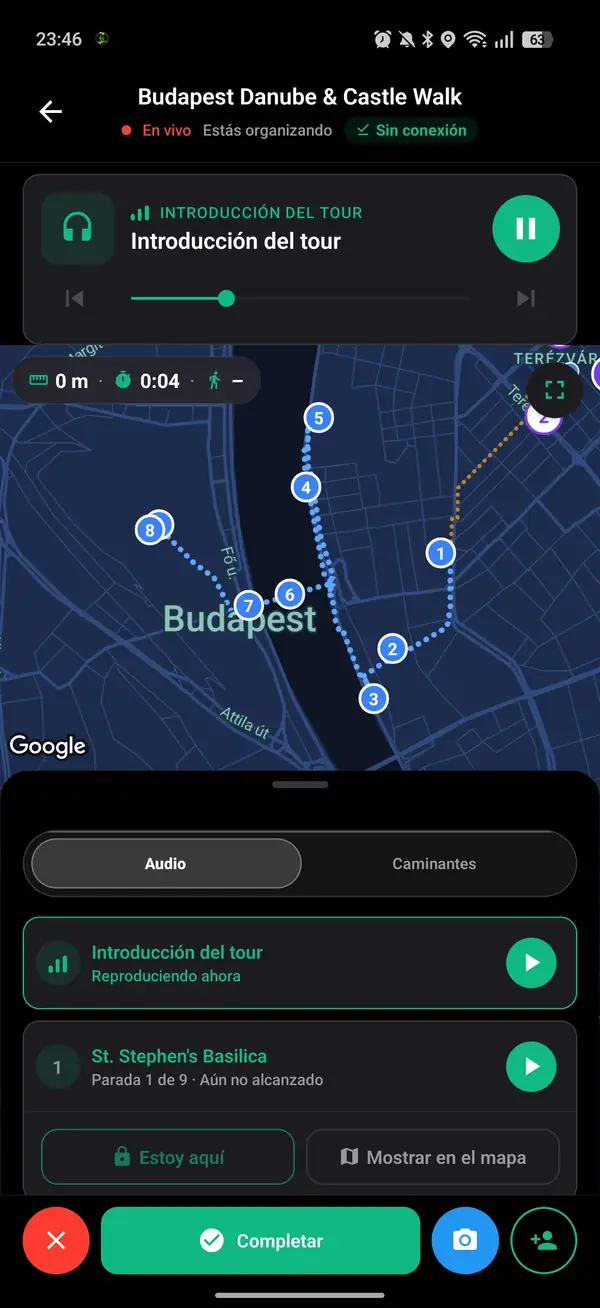
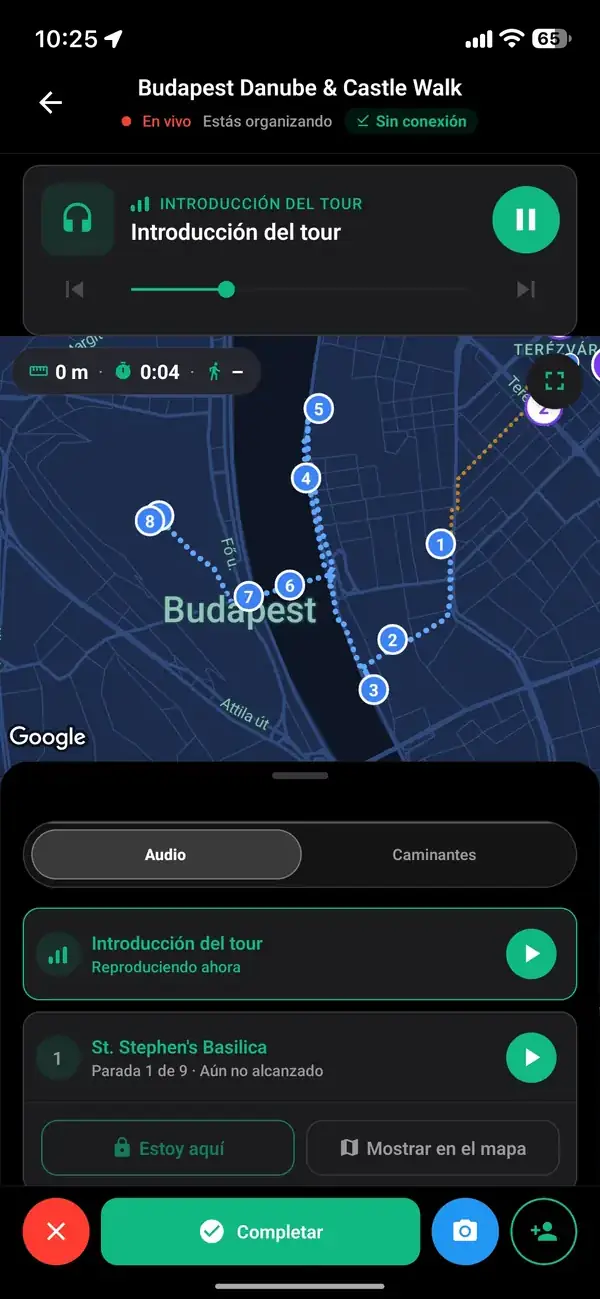
Pulsa reproducir y camina
03
Hechos a mano para tu tiempo en la ciudad
Estos tours no son una lista de monumentos que tachar. Están pensados para recorrerse despacio, con los auriculares puestos y la mirada en la ciudad.
Meditativos e inmersivos
Cada historia se cuenta donde ocurrió. La app suena al llegar a una parada, un toque inicia la historia y el tramo entre paradas es tuyo para disfrutarlo a tu ritmo.
Hechos a mano, con cuidado
Elegimos nosotros mismos cada ruta y cada parada y damos forma a cada historia con cuidado, para que tu tiempo en la ciudad vaya a los lugares que más merecen la pena.
Mejor en compañía
Todo paseo es mejor con alguien al lado, así que si puedes llevar a un amigo, te animamos de verdad a hacerlo. Por eso una sola compra cubre a todas las personas que invites: se unen a tu tour gratis.