
October 11, 2026 · 9 min read
Amsterdam Anne Frank Walking Tour
From the Hollandsche Schouwburg through the old Jewish Quarter, past the Dockworker and the Dam, to the Anne Frank House on the Prinsengracht.
589

October 9, 2026 · 11 min read

 A barátaid ingyen sétálnak
Minden túra ütemezett csoportos sétaként is fut, amelyhez csatlakozhatsz az appban.
További hangos túrák itt: Taipei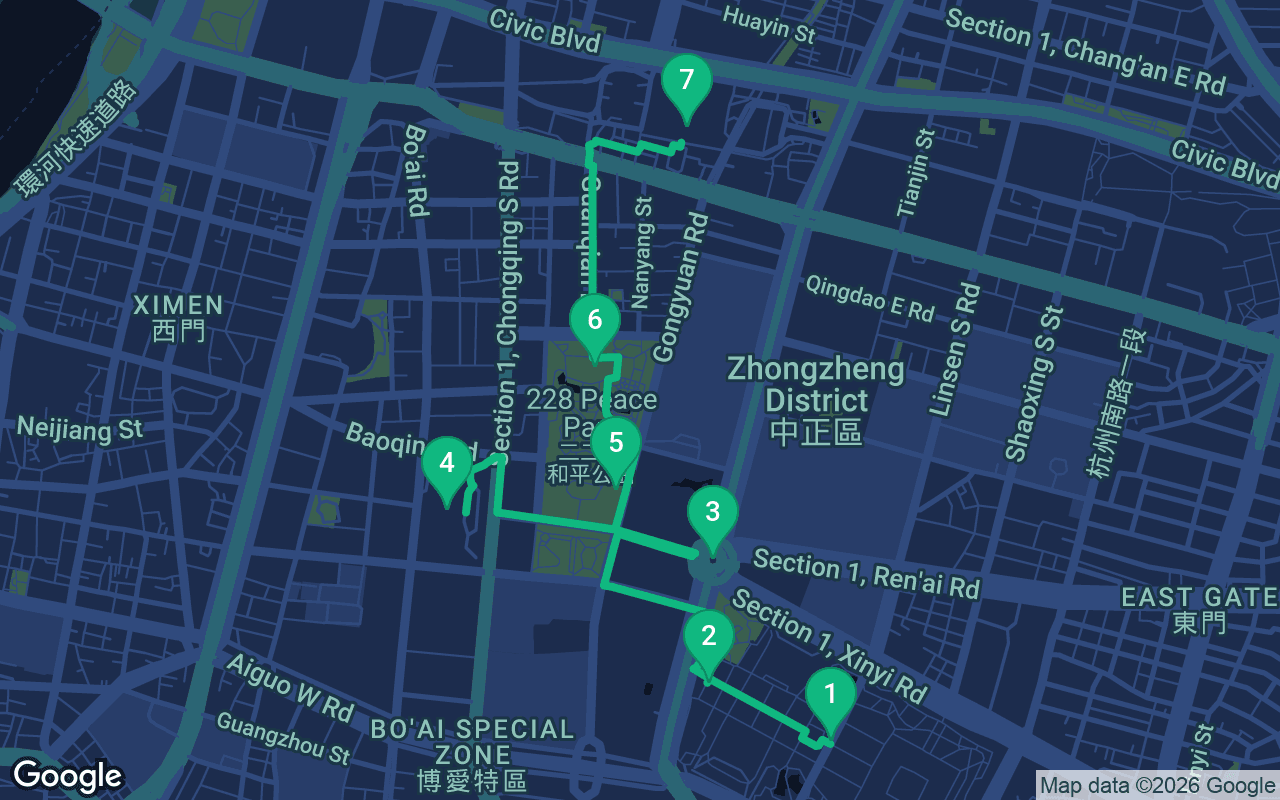
Nagyjából 3,6 km, körülbelül 50 perc kényelmes tempóban.
Ez a séta hangosvezetéssel is elérhető
Nyomj a lejátszásra az első 3 megállónál, és itt helyben meghallgathatsz egy 30 másodperces részletet a narrációból. Az alkalmazásban a bevezető és ez a 3 megálló teljes hosszában ingyenes, és mindegyik hangjelzéssel szól, amint megérkezel. A teljes narrált túra mindössze $9.99 összegért a tiéd lehet, ami egy egyszeri, örökre szóló vásárlás.
Működik Garmin, Komoot, Strava, OS Maps és bármilyen GPX alkalmazással.
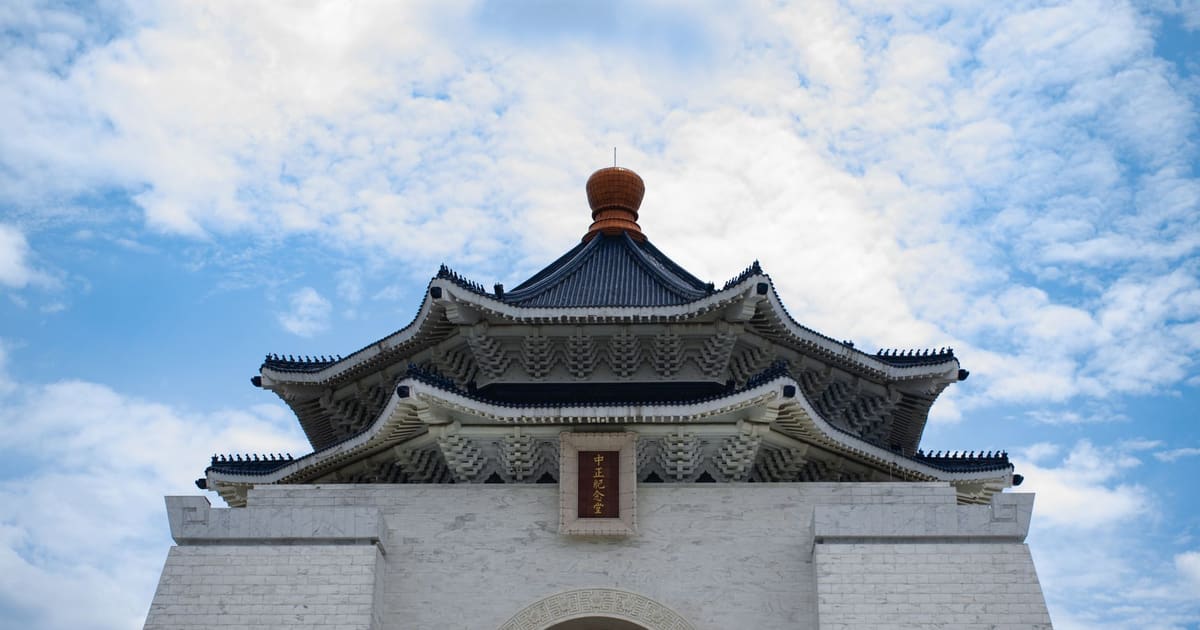
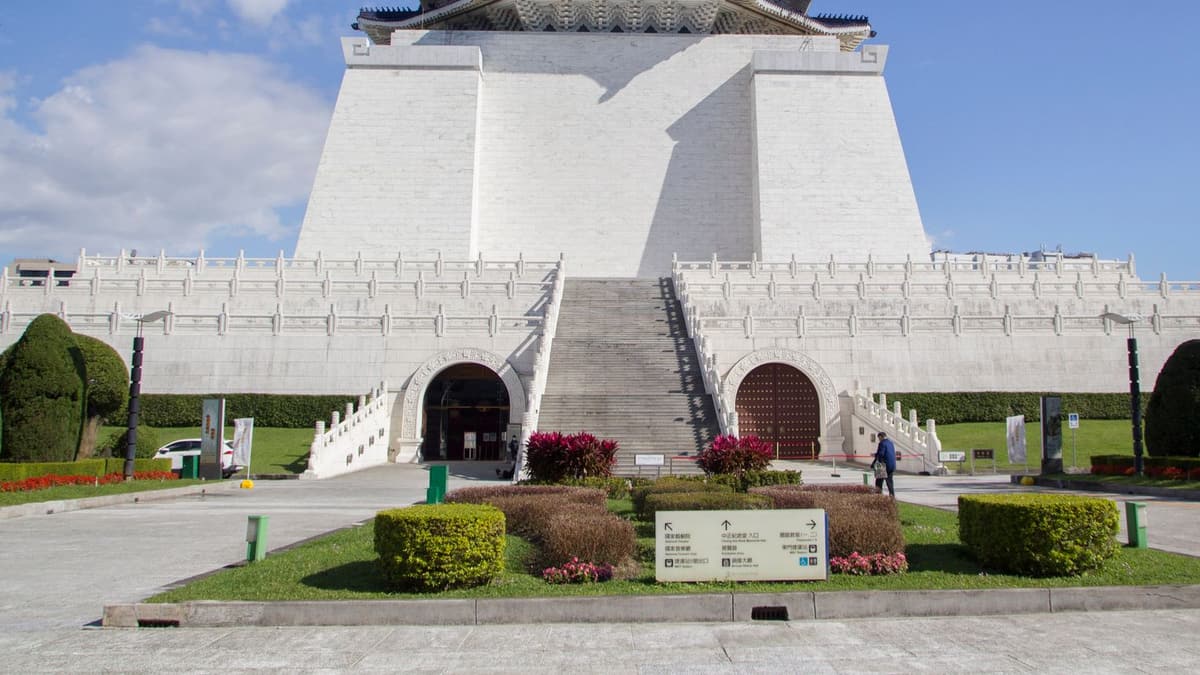
Taipei's political heart is a compact grid of wide boulevards, banyan-shaded parks and grand government buildings, and nearly every one of them holds a piece of the island's last century and a half. This walk starts at the white hall built to remember Chiang Kai-shek, passes a Qing dynasty city gate and the tower of the old Japanese governors' palace, pauses at the museum of the 228 Incident in a leafy park, and ends at Taipei Main Station, where you can step straight onto the metro. It covers about three and a half kilometers on flat ground, and it is one of the best self-guided walking tours for understanding how modern Taiwan came to be. You will read the city in layers: Qing walls, Japanese colonial architecture, the monuments of the martial law years, and the places where Taiwanese people have since argued, openly and often passionately, about how all of it should be remembered.
The walking alone takes under an hour, but give yourself two to three hours, and half a day if you want to go inside the museums. The route is flat and paved, with wide sidewalks, though you will cross some very large roads, so use the crossings and underpasses and be patient with the lights. Taipei is hot and humid from roughly May to October, and sudden afternoon downpours are common, so carry water and an umbrella, which doubles as a sunshade. Typhoons can arrive in summer and early autumn, and outdoor ceremonies are cancelled in rain. The good news is that convenience stores sit on almost every block for a cold drink, and 228 Peace Park near the end offers deep shade. Many museums in Taiwan close one day a week, often Monday, and the Presidential Office opens to visitors only at set times with photo ID, so check before you go. The nearest metro station to the start is Chiang Kai-shek Memorial Hall, on the red and green lines. The memorial museum on this route deals with painful history, so a quiet voice inside is appreciated.
Stand at the foot of the great staircase and look up. The hall rises white against the sky, crowned by an octagonal roof of deep blue glazed tiles, and the blue and white are no accident: they echo the blue sky and white sun emblem of the Republic of China. Count the steps if you like. There are 89 of them, one for each year of Chiang's life by the traditional East Asian way of reckoning age. Inside, at the top, a huge bronze statue of him sits facing out toward the city. Chiang led the Republic of China on the mainland through the war with Japan and the civil war that followed, and in 1949, after losing that war to the Communists, he moved his government to Taiwan. He ruled here until his death in 1975, under martial law that lasted from 1949 until 1987, and this hall opened in 1980. How to remember him is one of the most debated questions in Taiwan. Supporters credit him with defending the island and laying the foundations for its later growth, while many others remember the repression of those decades. In 2024 the honor guards were taken away from the statue, and the hourly drill, if it is not raining, now takes place outside on the plaza in front of the hall. When you are ready, walk back down and head west across the plaza, between the two red-pillared halls of the National Theater and National Concert Hall, to the great white gate about five minutes away.
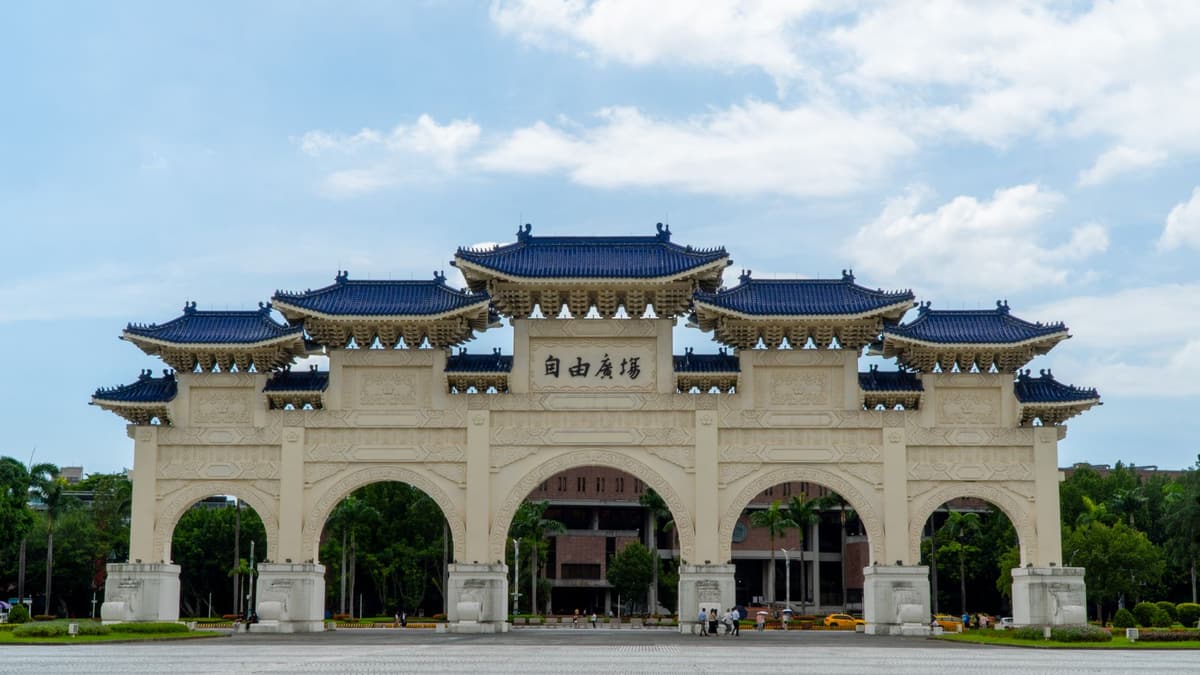 The archway in front of you is the formal entrance to the whole memorial park, five white arches under blue tiled roofs, built on a scale meant to impress anyone arriving from the city. Walk through to the outer side and look up at the large characters on the central arch. They read Liberty Square, and they have only been there since late 2007. Before that, the inscription read Da Zhong Zhi Zheng, roughly "great centrality and perfect uprightness," a phrase that contains Zhongzheng, Chiang's own given name. The government of the day swapped the plaque amid protests and scuffles, and the name Liberty Square stayed even after a later government restored the original name of the hall itself. The new name fits what happened on the paving behind you. In March 1990, thousands of students gathered here in what became known as the Wild Lily movement, sitting in for days and calling for democratic reform. President Lee Teng-hui met their representatives, and within a few years Taiwan held its first full legislative elections and, in 1996, its first direct presidential election. The square has hosted rallies, concerts and festivals ever since, and it is the city's favorite stage for both celebration and dissent. From the archway, turn right and walk north along Zhongshan South Road for about five minutes. The gate you are heading for stands in the middle of a traffic circle ahead.
Stop on the sidewalk at the edge of the traffic circle and look at the gate rising from the island of grass in the middle. Its name, Jingfu, speaks of great good fortune. Taipei only got a city wall late. The Qing court made the town the seat of a new prefecture in 1875, and the stone walls, with five gates, were finished in 1884. They did not last long. Japan took Taiwan in 1895, after defeating the Qing in war, and the new colonial government tore the walls down around the turn of the century, replacing them with broad tree-lined boulevards. The wide road you just walked runs along the line of the old east wall. Four of the five gates were spared. Look closely and you can see two different eras stacked on top of one another. The heavy stone base with its arched passage is the original Qing work. The tower on top, with its red columns and sweeping glazed roof, is far newer. In 1966 the government rebuilt this gate and two others in the style of northern Chinese palaces, replacing the plainer southern Fujian style they had been built in. It is a small lesson in how each government that ruled here reshaped the city to tell its own story. Only the North Gate, across town, kept its original form. From here, cross to the western side of the circle and walk west along Ketagalan Boulevard, the broad avenue with the tower at its end, for about eight to ten minutes.
Mit tartalmaz
Túráink meditatívnak és magával ragadónak készültek: mozogsz, és egyszerűen hallgatod. Együtt mindig jobbak, és az alkalmazás szinkronban játssza le a narrációt, így te, a párod és a barátaid ugyanabban a pillanatban hallhatjátok az egyes megállókat.
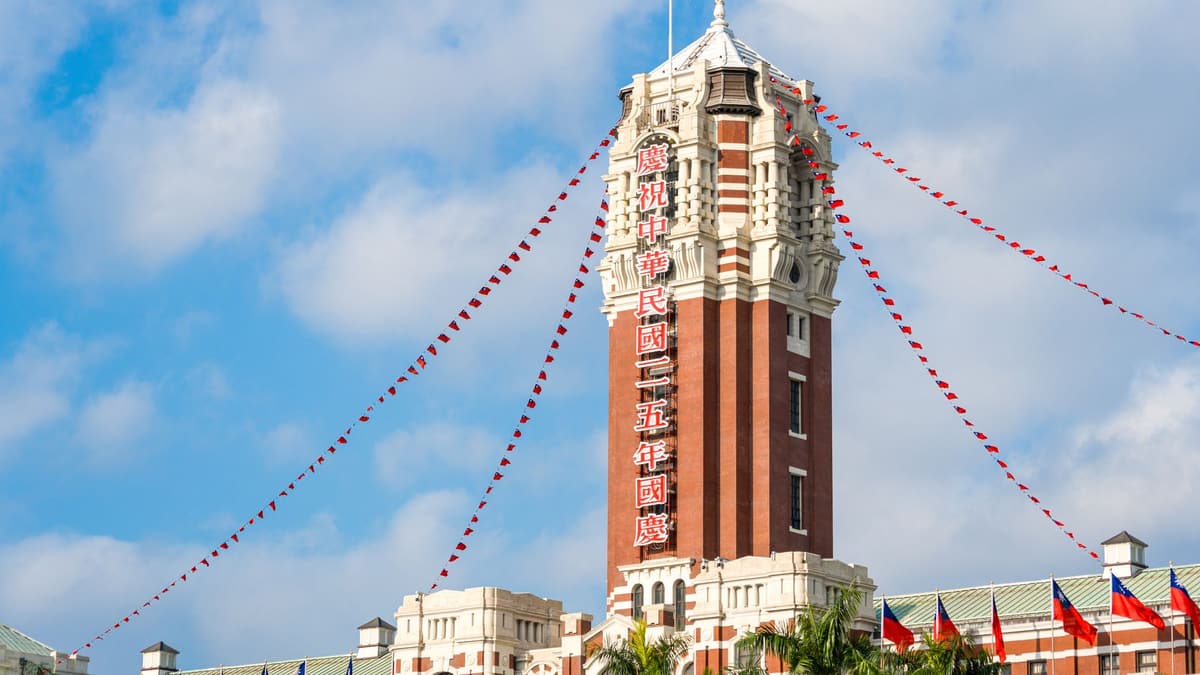
The red brick and white stone palace ahead was built between 1912 and 1919 as the Office of the Governor-General, the seat of Japan's colonial government in Taiwan.
A megálló folytatása a teljes hangos túrában hallható.
This pale, modest building was put up in 1930 as the Taipei Broadcasting Station, the voice of Japanese colonial radio, and its place in history comes from a single day.
A megálló folytatása a teljes hangos túrában hallható.
At the northern edge of the park stands the oldest museum in Taiwan, founded in 1908. The building you see, with its row of Greek columns and its central dome, opened in 1915, and it was built to honor two men who shaped the colonial…
A megálló folytatása a teljes hangos túrában hallható.
The walk ends at the heart of Taiwan's transport network.
A megálló folytatása a teljes hangos túrában hallható.
Tedd meg ezt a sétát másokkal a következő tervezett túrán.
Körülbelül 3,6 km, nagyjából 50 perc kényelmes tempóban · 7 megálló
A barátaid ingyen sétálnakOctober 11, 2026 · 9 min read
From the Hollandsche Schouwburg through the old Jewish Quarter, past the Dockworker and the Dam, to the Anne Frank House on the Prinsengracht.
October 11, 2026 · 11 min read
From Van Houten's street by the Vondelpark past Leidseplein, the Rijksmuseum passage and the famous canal bench to the Anne Frank House.

October 11, 2026 · 10 min read
Follow the last days of April and May 1945 from the Anhalter Bahnhof ruin past the Gestapo site and Brandenburg Gate to the Moltke Bridge and the Reichstag.
