




 $11.99Головне в місті
Аудіо Delhi Пішохідні екскурсії
Самостійні пішохідні прогулянки з аудіосупроводом по Delhi. Купуйте екскурсію один раз, завантажуйте та слухайте розповідь на кожній зупинці, гуляючи у власному темпі.
Екскурсії від $11.99
Друзі гуляють безкоштовно. Одна покупка покриває всіх учасників вашої прогулянки. Почніть тур, запросіть друзів приєднатися, і він відтворюватиметься на телефоні кожного у вашій групі.
5.0 на Google Play
Аудіоекскурсії по Delhi
Кожна екскурсія, це спланований маршрут із розповіддю на кожній зупинці. Купуйте один раз і користуйтеся назавжди, без жодних підписок.
$11.99Головне в містіЧого очікувати від аудіоекскурсії по Delhi
A Delhi audio walk crosses centuries in a single afternoon, from the white colonnades of Connaught Place down into a medieval stepwell, past an eighteenth century observatory, and into a Hindu temple and a Sikh gurudwara, with narration timed to each stop so you're never checking a map at a crowded roundabout.
The Connaught Place Walk begins in the Inner Circle of Connaught Place, under its white colonnaded arcades, then heads southeast to Agrasen ki Baoli, a stepwell where more than a hundred stone steps drop below the office towers around it. From there you'll cross to Janpath, the wide avenue once called Queen's Way, with its street market of bags, jewelry and handicrafts from the Himalayan region.
The route continues to Jantar Mantar, an eighteenth century observatory of giant rose red instruments built to track the sun and stars, then on to the Hanuman Mandir on Baba Kharak Singh Marg, where bells and incense mark one of Delhi's busiest Hindu temples. From there you'll reach the golden dome of Gurudwara Bangla Sahib, where you can walk around the sacred pool and the free community kitchen.
The walk finishes past the Gole Dak Khana roundabout, one of Lutyens's great traffic circles, and ends at the quiet grounds of Sacred Heart Cathedral. In total it covers 5.4 kilometers, about 78 minutes of walking, though the stops along the way are worth lingering over.
Де погуляти в Delhi
Кілька зупинок, які ви проходитимете, і чому біля них варто затриматися.
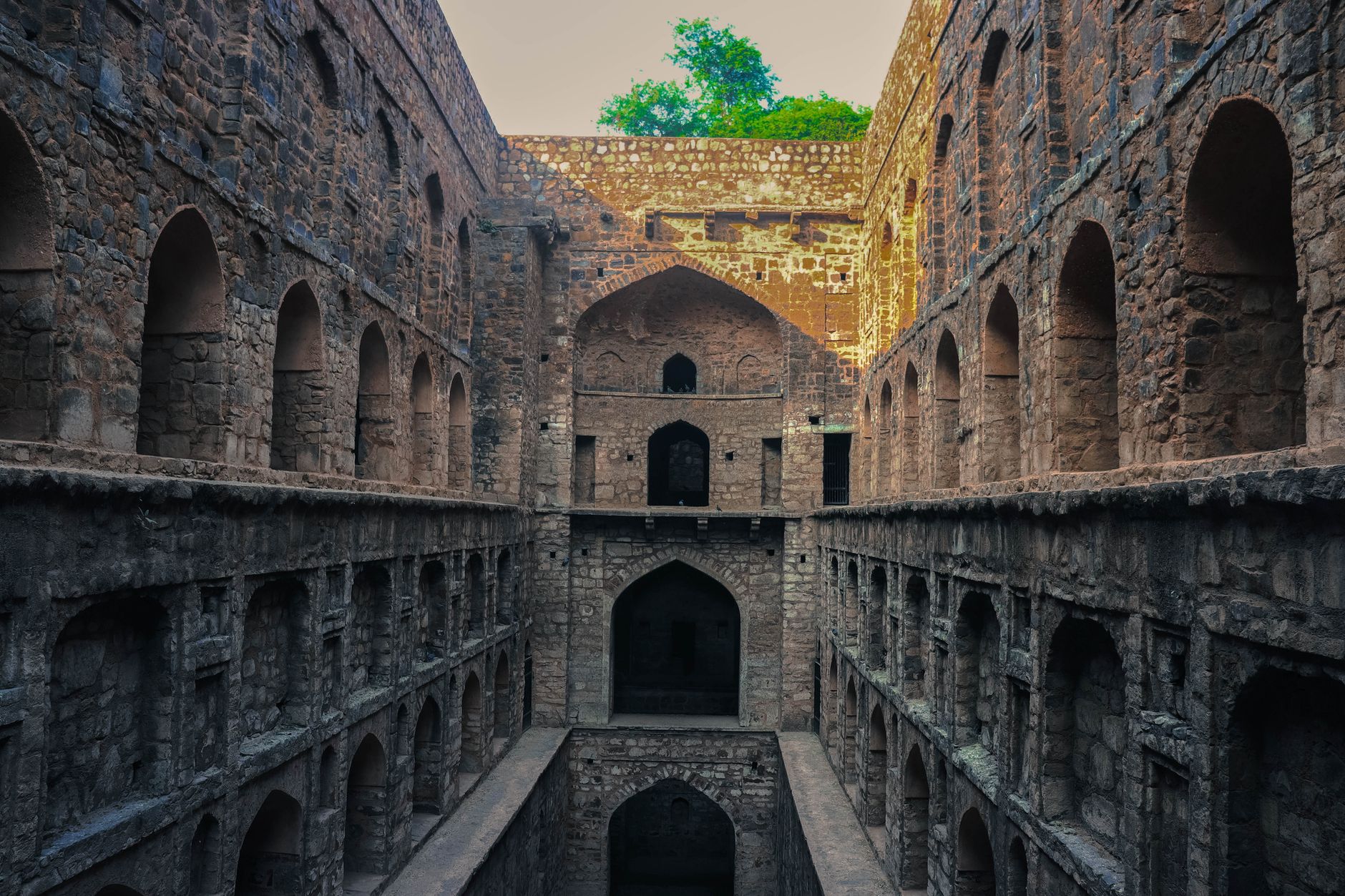
Agrasen ki Baoli
Tucked between office towers in central Delhi, Agrasen ki Baoli is a medieval stepwell where a narrow flight of stone steps drops more than a hundred steps down between high walls lined with arched niches. Stepwells like this one were built across northern India to reach water through the dry season, and people once walked down to fill their pots or simply to escape the heat in the cool stone chambers below. Nobody knows exactly when this one was built, though it's generally dated to the medieval period and was likely rebuilt more than once over the centuries. Today pigeons and bats move between the arches, and walking down even partway is enough to feel the temperature drop around you.

Connaught Place
Connaught Place is the commercial heart of New Delhi, a ring of white, two story buildings wrapped in tall columns and deep, shady arcades that have sheltered shoppers since the early 1930s. Everyone still calls it CP, even though it carries an official name today, and its blocks are marked by letters that make it easy to arrange to meet someone under the arches. At the center lies a green lawn sitting over one of the city's busiest metro stations, with a huge Indian flag flying above it. Walk slowly under the colonnade and you'll find shops and cafes tucked into arcades built to keep shoppers out of the sun and the monsoon rain alike.
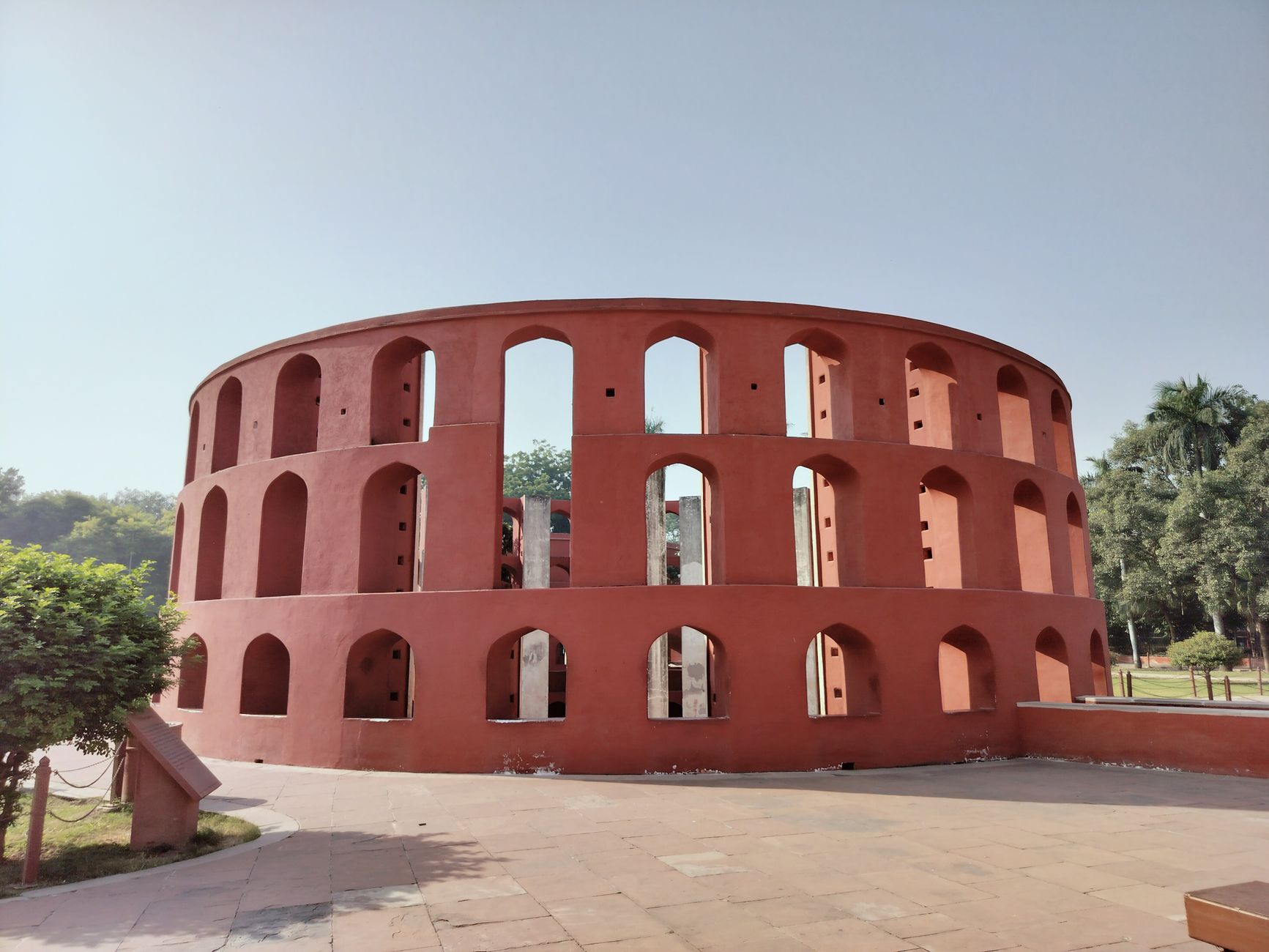
Jantar Mantar
Jantar Mantar is an eighteenth century observatory where huge, strange shapes in rose red plaster rise out of a quiet garden: ramps, curved walls, giant bowls and a towering triangle with a staircase running up its side. They look like modern sculpture, but they're scientific instruments built in 1724 by Maharaja Jai Singh the Second to track the sun, moon and stars. The largest, the Samrat Yantra, is a giant sundial whose shadow tells the time on the curved quadrants beside it, and nearby the Jai Prakash and Ram Yantra instruments once mapped the stars with a precision that was remarkable for its day. Walking among them feels like wandering through an abstract garden that happens to also be a working clock.
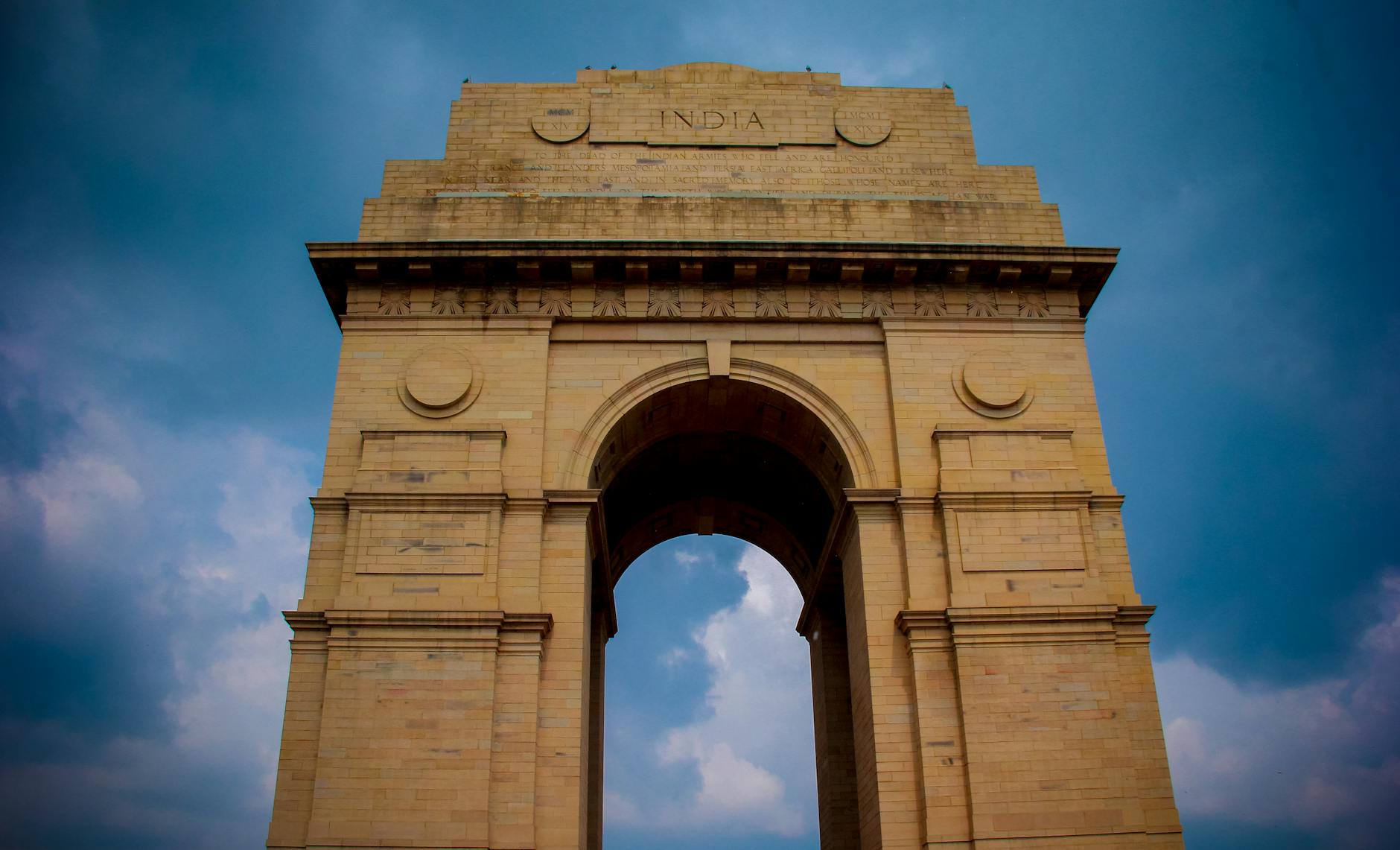
India Gate
At the far end of the ceremonial avenue that begins near Connaught Place and Janpath stands India Gate, a soaring sandstone arch built in the 1920s to honor the Indian soldiers of the British Indian Army who died in the First World War and the campaigns that followed, their names carved into the stone. It sits at one end of Rajpath, the wide processional avenue running toward the presidential palace, lined with lawns and shade trees where Delhi families gather in the evenings. The arch is lit at night and stands beside a flame honoring unknown soldiers. Even short of this point, the walk crosses the same Lutyens avenues near Connaught Place.

Humayun's Tomb
South of Connaught Place, in a walled garden off the busy Mathura Road, stands Humayun's Tomb, the red sandstone and white marble mausoleum built in the 1560s for the Mughal emperor Humayun by his widow. It was the first grand garden tomb built in India, raised on a high platform at the center of a formal charbagh, a garden quartered by water channels, and its dome and symmetry are often said to have inspired the Taj Mahal a century later. Paths lead between the four quarters of the garden to the platform, where generations of the Mughal dynasty are buried. UNESCO has listed it as a World Heritage Site.
Почніть аудіоекскурсію за 3 прості кроки
Усе в безкоштовному застосунку Walk With Me, а перші зупинки кожної екскурсії можна послухати безкоштовно.
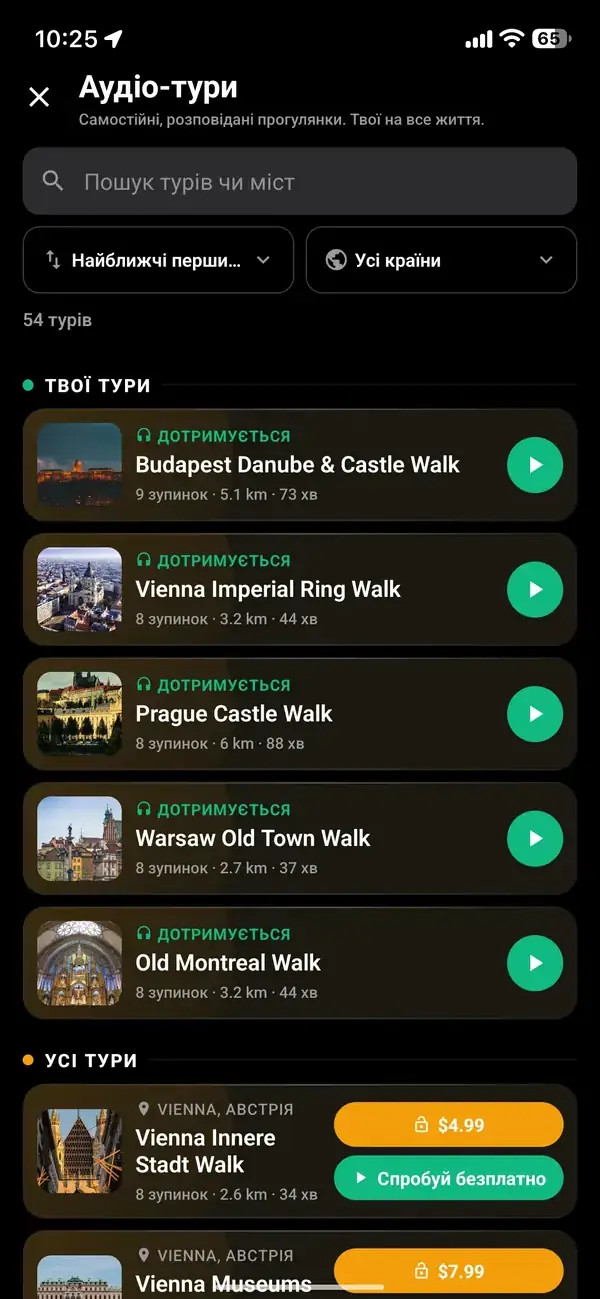
Торкніться золотих навушників і виберіть екскурсію
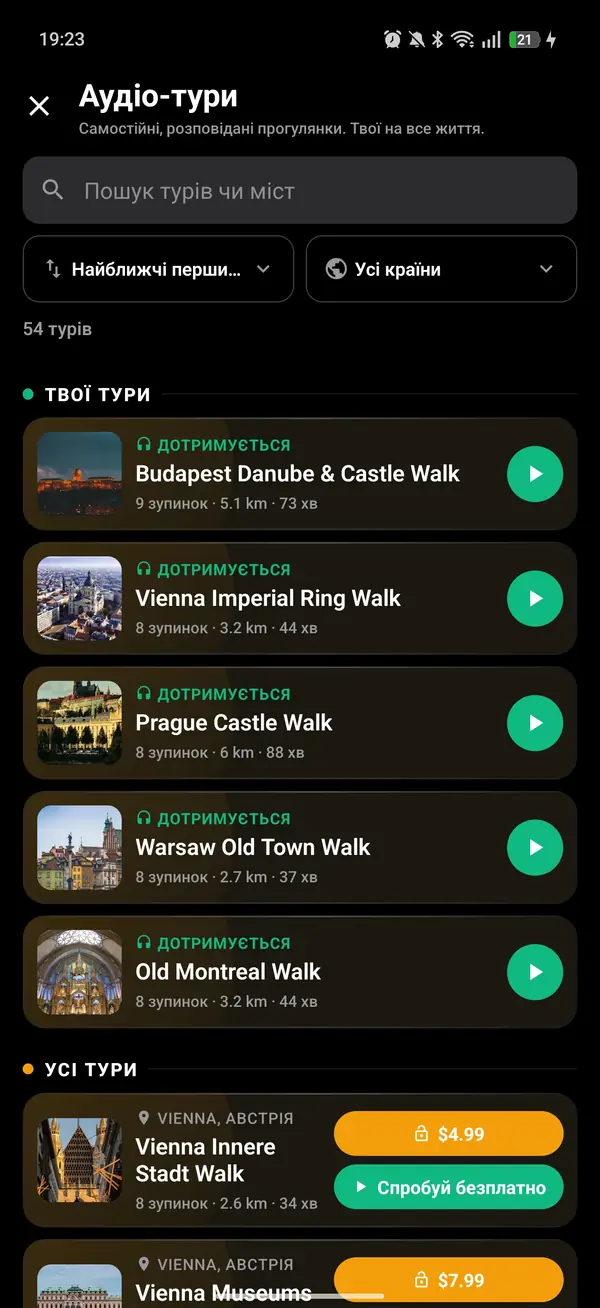
01
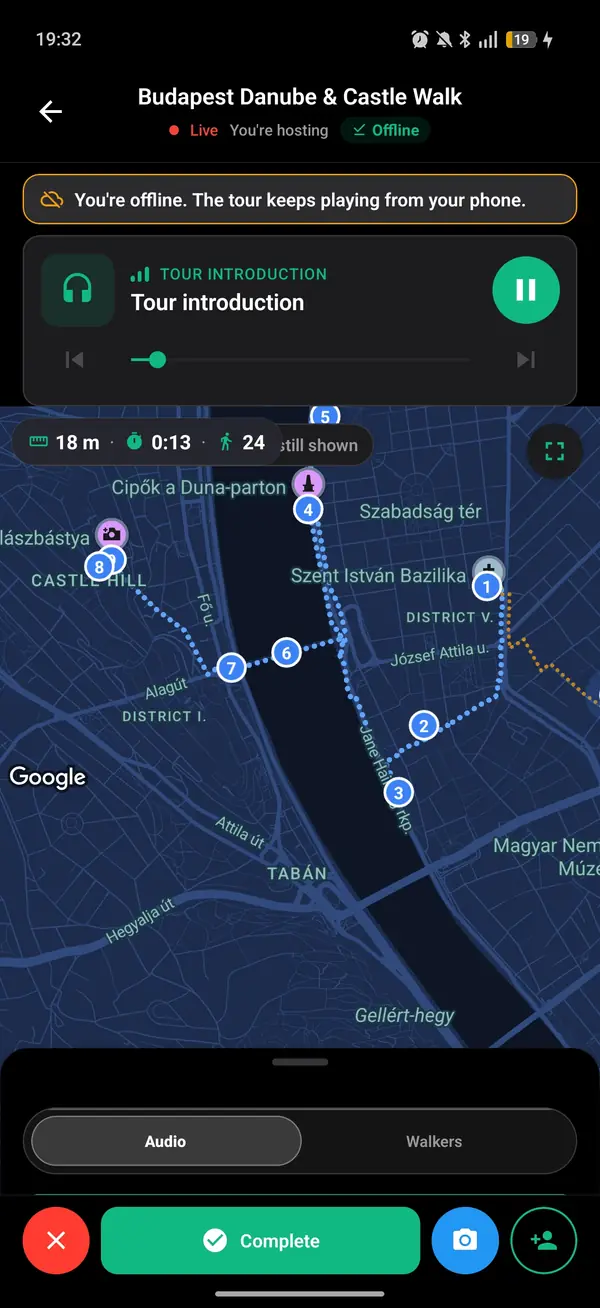
Ідіть самі або запросіть когось


02
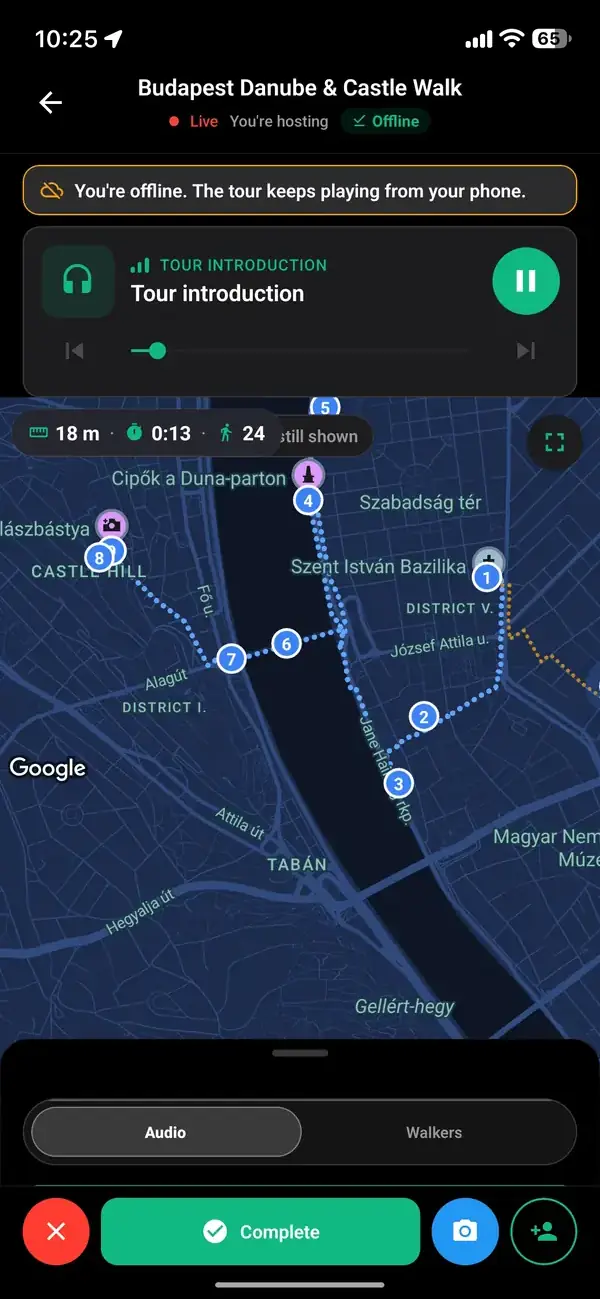
Натисніть «play» і йдіть
03
Створені з любов'ю для вашого часу в місті
Ці екскурсії не список пам'яток, які треба відмітити. Їх варто проходити неспішно, у навушниках і з поглядом на місто.
Медитативні та захопливі
Кожна історія звучить там, де вона сталася. Застосунок подає сигнал, коли ви доходите до зупинки, один дотик запускає розповідь, а шлях між зупинками належить вам, у вашому темпі.
Зроблені вручну, з турботою
Ми самі обираємо кожен маршрут і кожну зупинку та дбайливо створюємо кожну історію, щоб ваш час у місті пішов на місця, які справді того варті.
Удвох краще
Будь-яка прогулянка краща, коли поруч хтось є, тож якщо можете взяти когось із собою, дуже радимо це зробити. Саме тому одна покупка покриває всіх, кого ви запросите: вони приєднуються до вашої екскурсії безкоштовно.