




 $7.99Головне в місті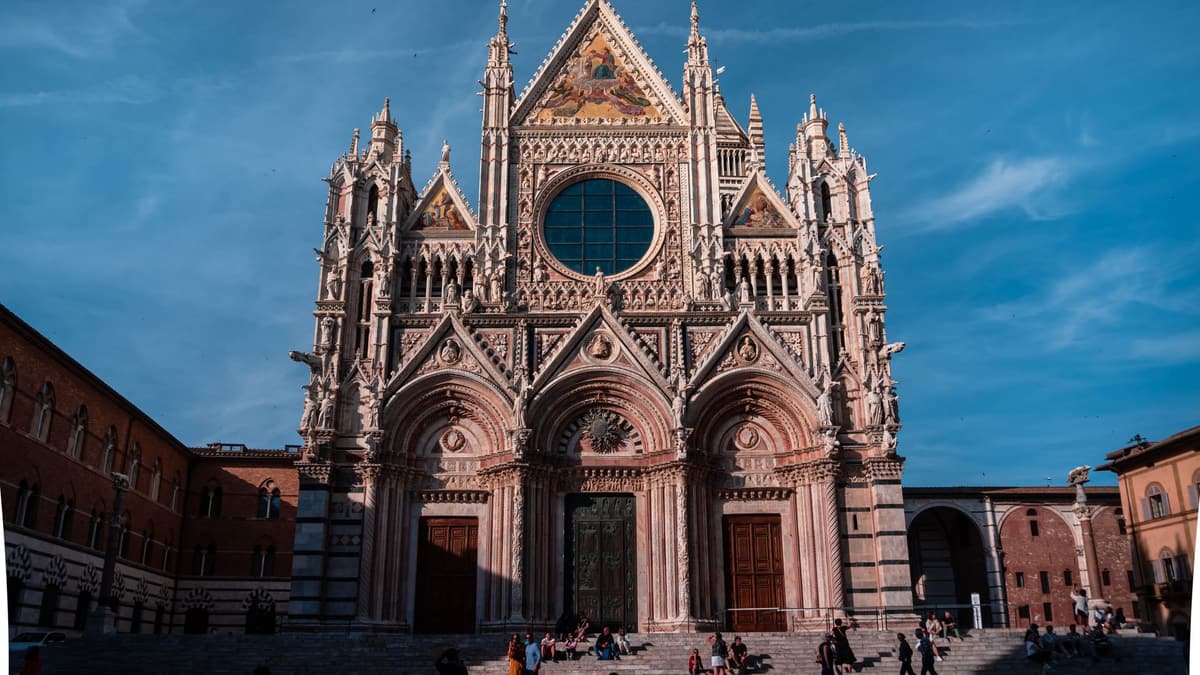
Аудіо Siena Пішохідні екскурсії
Самостійні пішохідні прогулянки з аудіосупроводом по Siena. Купуйте екскурсію один раз, завантажуйте та слухайте розповідь на кожній зупинці, гуляючи у власному темпі.
Екскурсії від $7.99
Друзі гуляють безкоштовно. Одна покупка покриває всіх учасників вашої прогулянки. Почніть тур, запросіть друзів приєднатися, і він відтворюватиметься на телефоні кожного у вашій групі.
5.0 на Google Play
Аудіоекскурсії по Siena
Кожна екскурсія, це спланований маршрут із розповіддю на кожній зупинці. Купуйте один раз і користуйтеся назавжди, без жодних підписок.
$7.99Головне в місті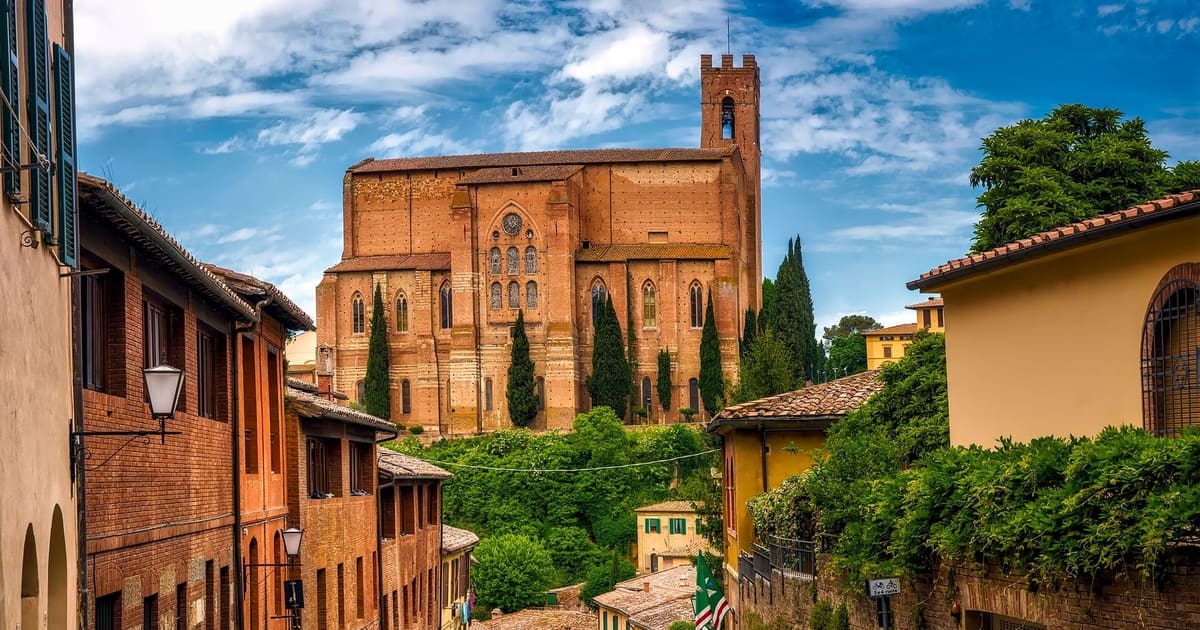 $8.99Головне в місті
Чого очікувати від аудіоекскурсії по Siena
A Siena audio walk climbs between the city's three steep ridges and the hollow where they meet, from the striped Duomo and the Campo where the Palio is run to the quiet northern lanes where Saint Catherine grew up, with narration timed to each stop as the hills do the rest of the work.
The Siena Campo and Duomo Walk comes in through Porta Romana, the city's grandest gate, then climbs past a hilltop church and a gallery of gold-ground Sienese paintings before dropping into the Piazza del Campo, the shell-shaped square where the Palio is run. It finishes at the baptistery and the black and white striped cathedral on the highest point of the old town. It's about 2 kilometers, roughly 33 minutes of walking, though the hills make sure you feel every one of them.
The Siena Saint Catherine Walk goes north instead, starting at Porta Camollia, the pilgrim gate on the old road from Canterbury to Rome, and crossing the ramparts of the Medici fortress that once held the city down.
From there it follows the life of Saint Catherine, Siena's own saint, down a steep valley to the Fontebranda fountain and the house where she was born, then back up to the bankers' square of Piazza Salimbeni and the vast Basilica di San Francesco. It's about 3 kilometers, roughly 44 minutes of walking, with one real climb in the middle.
Де погуляти в Siena
Кілька зупинок, які ви проходитимете, і чому біля них варто затриматися.
Piazza del Campo
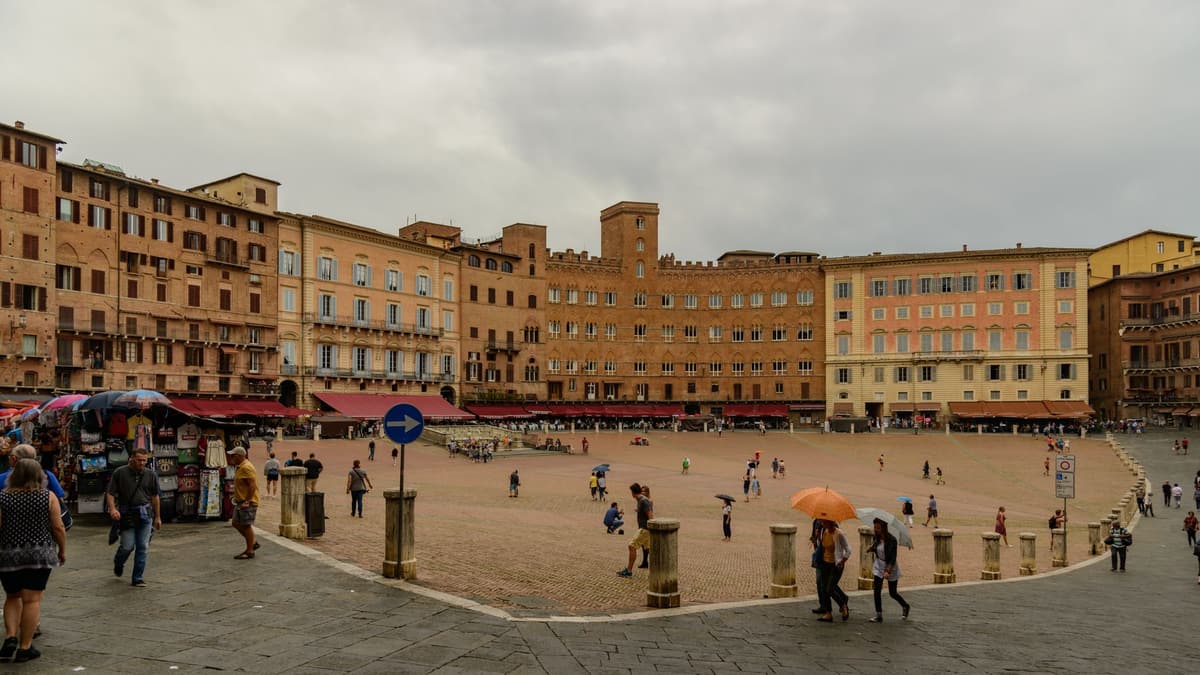
The Piazza del Campo slopes down like the inside of a shell toward the long brick front of the Palazzo Pubblico, the town hall, with the Torre del Mangia shooting up beside it. The paving is laid in red brick and divided by pale stone lines into nine sections, honoring the Nine, the merchants who governed Siena when the square took its shape around 1300. On an ordinary day it fills with market stalls, cafe tables and people cutting across. Twice a summer, the Palio transforms it completely: earth packed around the edge, crowds in the middle, and ten horses racing three laps of this sloping track in under two minutes.
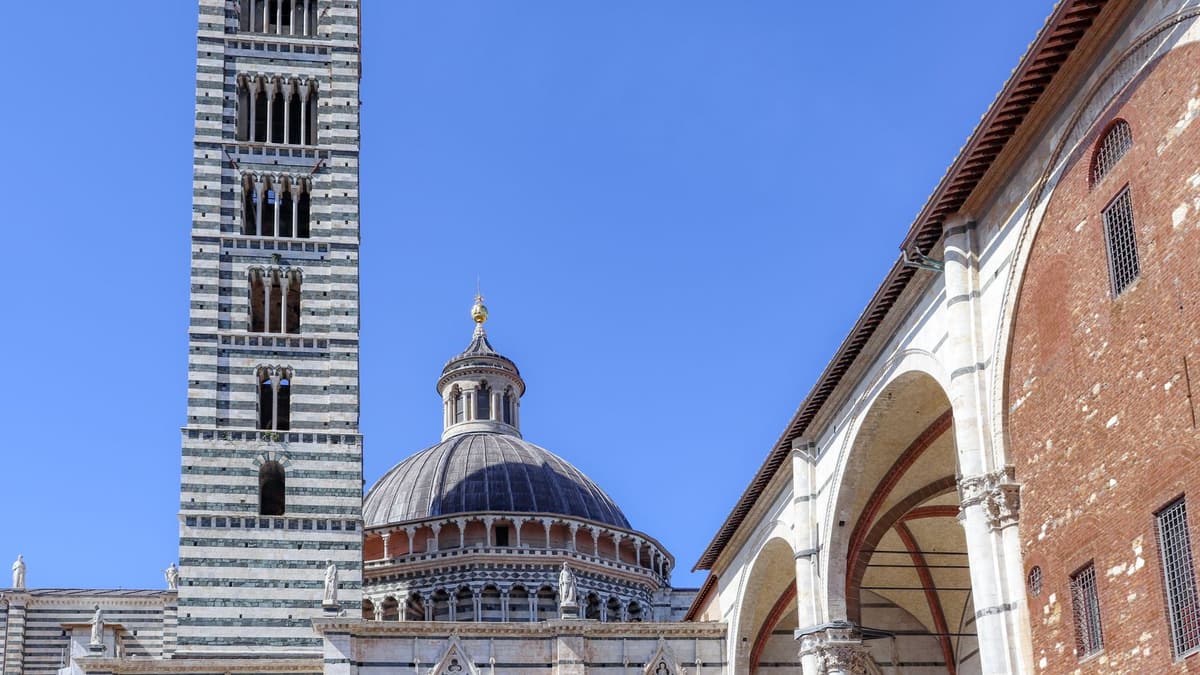
Siena Cathedral and the Baptistery
Bands of black and white marble wrap the Duomo's bell tower and walls, the colors of the Balzana, Siena's own shield, climbing every column inside and out. Tucked below and behind the cathedral, reached down a long flight of steps, is the Baptistery of San Giovanni, built into a lower church when the Duomo was extended over the edge of the hill in the fourteenth century. Its treasure is a hexagonal bronze font with panels by the best sculptors of the early Renaissance, including an unmissable Feast of Herod by Donatello. From up close, the striped tower and dome are the clearest symbol of the city.
Basilica di San Domenico
This huge, plain brick church on its own ridge is where Catherine's spiritual life took shape. She was a girl from the neighborhood just down the hill, and as a teenager she joined the Mantellate, laywomen who wore the Dominican habit while living at home. A raised chapel near the entrance is where she prayed and received that habit, and her actual head is kept here in a marble tabernacle, carried back from Rome in 1384 after her body stayed behind. From the square in front, looking across the valley, the cathedral and the Torre del Mangia line up on the opposite ridge, facing hills of saint and civic pride.
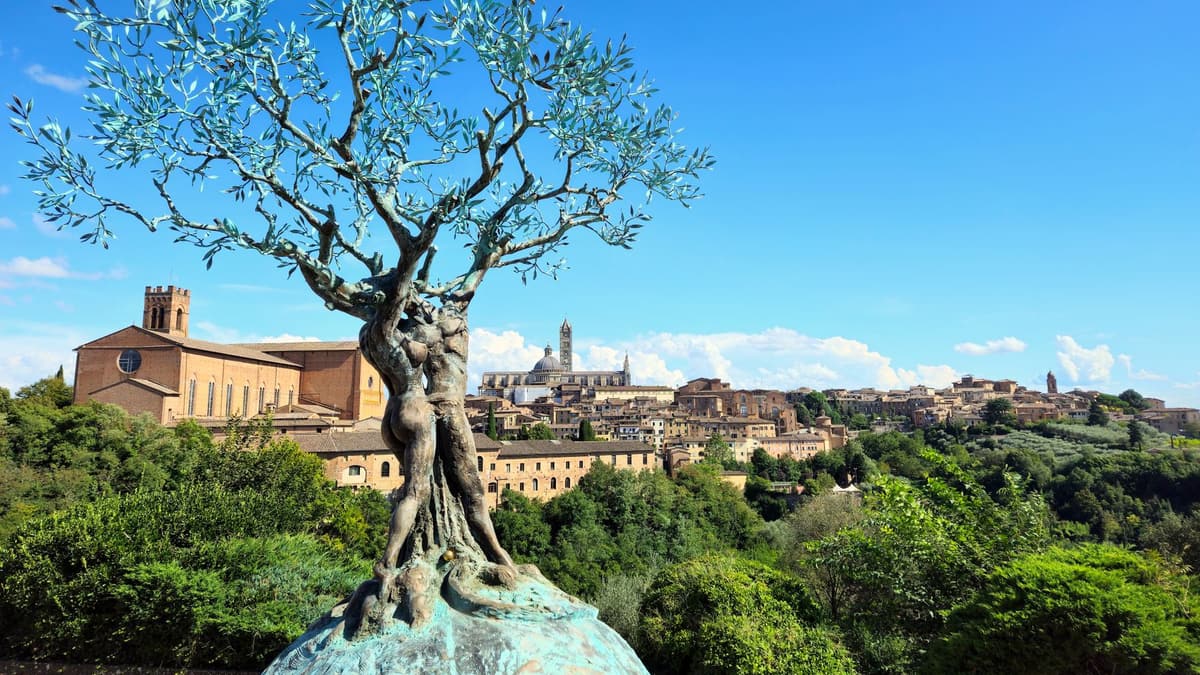
A view over Siena
Siena is built on three steep ridges that meet in a hollow, and from almost any high point around the edge of the old town, the striped Duomo and the brick bulk of San Domenico rise above a sea of red tiled roofs and cypress trees. Spots like the ramparts of the Fortezza Medicea, now a quiet public park where locals run laps, give some of the best views in the city, taking in the rooftops and green hills beyond the walls. These wider views make sense of Siena's shape: a city of sudden valleys and short climbs, where the next ridge and its tower are never far from view.
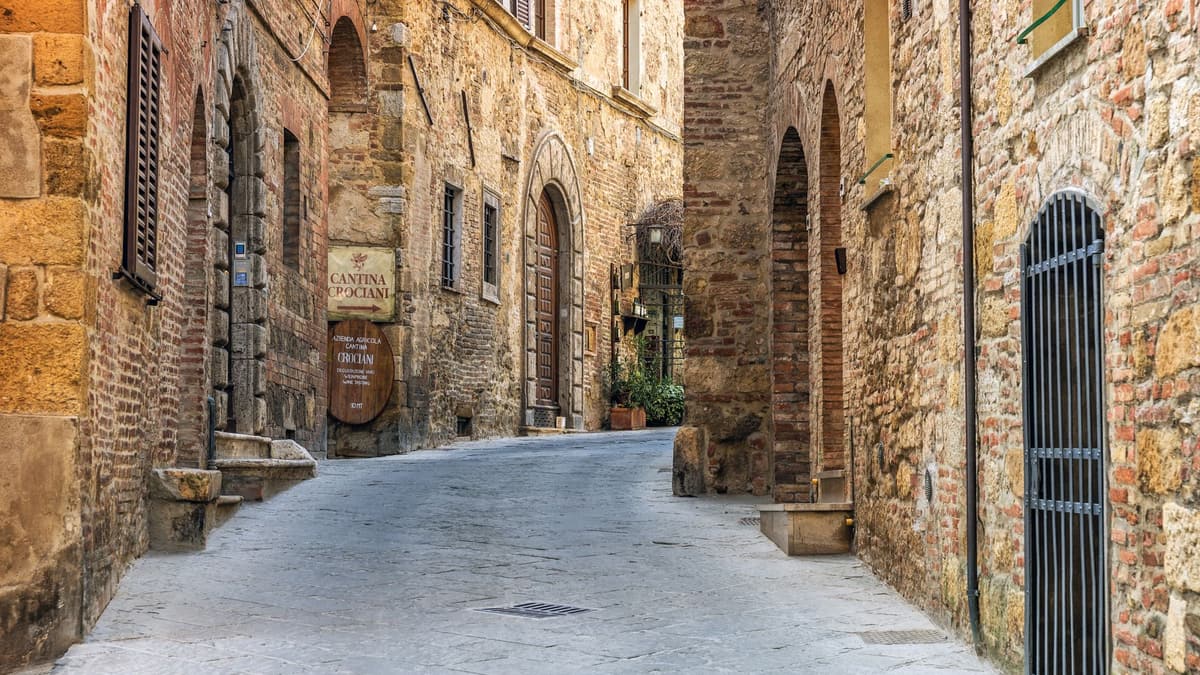
Siena's old lanes
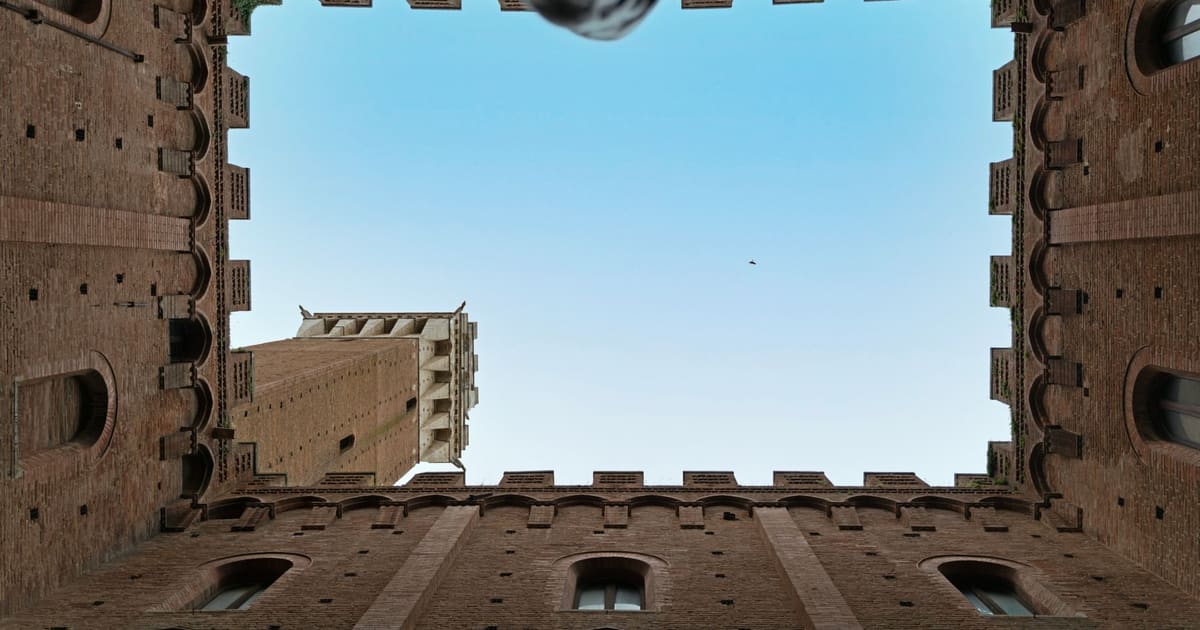
Between the grand squares, Siena is stitched together by lanes like this one, narrow stone streets that climb and dip with the ridges, lined with old wine cellars, shuttered windows and the occasional carved coat of arms over a doorway. The paving is smooth stone and brick, pretty but slippery after rain, which is why comfortable shoes with grip matter here. Every lane in Siena belongs to one of seventeen contrade, the historic neighborhoods that still hold their own flags and loyalties, with small painted emblems marking which one you're in. Away from the Campo's crowds, this is the everyday texture of the city.
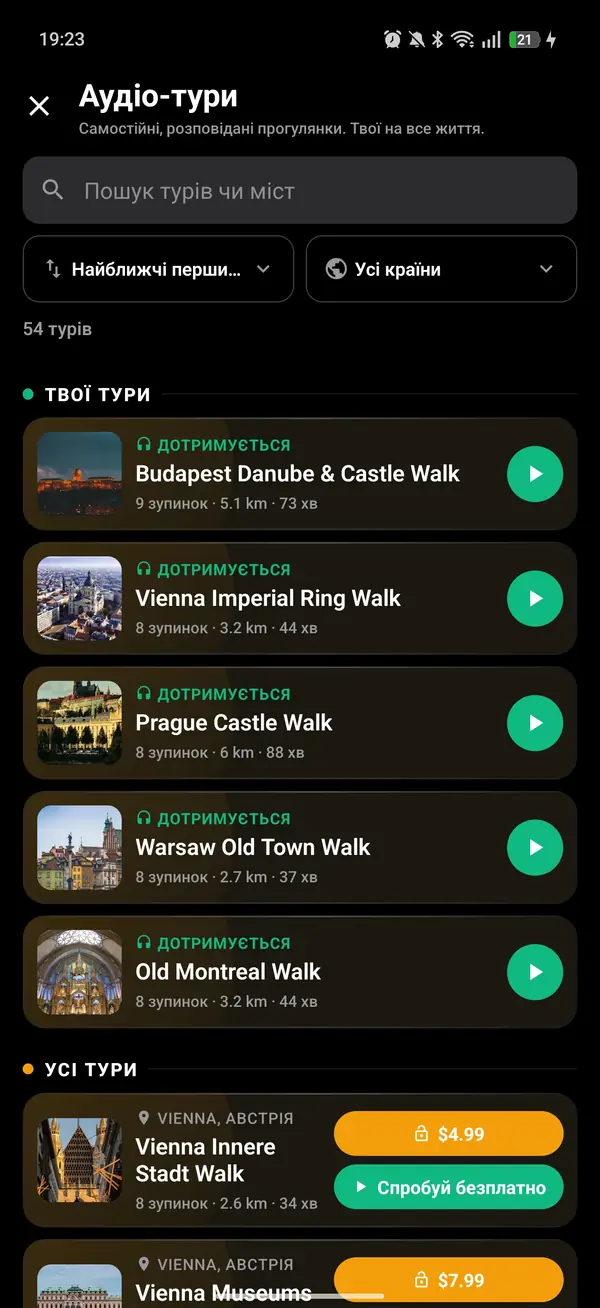
Почніть аудіоекскурсію за 3 прості кроки
Усе в безкоштовному застосунку Walk With Me, а перші зупинки кожної екскурсії можна послухати безкоштовно.
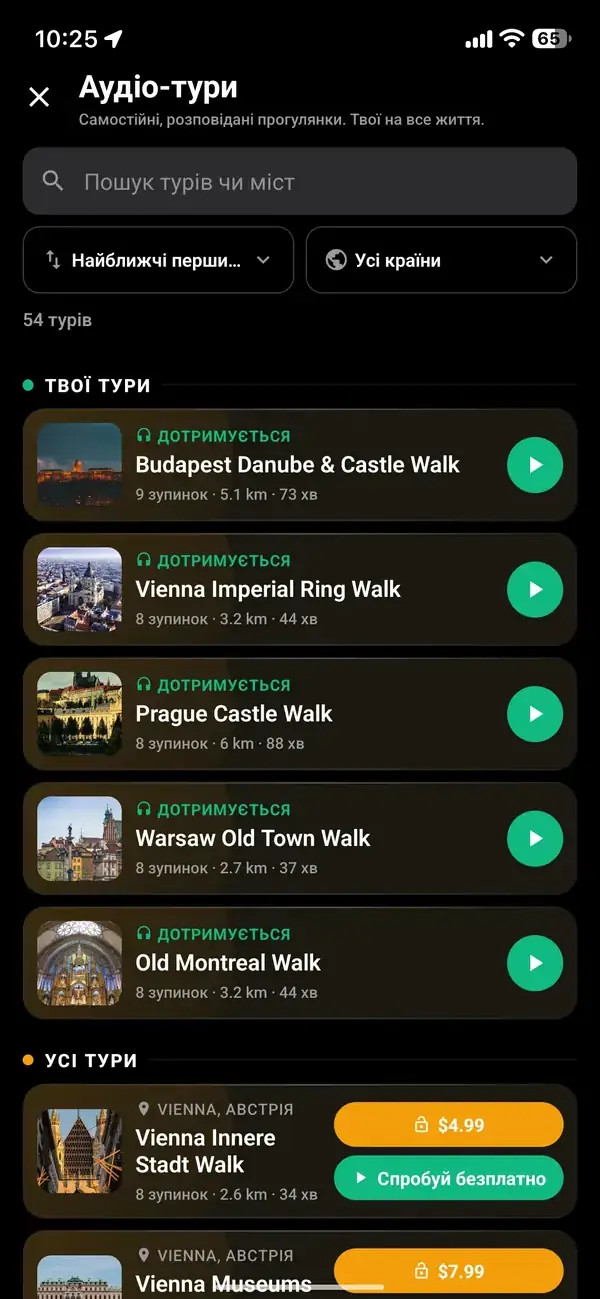
Торкніться золотих навушників і виберіть екскурсію
01
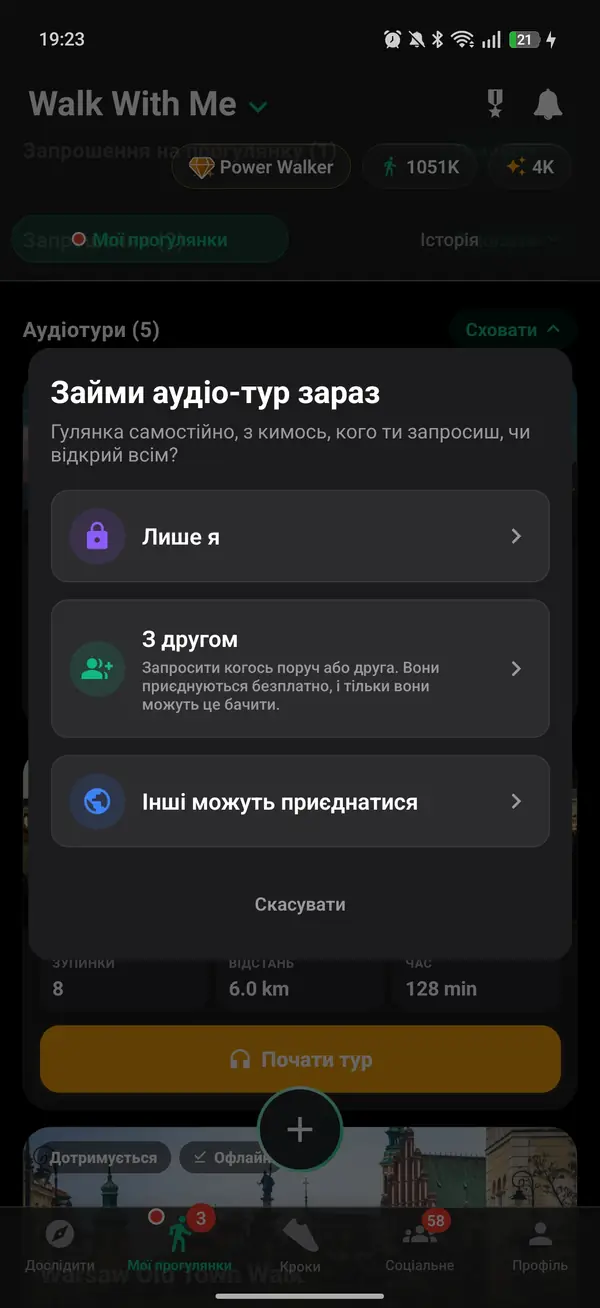
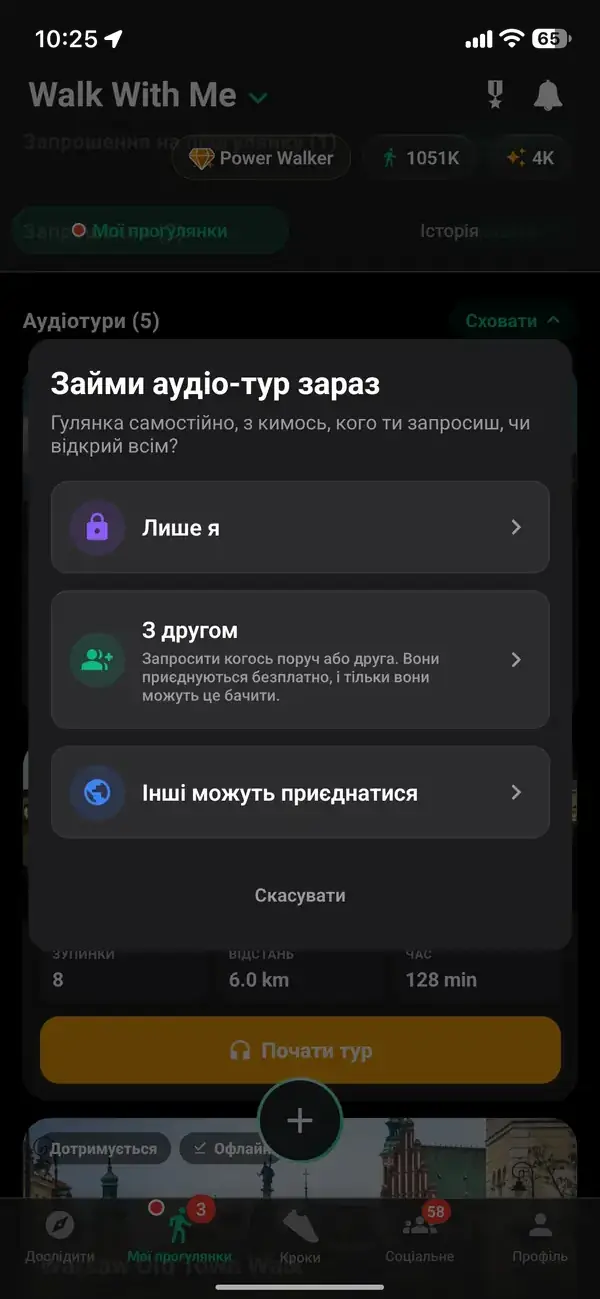
Ідіть самі або запросіть когось
02
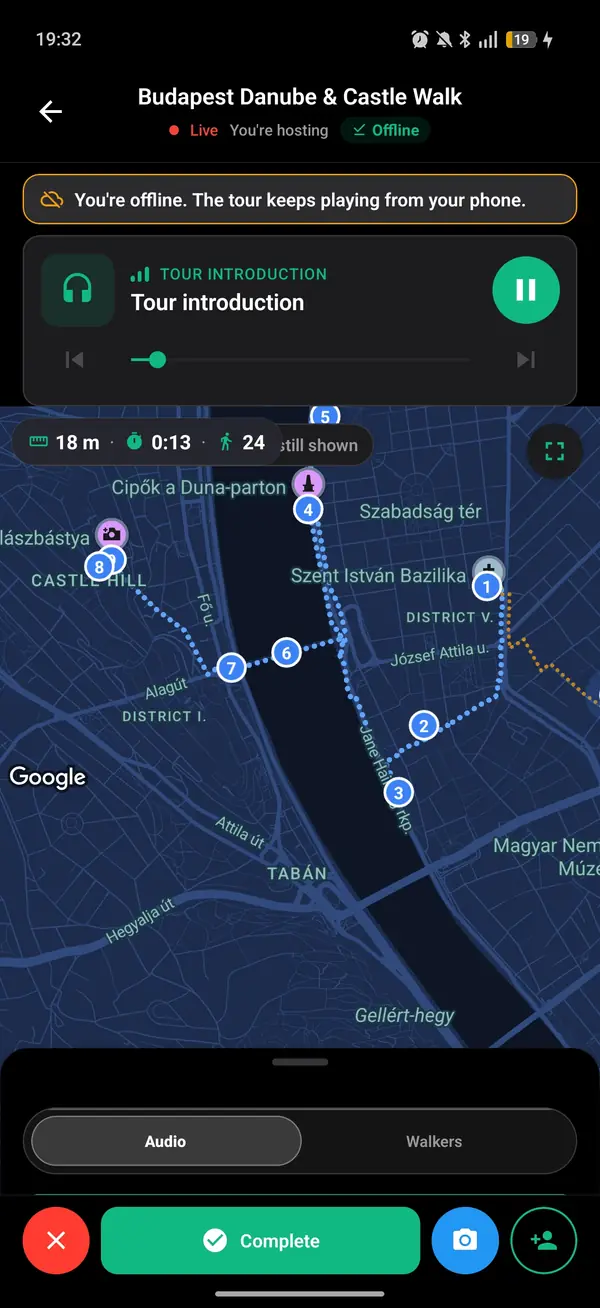
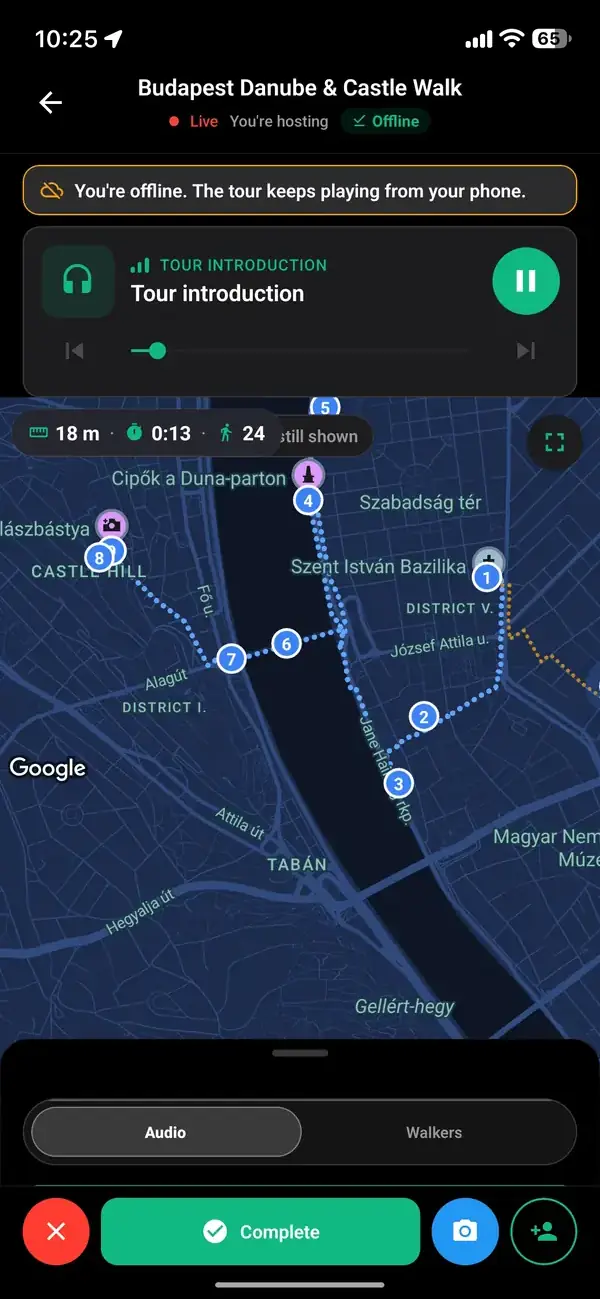
Натисніть «play» і йдіть
03
Створені з любов'ю для вашого часу в місті
Ці екскурсії не список пам'яток, які треба відмітити. Їх варто проходити неспішно, у навушниках і з поглядом на місто.
Медитативні та захопливі
Кожна історія звучить там, де вона сталася. Застосунок подає сигнал, коли ви доходите до зупинки, один дотик запускає розповідь, а шлях між зупинками належить вам, у вашому темпі.
Зроблені вручну, з турботою
Ми самі обираємо кожен маршрут і кожну зупинку та дбайливо створюємо кожну історію, щоб ваш час у місті пішов на місця, які справді того варті.
Удвох краще
Будь-яка прогулянка краща, коли поруч хтось є, тож якщо можете взяти когось із собою, дуже радимо це зробити. Саме тому одна покупка покриває всіх, кого ви запросите: вони приєднуються до вашої екскурсії безкоштовно.