
October 11, 2026 · 9 min read
Amsterdam Anne Frank Walking Tour
From the Hollandsche Schouwburg through the old Jewish Quarter, past the Dockworker and the Dam, to the Anne Frank House on the Prinsengracht.
589

October 11, 2026 · 11 min read

 Друзі гуляють безкоштовно
Кожен тур також доступний як запланована групова прогулянка, до якої можна приєднатися в додатку.
Більше аудіотурів у Edinburgh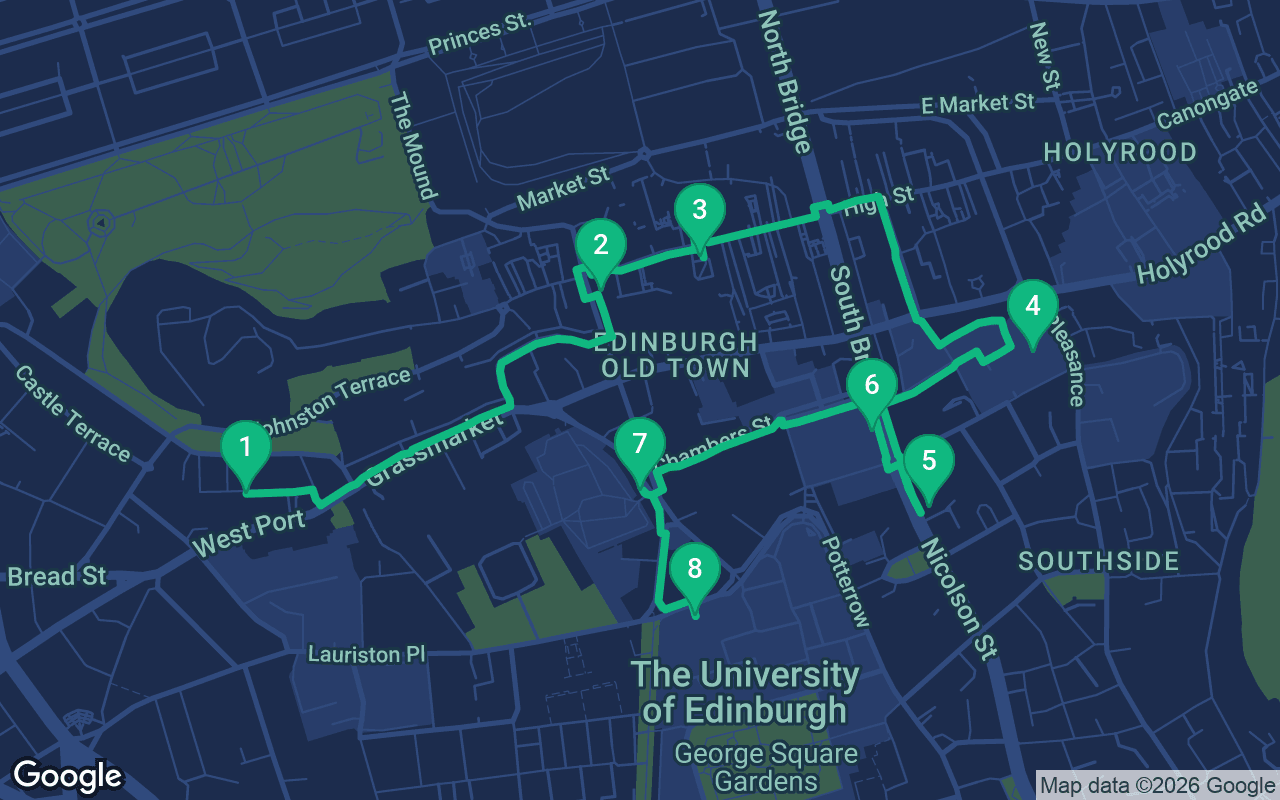
Приблизно 2,7 км, приблизно 39 хвилин у легкому темпі.
Цей тур озвучено
Натисніть відтворення на перших 3 зупинках, щоб послухати 30-секундний фрагмент розповіді. У додатку вступ і ці зупинки звучать повністю й безкоштовно, а про кожну з них вас сповістить звуковий сигнал, щойно ви прибудете. Весь тур із розповіддю буде вашим за $14.99, одноразова покупка назавжди.
Працює з Garmin, Komoot, Strava, OS Maps та будь-яким застосунком GPX.
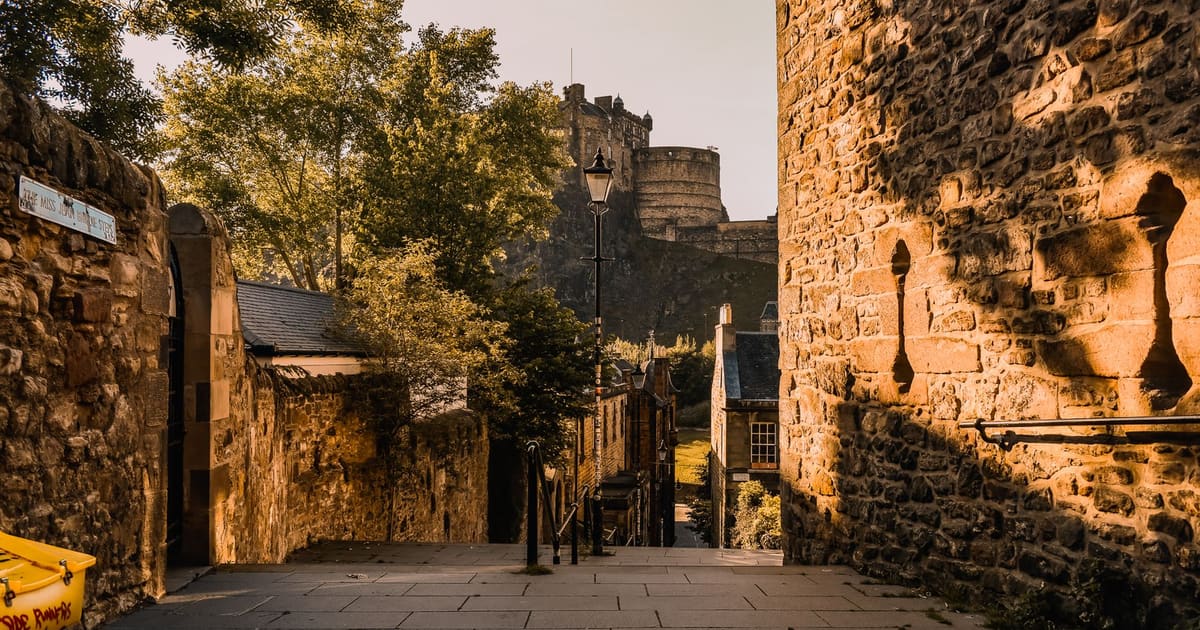
In November 1827, in a lodging house off Edinburgh's West Port, an old man died owing rent. His landlord, William Hare, and a lodger named William Burke sold his body to a doctor. Within a year they had killed at least sixteen people and sold them too. This walk tells what happened, where it happened, and who it happened to. It does not follow the calendar. We begin where the story began, at the West Port, then jump straight to the ending at the Lawnmarket gallows. From there we go back through the trial, the anatomy trade that paid for the bodies, and the city's graveyards, and we finish where Burke himself remains today. The route runs about 2.7 kilometers from the West Port to the Old Medical School on Teviot Place, one of our story-driven self-guided walking tours. It is a sober story about poor and vulnerable people, and we tell it that way.
The walking takes about forty minutes. With the stories, allow around an hour and a half. This is the Old Town, so expect one real climb, up the curve of Victoria Street from the Grassmarket toward the Royal Mile, and plenty of cobbles and stone setts after rain. Start at the Grassmarket end of the West Port. Two stops are museums with their own hours. Surgeons' Hall Museums charges for entry, so check before you go. The University's Anatomical Museum, at the last stop, opens to the public on select days only, so look up its open days in advance if you want to go in. The walk works from the street either way. Twice we jump in time, and we will tell you when.
You're on the West Port, the old road running west out of the Grassmarket. Look along the street for a large office block. That is Argyle House, built in the 1960s, and it is thought to stand over the site of Tanner's Close. Nothing of the close survives, and there is no plaque. The old buildings were pulled down in 1902 or 1903; sources disagree on the year.
In Tanner's Close, William Hare ran a lodging house. William Burke, born in 1792, lived there. In November 1827 one of the lodgers, an old army pensioner named Donald, died of natural causes. He owed Hare rent. Instead of letting him be buried, the two men took Donald's body out of its coffin and sold it to the private anatomy school of Dr Robert Knox, for seven pounds ten shillings.
That money changed everything. Over the following year, Burke and Hare stopped waiting for people to die. Their victims were mostly poor lodgers and visitors. They were lured to the lodging house, plied with drink and then suffocated, a method that left no marks. It gave the English language a word: burking.
So this street is where it started. Now the walk does something the story could not. It skips straight to the end. Walk east along the West Port into the Grassmarket, follow the Grassmarket to its far end, and climb the curve of Victoria Street. At the top, turn left along George IV Bridge to its corner with the Royal Mile. That's about ten minutes, most of it uphill.
You're at the corner where George IV Bridge meets the Lawnmarket, the top stretch of the Royal Mile. Look down at the pavement. Three brass plates are set into the stone. They mark the foot of the city gallows, Edinburgh's common place of execution at the head of a lane called Libberton's Wynd. On the wall beside them, a plaque names George Bryce, the last man publicly hanged in Edinburgh, in 1864. That plaque is about him, not Burke, and the plates mark the place of execution rather than Burke's own scaffold.
But this is where the story ended for William Burke. On the twenty-eighth of January, 1829, he was hanged here in the Lawnmarket. The crowd that packed this street was enormous. Sources put it at between twenty and twenty-five thousand people.
His hanging was only half the sentence. The court had also ordered that his body be publicly dissected, the same fate he had sold so many others to. We will come to that later in the walk.
Hare, the man whose house it was, was not on the scaffold. Neither was Burke's partner, Helen McDougal. To understand why, we have to go back three months, to Halloween, and then to a courtroom just around the corner. Walk east along the High Street, keeping St Giles' Cathedral on your right. Go past it to the far side of the church, where the Mercat Cross stands in Parliament Square. That's about two minutes.
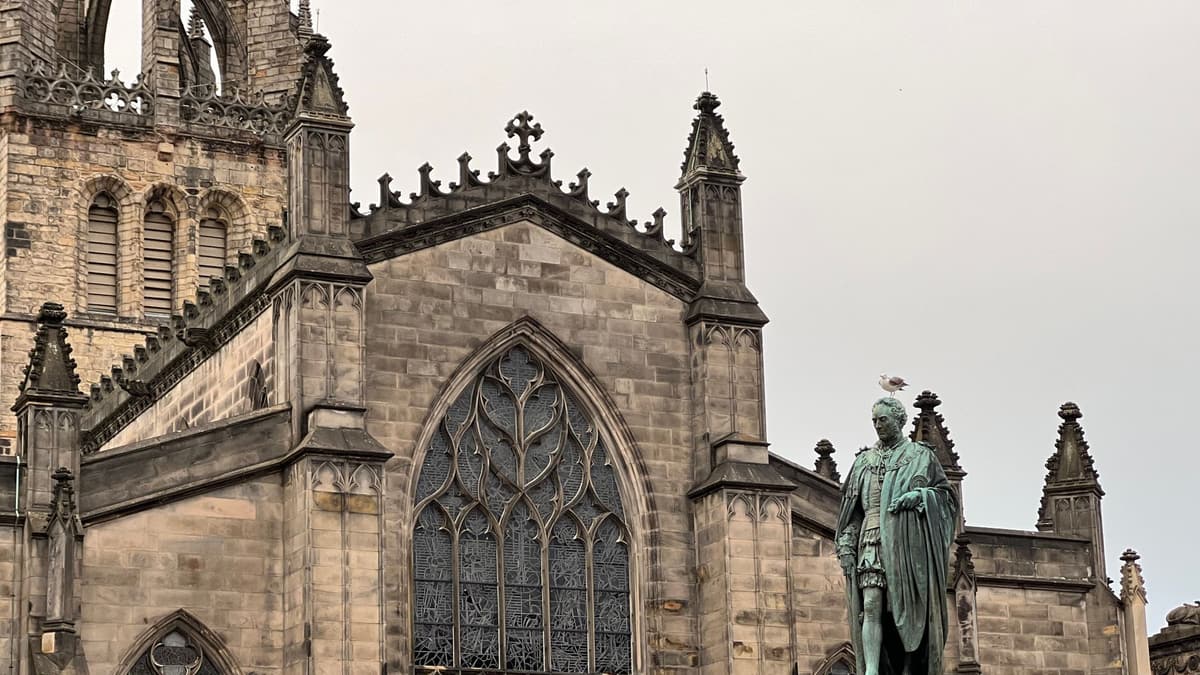 You're beside the Mercat Cross in Parliament Square. Across the square stands Parliament House. Today it is the seat of Scotland's supreme courts.
Rewind to the thirty-first of October, 1828. That night Burke and Hare killed a woman named Margaret Docherty. She would be their last victim. Two lodgers, James and Ann Gray, found her body under a bed, and the killings came to light.
Hare turned King's evidence. He testified against Burke and in return was granted immunity.
On Christmas Eve, 1828, the trial of Burke and Helen McDougal opened here at the High Court of Justiciary. At about twenty past nine on Christmas morning, the jury returned after fifty minutes. William Burke was found guilty. For Helen McDougal the verdict was "not proven", a Scottish verdict of acquittal. Burke was sentenced to be hanged and then publicly dissected.
So one man went to the gallows you just saw. But a question hung over the courtroom that the trial never really answered. Who had been buying the bodies, and why did nobody ask where they came from? For that, go back even further, to the anatomy schools. Walk east down the High Street to the big crossroads with North Bridge and South Bridge. Turn right onto South Bridge, then left into Infirmary Street, and follow it to the end, into the yard called High School Yards. That's about eight minutes.
Що входить
Наші екскурсії задумані медитативними та захопливими: ви рухаєтеся й просто слухаєте. Разом завжди краще, і додаток відтворює розповідь синхронно, тож ви, ваш партнер і ваші друзі чуєте кожну зупинку одночасно.
You're in High School Yards. The old building here is Old Surgeons' Hall, built in 1697 for Edinburgh's surgeons.
Продовження цієї зупинки є в повній аудіоекскурсії.
You're outside Surgeons' Hall Museums, the museum of the Royal College of Surgeons of Edinburgh.
Продовження цієї зупинки є в повній аудіоекскурсії.
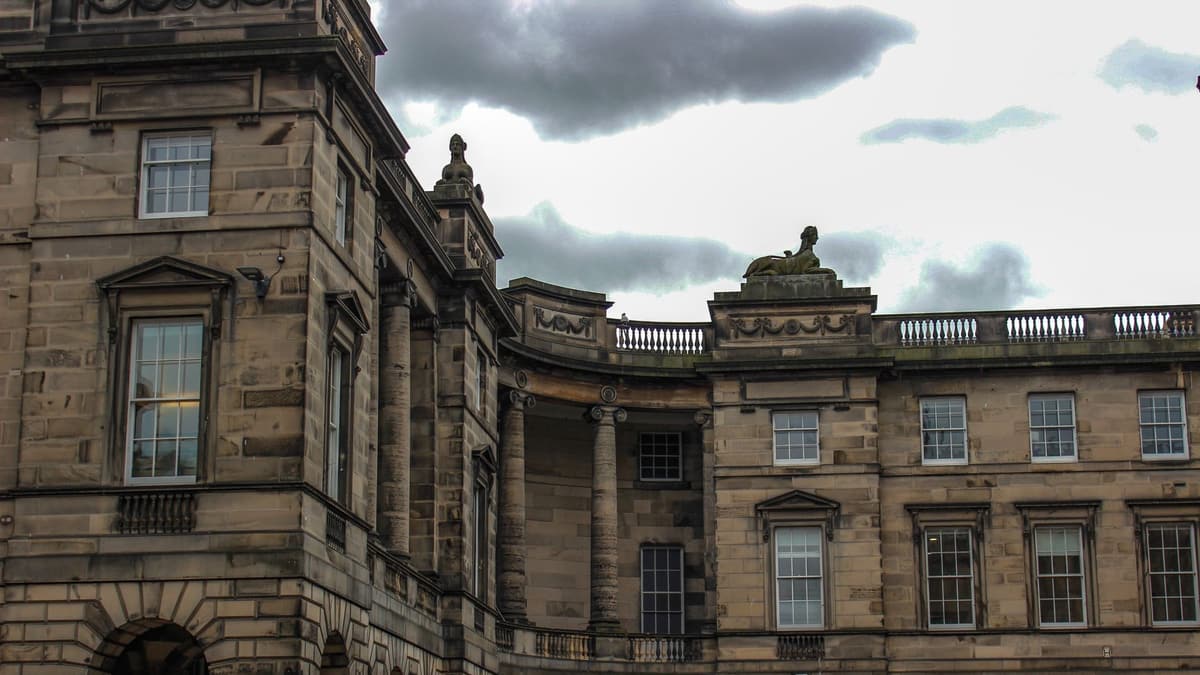
You're outside Old College, the University of Edinburgh's historic quadrangle on South Bridge. Stand by the gate and look through into the quad.
Продовження цієї зупинки є в повній аудіоекскурсії.
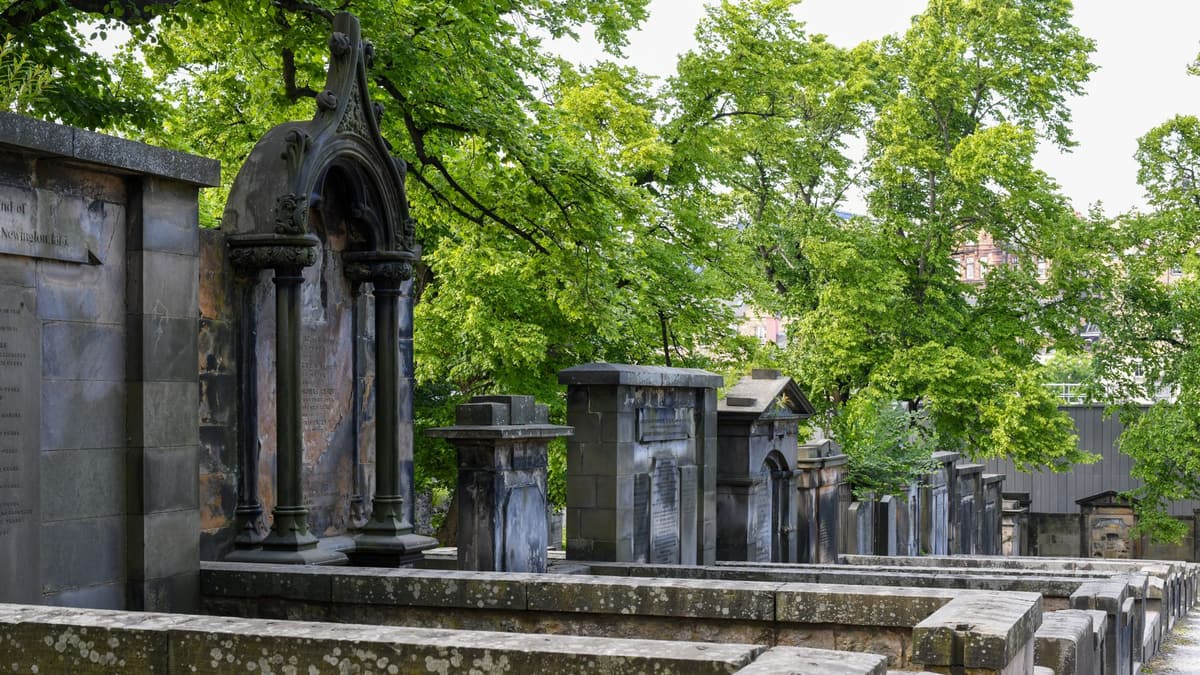
You're inside Greyfriars Kirkyard. Look around for iron cages standing over a couple of the graves.
Продовження цієї зупинки є в повній аудіоекскурсії.
You're on Teviot Place, outside the University's Old Medical School, designed by Robert Rowand Anderson. Inside is the University's Anatomical Museum, open to the public on select days only.
Продовження цієї зупинки є в повній аудіоекскурсії.
Зробіть цю прогулянку разом з іншими людьми на наступному запланованому турі.
Приблизно 2,7 км, приблизно 39 хвилин у легкому темпі · 8 зупинок
Друзі гуляють безкоштовноOctober 11, 2026 · 9 min read
From the Hollandsche Schouwburg through the old Jewish Quarter, past the Dockworker and the Dam, to the Anne Frank House on the Prinsengracht.
October 11, 2026 · 11 min read
From Van Houten's street by the Vondelpark past Leidseplein, the Rijksmuseum passage and the famous canal bench to the Anne Frank House.

October 11, 2026 · 10 min read
Follow the last days of April and May 1945 from the Anhalter Bahnhof ruin past the Gestapo site and Brandenburg Gate to the Moltke Bridge and the Reichstag.
