
October 11, 2026 · 9 min read
Amsterdam Anne Frank Walking Tour
From the Hollandsche Schouwburg through the old Jewish Quarter, past the Dockworker and the Dam, to the Anne Frank House on the Prinsengracht.
589

October 11, 2026 · 11 min read

 Друзі гуляють безкоштовно
Кожен тур також доступний як запланована групова прогулянка, до якої можна приєднатися в додатку.
Більше аудіотурів у Istanbul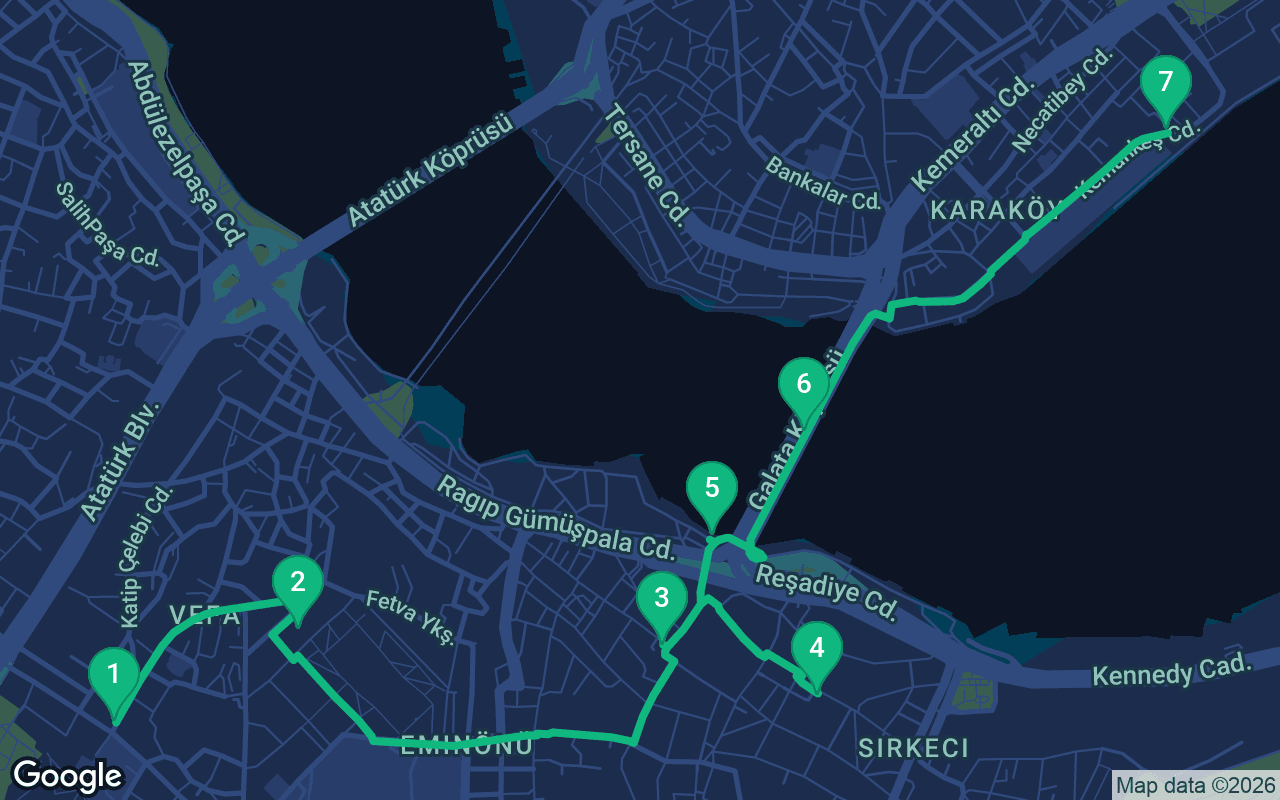
Приблизно 3,6 км, приблизно 50 хвилин у легкому темпі.
Цей тур озвучено
Натисніть відтворення на перших 3 зупинках, щоб послухати 30-секундний фрагмент розповіді. У додатку вступ і ці зупинки звучать повністю й безкоштовно, а про кожну з них вас сповістить звуковий сигнал, щойно ви прибудете. Весь тур із розповіддю буде вашим за $15.99, одноразова покупка назавжди.
Працює з Garmin, Komoot, Strava, OS Maps та будь-яким застосунком GPX.
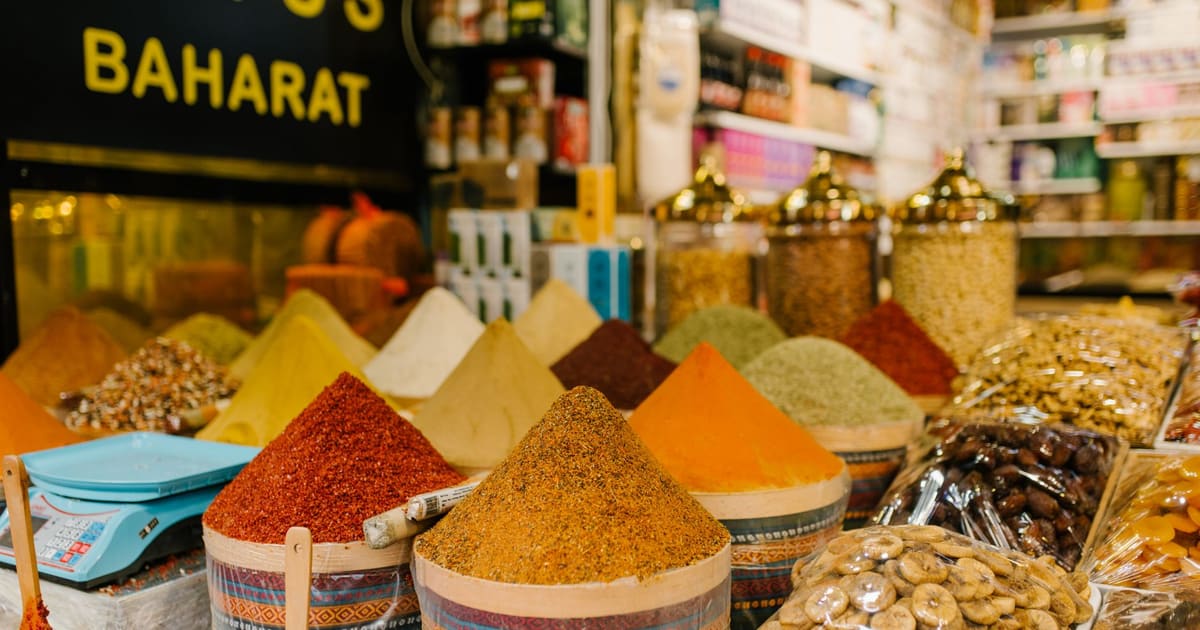
Istanbul's oldest food businesses are family stories, and many of the ones on this walk grew up around the markets of the Ottoman city. This walk follows them downhill, from Vefa to the water of the Golden Horn, and then across it. You start with a glass of boza at a shop that has been pouring it since 1876, pass the great mosque complex whose kitchen once fed the poor, and drop into the Spice Bazaar, where a coffee roaster began selling his coffee ready-roasted and ground. Then come lokum from a confectioner who says he served the palace, a fish sandwich on the Eminönü quay, simit and fishermen on the Galata Bridge, and pistachio baklava in Karaköy to finish. It's about 3.6 kilometers, roughly 50 minutes of walking, mostly downhill, and the start is a short walk from Vezneciler metro station. Like all our self-guided walking tours, it goes at your pace. The arc runs from Ottoman charity and court sweets to the street food of the modern city.
The route is about 3.6 kilometers and 50 minutes on foot, but with the tastings, plan on three hours or so. Most of it runs downhill, and some of the streets below Süleymaniye are steep, so wear shoes with grip.
Monday to Saturday works best. The Spice Bazaar opens later on Sunday, and it closes on religious holidays, so avoid the first days of Ramazan Bayramı and Kurban Bayramı. On Fridays, the midday prayers make the areas around the mosques busy. Around the mosques, dress and behave modestly, and don't eat or film inside.
You pay for your own food. Share as you go: one fish sandwich between two, two pieces of baklava, a small box of lokum. Six tastings add up, so keep each one small. If you have allergies, take care: nuts, sesame, gluten, fish and dairy all turn up on this route. Boza contains a little alcohol, about one percent, so skip it if you avoid alcohol. Opening hours for the boza shop and the fish boats change, so check before you go.
You're standing outside Vefa Bozacısı, at Vefa Caddesi 66, in the Vefa neighborhood, uphill from the Golden Horn. Look through the door at the counter where the boza is poured.
The family story begins with a journey. The firm says Hacı Sadık Bey came to Istanbul from Albania in 1870, and in September 1876 he opened his boza business here in Vefa. It's now run by the fourth generation.
So what is boza? It's a fermented grain drink, made from millet, wheat or maize. It has about one percent alcohol, and it's traditionally drunk in winter. The shop describes its own boza as thick and straw-colored, with a slightly sour taste. It's a drink with deep roots in this city. One count, attributed to the seventeenth-century writer Evliya Çelebi, put the number of boza shops in Istanbul at around 300. Take that as an old estimate, not a census.
That's the first theme of this walk. Before the fish sandwich and the baklava, Istanbul's food was built on old crafts like this one, handed from parent to child.
What to order here: a glass of boza. The custom is cinnamon and roasted chickpeas, called leblebi, sprinkled on top, so take them if they're offered. Check the shop's hours before you come, because they weren't confirmed for this season.
From here, the walk heads toward one of the grandest buildings in the city, and to a kitchen that fed the poor. Walk east toward the Süleymaniye Mosque, about 6 minutes, and stop on Şifahane Caddesi, beside the mosque's domed outbuildings.
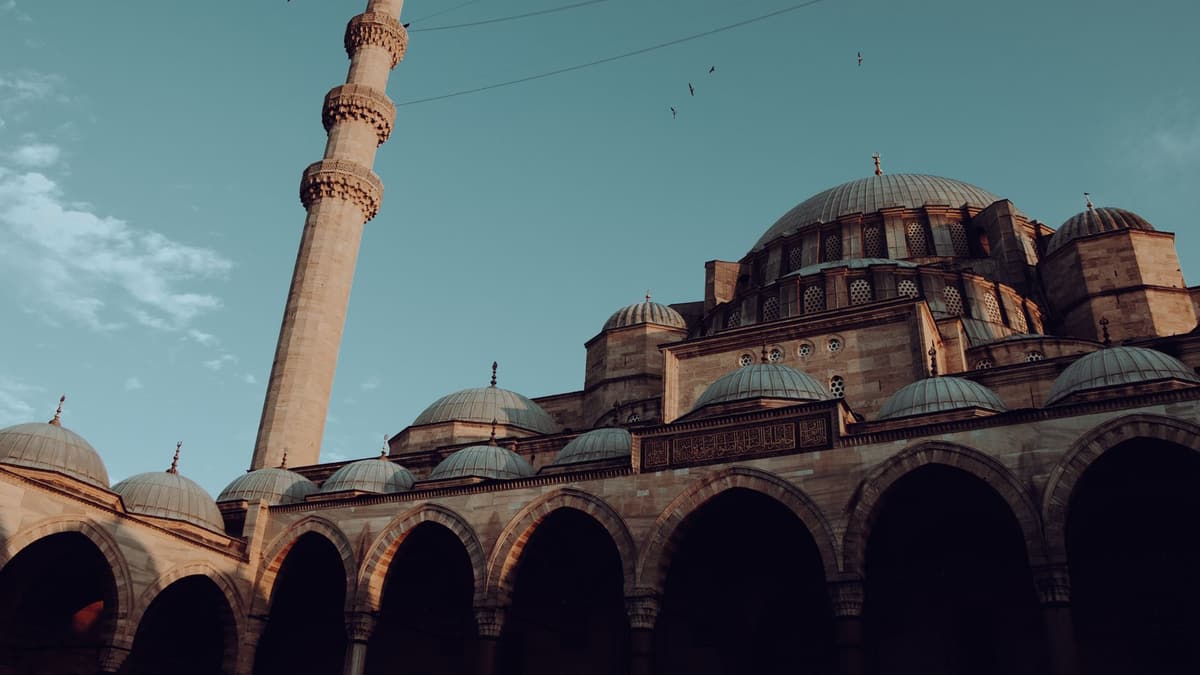 You're on Şifahane Caddesi, beside the Süleymaniye complex. This is a context stop, so there's nothing to order. Look at the domed kitchen and service buildings next to the mosque. Remember you're beside a place of worship, so keep your voice low and your food packed away.
The great architect Mimar Sinan built this complex between 1550 and 1557 for Suleiman the Magnificent. It was more than a mosque. Among its buildings was an imaret, a public kitchen that served food to the poor.
The former imaret is now a restaurant, called Darüzziyafe. So the building that once fed the poor still serves meals today, only now the guests pay.
It's a fitting place to pause on a food walk. Before the fine shops and the market stalls further down the hill, the city's food story included this: a kitchen in a sultan's mosque complex that served the poor.
From here it's downhill all the way to the water. Head east, downhill through the steep market streets toward the Golden Horn, about 12 minutes. Aim for the Spice Bazaar and its western side, and look for the coffee roaster on Tahmis Sokağı.
You're on Tahmis Sokağı, at the corner of the Spice Bazaar, outside Kurukahveci Mehmet Efendi.
Start with the bazaar itself. In July 1660, a great fire broke out in the city. Late that year, building began on this market as part of the New Mosque complex, founded by Turhan Hatice Sultan, the mother of Sultan Mehmed IV. The rents from its shops supported the mosque. It was paid for with revenue from Ottoman Egypt, which is why it's called Mısır Çarşısı. Mısır means Egypt. It also means maize, which is why you'll sometimes see it mistranslated as the Corn Bazaar. Today it has about 85 shops.
Now the coffee. In 1871, Mehmet Efendi took over his father Hacı Hasan Efendi's business. In those days, coffee was sold as green beans, and people roasted them at home. Mehmet Efendi roasted and ground the coffee in his shop, then packed it fresh in small paper bags. That's how he earned his nickname, Kurukahveci, the coffee roaster. In 1932 his son had the architect Zühtü Başar design an Art Deco headquarters on this street.
In 2013, Turkish coffee culture and tradition was inscribed on UNESCO's Representative List of the Intangible Cultural Heritage of Humanity. Note the wording: not just the coffee, but the culture. That means very fine grounds brewed slowly in a pot to raise a foam, served with water, and even the fortune-telling read from the grounds.
What to order here: a small bag of fresh-ground Turkish coffee from the counter. If you'd like a sit-down lunch instead, walk through the bazaar to its main gate, where Pandeli is upstairs in blue-tiled rooms. The restaurant says Pandeli Çobanoğlu opened it in 1901, and it lists famous guests of its own, from Atatürk to Elizabeth II and Audrey Hepburn. Its menu includes an aubergine börek topped with döner.
Next, a sweet shop that says it has been here since 1777. Walk through the bazaar and out of its main gate, then follow Hamidiye Caddesi, about 5 minutes. Hacı Bekir is on that street.
Що входить
Наші екскурсії задумані медитативними та захопливими: ви рухаєтеся й просто слухаєте. Разом завжди краще, і додаток відтворює розповідь синхронно, тож ви, ваш партнер і ваші друзі чуєте кожну зупинку одночасно.
You're on Hamidiye Caddesi, at Hacı Bekir. Look at the shop: it's registered as a historic confectioner's, and it calls itself a living museum.
Продовження цієї зупинки є в повній аудіоекскурсії.
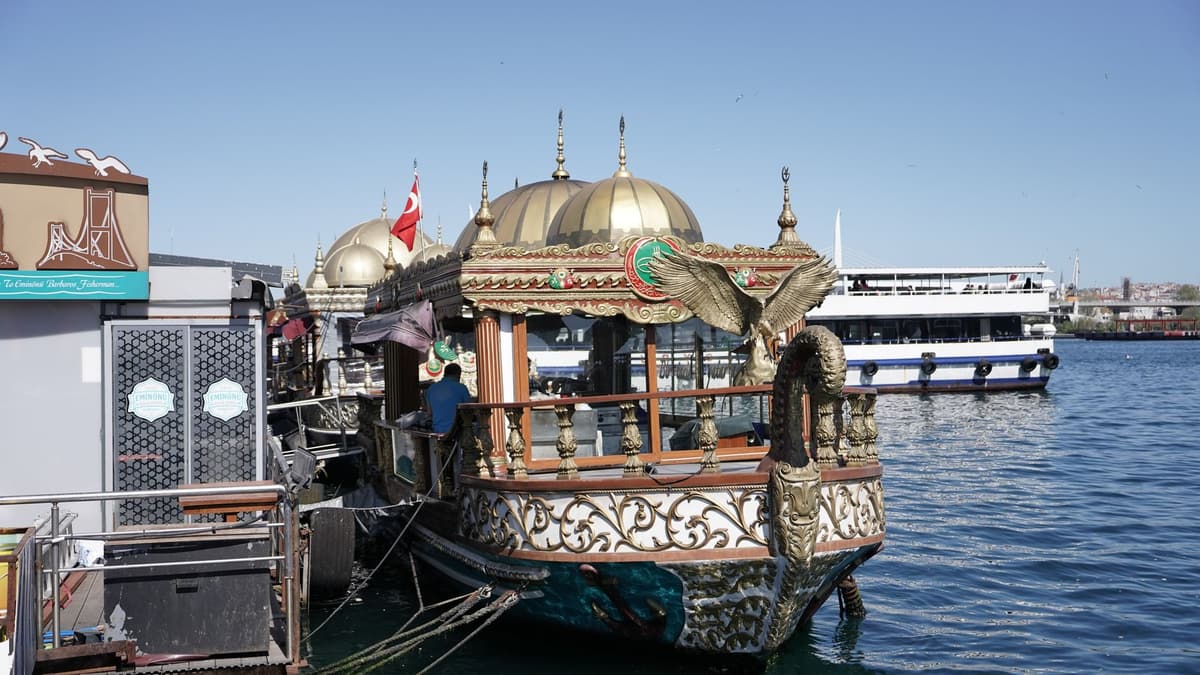
You're on the Eminönü quay, beside the Golden Horn, with the Galata Bridge just ahead. Look along the waterfront for the fish sandwich sellers.
Продовження цієї зупинки є в повній аудіоекскурсії.
You're on the Galata Bridge, over the Golden Horn. This is a context stop.
Продовження цієї зупинки є в повній аудіоекскурсії.
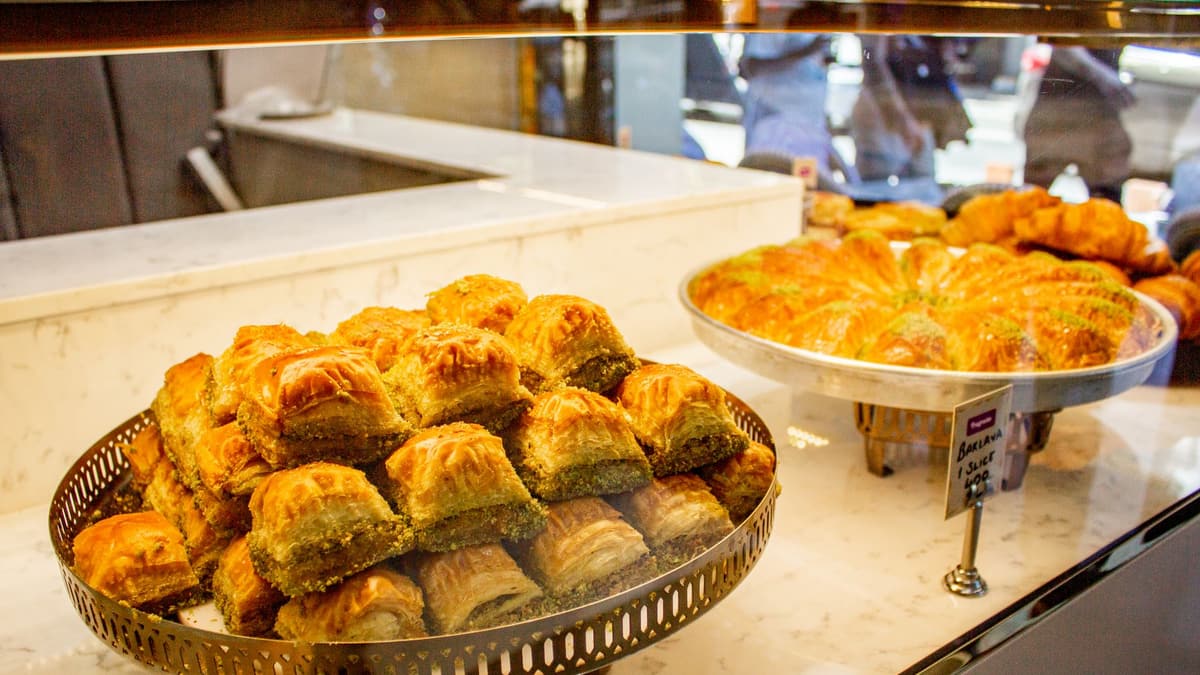
You're at Kemankeş Caddesi 67, at Karaköy Güllüoğlu, known for its pistachio baklava. Its listing gives the name of the man behind it, Nadir Güllü.
Продовження цієї зупинки є в повній аудіоекскурсії.
Зробіть цю прогулянку разом з іншими людьми на наступному запланованому турі.
Приблизно 3,6 км, приблизно 50 хвилин у легкому темпі · 7 зупинок
Друзі гуляють безкоштовноOctober 11, 2026 · 9 min read
From the Hollandsche Schouwburg through the old Jewish Quarter, past the Dockworker and the Dam, to the Anne Frank House on the Prinsengracht.
October 11, 2026 · 11 min read
From Van Houten's street by the Vondelpark past Leidseplein, the Rijksmuseum passage and the famous canal bench to the Anne Frank House.

October 11, 2026 · 10 min read
Follow the last days of April and May 1945 from the Anhalter Bahnhof ruin past the Gestapo site and Brandenburg Gate to the Moltke Bridge and the Reichstag.
