
October 11, 2026 · 9 min read
Amsterdam Anne Frank Walking Tour
From the Hollandsche Schouwburg through the old Jewish Quarter, past the Dockworker and the Dam, to the Anne Frank House on the Prinsengracht.
589

October 11, 2026 · 11 min read

 Друзі гуляють безкоштовно
Кожен тур також доступний як запланована групова прогулянка, до якої можна приєднатися в додатку.
Більше аудіотурів у Lisbon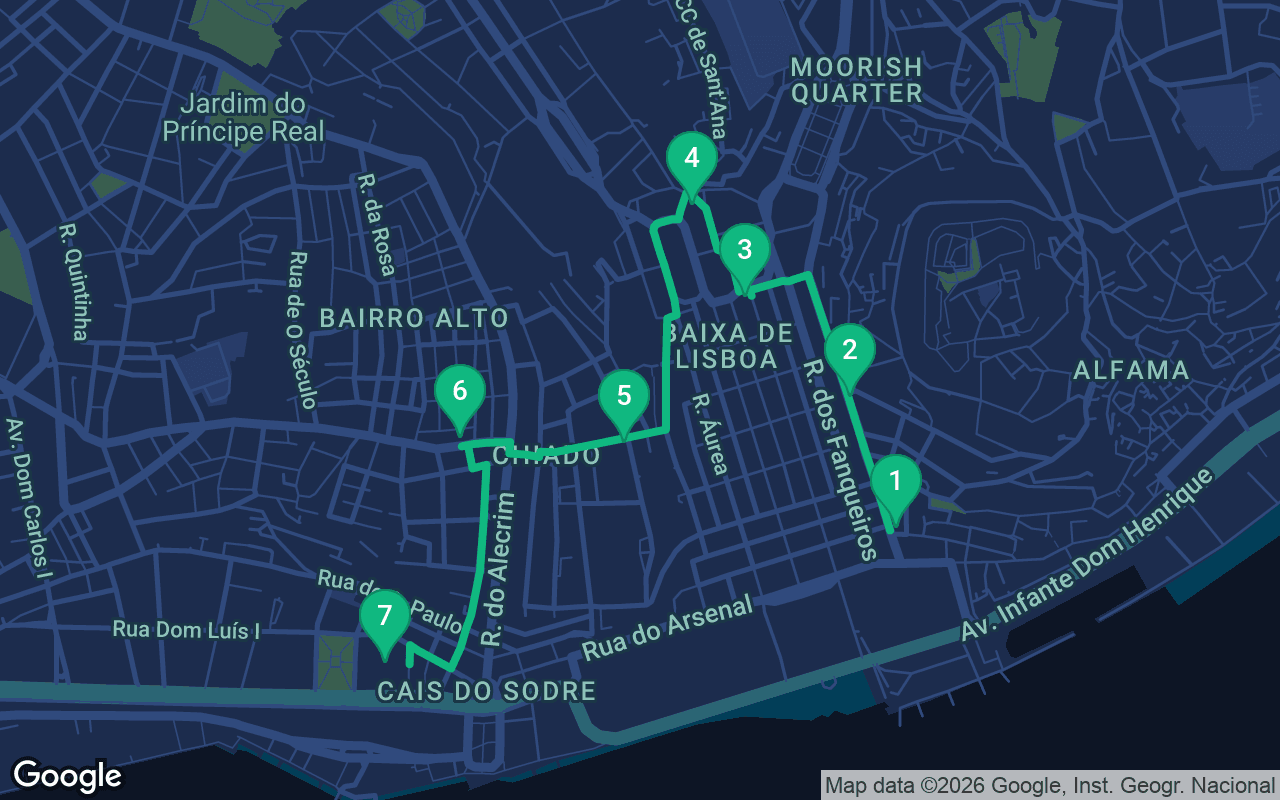
Приблизно 2,4 км, приблизно 36 хвилин у легкому темпі.
Цей тур озвучено
Натисніть відтворення на перших 3 зупинках, щоб послухати 30-секундний фрагмент розповіді. У додатку вступ і ці зупинки звучать повністю й безкоштовно, а про кожну з них вас сповістить звуковий сигнал, щойно ви прибудете. Весь тур із розповіддю буде вашим за $14.99, одноразова покупка назавжди.
Працює з Garmin, Komoot, Strava, OS Maps та будь-яким застосунком GPX.
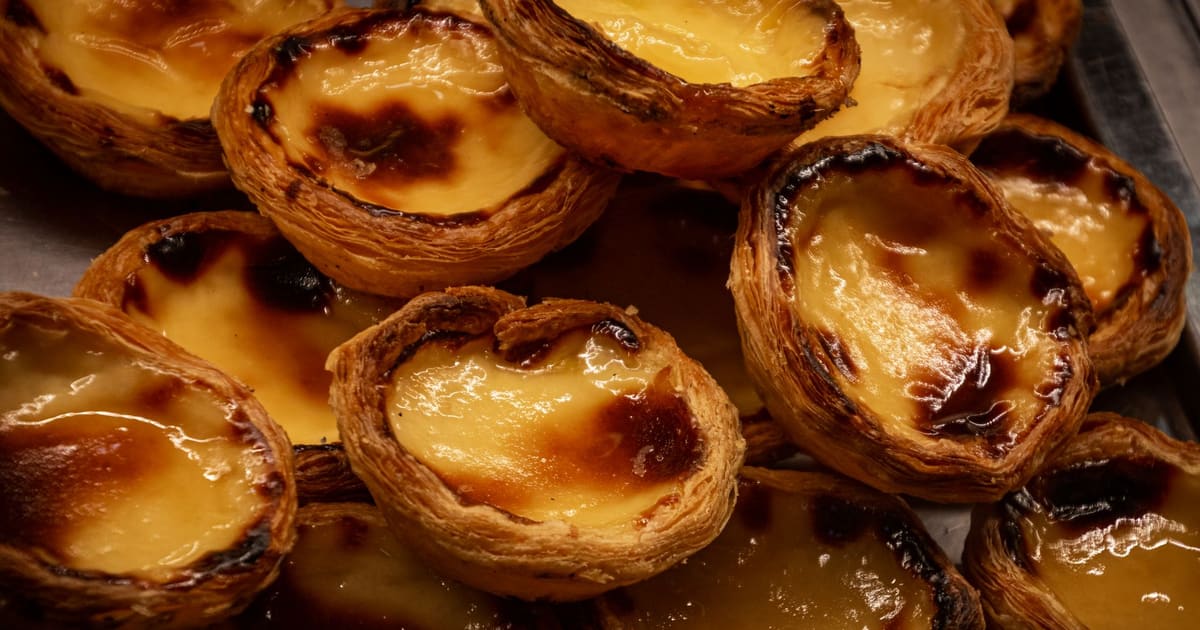
Lisbon's food tells two stories at once: one about the sea, and one about the convents. The sea gave the city its cod merchants and its tinned fish. The convents gave it sweets made of egg yolk and sugar. The most famous is the pastel de nata, the little custard tart, which left a monastery for a shop after Portugal's religious houses were shut down in 1834. This walk follows both stories through the Baixa and up into Chiado. You start in a 1930 tinned-fish shop on the street of the cod merchants, eat a bifana at a counter, visit the confectioner that says it brought the bolo-rei to Portugal, and drink a shot of cherry liqueur on a square. Then come convent sweets, a warm nata, and a finale in a market hall from the 1880s. It's one of our self-guided walking tours, compact by design: about 2.4 kilometers from Rua dos Bacalhoeiros to the Mercado da Ribeira by the river, with about 36 minutes of walking in total.
Go Monday to Friday. Sundays don't work: the tinned-fish shop and the bifana counter are both closed. On Saturdays the bifana counter shuts in the early afternoon, around 1:30 or 2. Start mid-morning. At the end, the traditional market inside the Mercado da Ribeira trades in the mornings until about 2 in the afternoon, so arrive by then if you want to see it as well as the food hall.
The start is about 300 meters from Terreiro do Paço metro station and Praça do Comércio. The walk climbs from the Baixa up to Chiado, then drops down to the river. It ends across the road from Cais do Sodré, with its metro, trains and ferries.
You pay for your own food along the way, and seven tastings is a lot, so share, or ask for half portions. Pace yourself. Two stops pour alcohol: one small ginjinha is plenty, and the beer with the bifana is optional. If you have allergies, take care: eggs, gluten, fish and pork run through this whole walk. Hours change, so check before you go.
You're on Rua dos Bacalhoeiros, at number 34, outside the Conserveira de Lisboa. Step inside and look up. The walls are stacked with brightly wrapped tins of fish. The wooden shelving, the counter and the till are the originals from the 1930s. When the magazine Monocle wrote about the shop, only the front doors were new.
The shop opened in 1930 as a neighborhood grocery and is a family business. The family also owned a cannery, which ran until 1980, and demand for tinned food in the Second World War boosted the business. Look at the labels. They sell their own brands, Tricana, Prata do Mar and Minor. The Tricana girl on the label dates from 1942. Monocle counted about 125 kinds of tinned fish here, all from Portuguese waters.
Now look at the street sign. Bacalhoeiros means cod merchants. But this street was once just as famous for sweets. Confectioners settled here from 1758. There were seven of their shops by 1760, and nine by 1836. Then in 1859 an official edict merged the old streets here under one name, Bacalhoeiros, in the Lisbon habit of naming streets after trades. So the walk opens with both of its stories at once: the sea on the sign, and the sugar in the street's past.
What to order here: a tin to take away, sardines, tuna or cod. This is a shop, not a tasting bar, so this is a souvenir, not a snack. The staff wrap your tin in paper for you.
Walk north up Rua da Madalena. The bifana counter is about four minutes away, at number 146.
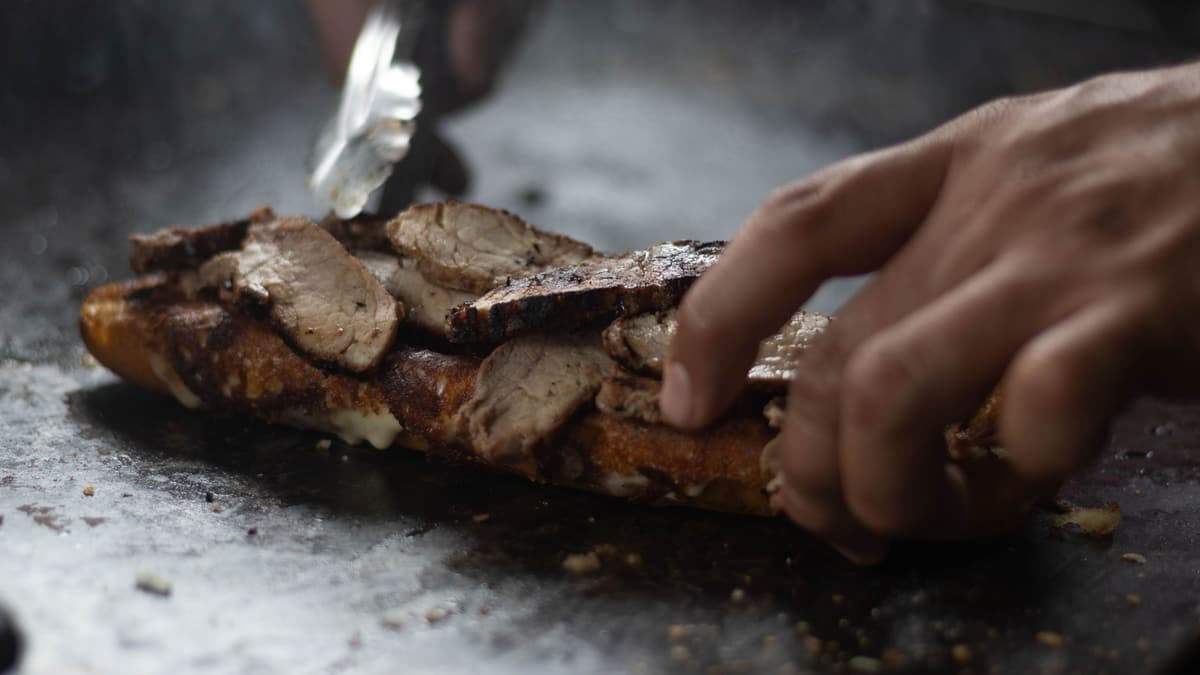
You're at Rua da Madalena 146, at As Bifanas do Afonso, a small counter bar. This is Lisbon eating at its quickest: a counter, a sandwich, and on you go.
The bifana is a thin pork steak cooked in a seasoned sauce and served in a bread roll. The owner told Time Out in 2018 that his recipe holds "love, care, white wine and a bit of lard." He also said he aims at local prices, and that's part of the point here. This is everyday food, not a special occasion.
Where does the bifana come from? You'll find invention stories online, some with dates and some with kings, and none of them is verified. What is on record is a claim. The town of Vendas Novas, in the Alentejo region, says the bifana is its own. In May 2011 the town council registered the brand "Bifanas de Vendas Novas" with the National Institute of Industrial Property. So the sandwich has a registered hometown, even if nobody can prove who made the first one.
It's a good contrast with where you just stood. The tins at the Conserveira are about keeping food for later. The bifana is about eating right now, standing up, with the next errand waiting.
What to order here: a bifana. The mustard is on the counter. If you'd like, add a small draught beer.
Keep walking north on Rua da Madalena to Praça da Figueira, a broad square about five minutes ahead. The Confeitaria Nacional is on the square, at number 18B.
You're in Praça da Figueira, in front of the Confeitaria Nacional, at number 18B. Look at the shopfront, then at the cases of cakes inside. This confectioner has stood on this same square since 1829.
It was founded that year by Balthazar Roiz Castanheiro. In 1873 it became a supplier to the royal house, in the reign of King Luís I. Then in 1875 Balthazar Junior brought a recipe home from France: the bolo-rei, the king cake. The house says it was the first in Portugal to make it.
The recipe is still guarded. The house says only two people know it: the owner and the house's longest-serving pastry chef. Think back to Rua dos Bacalhoeiros, where nine confectioners once worked side by side. Here is one of the sweet shops of that old Lisbon that is still going, almost two centuries on.
What to order here: a slice of bolo-rei if it's the Christmas season, which is when it's mainly made. The rest of the year, try a bolo de arroz, a rice-flour cake and one of the house specialties.
The next stop is very close. Head out of the square at its northwest corner, toward Largo de São Domingos. A Ginjinha is about three minutes away, at number 8.
Що входить
Наші екскурсії задумані медитативними та захопливими: ви рухаєтеся й просто слухаєте. Разом завжди краще, і додаток відтворює розповідь синхронно, тож ви, ваш партнер і ваші друзі чуєте кожну зупинку одночасно.
You're at Largo de São Domingos, number 8. In front of you is A Ginjinha, a bar that is really just a counter opening onto the square.
Продовження цієї зупинки є в повній аудіоекскурсії.
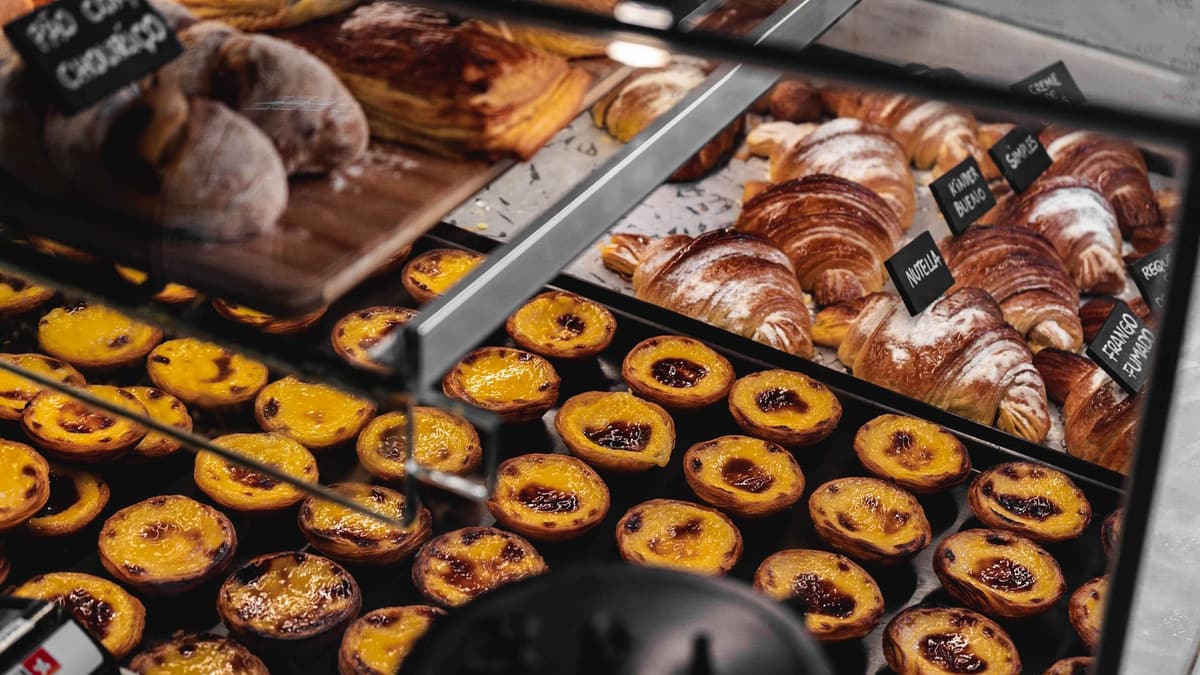
You're at Rua Garrett 37, at Pastelaria Alcôa. Look at the glass cases.
Продовження цієї зупинки є в повній аудіоекскурсії.
On the way here you passed A Brasileira, at Rua Garrett 120. It opened in 1905 to sell Brazilian coffee.
Продовження цієї зупинки є в повній аудіоекскурсії.
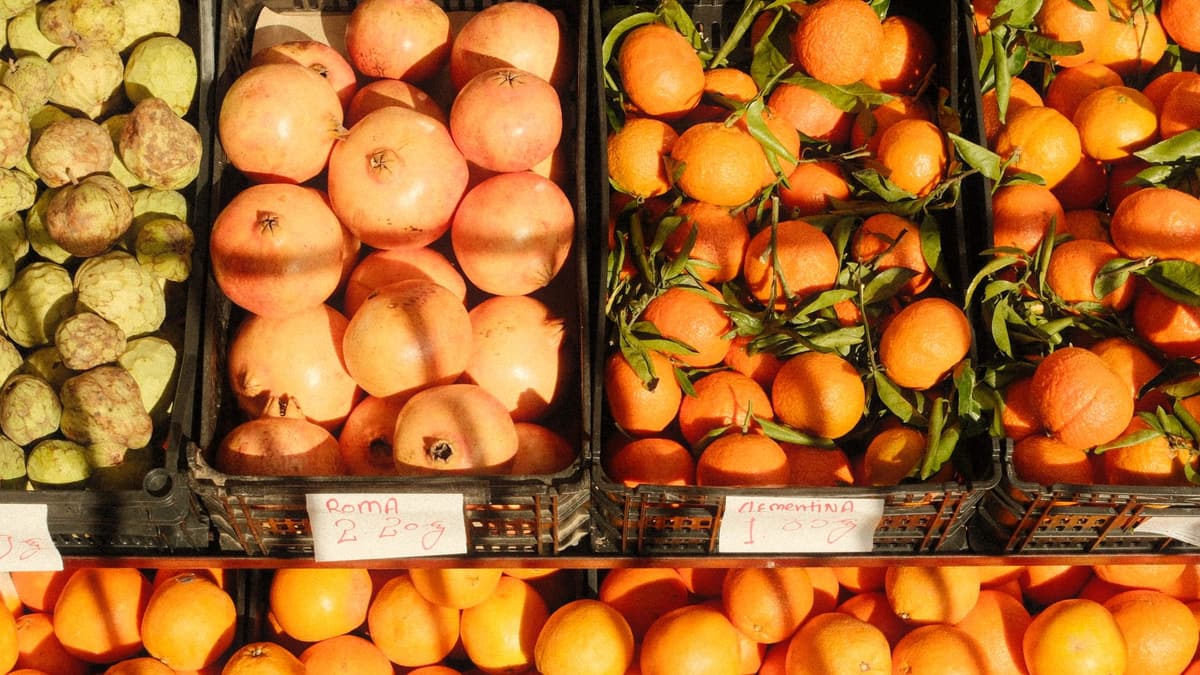
You're at Avenida 24 de Julho 49, at the Mercado da Ribeira. Today most people know it as the Time Out Market.
Продовження цієї зупинки є в повній аудіоекскурсії.
Зробіть цю прогулянку разом з іншими людьми на наступному запланованому турі.
Приблизно 2,4 км, приблизно 36 хвилин у легкому темпі · 7 зупинок
Друзі гуляють безкоштовноOctober 11, 2026 · 9 min read
From the Hollandsche Schouwburg through the old Jewish Quarter, past the Dockworker and the Dam, to the Anne Frank House on the Prinsengracht.
October 11, 2026 · 11 min read
From Van Houten's street by the Vondelpark past Leidseplein, the Rijksmuseum passage and the famous canal bench to the Anne Frank House.

October 11, 2026 · 10 min read
Follow the last days of April and May 1945 from the Anhalter Bahnhof ruin past the Gestapo site and Brandenburg Gate to the Moltke Bridge and the Reichstag.
