
October 11, 2026 · 9 min read
Amsterdam Anne Frank Walking Tour
From the Hollandsche Schouwburg through the old Jewish Quarter, past the Dockworker and the Dam, to the Anne Frank House on the Prinsengracht.
589

October 11, 2026 · 14 min read

 Друзі гуляють безкоштовно
Кожен тур також доступний як запланована групова прогулянка, до якої можна приєднатися в додатку.
Більше аудіотурів у London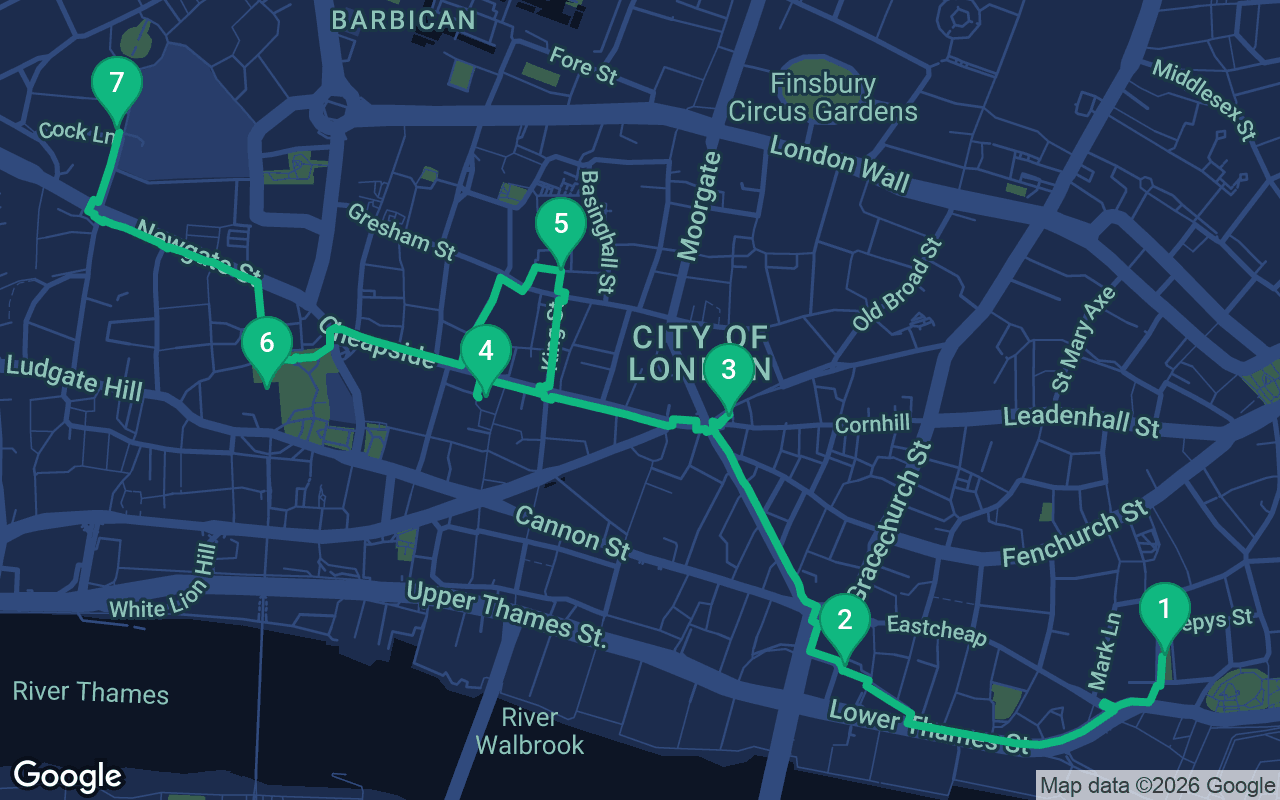
Приблизно 3 км, приблизно 43 хвилин у легкому темпі.
Цей тур озвучено
Натисніть відтворення на перших 3 зупинках, щоб послухати 30-секундний фрагмент розповіді. У додатку вступ і ці зупинки звучать повністю й безкоштовно, а про кожну з них вас сповістить звуковий сигнал, щойно ви прибудете. Весь тур із розповіддю буде вашим за $14.99, одноразова покупка назавжди.
Працює з Garmin, Komoot, Strava, OS Maps та будь-яким застосунком GPX.
At about one in the morning on Sunday 2 September 1666, a fire started in a bakery on Pudding Lane, close to the City end of London Bridge. Four days later, much of the City of London was ash: more than thirteen thousand houses, eighty-seven churches, the great cathedral of St Paul's. Around a hundred thousand people had lost their homes. This walk follows the fire in the order it moved, from east to west, day by day, through the eyes of two men who wrote it down as it happened: Samuel Pepys, a navy official with a famous diary, and his fellow diarist John Evelyn. You start in the little garden where Pepys lived, on Seething Lane near Tower Hill, and you finish about three kilometers later at a small gilded statue of a boy near Smithfield, who has his own theory about who was to blame. It's one of the easiest of our self-guided walking tours, and every quote you hear comes straight from people who were there.
The walking takes under an hour; with the stories, allow an hour and a half to two. Start at Tower Hill Underground, a few minutes from Seething Lane. You finish near St Paul's station on the Central line, or Farringdon and City Thameslink, each about ten minutes away. The route is flat apart from a gentle rise toward St Paul's. The City is busiest on weekday lunchtimes and very quiet on weekends, when some of the small churches are closed, so check before you go if you want to step inside. Climbing the Monument and going into St Paul's Cathedral are both paid extras. Pavements are narrow in places, and there's little shade but plenty of tall buildings to shelter behind if it rains.
You're in a small public garden on Seething Lane. This was the site of the Navy Office, where Samuel Pepys both worked and lived. Look for the bust of Pepys, and then look down. The stone pavers are carved with scenes from his life, and one of them shows the Parmesan cheese and wine he buried. Hold on to that; it comes later. At the top of the lane is St Olave's, Pepys's own church, and just to the south you can see the brick tower of All Hallows by the Tower.
On the night of Saturday 1 September, the household was busy getting ready for a dinner party. Pepys wrote: "Some of our mayds sitting up late last night to get things ready against our feast to-day, Jane called us up about three in the morning, to tell us of a great fire they saw in the City." He put on his nightgown and looked out of her window. "I thought it far enough off," he wrote, "and so went to bed again and to sleep."
At seven he got up and looked again. The fire seemed smaller. Then Jane came back with news: "above 300 houses have been burned down to-night by the fire we saw, and that it is now burning down all Fish-street, by London Bridge."
Pepys walked to the Tower and climbed up to look. He saw the houses at the end of the bridge all on fire. The Lieutenant of the Tower told him "that it begun this morning in the King's baker's house in Pudding-lane." Pepys took a boat onto the river. People were throwing their goods into the water or into boats, staying in their houses until the fire touched them. He noticed the pigeons, too, which "were loth to leave their houses, but hovered about the windows and balconys till they were, some of them burned, their wings, and fell down."
Walk to the bottom of Seething Lane, then follow your map west along Great Tower Street toward the tall column of the Monument, about eight minutes.
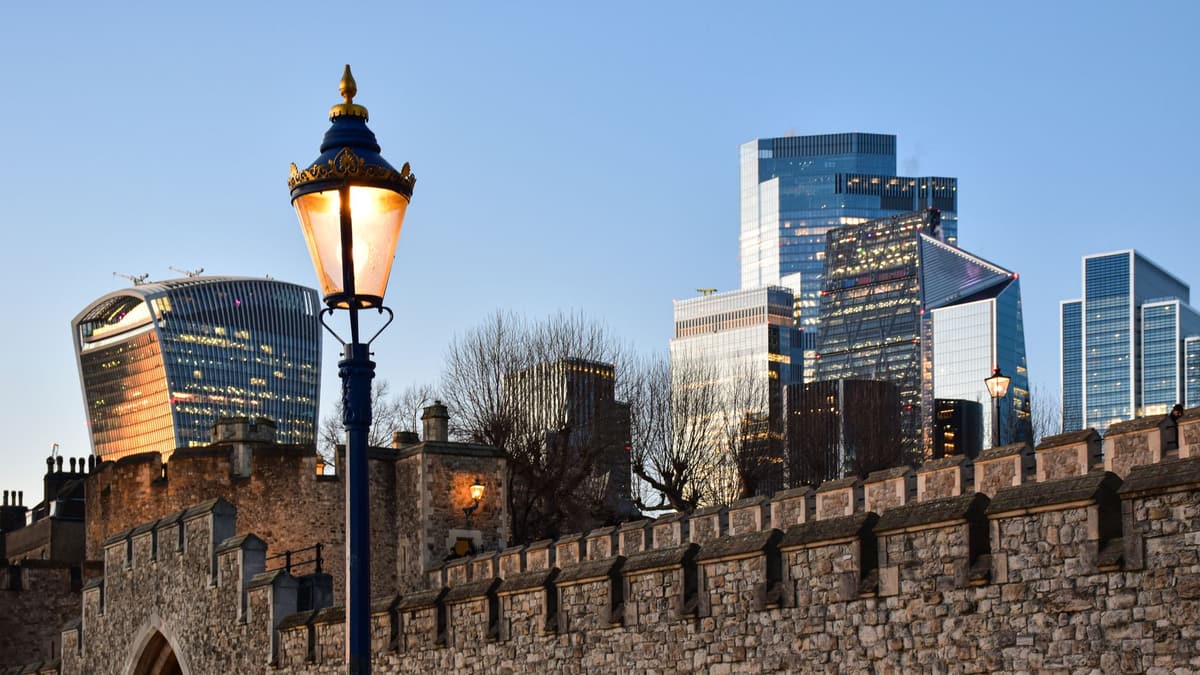 You're standing beside the Monument, a Doric column designed by Christopher Wren and Robert Hooke and built between 1671 and 1677. It is 202 feet tall, about 61 meters, and it stands 202 feet from where the fire began. Lay it down on its side toward the east, and the gilded urn at the top would land on the bakery. A plaque on Pudding Lane, put up by the Bakers' Company in 1986, marks the King's Baker's shop as "near this site"; the real spot disappeared under Monument Street in the 1880s. If you're feeling strong, there are 311 steps to the top.
The bakery belonged to Thomas Farriner. The fire started there at about one in the morning. Nobody knows how; it may have been a spark from the oven. The first to notice might have been an apprentice, Thomas Dagger, twenty-four years old, who woke to "the choke of the smoke." By one account, the Monument's, the family's maid died. Other histories don't mention her, so we can't be sure.
The Lord Mayor, Sir Thomas Bludworth, was called. He judged it not serious and went back to bed. You may have heard a crude line he's supposed to have said about it; it isn't in Pepys's diary, so treat it as legend.
The fire found plenty to eat. Pepys listed it: "pitch and tarr, in Thames-street; and warehouses of oyle, and wines, and brandy." He hurried to Whitehall and told King Charles II "that unless his Majesty did command houses to be pulled down nothing could stop the fire." The King sent him back to the Lord Mayor with orders "to spare no houses, but to pull down before the fire every way." Pepys found Bludworth in Cannon Street, "like a man spent, with a handkercher about his neck," who cried: "Lord! what can I do? I am spent: people will not obey me. I have been pulling down houses; but the fire overtakes us faster than we can do it."
That evening, from an alehouse on the far bank, Pepys watched "one entire arch of fire from this to the other side the bridge, and in a bow up the hill for an arch of above a mile long: it made me weep to see it."
In 1681, words blaming the fire on "Popish frenzy" were added to the Monument's inscription. They were finally removed in 1830.
Head north-west up King William Street to Bank junction, about seven minutes.
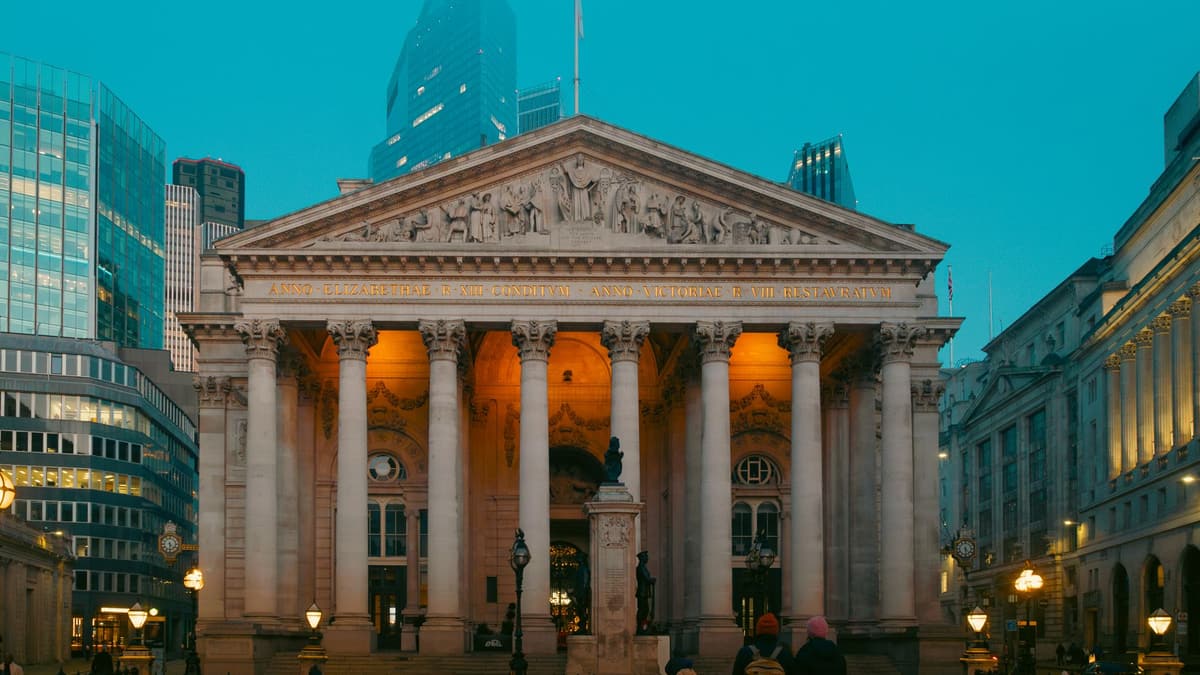
You're at Bank junction, one of the busiest crossroads in the City. In front of the great columned portico is the Royal Exchange, with the Duke of Wellington on horseback outside. Scan the roofline for a gilded grasshopper weathervane. The grasshopper was the emblem of Thomas Gresham, the merchant who founded the Exchange. Queen Elizabeth the First opened it in 1571, and it was the trading hall at the heart of the City. The building in front of you is the third on the site, opened in 1844.
On Monday 3 September the fire spread into this commercial heart. John Evelyn went to look. The fire was moving with "a fierce Eastern Wind, in a very drie season," and it even "kindled back against the Wind, as well as forward." He said the night had been as light as day for ten miles around.
Pepys spent Monday saving his things. At four in the morning a neighbor, Lady Batten, sent him a cart, and he rode off with his money and best possessions to a friend's house in Bethnal Green, sitting "in my night-gowne in the cart." The roads were packed. That night he and his wife slept on a borrowed quilt in the office, eating the leftovers of Sunday's dinner.
The Exchange burned. When Pepys walked through two days later, he wrote: "The Exchange a sad sight, nothing standing there, of all the statues or pillars, but Sir Thomas Gresham's picture in the corner." Evelyn noticed the same thing. The statues of the kings of England had broken to pieces, but Gresham, though fallen from his niche, was whole. Pepys saw something smaller too: "a poor cat taken out of a hole in the chimney, joyning to the wall of the Exchange; with, the hair all burned off the body, and yet alive."
Walk west along Poultry and into Cheapside until you reach the tall white steeple of St Mary-le-Bow, about six minutes.
Що входить
Наші екскурсії задумані медитативними та захопливими: ви рухаєтеся й просто слухаєте. Разом завжди краще, і додаток відтворює розповідь синхронно, тож ви, ваш партнер і ваші друзі чуєте кожну зупинку одночасно.
You're on Cheapside, in front of St Mary-le-Bow. This is the church of Bow Bells.
Продовження цієї зупинки є в повній аудіоекскурсії.
You're in Guildhall Yard. In front of you is the Guildhall, the City's town hall, built from 1411, with its Gothic porch.
Продовження цієї зупинки є в повній аудіоекскурсії.
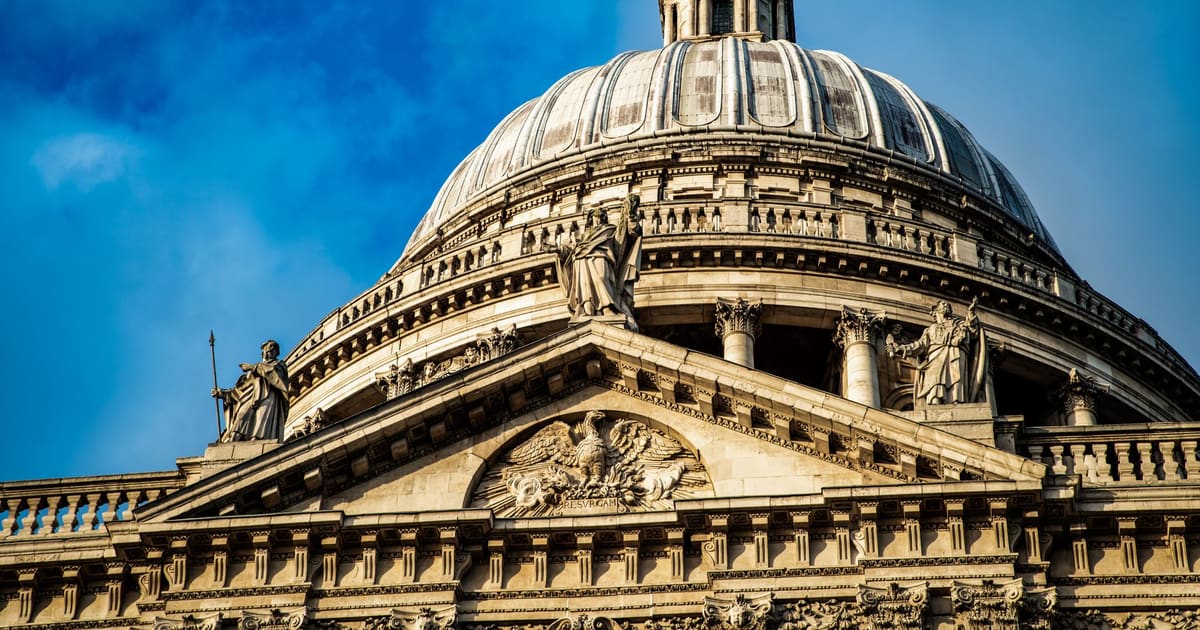
You're in front of St Paul's Cathedral, Christopher Wren's masterpiece, with its great dome above you. It was begun in 1675 and declared complete in 1711.
Продовження цієї зупинки є в повній аудіоекскурсії.
You're on the corner of Giltspur Street and Cock Lane, opposite St Bartholomew's Hospital. Look up.
Продовження цієї зупинки є в повній аудіоекскурсії.
Зробіть цю прогулянку разом з іншими людьми на наступному запланованому турі.
Приблизно 3 км, приблизно 43 хвилин у легкому темпі · 7 зупинок
Друзі гуляють безкоштовноOctober 11, 2026 · 9 min read
From the Hollandsche Schouwburg through the old Jewish Quarter, past the Dockworker and the Dam, to the Anne Frank House on the Prinsengracht.
October 11, 2026 · 11 min read
From Van Houten's street by the Vondelpark past Leidseplein, the Rijksmuseum passage and the famous canal bench to the Anne Frank House.

October 11, 2026 · 10 min read
Follow the last days of April and May 1945 from the Anhalter Bahnhof ruin past the Gestapo site and Brandenburg Gate to the Moltke Bridge and the Reichstag.
