




 $14.99Zlomové okamžiky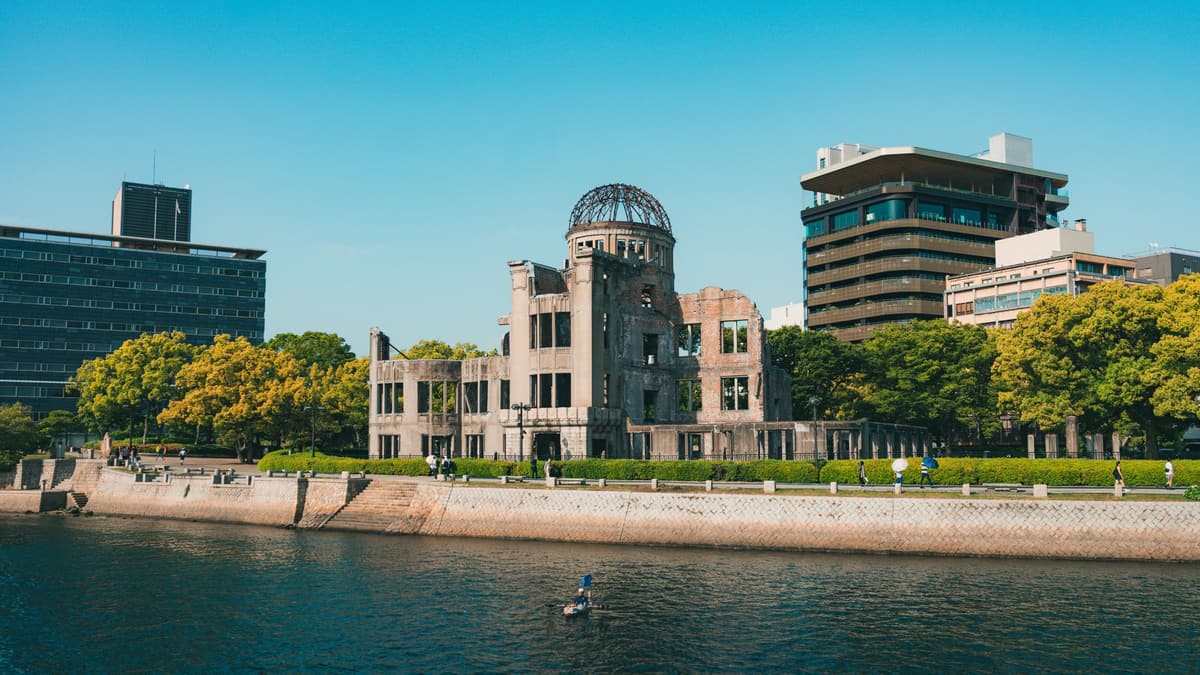
Audioprůvodce Hiroshima Pěší trasy
Pěší trasy s komentářem v Hiroshima, které můžete procházet sami. Kupte si trasu jednou, stáhněte si ji a nechte příběh hrát na každé zastávce, zatímco jdete vlastním tempem.
Trasy od $14.99
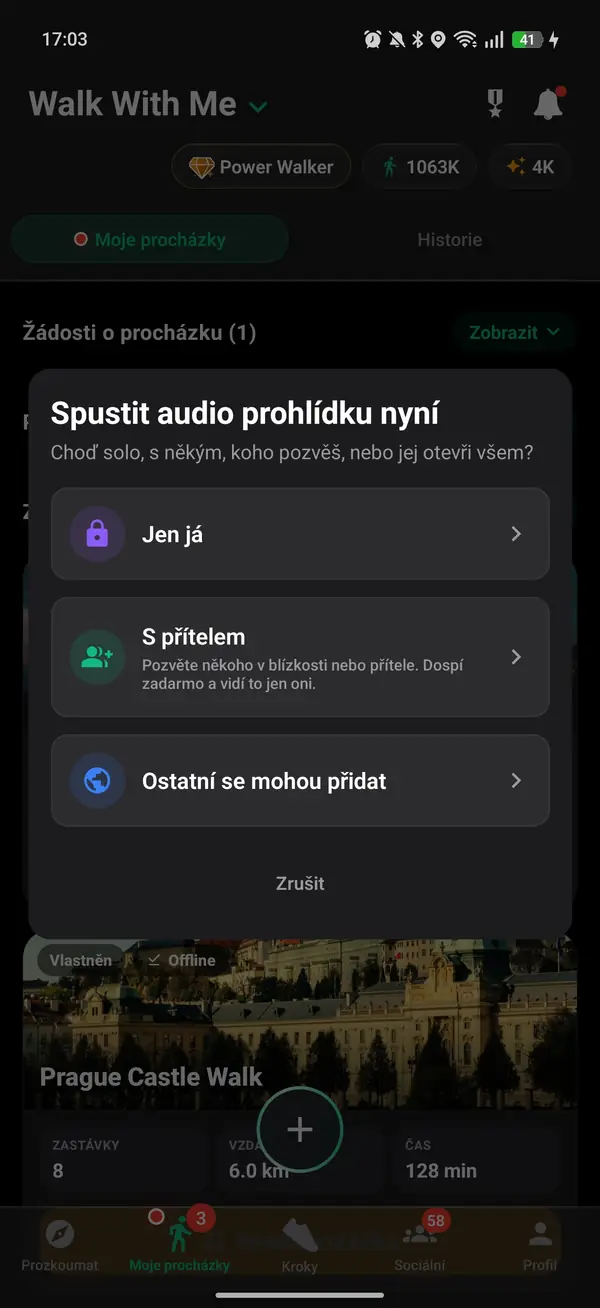
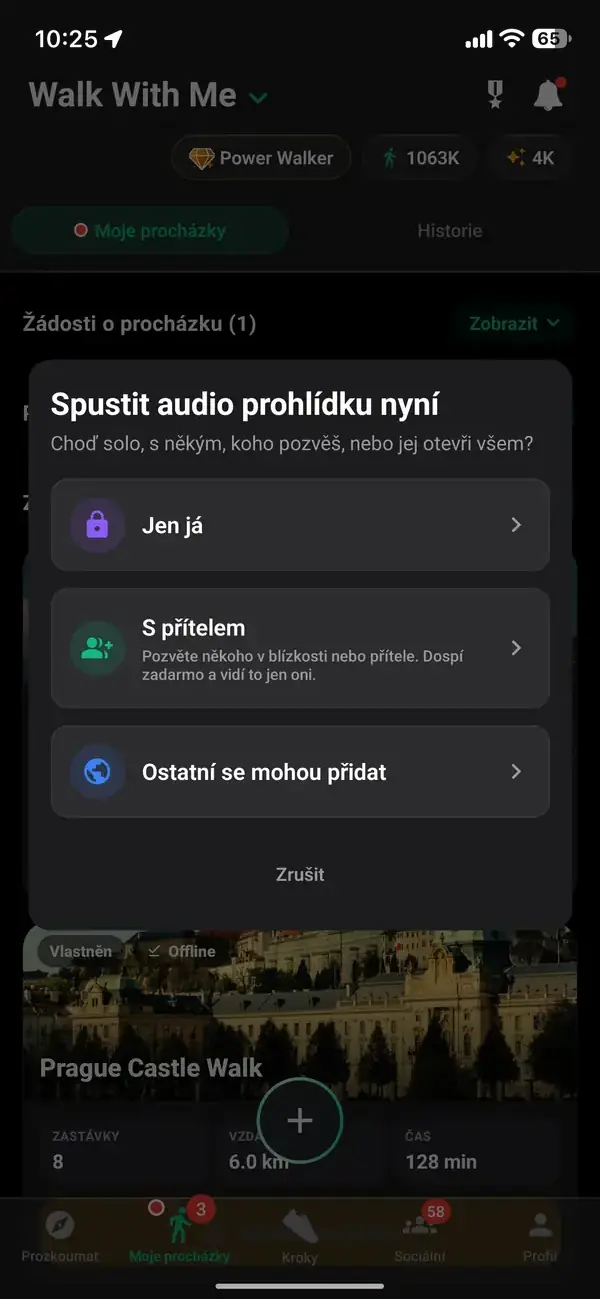
Přátelé chodí zdarma. Jeden nákup pokryje všechny na tvé procházce. Spusť túru, pozvi přátele, aby se připojili, a bude hrát na telefonu každého z vaší skupiny.
5.0 na Google Play
Audioprůvodci pro Hiroshima
Každá trasa obsahuje mapu a komentář pro každé zastavení. Koupíte si ji jednou a zůstane vám napořád, bez jakéhokoli předplatného.
$14.99Zlomové okamžikyCo vás čeká na pěší trase s audioprůvodcem v Hiroshima
A Hiroshima audio walk follows August 6, 1945 and what came after, from the T shaped bridge the bomb was aimed at, past the Dome and the hypocenter, to the memorials of the Peace Park, ending with Sadako Sasaki and her paper cranes.
The walk starts at Aioi Bridge, whose T shape made it the aiming point, then follows the river to the Atomic Bomb Dome, completed in 1915 as an exhibition hall and a World Heritage Site since 1996. A short street leads to the small plaque outside Shima Hospital, the hypocenter, about 600 meters below where the bomb exploded at 8:15.
It continues to Fukuromachi Elementary School, where survivors wrote messages for the missing on the burned walls, then crosses the river into the Peace Park: the phoenix trees that budded again the next spring, the Cenotaph that frames the Flame of Peace and the Dome in a single line, and the Korean Victims Memorial on its stone turtle.
It ends at the Children's Peace Monument, where about 10 million paper cranes are left every year. It's about 2.6 kilometers, roughly 36 minutes of walking, flat and paved, starting at the Genbaku Dome-mae tram stop and finishing about 250 meters from it. People come here to pray, so the tone is quiet and the narration leaves room for silence.
Kam se vydat v Hiroshima
Několik zastávek, které potkáte cestou, a důvody, proč u nich stojí za to zpomalit.
Aioi Bridge
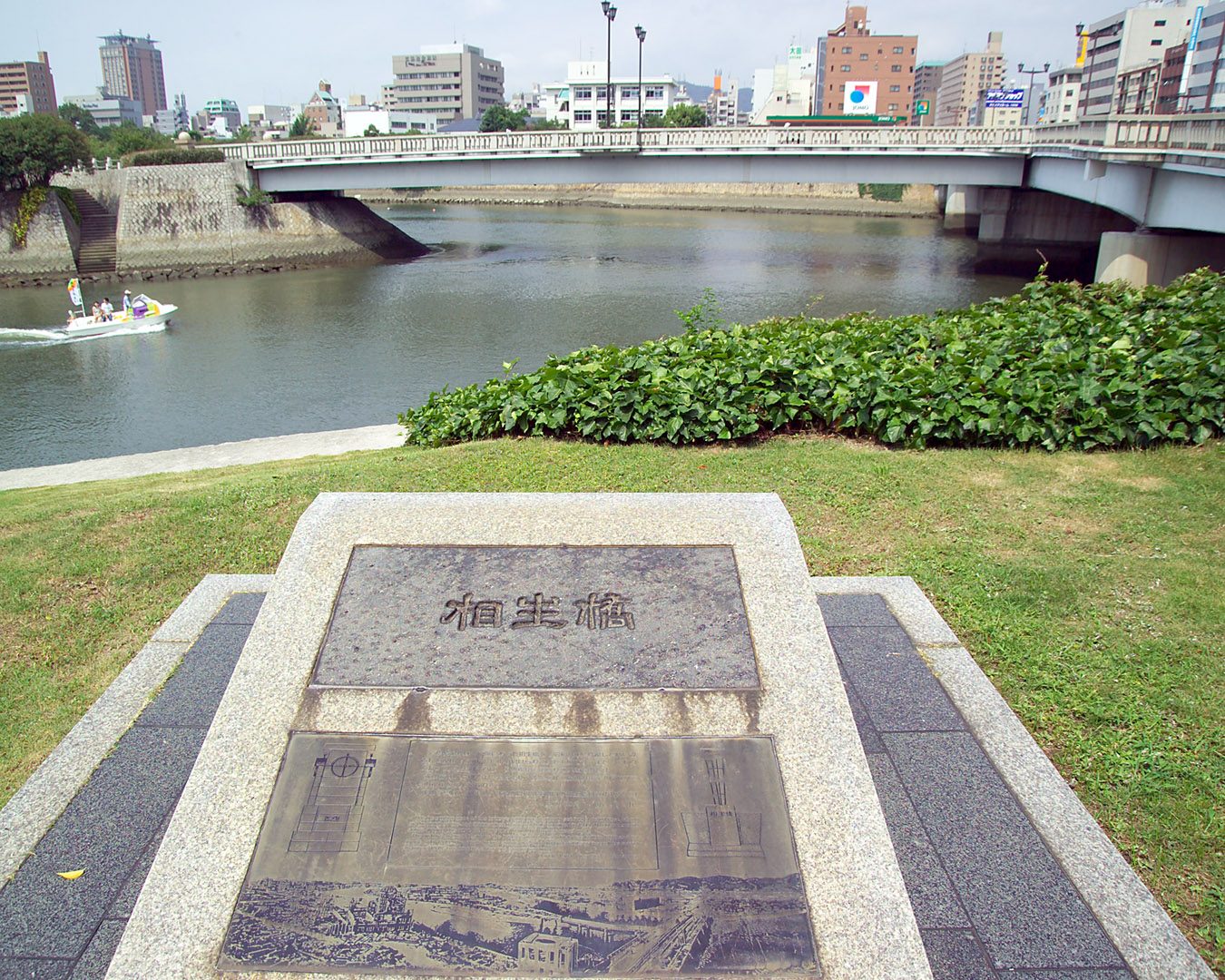
This stone marker by the river carries the name of Aioi Bridge, and behind it runs the bridge itself, which is not a straight crossing but a T: a stem branches off the middle and runs onto the tip of the island that is now the Peace Park, an arm added in 1934. From the air that shape was easy to pick out, which is why the crew aimed for it, not for the Dome. The bomb missed it by a few hundred meters. The bridge was rebuilt in 1983, but pillars of the original, damaged by the blast, are kept at its base.
Atomic Bomb Dome
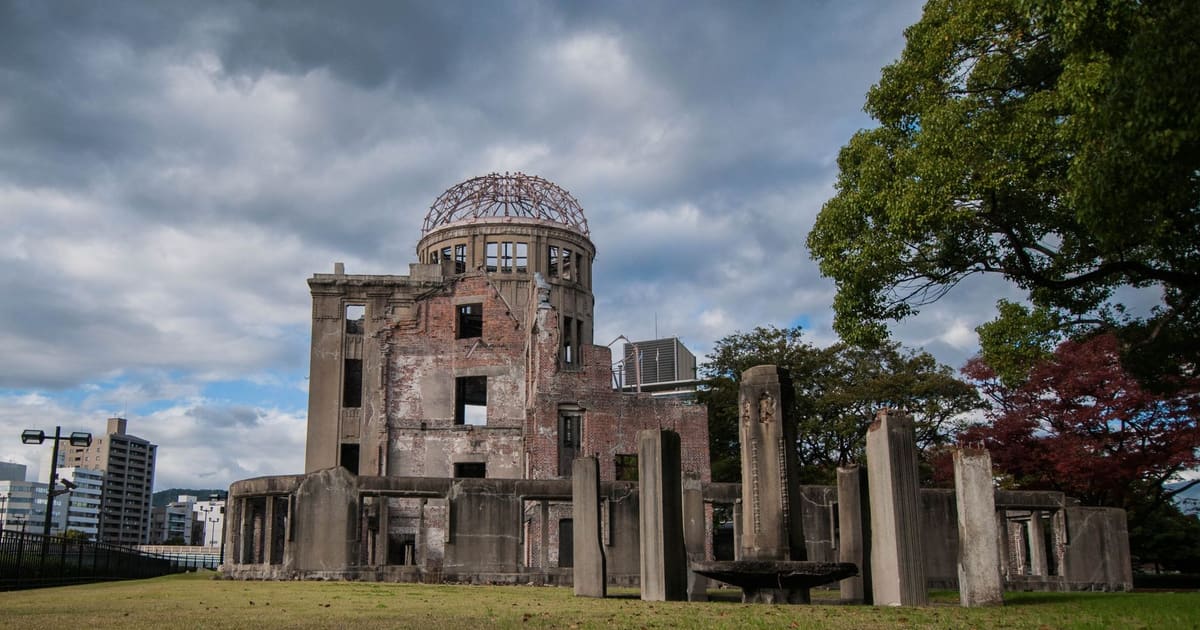
The Czech architect Jan Letzel designed this building, completed in April 1915 as the Prefectural Commercial Exhibition Hall, and by 1945 it held wartime government offices. The bomb exploded about 160 meters to the southeast and high above, and because the blast came from almost directly overhead, the central hall stayed standing with the steel frame of its dome. Everyone working inside died. The city resolved to preserve it in 1966, and in December 1996 it was added to the World Heritage list. Look from the fence, and remember its shape for the Cenotaph.
The Motoyasu River
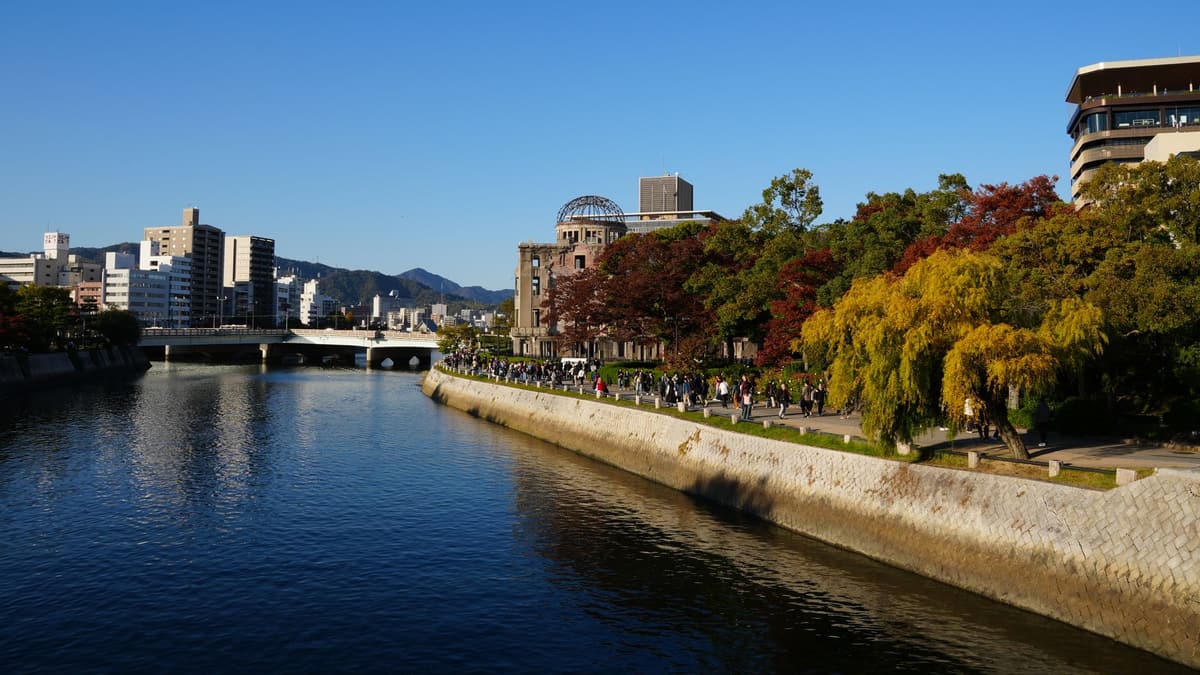
The Motoyasu River runs between the Dome and the Peace Park, and the walk follows it from Aioi Bridge, then crosses it on the way from Fukuromachi to the museum. The park on the far bank was laid out over the Nakajima district, a neighborhood of about 6,500 residents destroyed that morning, and finished in 1954, so the paths and trees along the water stand where homes once were. In autumn the banks turn red and gold, and it's a quiet place to pause between stops before you go on into the park.
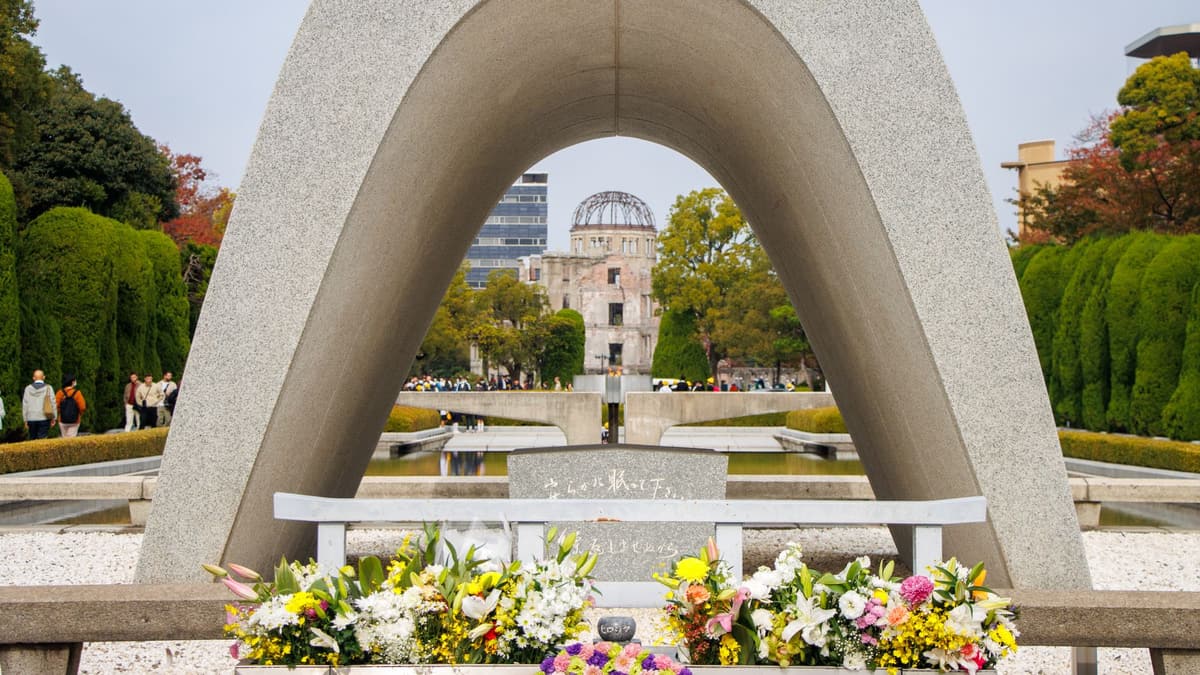
Cenotaph and Flame of Peace
Kenzo Tange designed this saddle shaped arch, finished in 1952, and under it a stone chest holds the register of the names of those who died from the bomb, regardless of nationality. Names are still added. Stand in front and look through it, and the Flame of Peace and the Dome across the river line up in one view. The flame was lit on August 1, 1964 and is meant to burn until nuclear weapons are gone from the earth. The official English inscription reads: Let all the souls here rest in peace; For we shall not repeat the evil.
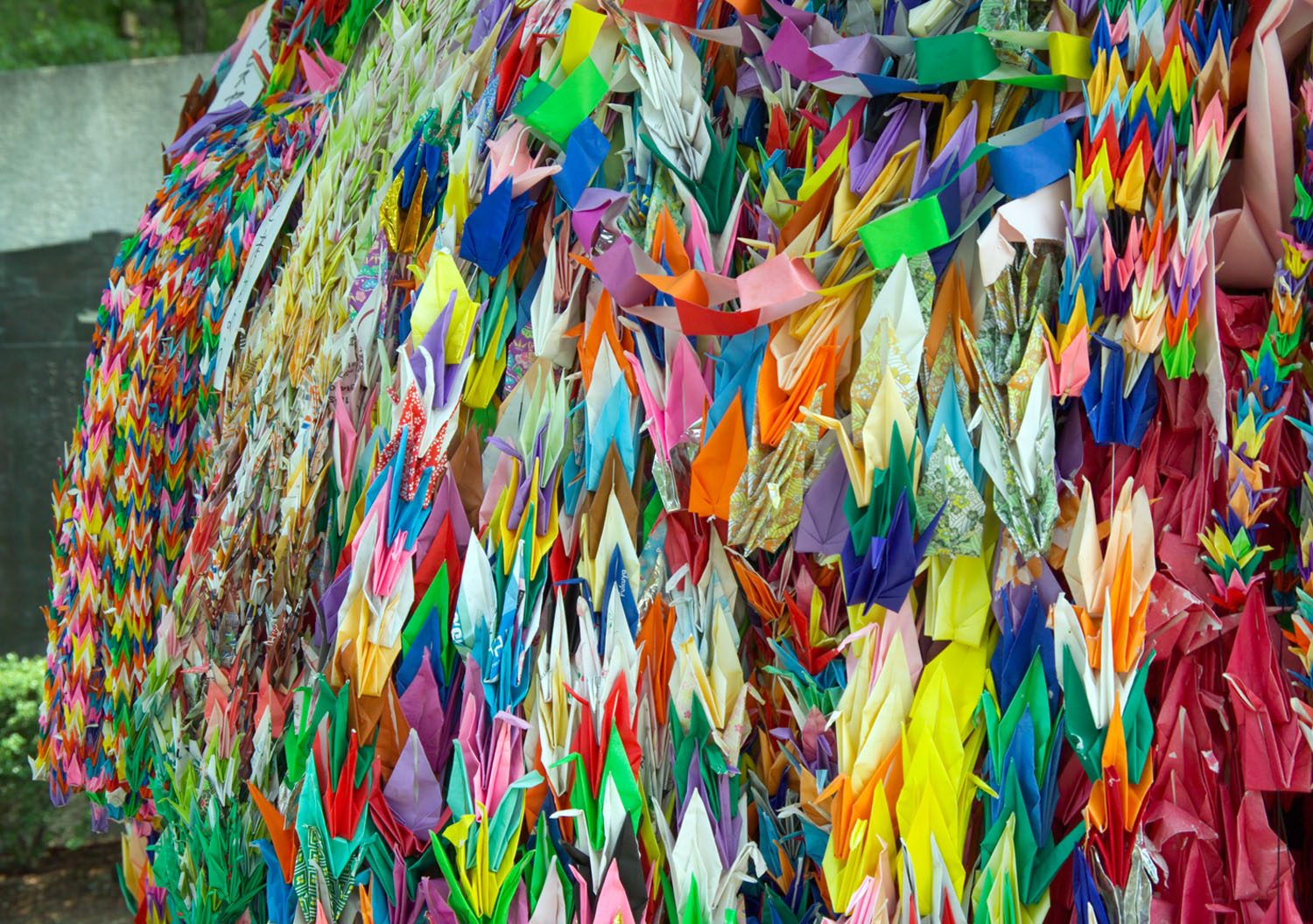
Children's Peace Monument
Paper cranes like these, strung together by the thousand in every color, fill the cases around the Children's Peace Monument, about 10 million every year. The monument began with Sadako Sasaki, who was two when the bomb fell and began folding cranes from her medicine wrappers in August 1955, after she fell ill with leukemia. She passed a thousand and kept folding before she died that October, aged twelve. Her classmates raised money from more than 3,100 schools, and the monument was unveiled on Children's Day, May 5, 1958. Never touch or take the cranes.
Získejte audioprohlídku ve 3 jednoduchých krocích
Vše v bezplatné aplikaci Walk With Me a první zastávky každé prohlídky si můžete vyzkoušet zdarma.
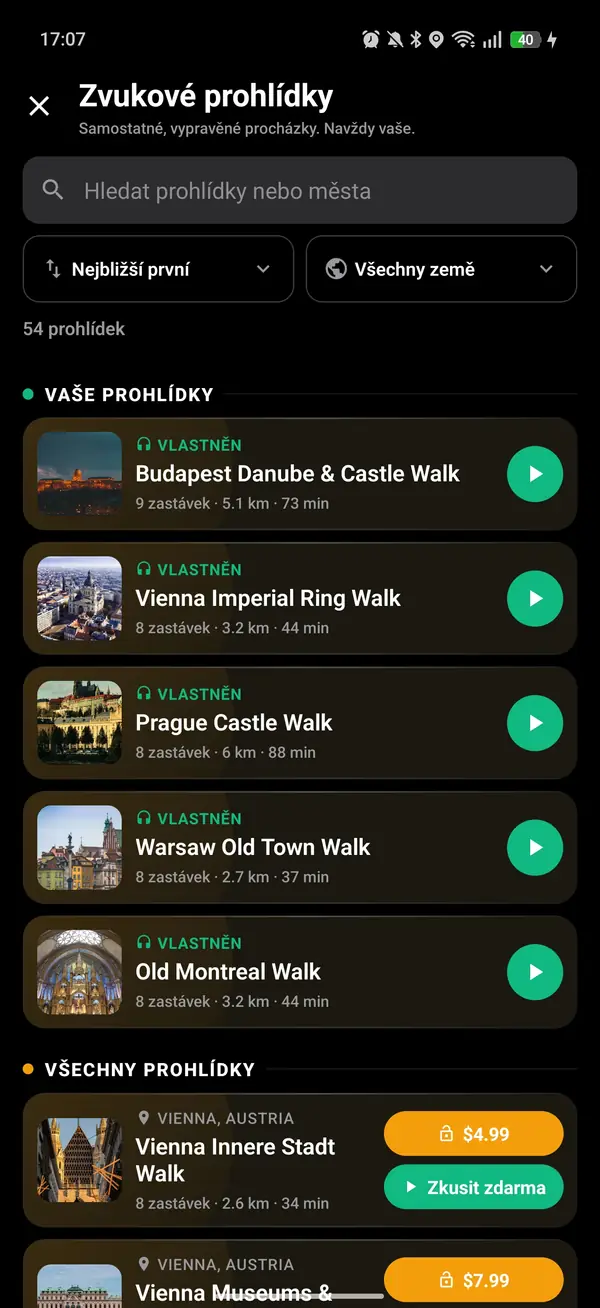
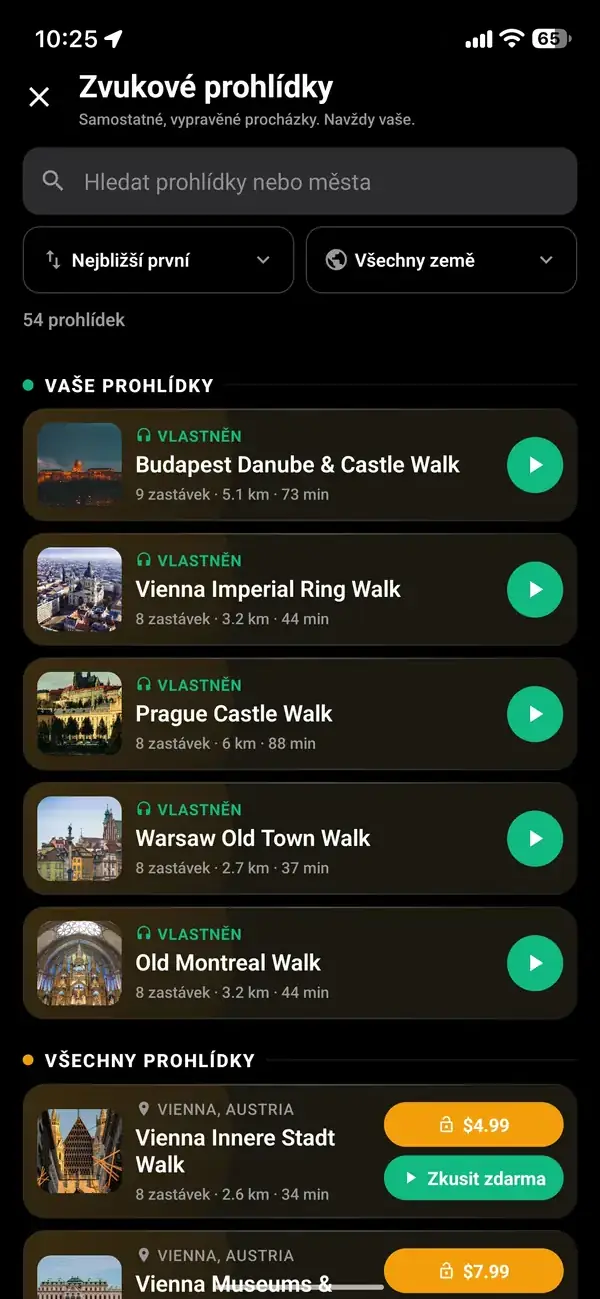
Klepněte na zlatá sluchátka a vyberte prohlídku
01
Jděte sami, nebo někoho pozvěte
02
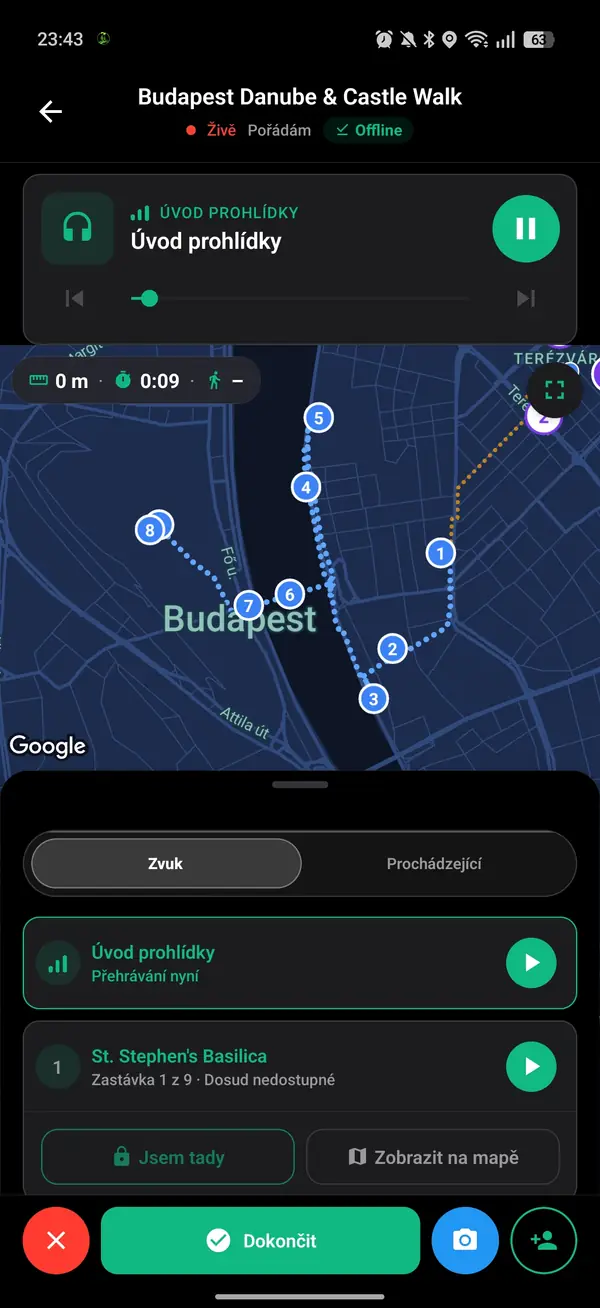
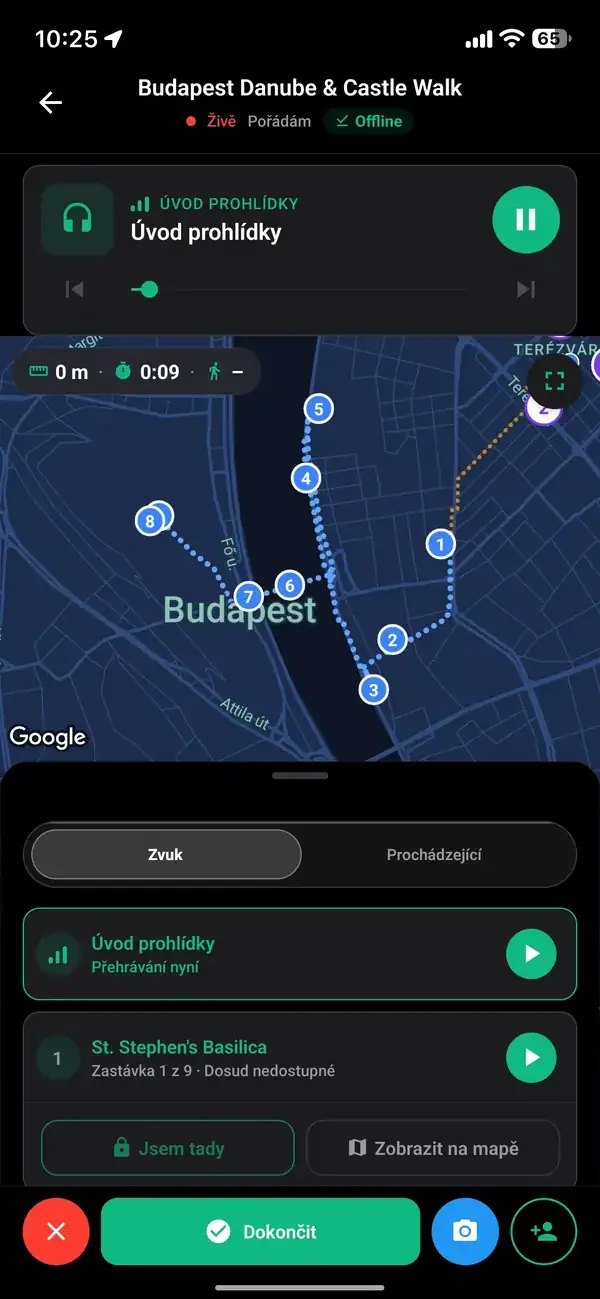
Spusťte přehrávání a jděte
03
Pečlivě vytvořené pro váš čas ve městě
Tyto prohlídky nejsou seznam památek k odškrtání. Jsou určené k pomalé chůzi, se sluchátky na uších a pohledem upřeným na město.
Meditativní a pohlcující
Každý příběh zazní tam, kde se odehrál. Aplikace zazvoní, když dorazíte na zastávku, jedno klepnutí spustí vyprávění a cesta mezi zastávkami patří jen vám, vaším vlastním tempem.
Ručně a s péčí
Každou trasu i každou zastávku vybíráme sami a každý příběh pečlivě dotváříme, aby váš čas ve městě patřil místům, která za to opravdu stojí.
Ve dvou je to lepší
Každá procházka je lepší s někým po boku, takže pokud můžete někoho vzít s sebou, moc vám to doporučujeme. Proto jeden nákup pokryje všechny, koho pozvete: připojí se k vaší prohlídce zdarma.