




 $14.99歴史の転換点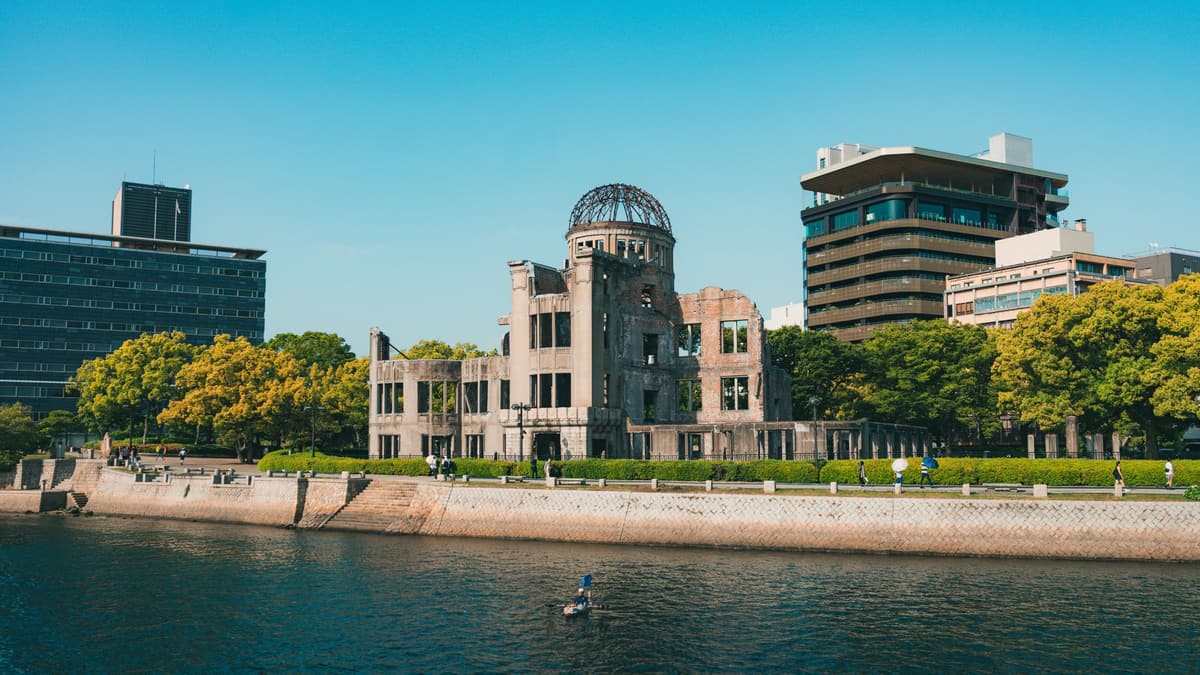
Hiroshimaの音声 ウォーキングツアー
自分のペースで歩く、Hiroshimaのセルフガイド音声ウォーキングツアー。一度購入してダウンロードすれば、歩きながら各スポットで自動的にストーリーが再生されます。
ツアー料金:$14.99〜
友達は無料で歩けます. 購入は1回だけで、一緒に歩く全員分をカバーします。ツアーを開始して友達を招待すれば、グループの全員のスマートフォンで再生されます。
Google Playで5.0
Hiroshimaの音声ツアー
各ツアーは、すべてのスポットに音声ガイドが付いた地図付きルートです。一度購入すれば、サブスクリプションなしでずっとご利用いただけます。
$14.99歴史の転換点Hiroshimaの音声ウォーキングツアーの見どころ
A Hiroshima audio walk follows August 6, 1945 and what came after, from the T shaped bridge the bomb was aimed at, past the Dome and the hypocenter, to the memorials of the Peace Park, ending with Sadako Sasaki and her paper cranes.
The walk starts at Aioi Bridge, whose T shape made it the aiming point, then follows the river to the Atomic Bomb Dome, completed in 1915 as an exhibition hall and a World Heritage Site since 1996. A short street leads to the small plaque outside Shima Hospital, the hypocenter, about 600 meters below where the bomb exploded at 8:15.
It continues to Fukuromachi Elementary School, where survivors wrote messages for the missing on the burned walls, then crosses the river into the Peace Park: the phoenix trees that budded again the next spring, the Cenotaph that frames the Flame of Peace and the Dome in a single line, and the Korean Victims Memorial on its stone turtle.
It ends at the Children's Peace Monument, where about 10 million paper cranes are left every year. It's about 2.6 kilometers, roughly 36 minutes of walking, flat and paved, starting at the Genbaku Dome-mae tram stop and finishing about 250 meters from it. People come here to pray, so the tone is quiet and the narration leaves room for silence.
Hiroshimaのおすすめウォーキングスポット
ツアーで通りかかる代表的なスポットと、そこで少し足を止めてみるべき理由をご紹介します。
Aioi Bridge
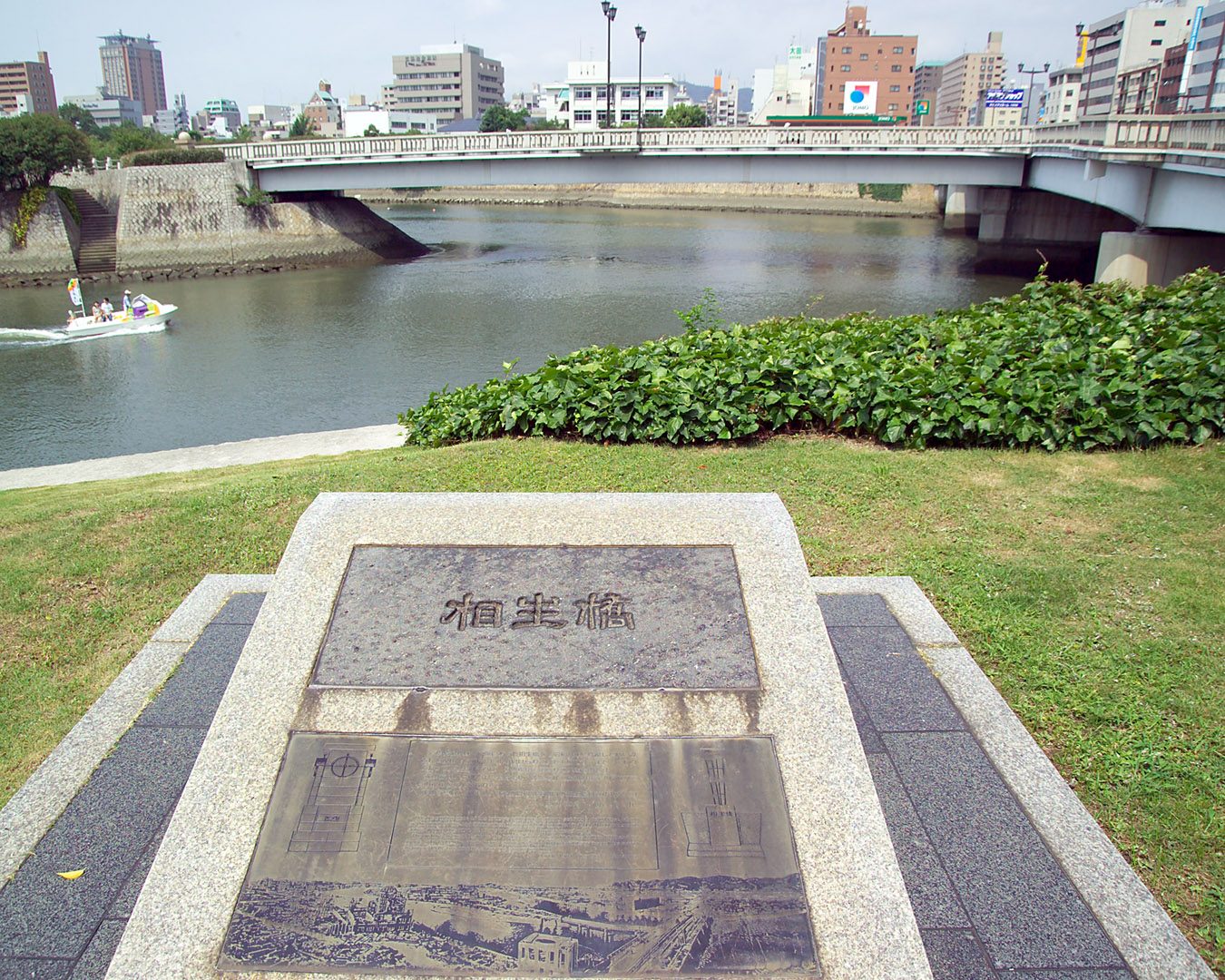
This stone marker by the river carries the name of Aioi Bridge, and behind it runs the bridge itself, which is not a straight crossing but a T: a stem branches off the middle and runs onto the tip of the island that is now the Peace Park, an arm added in 1934. From the air that shape was easy to pick out, which is why the crew aimed for it, not for the Dome. The bomb missed it by a few hundred meters. The bridge was rebuilt in 1983, but pillars of the original, damaged by the blast, are kept at its base.
Atomic Bomb Dome
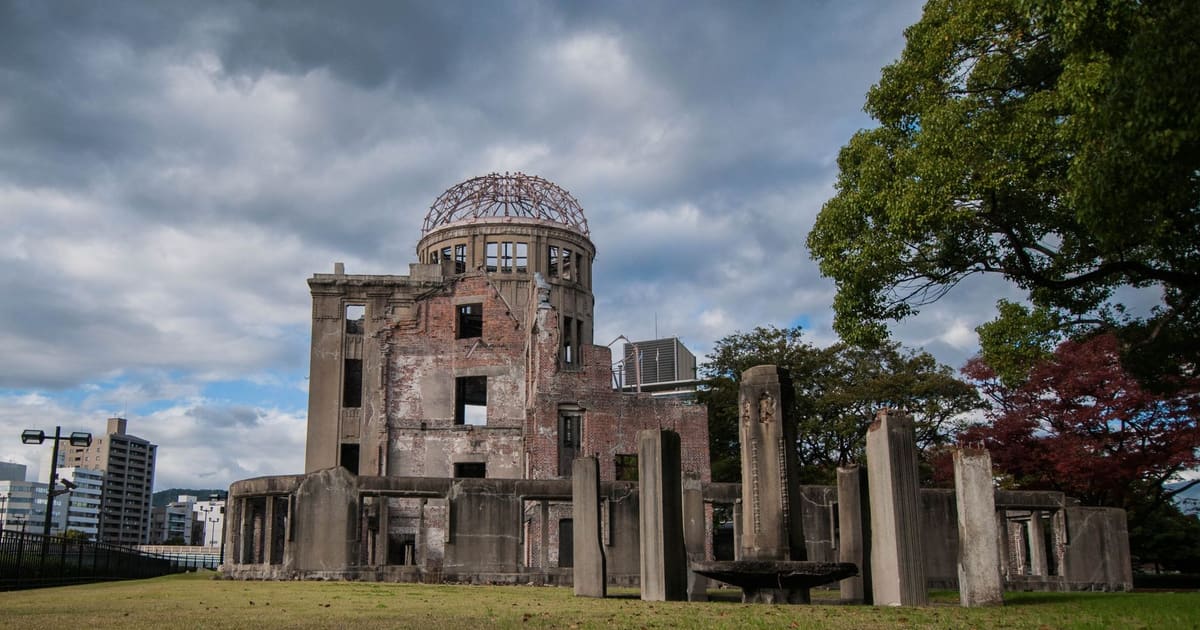
The Czech architect Jan Letzel designed this building, completed in April 1915 as the Prefectural Commercial Exhibition Hall, and by 1945 it held wartime government offices. The bomb exploded about 160 meters to the southeast and high above, and because the blast came from almost directly overhead, the central hall stayed standing with the steel frame of its dome. Everyone working inside died. The city resolved to preserve it in 1966, and in December 1996 it was added to the World Heritage list. Look from the fence, and remember its shape for the Cenotaph.
The Motoyasu River
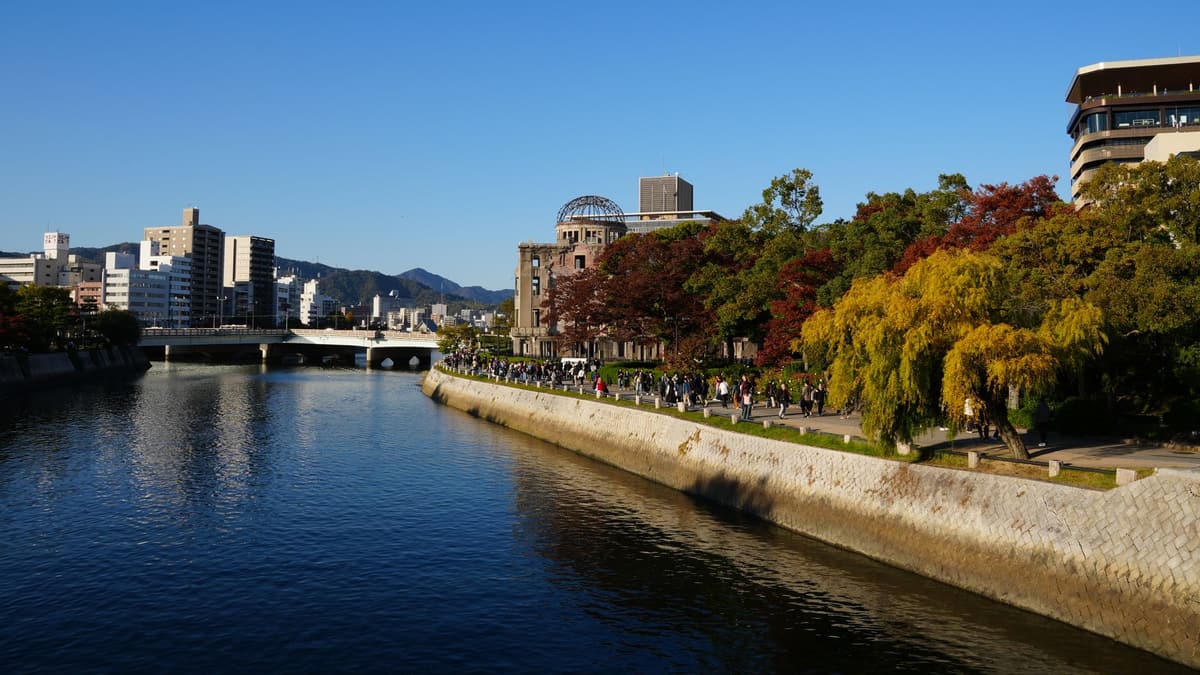
The Motoyasu River runs between the Dome and the Peace Park, and the walk follows it from Aioi Bridge, then crosses it on the way from Fukuromachi to the museum. The park on the far bank was laid out over the Nakajima district, a neighborhood of about 6,500 residents destroyed that morning, and finished in 1954, so the paths and trees along the water stand where homes once were. In autumn the banks turn red and gold, and it's a quiet place to pause between stops before you go on into the park.
Cenotaph and Flame of Peace
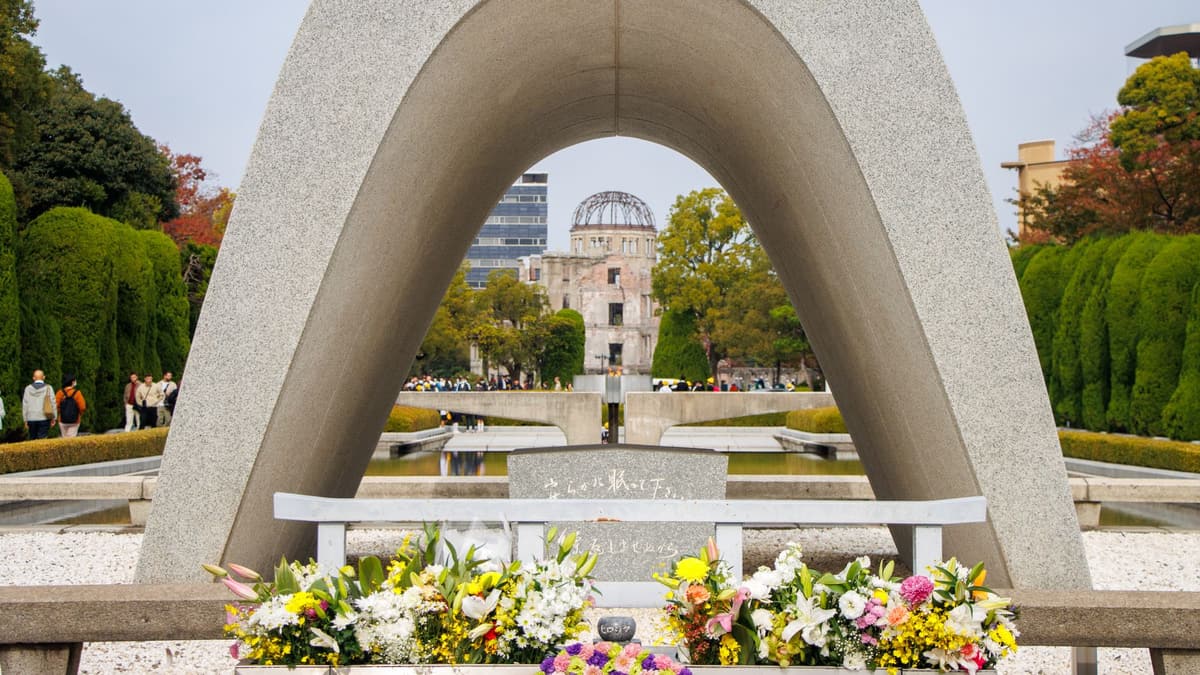
Kenzo Tange designed this saddle shaped arch, finished in 1952, and under it a stone chest holds the register of the names of those who died from the bomb, regardless of nationality. Names are still added. Stand in front and look through it, and the Flame of Peace and the Dome across the river line up in one view. The flame was lit on August 1, 1964 and is meant to burn until nuclear weapons are gone from the earth. The official English inscription reads: Let all the souls here rest in peace; For we shall not repeat the evil.
Children's Peace Monument
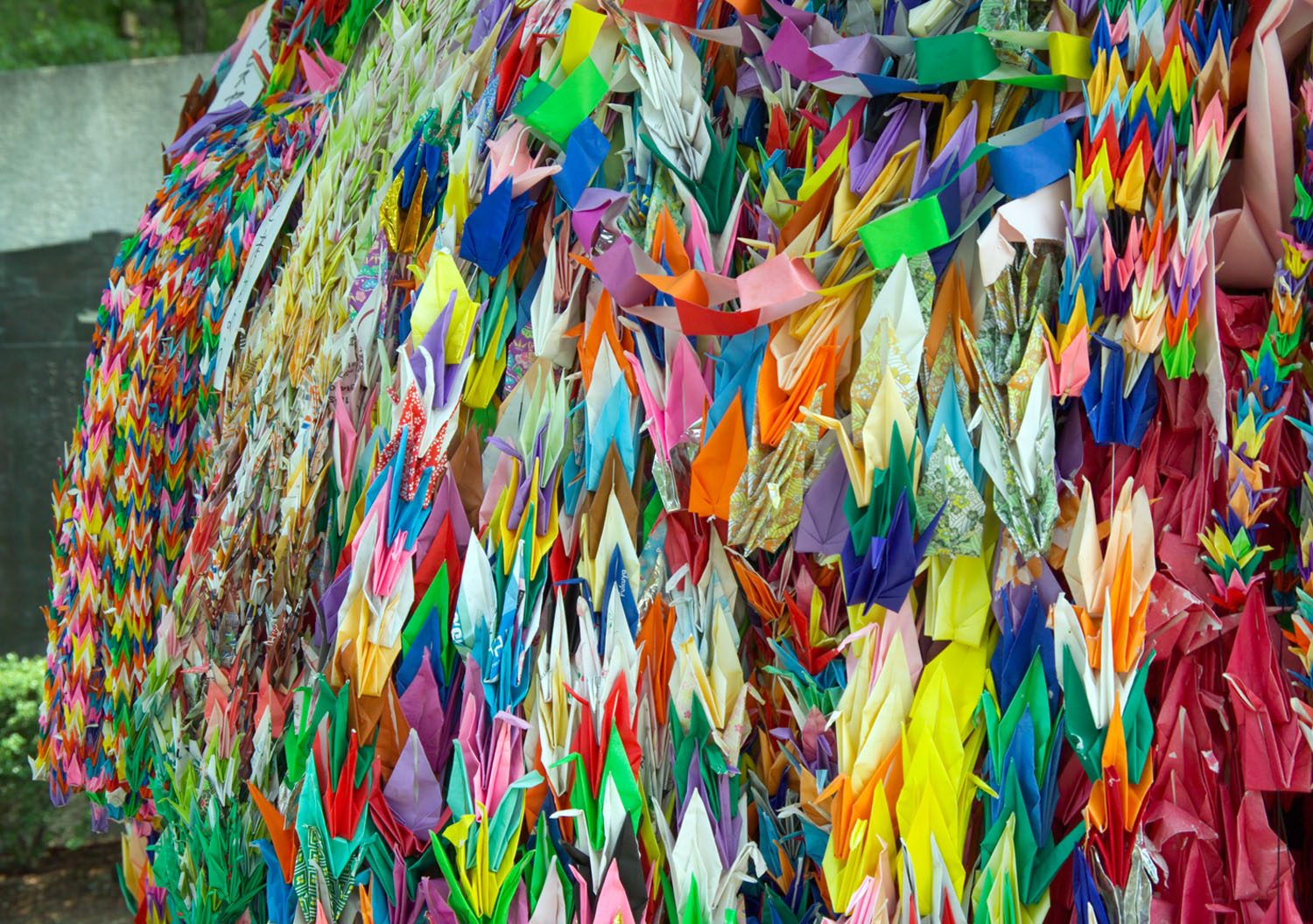
Paper cranes like these, strung together by the thousand in every color, fill the cases around the Children's Peace Monument, about 10 million every year. The monument began with Sadako Sasaki, who was two when the bomb fell and began folding cranes from her medicine wrappers in August 1955, after she fell ill with leukemia. She passed a thousand and kept folding before she died that October, aged twelve. Her classmates raised money from more than 3,100 schools, and the monument was unveiled on Children's Day, May 5, 1958. Never touch or take the cranes.
たった 3ステップでオーディオツアーを始める
すべて無料のWalk With Meアプリで完結。どのツアーも最初のいくつかのスポットは無料で試せます。
金色のヘッドホンをタップしてツアーを選ぶ
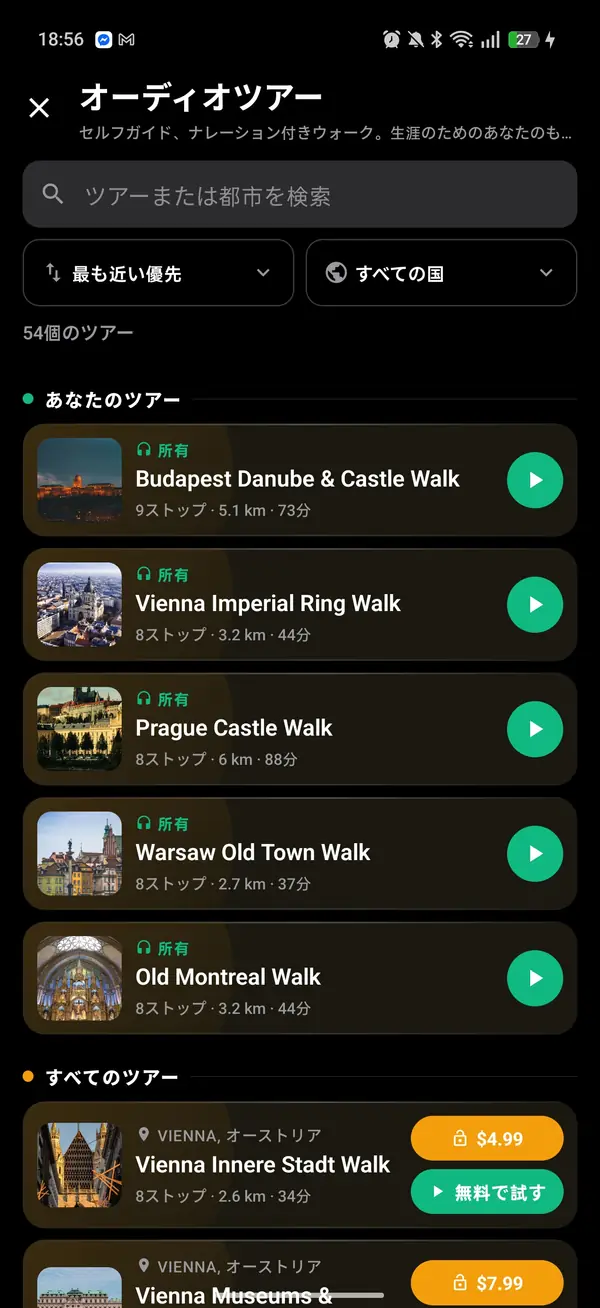
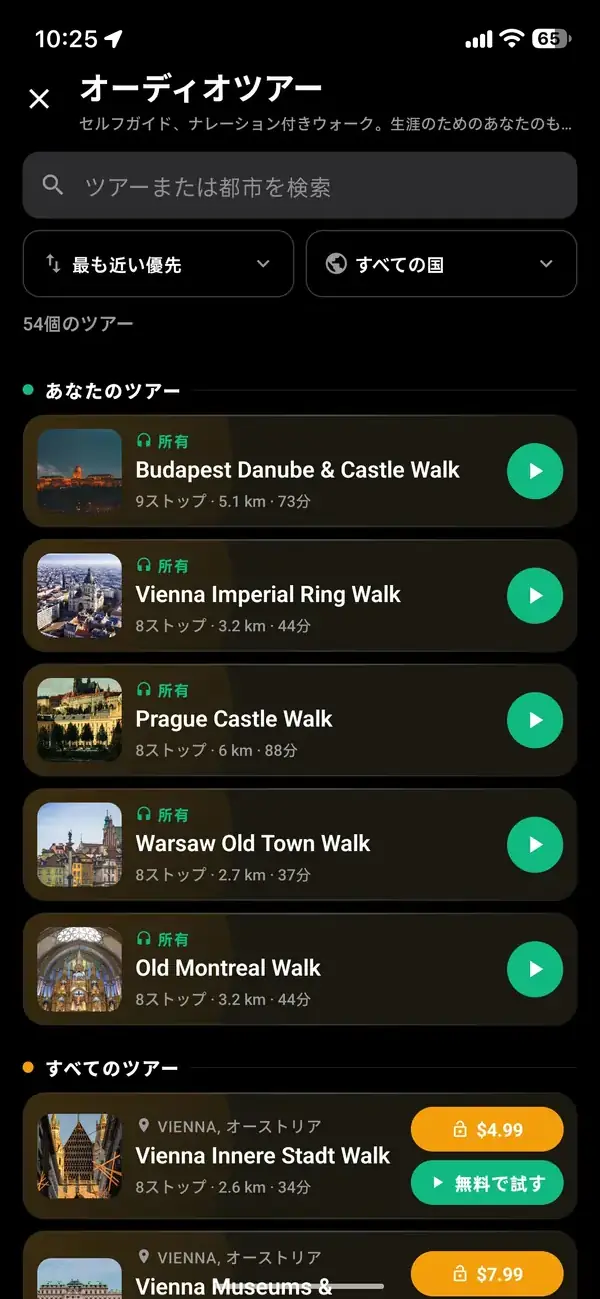
01
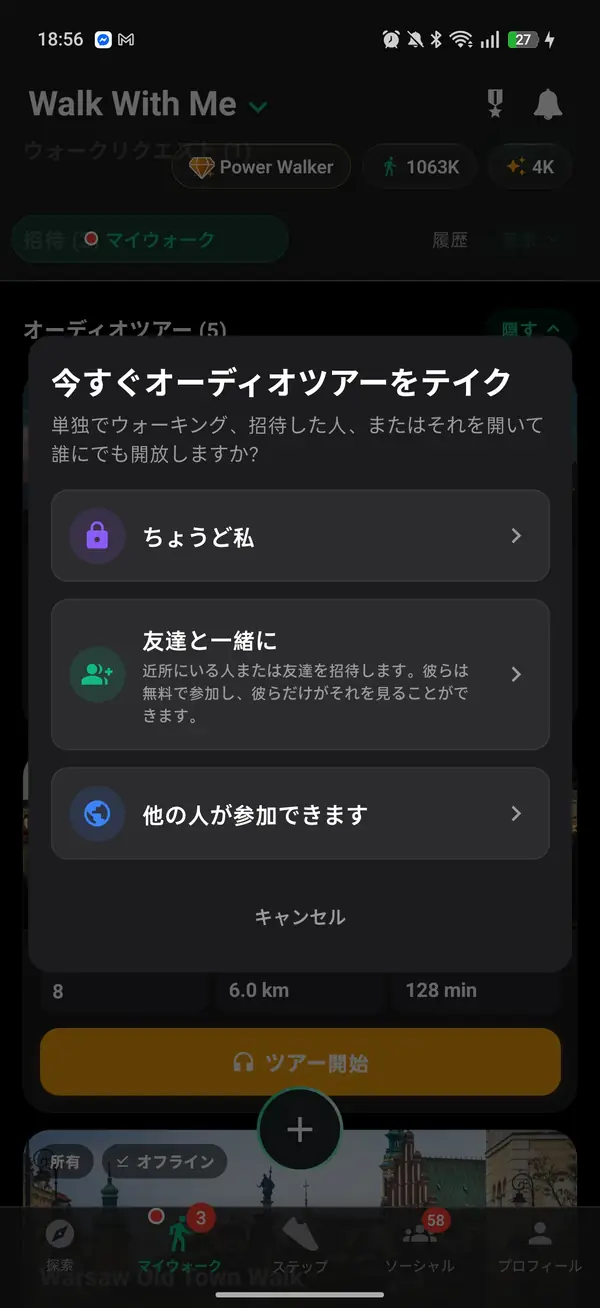
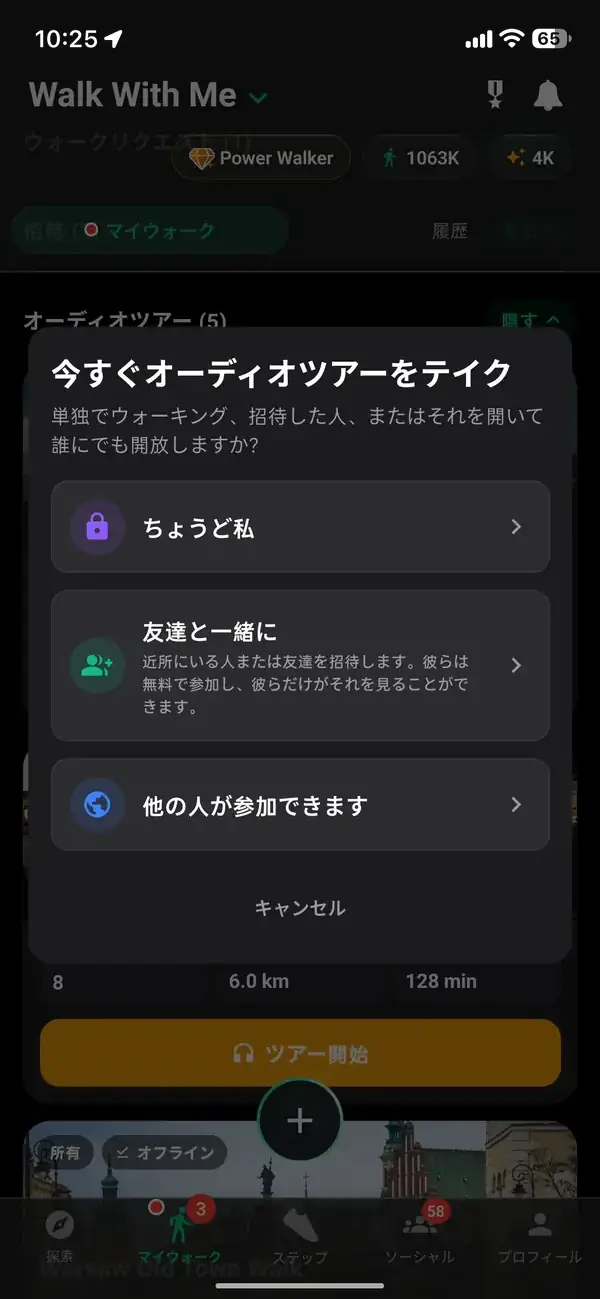
ひとりで歩くか、誰かを招待する
02
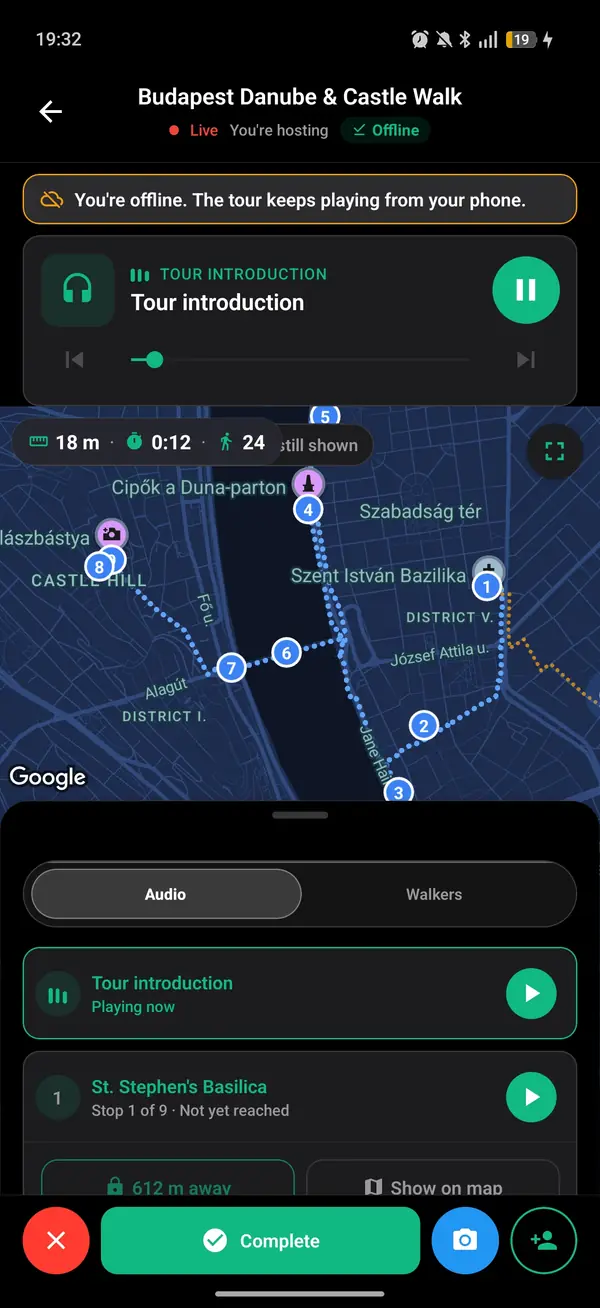
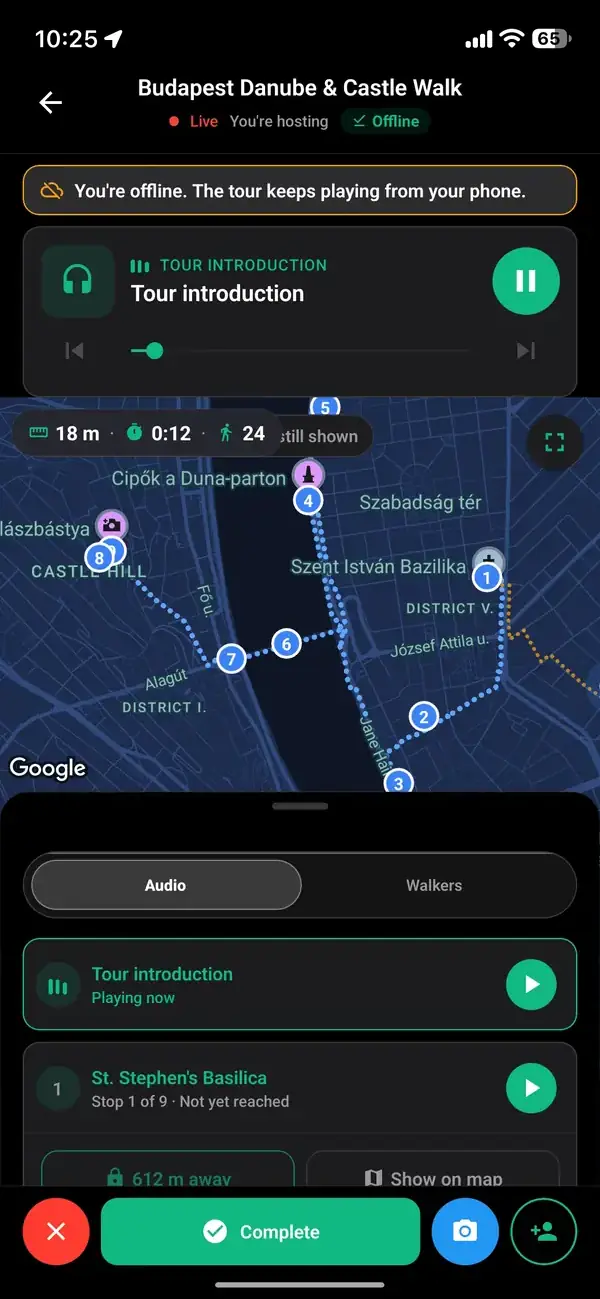
再生して歩き出す
03
街で過ごす時間のために、 ひとつひとつ丁寧に
このツアーは名所をチェックしていくリストではありません。ヘッドホンをつけて、街を眺めながら、ゆっくり歩くためにつくられています。
瞑想的で、没入できる
どの物語も、それが起きた場所で語られます。スポットに着くとアプリが知らせ、ワンタップで物語が始まります。スポットの間の道のりは、あなたのペースで楽しめます。
丁寧な手づくり
ルートもスポットもすべて私たち自身が選び、物語のひとつひとつを丁寧に仕上げています。街で過ごす時間を、本当に訪れる価値のある場所に使えるように。
誰かと歩けば、もっと楽しい
どんな散歩も、隣に誰かがいるともっと楽しくなります。誘える人がいたら、ぜひ一緒に歩いてください。だからこそ、1回の購入で招待した全員が対象になり、招待された人は無料でツアーに参加できます。