
October 11, 2026 · 9 min read
Amsterdam Anne Frank Walking Tour
From the Hollandsche Schouwburg through the old Jewish Quarter, past the Dockworker and the Dam, to the Anne Frank House on the Prinsengracht.
589

October 9, 2026 · 9 min read

 Přátelé chodí zdarma
Každá prohlídka funguje také jako naplánovaná skupinová procházka, ke které se můžete v aplikaci připojit.
Další audio prohlídky v Ho Chi Minh City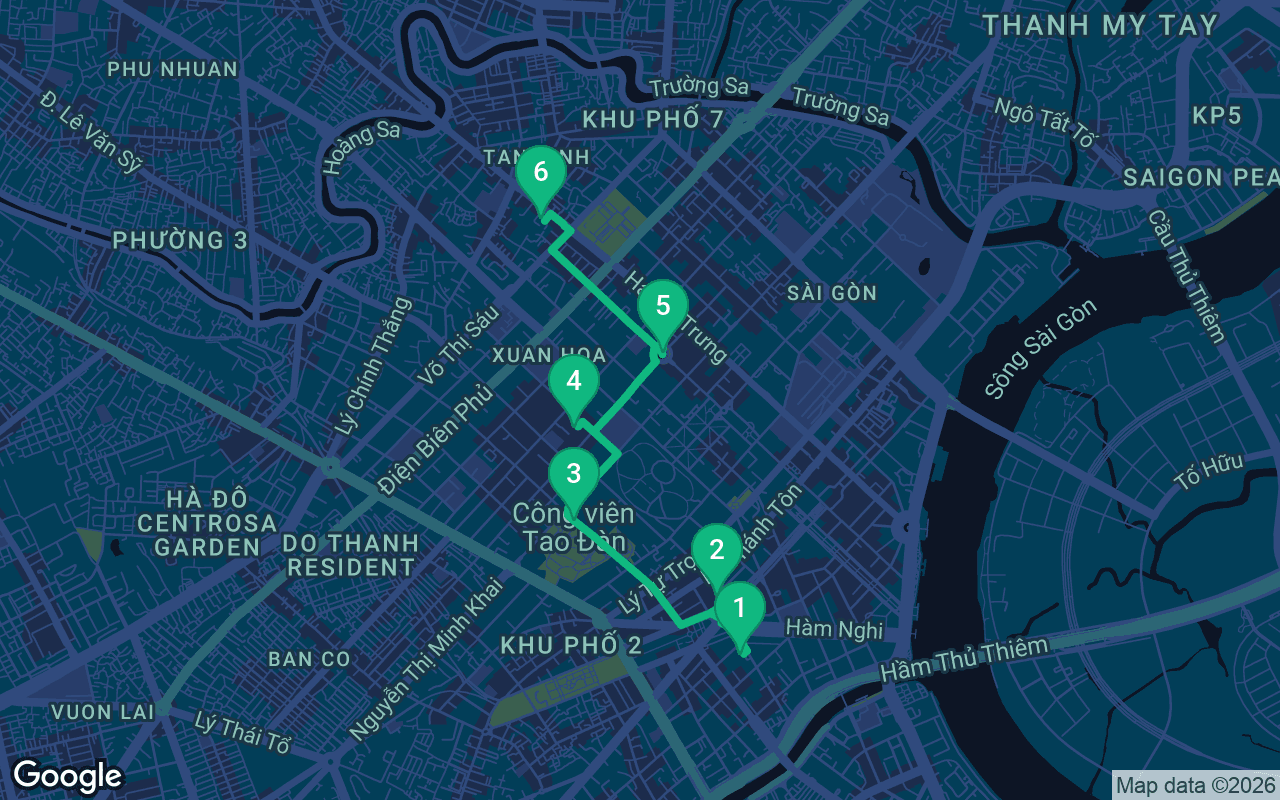
Zhruba 3,7 km, přibližně 51 minut pohodovým tempem.
Tato prohlídka je namluvená
Stisknutím tlačítka přehrávání u prvních 3 zastávek si poslechnete 30sekundovou ukázku vyprávění. V aplikaci si úvod a tyto zastávky přehrajete celé zdarma a každá se ozve zvukovým signálem, jakmile dorazíte na místo. Celá komentovaná prohlídka může být vaše za jednorázový poplatek $9.99, který vám zůstane napořád.
Funguje s aplikacemi Garmin, Komoot, Strava, OS Maps a jakýmkoli GPX programem.
This is a walk through the everyday side of Saigon, the name most people in Ho Chi Minh City still use for their home. It starts in a merchant's mansion full of paintings, plunges into the clamor of Bến Thành Market, then slows down under the giant trees of Tao Đàn Park before facing the war at the War Remnants Museum. From there it follows a student hangout around a roundabout pond and ends at a church painted an unforgettable shade of pink, next to a neighborhood market. It is just under four kilometers, flat all the way, and it mixes art, food, history and street life while staying clear of the big tourist boulevards. Among self-guided walking tours of the city, it is the one that shows you how Saigon lives.
Give it four hours, because the museums deserve time and the market will swallow more of it than you expect. The War Remnants Museum in particular is not a quick visit, and some of what it shows is hard to look at, so leave space in the day afterward. The route is flat, on pavements that are often uneven, cluttered with parked motorbikes and food stalls, so wear sturdy shoes and expect to step into the road now and then. When you cross, the rule is calm and steady: move at an even walking pace, keep going once you have started, and the traffic will flow around you. Saigon's heat is constant and the humidity is heavy, so start early, when the park is at its liveliest, drink plenty of water and rest in the shade. In the rainy season, roughly May to November, short tropical downpours often arrive in the afternoon, so carry a light rain jacket. The museums charge small entry fees and keep their own hours, and some close for a midday break, so check before you go.
Stand on the pavement and look up at the grand yellow building with its tall shuttered windows, balconies and mix of French and Chinese decoration. This mansion was built around 1930 for the family of Hui Bon Hoa, a Chinese-Vietnamese businessman who made a fortune in property and pawnbroking in colonial Saigon. He was so rich that an old local saying ranks him among the four wealthiest men in the south. The house shows it. Inside, look for the colored tile floors, the stained-glass windows that throw patches of color across the stairs, and one of the earliest passenger lifts in the city, an elegant cage of iron that still sits in the stairwell. Since the late 1980s the mansion and its neighbors have housed the city's Fine Arts Museum. The collection is a fine introduction to Vietnamese art, from ancient Champa stone sculpture and Buddhist statues to the twentieth century, when artists turned the old craft of lacquer into a painting medium of glowing reds, golds and blacks. You may also find wartime sketches made in the jungle and in the field, which gives you an early taste of a theme you will meet again on this walk. Even if you do not stay long, walk the stairs for the light. Then head north for about five minutes, toward the clock tower rising over the big roundabout ahead.
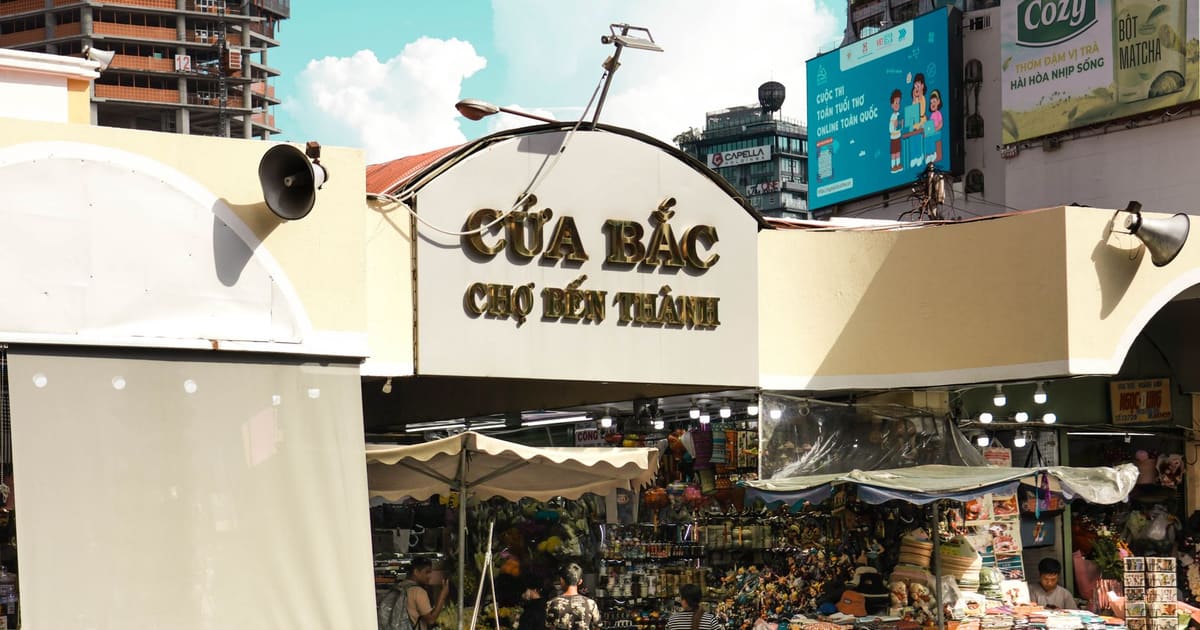
 In front of you, across the roundabout, is the south gate of Bến Thành Market and its clock tower, the most recognizable image of the city. The name means roughly the wharf by the citadel, a reminder that an older market once stood on the riverbank near the long-gone fortress of Gia Định. The French moved it to this site and opened the current building in 1914, and it has been the heart of Saigon's commerce ever since. Under the square beside you lies Bến Thành station, the hub of the city's first metro line, which opened at the end of 2024 after many years of construction. Go in through the clock tower gate. The market is a maze of narrow aisles packed with stalls: coffee beans, dried fruit, silk, lacquerware, sandals, kitchen knives and conical hats, with fresh fish, meat and vegetables in the back. Prices for visitors are often set high, so bargaining with a smile is normal in the souvenir sections. The food stalls in the middle are the best part. Sit on a stool and order a bowl of noodles or a plate of broken rice, cơm tấm, with grilled pork. When you leave, walk out past the western side of the market and follow Trương Định northwest, a lively street of shops and cafés, for about ten minutes until the trees of the park open up on your left.
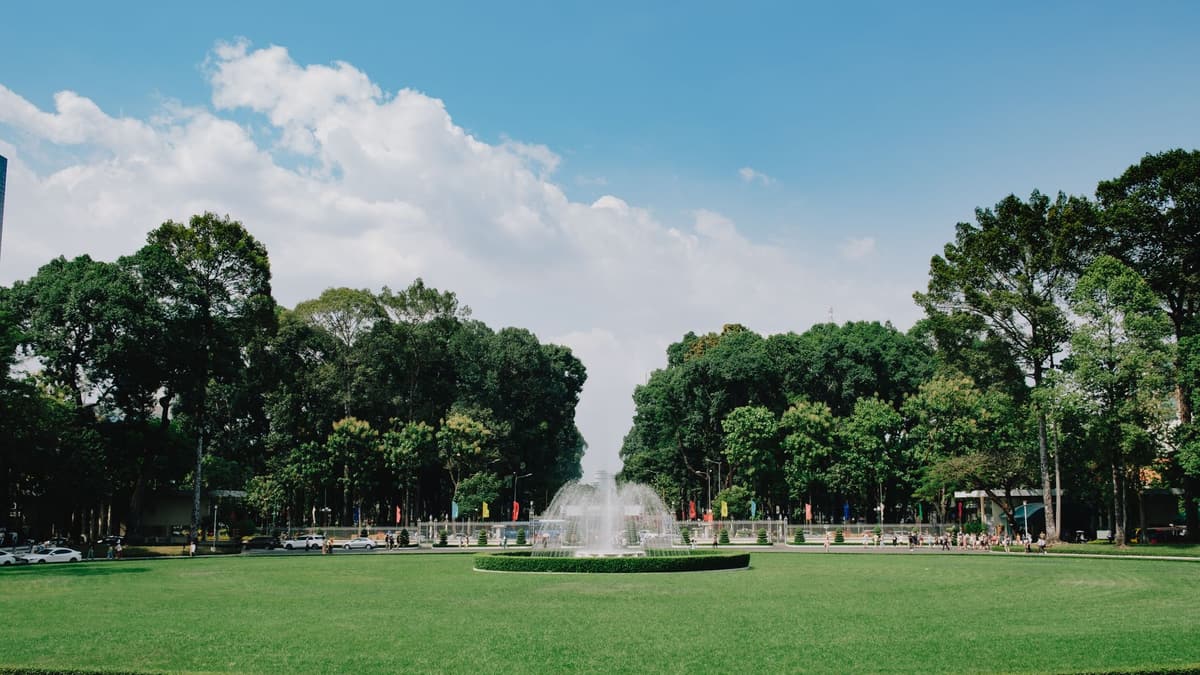
Step under the trees of Tao Đàn Park and the noise of the city drops away. This is one of Saigon's oldest green spaces, laid out in the French era as part of the gardens of the governor's palace next door, and its tallest trees, towering tropical hardwoods with smooth pale trunks, are older than most of the buildings in the city. The name recalls Tao Đàn, a famous circle of poets gathered around a Vietnamese king in the fifteenth century. In the early morning the park is at its best. People of all ages come to exercise: slow tai chi under the trees, teams kicking a feathered shuttlecock, đá cầu, ballroom dancing to a crackling speaker, and groups of older men swinging their arms as they walk laps. Follow the birdsong to the corner where men bring their songbirds in delicate bamboo cages, hang them on hooks in the trees, and sit over coffee listening to them sing. Keeping songbirds is a serious hobby here, and owners believe that birds learn to sing better by hearing each other. Find a bench in the shade and watch the city's slower side for a while. When you are ready, leave the park by its northern edge, follow Nguyễn Thị Minh Khai northeast for a few minutes, and turn left onto Lê Quý Đôn. The museum's yard of tanks and aircraft appears on the corner, about eight minutes away.
Co je v ceně
Naše prohlídky jsou zamýšlené jako meditativní a pohlcující: jdete a prostě posloucháte. Vždy jsou lepší ve společnosti a aplikace přehrává vyprávění synchronizovaně, takže vy, váš partner i vaši přátelé slyšíte každou zastávku ve stejnou chvíli.
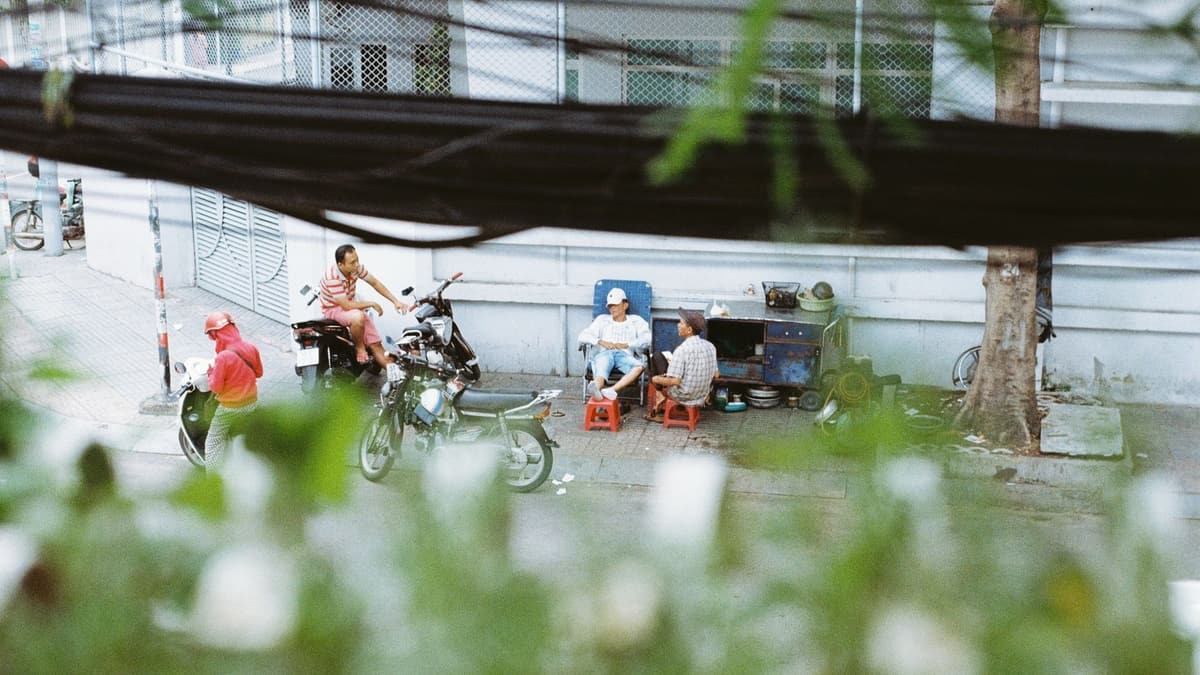
You are at the War Remnants Museum, one of the most visited museums in Vietnam, and one of the most difficult. In the yard stand the machines of the war: an American Huey helicopter, a tank, a fighter plane, bombs and heavy artillery.
Zbytek této zastávky najdete v celé audioprohlídce.
After the weight of the museum, Turtle Lake, Hồ Con Rùa, is a welcome breath of everyday life.
Zbytek této zastávky najdete v celé audioprohlídce.
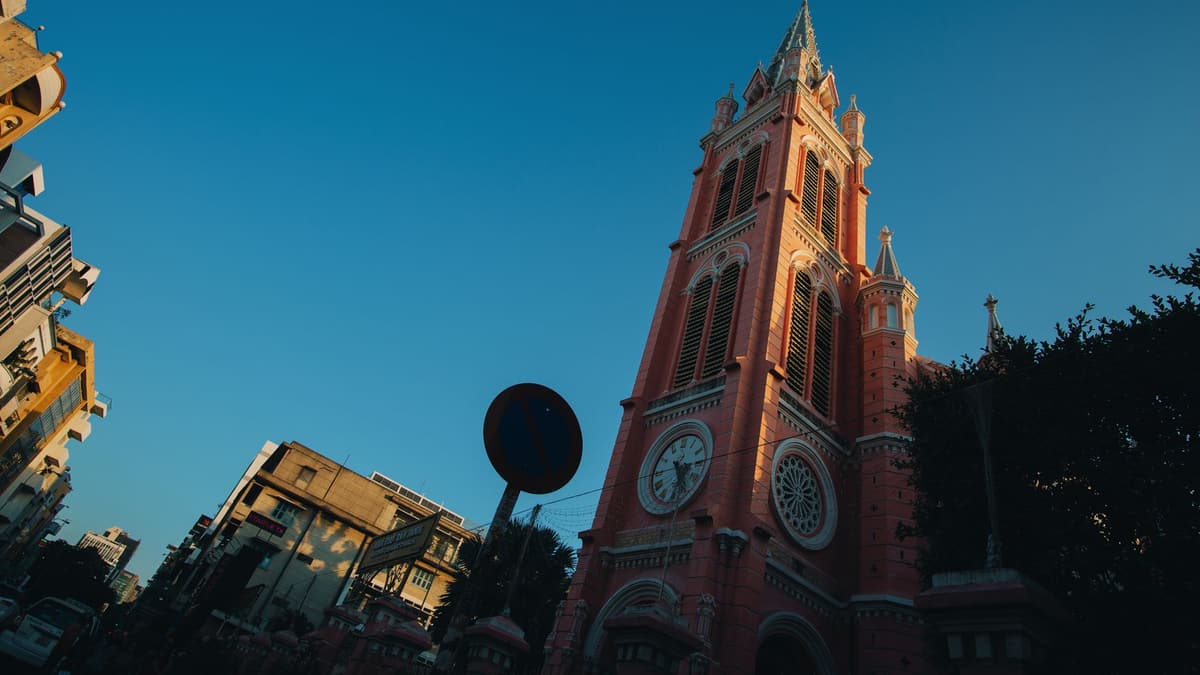
You can see why everyone calls it the pink church.
Zbytek této zastávky najdete v celé audioprohlídce.
Absolvuj tuto procházku s ostatními v rámci příští naplánované trasy.
Asi 3,7 km, zhruba 51 minut volným tempem · 6 zastávek
Přátelé chodí zdarmaOctober 11, 2026 · 9 min read
From the Hollandsche Schouwburg through the old Jewish Quarter, past the Dockworker and the Dam, to the Anne Frank House on the Prinsengracht.
October 11, 2026 · 11 min read
From Van Houten's street by the Vondelpark past Leidseplein, the Rijksmuseum passage and the famous canal bench to the Anne Frank House.

October 11, 2026 · 10 min read
Follow the last days of April and May 1945 from the Anhalter Bahnhof ruin past the Gestapo site and Brandenburg Gate to the Moltke Bridge and the Reichstag.
