




 $16.99Wendepunkte
Audioguide Sarajevo Stadtrundgänge
Selbstgeführte, vertonte Rundgänge durch Sarajevo. Einmal kaufen, herunterladen und an jeder Station der Geschichte lauschen, während du in deinem eigenen Tempo gehst.
Touren ab $16.99
Freunde laufen kostenlos mit. Ein Kauf deckt alle auf deiner Tour ab. Starte die Tour, lade deine Freunde zum Mitmachen ein, und sie läuft auf jedem Handy in deiner Gruppe.
5.0 bei Google Play
Audiotouren durch Sarajevo
Jede Tour bietet eine feste Route mit Audio-Erklärungen an jeder Station. Einmal kaufen und für immer behalten, ganz ohne Abo.
$16.99WendepunkteDas erwartet dich bei einer Audiotour durch Sarajevo
A Sarajevo audio walk follows Sunday, June 28, 1914 along the Miljacka, from the army camp where Franz Ferdinand arrived, down the riverside quay to the corner where a wrong turn put his car in front of Gavrilo Princip, then on to City Hall, the Konak and the riots of the next day.
The walk starts at the University of Sarajevo campus, in 1914 the Filipović army camp where the Archduke and Sophie were welcomed, and passes the site of the army hospital, where a wounded officer would later change the day's plans. It then follows the river along the old Appel Quay, today Obala Kulina bana, the way the six cars drove.
At the Ćumurija Bridge the narration tells the first attack, Čabrinović's bomb, and a few minutes on, at the Latin Bridge, the corner where Princip fired from no more than five feet away. Then it goes on to City Hall to explain why the cars came back along the quay at all, before crossing the river to the Konak, where the couple died.
It ends at the Hotel Europe, wrecked in the riots of June 29. It's about 5.1 kilometers, roughly 73 minutes of walking, flat and mostly along the river quay, with trams near the start and the Baščaršija loop a few minutes from the finish. Where the sources disagree on times and details, the narration says so.
Sehenswürdigkeiten in Sarajevo
Einige der Stationen auf deinem Weg und warum es sich lohnt, dort innezuhalten.
Appel Quay
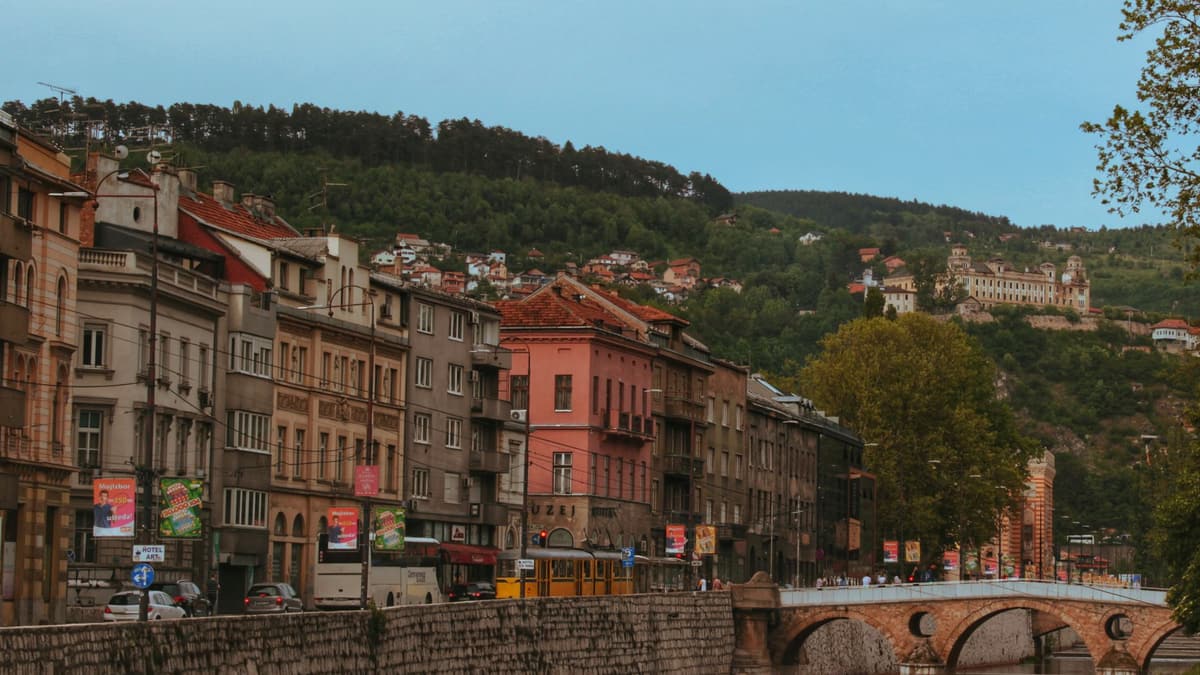
In 1914 this riverside avenue was the Appel Quay, the city's broadest street, and today it's Obala Kulina bana. The motorcade drove up it toward City Hall on a morning that, after a week of rain, had turned into what one historian calls splendid summer weather, with most spectators on the shady side and the Miljacka running low, as it does at that time of year. Somewhere along this stretch seven young conspirators had taken their posts with small bombs, pistols and cyanide that had reached them through the Black Hand in Belgrade.
Latin Bridge
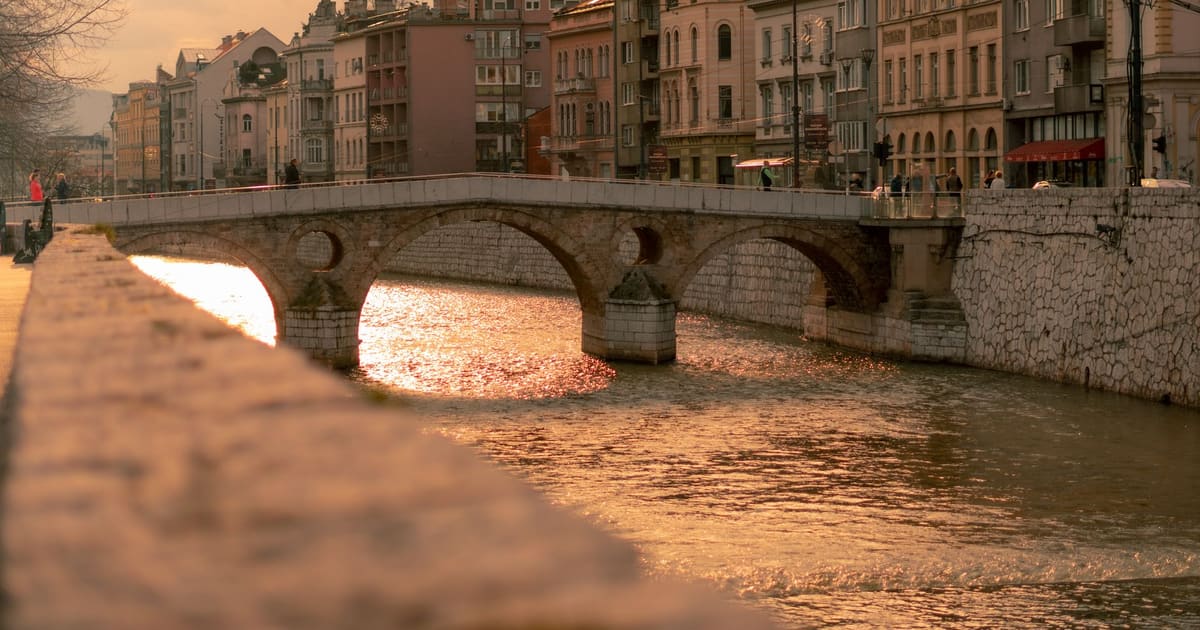
The old stone Latin Bridge crosses the Miljacka beside the corner where the morning ended. When the cars came back along the quay from City Hall, the mayor's car turned right into Franz Joseph Street, the old route, and the Archduke's driver followed it. Governor Potiorek shouted that it was the wrong way, and the driver braked and began to reverse, which stopped the car level with Gavrilo Princip. After the shots, Potiorek ordered the car across this bridge to the Konak, the governor's residence on the far bank.
Schiller's Corner
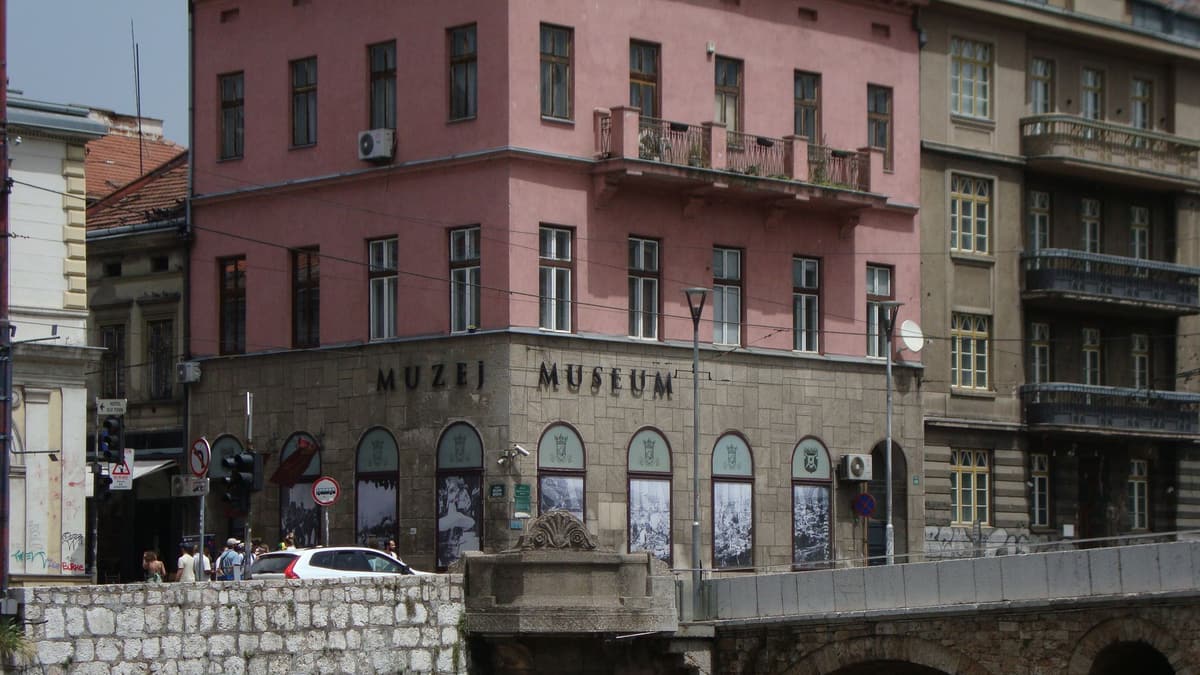
This corner building, with MUZEJ over its windows, was Moritz Schiller's food shop in 1914 and is now the Museum Sarajevo 1878 to 1918. Look at the pavement in front for a pair of cast footprints marking where Gavrilo Princip stood. Just before eleven, from no more than five feet away, he fired twice, hitting Franz Ferdinand in the neck and Sophie in the abdomen. You may hear that he had given up and stopped for a sandwich. Nobody has traced that story further back than a novel from 2001.
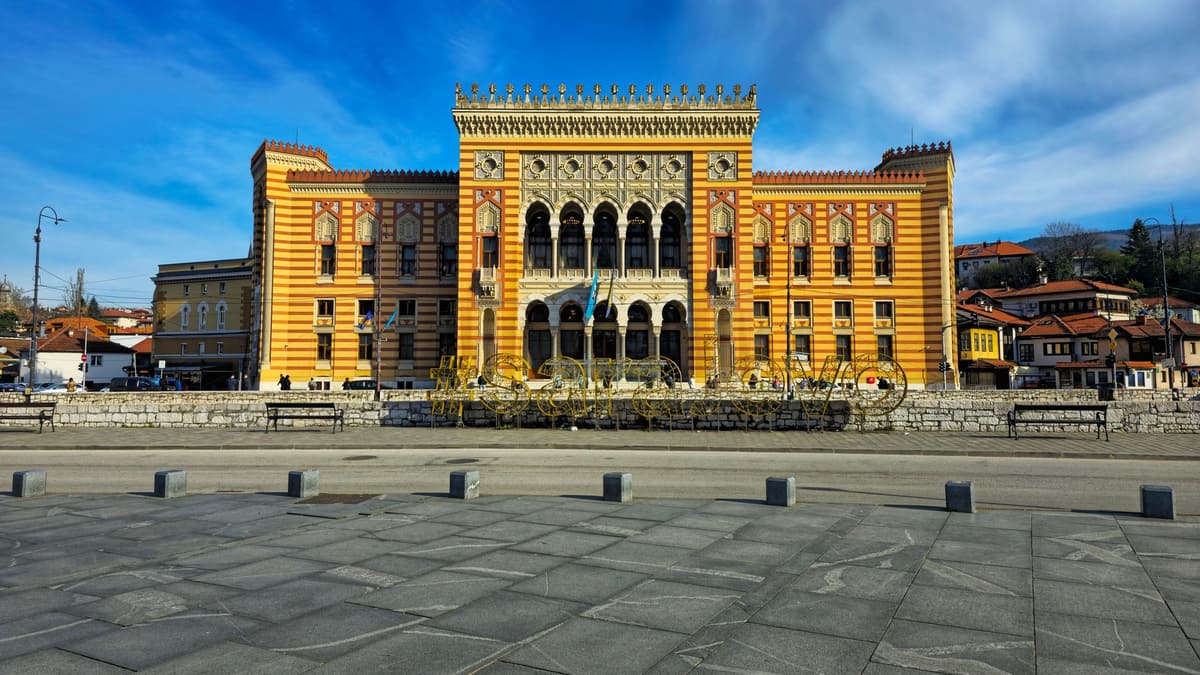
City Hall (Vijećnica)
Sarajevo's striped City Hall, the Vijećnica, opened in 1896. The Archduke arrived here a little after the bomb and cut off the mayor's welcome: one comes here for a visit and is received with bombs. Inside, the museum visit was dropped and he chose to see the wounded officer in the army hospital instead, a change his driver was never told about. On the night of August 25, 1992, during the siege of Sarajevo, incendiary shells set the building on fire and about two million library items burned. It reopened in 2014, and you can go inside.
Hol dir die Audiotour in 3 einfachen Schritten
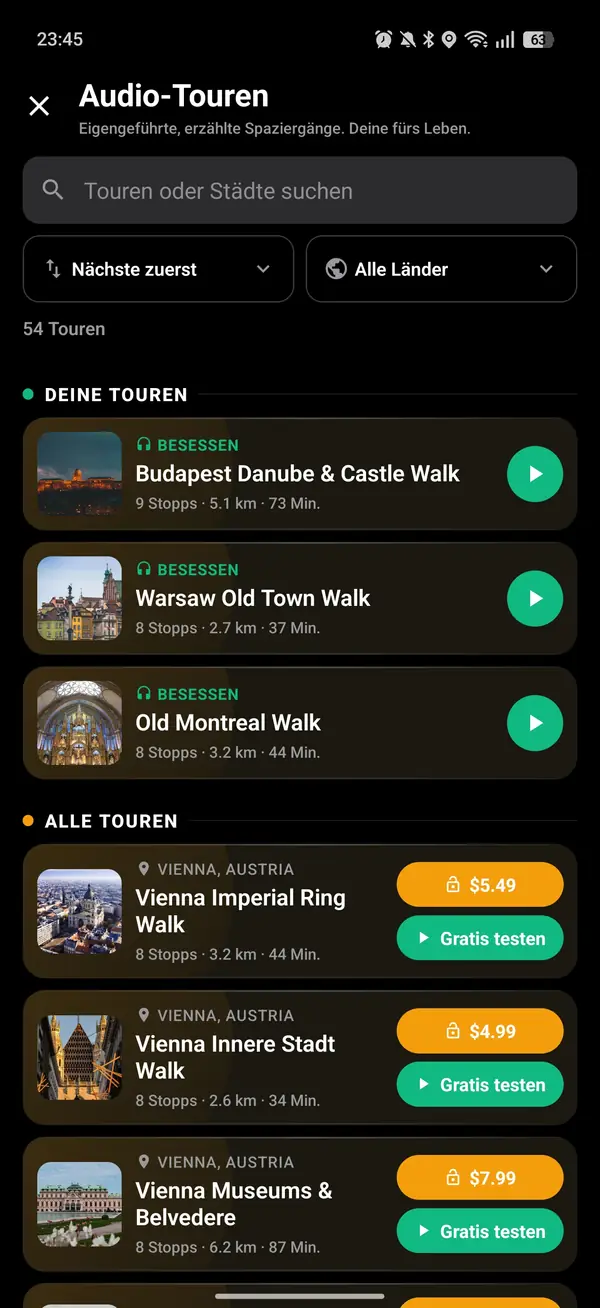
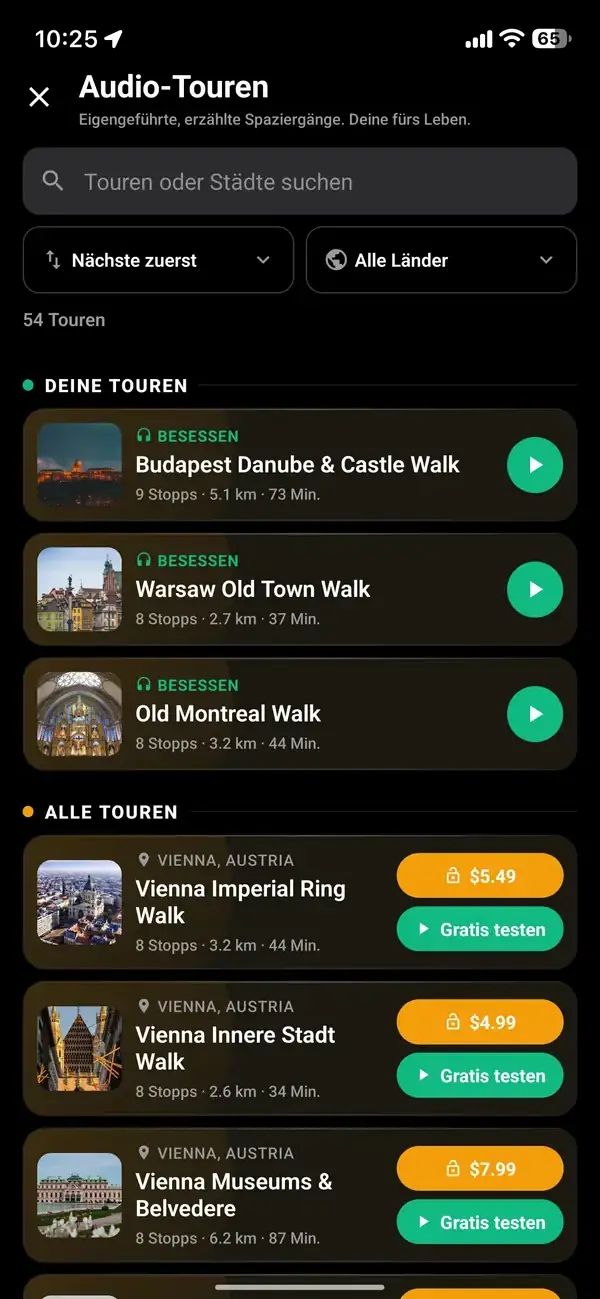
Alles in der kostenlosen Walk With Me App, und die ersten Stopps jeder Tour kannst du gratis testen.
Tippe auf die goldenen Kopfhörer und wähle eine Tour
01
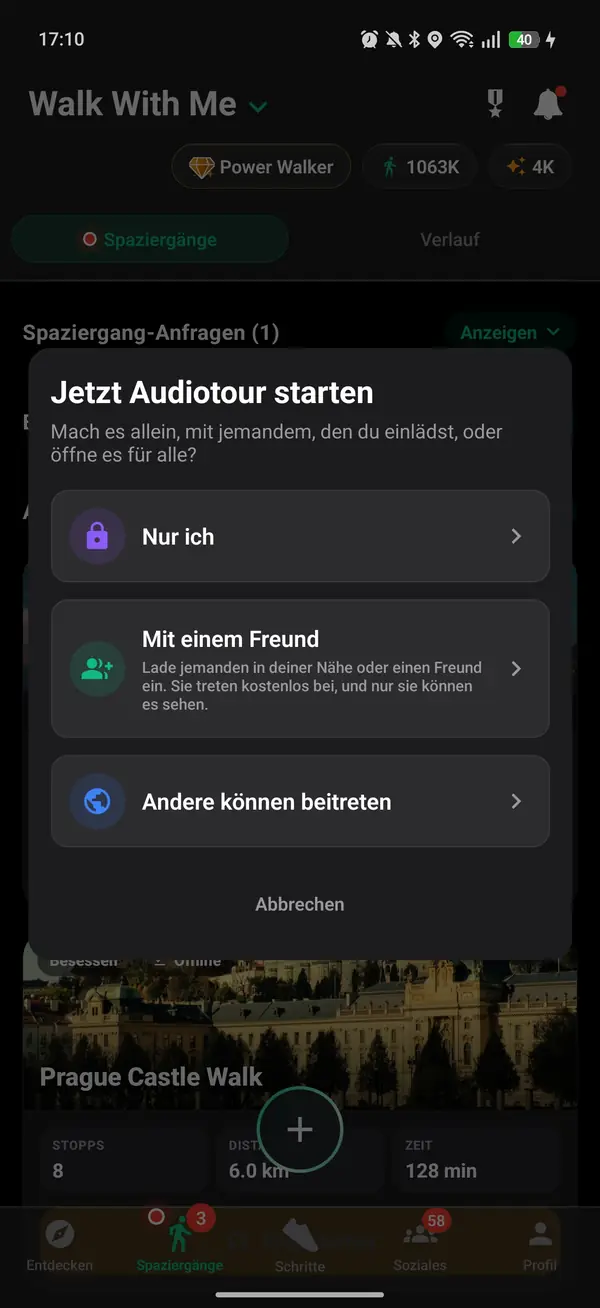
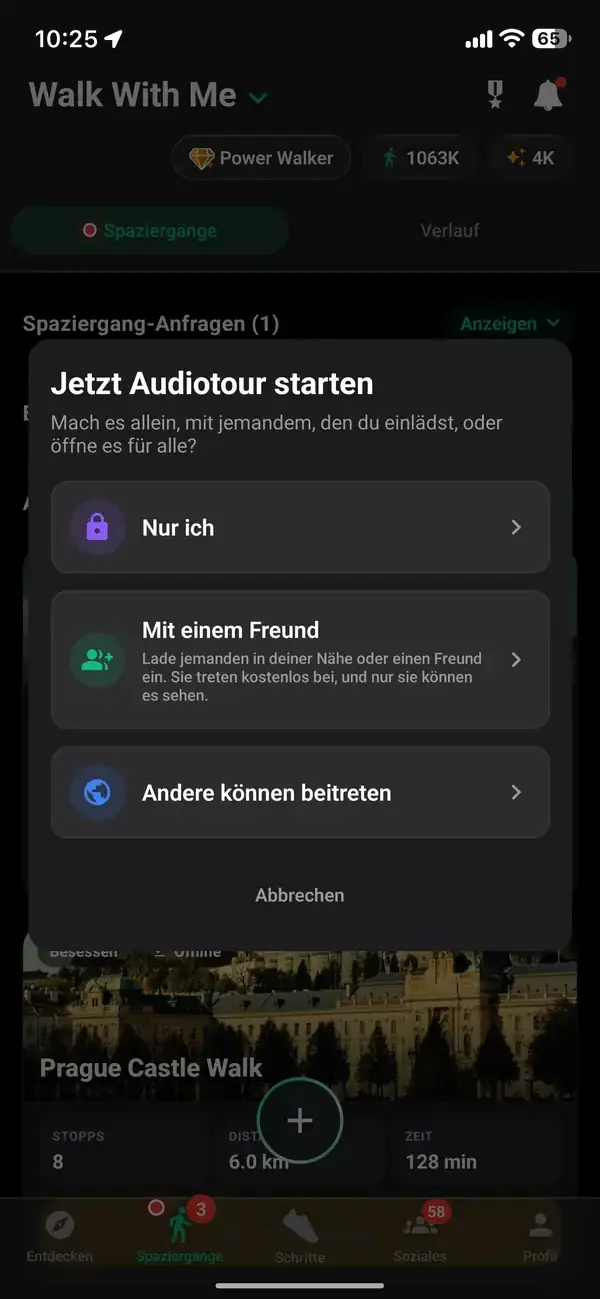
Allein gehen oder jemanden einladen
02
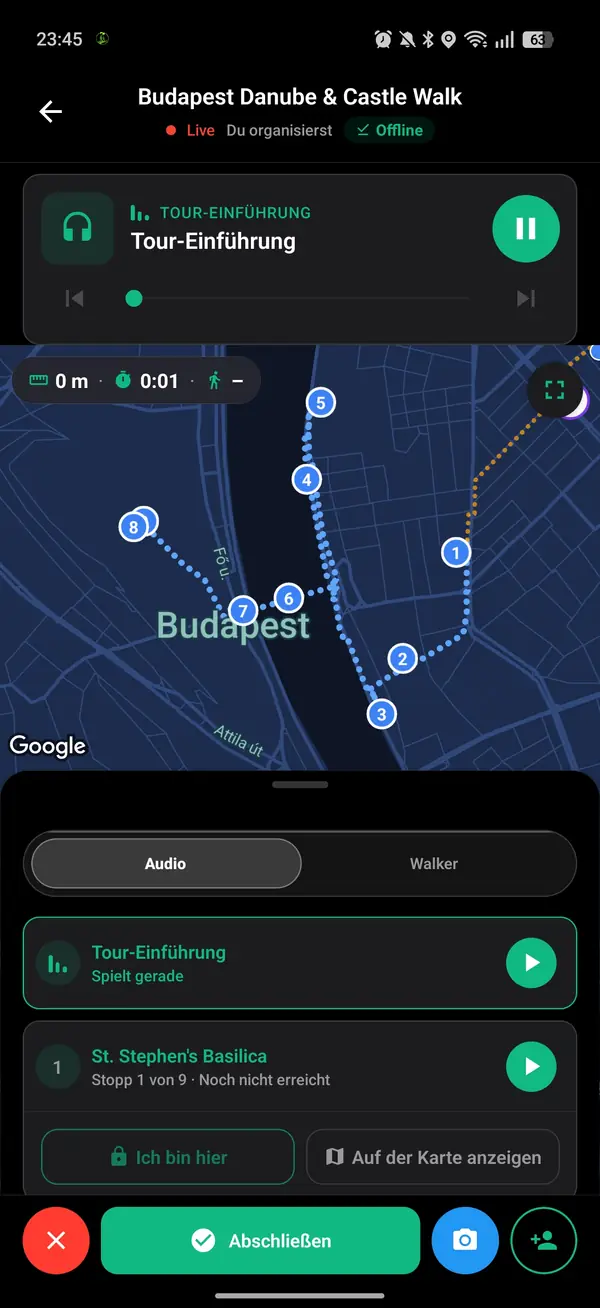
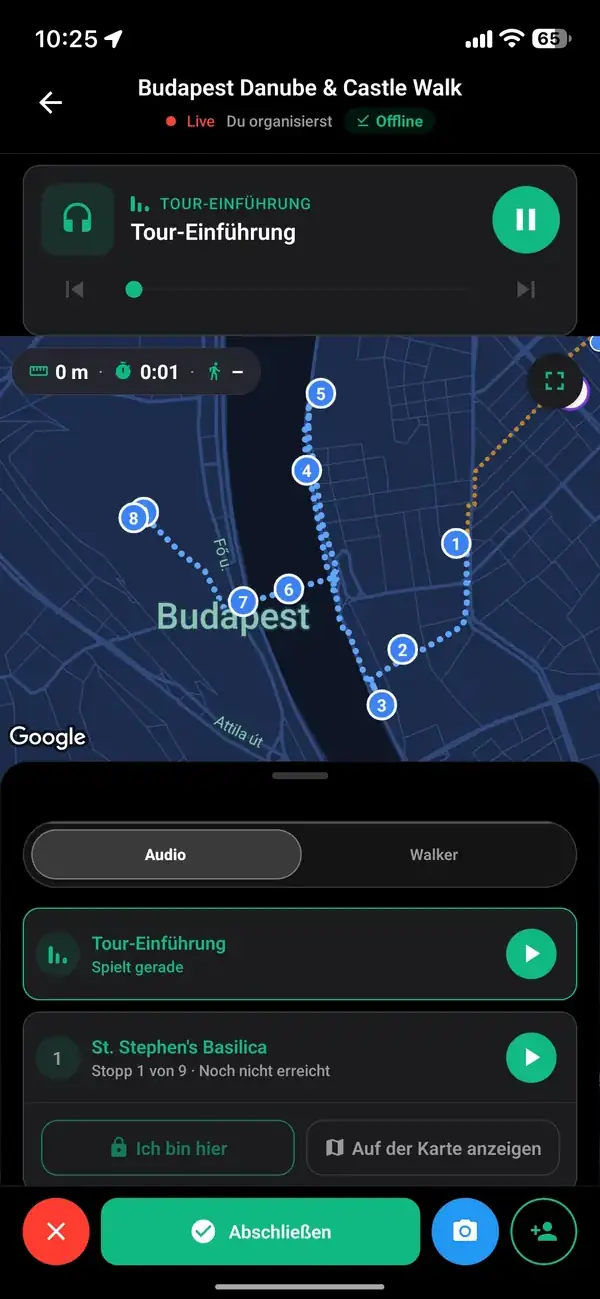
Auf Play drücken und loslaufen
03
Handverlesen für deine Zeit in der Stadt
Diese Touren sind keine Checkliste von Sehenswürdigkeiten. Sie sind zum langsamen Gehen gemacht: Kopfhörer auf, Blick auf die Stadt.
Meditativ und immersiv
Jede Geschichte wird dort erzählt, wo sie passiert ist. Die App gibt einen Ton, wenn du einen Stopp erreichst, ein Tippen startet die Geschichte, und der Weg dazwischen gehört ganz dir, in deinem eigenen Tempo.
Mit Sorgfalt von Hand gemacht
Wir wählen jede Route und jeden Stopp selbst aus und gestalten jede Geschichte mit Sorgfalt, damit deine Zeit in der Stadt den Orten gehört, die sich wirklich lohnen.
Zu zweit schöner
Jeder Spaziergang ist schöner mit jemandem an deiner Seite. Wenn du also jemanden mitnehmen kannst, tu es unbedingt. Deshalb deckt ein Kauf alle ab, die du einlädst: Sie laufen kostenlos mit.