




 $16.99Turning Points
Sarajevo Audio Walking Tours
Self-guided, narrated walks through Sarajevo. Buy a tour once, download it, and hear the story at each stop while you walk at your own pace.
Tours from $16.99
Friends walk free. One purchase covers everyone on your walk. Start the tour, invite your friends to join, and it plays on every phone in your group.
5.0 on Google Play
Sarajevo audio tours
Each tour is a mapped route with narration at every stop. Buy it once and it is yours to keep, no subscription.
$16.99Turning PointsWhat to expect on a Sarajevo audio walking tour
A Sarajevo audio walk follows Sunday, June 28, 1914 along the Miljacka, from the army camp where Franz Ferdinand arrived, down the riverside quay to the corner where a wrong turn put his car in front of Gavrilo Princip, then on to City Hall, the Konak and the riots of the next day.
The walk starts at the University of Sarajevo campus, in 1914 the Filipović army camp where the Archduke and Sophie were welcomed, and passes the site of the army hospital, where a wounded officer would later change the day's plans. It then follows the river along the old Appel Quay, today Obala Kulina bana, the way the six cars drove.
At the Ćumurija Bridge the narration tells the first attack, Čabrinović's bomb, and a few minutes on, at the Latin Bridge, the corner where Princip fired from no more than five feet away. Then it goes on to City Hall to explain why the cars came back along the quay at all, before crossing the river to the Konak, where the couple died.
It ends at the Hotel Europe, wrecked in the riots of June 29. It's about 5.1 kilometers, roughly 73 minutes of walking, flat and mostly along the river quay, with trams near the start and the Baščaršija loop a few minutes from the finish. Where the sources disagree on times and details, the narration says so.
Where to walk in Sarajevo
A few of the stops you will pass, and why they are worth slowing down for.
Appel Quay
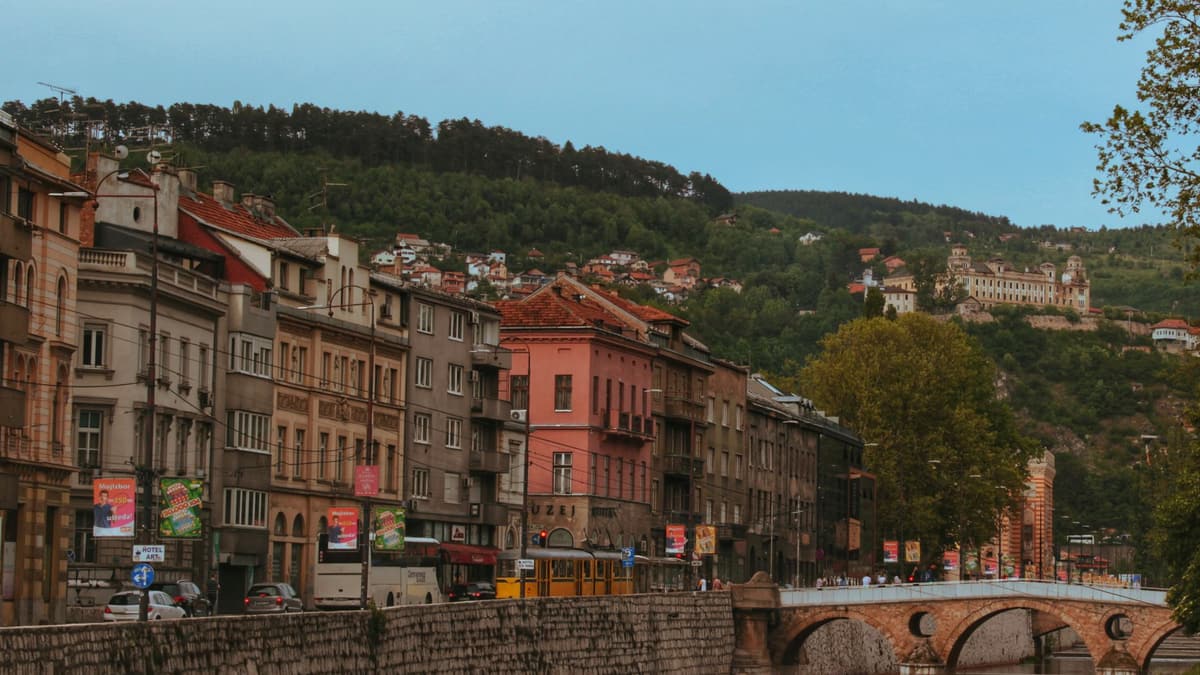
In 1914 this riverside avenue was the Appel Quay, the city's broadest street, and today it's Obala Kulina bana. The motorcade drove up it toward City Hall on a morning that, after a week of rain, had turned into what one historian calls splendid summer weather, with most spectators on the shady side and the Miljacka running low, as it does at that time of year. Somewhere along this stretch seven young conspirators had taken their posts with small bombs, pistols and cyanide that had reached them through the Black Hand in Belgrade.
Latin Bridge
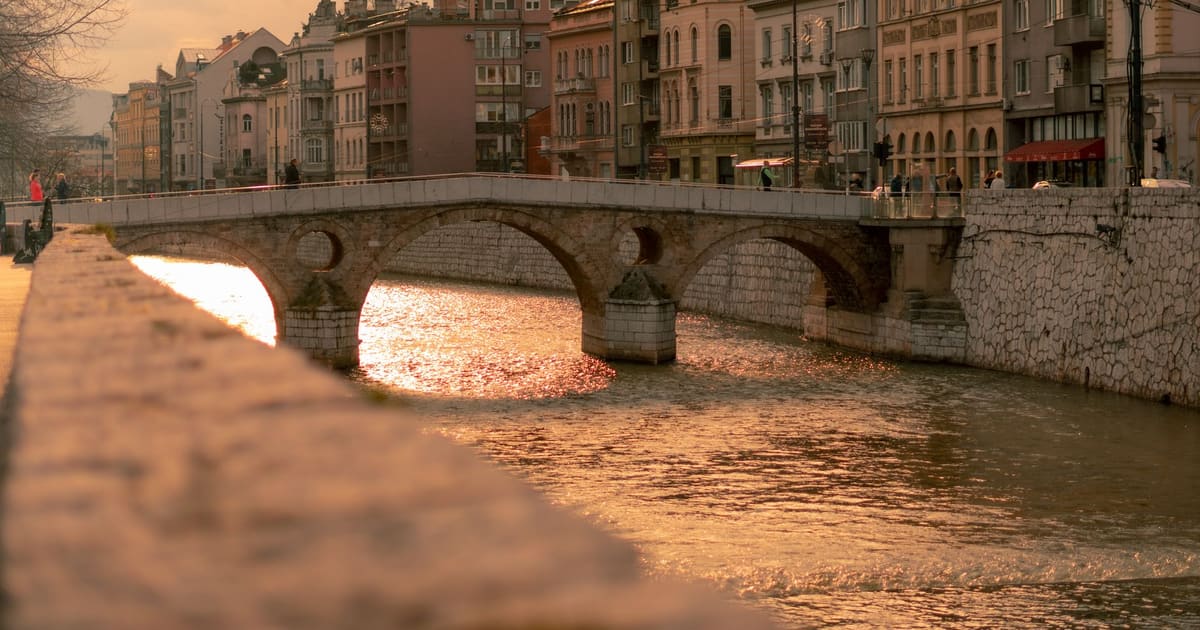
The old stone Latin Bridge crosses the Miljacka beside the corner where the morning ended. When the cars came back along the quay from City Hall, the mayor's car turned right into Franz Joseph Street, the old route, and the Archduke's driver followed it. Governor Potiorek shouted that it was the wrong way, and the driver braked and began to reverse, which stopped the car level with Gavrilo Princip. After the shots, Potiorek ordered the car across this bridge to the Konak, the governor's residence on the far bank.
Schiller's Corner
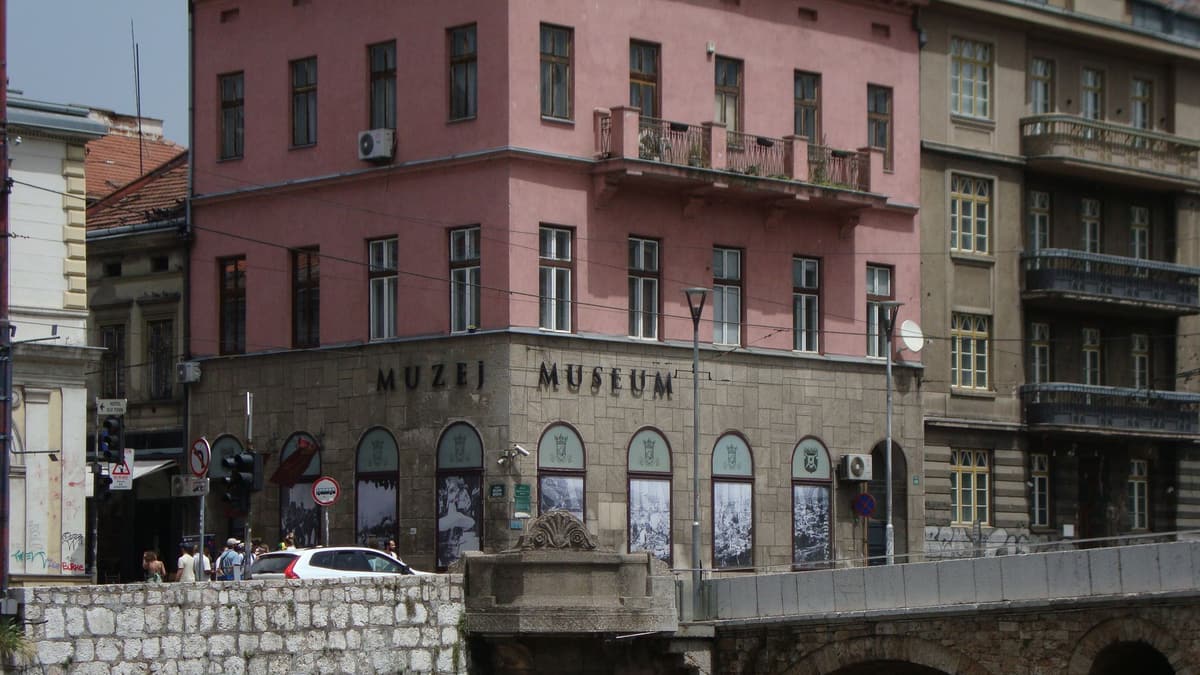
This corner building, with MUZEJ over its windows, was Moritz Schiller's food shop in 1914 and is now the Museum Sarajevo 1878 to 1918. Look at the pavement in front for a pair of cast footprints marking where Gavrilo Princip stood. Just before eleven, from no more than five feet away, he fired twice, hitting Franz Ferdinand in the neck and Sophie in the abdomen. You may hear that he had given up and stopped for a sandwich. Nobody has traced that story further back than a novel from 2001.
City Hall (Vijećnica)
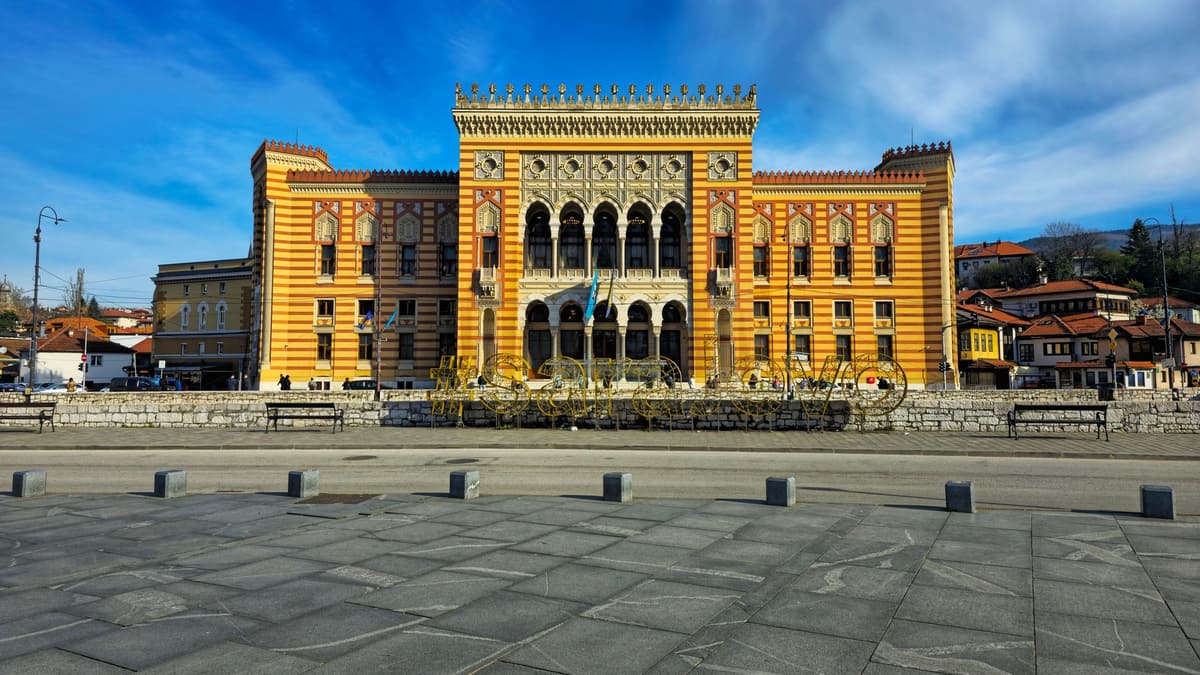
Sarajevo's striped City Hall, the Vijećnica, opened in 1896. The Archduke arrived here a little after the bomb and cut off the mayor's welcome: one comes here for a visit and is received with bombs. Inside, the museum visit was dropped and he chose to see the wounded officer in the army hospital instead, a change his driver was never told about. On the night of August 25, 1992, during the siege of Sarajevo, incendiary shells set the building on fire and about two million library items burned. It reopened in 2014, and you can go inside.
Get the Audio Tour in 3 Simple Steps
All in the free Walk With Me app, and the first stops of every tour are free to try.
Tap the Gold Headphones and Pick a Tour


01
Walk It Solo or Invite Someone


02
Press Play and Walk


03
Handcrafted for Your Time in the City
These tours aren't a checklist of sights. They're made to be walked slowly, headphones on, eyes on the city.
Meditative and Immersive
Each story is told where it happened. The app chimes when you reach a stop, one tap starts the story, and the stretch between stops is yours to take in at your own pace.
Handcrafted With Care
We choose every route and every stop ourselves and shape each story with care, so the time you have in the city goes to the places most worth seeing.
Better With Someone
Every walk is better with someone beside you, so if you can bring a friend, we really hope you do. That's why one purchase covers everyone you invite: they join your tour free.