




 $8.99Városnézés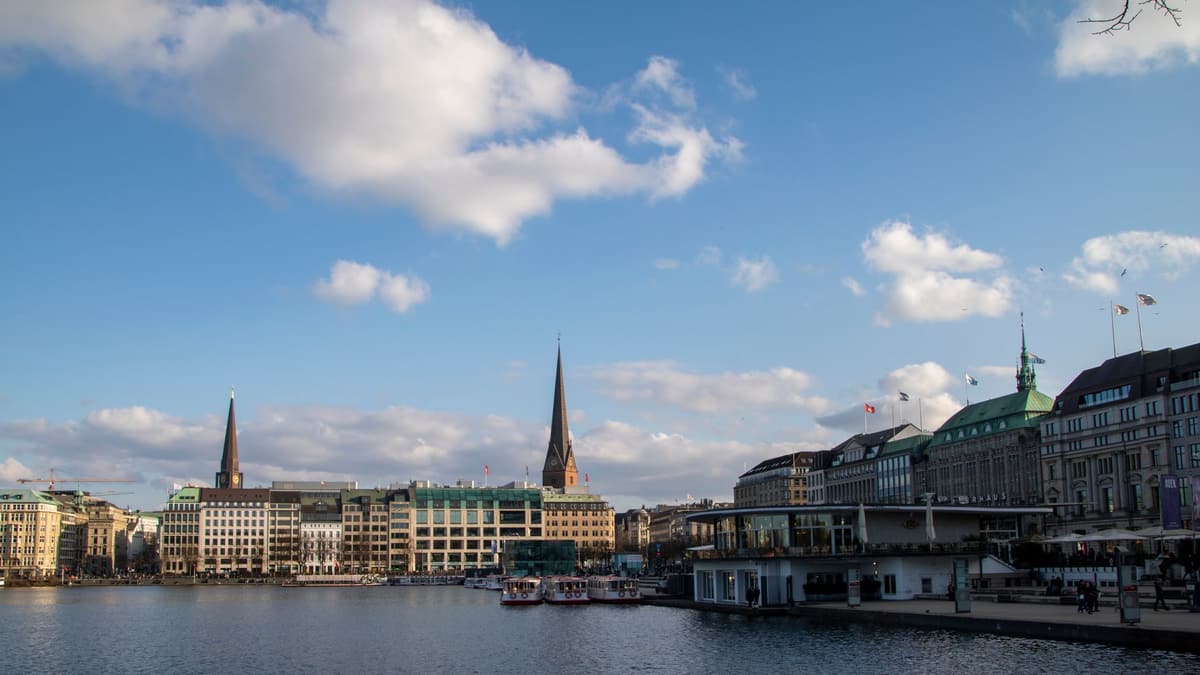
Hamburg audió gyalogos túrák
Egyéni, narrált séták Hamburg területén. Vásárold meg a túrát egyszer, töltsd le, és hagyd, hogy a történet megszólaljon minden megállónál, miközben a saját tempódban sétálsz.
Túrák már $8.99 ártól
A barátaid ingyen sétálnak. Egyetlen vásárlás mindenkit lefedi a sétádon. Indítsd el a túrát, hívd meg a barátaidat csatlakozásra, és minden telefonon lejátszódik a csoportodban.
5.0 a Google Play-en
Hamburg audió túrák
Minden túra egy térképes útvonal, amely minden megállónál narrációt tartalmaz. Vedd meg egyszer, és a tiéd marad, előfizetés nélkül.
$8.99Városnézés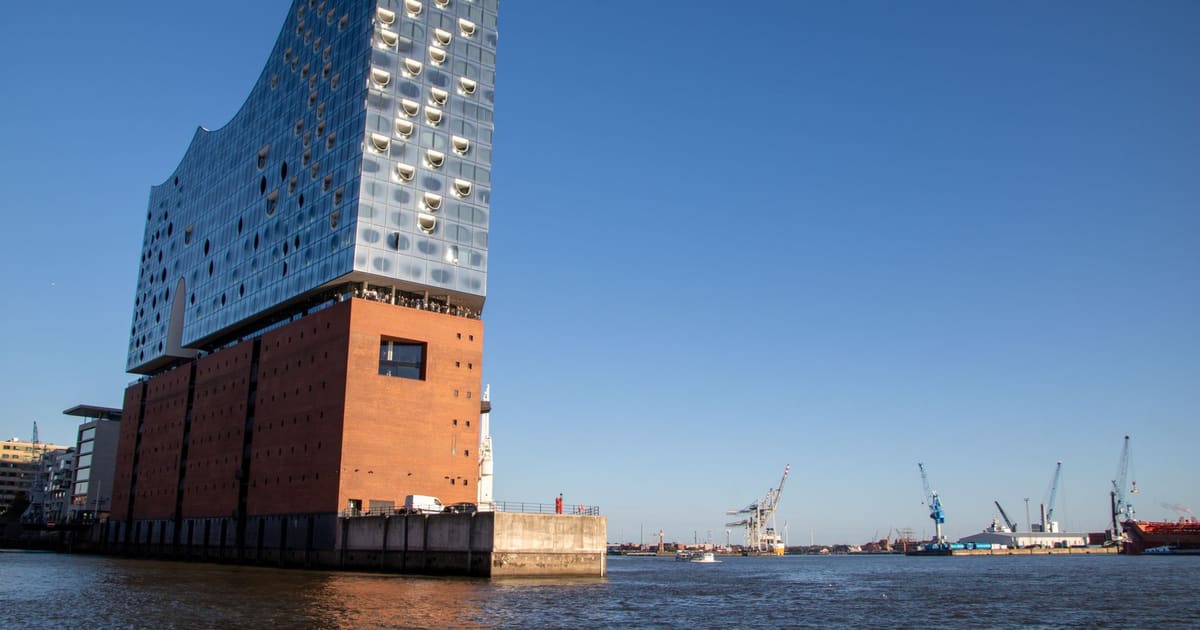 $9.99Városnézés
Mire számíthatsz egy Hamburg audió gyalogos túrán?
A Hamburg audio walk crosses eight centuries of a merchant republic, from the church sailors call the Michel to the Alster lake and grand City Hall, or follows the water itself, through a tiled tunnel under the Elbe to the red-brick Speicherstadt.
The Old Town and Alster Walk starts at St. Michael's, the great brick church the whole city calls the Michel, and drops through the old merchant street of Deichstrasse to the bombed spire of St. Nikolai, 3.5 kilometers, about 48 minutes in all.
From there it crosses the square in front of Hamburg City Hall, with its 647 rooms, and finishes on the shining Alster lake at the Hamburger Kunsthalle, one of Germany's finest art museums.
The Harbor Walk follows the water instead, 4.1 kilometers, about 59 minutes, from the tiled Old Elbe Tunnel past the piers, a museum cargo ship and the glass crown of the Elbphilharmonie, into the red-brick Speicherstadt and on to the dark, rippling brick of the Chilehaus.
Merre sétálj Hamburg területén?
Néhány megálló, amely mellett elhaladsz majd, és amiért érdemes lesz lelassítanod.
Hamburg City Hall
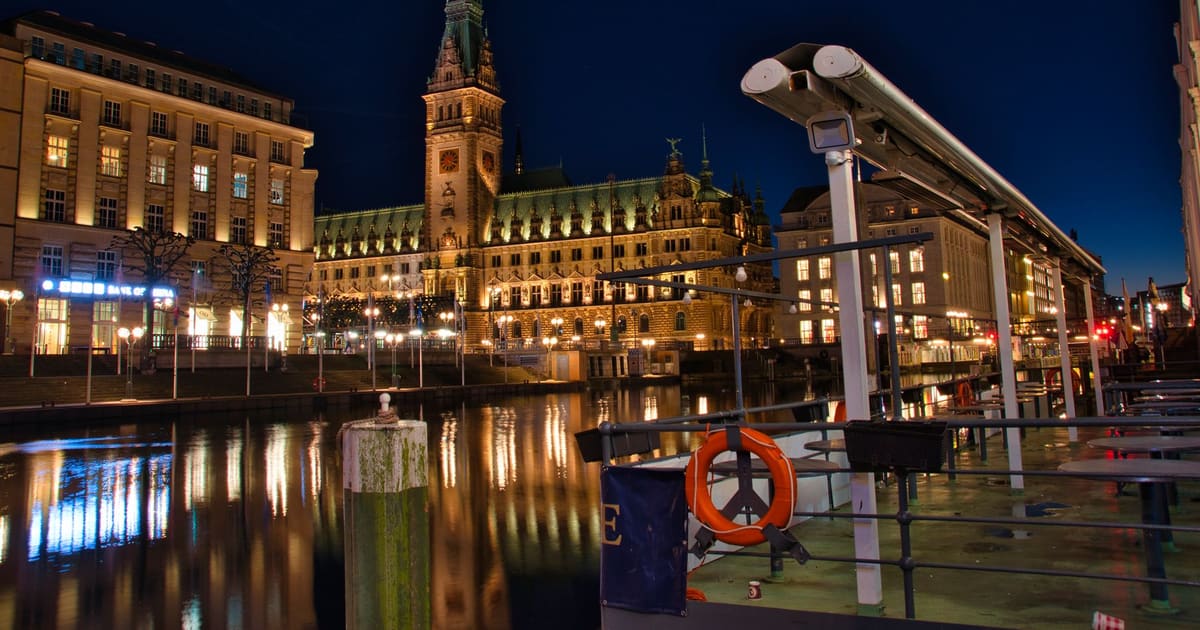
Hamburg City Hall, the Rathaus, went up between 1886 and 1897 in a lavish neo-Renaissance style, its tower rising over a hundred meters above a facade lined with statues of emperors. Inside are 647 rooms, enough for the city's government and its parliament both, since Hamburg is itself one of Germany's sixteen states. At night the facade lights up and reflects in the water of the Kleine Alster in front of it, lamps and flagpoles doubled in the still surface. An old Hanseatic custom has the mayor greet visiting monarchs at the top of the stairs rather than going down to meet them, a nod to the city's pride in never bowing to royalty.
Deichstrasse and the Old Canal
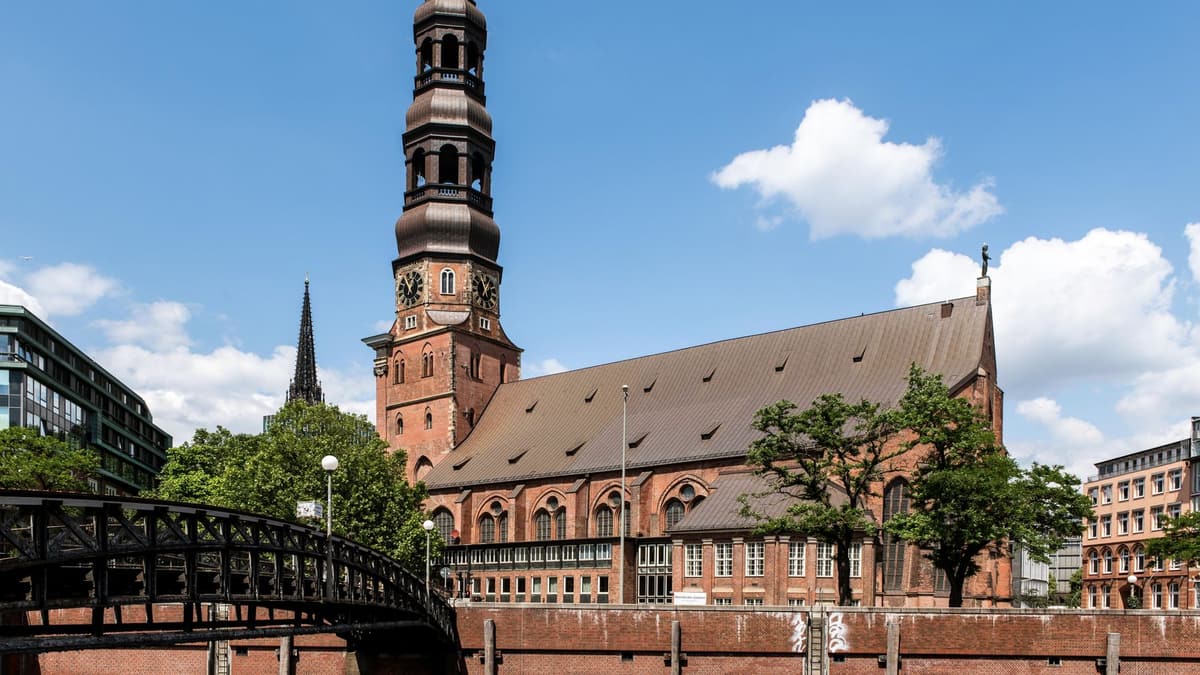
Deichstrasse takes its name from the dike it was first built along in the fourteenth century, and its narrow merchant houses, steep gables and timber frames, show what Hamburg looked like before the modern city arrived. The houses back directly onto the canal, so barges could once unload goods straight into the storerooms by hoist. A fire that started in a cigar maker's warehouse here in 1842 burned for three days and destroyed a quarter of the old city, yet part of Deichstrasse survived, which is why you can still walk it today. The red brick tower and canal bridge nearby are classic Hamburg Altstadt, water and old merchant architecture side by side.
The Elbphilharmonie
The Elbphilharmonie sits on a plain 1960s warehouse, Kaispeicher A, with a crown of glass rising above it in peaks and troughs like waves, made from more than a thousand curved panels. It opened in 2017, years late and well over budget, but most of Hamburg has forgiven it, partly for how good the concert hall inside actually sounds. You don't need a ticket to enjoy the building, since an escalator carries visitors up through the old warehouse to a public plaza wrapping around it, with views over the river, the cranes and the rooftops. From the water, the glass crown catches the light differently as the weather changes.
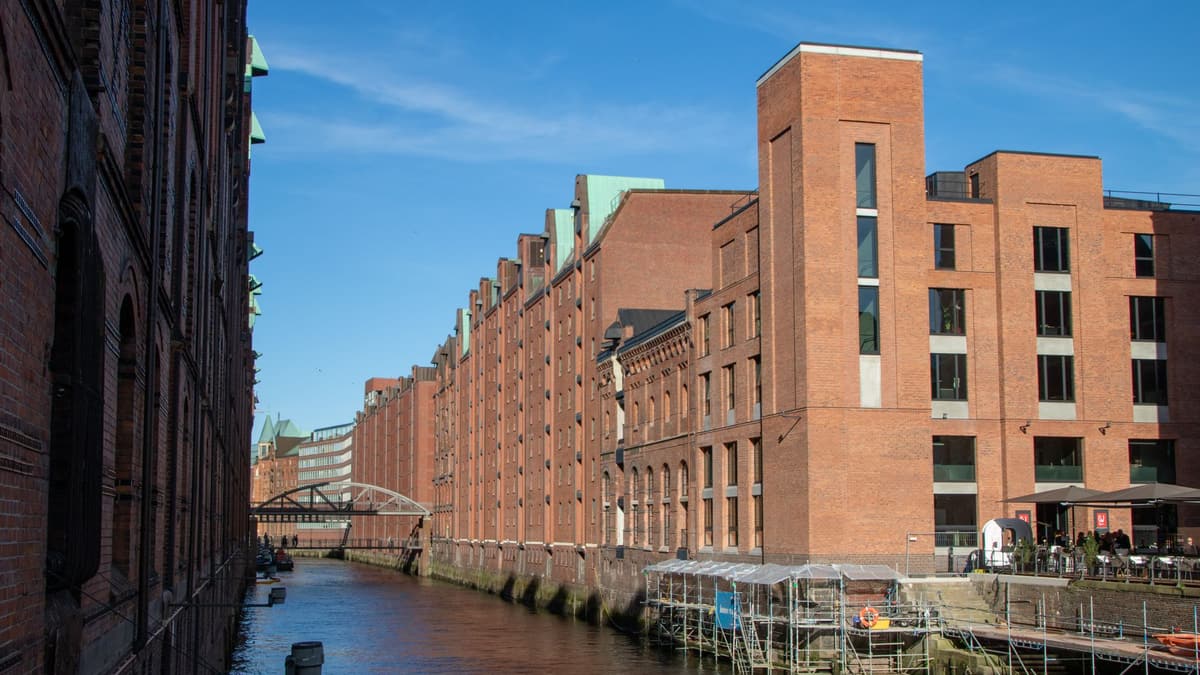
The Speicherstadt
The Speicherstadt is a district of red-brick warehouses built from 1883, after Hamburg joined the German customs union but kept a free port where goods could be stored without paying duty. The warehouses stand on thousands of timber piles driven into marshy ground, and for a century they held coffee, tea, spices and tobacco, some of which is still traded here today. Walking the canals between the buildings, their gabled fronts rise straight out of the water, each one with a beam and hoist above a column of loading doors, one for every floor. It's now a UNESCO World Heritage Site, and it shows once you're standing among the warehouses.
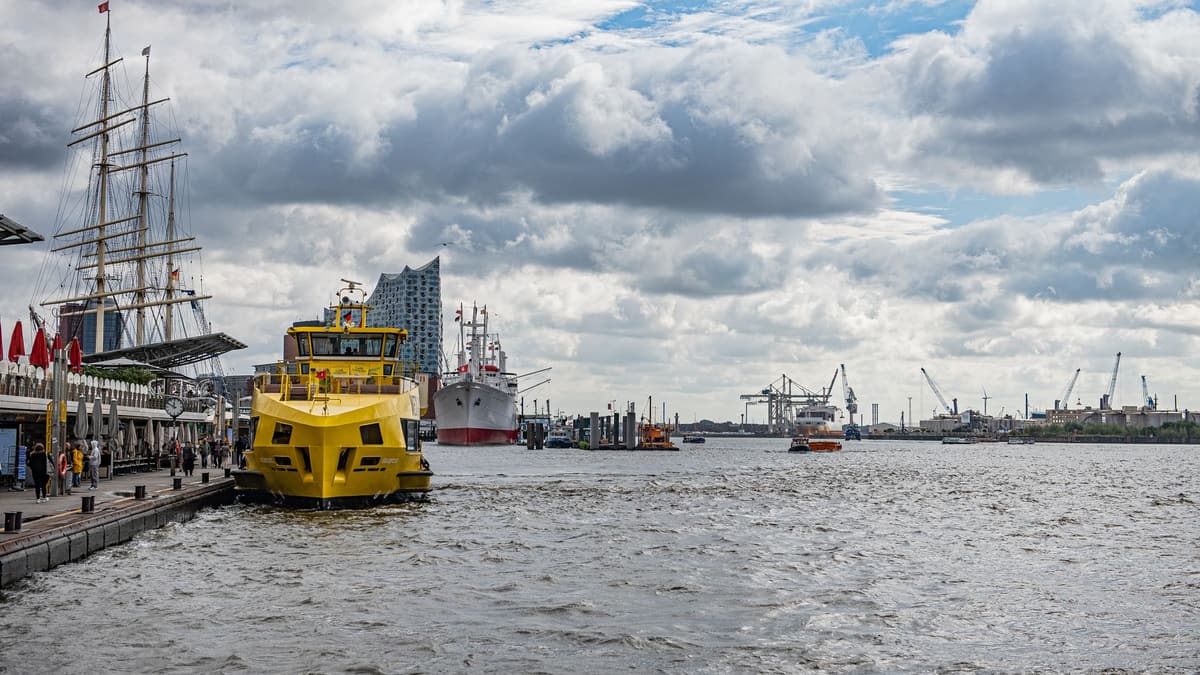
St. Pauli Landungsbrücken
The Landungsbrücken are Hamburg's harbor piers, floating pontoons joined to shore by hinged bridges that tilt with the Elbe's tide, which rises and falls by several meters twice a day. Harbor ferries leave from here as part of the city's ordinary public transport, and riding one downstream past the container terminals is one of the better cheap thrills in the city. A green-hulled sailing ship and a cargo liner sit moored nearby as museum ships, a reminder of the working harbor this once was and largely still is. Look past the masts and cranes and you can usually make out the Elbphilharmonie's glass crown further along the waterfront.
Szerezd meg az audiotúrát 3 egyszerű lépésben
Minden az ingyenes Walk With Me appban történik, és minden túra első megállóit ingyen kipróbálhatod.
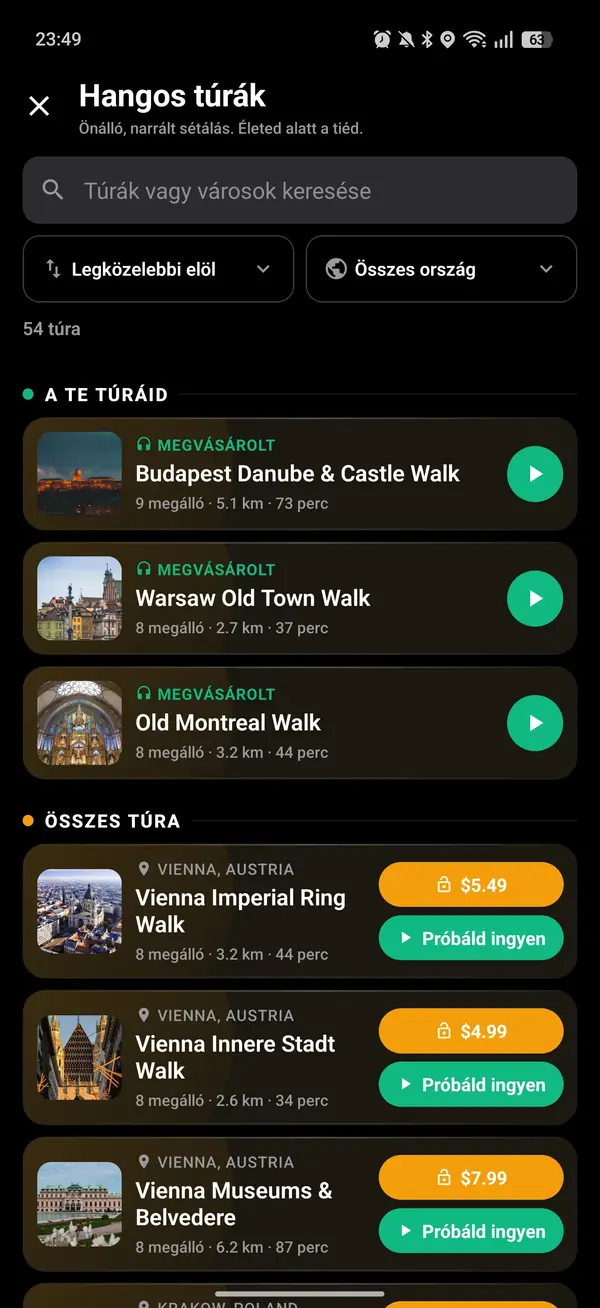
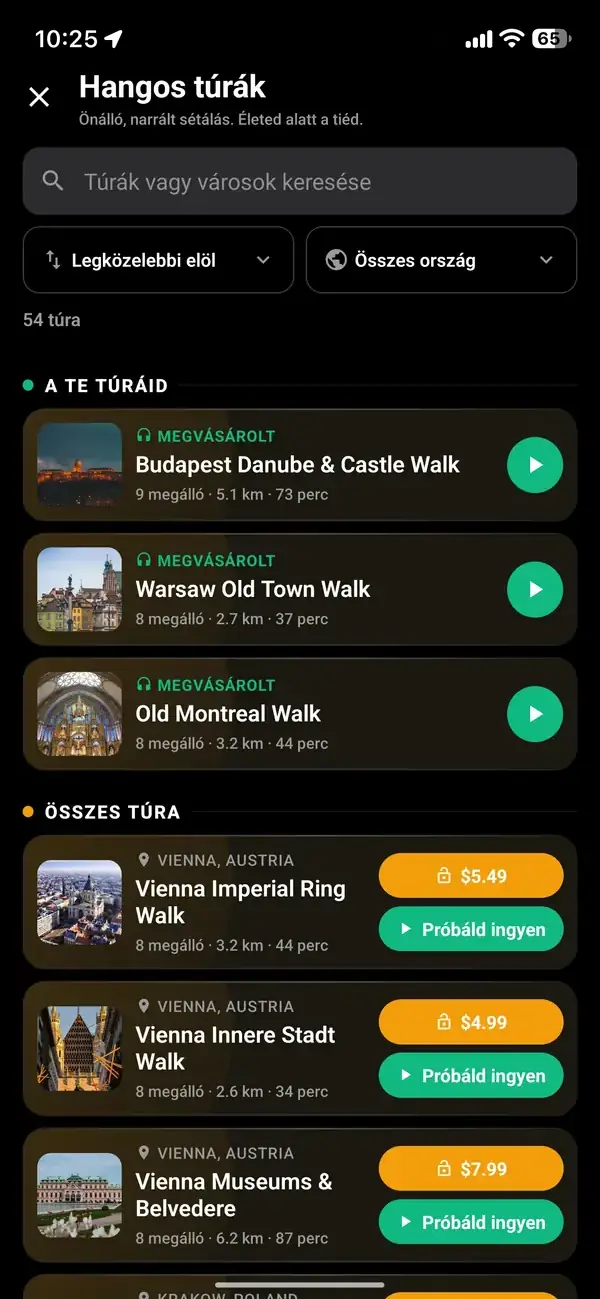
Koppints az arany fejhallgatóra, és válassz túrát
01
Sétálj egyedül, vagy hívj meg valakit


02
Nyomj a lejátszásra és indulj
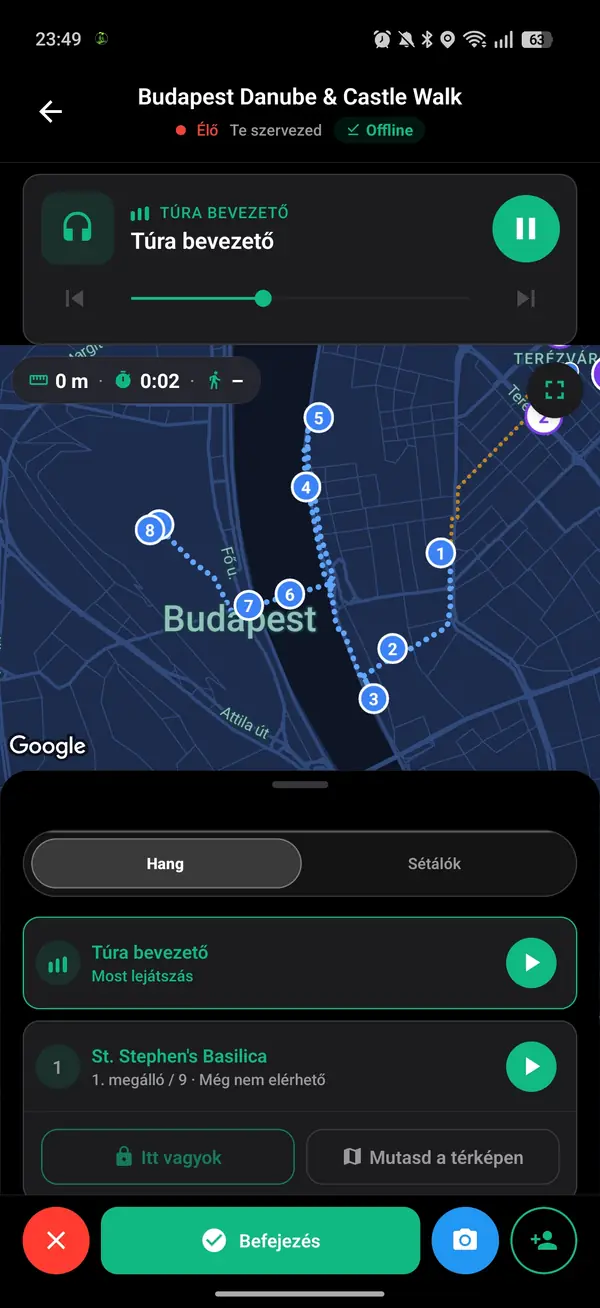
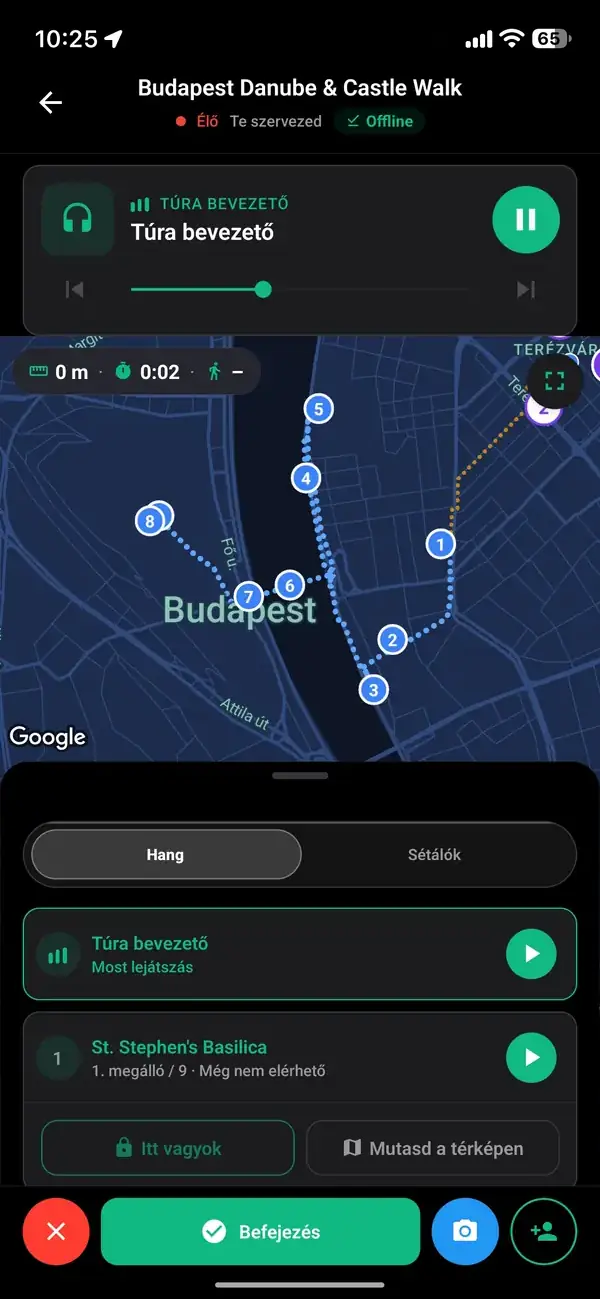
03
Kézzel készítve a városban töltött idődre
Ezek a túrák nem kipipálandó látnivalók listái. Arra készültek, hogy lassan járd végig őket, fejhallgatóval a füleden, a várost figyelve.
Meditatív és magával ragadó
Minden történet ott hangzik el, ahol megtörtént. Az app jelez, amikor egy megállóhoz érsz, egy koppintás elindítja a történetet, a megállók közötti utat pedig a saját tempódban élvezheted.
Kézzel, gondosan készítve
Minden útvonalat és minden megállót mi magunk választunk ki, és minden történetet gondosan formálunk meg, hogy a városban töltött időd a leginkább érdemes helyekre jusson.
Valakivel jobb
Minden séta jobb, ha valaki melletted van, ezért ha tudsz hozni valakit, nagyon ajánljuk. Ezért fedez egyetlen vásárlás mindenkit, akit meghívsz: ingyen csatlakoznak a túrádhoz.