




 $8.99Điểm nổi bật thành phố
Âm thanh Hamburg Tour đi bộ
Các chuyến đi bộ tự hướng dẫn, có thuyết minh qua Hamburg. Mua tour một lần, tải xuống và để câu chuyện tự động phát tại mỗi điểm dừng khi bạn đi bộ theo nhịp độ của riêng mình.
Tour chỉ từ $8.99
Bạn bè đi bộ miễn phí. Một lần mua bao gồm tất cả mọi người trong chuyến đi bộ của bạn. Bắt đầu tour, mời bạn bè tham gia, và nó sẽ phát trên mọi điện thoại trong nhóm của bạn.
5.0 trên Google Play
Tour âm thanh tại Hamburg
Mỗi tour là một lộ trình trên bản đồ có thuyết minh tại từng điểm dừng. Mua một lần và sở hữu mãi mãi, không cần đăng ký định kỳ.
$8.99Điểm nổi bật thành phố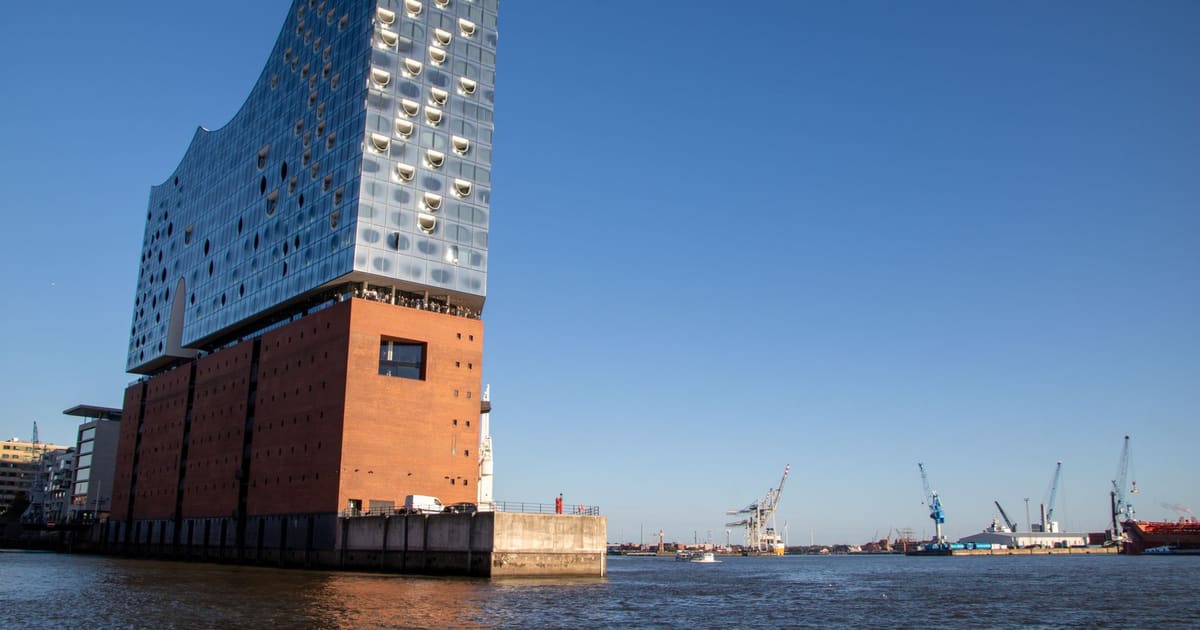 $9.99Điểm nổi bật thành phố
Trải nghiệm gì trong tour đi bộ âm thanh tại Hamburg
A Hamburg audio walk crosses eight centuries of a merchant republic, from the church sailors call the Michel to the Alster lake and grand City Hall, or follows the water itself, through a tiled tunnel under the Elbe to the red-brick Speicherstadt.
The Old Town and Alster Walk starts at St. Michael's, the great brick church the whole city calls the Michel, and drops through the old merchant street of Deichstrasse to the bombed spire of St. Nikolai, 3.5 kilometers, about 48 minutes in all.
From there it crosses the square in front of Hamburg City Hall, with its 647 rooms, and finishes on the shining Alster lake at the Hamburger Kunsthalle, one of Germany's finest art museums.
The Harbor Walk follows the water instead, 4.1 kilometers, about 59 minutes, from the tiled Old Elbe Tunnel past the piers, a museum cargo ship and the glass crown of the Elbphilharmonie, into the red-brick Speicherstadt and on to the dark, rippling brick of the Chilehaus.
Địa điểm đi bộ tại Hamburg
Một vài điểm dừng bạn sẽ đi qua và lý do tại sao chúng xứng đáng để bạn đi chậm lại và thưởng thức.
Hamburg City Hall
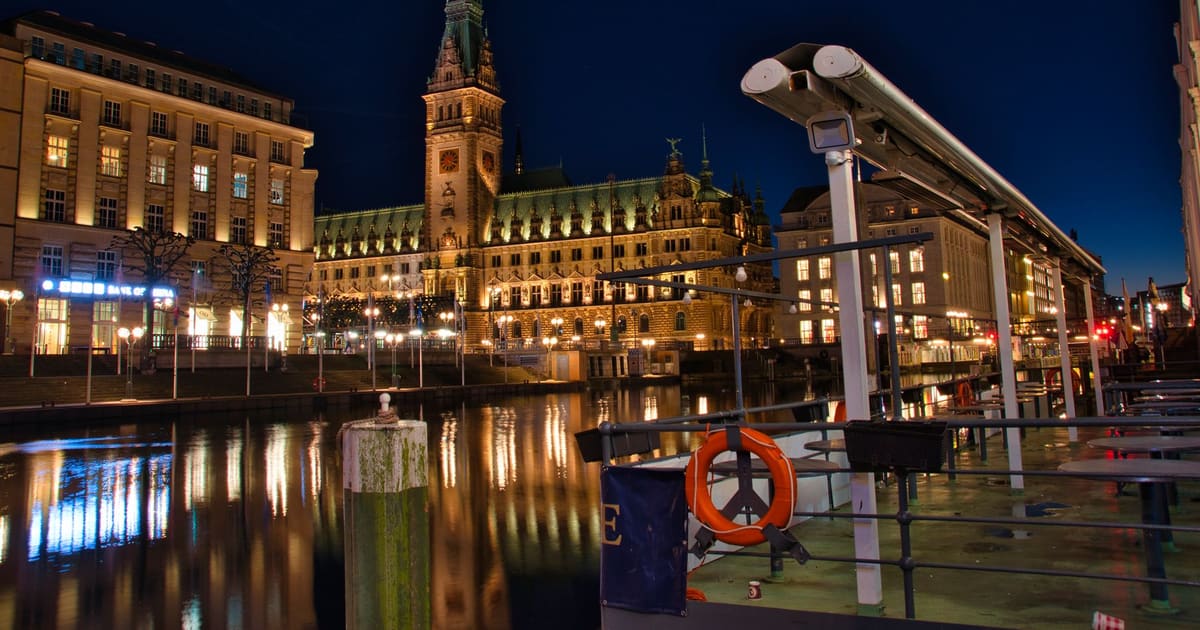
Hamburg City Hall, the Rathaus, went up between 1886 and 1897 in a lavish neo-Renaissance style, its tower rising over a hundred meters above a facade lined with statues of emperors. Inside are 647 rooms, enough for the city's government and its parliament both, since Hamburg is itself one of Germany's sixteen states. At night the facade lights up and reflects in the water of the Kleine Alster in front of it, lamps and flagpoles doubled in the still surface. An old Hanseatic custom has the mayor greet visiting monarchs at the top of the stairs rather than going down to meet them, a nod to the city's pride in never bowing to royalty.
Deichstrasse and the Old Canal
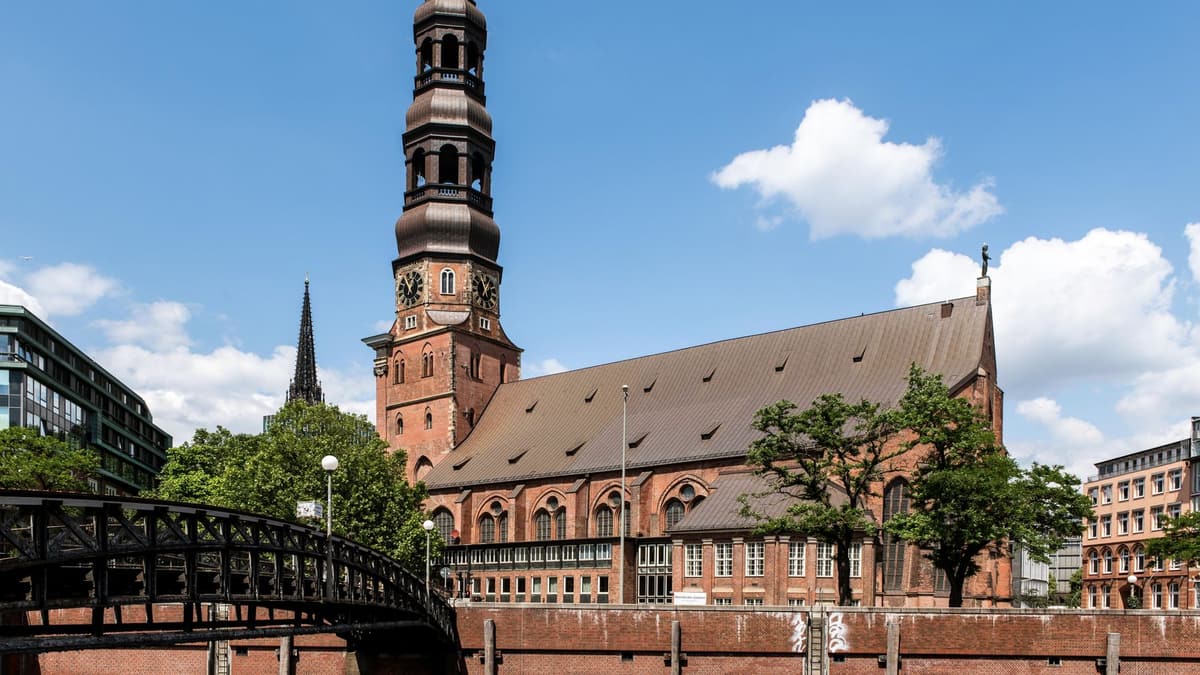
Deichstrasse takes its name from the dike it was first built along in the fourteenth century, and its narrow merchant houses, steep gables and timber frames, show what Hamburg looked like before the modern city arrived. The houses back directly onto the canal, so barges could once unload goods straight into the storerooms by hoist. A fire that started in a cigar maker's warehouse here in 1842 burned for three days and destroyed a quarter of the old city, yet part of Deichstrasse survived, which is why you can still walk it today. The red brick tower and canal bridge nearby are classic Hamburg Altstadt, water and old merchant architecture side by side.
The Elbphilharmonie
The Elbphilharmonie sits on a plain 1960s warehouse, Kaispeicher A, with a crown of glass rising above it in peaks and troughs like waves, made from more than a thousand curved panels. It opened in 2017, years late and well over budget, but most of Hamburg has forgiven it, partly for how good the concert hall inside actually sounds. You don't need a ticket to enjoy the building, since an escalator carries visitors up through the old warehouse to a public plaza wrapping around it, with views over the river, the cranes and the rooftops. From the water, the glass crown catches the light differently as the weather changes.
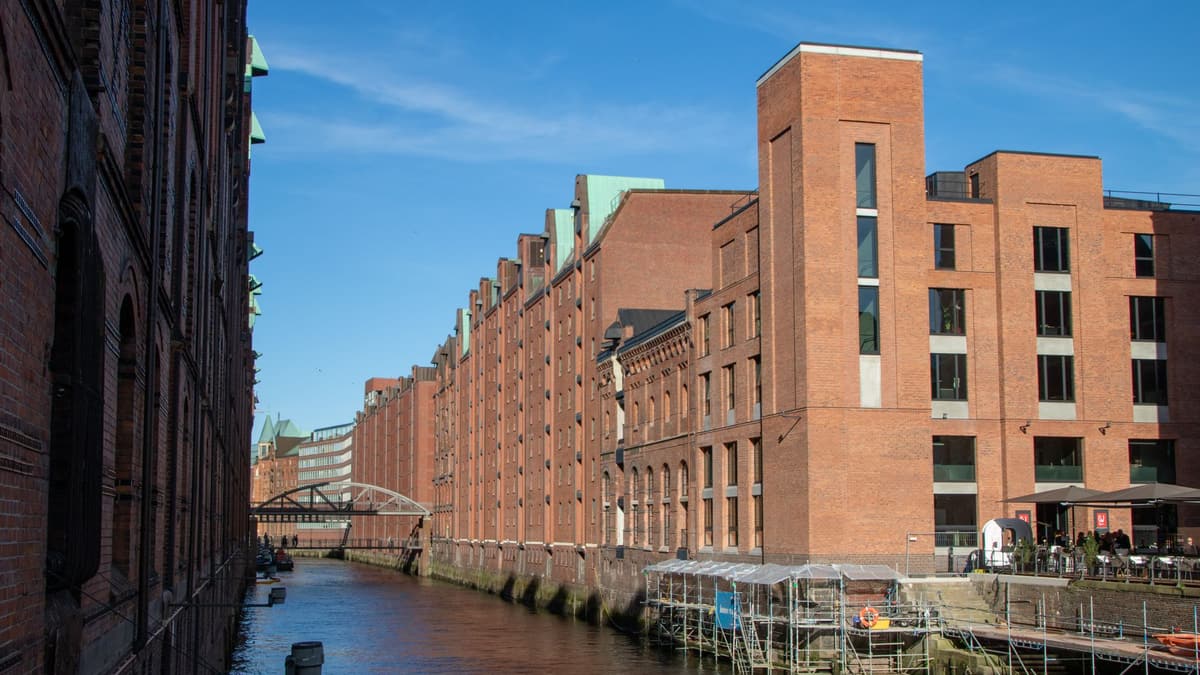
The Speicherstadt
The Speicherstadt is a district of red-brick warehouses built from 1883, after Hamburg joined the German customs union but kept a free port where goods could be stored without paying duty. The warehouses stand on thousands of timber piles driven into marshy ground, and for a century they held coffee, tea, spices and tobacco, some of which is still traded here today. Walking the canals between the buildings, their gabled fronts rise straight out of the water, each one with a beam and hoist above a column of loading doors, one for every floor. It's now a UNESCO World Heritage Site, and it shows once you're standing among the warehouses.
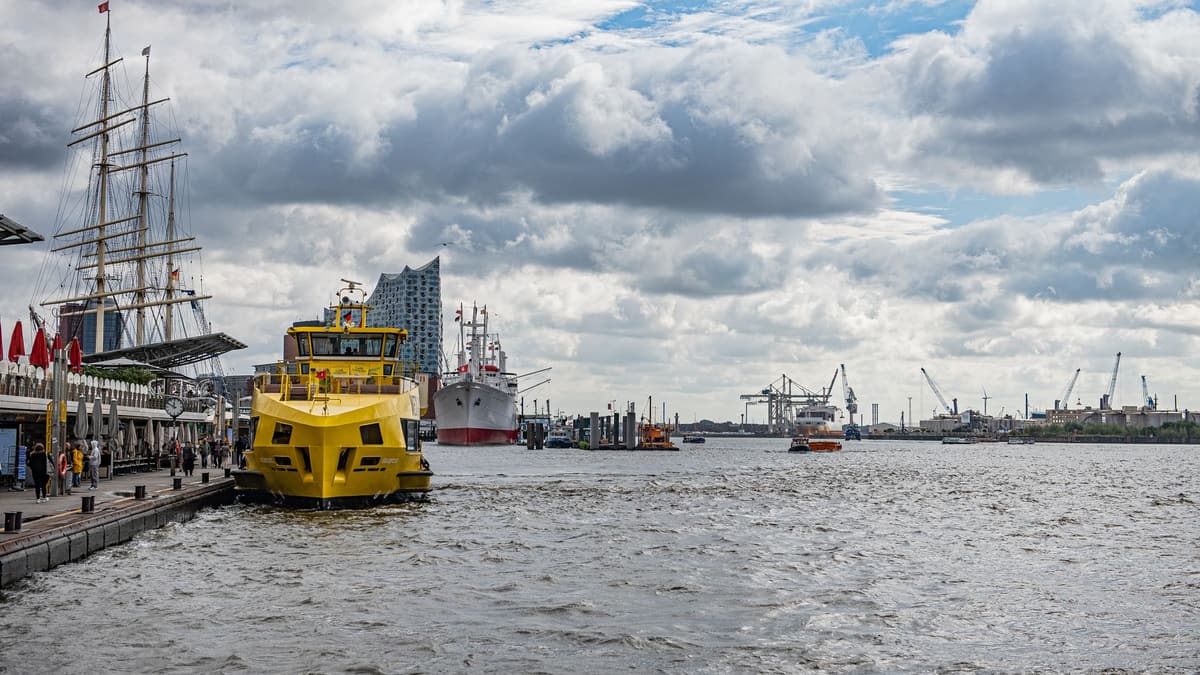
St. Pauli Landungsbrücken
The Landungsbrücken are Hamburg's harbor piers, floating pontoons joined to shore by hinged bridges that tilt with the Elbe's tide, which rises and falls by several meters twice a day. Harbor ferries leave from here as part of the city's ordinary public transport, and riding one downstream past the container terminals is one of the better cheap thrills in the city. A green-hulled sailing ship and a cargo liner sit moored nearby as museum ships, a reminder of the working harbor this once was and largely still is. Look past the masts and cranes and you can usually make out the Elbphilharmonie's glass crown further along the waterfront.
Nhận Tour Âm Thanh Trong 3 Bước Đơn Giản
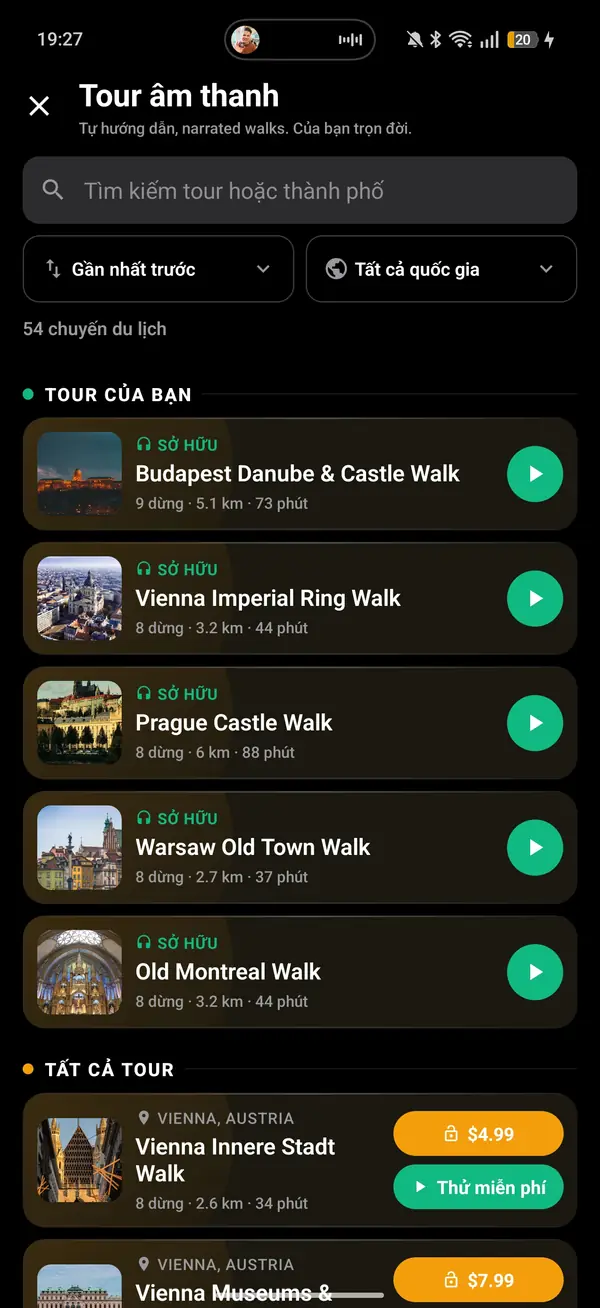
Tất cả trong ứng dụng Walk With Me miễn phí, và các điểm dừng đầu tiên của mỗi tour đều được nghe thử miễn phí.
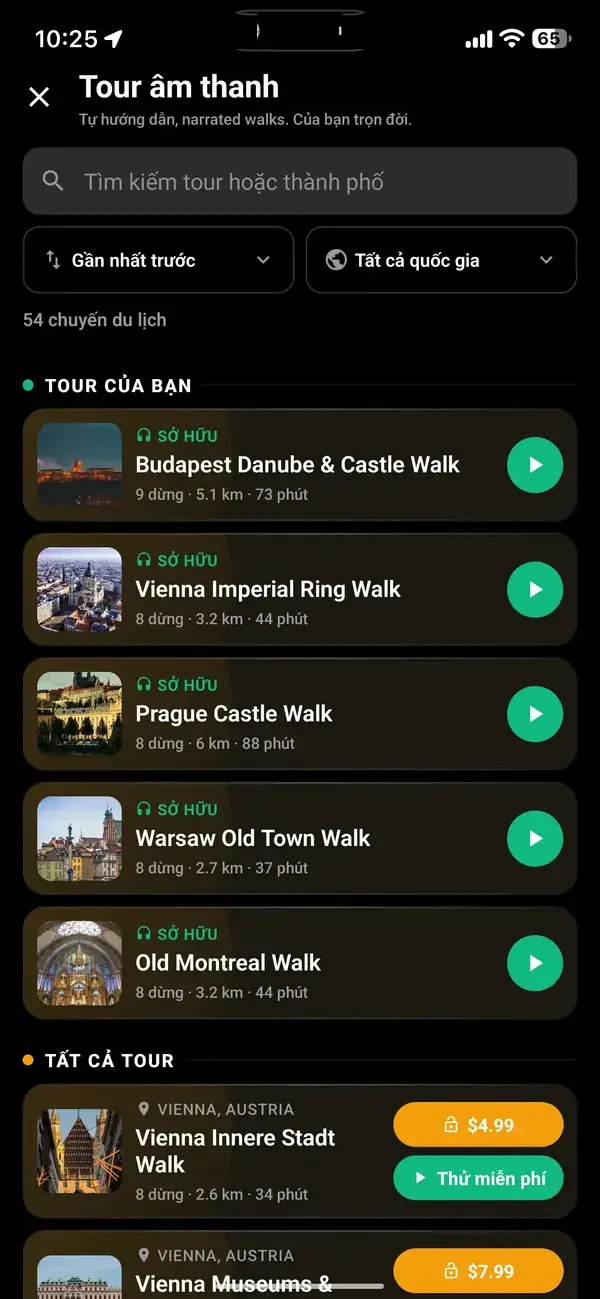
Chạm vào tai nghe vàng và chọn tour
01
Đi một mình hoặc mời ai đó
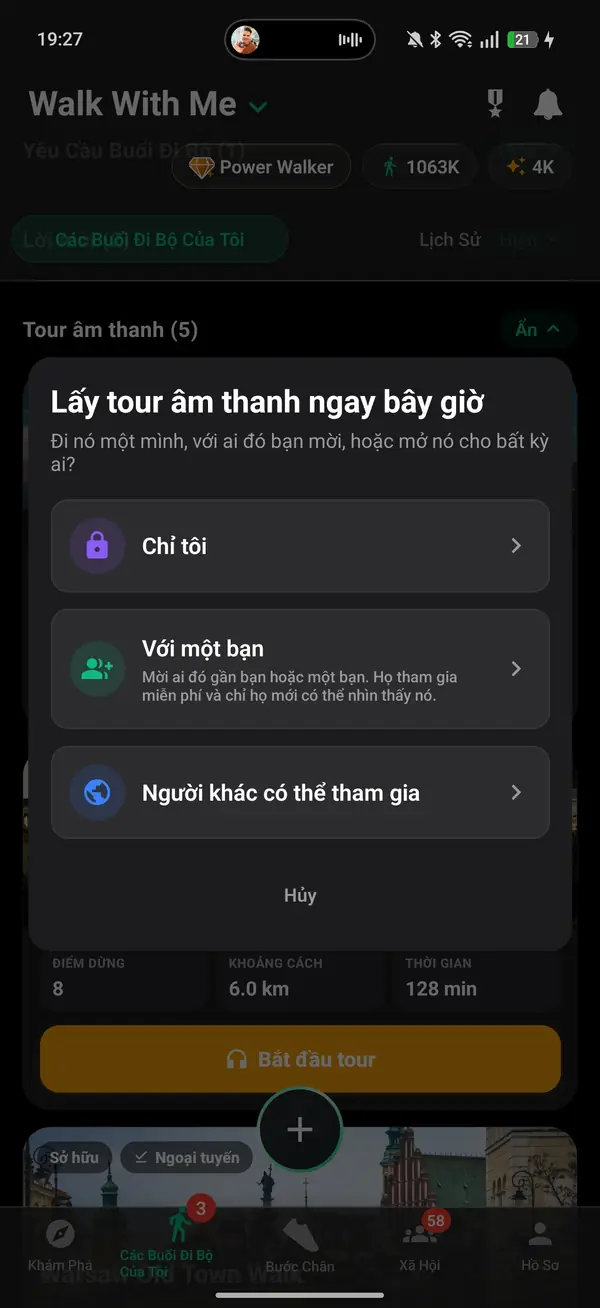
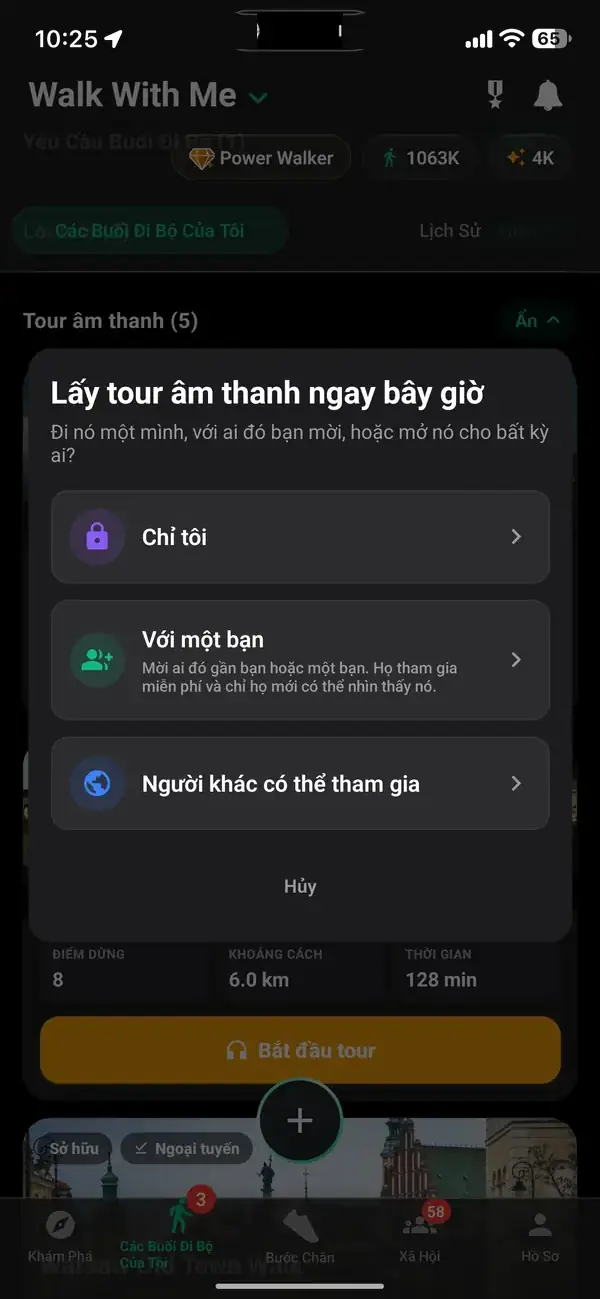
02
Nhấn phát và đi bộ
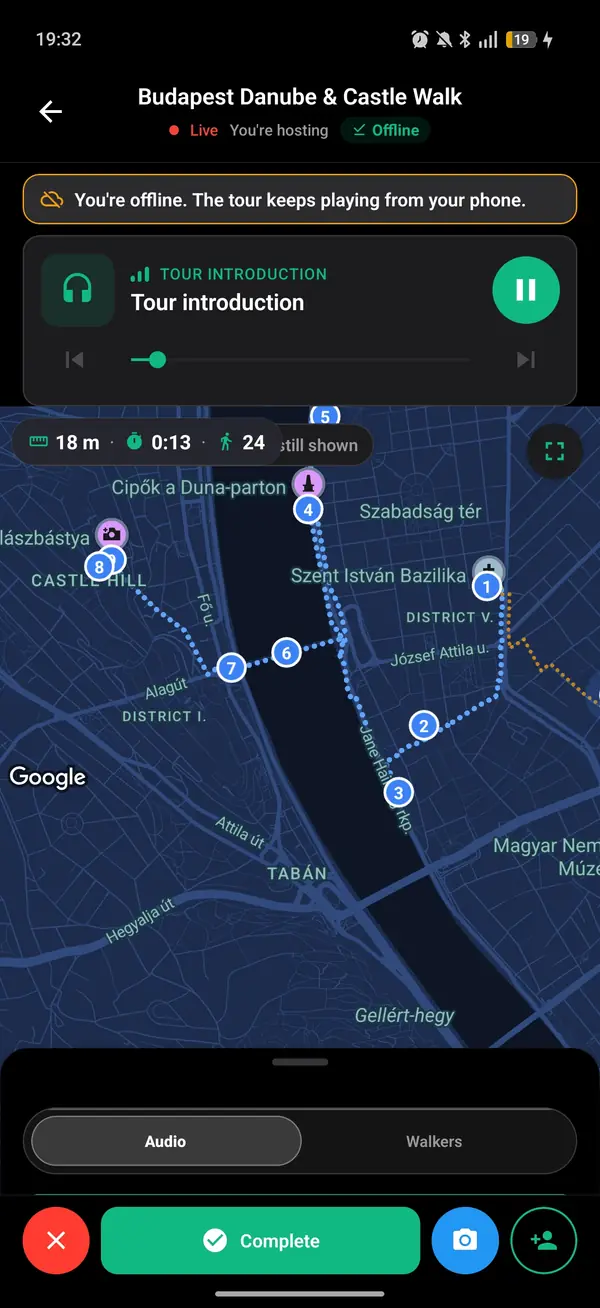
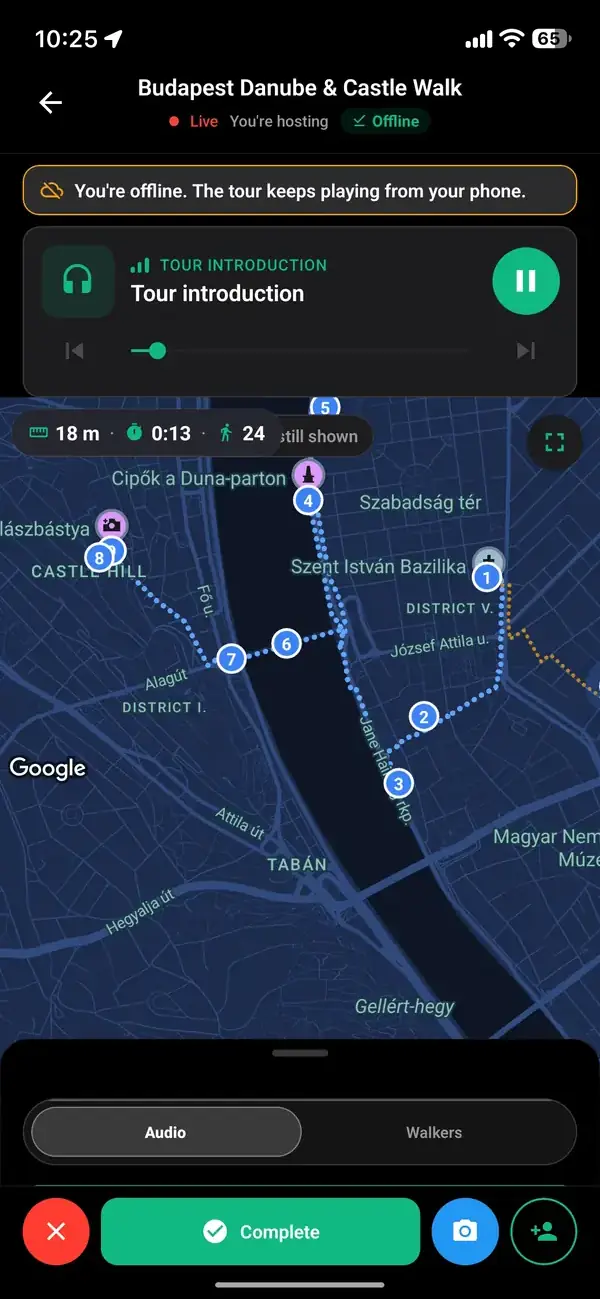
03
Được chăm chút cho thời gian của bạn trong thành phố
Những tour này không phải danh sách địa danh để đánh dấu. Chúng được tạo ra để bước đi chậm rãi, đeo tai nghe và ngắm nhìn thành phố.
Thư thái và cuốn hút
Mỗi câu chuyện được kể ngay tại nơi nó đã diễn ra. Ứng dụng phát âm báo khi bạn đến một điểm dừng, một lần chạm để bắt đầu câu chuyện, và quãng đường giữa các điểm dừng là của riêng bạn, theo nhịp của bạn.
Thủ công, tỉ mỉ
Chúng tôi tự chọn từng lộ trình, từng điểm dừng và chăm chút từng câu chuyện, để thời gian của bạn trong thành phố dành cho những nơi đáng đến nhất.
Vui hơn khi có bạn đồng hành
Mỗi chuyến đi bộ đều vui hơn khi có ai đó bên cạnh, vì vậy nếu bạn có thể rủ một người bạn, chúng tôi rất khuyến khích. Đó là lý do một lần mua bao gồm tất cả những người bạn mời: họ tham gia tour của bạn miễn phí.