
October 11, 2026 · 9 min read
Amsterdam Anne Frank Walking Tour
From the Hollandsche Schouwburg through the old Jewish Quarter, past the Dockworker and the Dam, to the Anne Frank House on the Prinsengracht.
589

October 9, 2026 · 11 min read

 Gli amici camminano gratis
Ogni tour funziona anche come camminata di gruppo programmata a cui puoi unirti nell'app.
Altri tour audio a Antalya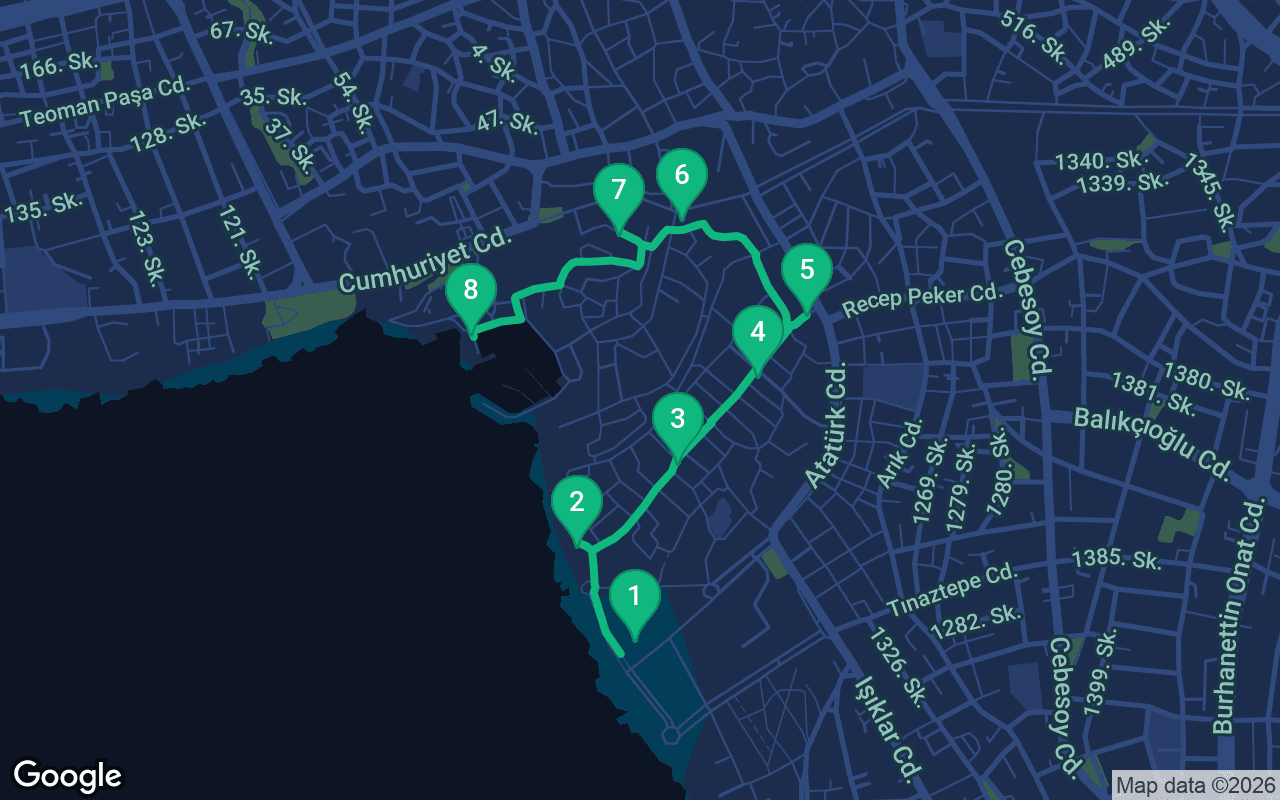
Circa 1,9 km, più o meno 26 minuti a passo tranquillo.
Questo tour è narrato
Premi play sulle prime 3 tappe per ascoltare una demo di 30 secondi della narrazione. Nell'app, l'introduzione e queste 3 tappe sono gratis e complete, e ogni tappa ti avvisa con un segnale acustico al tuo arrivo. L'intero tour narrato sarà tuo a $6.99, un acquisto unico che conservi per sempre.
Funziona con Garmin, Komoot, Strava, OS Maps e qualsiasi app GPX.
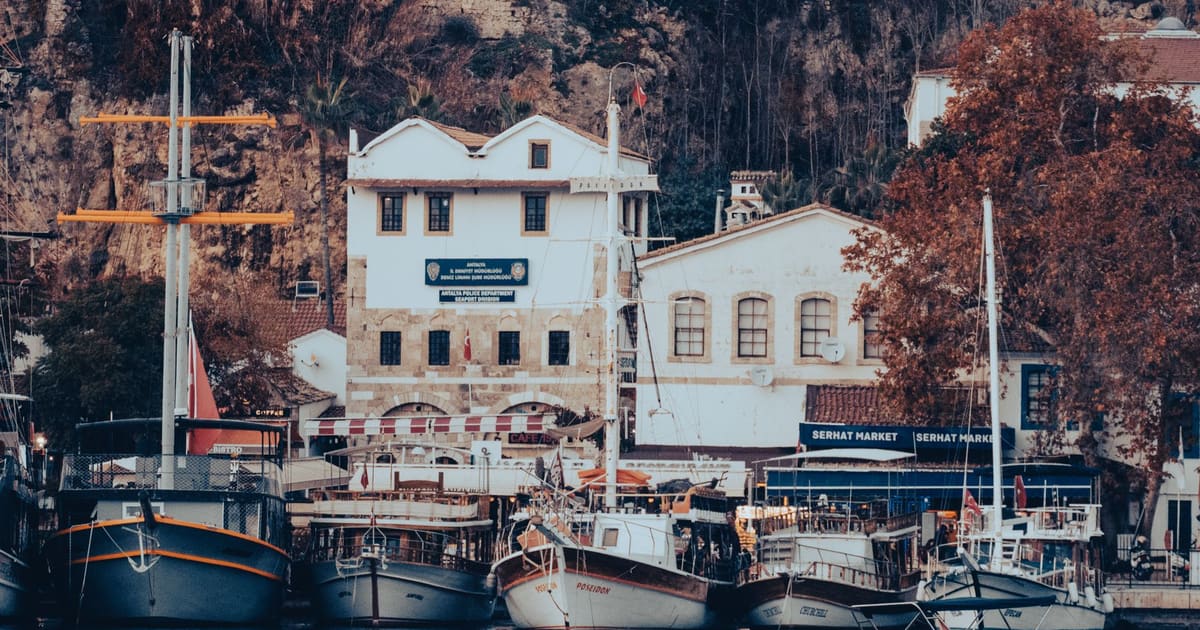
Kaleiçi means "inside the castle," and that is exactly what it is: the old town of Antalya, still wrapped in a horseshoe of walls around its ancient harbor. Romans, Byzantines, Seljuks and Ottomans all lived inside these walls, and each of them left something you can touch. This walk starts in the clifftop gardens of Karaalioğlu Park, follows the cliff edge to a Roman tower, threads the lanes of the old town to the marble gate built for an emperor, swings past the clock tower and the fluted minaret that became the city's emblem, and finishes down at the water where it all began. It is about 2 kilometers, a little over a mile, and one of the most rewarding self-guided walking tours on the Turkish coast, with two thousand years of history packed into a short, easy stroll.
Allow about an hour and a half at a stroll, and up to three hours if you go into the Kaleiçi Museum and stop for tea, which you should. The walking itself is short and mostly level, on smooth stone paving and old cobbles, until the last leg, when the lanes drop steeply down to the harbor on slopes and steps. Climbing back up afterward is the hardest part of the day, so take it slowly or catch a taxi from the marina. Antalya summers are very hot, often well above 35°C (95°F) in July and August, so walk early in the morning or in the last two hours before sunset, carry water, and wear a hat and sunscreen. The narrow lanes give some shade, but the open parks and the harbor give very little. Spring and autumn are lovely here, and even winter days are often mild and bright. The Yivli Minaret stands beside a working mosque, so dress modestly if you want to look inside. The museum keeps its own hours and closing days, so check before you go. Wear shoes with a good grip, because old marble paving can be slippery.
You begin in Karaalioğlu Park, a shady stretch of gardens on top of the cliffs at the southern edge of the old town. Walk to the railing at the sea edge and look down: the land here simply stops, dropping in a sheer wall of pale rock straight into the Mediterranean. Antalya sits on a high natural shelf above the sea, and this is the first place on the walk where you feel it. Turn around and you will see pines, palms, flowerbeds heavy with bougainvillea, families on the benches and, very likely, a cat or two supervising the whole scene. The park takes its name from the Karaalioğlu family, local notables who held great power around Antalya in the late Ottoman centuries, when Istanbul was far away and provincial families ran much of daily life. Today it is the old town's back garden, the place where people come for a walk, a game of backgammon or a quiet glass of tea in the evening. Find a bench, get your bearings and enjoy the breeze off the water before the lanes close in. When you are ready, follow the paths north-west through the park, keeping the sea on your left, to the round stone tower at its far corner, about three minutes away.
The squat, round stone tower in front of you is the Hıdırlık Tower, and it has been standing at this corner of the cliff since Roman times, probably the second century. Look at its shape: a square base, with a stout cylinder rising from it. Historians think it may have begun as a grand tomb for an important local family, much like the round mausoleums of Rome, before the city found more practical uses for it. Over the centuries it was folded into the city walls as a bastion, guarding the point where the land walls met the sea walls, and its height and position made it a natural lookout and, by tradition, a lighthouse for ships approaching the harbor. The name is usually linked to Hızır, the green-cloaked wanderer of Anatolian folklore who is said to appear to travelers in need and to bring the spring. Walk around the base and look out from the cliff edge beside it, where the whole curve of the bay opens up below you, and you will see why every ruler of Antalya wanted a watchman standing here. From the tower, take the narrow lane that leads inland into the old town, Hesapçı Sokak, heading north-east. Kesik Minaret is about four minutes along.
 Stop where you can see the stump of a minaret rising above the old stone walls, cut off sharply partway up. Kesik means "cut" or "broken," and this building has had more lives than almost any other in the city. It began as a Roman temple in the second century. In the Byzantine era it became a church, and you can still pick out carved marble pieces from that time, reused and set into the walls. After Antalya passed to Muslim rulers in the thirteenth century, it was turned into a mosque and given its minaret. Later it took the name Korkut Mosque, after the Ottoman prince Korkut, a son of Sultan Bayezid II, who governed this region around the end of the fifteenth century and had it restored. Then, in the nineteenth century, a fire swept through and destroyed much of the building, and the top of the minaret came down with it. It was never rebuilt, and the broken tower became a landmark in its own right. Restoration work has brought parts of the building back in recent years, so check whether you can step inside. Continue north-east along Hesapçı Sokak, past old houses with jutting wooden upper floors, for about four minutes to the Kaleiçi Museum.
Cosa è incluso
I nostri tour sono pensati per essere meditativi e immersivi: ti muovi e semplicemente ascolti. Sono sempre più belli in compagnia, e l'app riproduce la narrazione in sincronia, così tu, il tuo partner e i tuoi amici sentite ogni tappa nello stesso momento.
The Kaleiçi Museum is two buildings side by side: a restored Ottoman house and, beside it, a former Greek Orthodox church dedicated to Saint George. Together they tell the story of the old town's two communities.
Il resto di questa tappa è nel tour audio completo.
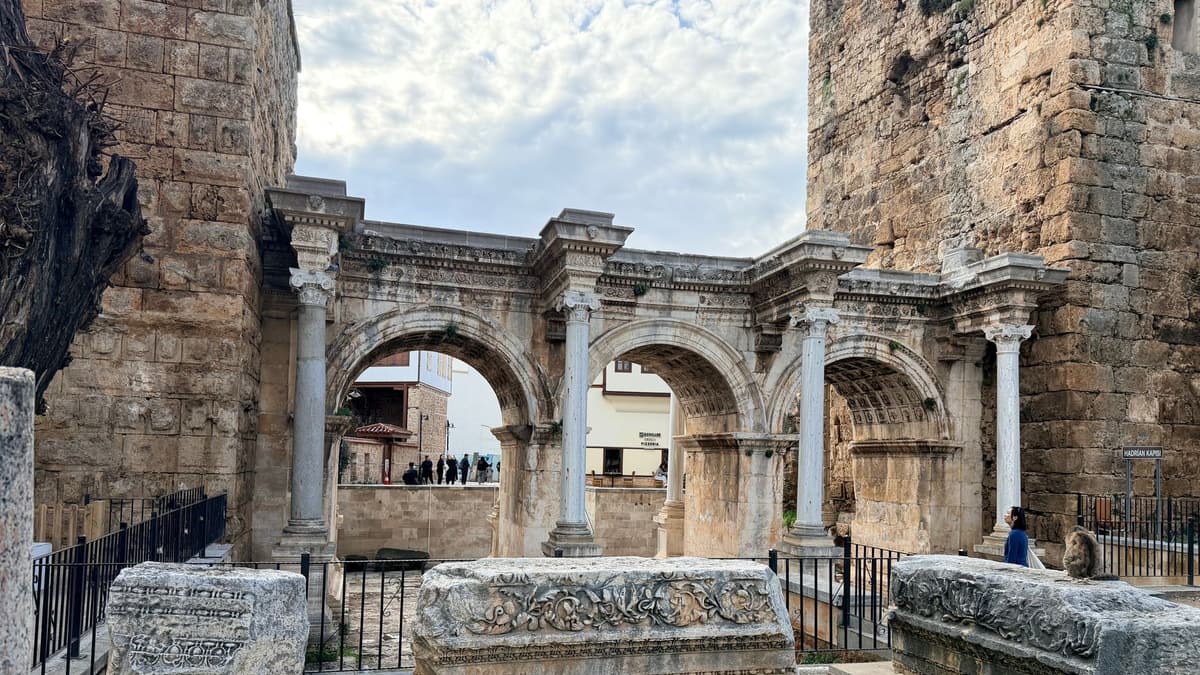
Here is the grandest entrance to the old town: three marble arches flanked by two stone towers, called Üçkapılar, the Three Gates, by locals.
Il resto di questa tappa è nel tour audio completo.
You are now at Kalekapısı, the Castle Gate, the old main entrance to the walled town and still the busiest corner in central Antalya. The stone tower in front of you was once part of the city's defenses, guarding the gate.
Il resto di questa tappa è nel tour audio completo.
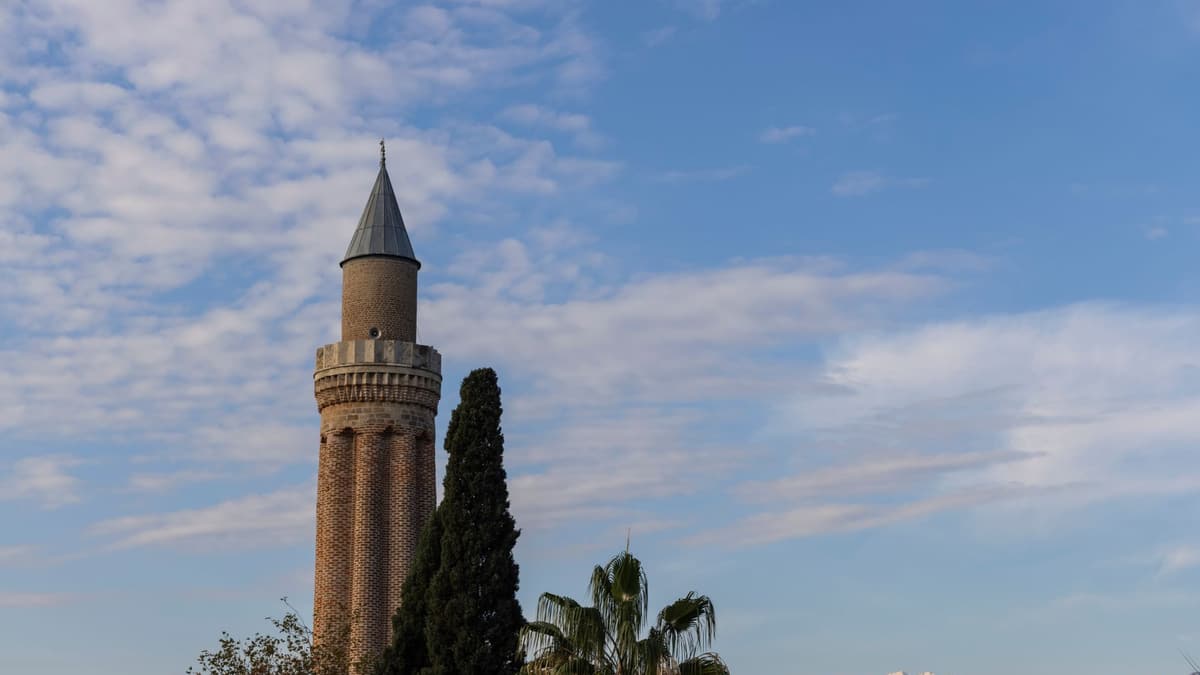
This is the symbol of Antalya, the Yivli Minaret, the "fluted minaret," and you will see its outline on signs and souvenirs all over the city.
Il resto di questa tappa è nel tour audio completo.
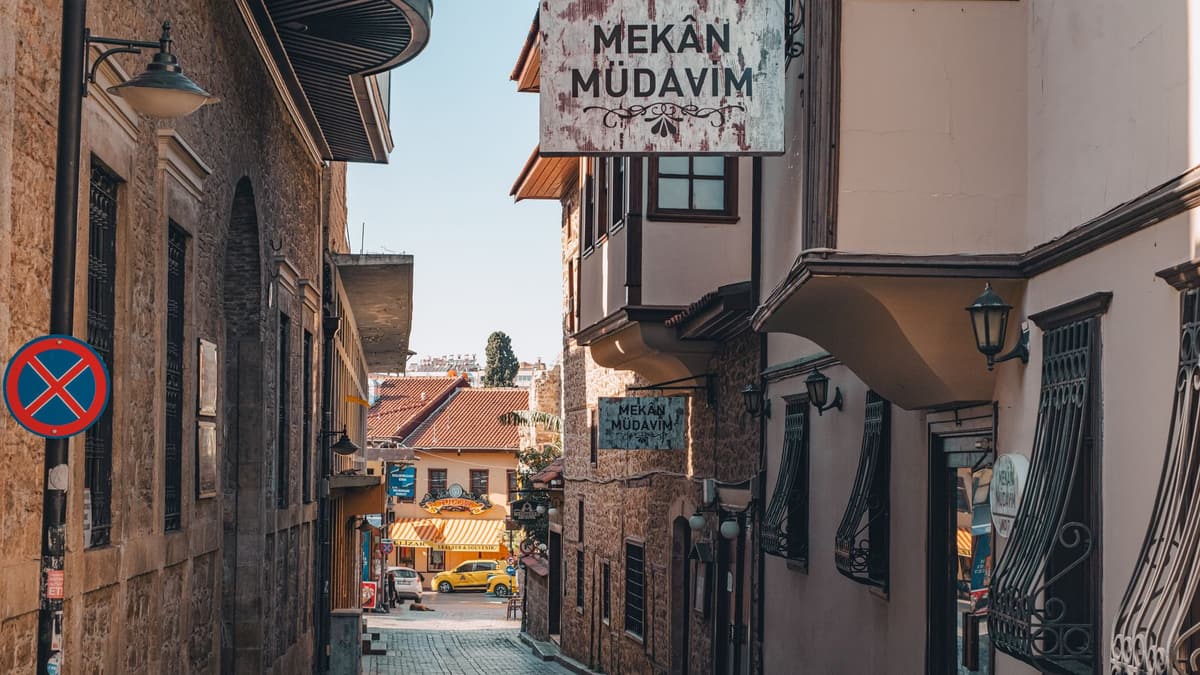
You have reached the water, and the oldest part of the story.
Il resto di questa tappa è nel tour audio completo.
Fai questa camminata in compagnia alla prossima uscita in programma.
Circa 1,9 km, circa 26 minuti a passo lento · 8 tappe
Gli amici camminano gratisOctober 11, 2026 · 9 min read
From the Hollandsche Schouwburg through the old Jewish Quarter, past the Dockworker and the Dam, to the Anne Frank House on the Prinsengracht.
October 11, 2026 · 11 min read
From Van Houten's street by the Vondelpark past Leidseplein, the Rijksmuseum passage and the famous canal bench to the Anne Frank House.

October 11, 2026 · 10 min read
Follow the last days of April and May 1945 from the Anhalter Bahnhof ruin past the Gestapo site and Brandenburg Gate to the Moltke Bridge and the Reichstag.
