
October 11, 2026 · 9 min read
Amsterdam Anne Frank Walking Tour
From the Hollandsche Schouwburg through the old Jewish Quarter, past the Dockworker and the Dam, to the Anne Frank House on the Prinsengracht.
589

October 11, 2026 · 10 min read

 친구는 무료로 함께 걸어요
모든 투어는 앱에서 참여할 수 있는 정기 그룹 걷기 모임으로도 운영됩니다.
Budapest의 오디오 투어 더 보기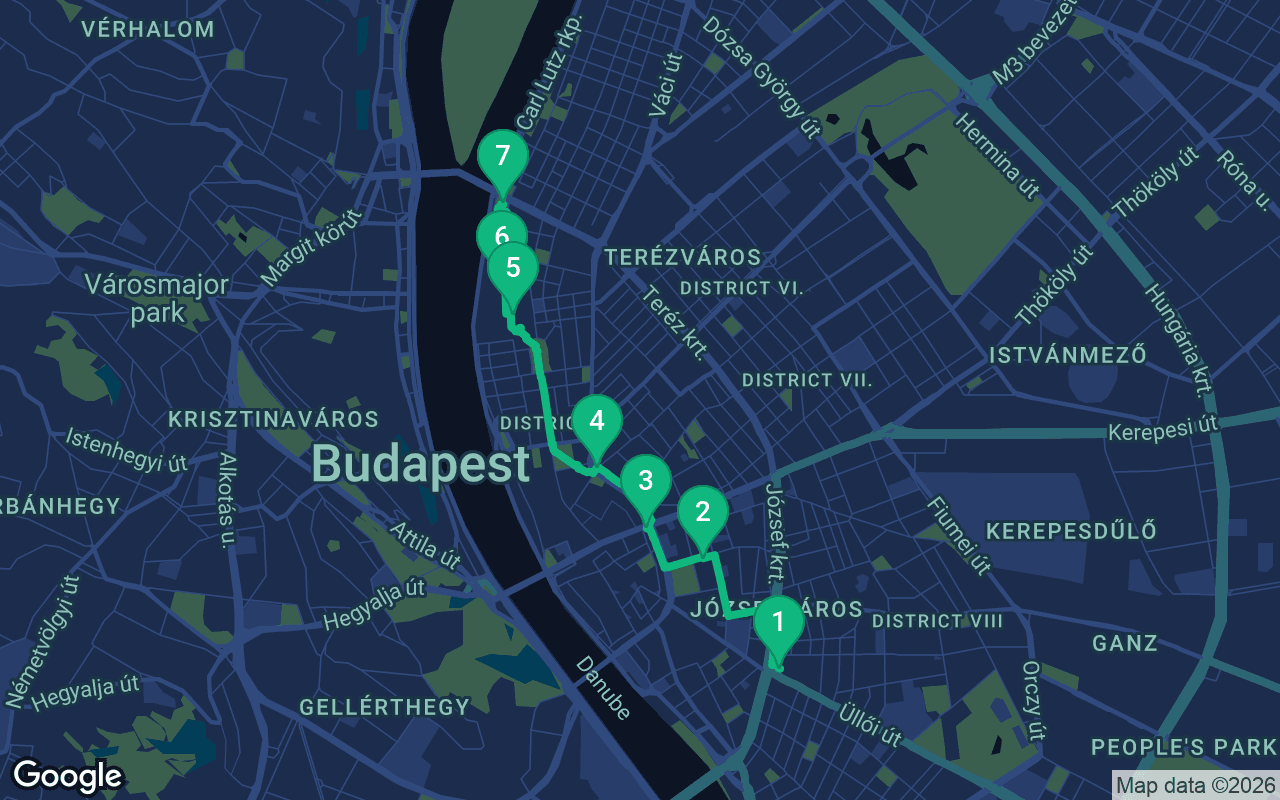
약 4.6km, 여유로운 페이스로 대략 64분 소요.
음성 가이드가 포함된 투어입니다
처음 3개 스톱에서 재생을 누르면 여기에서 나레이션을 30초 데모로 들을 수 있습니다. 앱에서는 인트로와 이 스톱들을 무료로 끝까지 들으실 수 있으며, 각 스톱에 도착하면 알림음이 울립니다. 전체 오디오 투어는 $17.99에 한 번만 구매하시면 평생 소장하실 수 있습니다.
Garmin, Komoot, Strava, OS Maps 및 모든 GPX 앱과 호환됩니다.
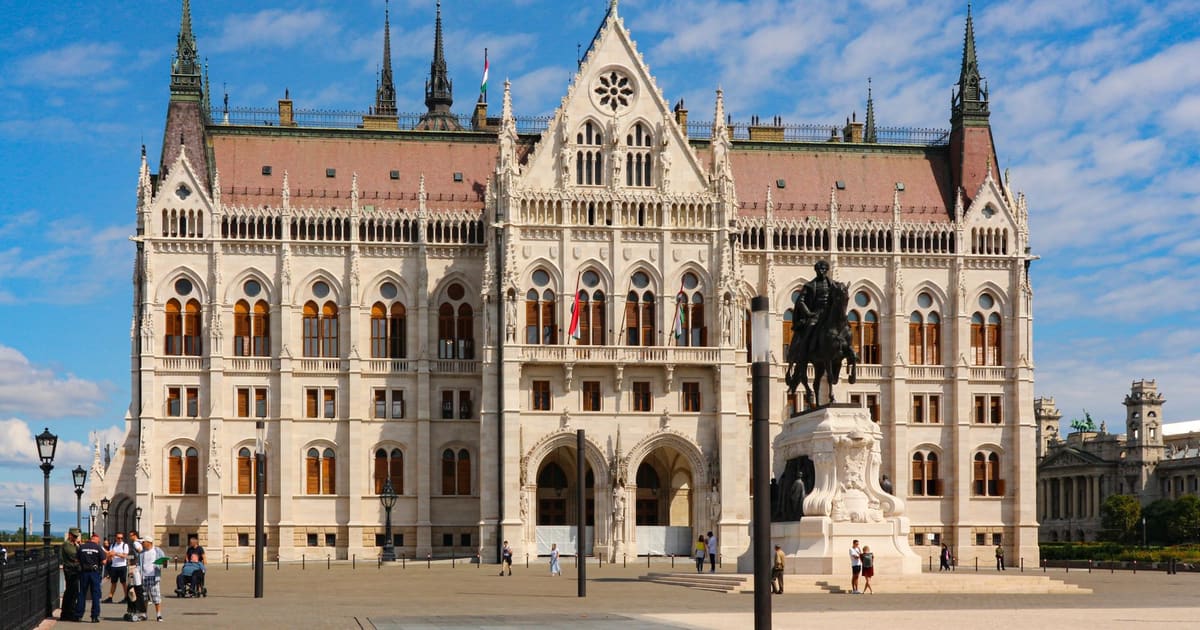
On the evening of October 23, 1956, students in Budapest wanted one thing: their demands read out on the radio. By the next morning, a peaceful protest had become an armed uprising against the communist regime and the Soviet army. For a few days in late October it looked as if Hungary had won. Then, on November 4, the tanks came back. This walk follows those days in order through Pest, from the Radio building where the first shots were fired, past the passage where young fighters held off Soviet armor, along the route of the crowd that rode Soviet tanks to Parliament, to the statue of Imre Nagy, the prime minister who paid with his life. It is about five and a half kilometers, one of our self-guided walking tours built around a single story.
The walking takes about an hour and twenty minutes; with the stories, allow two and a half hours. Pest is flat, and the route follows the boulevards and big avenues. Astoria and Kálvin tér metro stations are each a few minutes from the start. The walk ends beside the Pest end of Margaret Bridge, where trams 2, 4 and 6 stop, and Kossuth Lajos tér metro is about 800 meters back. The old Radio building is partly a construction site, so check what you can see on the day. October 23, November 4 and June 16 are days of mourning and remembrance here, so expect ceremonies and crowds on those dates.
 Stand in front of the Corvin Cinema, set in its round courtyard. It was a cinema then and it is a cinema now. The bronze boy in front of it is the Pesti srác, the Pest kid, by Lajos Győrfi, put up in 1996. Across Üllői út is the large former Kilián Barracks.
The first Soviet armored units rolled into Budapest between three and four in the morning on October 24. That same day, a group of young insurgents formed here at the Corvin Cinema. The Corvin group fought the Soviet tanks at this junction. According to the National Heritage Institute, the Soviets lost about 120 soldiers and 20 to 25 armored vehicles here in the October fighting.
Across the road, the barracks were commanded by Colonel Pál Maléter. On October 25 he reached a ceasefire with the Corvin fighters. On October 28 the Soviets attacked the Corvin group at dawn and were driven back, and by the next day it had about 1,000 to 1,200 armed fighters. On October 31 Maléter became first deputy minister of defense.
On November 4, when the Soviet army returned in force, this junction and the barracks were among its main targets, and the Corvin group fought heavy battles along Üllői út and Práter utca. Look to the right of the cinema entrance for a plaque to Sándor Kopácsi. You will hear about him shortly.
Now back to the morning of October 25. Walk north-west up Üllői út to Kálvin tér, then along Múzeum körút past the National Museum to Astoria, about twenty minutes.
You're on Bródy Sándor utca, behind the National Museum, in front of the old headquarters of Hungarian Radio. The courtyard wings behind are due to be demolished, but the street front is to stay. Find the two memorial plaques on the facade: one for the soldiers of an armored unit who died in the siege, one for everyone who died here among the protesters and fighters.
On October 22, students at the Technical University drew up their demands, the "16 points". The next afternoon, at three, they marched to the statue of General Bem in Buda. The rally had been banned at lunchtime, then allowed an hour and a half later. By about five that evening, a crowd had come here. They wanted the 16 points read on air. The Radio's leadership refused.
Inside were about 260 to 280 state security men and soldiers. In the evening, the security men opened fire into the crowd. The sources differ on the exact times, but the shooting began that evening, and one participant remembered the cry going up: "They've shot him dead!" Some soldiers sent in as reinforcements went over to the protesters. Fighters shot from the roofs and attics around this street, and the siege went on all night. The insurgents took the building on the morning of October 24, though by then the broadcasts were coming from Parliament instead.
That same night, at 9:37, another crowd pulled down the giant statue of Stalin, using cutting torches. And at about eleven, at the request of the party leader Ernő Gerő, the order went out for Soviet troops to occupy Budapest.
Follow your map south-east to the Grand Boulevard where it crosses Üllői út, about fifteen minutes.
Stand on the corner by the Hotel Astoria, the hotel that gives this busy crossroads its name.
On the morning of October 25, Soviet tanks were here. And something extraordinary happened. Demonstrators climbed up onto them, and the crews let them. People believed that talks between the new government and the Soviets were going on in Parliament; the Soviet leaders Mikoyan and Suslov had been in Budapest since the day before.
So the crowd set off for Parliament, and three Soviet tanks went with them, carrying demonstrators and Hungarian flags. Picture it at this crossroads: a revolution and the army sent to crush it, heading the same way together.
From Astoria and from other directions, thousands of people poured toward Kossuth Square that morning. The chronology of the 1956 Institute puts eight to ten thousand on the square between ten and eleven.
You are going to follow them. Walk along Károly körút, the boulevard that was then called Tanács körút, to Deák Square, about seven minutes.
포함 사항
저희 투어는 명상하듯 몰입할 수 있도록 만들어졌습니다. 걸으며 그저 귀 기울이시면 됩니다. 함께하면 언제나 더 좋고, 앱이 나레이션을 동기화해 재생하므로 당신과 파트너, 친구들이 모든 스톱을 같은 순간에 들을 수 있습니다.
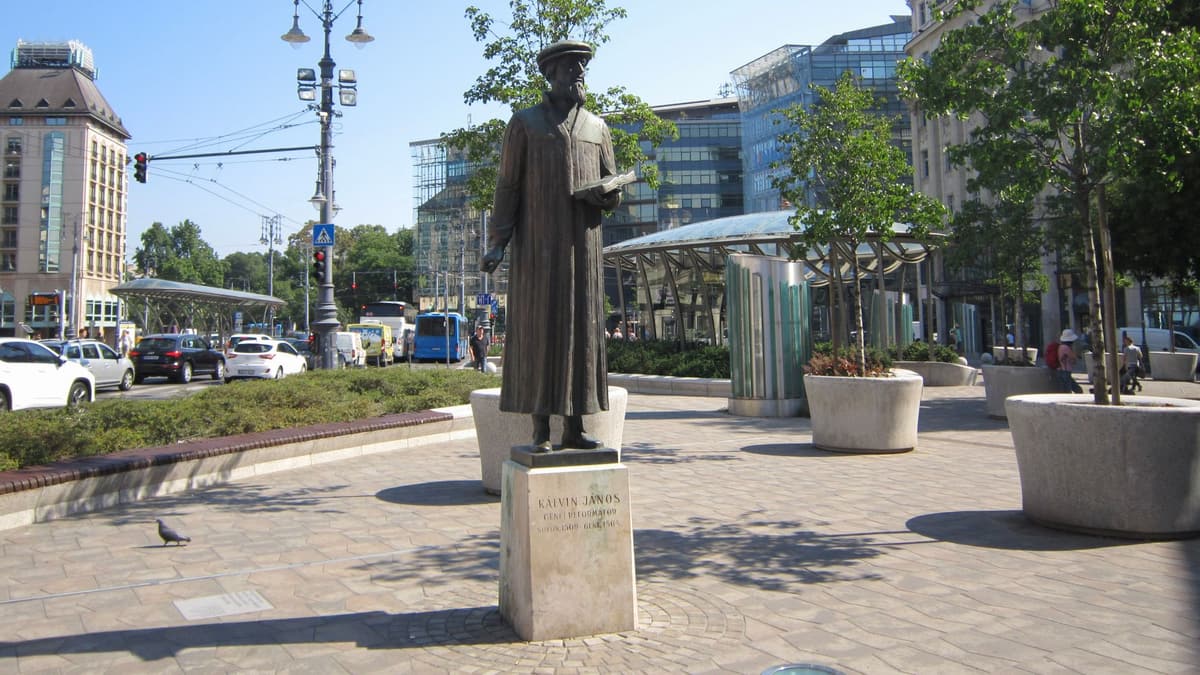
Stand at the corner where Károly körút meets Bajcsy-Zsilinszky út. Today this is the city's main transport hub.
이 스톱의 나머지 내용은 전체 오디오 투어에 있습니다.
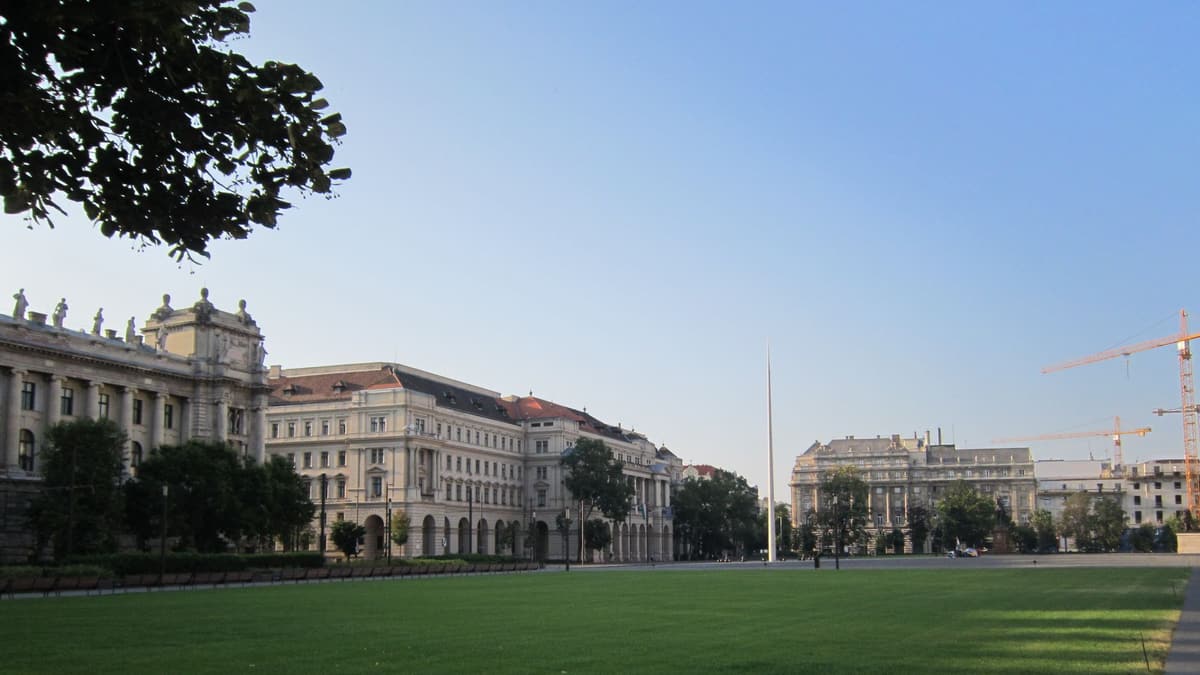
Step under the arcade and look at the wall. Set into it are small bronze balls.
이 스톱의 나머지 내용은 전체 오디오 투어에 있습니다.
You're by the Kossuth monument, facing the long front of Parliament. To understand what happened next, step back two days, to the first night.
이 스톱의 나머지 내용은 전체 오디오 투어에 있습니다.
You'll find Nagy in bronze, life-size, standing on a small bridge over a round basin. The sculptor was Tamás Varga.
이 스톱의 나머지 내용은 전체 오디오 투어에 있습니다.
다음 예정된 투어에서 다른 사람들과 함께 이 산책을 해보세요.
약 4.6km, 여유로운 페이스로 대략 64분 소요 · 7 정류장
친구는 무료로 함께 걸어요October 11, 2026 · 9 min read
From the Hollandsche Schouwburg through the old Jewish Quarter, past the Dockworker and the Dam, to the Anne Frank House on the Prinsengracht.
October 11, 2026 · 11 min read
From Van Houten's street by the Vondelpark past Leidseplein, the Rijksmuseum passage and the famous canal bench to the Anne Frank House.

October 11, 2026 · 10 min read
Follow the last days of April and May 1945 from the Anhalter Bahnhof ruin past the Gestapo site and Brandenburg Gate to the Moltke Bridge and the Reichstag.
