
2026년 10월 7일 · 6분
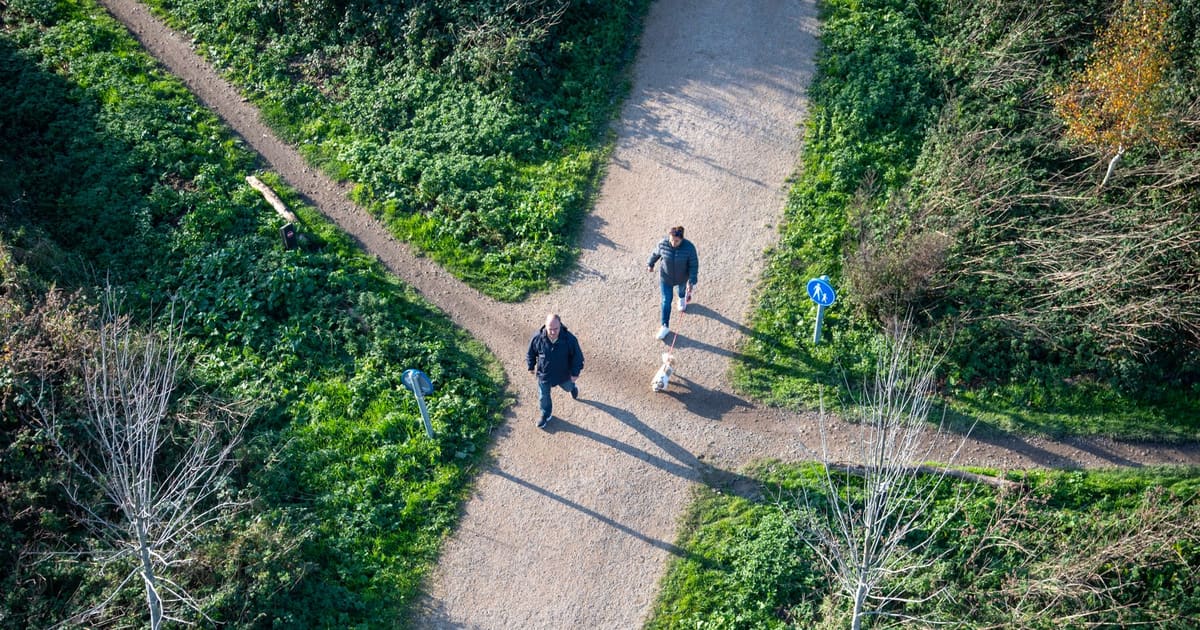
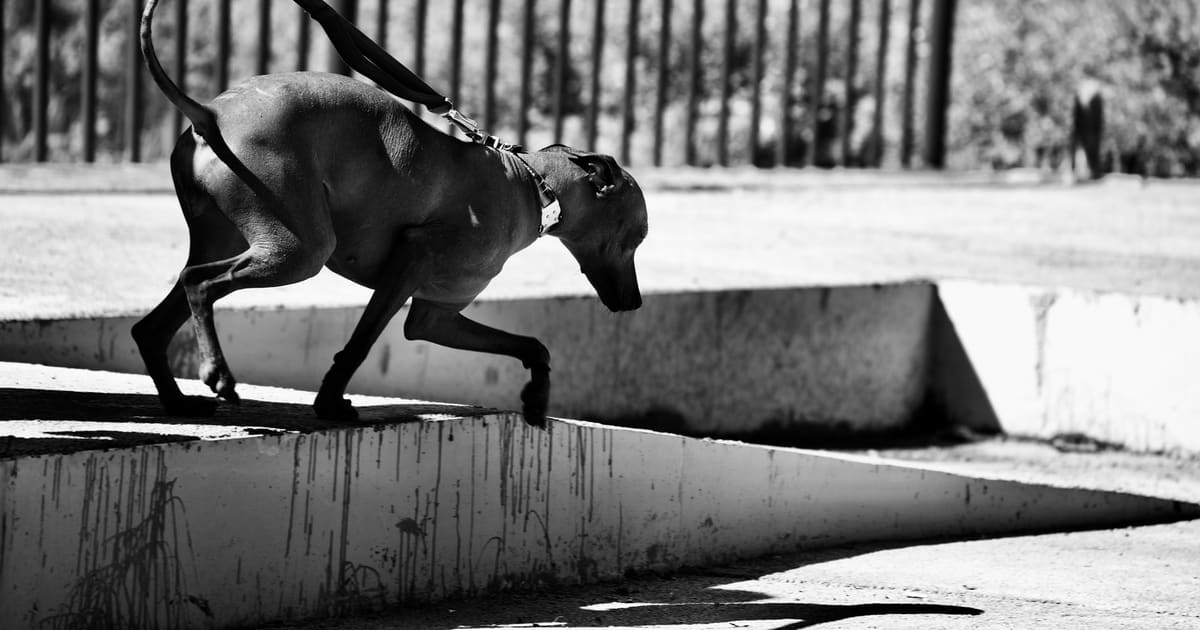
강아지에게 가장 좋은 산책 노면
건강한 관절과 안전한 발바닥을 위해 반려견을 어디서 산책시켜야 할까요? 열, 충격 흡수, 일상적인 마모 측면에서 잔디, 흙, 콘크리트를 비교합니다.
680
Tight sidewalks turn otherwise friendly dogs into nervous wrecks.
When two dogs walk straight at each other on a four-foot strip of concrete, every natural canine greeting instinct gets thrown out the window. If you use a dog walking app to plan your routes, you probably know the exact neighborhood bottlenecks where space suddenly vanishes between parked cars and brick garden walls. Mastering basic dog leash etiquette in these tight quarters is not just about good manners. It is the practical difference between a calm neighborhood loop and an adrenaline-fueled standoff.
To understand why narrow sidewalks cause fights, you have to look at how dogs communicate space.
When two unfamiliar, off-leash dogs meet in an open field, they almost never walk straight at each other. A straight, head-on line with unbroken eye contact is aggressive in canine body language. In natural settings, dogs approach on a gentle arc. They curve their path, turn their heads slightly away, sniff the ground, and offer sideways body posture before ever closing the distance. That curve signals peaceful intentions.
A narrow urban sidewalk destroys that natural curve. It forces both dogs into a direct, head-on trajectory where they are locked into staring directly at one another. Neither animal has the space to turn sideways or curve away without stepping into the road or hitting a wall. To make things worse, human owners instinctively react by reeling in the leash and yanking upward.
When you pull upward on a collar or front-clip harness, you force the dog's chest up and forward. That makes your dog look larger, taller, and more assertive to the oncoming dog. You think you are restraining your dog, but to the other dog, your pet just struck a challenge posture. Understanding this geometry changes how you handle tight passes.
Do not play sidewalk chicken. Most awkward encounters happen because both owners assume the other person will step aside, until you are three feet apart and panic sets in.
Here is a simple decision rule you can use on every walk. When an oncoming dog enters your line of sight, check the distance. At twenty meters, you evaluate the environment. At five meters, your decision must already be executed.
If the sidewalk is under two meters wide and you see any of these three signs from the approaching dog, you bail immediately:
Bailing does not mean running away in shame. Bailing simply means creating an artificial arc. You can cross the street well before you reach them. If crossing is unsafe due to traffic, step into the mouth of an empty driveway, pause behind a parked car, or step onto a grass buffer strip. By stepping off the linear path, you give the oncoming dog a visual break and restore the natural curve they need to stay calm.
If stepping off the path is physically impossible, you have to execute a tight pass. This is where deliberate technique matters.
First, put yourself between the dogs. If the oncoming dog is approaching on your left, move your dog to your right side. Your legs and hips should act as a physical and visual barrier between the two animals. Letting two dogs pass flank-to-flank while the humans walk on the outside edges is a recipe for snaps and lunges. You are the wall.
Second, shorten the lead without adding tension. This sounds like a contradiction, but it is entirely mechanical. Do not haul back on the leash like an anchor rope. Instead, gather the slack in loops in your opposite hand, holding the lead firmly near your hip. Keep your arm relaxed and low. A tight, vibrating leash transmits your elevated heart rate straight to your dog's neck. A short lead with a slight drape tells your dog that you have the perimeter handled.
Third, increase your walking pace by twenty percent. Sluggish, creeping passes prolong the tension. A brisk, purposeful stride gives your dog momentum, focusing their balance forward rather than sideways toward the distraction.
Avoid letting your dog stop to sniff an oncoming dog on a short leash. Sidewalk greetings on six-foot nylon leads lead to tangled lines, trapped body language, and defensive snaps. Keep your dog moving until you have clear air behind you.
Awkward social pressure causes a lot of bad dog encounters. People are terrified of looking rude, so they smile weakly, let their leashes spool out, and say nothing while a mess unfolds.
Clear communication beats polite silence every time. If someone is approaching with their dog drifting toward yours, speak up while you are still ten paces away. Keep your voice loud, pleasant, and flat. Do not shout, but project clearly over street noise.
The most dangerous phrase on a walk is, "Don't worry, he's friendly!" If someone yells this at you while their dog pulls toward yours, reply immediately with: "We are in training, please keep your distance!"
You do not need to explain your dog's life history. You do not need to apologize. Saying "we are training" is universal code among pet owners that means give us space. Another reliable line when stepping into a driveway is: "Go ahead and pass, we're practicing our focus!"
This simple sentence frames your pause as intentional work rather than fear. It tells the other person exactly what to do (keep walking) without creating defensiveness or an argument.
What do you do with a dog that wants to bark, pull, or greet every passing snout? You use the magnet technique.
Carry small, soft treats that your dog does not get at home. Dry kibble will not cut it when a seventy-pound lab is four feet away. Use tiny bits of roast chicken, string cheese, or hot dog. The food must smell strong enough to compete with visual street triggers.
As the oncoming dog reaches that ten-meter mark, bring a treat right to your dog's nose. Do not hold it in the air above their head, because lifting their head stiffens their spine. Hold the treat directly against the side of their muzzle on the side facing away from the other dog.
Let them nibble on the treat continuously as you walk briskly past the distraction. You are not asking them to sit. Sitting on a narrow sidewalk when a strange dog walks past can make a nervous dog feel trapped and vulnerable. Keep their feet moving. By keeping their nose glued to your hand, you control their head direction, block their view of the other dog, and feed positive associations into their brain simultaneously.
The moment you pass the other dog, your job is not quite finished. Most handlers relax the second their shoulders pass the other person, but dogs hold residual arousal for several seconds.
If you drop the leash slack immediately after passing, your dog will often whip around to check their rear. That sudden 180-degree turn can trigger the other dog to turn around as well, sparking a barking match from behind.
Keep your brisk pace for at least ten to fifteen paces beyond the encounter. Once you have a clean buffer of space, stop at a patch of grass or a tree. Give your release cue and encourage your dog to sniff the ground.
Sniffing lowers a dog's pulse rate and discharges physical tension. Let them take five or ten deep sniffs of the grass before you continue your standard route. This brief reset clears their head and prevents stress from stacking up from one block to the next.
Walking with a dog in a busy neighborhood requires real awareness of physical boundaries. If you enjoy structured neighborhood walks and want to connect with other local owners who respect space, you can find dog-friendly routes and coordinate shared outings through Walk With Me.
2026년 10월 7일 · 6분
건강한 관절과 안전한 발바닥을 위해 반려견을 어디서 산책시켜야 할까요? 열, 충격 흡수, 일상적인 마모 측면에서 잔디, 흙, 콘크리트를 비교합니다.
2026년 9월 27일 · 8분
강아지 산책 앱을 사용하여 동네 산책 그룹을 찾고 안전하게 나란히 걷는 법을 배우며 반려견을 위한 사회화 루틴을 만드세요.
2026년 9월 11일 · 9분
다른 사람의 반려견을 산책시킬 때 필요한 구체적인 안전 수칙, 장비 점검 방법, 신뢰 구축 프로토콜을 배워 흔히 발생하는 실수를 예방하고 안전하게 산책을 마쳐보세요. 반려견과 산책자 모두를 위한 필수 가이드입니다.
