
October 11, 2026 · 9 min read
Amsterdam Anne Frank Walking Tour
From the Hollandsche Schouwburg through the old Jewish Quarter, past the Dockworker and the Dam, to the Anne Frank House on the Prinsengracht.
589

October 9, 2026 · 12 min read

 Znajomi spacerują za darmo
Każdy spacer odbywa się również jako zaplanowany spacer grupowy, do którego możesz dołączyć w aplikacji.
Więcej wycieczek audio w Lyon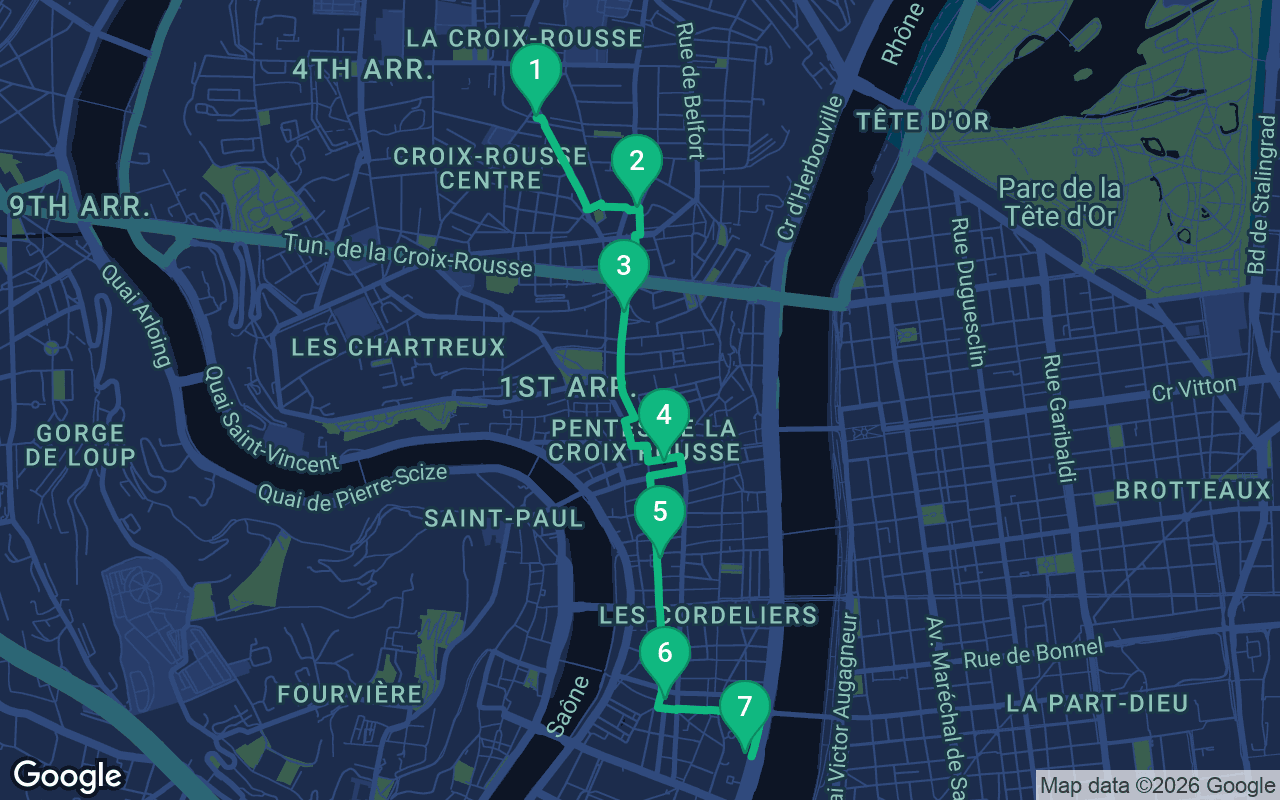
Około 3,1 km, mniej więcej 43 minut w spokojnym tempie.
Ten spacer ma narrację
Naciśnij odtwarzanie na pierwszych 3 przystankach, aby posłuchać 30-sekundowego demo narracji. W aplikacji wstęp i te przystanki odtworzysz w całości za darmo, a każdy z nich zasygnalizuje się dźwiękiem po przybyciu. Cały spacer z narracją otrzymasz za $8.99, jednorazowy zakup, który zachowasz na zawsze.
Działa z Garmin, Komoot, Strava, OS Maps i każdą aplikacją GPX.
For most of the nineteenth century, the hill north of central Lyon rang with the clatter of thousands of looms. This was the Croix-Rousse, home of the canuts, the silk weavers who made Lyon the silk capital of Europe and who twice rose up against the merchants who paid them. This walk starts at the top of their hill, on the painted wall that tells their story, and follows the old route the cloth took downhill, past the statue of the man whose loom changed their lives, through the terraced slopes and stairways of the Grande Côte, and into the grand squares of the Presqu'île below, where the silk was sold. It finishes at the restored Grand Hôtel-Dieu beside the Rhône. It is about three kilometers and almost all of it runs downhill, which makes it one of the kindest self-guided walking tours in a hilly city. It also shares no stops with the Vieux Lyon and Fourvière walk across the river, so you can do both.
Plan on about an hour and a half at a stroll, and closer to three hours if you stop to look inside the churches, the town hall courtyard and the Hôtel-Dieu. The easiest way to the start is metro line C up the hill to Hénon station, a few minutes from the mural, which saves you the climb entirely. From there the walk goes down. The stretch on the Grande Côte is steep, with stairs and sloping cobbles that get slippery in the rain, so wear shoes with grip and take it slowly. Everything below that is flat. Mornings are a good time, when the street market on the hilltop boulevard is often in full swing and the light falls nicely across the slopes. There is little shade on the squares of the Presqu'île in high summer, so carry water. The traboules, the covered passages through the buildings, are mostly in homes where people live, so keep your voice down inside them and respect any door that is closed. If you want to see a working silk loom, there is a small weavers' workshop museum on the hilltop near the start; check before you go for its hours and demonstrations.
Stand back on the far side of the street and take in the wall in front of you, because it is not quite what it seems. That enormous scene of shop fronts, windows, people going about their day and a wide flight of steps climbing up the hillside is all paint, spread across the blank end of an ordinary apartment building. This is the Mur des Canuts, often called the largest trompe l'oeil painting in Europe. It was first painted in the late 1980s and has been repainted more than once since then, so the neighborhood it shows has aged and changed along with the real one. Look for the painted stairway: the slopes of the Croix-Rousse are laced with stepped streets just like it, and you will walk down one later. The canuts were the silk weavers who lived and worked on this hill. A typical workshop was run by a master weaver who owned a few looms, with his family and a handful of journeymen and apprentices, all sharing a set of tall rooms where they worked, ate and slept, often on wooden lofts built above the looms. The silk itself belonged to the merchants down in the city, who handed out the thread, set the price per length of finished cloth, and kept the profits. Notice how tall the windows are on the real buildings around you. You will find out why at the next stop. To get there, head southeast through the quiet residential streets until you reach the broad Boulevard de la Croix-Rousse, then turn left along it to the big square, about eight minutes in all.
 You are now in the hilltop square that gives the whole district its name, after a cross of reddish stone that once stood up here. The figure on the pedestal is Joseph Marie Jacquard, a Lyon man born in the middle of the eighteenth century, and his invention is the reason the buildings on this hill look the way they do. Around 1800 he perfected a loom that wove complex patterns automatically, guided by a chain of punched cards. Each card told the loom which threads to lift, so a single weaver could produce in a day a pattern that once needed a helper pulling cords by hand. The cards and their machinery sat on top of the loom, which made it very tall, and so the new apartment buildings of the Croix-Rousse were built with high ceilings and big windows to fit the machines and let in the light the weavers needed. That is what you saw on the walk here. The idea of controlling a machine with punched cards outlived silk weaving by a long way: it fed into early calculating machines in England and, in time, into computing. Lyon has an old saying that Fourvière, the hill across the river with its white basilica, is the hill that prays, and the Croix-Rousse is the hill that works. Until the middle of the nineteenth century the Croix-Rousse was not even part of Lyon but a separate town, packed with workshops. Leave the square on its southern side and take the short street called Rue des Pierres Plantées, which slopes down for about five minutes to the top of the Montée de la Grande Côte and its garden.
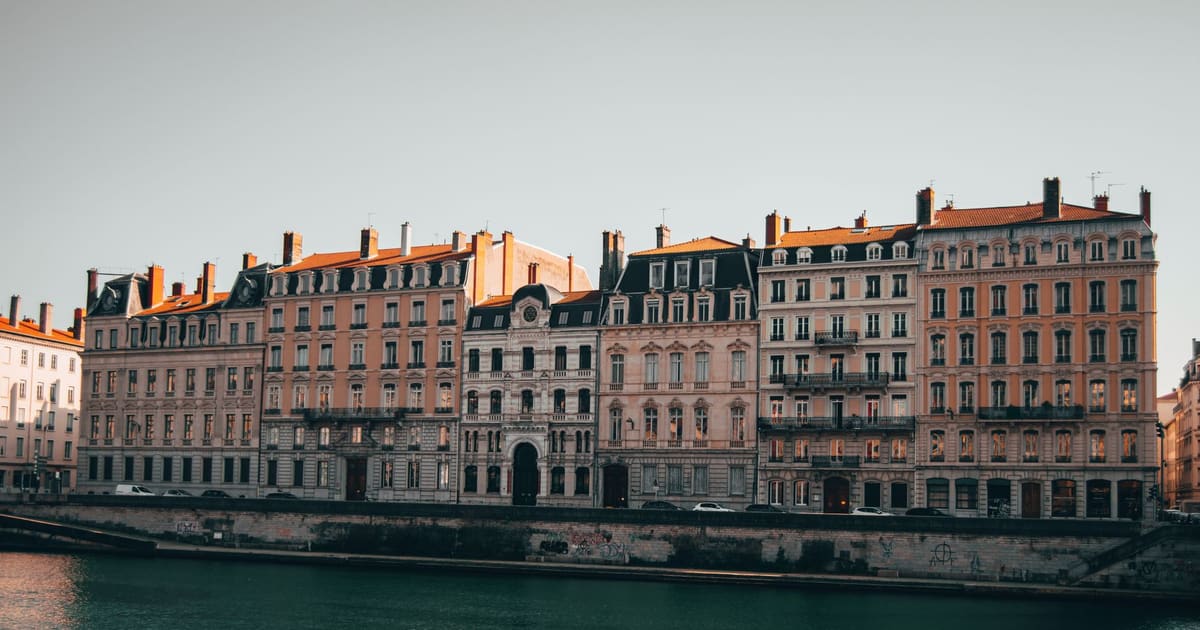
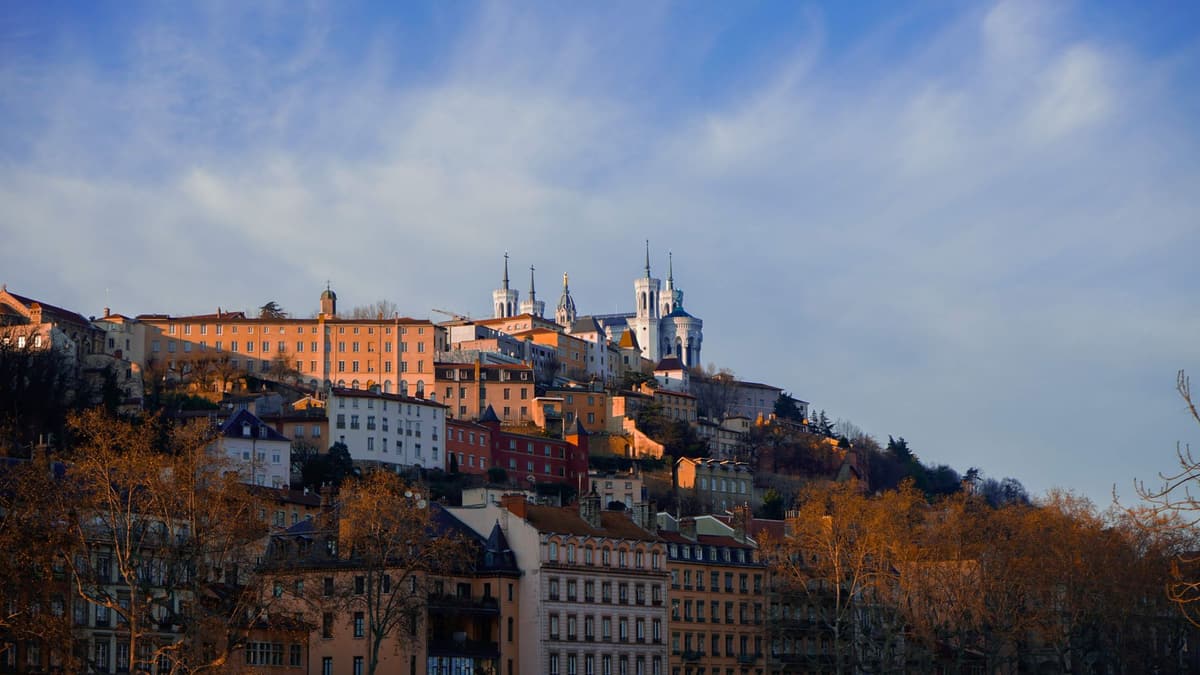
Find a spot by the railing at the top of the garden and look out. Below you the terraced lawns fall away down the slope, and beyond them the whole of Lyon spreads out: the roofs of the Presqu'île, the two rivers, and on the far side the hill of Fourvière with its basilica. Beside the garden runs the Montée de la Grande Côte, for centuries the main way up and down this hill and the road the canuts used to carry their finished silk down to the merchants. In November 1831 the weavers came down from this hill under a black flag. The merchants had refused to honor a minimum price for woven silk, and the workers' motto, written on their banner, was "live working or die fighting." After fierce fighting they held the city for several days, until the army marched in and the price agreement was cancelled. In April 1834 they rose again, after strike leaders were put on trial, and this time the army retook Lyon street by street over almost a week. Hundreds were killed. Historians often count these revolts among the first great workers' uprisings of the industrial age. If you have ten minutes to spare, walk east along the slope to Place Colbert and the Cour des Voraces, a traboule with a huge open staircase climbing six floors up the face of a courtyard. The Croix-Rousse traboules are different from the Renaissance ones in Vieux Lyon: they run downhill, in steep flights of steps, so a weaver could take a roll of silk from street to street down the slope, under cover and out of the rain. When you are ready, follow the Montée de la Grande Côte all the way down, a steep street of stairs and slopes, then carry on south a couple of blocks to the big open square with the town hall, about ten minutes.
Co zawiera
Nasze wycieczki mają być medytacyjne i wciągające: idziesz i po prostu słuchasz. Zawsze lepiej przeżywa się je razem, a aplikacja odtwarza narrację synchronicznie, więc ty, twój partner i twoi przyjaciele słyszycie każdy przystanek w tej samej chwili.
You are now at the bottom of the hill and in a different world. The silk was woven up there, but it was sold down here, and this grand square was the face of the city the canuts were up against.
Dalsza część tego przystanku jest w pełnej audiowycieczce.
Stand in front of the church and look up at its two spires. They do not quite match, and that is because they were built centuries apart, one in the late Middle Ages and its partner only in the nineteenth century to complete the facade.
Dalsza część tego przystanku jest w pełnej audiowycieczce.
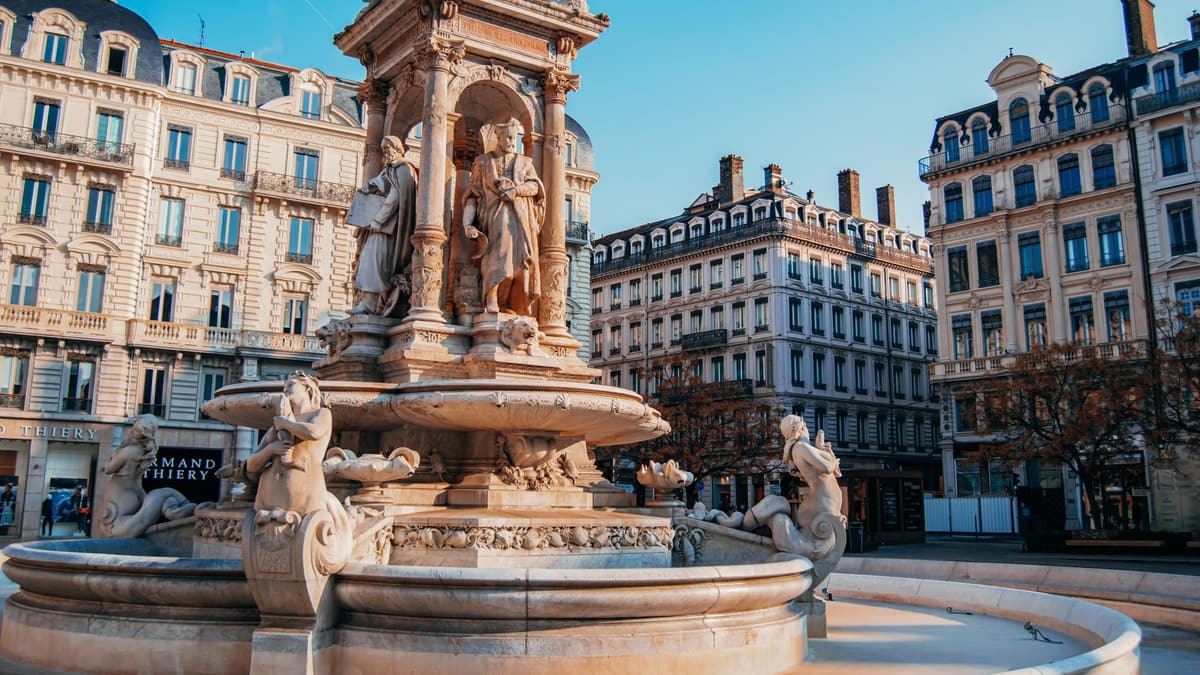
The fountain in the middle of this square is all about Lyon's pride in its own artists.
Dalsza część tego przystanku jest w pełnej audiowycieczce.
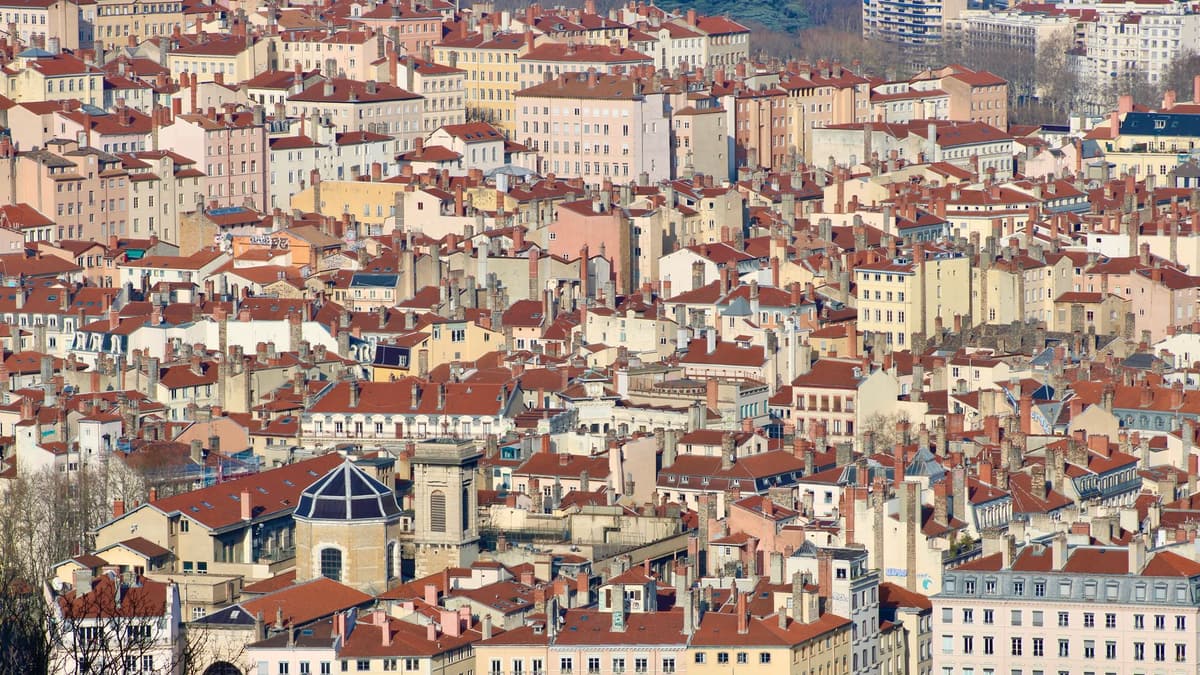
The walk ends at one of the oldest institutions in Lyon.
Dalsza część tego przystanku jest w pełnej audiowycieczce.
Wykonaj ten spacer z innymi ludźmi na następnym zaplanowanym spacerze.
Około 3,1 km, mniej więcej 43 minut w spokojnym tempie · 7 przystanków
Znajomi spacerują za darmoOctober 11, 2026 · 9 min read
From the Hollandsche Schouwburg through the old Jewish Quarter, past the Dockworker and the Dam, to the Anne Frank House on the Prinsengracht.
October 11, 2026 · 11 min read
From Van Houten's street by the Vondelpark past Leidseplein, the Rijksmuseum passage and the famous canal bench to the Anne Frank House.

October 11, 2026 · 10 min read
Follow the last days of April and May 1945 from the Anhalter Bahnhof ruin past the Gestapo site and Brandenburg Gate to the Moltke Bridge and the Reichstag.
