
October 11, 2026 · 9 min read
Amsterdam Anne Frank Walking Tour
From the Hollandsche Schouwburg through the old Jewish Quarter, past the Dockworker and the Dam, to the Anne Frank House on the Prinsengracht.
589

October 9, 2026 · 11 min read

 Znajomi spacerują za darmo
Każdy spacer odbywa się również jako zaplanowany spacer grupowy, do którego możesz dołączyć w aplikacji.
Więcej wycieczek audio w Nice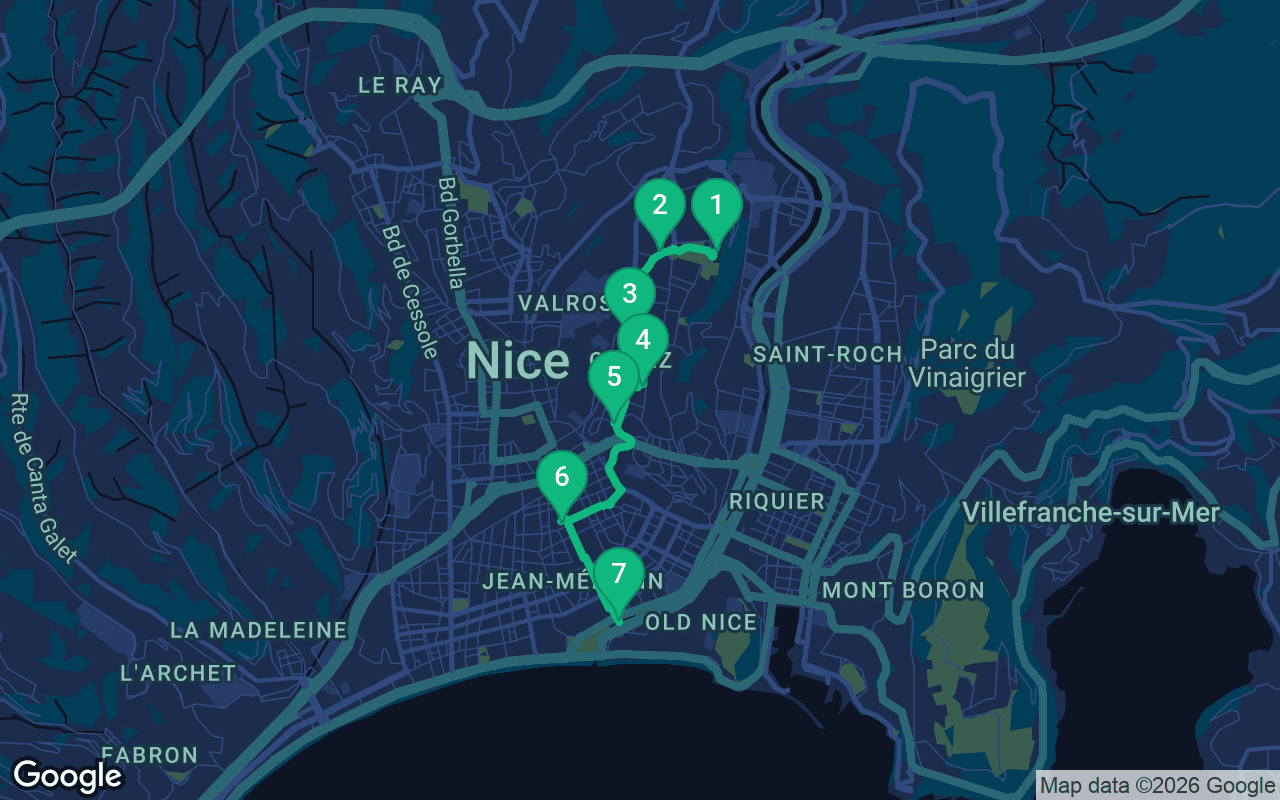
Około 4 km, mniej więcej 53 minut w spokojnym tempie.
Ten spacer ma narrację
Naciśnij odtwarzanie na pierwszych 3 przystankach, aby posłuchać 30-sekundowego demo narracji. W aplikacji wstęp i te przystanki odtworzysz w całości za darmo, a każdy z nich zasygnalizuje się dźwiękiem po przybyciu. Cały spacer z narracją otrzymasz za $9.99, jednorazowy zakup, który zachowasz na zawsze.
Działa z Garmin, Komoot, Strava, OS Maps i każdą aplikacją GPX.
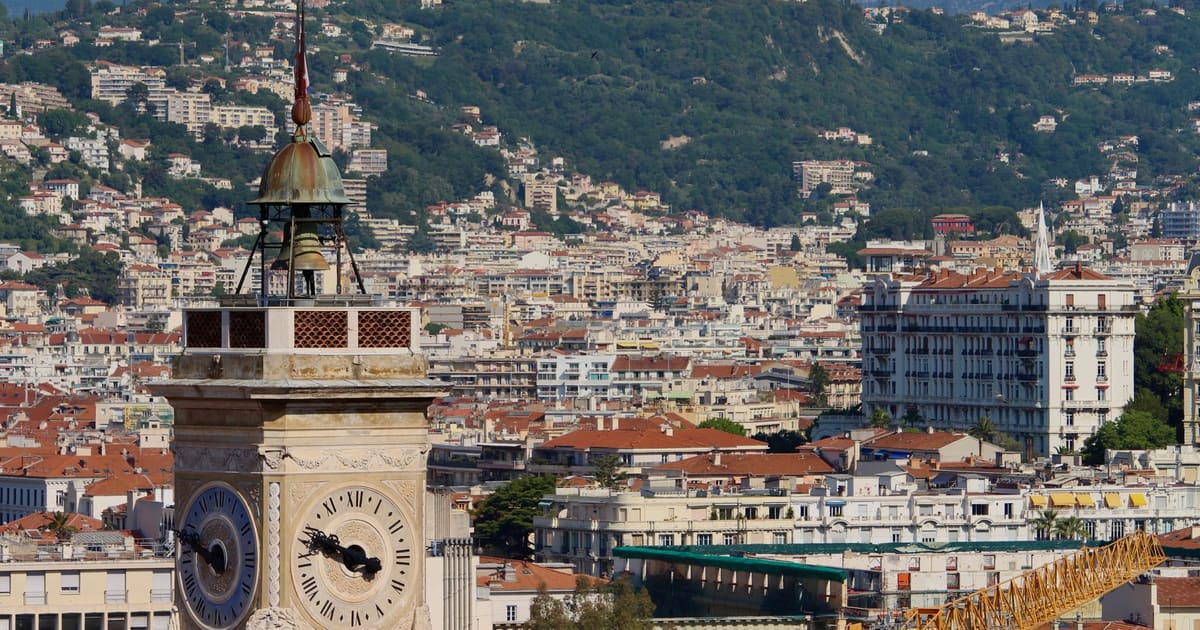
Most visitors to Nice never leave the seafront and the old town, and they miss the hill where the city's grandest winters were spent. Cimiez rises just north of the center, green and quiet, a hill of olive groves, Roman ruins, palace hotels built for queens and the places where two of the great painters of the twentieth century lived, worked and lie at rest. This walk starts at the Franciscan monastery at the top, where Matisse is buried, and runs downhill the whole way: past the hotel built for Queen Victoria, a string of Belle Époque palaces and a Moorish fantasy villa, to the museum Marc Chagall helped design, and on down into the city to the great neo-Gothic basilica and the red facades of Place Masséna. It is about four kilometers, and since gravity does most of the work, it is one of the gentlest self-guided walking tours in the city. It shares nothing with the old town and Castle Hill walk, so the two make a good pair.
Allow about an hour and a half at a stroll, and three hours or more if you go into the Chagall museum and the Matisse museum along the way, both of which deserve time; check before you go for their hours and closing days. The easiest way to the start is the bus up the hill to the monastery, which saves you the climb, and after that the whole route runs downhill. The upper half follows the broad, tree-lined Boulevard de Cimiez on wide sidewalks, with plenty of shade from the plane trees and the gardens. The lower half is city streets, busier and sunnier, ending on the flat in the center. Mornings are lovely, when the monastery garden is cool and quiet. Bring water in summer and comfortable shoes, since the sidewalks slope steadily for the first couple of kilometers. Many of the grand buildings on this walk are private apartments now, so you will be admiring them from the street, which is where their facades were designed to be seen from anyway.
You are standing in front of the Monastère de Cimiez, the Franciscan monastery that has crowned this hill since the sixteenth century, when the friars took over an older religious house here. Step into the church if it is open. Its treasures are altarpieces by Louis Bréa, the finest painter of old Nice, whose gold-backed panels of the Pietà and the Crucifixion glow in the dim light. Then walk into the garden beside the monastery, a formal Italian garden of clipped hedges, rose arbors and flower beds, laid out where the friars once grew their vegetables. Go to the far end, where the terrace looks out over the city and the valley toward the sea. It is one of the most peaceful places in Nice. Beside the monastery lies the cemetery of Cimiez, and two of the painters who loved this light are buried there: Henri Matisse, in a simple grave signposted from the paths, and Raoul Dufy, the painter of bright regattas and seafronts. Long before the friars, this hill was Roman. The town of Cemenelum stood here, the capital of a small Roman province in the Alps, and you will pass what is left of it next. To reach the next stop, walk west through the park of olive trees beside the monastery. Along the way you pass the low stone ruins of the Roman arena and the red Genoese villa that houses the Musée Matisse. Keep going to Boulevard de Cimiez and the huge white hotel facing it, about seven minutes in all.
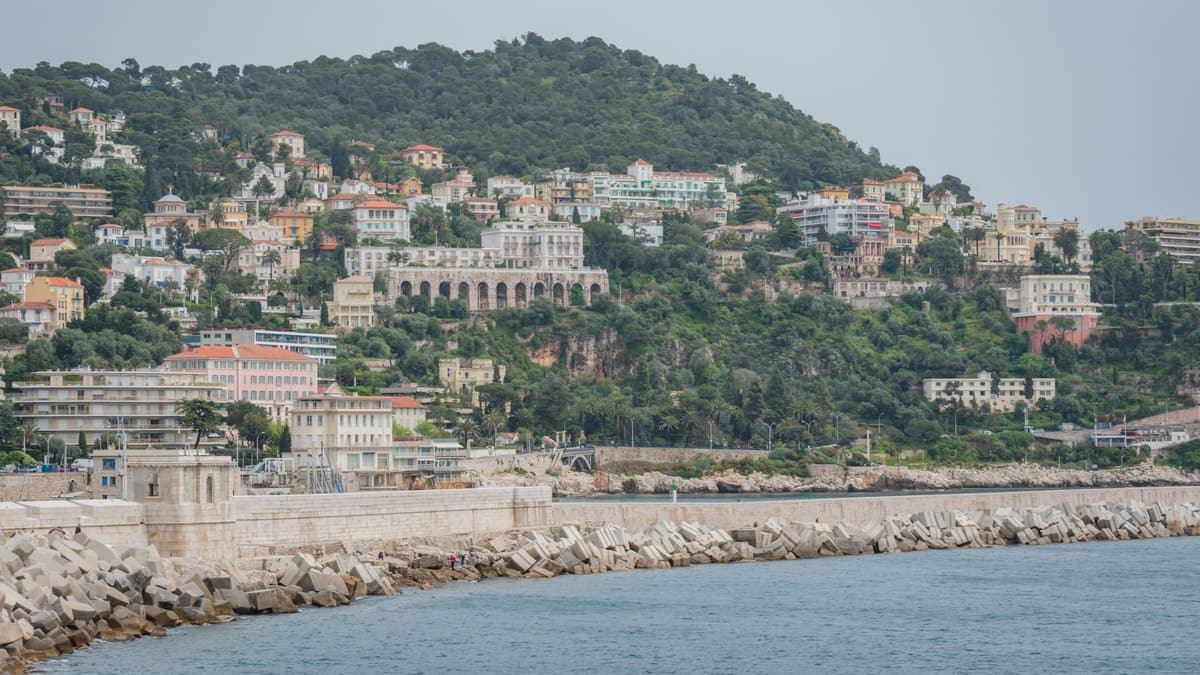 Look up at the enormous white building in front of you, long and ornate, with its rows of balconies. This is the Excelsior Régina, and its name is a compliment: regina is Latin for queen. It was built in the 1890s, in the years when Cimiez became the most fashionable winter address on the Riviera, and its most important guest was Queen Victoria. She came for several seasons in the last years of her life, at the end of the nineteenth century, traveling incognito as the Countess of Balmoral with an entourage that filled a whole wing of the hotel. She went out in a carriage drawn by a donkey, took the air, and set the seal on Cimiez as the place for royalty to be seen. A monument to her stands near the hotel. The British had been wintering in Nice for generations by then, the same colony that paid for the seafront promenade, but Victoria's visits brought a new rush of palaces up the hill. Decades later the Régina had a second famous resident. After the hotel was turned into apartments, Henri Matisse moved in during the late 1930s and, apart from the war years, lived and worked here until his death in 1954. In his last years, often confined to bed or a wheelchair, he threw himself into a new way of making art: he painted sheets of paper with color and cut them into shapes with scissors, pinning the paper cut-outs to his walls. He drew on the walls and ceiling with charcoal tied to the end of a long stick. Some of the most joyful art of the century was made behind these windows. To reach the next stop, follow Boulevard de Cimiez downhill for about ten minutes, under the plane trees. The Riviera Palace stands on your right.
Stop across the street and take in the length of this facade, with its long rows of tall windows, wrought-iron balconies and carved stone, laid out to catch the winter sun from the south. The Riviera Palace was one of the great hotels that rose on Cimiez around the end of the nineteenth century, when this hill was filling up with palaces built for the aristocracy of Europe. The idea was simple. The winter visitors came for health as much as pleasure, and the doctors of the day recommended clean air, sunshine and a little altitude above the damp of the seafront. Up here, guests found all three, with gardens, salons, ballrooms and long views across the bay. For a few decades this hill was a winter capital for royals, aristocrats, bankers and invalids from all over Europe, and the hotels competed to outdo each other in luxury. Then the world changed. The First World War broke up the old aristocratic society, and in the 1920s and 1930s the Riviera discovered summer, sunbathing and the beach, and the rich no longer came to sit on hilltops in January. One by one the palace hotels of Cimiez closed and were divided into apartments, which is what the Riviera Palace is today. The building itself survived almost unchanged, so the facade still shows you exactly the scale of life the Belle Époque expected. Continue down Boulevard de Cimiez for about four minutes. A white villa with towers and horseshoe arches appears on your left.
Co zawiera
Nasze wycieczki mają być medytacyjne i wciągające: idziesz i po prostu słuchasz. Zawsze lepiej przeżywa się je razem, a aplikacja odtwarza narrację synchronicznie, więc ty, twój partner i twoi przyjaciele słyszycie każdy przystanek w tej samej chwili.
You will know it when you see it.
Dalsza część tego przystanku jest w pełnej audiowycieczce.
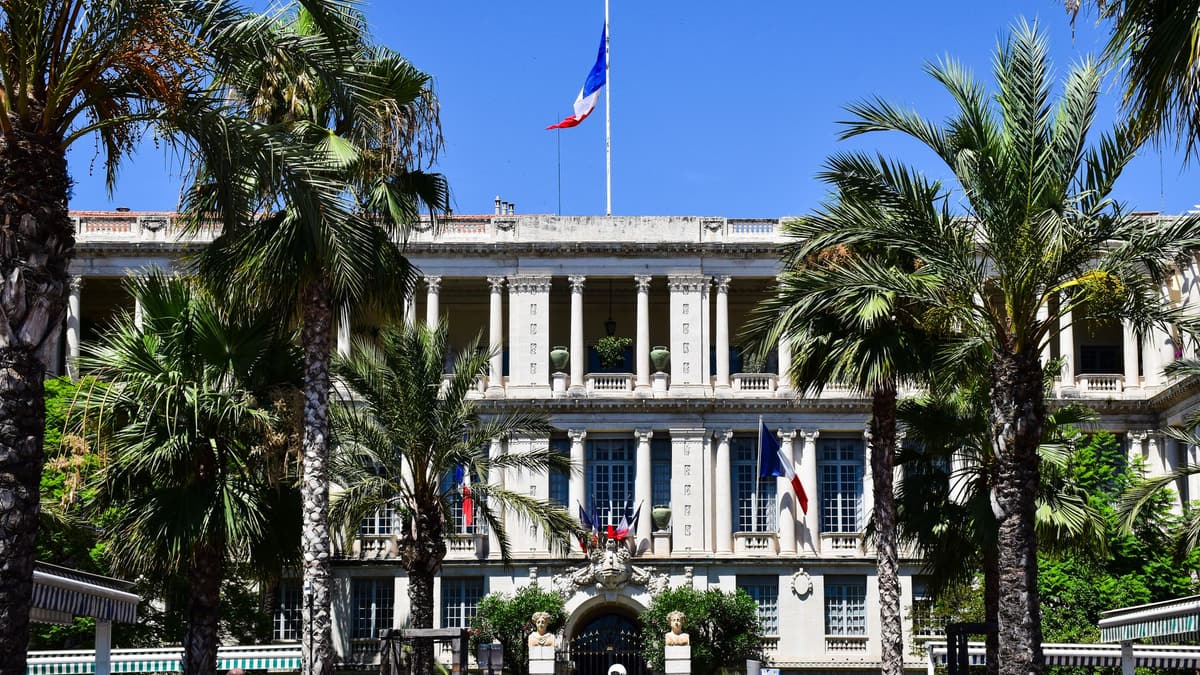
You have arrived at one of the most beautiful small museums in France. The low, pale stone building, set in a Mediterranean garden, was built specifically to hold one great cycle of paintings: Marc Chagall's Biblical Message.
Dalsza część tego przystanku jest w pełnej audiowycieczce.
You are on Avenue Jean Médecin, the busiest shopping street in Nice, with the tram gliding past, and in front of you rise the two square towers and the big rose window of the Basilique Notre-Dame.
Dalsza część tego przystanku jest w pełnej audiowycieczce.
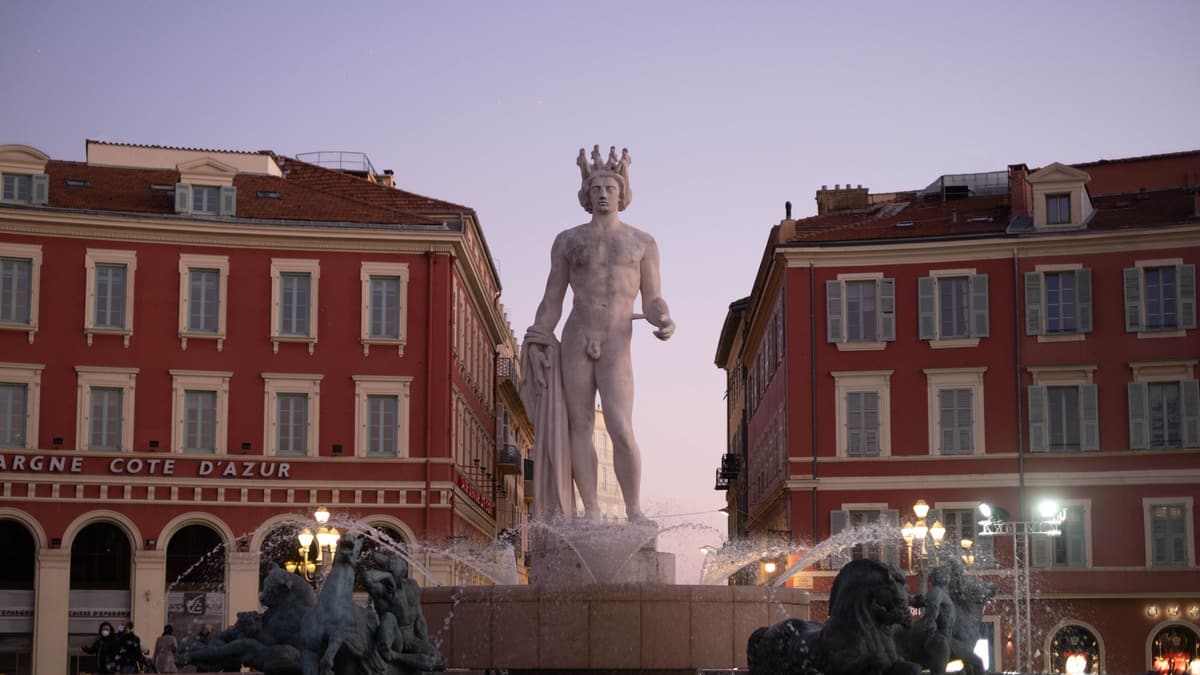
The walk ends in the great square at the center of Nice. Stand in the middle and turn slowly around.
Dalsza część tego przystanku jest w pełnej audiowycieczce.
Wykonaj ten spacer z innymi ludźmi na następnym zaplanowanym spacerze.
Około 4 km, mniej więcej 53 minut w spokojnym tempie · 7 przystanków
Znajomi spacerują za darmoOctober 11, 2026 · 9 min read
From the Hollandsche Schouwburg through the old Jewish Quarter, past the Dockworker and the Dam, to the Anne Frank House on the Prinsengracht.
October 11, 2026 · 11 min read
From Van Houten's street by the Vondelpark past Leidseplein, the Rijksmuseum passage and the famous canal bench to the Anne Frank House.

October 11, 2026 · 10 min read
Follow the last days of April and May 1945 from the Anhalter Bahnhof ruin past the Gestapo site and Brandenburg Gate to the Moltke Bridge and the Reichstag.
