




 $8.99Obiective din oraș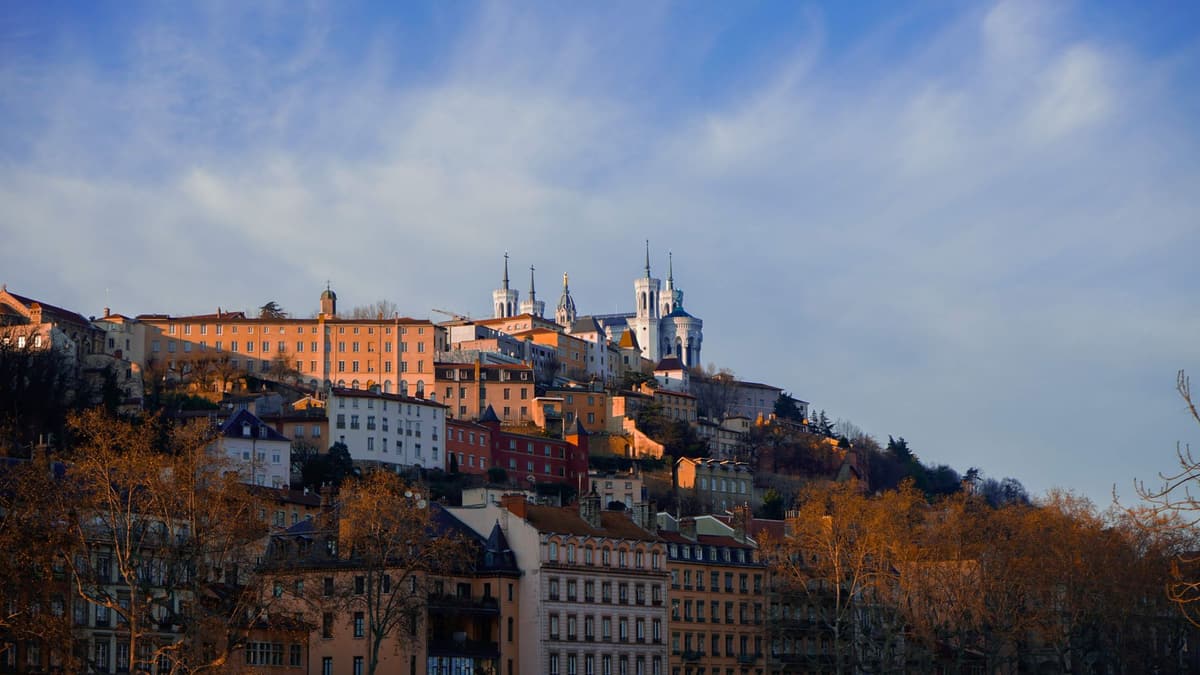
Audio Lyon Tururi pietonale
Plimbări ghidate pe cont propriu, cu narațiune, prin Lyon. Cumperi turul o singură dată, îl descarci și lași povestea să ruleze la fiecare oprire, în timp ce mergi în propriul ritm.
Tururi de la $8.99
Prietenii merg gratis. O singură achiziție îi include pe toți cei de pe plimbarea ta. Pornește turul, invită-ți prietenii să se alăture, și acesta se va reda pe fiecare telefon din grupul tău.
5.0 pe Google Play
Tururi audio în Lyon
Fiecare tur este un traseu pe hartă cu narațiune la fiecare oprire. Îl cumperi o singură dată și rămâne al tău, fără abonament.
$8.99Obiective din oraș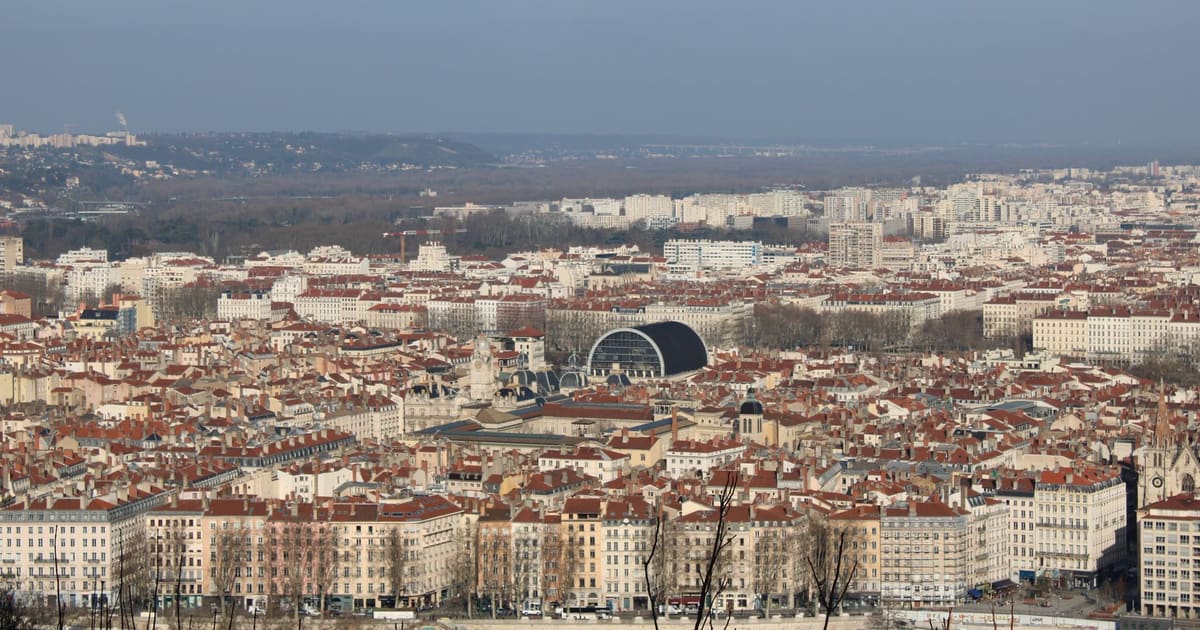 $9.99Obiective din oraș
La ce să te aștepți de la un tur pietonal audio în Lyon
A Lyon audio walk follows the silk trade downhill from the weavers' hill of the Croix-Rousse to the grand squares of the Presqu'île, or climbs the other way through Renaissance Vieux Lyon to the basilica and Roman ruins on Fourvière hill.
The Canuts to Presqu'île Walk starts at the Mur des Canuts, a giant trompe l'oeil mural on the silk weavers' hill, and runs almost entirely downhill, 3.1 kilometers, about 43 minutes, past Jacquard's statue and the stepped Grande Côte.
It finishes in the grand squares of the Presqu'île, Place des Terreaux's fountain by the sculptor of the Statue of Liberty, Place des Jacobins, and the restored courtyards of the Grand Hôtel-Dieu beside the Rhône.
The Vieux Lyon and Fourvière Walk goes the other direction, 3.7 kilometers, about 59 minutes, from Place Bellecour across the Saône into the Renaissance lanes of Vieux Lyon, then up the hill, on foot or by funicular, to the white basilica, the Roman theatres and a view that takes in both rivers and the Alps beyond.
Pe unde să te plimbi în Lyon
Câteva dintre opririle pe care le vei face și motivele pentru care merită să încetinești pasul.
The View from Fourvière
From the hill of Fourvière, Lyon spreads out below in a sea of red-tile roofs, the twin spires of Église Saint-Nizier rising above the rooftops of the Presqu'île, the two rivers threading through the middle of the city. Lyon has an old saying that Fourvière is the hill that prays, while the Croix-Rousse across the valley is the hill that works, and the view from up here makes the contrast obvious. On a clear day the panorama stretches past the modern city to the distant white peaks of the Alps on the horizon. It's worth taking your time here, picking out the streets and squares you've already walked or are about to.
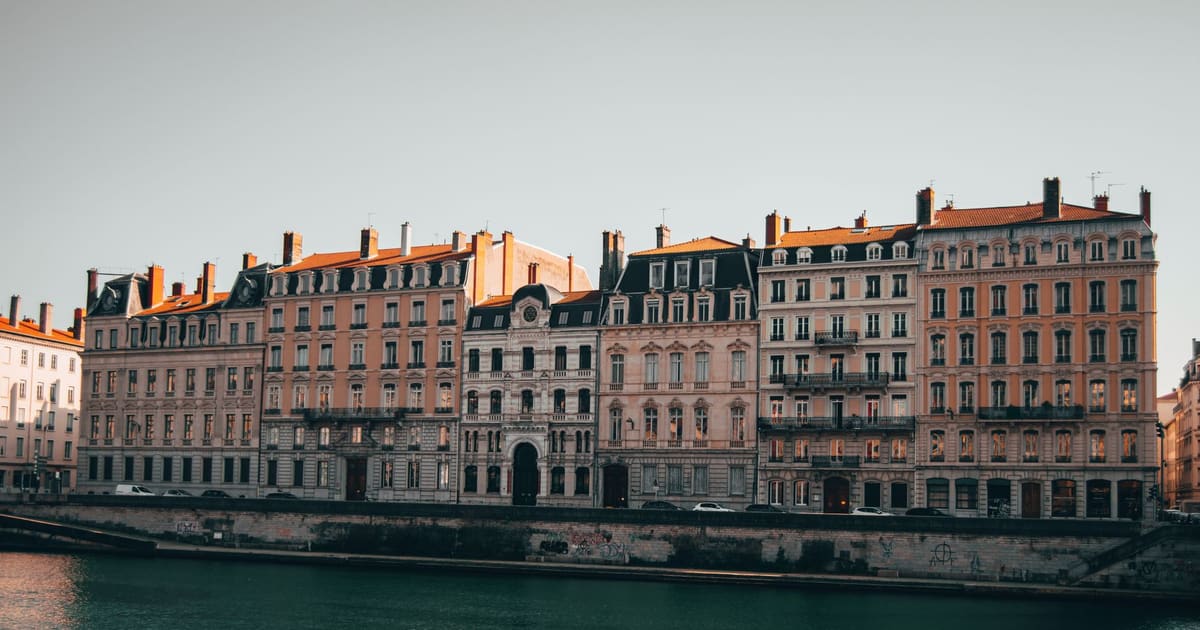
The Presqu'île Riverfront
The Presqu'île is the narrow tongue of land between Lyon's two rivers, and its riverfront buildings, cream and ochre facades with wrought iron balconies, date mostly from the Second Empire, when the city cut long straight streets through its old tangle in the same years Paris was being rebuilt. This was the world the Croix-Rousse silk weavers were up against, the merchants' city where the finished cloth was sold at a price the workers rarely controlled. Walking along the water at dusk, with the buildings catching the last light, gives you a sense of just how much wealth gold-rush silk money built along this single stretch of riverbank.
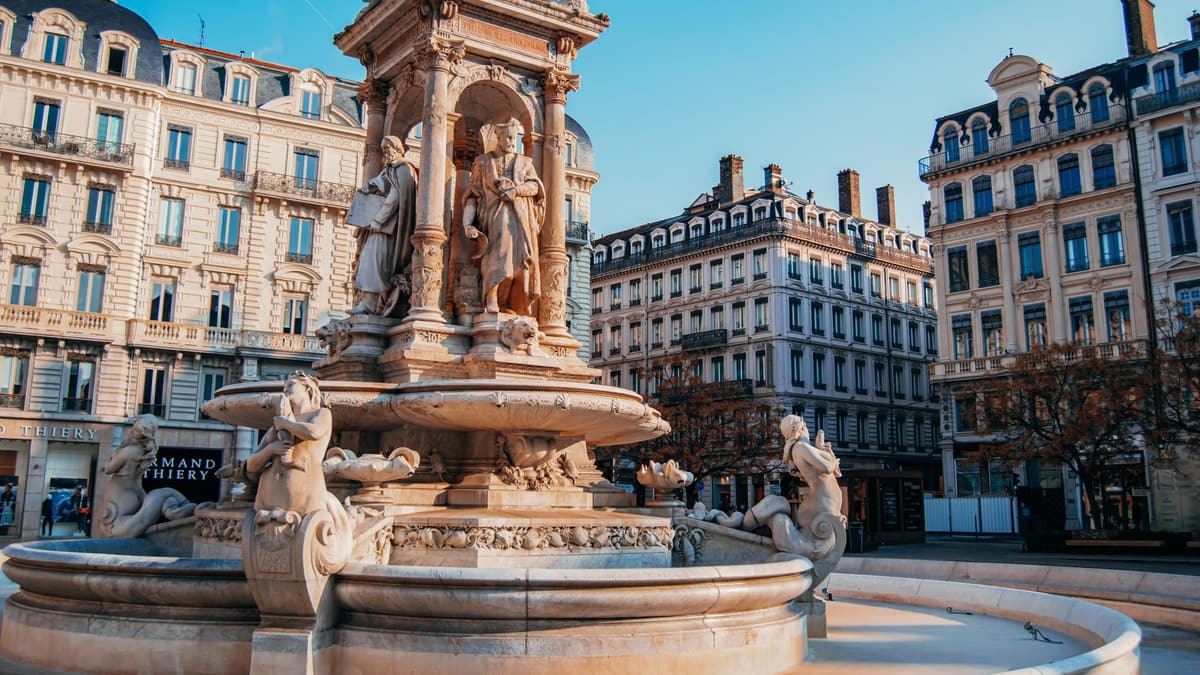
Place des Jacobins
The fountain at the center of Place des Jacobins celebrates Lyon's own artists, four marble figures seated at its base: the architect Philibert Delorme, the engraver Gérard Audran, the sculptor Guillaume Coustou and the painter Hippolyte Flandrin, all sons of the city. The square takes its name from a Dominican convent that once stood here, replaced by the cream-colored Second Empire facades that now ring it. On a hot day the sound of the water fills the whole space, and the fountain's edge is a good spot to rest your legs. It's one of the more elegant pauses on a walk between the hill and the river.
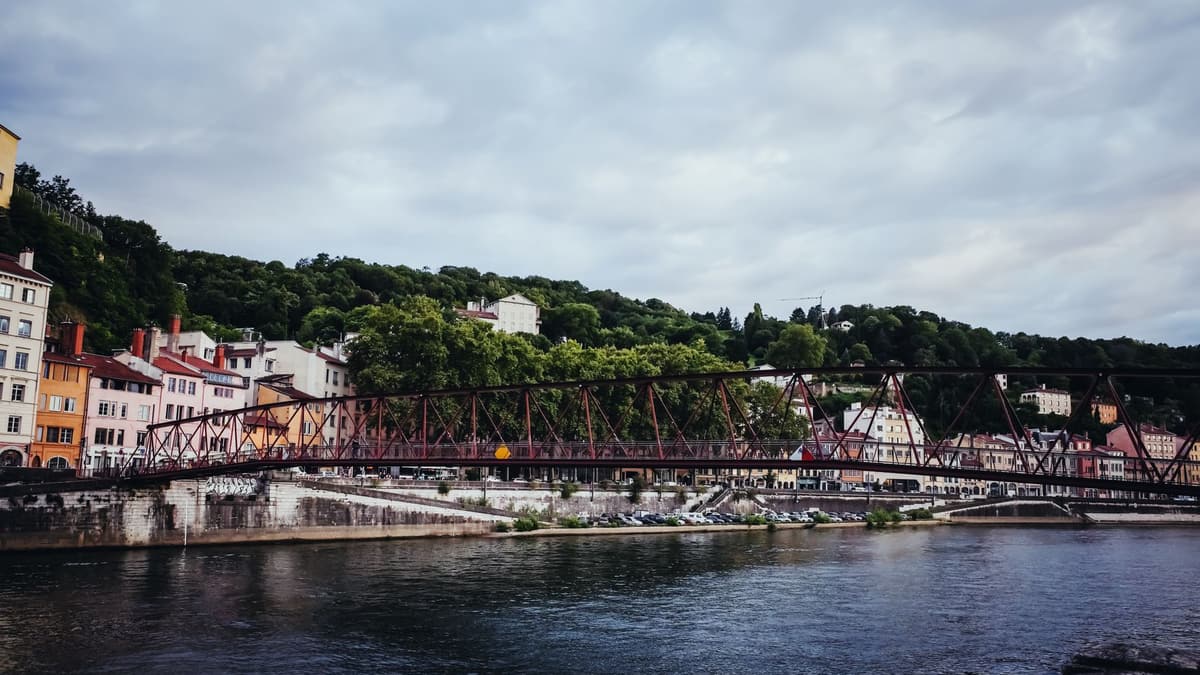
Vieux Lyon and the Saône
Vieux Lyon sits on the west bank of the Saône, its Renaissance houses backed right up against the hillside, with an old iron truss bridge carrying the road across the water in front of them. The old town grew rich on silk and banking in the sixteenth century, and the merchants who built these houses riddled them with traboules, hidden passageways that cut through courtyards from one street to the next. The green hillside behind the rooftops climbs straight up to Fourvière, so from the riverbank you see both the old quarter and the hill that watches over it in one view. It's among the best-preserved Renaissance quarters in France.
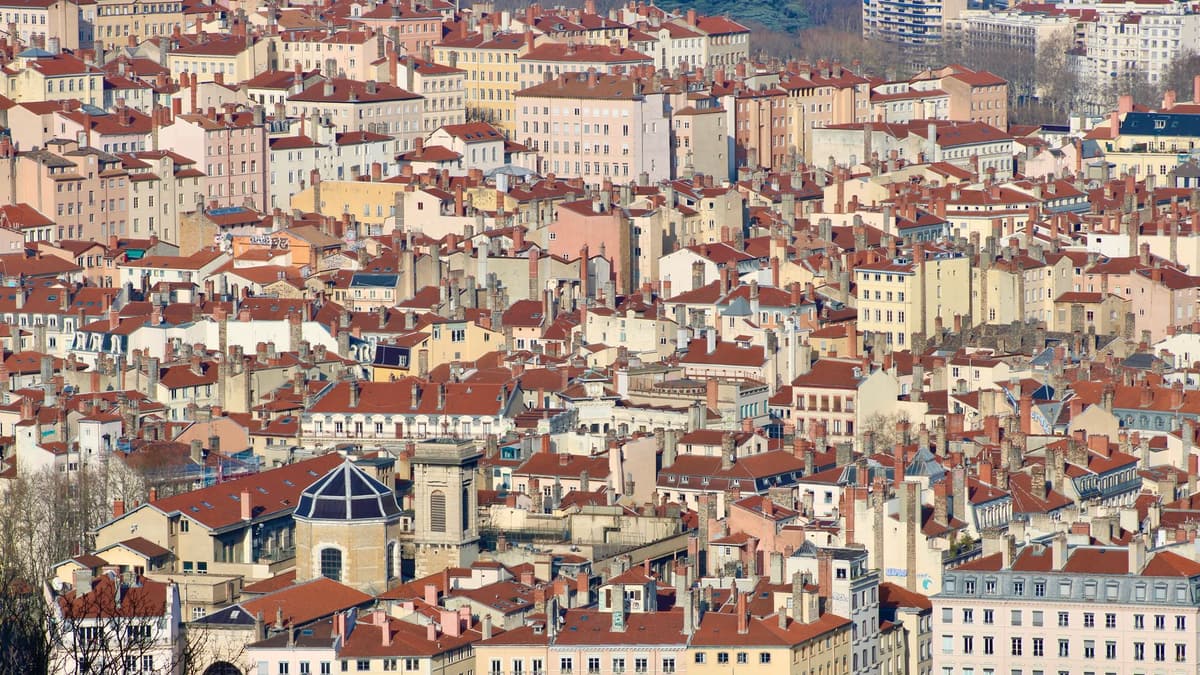
The Croix-Rousse Rooftops
The Croix-Rousse hill is packed with apartment buildings built with unusually tall ceilings and big windows, designed to fit the tall silk looms that Joseph Marie Jacquard's invention made possible around 1800. Seen from above, the rooftops crowd together in a dense red-tile sprawl, barely a gap between one building and the next, a sign of how intensively this district was built up during the silk boom. Until the mid-nineteenth century the Croix-Rousse wasn't even part of Lyon, but a separate working town packed with workshops rather than apartments as we'd think of them today. The density you see from here is the trace of that industrial history.
Ia turul audio în 3 pași simpli
Totul în aplicația gratuită Walk With Me, iar primele opriri ale fiecărui tur le poți încerca gratuit.
Atinge căștile aurii și alege un tur
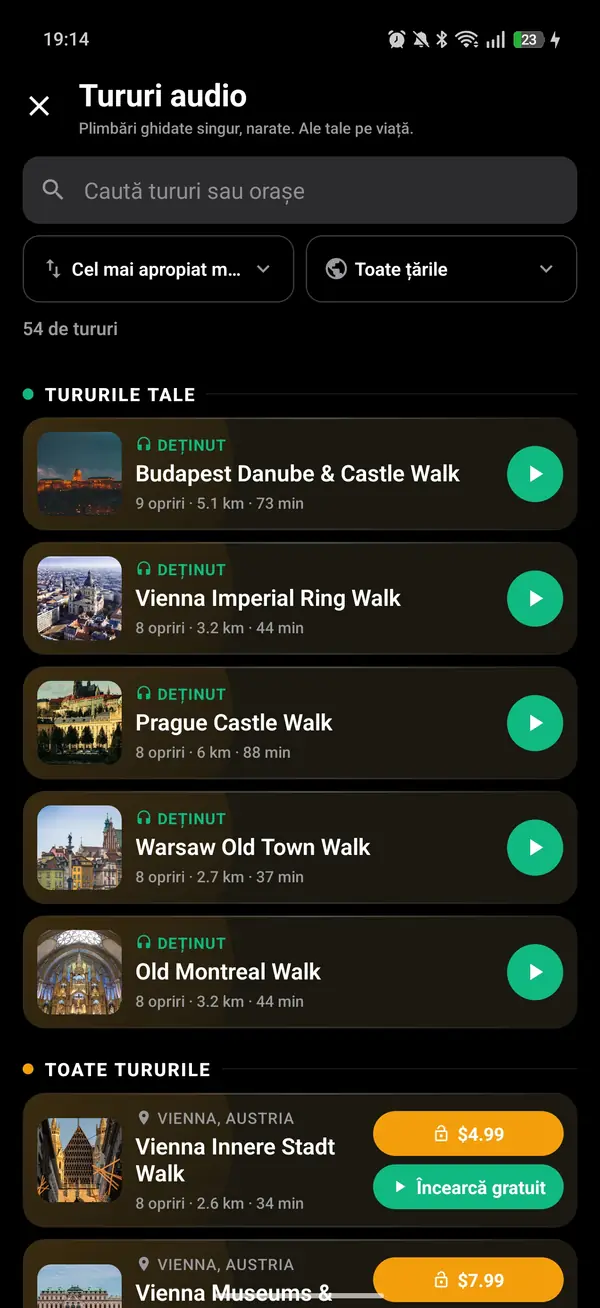
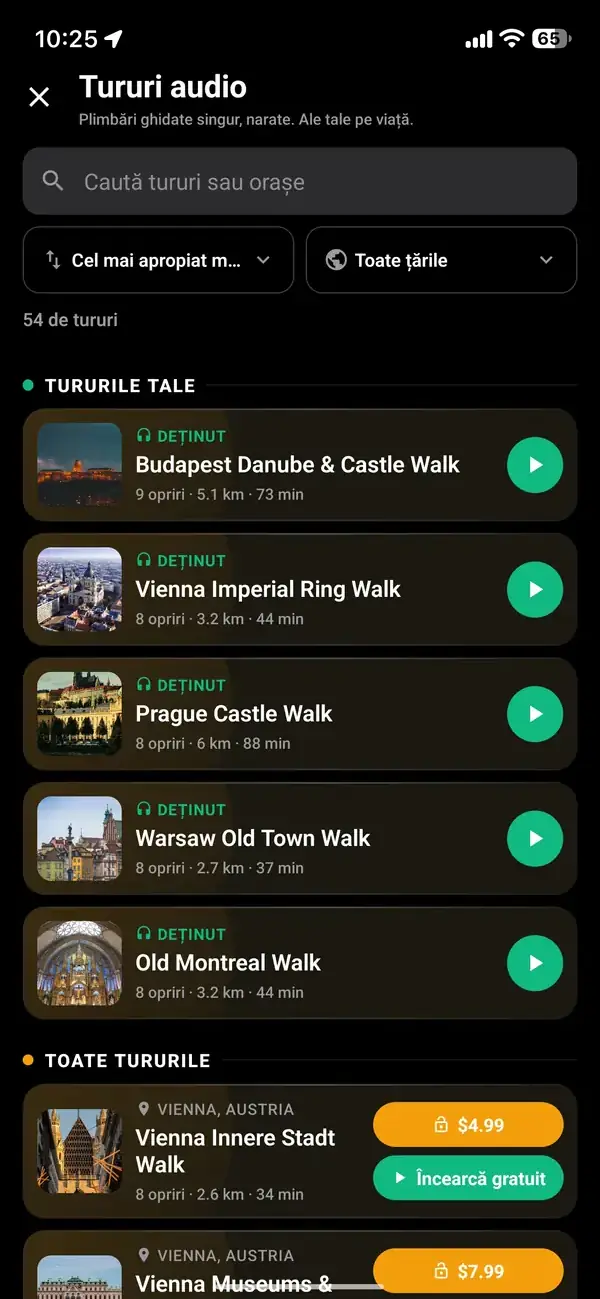
01
Mergi singur sau invită pe cineva
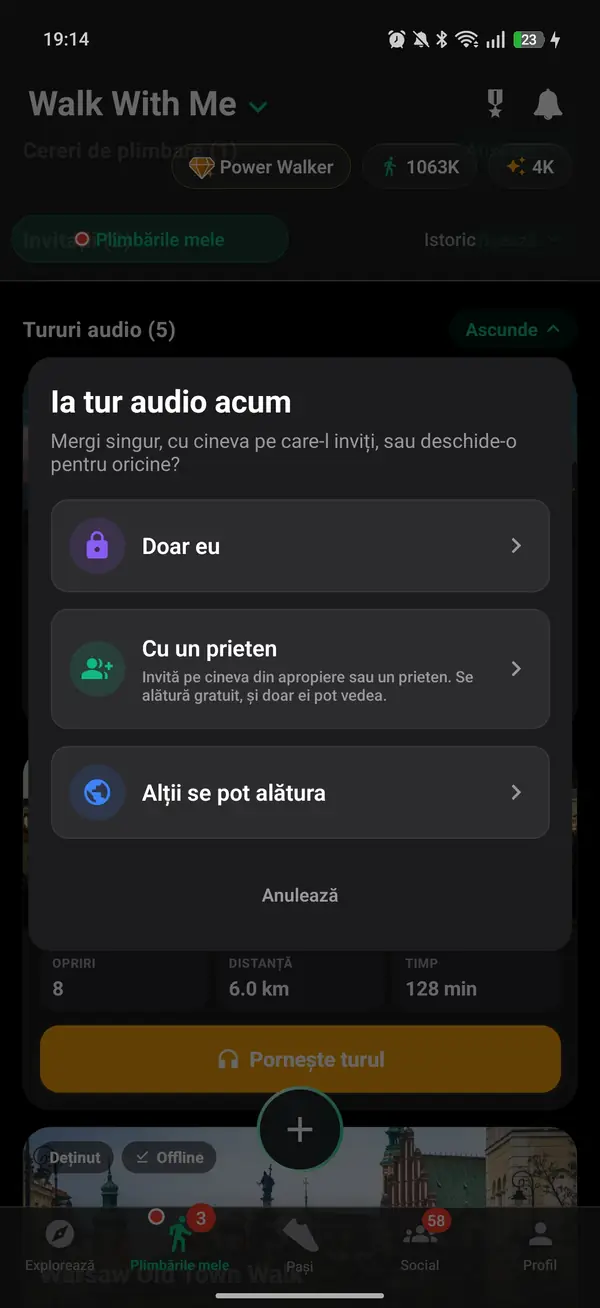
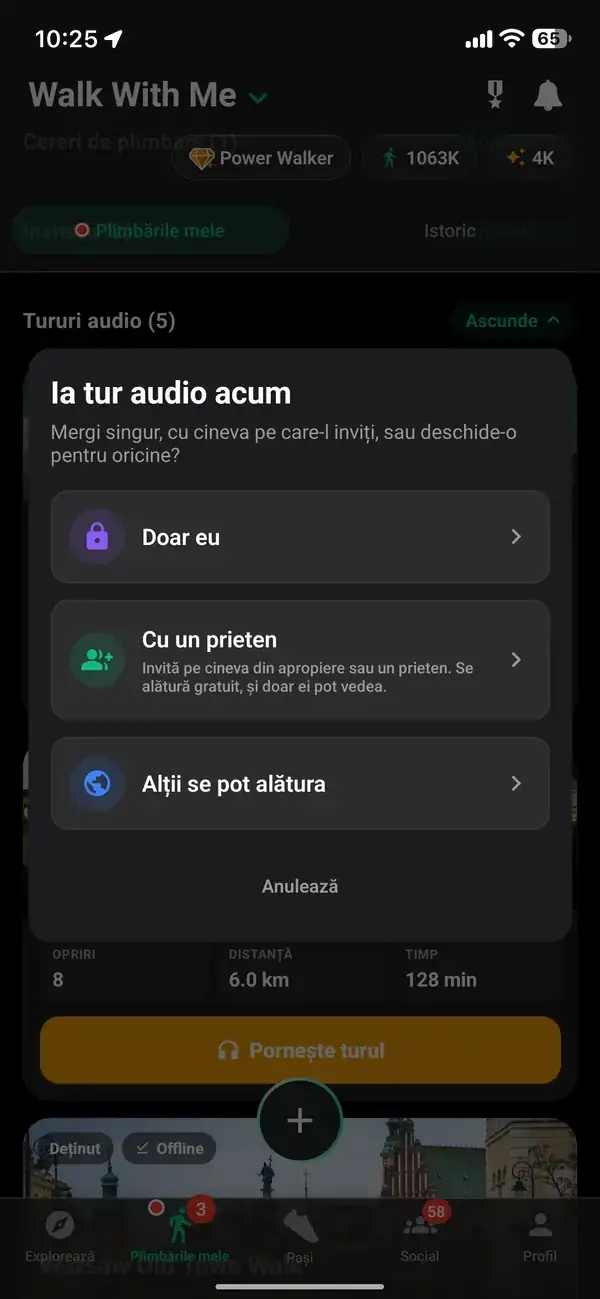
02
Apasă pe redare și mergi
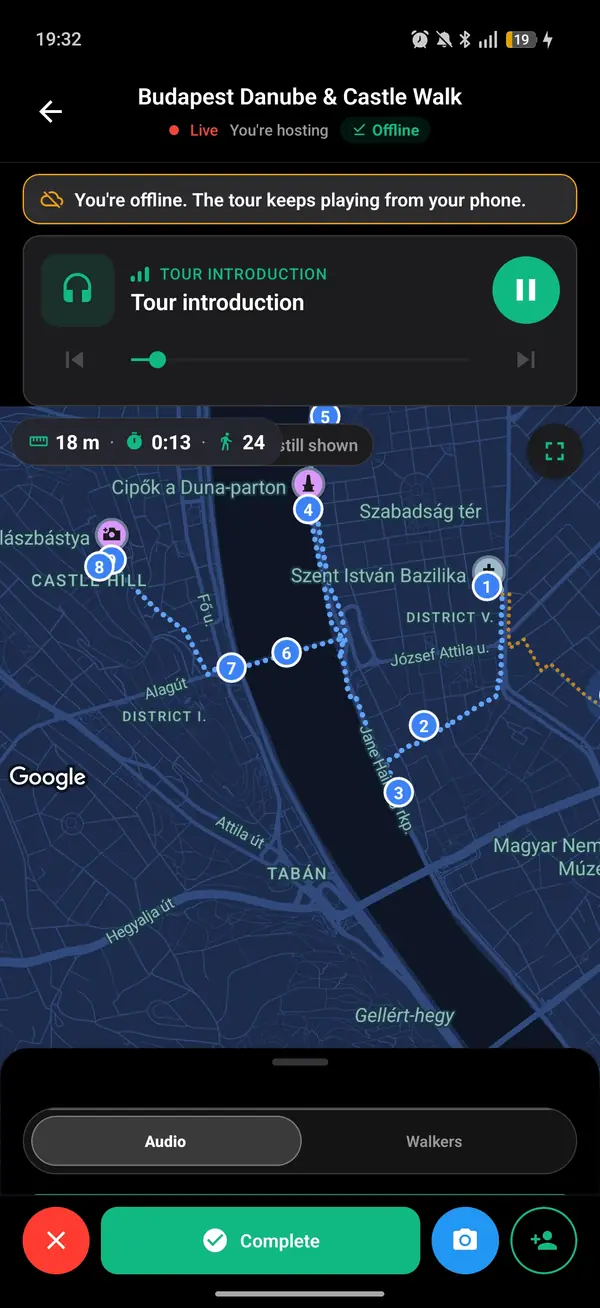
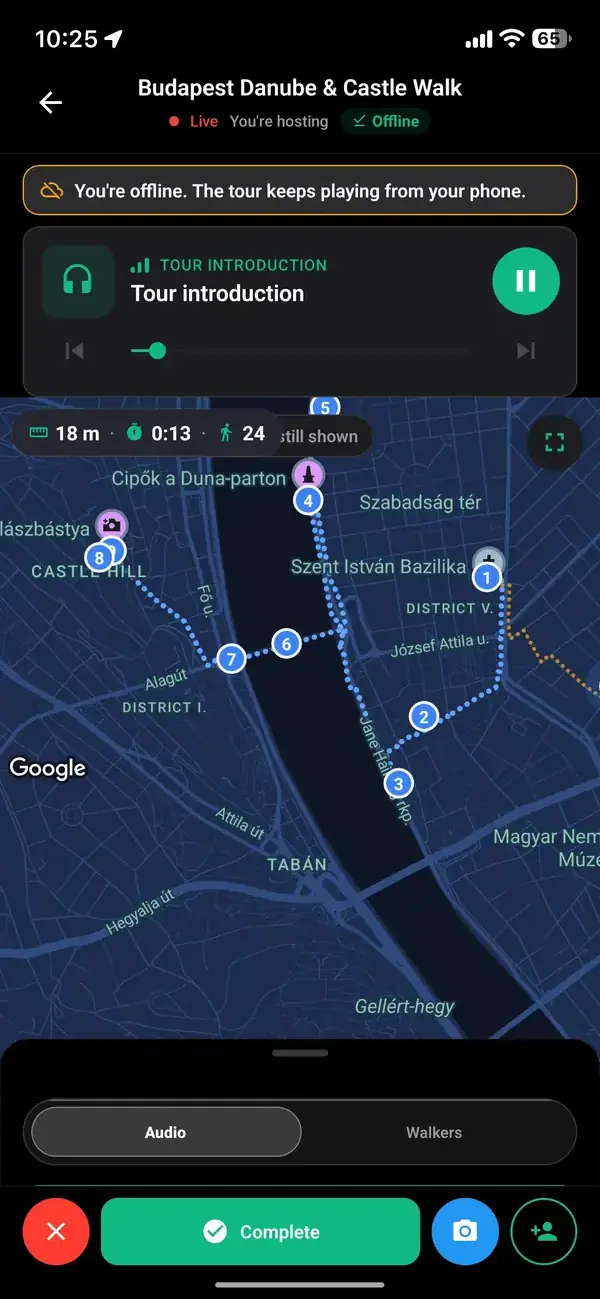
03
Create cu grijă pentru timpul tău în oraș
Aceste tururi nu sunt o listă de obiective de bifat. Sunt făcute pentru a fi parcurse încet, cu căștile pe urechi și ochii pe oraș.
Meditative și captivante
Fiecare poveste este spusă acolo unde s-a petrecut. Aplicația te anunță când ajungi la o oprire, o atingere pornește povestea, iar drumul dintre opriri este al tău, în ritmul tău.
Lucrate manual, cu grijă
Alegem noi înșine fiecare traseu și fiecare oprire și modelăm fiecare poveste cu grijă, ca timpul tău în oraș să meargă spre locurile care merită cel mai mult.
Mai bine împreună
Orice plimbare e mai frumoasă cu cineva alături, așa că, dacă poți lua pe cineva cu tine, te încurajăm din tot sufletul. De aceea o singură achiziție îi acoperă pe toți cei pe care îi inviți: ei se alătură turului tău gratuit.