




 $8.99Головне в місті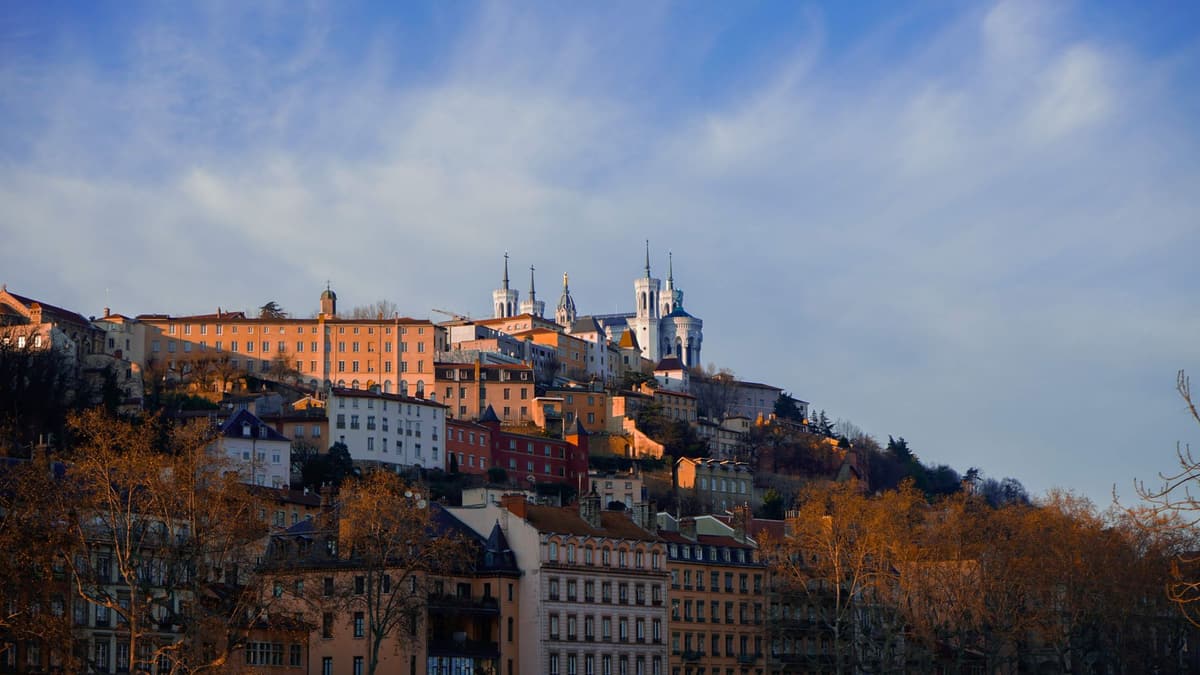
Аудіо Lyon Пішохідні екскурсії
Самостійні пішохідні прогулянки з аудіосупроводом по Lyon. Купуйте екскурсію один раз, завантажуйте та слухайте розповідь на кожній зупинці, гуляючи у власному темпі.
Екскурсії від $8.99
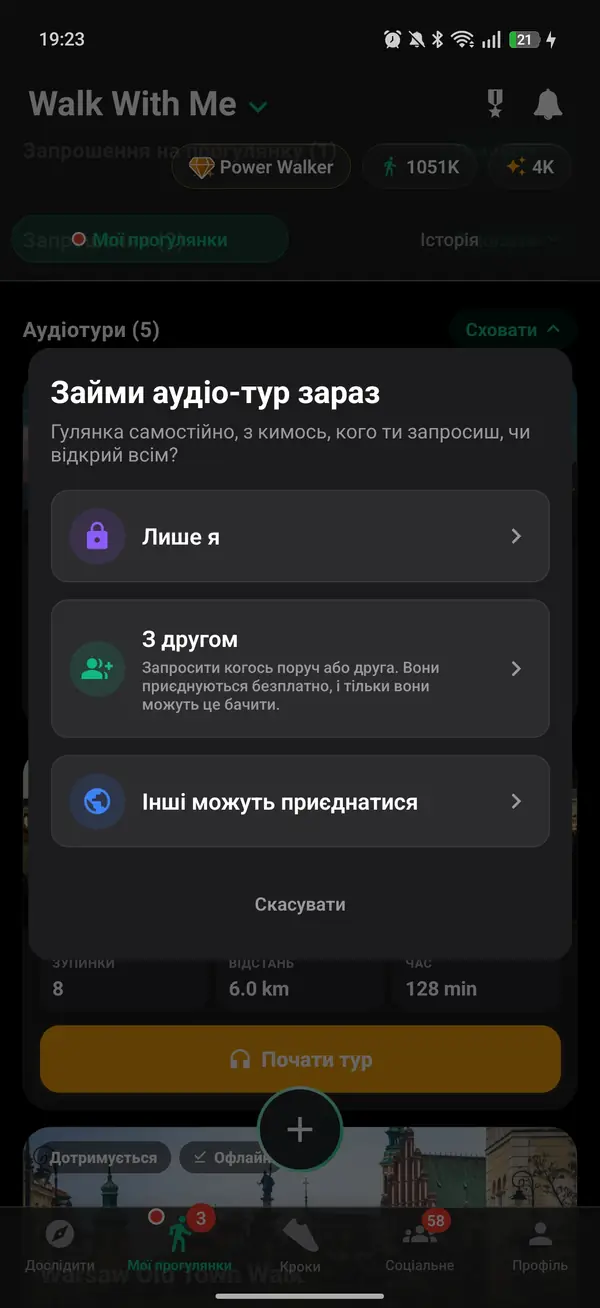
Друзі гуляють безкоштовно. Одна покупка покриває всіх учасників вашої прогулянки. Почніть тур, запросіть друзів приєднатися, і він відтворюватиметься на телефоні кожного у вашій групі.
5.0 на Google Play
Аудіоекскурсії по Lyon
Кожна екскурсія, це спланований маршрут із розповіддю на кожній зупинці. Купуйте один раз і користуйтеся назавжди, без жодних підписок.
$8.99Головне в місті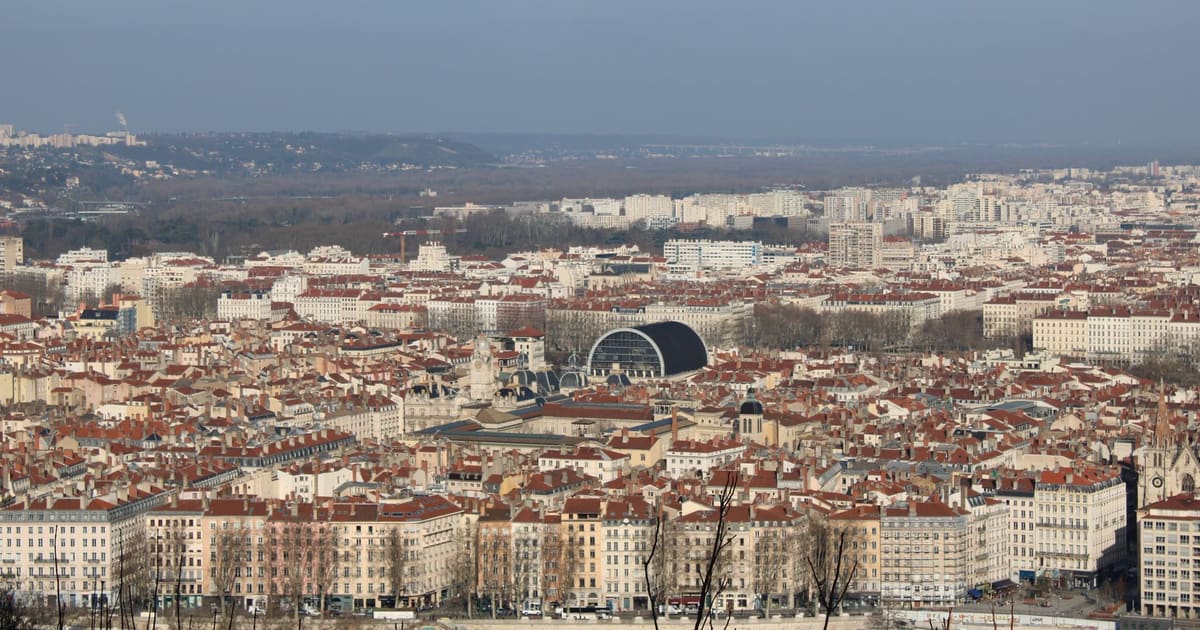 $9.99Головне в місті
Чого очікувати від аудіоекскурсії по Lyon
A Lyon audio walk follows the silk trade downhill from the weavers' hill of the Croix-Rousse to the grand squares of the Presqu'île, or climbs the other way through Renaissance Vieux Lyon to the basilica and Roman ruins on Fourvière hill.
The Canuts to Presqu'île Walk starts at the Mur des Canuts, a giant trompe l'oeil mural on the silk weavers' hill, and runs almost entirely downhill, 3.1 kilometers, about 43 minutes, past Jacquard's statue and the stepped Grande Côte.
It finishes in the grand squares of the Presqu'île, Place des Terreaux's fountain by the sculptor of the Statue of Liberty, Place des Jacobins, and the restored courtyards of the Grand Hôtel-Dieu beside the Rhône.
The Vieux Lyon and Fourvière Walk goes the other direction, 3.7 kilometers, about 59 minutes, from Place Bellecour across the Saône into the Renaissance lanes of Vieux Lyon, then up the hill, on foot or by funicular, to the white basilica, the Roman theatres and a view that takes in both rivers and the Alps beyond.
Де погуляти в Lyon
Кілька зупинок, які ви проходитимете, і чому біля них варто затриматися.
The View from Fourvière
From the hill of Fourvière, Lyon spreads out below in a sea of red-tile roofs, the twin spires of Église Saint-Nizier rising above the rooftops of the Presqu'île, the two rivers threading through the middle of the city. Lyon has an old saying that Fourvière is the hill that prays, while the Croix-Rousse across the valley is the hill that works, and the view from up here makes the contrast obvious. On a clear day the panorama stretches past the modern city to the distant white peaks of the Alps on the horizon. It's worth taking your time here, picking out the streets and squares you've already walked or are about to.
The Presqu'île Riverfront
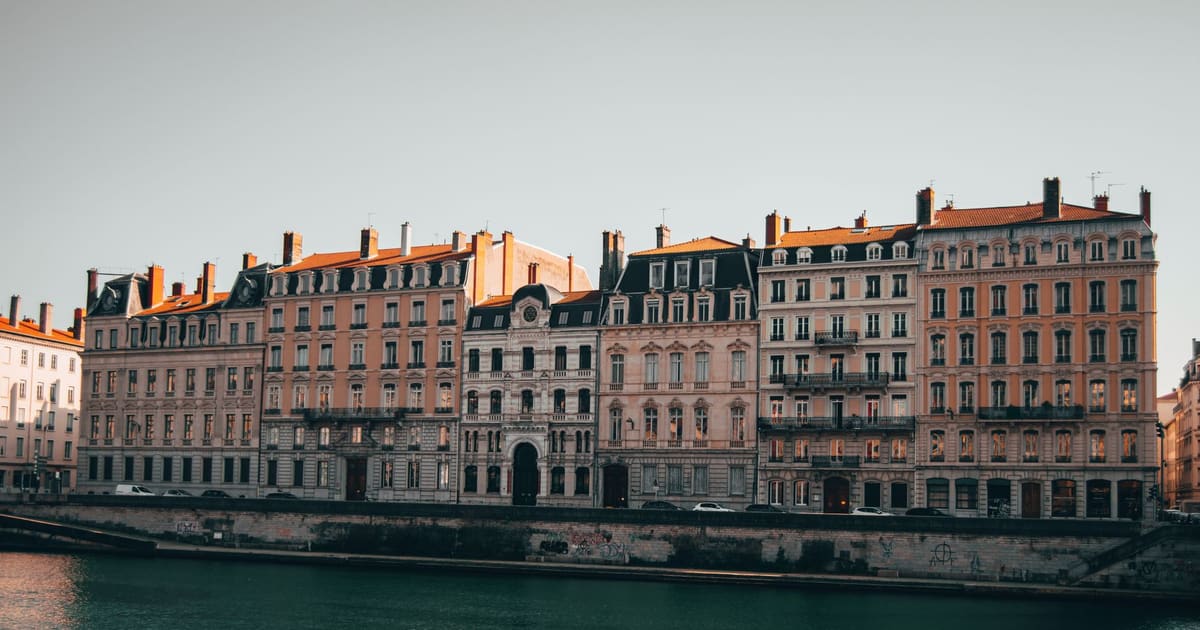
The Presqu'île is the narrow tongue of land between Lyon's two rivers, and its riverfront buildings, cream and ochre facades with wrought iron balconies, date mostly from the Second Empire, when the city cut long straight streets through its old tangle in the same years Paris was being rebuilt. This was the world the Croix-Rousse silk weavers were up against, the merchants' city where the finished cloth was sold at a price the workers rarely controlled. Walking along the water at dusk, with the buildings catching the last light, gives you a sense of just how much wealth gold-rush silk money built along this single stretch of riverbank.
Place des Jacobins
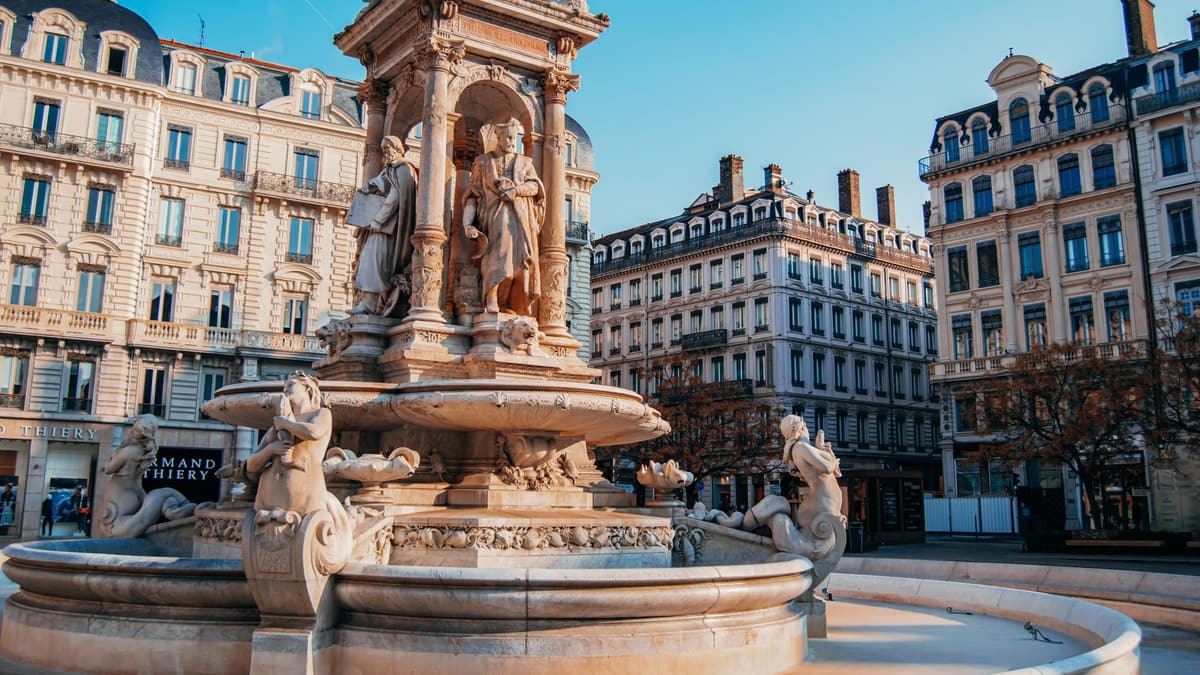
The fountain at the center of Place des Jacobins celebrates Lyon's own artists, four marble figures seated at its base: the architect Philibert Delorme, the engraver Gérard Audran, the sculptor Guillaume Coustou and the painter Hippolyte Flandrin, all sons of the city. The square takes its name from a Dominican convent that once stood here, replaced by the cream-colored Second Empire facades that now ring it. On a hot day the sound of the water fills the whole space, and the fountain's edge is a good spot to rest your legs. It's one of the more elegant pauses on a walk between the hill and the river.
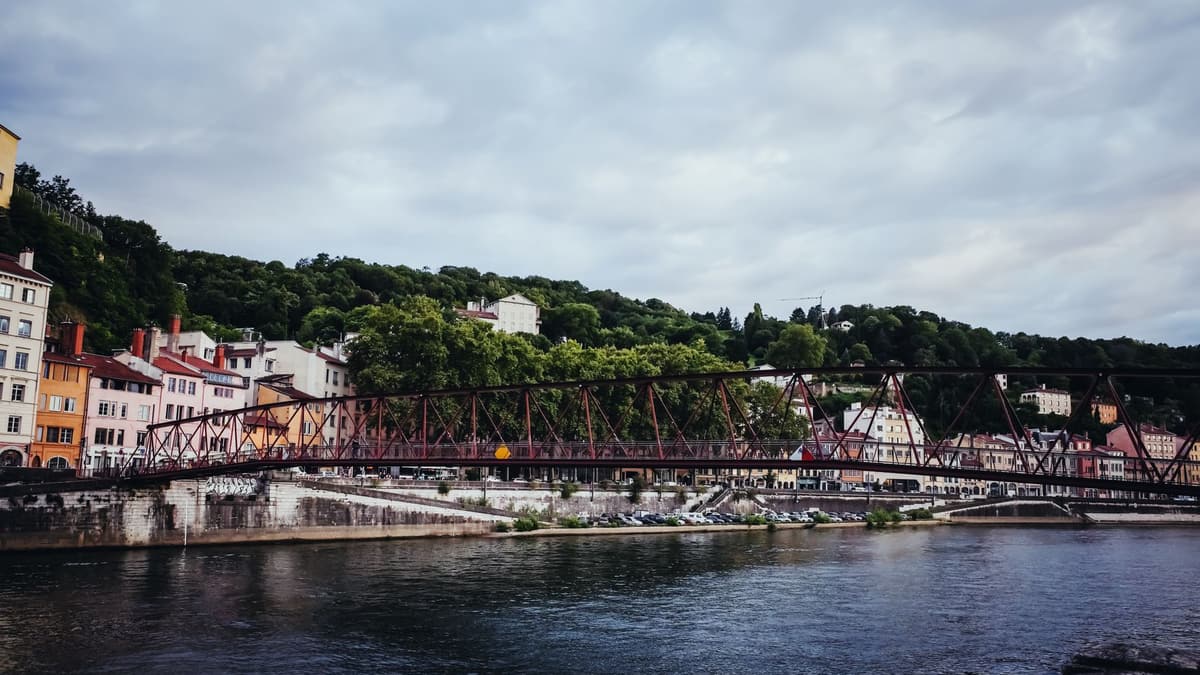
Vieux Lyon and the Saône
Vieux Lyon sits on the west bank of the Saône, its Renaissance houses backed right up against the hillside, with an old iron truss bridge carrying the road across the water in front of them. The old town grew rich on silk and banking in the sixteenth century, and the merchants who built these houses riddled them with traboules, hidden passageways that cut through courtyards from one street to the next. The green hillside behind the rooftops climbs straight up to Fourvière, so from the riverbank you see both the old quarter and the hill that watches over it in one view. It's among the best-preserved Renaissance quarters in France.
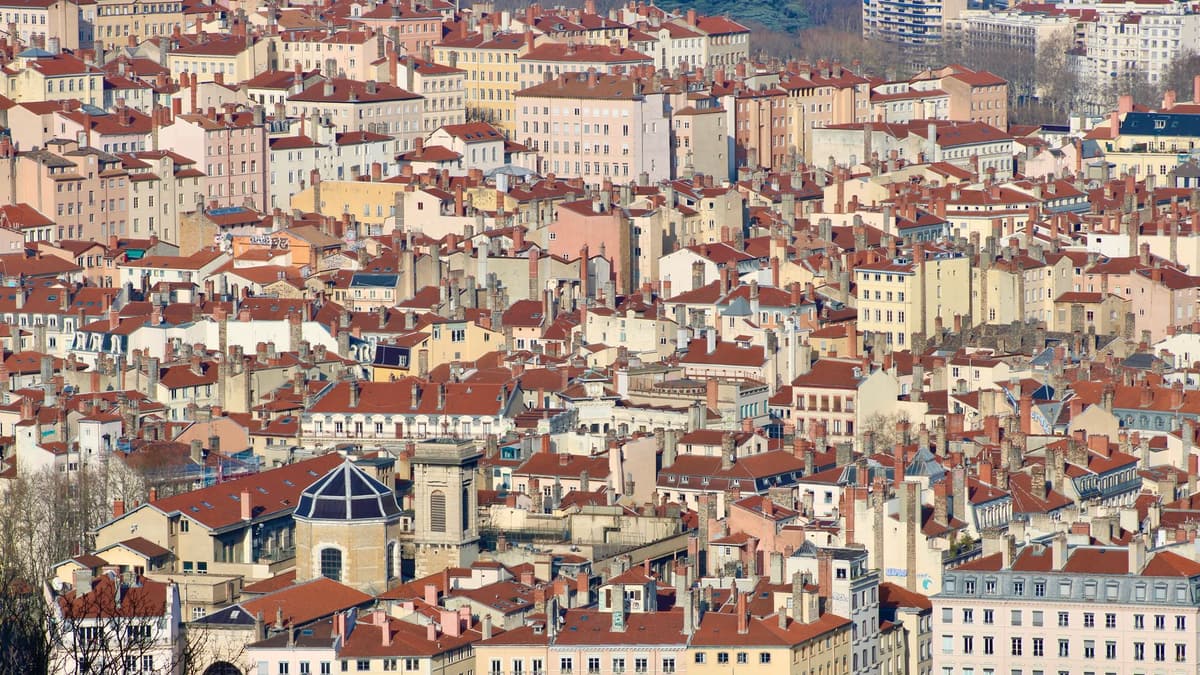
The Croix-Rousse Rooftops
The Croix-Rousse hill is packed with apartment buildings built with unusually tall ceilings and big windows, designed to fit the tall silk looms that Joseph Marie Jacquard's invention made possible around 1800. Seen from above, the rooftops crowd together in a dense red-tile sprawl, barely a gap between one building and the next, a sign of how intensively this district was built up during the silk boom. Until the mid-nineteenth century the Croix-Rousse wasn't even part of Lyon, but a separate working town packed with workshops rather than apartments as we'd think of them today. The density you see from here is the trace of that industrial history.
Почніть аудіоекскурсію за 3 прості кроки
Усе в безкоштовному застосунку Walk With Me, а перші зупинки кожної екскурсії можна послухати безкоштовно.
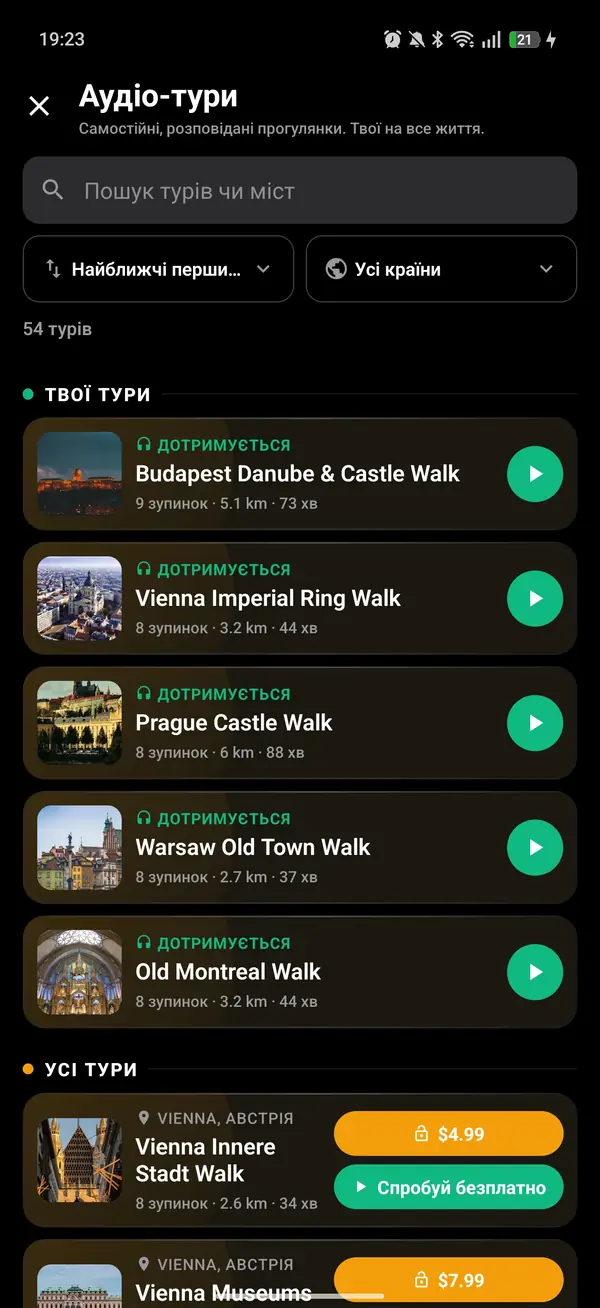
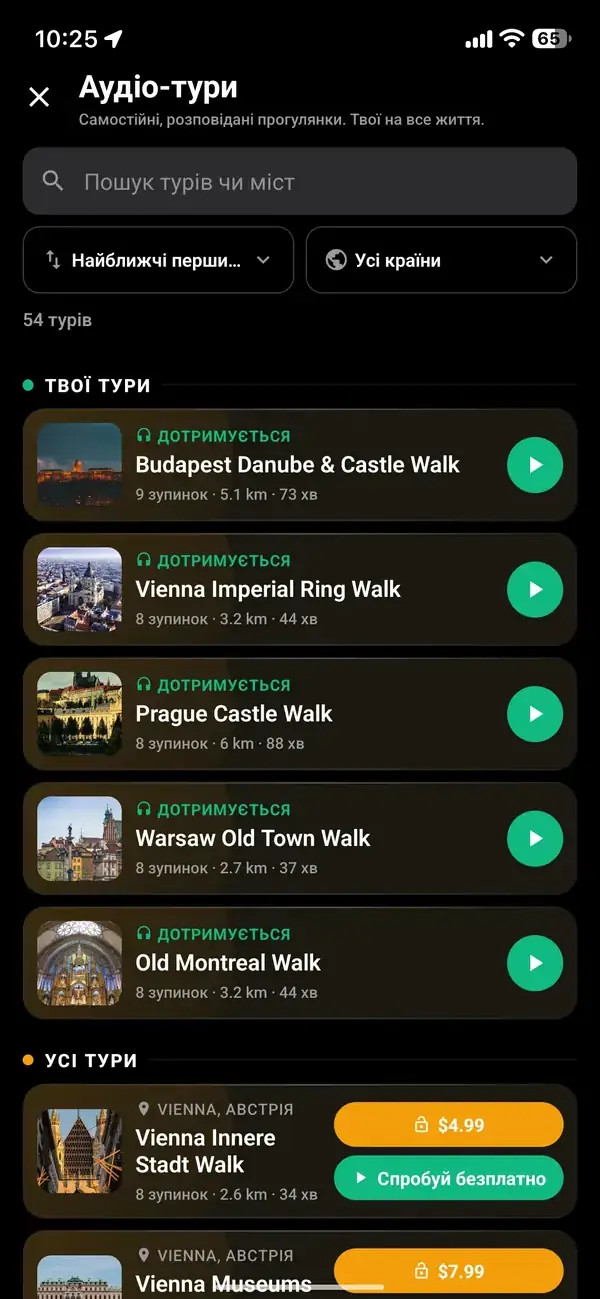
Торкніться золотих навушників і виберіть екскурсію
01
Ідіть самі або запросіть когось

02
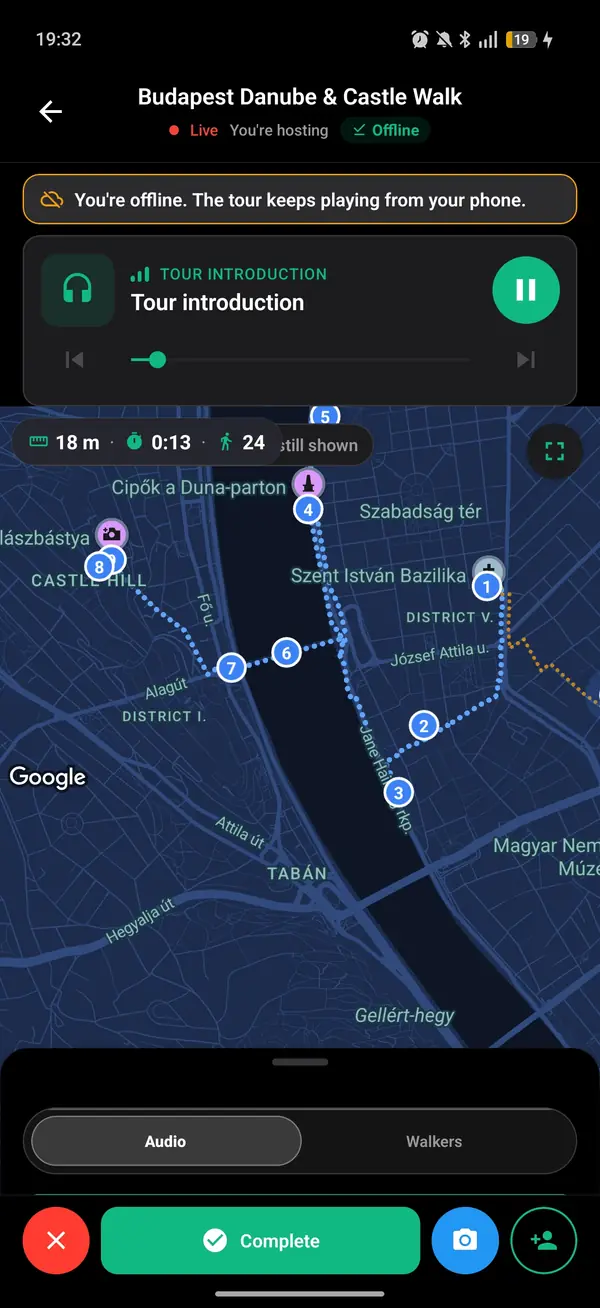
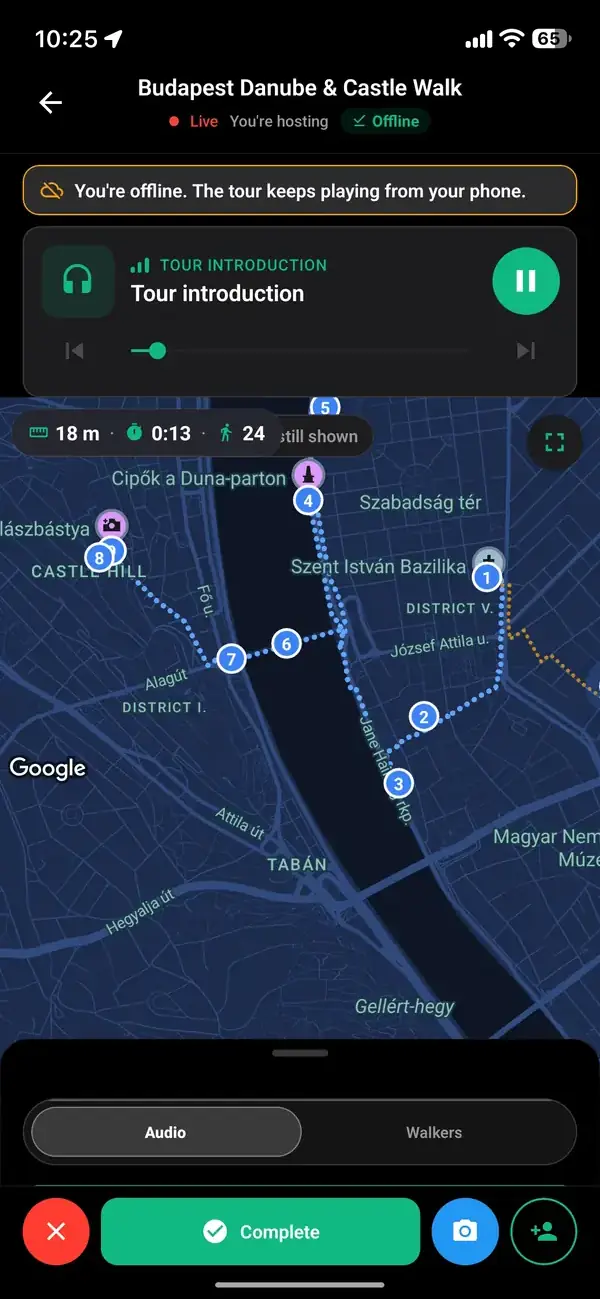
Натисніть «play» і йдіть
03
Створені з любов'ю для вашого часу в місті
Ці екскурсії не список пам'яток, які треба відмітити. Їх варто проходити неспішно, у навушниках і з поглядом на місто.
Медитативні та захопливі
Кожна історія звучить там, де вона сталася. Застосунок подає сигнал, коли ви доходите до зупинки, один дотик запускає розповідь, а шлях між зупинками належить вам, у вашому темпі.
Зроблені вручну, з турботою
Ми самі обираємо кожен маршрут і кожну зупинку та дбайливо створюємо кожну історію, щоб ваш час у місті пішов на місця, які справді того варті.
Удвох краще
Будь-яка прогулянка краща, коли поруч хтось є, тож якщо можете взяти когось із собою, дуже радимо це зробити. Саме тому одна покупка покриває всіх, кого ви запросите: вони приєднуються до вашої екскурсії безкоштовно.