




 $7.99Obiective din oraș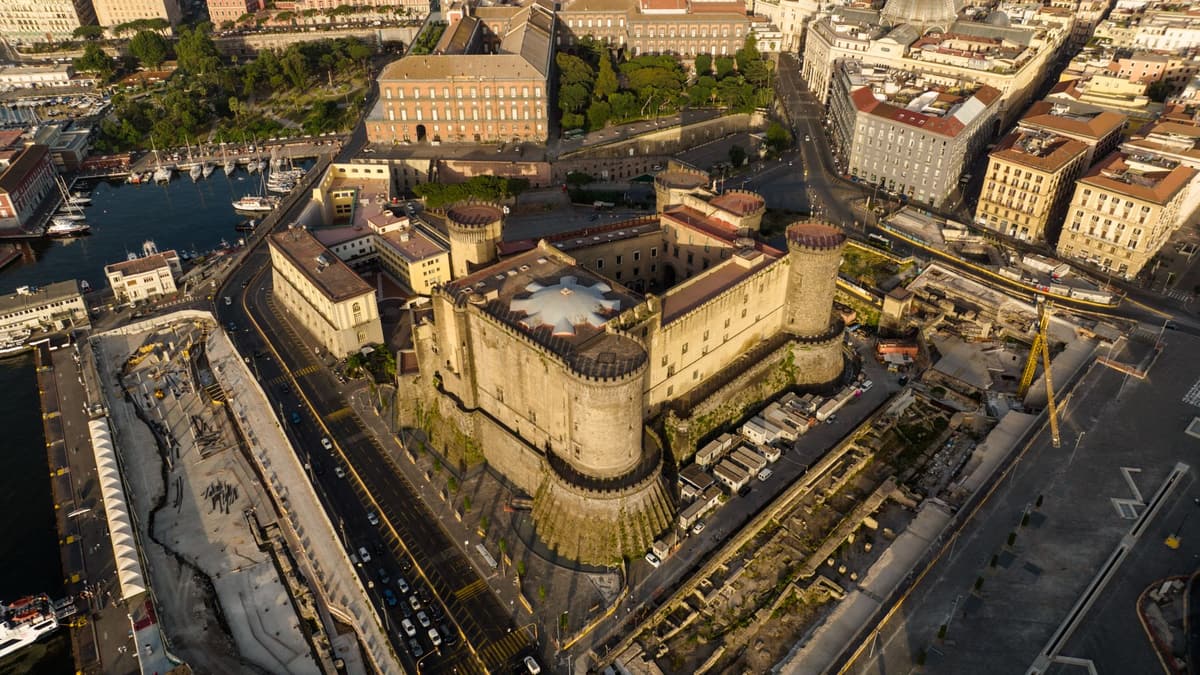
Audio Naples Tururi pietonale
Plimbări ghidate pe cont propriu, cu narațiune, prin Naples. Cumperi turul o singură dată, îl descarci și lași povestea să ruleze la fiecare oprire, în timp ce mergi în propriul ritm.
Tururi de la $7.99
Prietenii merg gratis. O singură achiziție îi include pe toți cei de pe plimbarea ta. Pornește turul, invită-ți prietenii să se alăture, și acesta se va reda pe fiecare telefon din grupul tău.
5.0 pe Google Play
Tururi audio în Naples
Fiecare tur este un traseu pe hartă cu narațiune la fiecare oprire. Îl cumperi o singură dată și rămâne al tău, fără abonament.
$7.99Obiective din oraș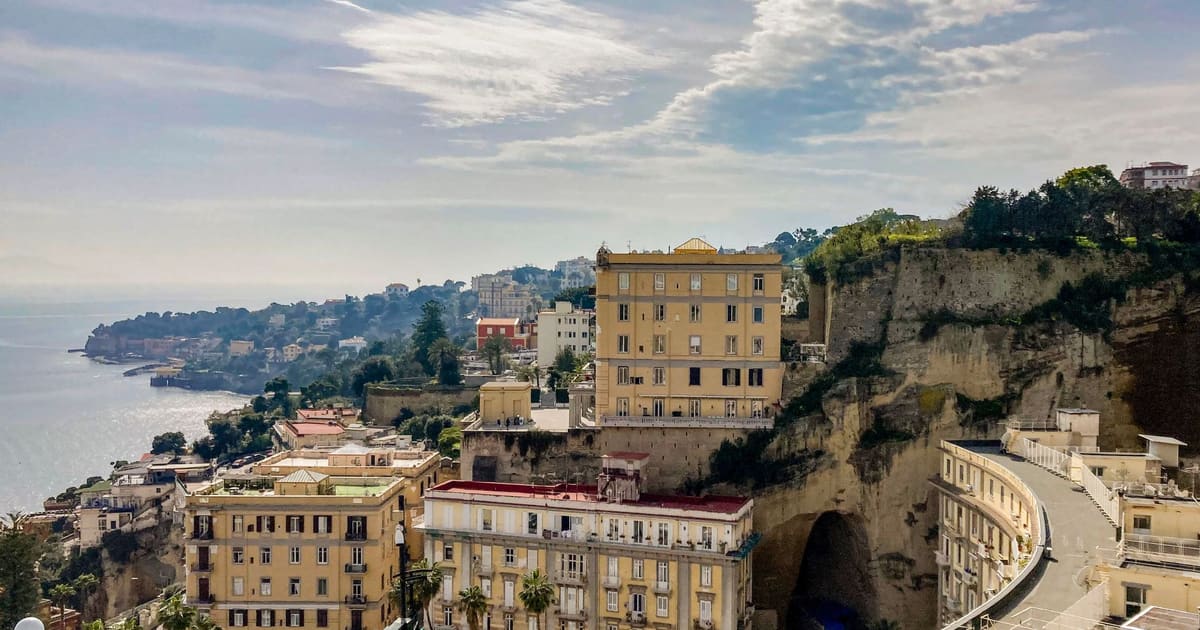 $8.99Obiective din oraș
La ce să te aștepți de la un tur pietonal audio în Naples
A Naples audio walk drops you straight into a living, shouting, scooter-dodging city, whether you're threading the ancient Greek street grid of the old center or tracing the royal seafront past castles and a glass-domed arcade, with narration timed to each stop.
The Naples Centro Storico Walk starts at the National Archaeological Museum, home to the treasures of Pompeii, then drops through Piazza Dante to Spaccanapoli, the long straight street that splits the old town in two. It passes the Cappella Sansevero's Veiled Christ and the nativity workshops of Via San Gregorio Armeno before ending at the cathedral of San Gennaro and the Renaissance gate of Porta Capuana. It's about 2.9 kilometers, roughly 39 minutes of walking.
The Naples Royal Seafront Walk starts on the little island of Castel dell'Ovo, where the city was born, then follows the bay to a baroque fountain facing Vesuvius before climbing to Piazza del Plebiscito and the Royal Palace.
From there it takes in the opera house, the great Angevin fortress of Castel Nuovo on the harbor, and the glass dome of the Galleria Umberto I, finishing underground in the mosaic-lined Toledo metro station. It's about 2.9 kilometers, roughly 40 minutes of walking, mostly flat with one gentle climb.
Pe unde să te plimbi în Naples
Câteva dintre opririle pe care le vei face și motivele pentru care merită să încetinești pasul.

Castel dell'Ovo
Castel dell'Ovo, the Castle of the Egg, is the oldest castle in Naples and sits on the very spot where the city began, a rocky islet called Megaride where Greek settlers from nearby Cumae first put down roots. Legend says the siren Parthenope washed ashore here after failing to lure Ulysses with her song, which is why poets still call Naples Parthenope. Normans built the first castle here in the twelfth century, and later rulers strengthened it again and again. Its odd name comes from a legend that the poet Virgil hid a magic egg in the foundations, and as long as it stays unbroken, so the story goes, the castle will stand.

Piazza del Plebiscito
This vast, open square takes its name from the vote of October 1860 that made the Kingdom of the Two Sicilies part of a newly united Italy. The long front of the Royal Palace, begun around 1600 for the Spanish viceroys, faces a domed church framed by a sweeping colonnade, with two bronze Bourbon kings on horseback out front. Eight statues along the palace facade show rulers of Naples across seven centuries, added in the 1880s. Just off the square stands Gran Caffe Gambrinus, home of the caffe sospeso, the suspended coffee, where locals pay for two and leave one for a stranger who can't afford it.

Galleria Umberto I
Step inside and look straight up at this glass and iron dome soaring more than fifty meters over the crossing of a shopping arcade built in the shape of a cross. It went up between 1887 and 1890 as part of a huge urban renewal program launched after a cholera epidemic killed thousands in the poorest, most crowded quarters, a glittering statement that Naples was modern and grand again. Look down too, at the mosaic of the zodiac in the floor. The Galleria was badly damaged in the war, and afterward became the meeting point of a ruined city full of soldiers. Across the street stands the Teatro di San Carlo, Europe's oldest opera house in use.
Santa Chiara
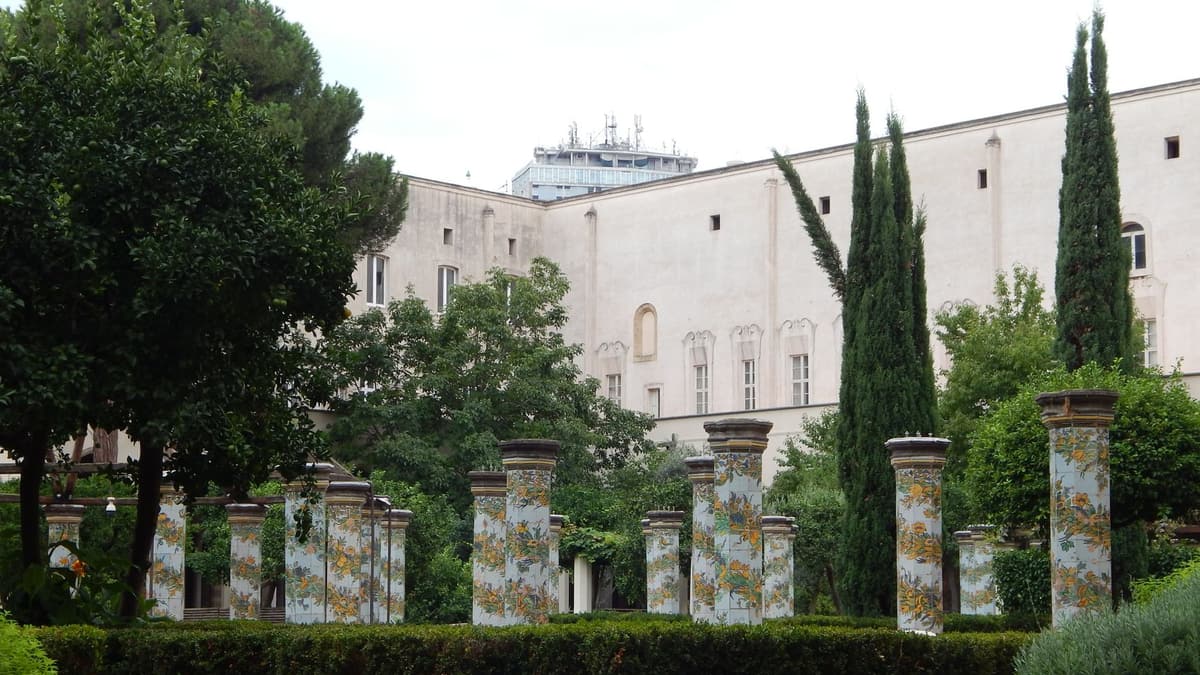
These majolica-tiled columns wrap around the cloister of the Poor Clares behind Santa Chiara, transformed in the eighteenth century with hand-painted tiles of vines, lemons and country scenes, one of the loveliest quiet spots in the old city. The church itself was built in the early fourteenth century for the Angevin king Robert and his queen Sancha, burned out by Allied bombing in 1943, and rebuilt afterward in its original austere Gothic form. Stepping from the plain church into this bright, patterned garden is one of the real surprises of the walk, a pocket of calm just off Spaccanapoli's noise and traffic.
Spaccanapoli
This is Spaccanapoli, the long straight street that splits the old town in two along the lines of the ancient Greek city's main street, still a living, working neighborhood rather than a museum piece. Laundry hangs between balconies, scooters weave through two at a time, and shopfronts and street shrines crowd the ground floor of tall, faded apartment blocks. The street plan beneath your feet is more than two and a half thousand years old, which is why the whole district is a UNESCO World Heritage Site, but none of that shows from a car. It shows on foot, in the smell of frying dough and the hush of a cloister after the roar of the street.
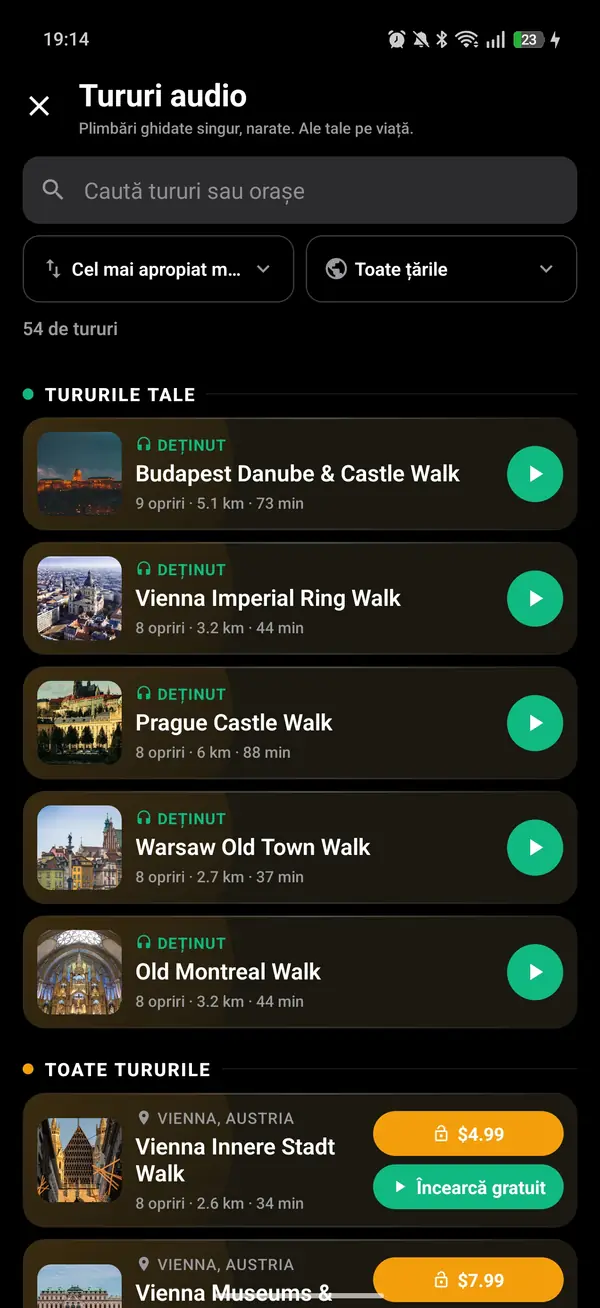
Ia turul audio în 3 pași simpli
Totul în aplicația gratuită Walk With Me, iar primele opriri ale fiecărui tur le poți încerca gratuit.
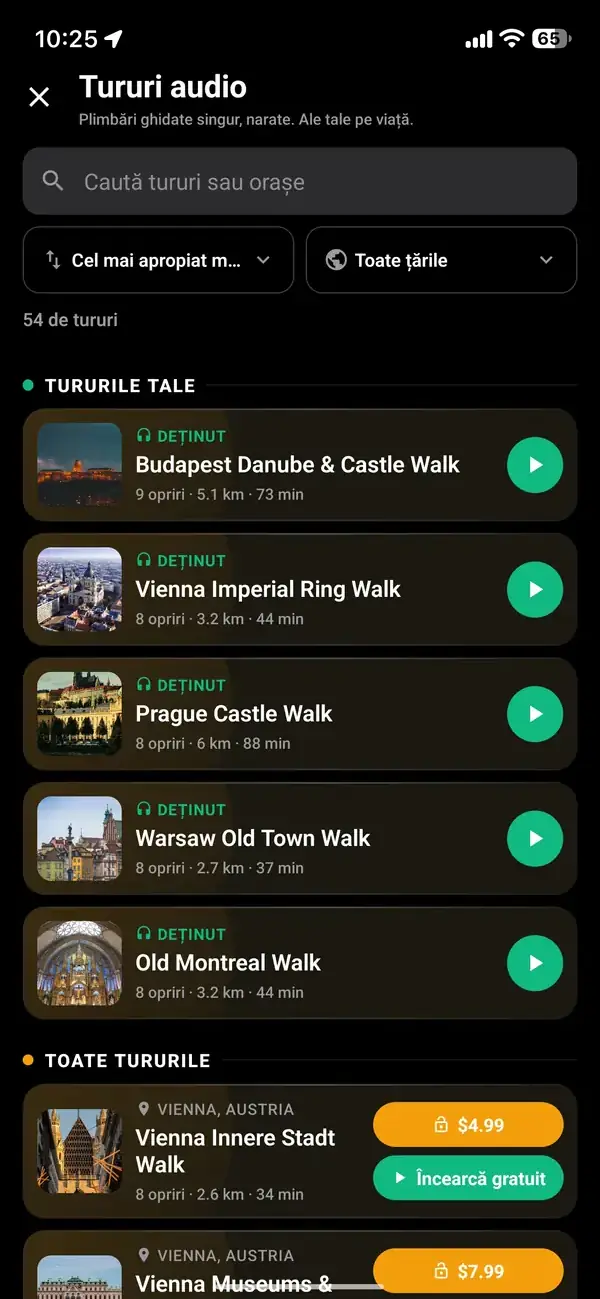
Atinge căștile aurii și alege un tur
01
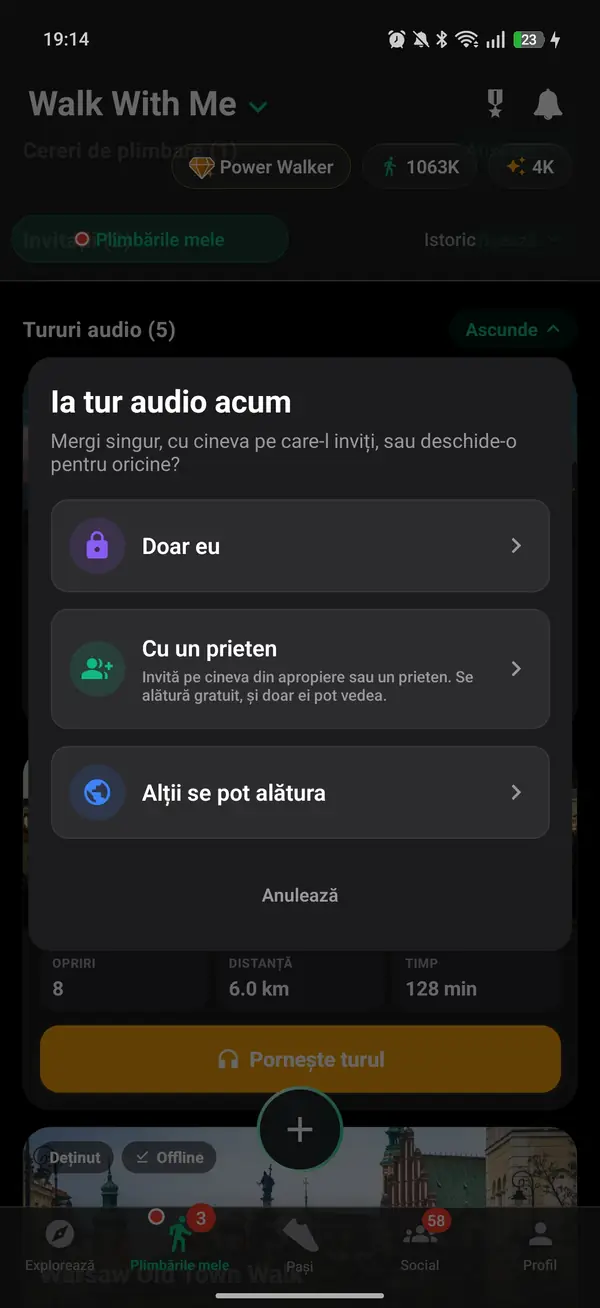
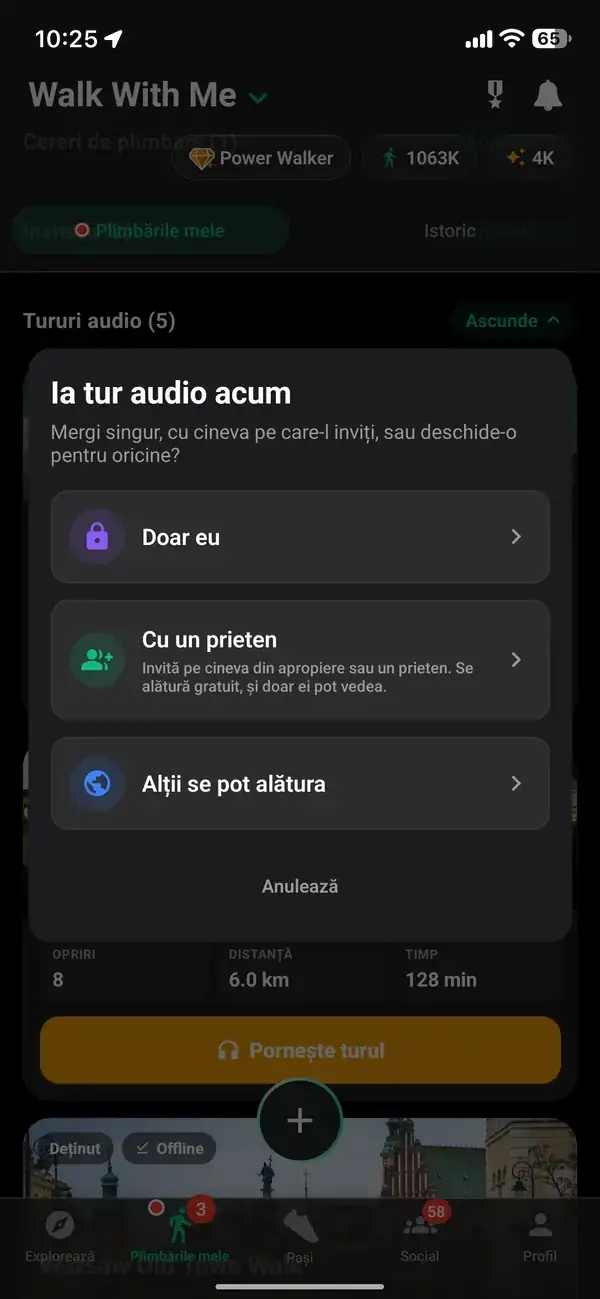
Mergi singur sau invită pe cineva
02
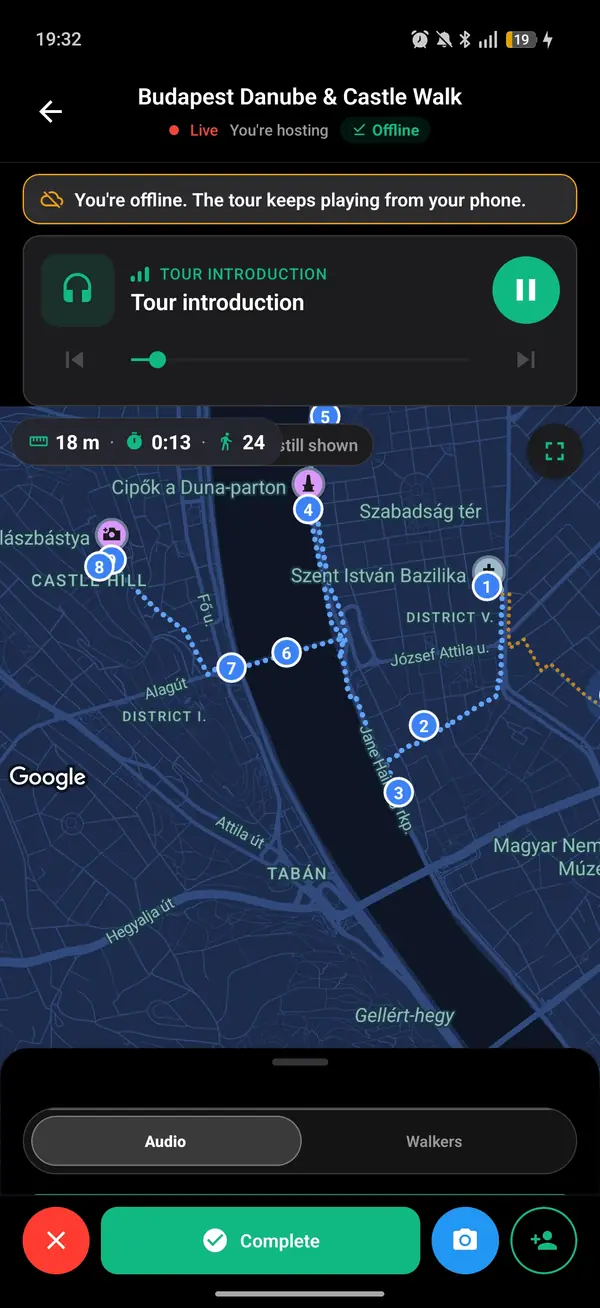
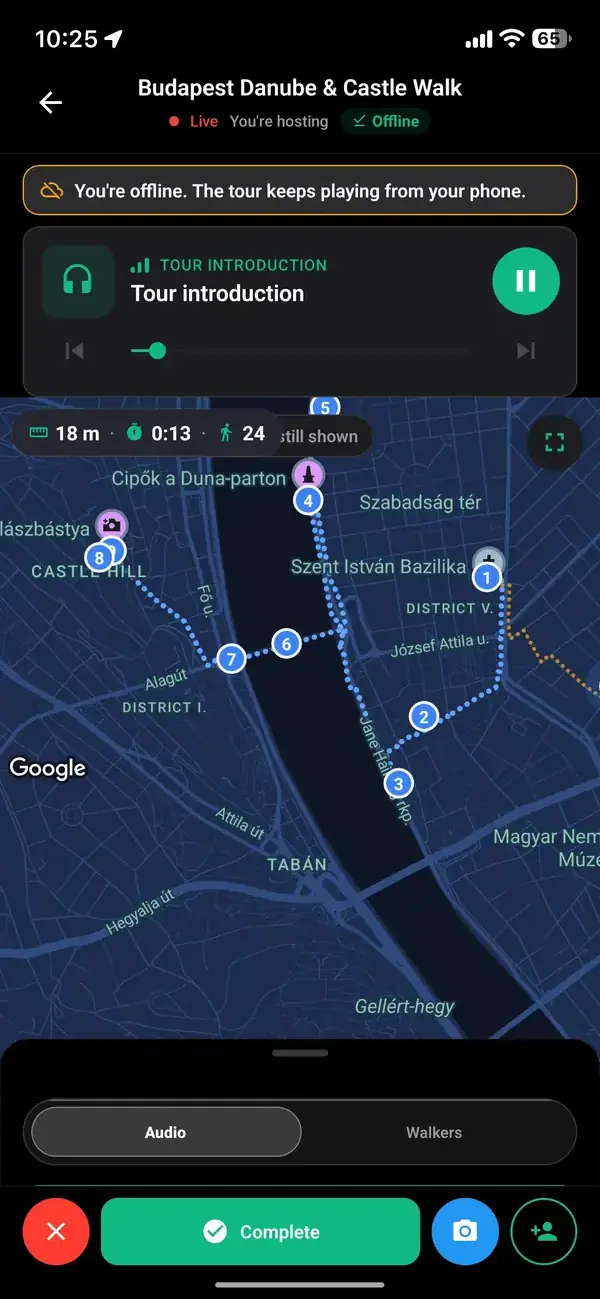
Apasă pe redare și mergi
03
Create cu grijă pentru timpul tău în oraș
Aceste tururi nu sunt o listă de obiective de bifat. Sunt făcute pentru a fi parcurse încet, cu căștile pe urechi și ochii pe oraș.
Meditative și captivante
Fiecare poveste este spusă acolo unde s-a petrecut. Aplicația te anunță când ajungi la o oprire, o atingere pornește povestea, iar drumul dintre opriri este al tău, în ritmul tău.
Lucrate manual, cu grijă
Alegem noi înșine fiecare traseu și fiecare oprire și modelăm fiecare poveste cu grijă, ca timpul tău în oraș să meargă spre locurile care merită cel mai mult.
Mai bine împreună
Orice plimbare e mai frumoasă cu cineva alături, așa că, dacă poți lua pe cineva cu tine, te încurajăm din tot sufletul. De aceea o singură achiziție îi acoperă pe toți cei pe care îi inviți: ei se alătură turului tău gratuit.