




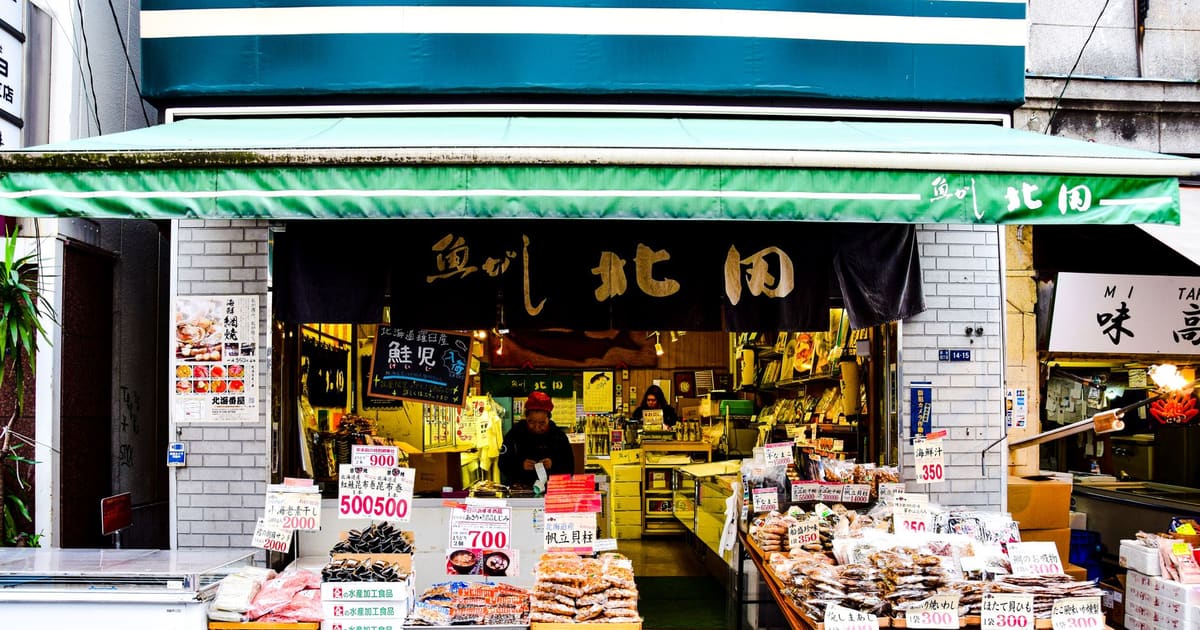
 $16.99Mâncare și degustări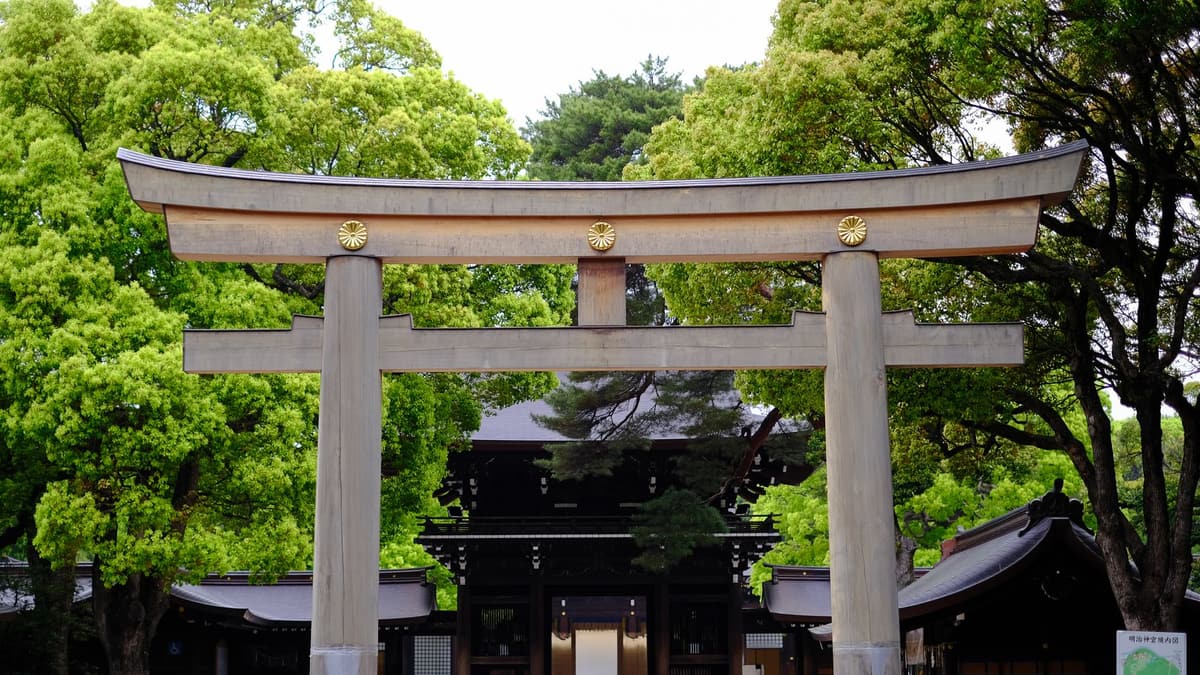
Audio Tokyo Tururi pietonale
Plimbări ghidate pe cont propriu, cu narațiune, prin Tokyo. Cumperi turul o singură dată, îl descarci și lași povestea să ruleze la fiecare oprire, în timp ce mergi în propriul ritm.
Tururi de la $8.99
Prietenii merg gratis. O singură achiziție îi include pe toți cei de pe plimbarea ta. Pornește turul, invită-ți prietenii să se alăture, și acesta se va reda pe fiecare telefon din grupul tău.
5.0 pe Google Play
Tururi audio în Tokyo
Fiecare tur este un traseu pe hartă cu narațiune la fiecare oprire. Îl cumperi o singură dată și rămâne al tău, fără abonament.
$16.99Mâncare și degustări $17.99Film și ficțiune
 $17.99Film și ficțiune
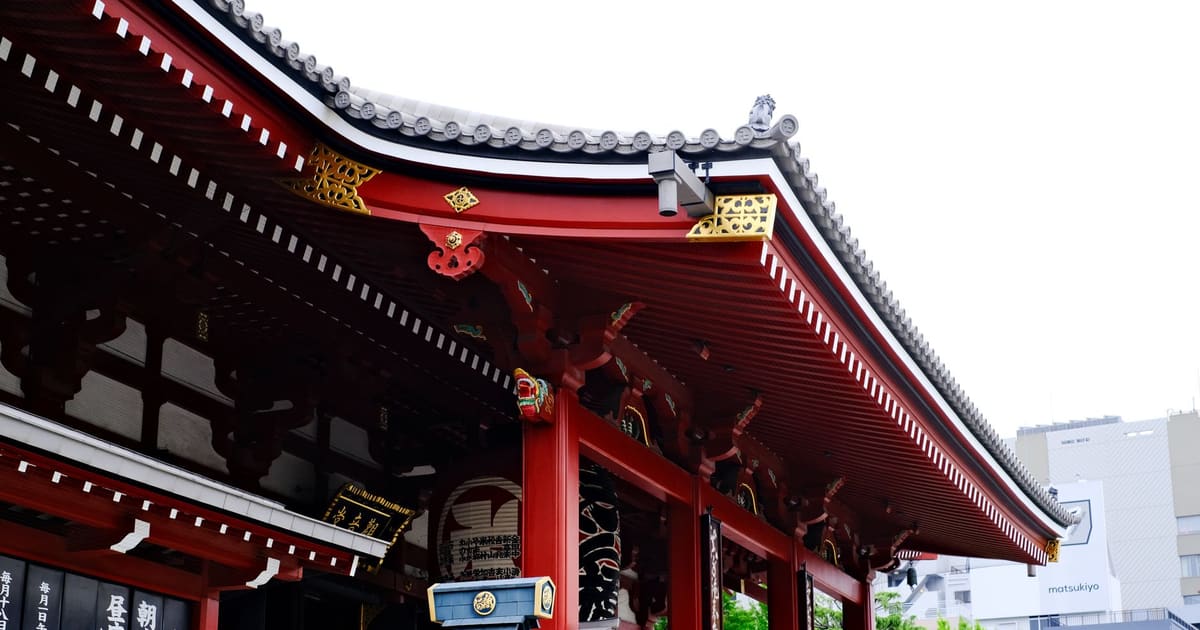 $8.99Obiective din oraș
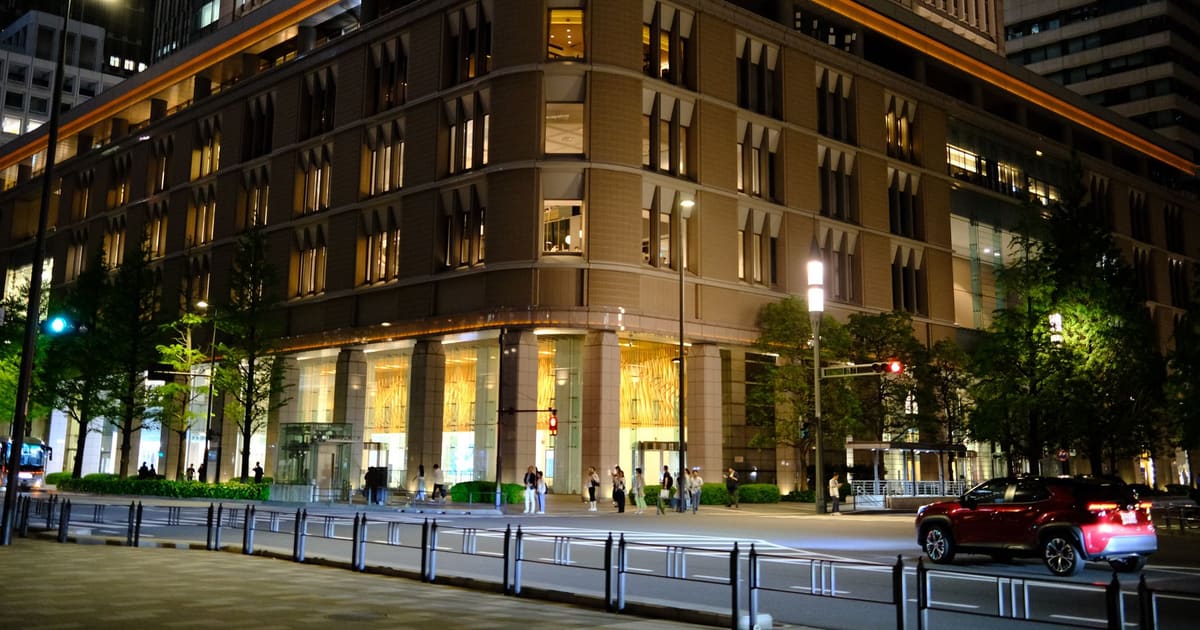 $10.99Obiective din oraș
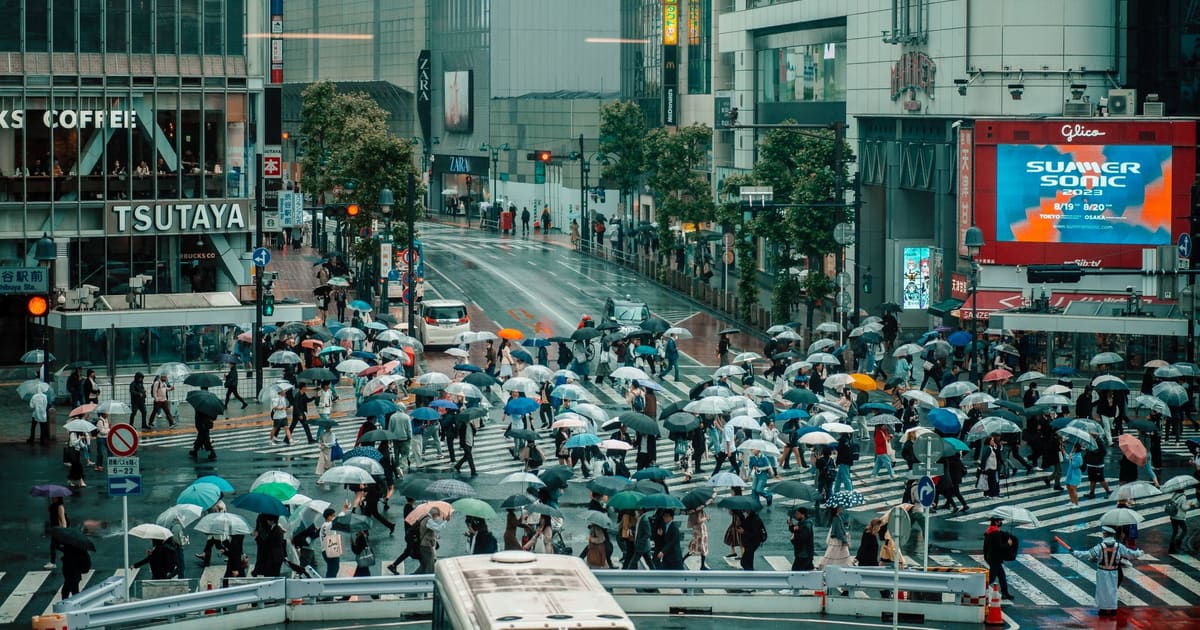 $9.99Obiective din oraș
La ce să te aștepți de la un tur pietonal audio în Tokyo
A Tokyo audio walking tour can take you through old Edo's temple streets, across the plaza of the shogun's former castle, or from a world famous crossing into a forest shrine, with narration timed to each turn so you never lose your place in the crowd.
The Tokyo Asakusa Walk starts on the Sumida riverbank, crosses the red Azumabashi Bridge, and passes under the giant lantern of Kaminarimon Gate to Senso-ji, the city's oldest temple, its hall and five-story pagoda lit up after dark. From there it slips behind the temple into the old entertainment streets of Rokku, past the Asakusa Engei Hall, before finishing on Kappabashi, the street where Tokyo's restaurants buy their knives. It covers about 2.8 kilometers, around 40 minutes of walking.
The Tokyo Palace to Ginza Walk begins at the red brick front of Tokyo Station, heads down a ginkgo-lined avenue to the Kusunoki Masashige statue, and crosses the palace plaza to Nijubashi, the double bridge and watchtower that form the most photographed view of the Imperial Palace. It continues past Sakuradamon Gate and through Hibiya Park before ending beneath the clock tower at Ginza's famous crossing, about 4.5 kilometers and 65 minutes in all.
The Tokyo Shibuya-Harajuku Walk opens at the statue of Hachiko beside Shibuya's scramble crossing, where thousands of people cross from every direction at once, then heads north past Miyashita Park and along Cat Street to the designer avenue of Omotesando. From there it is a short walk to the teenage riot of Takeshita Street, and then, through a wooden torii gate, into the quiet forest of Meiji Jingu. It runs about 4 kilometers, roughly 57 minutes of walking, and it is worth every one of them for the contrast at the end.
Pe unde să te plimbi în Tokyo
Câteva dintre opririle pe care le vei face și motivele pentru care merită să încetinești pasul.
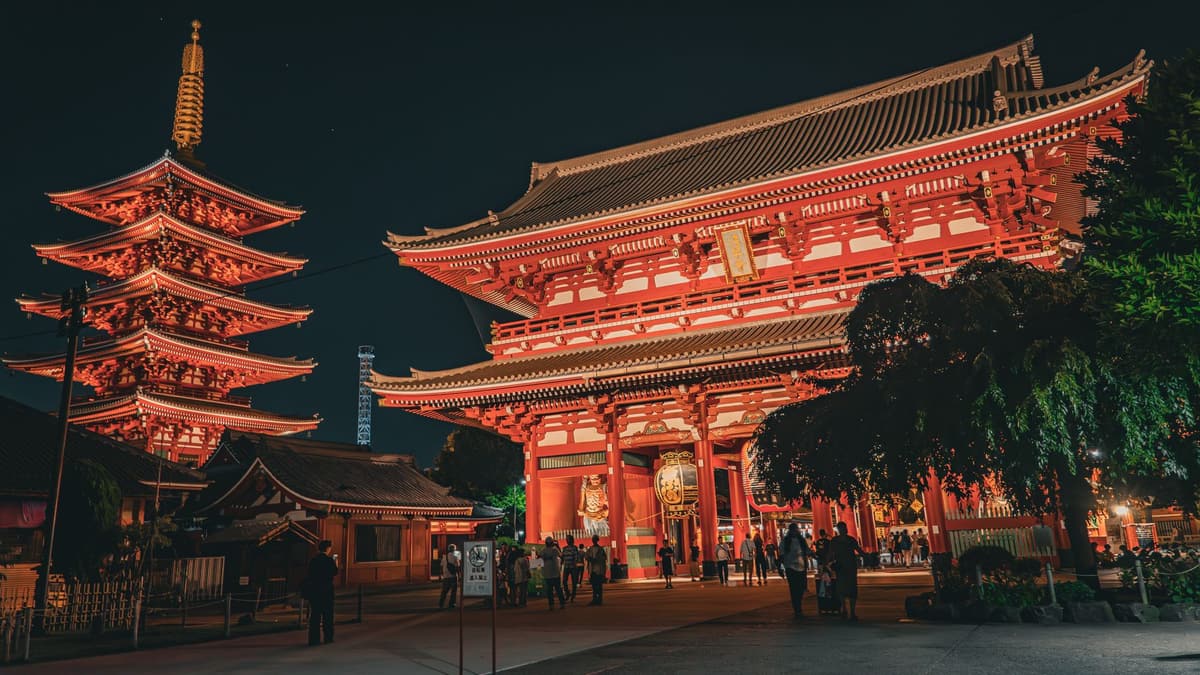
Senso-ji and Kaminarimon Gate
Lit up red after dark, Senso-ji's main hall and its five-story pagoda are one of the most striking sights in Tokyo, rising beside the glowing gate. This is the city's oldest temple, and according to its own story it began after two fishermen pulled a small golden statue of the bodhisattva Kannon from the Sumida River in the year 628. The current buildings are postwar reconstructions in concrete, rebuilt after the air raids of 1945 destroyed the originals, but the atmosphere of incense smoke and lantern light has carried on regardless. Come after dark, when the crowds thin out while the buildings glow even brighter against the night sky.
The Sumida River
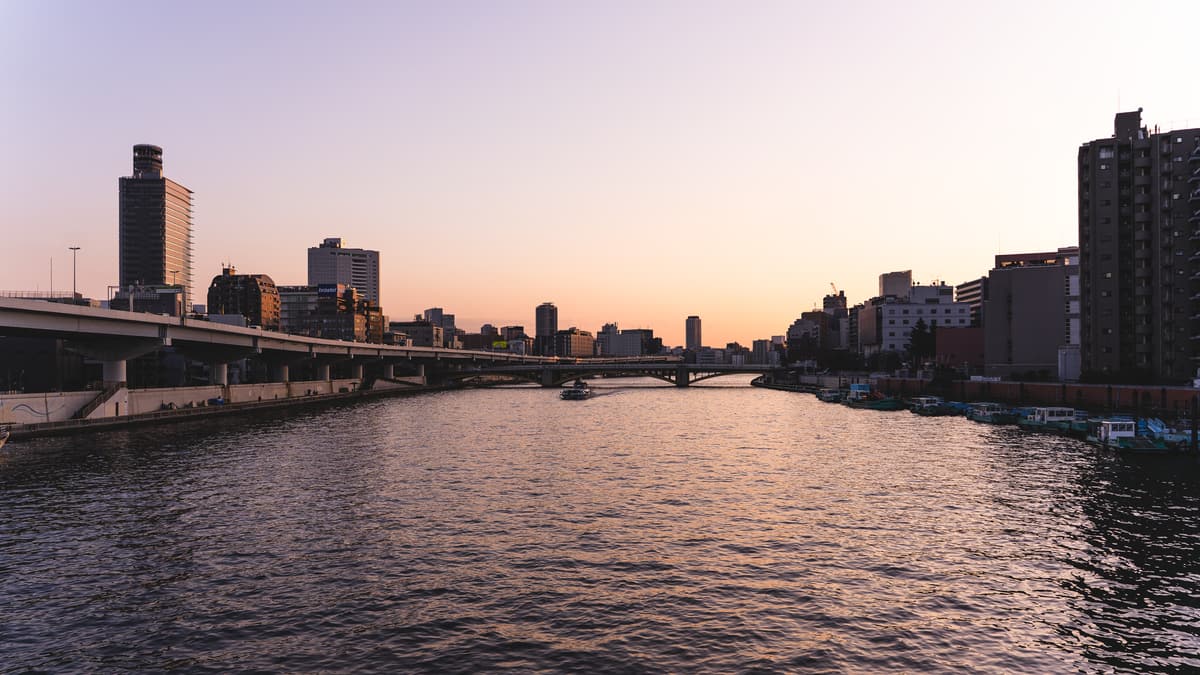
The Sumida is the great working river of old Edo, and at dusk a bridge crosses the water with the city's towers silhouetted against a fading orange sky. This riverside has drawn crowds for spring blossom viewing since the early 1700s, when the shogun Tokugawa Yoshimune had cherry trees planted along the embankment, and the tradition of hanami here has never really stopped. The park along the bank was rebuilt after the Great Kanto Earthquake of 1923 flattened this district, one of several new public spaces the city added as it recovered. Walk the riverside path at this hour and you will have much of the view to yourself before the evening crowds arrive in Asakusa proper.
Shibuya Scramble Crossing
This is the busiest pedestrian crossing on earth, and mid-scramble, a sea of umbrellas moves across every stripe of the crossing from every direction at once. When the lights stop the traffic, thousands of people can cross in a single change without anyone bumping into anyone else, a small daily miracle of choreography that nobody in Tokyo thinks twice about. The bronze statue of Hachiko, the loyal dog who waited here for his owner for years after his death, sits just off to one side, and it is where almost everyone starts this walk. Cross it at least once in each direction, rain or shine, because standing still at the edge and watching is part of the experience too.
Takeshita Street
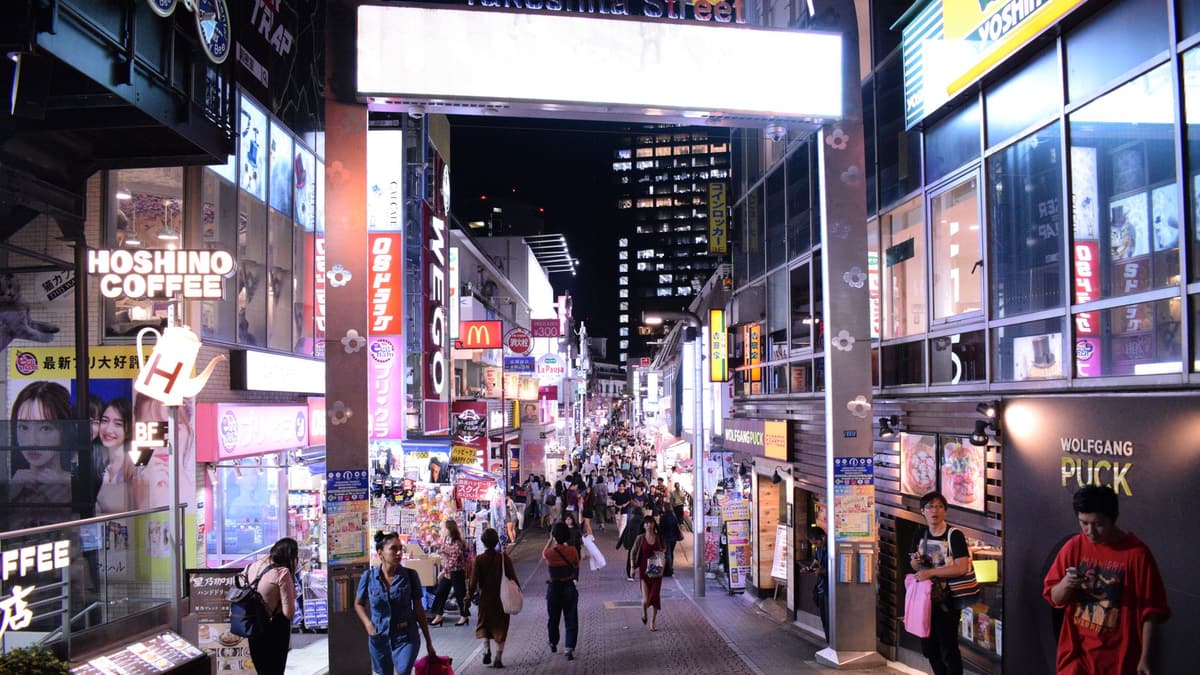
Narrow, packed and lit up with shop signs in every direction, Takeshita Street has been where Tokyo teenagers come to look different since the 1970s, and after dark it feels exactly like that: shoulder to shoulder, neon overhead, a crowd drifting slowly uphill toward the station. The street sells platform shoes, pastel wigs, band merchandise and some of the most theatrical snacks in the city, including the rolled Harajuku crepe stuffed with cream and fruit. Many shops ask customers not to eat while walking, so step aside to finish your crepe rather than carrying it down the street, and ask before photographing anyone in an elaborate outfit.
Nijubashi Bridge and the Imperial Palace
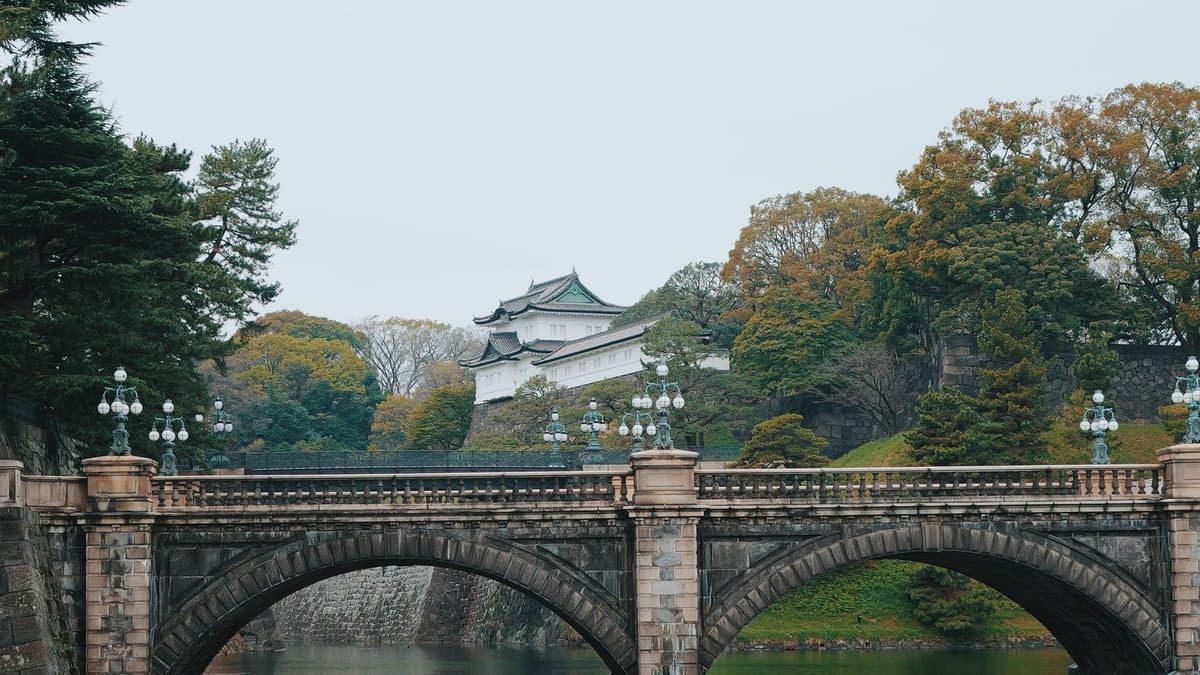
This stone double bridge and the curved-roof watchtower behind it make up the single most photographed view of the Imperial Palace, and it is easy to see why, the arches reflected in the moat and the palace grounds rising green behind the walls. Nijubashi means double bridge, a name that properly belongs to the rear span, once built on two levels, though most people use it for the whole scene. Behind these walls stood Edo Castle, the seat of the Tokugawa shoguns for more than 250 years, until the young Emperor Meiji moved in after their rule collapsed in 1868 and the city of Edo became Tokyo. Ordinary visitors only cross these bridges on a couple of days a year, so most of this walk is spent looking at them from exactly this spot.
Ia turul audio în 3 pași simpli
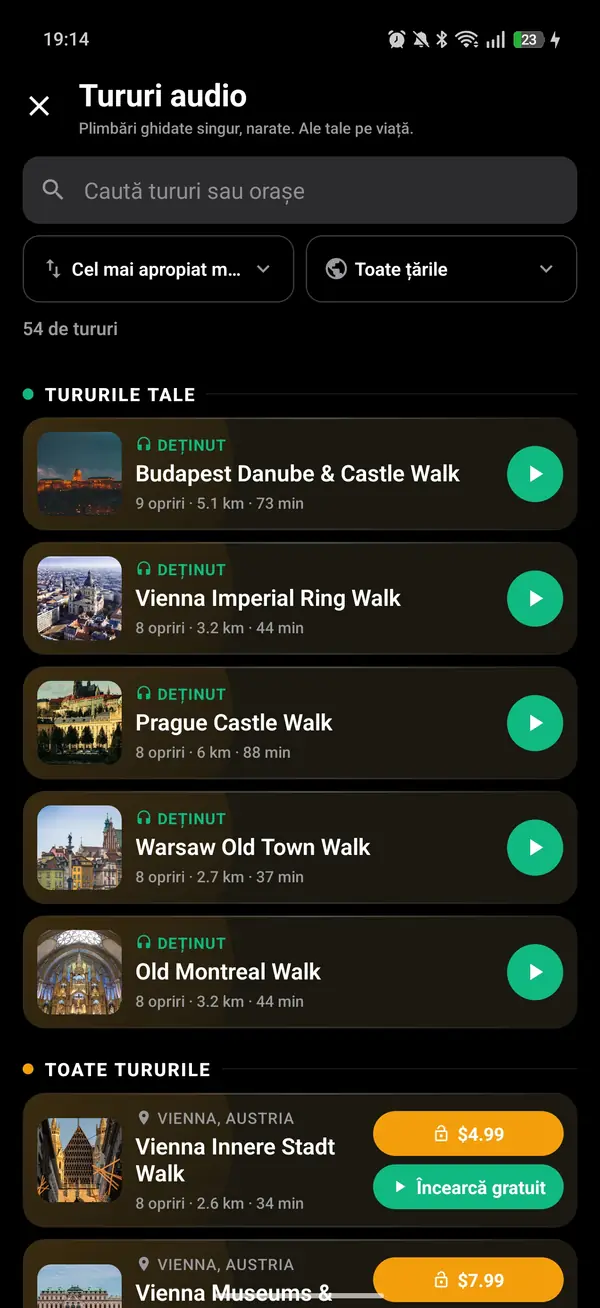
Totul în aplicația gratuită Walk With Me, iar primele opriri ale fiecărui tur le poți încerca gratuit.
Atinge căștile aurii și alege un tur
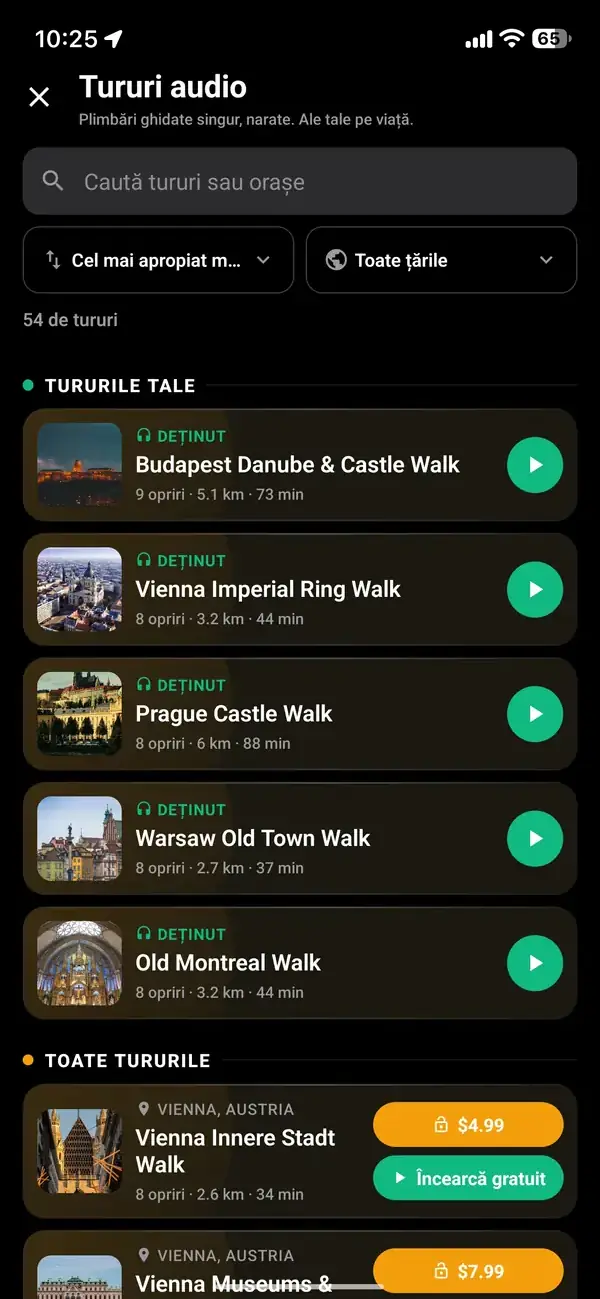
01
Mergi singur sau invită pe cineva


02
Apasă pe redare și mergi
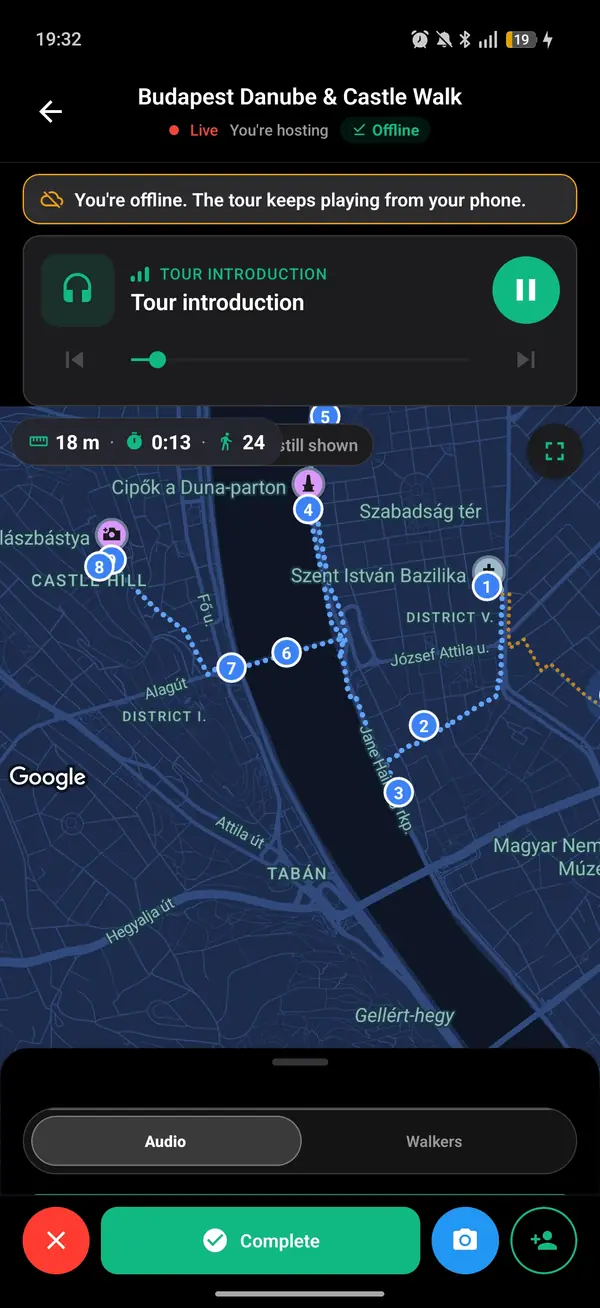
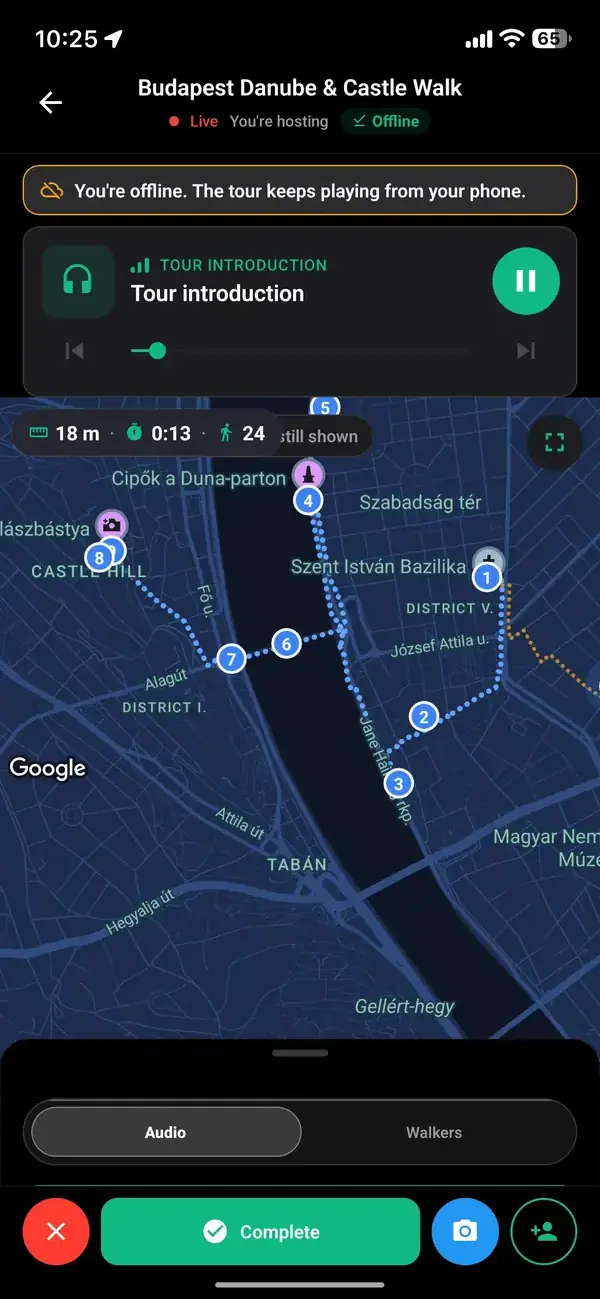
03
Create cu grijă pentru timpul tău în oraș
Aceste tururi nu sunt o listă de obiective de bifat. Sunt făcute pentru a fi parcurse încet, cu căștile pe urechi și ochii pe oraș.
Meditative și captivante
Fiecare poveste este spusă acolo unde s-a petrecut. Aplicația te anunță când ajungi la o oprire, o atingere pornește povestea, iar drumul dintre opriri este al tău, în ritmul tău.
Lucrate manual, cu grijă
Alegem noi înșine fiecare traseu și fiecare oprire și modelăm fiecare poveste cu grijă, ca timpul tău în oraș să meargă spre locurile care merită cel mai mult.
Mai bine împreună
Orice plimbare e mai frumoasă cu cineva alături, așa că, dacă poți lua pe cineva cu tine, te încurajăm din tot sufletul. De aceea o singură achiziție îi acoperă pe toți cei pe care îi inviți: ei se alătură turului tău gratuit.