




 $7.99Головне в місті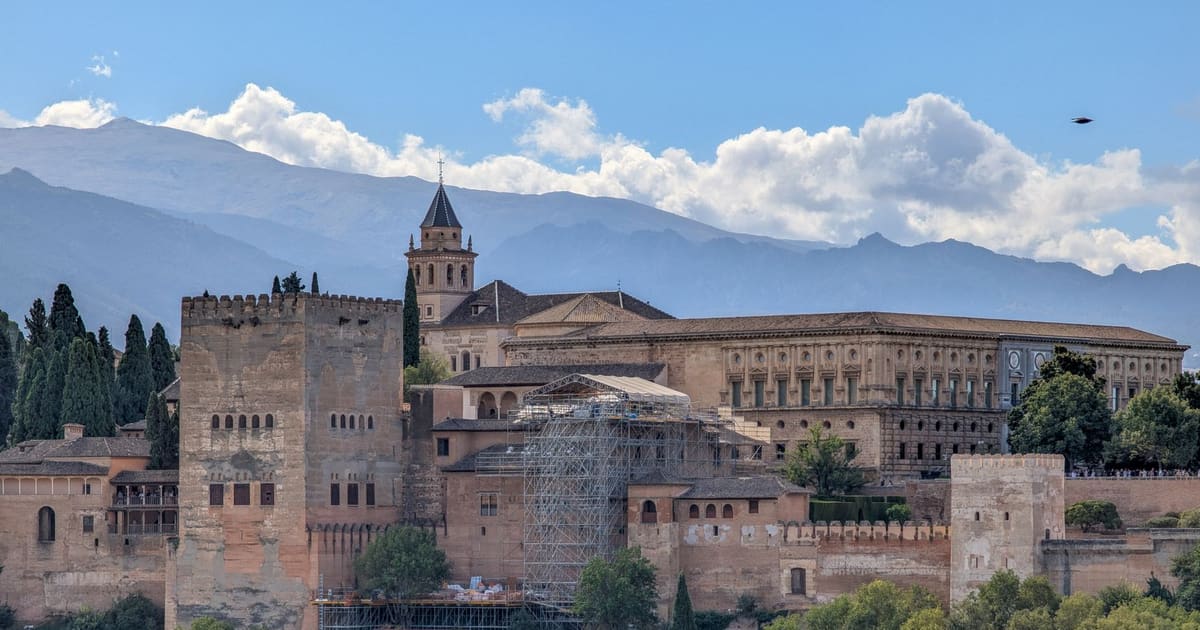
Аудіо Granada Пішохідні екскурсії
Самостійні пішохідні прогулянки з аудіосупроводом по Granada. Купуйте екскурсію один раз, завантажуйте та слухайте розповідь на кожній зупинці, гуляючи у власному темпі.
Екскурсії від $7.99
Друзі гуляють безкоштовно. Одна покупка покриває всіх учасників вашої прогулянки. Почніть тур, запросіть друзів приєднатися, і він відтворюватиметься на телефоні кожного у вашій групі.
5.0 на Google Play
Аудіоекскурсії по Granada
Кожна екскурсія, це спланований маршрут із розповіддю на кожній зупинці. Купуйте один раз і користуйтеся назавжди, без жодних підписок.
$7.99Головне в місті$7.99Головне в містіЧого очікувати від аудіоекскурсії по Granada
A Granada audio walk can climb the quiet back stairs to the Alhambra through the old Jewish quarter of the Realejo, or trace the river Darro up into the whitewashed Albaicin to the famous sunset view, each route timed stop by stop as you climb.
The Alhambra Hill Walk starts at the Corral del Carbon, the best preserved Moorish merchants' inn in Spain, then crosses the Realejo, Granada's old Jewish quarter, past the fortress-like Casa de los Tiros and the Dominican church of Santo Domingo to the wide square of Campo del Principe. From there the route climbs past the composer Manuel de Falla's small house on the Alhambra's southern slope, through shady elm woods to the Palacio de Carlos V, and finishes at the Parador de Granada, the old convent where Ferdinand and Isabella were first buried, about 2.3 kilometers and 36 minutes, uphill most of the way.
The Albaicin Walk starts in the golden lower town around the cathedral and the Royal Chapel, slips through the old silk market lanes of the Alcaiceria, and opens into Plaza Nueva, where the flat Christian city meets the rising Moorish hills. From there it follows the little river Darro along the Carrera del Darro, often called Granada's most beautiful street, out to the terraces of the Paseo de los Tristes beneath the Alhambra's walls, then climbs the steep lanes of the Albaicin to the Mirador de San Nicolas, about 2.3 kilometers and 39 minutes.
Both walks save their climb for last, so pace yourself on the cobbles and time your finish for the hour or two before sunset, when the Alhambra turns gold across the valley from the Mirador, or the light softens over the Realejo's rooftops from the Parador's terrace. Granada sits high and dry, so mornings and evenings are far kinder than the middle of a summer day.
Де погуляти в Granada
Кілька зупинок, які ви проходитимете, і чому біля них варто затриматися.
Mirador de San Nicolás
The climb through the Albaicin's steep white lanes ends at the Mirador de San Nicolas, and the view from its terrace is the reason most people come to Granada. From the low wall in front of a small church, the whole Alhambra spreads out across the valley, its long red gold walls and towers strung along the ridge with the snow capped Sierra Nevada rising behind. It's especially striking in the last hour of daylight, when the setting sun turns the palace to fire and a hush falls over the crowd on the terrace, usually with a guitarist playing somewhere nearby. Arrive a little before the light turns if you want a spot at the wall, since it fills up fast, and plan to simply sit and watch the color change for a while.
The Albaicín's White Lanes
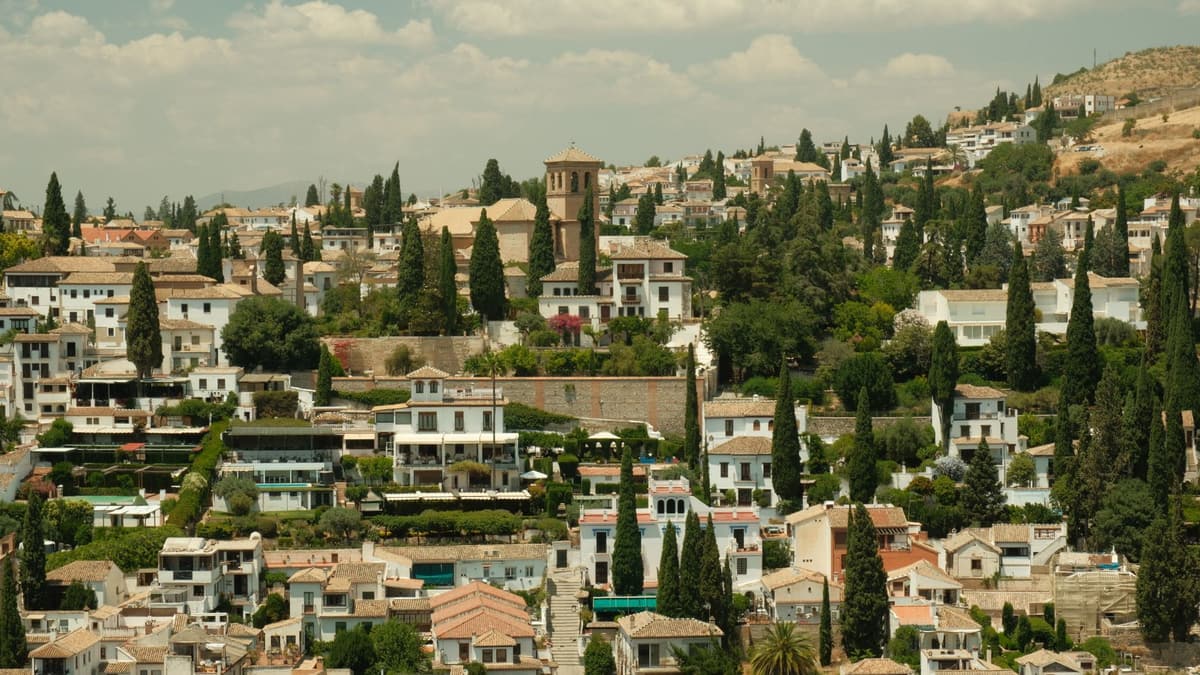
The Albaicin is Granada's old Moorish quarter, a genuine maze of steep, narrow, cobbled lanes climbing the hill across the river from the Alhambra, lined with whitewashed houses behind high garden walls called carmens. There's no real logic to the streets up here, and getting a little lost is part of the point, since every turn brings another hidden square, another splash of bougainvillea, or another sudden glimpse of the Alhambra's towers above the rooftops. Church towers mark the old parish centers scattered through the quarter, echoes of the mosques they replaced after the conquest. It's a steep climb in places, so take it slowly and let yourself wander off the direct route if a lane looks interesting.
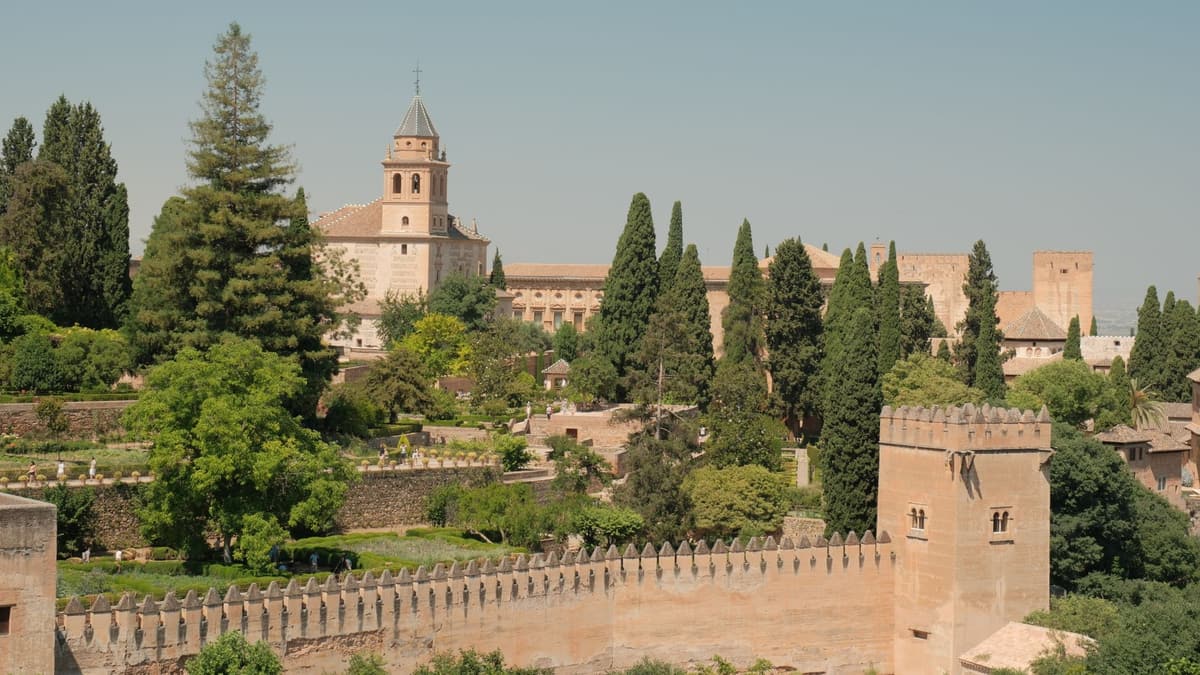
The Alhambra and Generalife
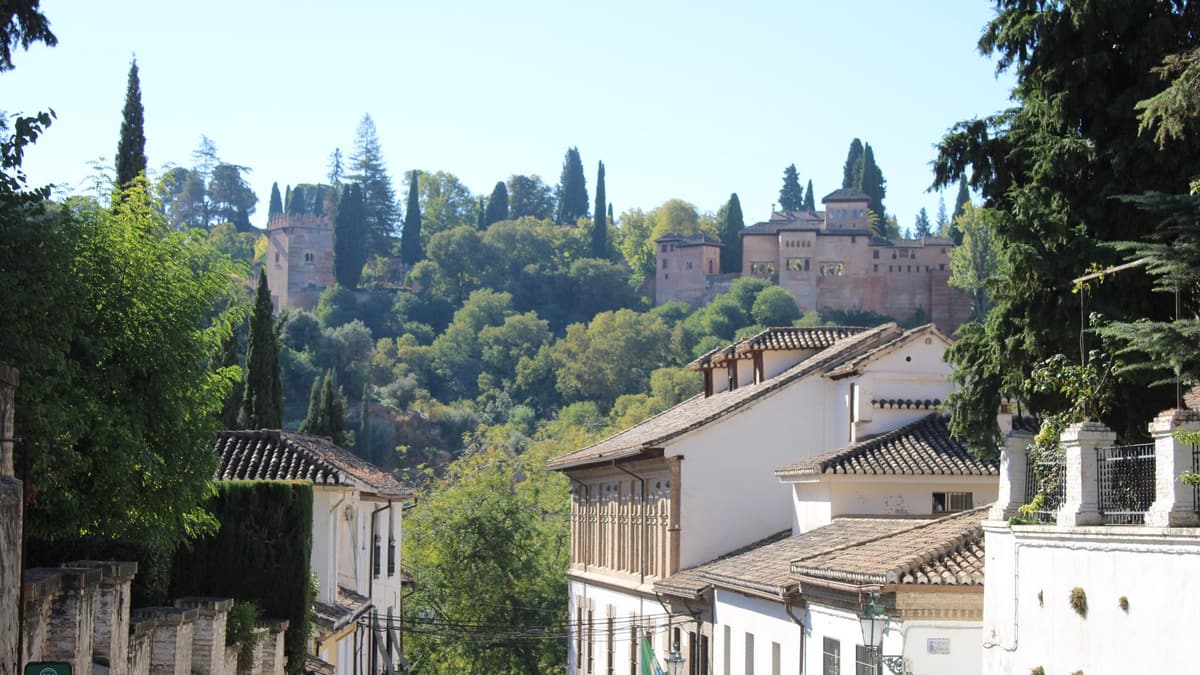
Seen from across the Realejo or the Albaicin, the Alhambra is a long red gold fortress and palace complex strung along its ridge, with the white walls of the Generalife, the sultans' summer garden, visible just beyond it among dark cypress trees. For centuries this hill held the court of the Nasrid sultans, the last Muslim rulers in Spain, and its gardens, pools and courtyards are considered some of the finest Islamic architecture in Europe. A church tower rising among the garden's cypresses marks Santa Maria, built after the conquest on the site of the old palace mosque. Visiting the Nasrid Palaces themselves needs a timed ticket that often sells out well ahead, so book early if you want to go inside rather than just admire the walls from below.
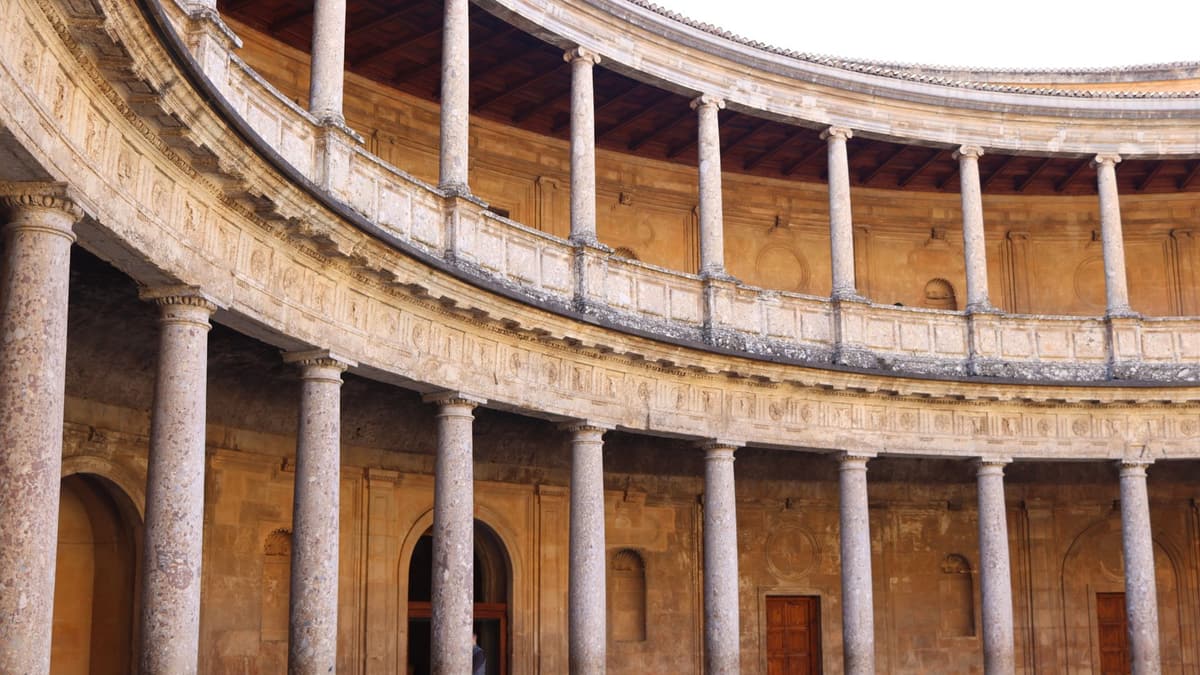
Palacio de Carlos V
The Palacio de Carlos V looks like it took a wrong turn in Italy, a perfectly square block of golden Renaissance stone set right against the Alhambra's Moorish walls. Charles V ordered it after falling for Granada on his honeymoon in 1526, and its architect Pedro Machuca hid a surprise inside the square exterior, a perfect circular courtyard ringed by two stories of stone columns and open to the sky. Stand in the middle and say something, since the acoustics are part of why concerts are held here in summer. Much of the money for it came from a tax on Granada's Moriscos, and when that arrangement broke down the palace stood unroofed for centuries before finally being completed in the twentieth. It now holds the Alhambra's museum and a fine arts collection.
The Realejo and the Alhambra's Nasrid Palaces
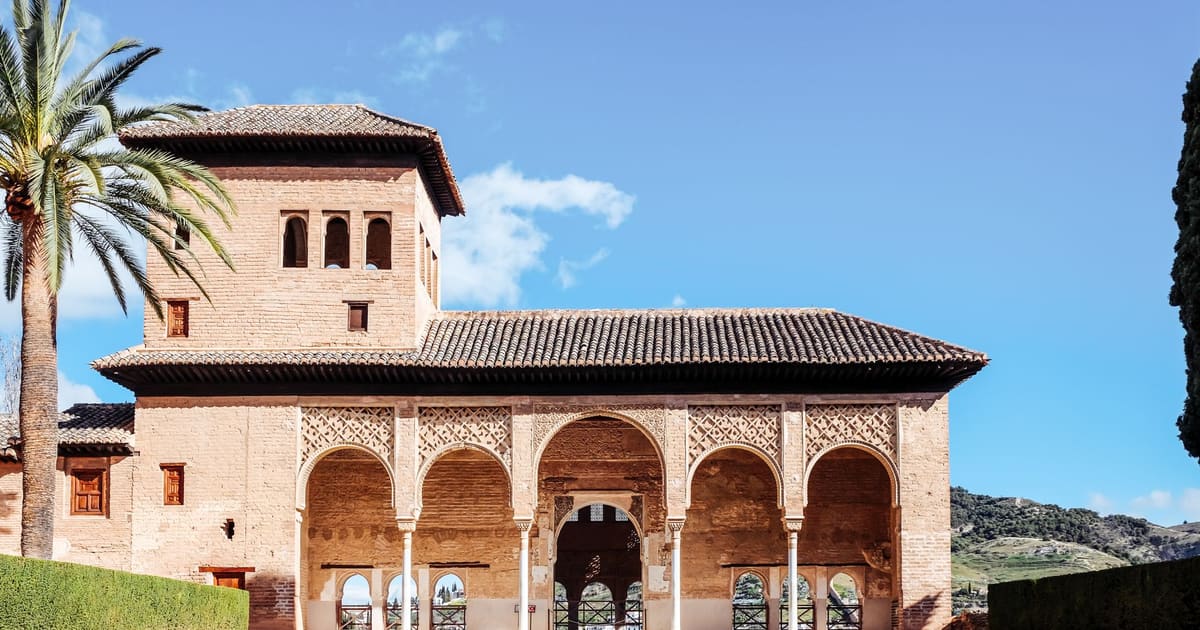
The Realejo is Granada's old Jewish quarter, cleared out by royal decree in 1492 and now a quiet, lived in neighborhood of bars and terraces around the tree lined Campo del Principe. Climbing out of it toward the Alhambra brings you past elegant Nasrid style arches and horseshoe doorways like these, the architectural language that runs through the whole hill, from garden pavilions to the Partal Palace's reflecting pool. Palm trees and cypress line the paths between the Alhambra's outer walls and its inner palaces, a quieter, greener approach than the crowds at the main gate below. It's worth remembering that the Realejo and the Alhambra were always this close together, a few minutes' walk apart, long before either became a tourist route.
Почніть аудіоекскурсію за 3 прості кроки
Усе в безкоштовному застосунку Walk With Me, а перші зупинки кожної екскурсії можна послухати безкоштовно.
Торкніться золотих навушників і виберіть екскурсію


01
Ідіть самі або запросіть когось


02
Натисніть «play» і йдіть


03
Створені з любов'ю для вашого часу в місті
Ці екскурсії не список пам'яток, які треба відмітити. Їх варто проходити неспішно, у навушниках і з поглядом на місто.
Медитативні та захопливі
Кожна історія звучить там, де вона сталася. Застосунок подає сигнал, коли ви доходите до зупинки, один дотик запускає розповідь, а шлях між зупинками належить вам, у вашому темпі.
Зроблені вручну, з турботою
Ми самі обираємо кожен маршрут і кожну зупинку та дбайливо створюємо кожну історію, щоб ваш час у місті пішов на місця, які справді того варті.
Удвох краще
Будь-яка прогулянка краща, коли поруч хтось є, тож якщо можете взяти когось із собою, дуже радимо це зробити. Саме тому одна покупка покриває всіх, кого ви запросите: вони приєднуються до вашої екскурсії безкоштовно.